
Jewish heritage · Byzantine period
Ein Keshatot a restored ancient synagogue in the Golan
A restored basalt synagogue, the decorated Torah shrine and an arched spring reveal Jewish life in the Byzantine Golan.
- Where : Golan Heights, near Natur
- Duration : About 1 hour
- Access : Paid admission · route includes stairs
Essentials
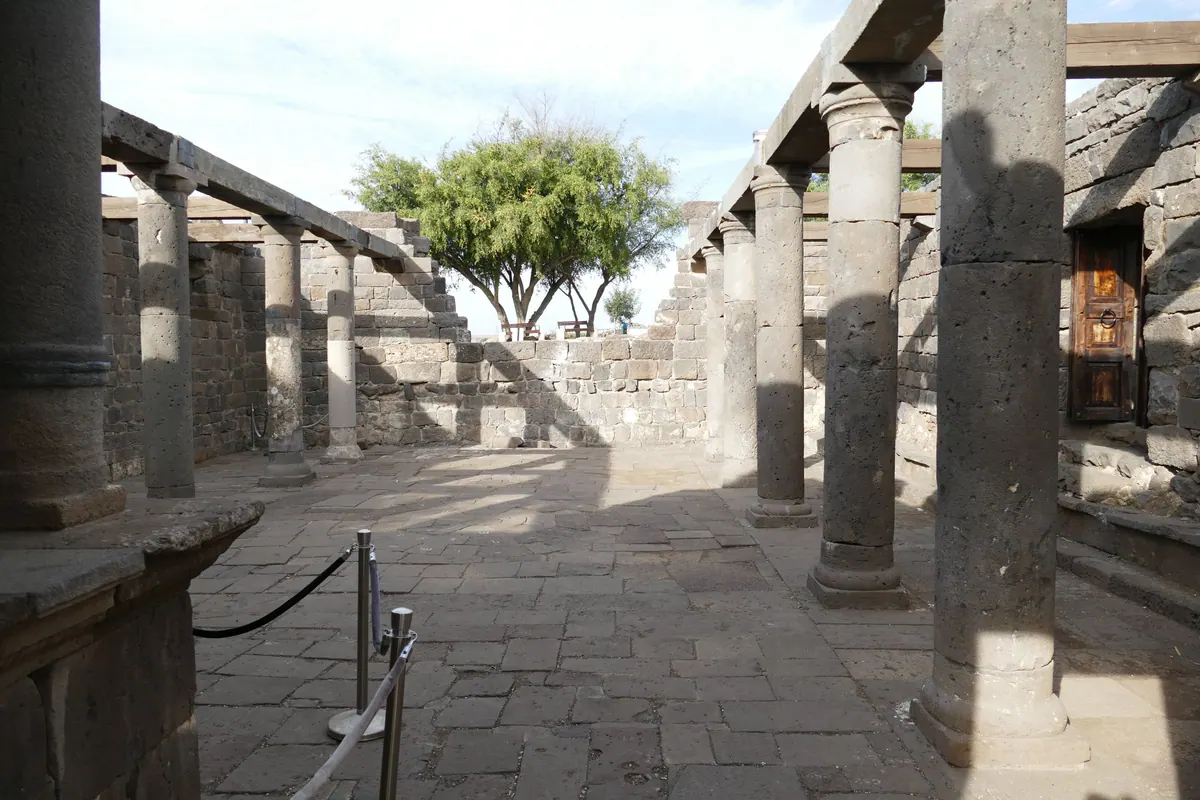
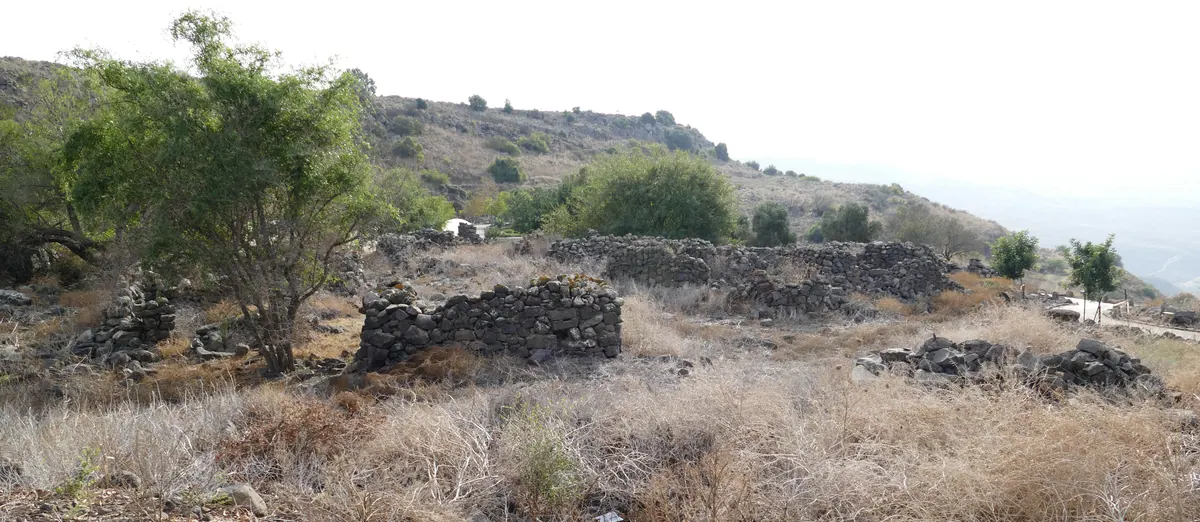
Above the Nahal Samekh valley, overlooking the landscapes of the Sea of Galilee, Ein Keshatot preserves the remains of an ancient Jewish village. Its main monument is a synagogue reassembled using stones recovered on the site. Inside, the architectural setting that housed the Torah ark is a highlight. The visitor route also reaches the spring and its pools.
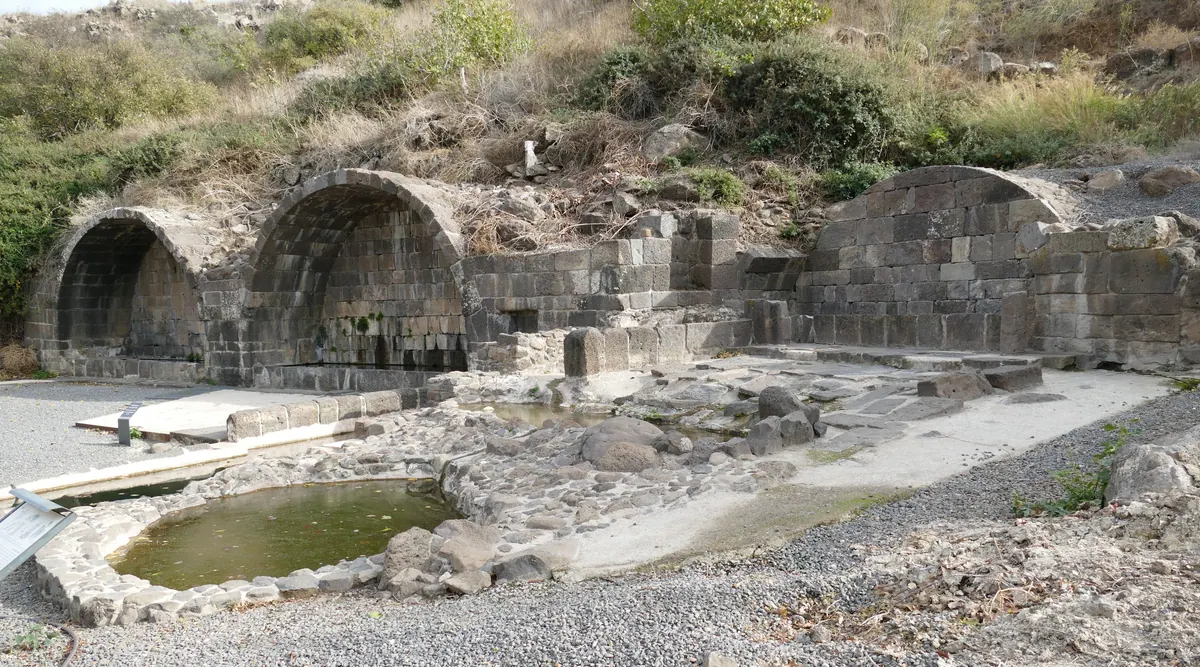
The Hebrew name Ein Keshatot means “spring of the arches”, referring to the structures above the water. The site is also known by its Arabic name, Umm el-Qanatir. The ancient name of the village remains unknown.
In brief
- Why go
- Discover the life of a Jewish community in the Byzantine Golan.
- What you'll see
- The restored basalt synagogue, the decorated Torah shrine and the arched spring.
- Check before you go
- The usual route includes stairs; contact reception to arrange accessible entry.
Plan my visit
Ein Keshatot: planning your visit
| Visit duration | About one hour, including the film and the walk to the synagogue and spring. |
|---|---|
| November–February opening hours | Sunday–Thursday and Saturday: 9 am–4 pm. Friday: 9 am–3 pm. Last entry one hour before closing. |
| Admission | Paid admission. Check the official ticketing website for the applicable price. |
| Wheelchair access | Accessible paths are available; the usual route includes stairs. Contact reception to arrange suitable access. |
| With a baby | The operator recommends a baby carrier. |
| Please note | Bathing in the spring is prohibited. Check access conditions before travelling, especially during holidays. |
| Telephone |
The visitor route
The self-guided visit begins at the visitor centre with a short film about the restoration, followed by a walk to the synagogue and spring. The operator gives a total duration of about one hour.
A walk through history and landscape
The route connects the visitor centre, synagogue and spring. The usual path includes stairs: contact reception beforehand to arrange an accessible route. Bathing in the spring is prohibited.
Suggested itineraries
- Synagogues and northern landscapes
- Ein Keshatot → Capernaum
- Archaeology and the sources of the Jordan
- Ein Keshatot → Tel Dan
Nearby
Add to your itinerary
Add other places to visit around Ein Keshatot.
Straight-line distances: the drive is longer.
-
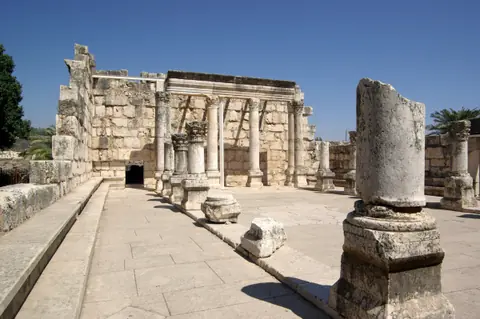
Capernaum
The fishing village where Jesus settled, taught in the synagogue and stayed with Peter: what the Gospels say, what the excavations found and what you can see today.
-
Mount of Beatitudes
The Sermon on the Mount
Page coming soon -
Tabgha
The multiplication of the loaves
Page coming soon -
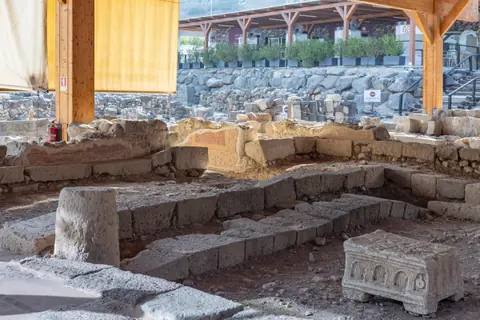
Magdala
A first-century synagogue
Page coming soon
History & Bible
Archaeology
A sixth-century synagogue
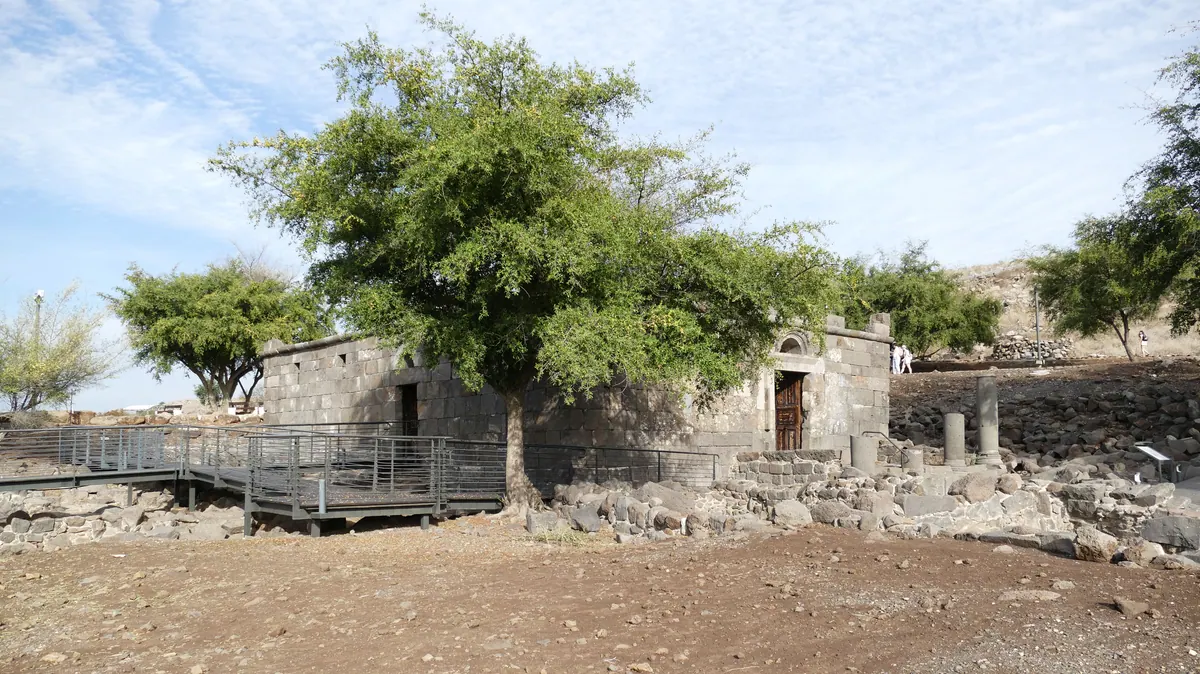
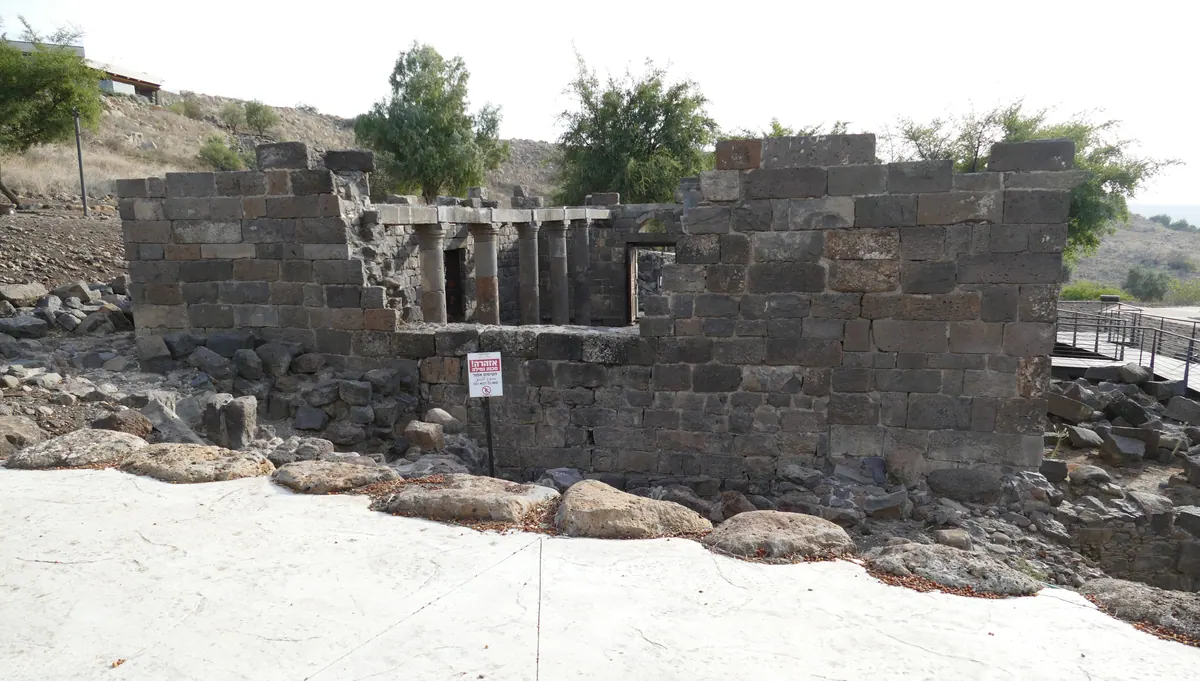
The excavators date the synagogue to the second half of the sixth century. Built of basalt, it originally had two storeys. Its size and decoration reflect the community’s investment in the building.
Its history includes several phases: an initial collapse of the upper parts, changes to the interior, and a final abandonment attributed to the earthquake of 749. The archaeological publication therefore identifies several transformations before the village disappeared.
Archaeology
What to look for
Basalt architecture
The walls and columns help visitors understand the ancient hall’s layout.
The Torah shrine
This monumental structure framed the place where the Torah scrolls were kept.
Stone carvings
Seven-branched menorahs and the four species associated with Sukkot are among the surviving motifs. They express the community’s religious identity and the memory of the Temple in Jerusalem.
The spring and its arches
The water complex predates the visible synagogue: research dates its main construction to between the second half of the third and the first half of the fourth century.
Archaeology
Restoration, stone by stone
The synagogue seen today is the result of about fifteen years of excavation and restoration. Teams used technological tools to record the stone blocks and identify their original positions.
This reassembly, known as anastylosis, reuses identified ancient elements. The reconstruction to the height of one storey helps visitors understand the building’s arrangement.
History
What is its connection with the Bible?
No specific biblical episode can be securely identified with Ein Keshatot in the sources consulted. The synagogue belongs to a period later than the biblical narratives.
Its interest for IsraBible lies in the transmission of this heritage: the place of the Torah in communal life, symbols of Jewish festivals and the memory of the Temple. A visit extends the exploration of the biblical world into the religious life of late antiquity.
For another ancient synagogue, see Capernaum. The excavations at Tel Dan illuminate a different period of religious history in the north.
Archaeology
Did the village depend on linen production?
Linen processing or bleaching has been proposed as an explanation for some installations near the spring. This remains a hypothesis: archaeologists discuss several possible functions for the pools.
Frequently asked questions
What does Ein Keshatot mean?
The Hebrew name means “spring of the arches”. The site is also known as Umm el-Qanatir; the ancient village’s name remains unknown.
When was the synagogue built?
The excavators date the synagogue to the second half of the sixth century, during the Byzantine period.
Is Ein Keshatot linked to a biblical episode?
No specific biblical episode is securely identified with Ein Keshatot in the sources consulted. The site illustrates the transmission of Jewish heritage in late antiquity.
How long should I allow for a visit?
The operator gives about one hour for the film and the walk to the synagogue and spring.
Can you bathe in the spring?
No. Bathing in the spring is prohibited.
Where is Ein Keshatot?
It is in the Golan Heights near Natur, above the Nahal Samekh valley.
Is the synagogue seen today entirely ancient?
The remains were excavated and reassembled using identified ancient stones. This restoration, known as anastylosis, helps visitors understand the building’s size and layout; the structure did not survive intact.
Is the site accessible with a wheelchair or pushchair?
The usual route includes stairs. Accessible paths are available: contact reception to arrange suitable access. The operator recommends a baby carrier.