
Sodom and Gomorrah: the Cities of the Plain and the Valley of Siddim
From the Genesis narrative to the excavations at Bab edh-Dhra and Tall el-Hammam: what we know — and what we do not — about the cities destroyed near the Dead Sea.
Biblical period: The Patriarchs
From Genesis 14 to the "House of David" stele: archaeology, nature and biblical history at the springs of the Jordan.
At the foot of Mount Hermon, Tel Dan — ancient Laish, known in Arabic as Tell el-Qadi — combines a major archaeological site with a nature reserve fed by the Dan springs, the main source of the Jordan River. According to Genesis 14, it was "unto Dan" that Abraham pursued the four kings who had taken his nephew Lot captive.
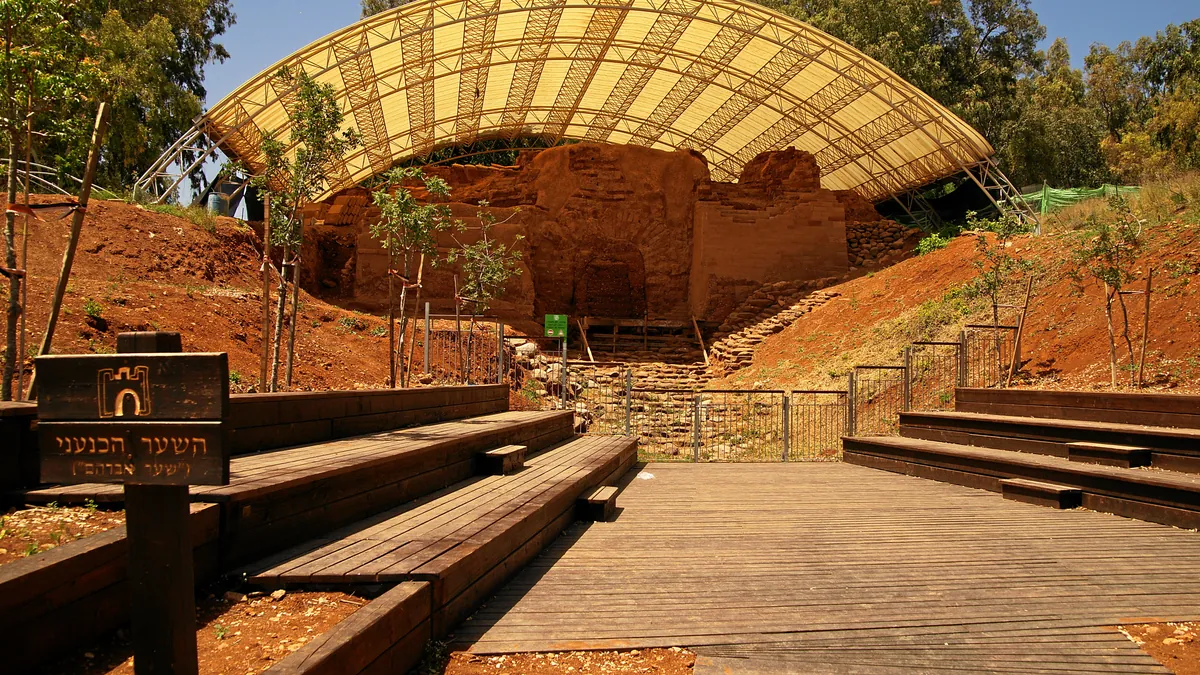
The mound preserves Abraham's Gate (Bab Ibrahim), an arched mud-brick gate from the Middle Bronze Age (c. 1750 BCE); the sacred precinct where Jeroboam I set up one of his golden calves; and the Israelite gate near which the Tel Dan Stele, the "House of David" inscription, was found. Shaded trails, rushing water and four thousand years of history make Tel Dan a highlight of any trip to northern Israel.
In brief
History & Bible
Bible story
Genesis 14 tells of the "war of the kings": four rulers from the east, led by Chedorlaomer king of Elam, defeat the five kings of the Plain, plunder Sodom and Gomorrah and carry off Lot, who was living in Sodom. When Abram hears the news, he arms the 318 men of his household and pursues the raiders to the far north of the land. He attacks by night, frees Lot, recovers the spoil and chases the defeated army as far as Hobah, "on the left hand" — that is, north — of Damascus (Genesis 14:15).
"And when Abram heard that his brother was taken captive, he armed his trained servants, born in his own house, three hundred and eighteen, and pursued them unto Dan."
Genesis 14:14
In the patriarchal period the city was called Laish (or Leshem, Joshua 19:47). It only took the name Dan after it was conquered by the tribe of that name (Judges 18). The use of "Dan" in Genesis 14 is therefore an editorial anachronism: the writer updates the place name for his readers, a common practice in ancient texts. Laish itself appears in extra-biblical sources of the second millennium BCE, including the Egyptian Execration Texts and the Mari archives.
"And they called the name of the city Dan, after the name of Dan their father, who was born unto Israel: howbeit the name of the city was Laish at the first."
Judges 18:29
The story implies a long march from the oaks of Mamre near Hebron. The exact route is unknown; a common suggestion follows the ridge road past Bethel, then the Jordan Valley up to its springs. Laish controlled one of the natural passes between Canaan and the Damascus region — a location that fits the geography of the narrative. On his way back, Abram is met by Melchizedek, king of Salem, who blesses him (Genesis 14:18-20).
As the northernmost city of the land, Dan pairs with Beersheba in the Negev in the biblical phrase for all Israel: "from Dan even to Beersheba" (Judges 20:1; 1 Samuel 3:20). From the springs of the Jordan to the Negev, the two sites frame the land Abraham travelled.
Archaeology
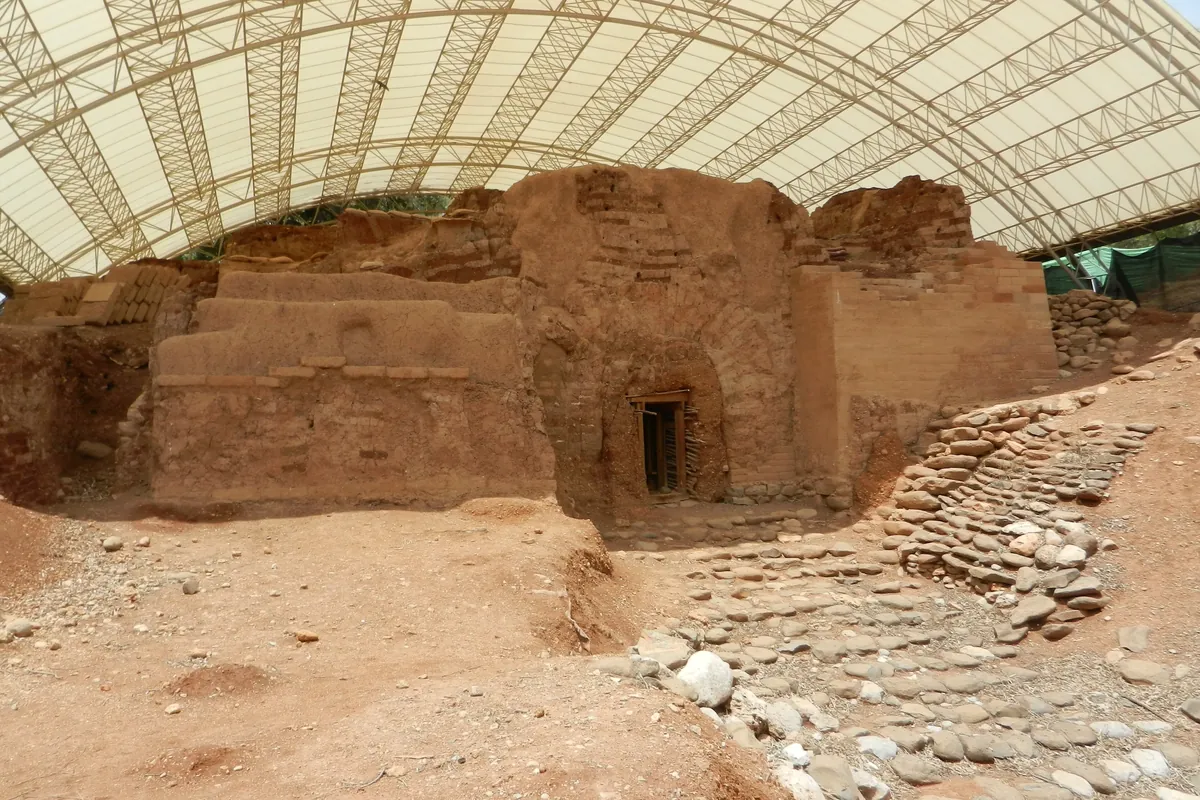
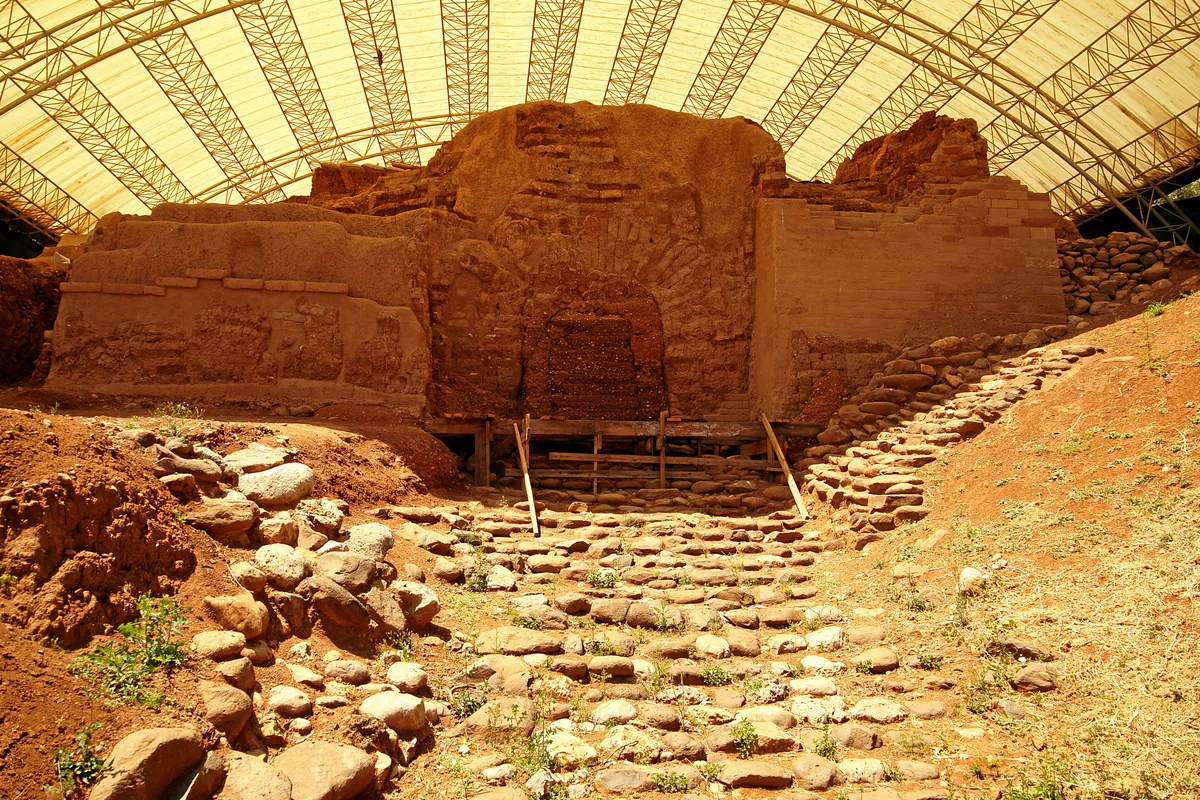
The jewel of the site, the so-called Abraham's Gate belonged to the fortifications of Canaanite Laish. Dated to the Middle Bronze Age II (c. 1750 BCE), it is one of the oldest complete arched gateways known anywhere in the world. Uncovered in 1979 by Avraham Biran's team, it was consolidated and restored in the late 2000s and now stands beneath a protective shelter.
Built of sun-dried bricks on a stone base, the gate was set into a massive earthen rampart. Its remarkable state of preservation is something of a paradox: shortly after it was built, it was filled in and buried inside the rampart, which protected it for nearly four thousand years.
🔎 Tradition and archaeology
The name "Abraham's Gate" is a teaching device: the gate belongs to a period often associated with the setting of the patriarchal narratives, but no inscription or direct evidence links Abraham to this particular gateway. What it does show is the power of Middle Bronze Age Canaanite cities — bringing the world of Genesis 14 vividly to life.
Archaeology
Tell el-Qadi ("mound of the judge", echoing the Hebrew name Dan, which means "judge") was occupied from the Neolithic to the Roman period. Excavated from 1966 by Avraham Biran and later by teams from Hebrew Union College, it is one of the richest sites in northern Israel.
In 1993 and 1994, excavators found three fragments of a basalt stele inscribed in Aramaic (9th century BCE) near the Israelite gate. In it, an Aramean king boasts of victory over a king of Israel and a king of the "House of David" (bytdwd). It is the earliest widely accepted extra-biblical reference to the Davidic dynasty. While it says nothing about David himself, it shows that roughly a century and a half after the time traditionally assigned to him, the kingdom of Judah was known by the name of its founder. The original is on display at the Israel Museum in Jerusalem.
On the north side of the mound, the sacred precinct preserves a large platform of dressed stone (bamah, "high place"), the site of a great altar — one of its horns has been found — and side rooms that yielded small horned altars, incense shovels and other cult objects. A metal frame now outlines the dimensions of the altar. The biblical text presents this sanctuary, a rival to Jerusalem where Jeroboam placed one of his two golden calves, as a "sin" for Israel (1 Kings 12:30).
"And he set the one in Bethel, and the other put he in Dan."
1 Kings 12:29
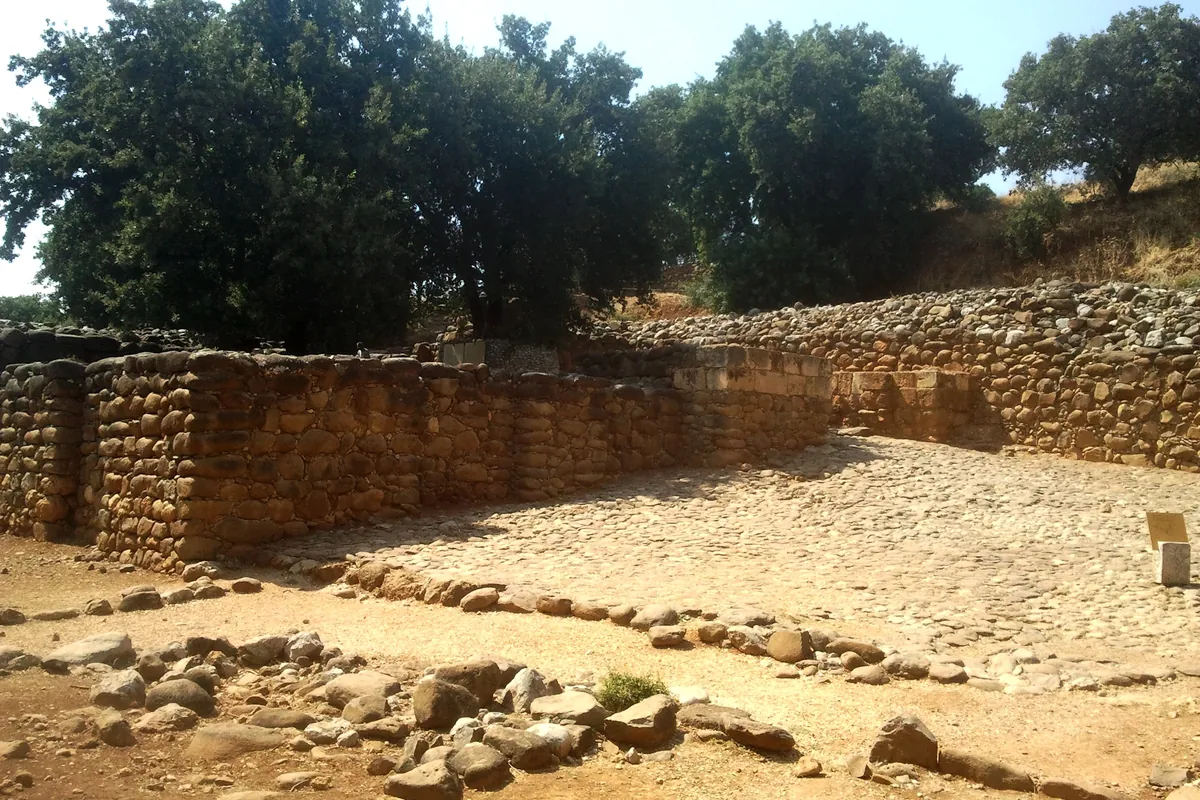
Lower down the slope, an impressive Iron Age gate complex (9th–8th centuries BCE) — with its paved square, standing stones and a podium interpreted as the base of a canopy or throne — recalls that justice and public business were conducted "in the gate".
📌 Good to know
Tel Dan is both a first-rank archaeological site and a protected nature reserve: the ruins are discovered along the trails, amid flowing streams.
Plan my visit
Tel Dan
Tel Dan Nature Reserve, near Kibbutz Dan, Route 99, Upper Galilee
GPS coordinates : 33.2486, 35.6522 (reference point, not the exact entrance)
Start navigation with:
The Tel Dan Nature Reserve surrounds the mound and follows the Dan springs, the most abundant of the three streams that form the Jordan (together with the Hasbani and the Banias). Fed by rain and snowmelt from Mount Hermon, the springs flow all year round. Developed trails, footbridges over the water, lush vegetation and rich wildlife (birds, small mammals) create a setting that is rare in the Middle East.
The reserve is especially pleasant in spring (wildflowers) and autumn (mild temperatures); in summer, the shade and cool water make it a popular refuge from the heat.
For opening hours, prices and access conditions, check the Israel Nature and Parks Authority. To follow current research, visit Tel Dan Excavations, the official excavation website.
Around the site
From the Genesis narrative to the excavations at Bab edh-Dhra and Tall el-Hammam: what we know — and what we do not — about the cities destroyed near the Dead Sea.
A sacred site venerated by the three monotheistic religions, the traditional burial place of Abraham, Isaac and Jacob.
After Shechem, Abraham builds an altar "between Bethel and Ai" and calls on the name of the LORD, then returns there after his stay in Egypt (Genesis 12:8; 13:1-4).
At Beersheba, Abraham seals a covenant with Abimelech over a well, plants a tamarisk and calls on the name of the Everlasting God.
The name "Dan" is an editorial anachronism. In Abraham's time the city was called Laish; the tribe of Dan conquered it later (Judges 18), and scribes updated the name for their readers. This was common practice in ancient texts to help readers locate places.
Not in the strict sense. The gate (c. 1750 BCE) belongs to a period often associated with the setting of the patriarchal narratives, and its nickname is a teaching device. There is no direct evidence that Abraham passed through this particular gate, but it illustrates the fortifications of Middle Bronze Age Canaanite cities and brings the world of Genesis 14 to life.
Discovered in 1993–1994, it is a basalt stele inscribed in Aramaic (9th century BCE) commemorating the victory of an Aramean king. It mentions the "House of David" (bytdwd), making it the earliest widely accepted extra-biblical reference to the Davidic dynasty. The original is on display at the Israel Museum in Jerusalem.
According to 1 Kings 12:28-30, Jeroboam I made two golden calves and set one at Dan and the other at Bethel, as rivals to the Temple in Jerusalem. No calf has been found, but excavations uncovered the sacred precinct: a large platform (bamah), the site of a horned altar and many cult objects.
Allow 1–2 hours depending on your pace. The full circuit combines the archaeological site (Abraham's Gate, the sacred precinct, the Israelite gate) with the trails along the Dan springs. Add 30–60 minutes for the nearby Beit Ussishkin Museum.
Partly. A boardwalk trail lets wheelchair users enjoy the springs, but parts of the mound have slopes and uneven ground. Check with the Israel Nature and Parks Authority before your visit.
Spring (March to May) for the wildflowers and autumn (September to November) for mild temperatures. In summer the shaded reserve stays pleasant, but it is busier.
For an "Abraham's Pursuit" route: Hebron (starting point), Bethel (Abraham's altar), then Tel Dan. For a "Northern Border" circuit: Tel Dan, Banias (Caesarea Philippi, another source of the Jordan) and Hazor, the great Canaanite capital.