
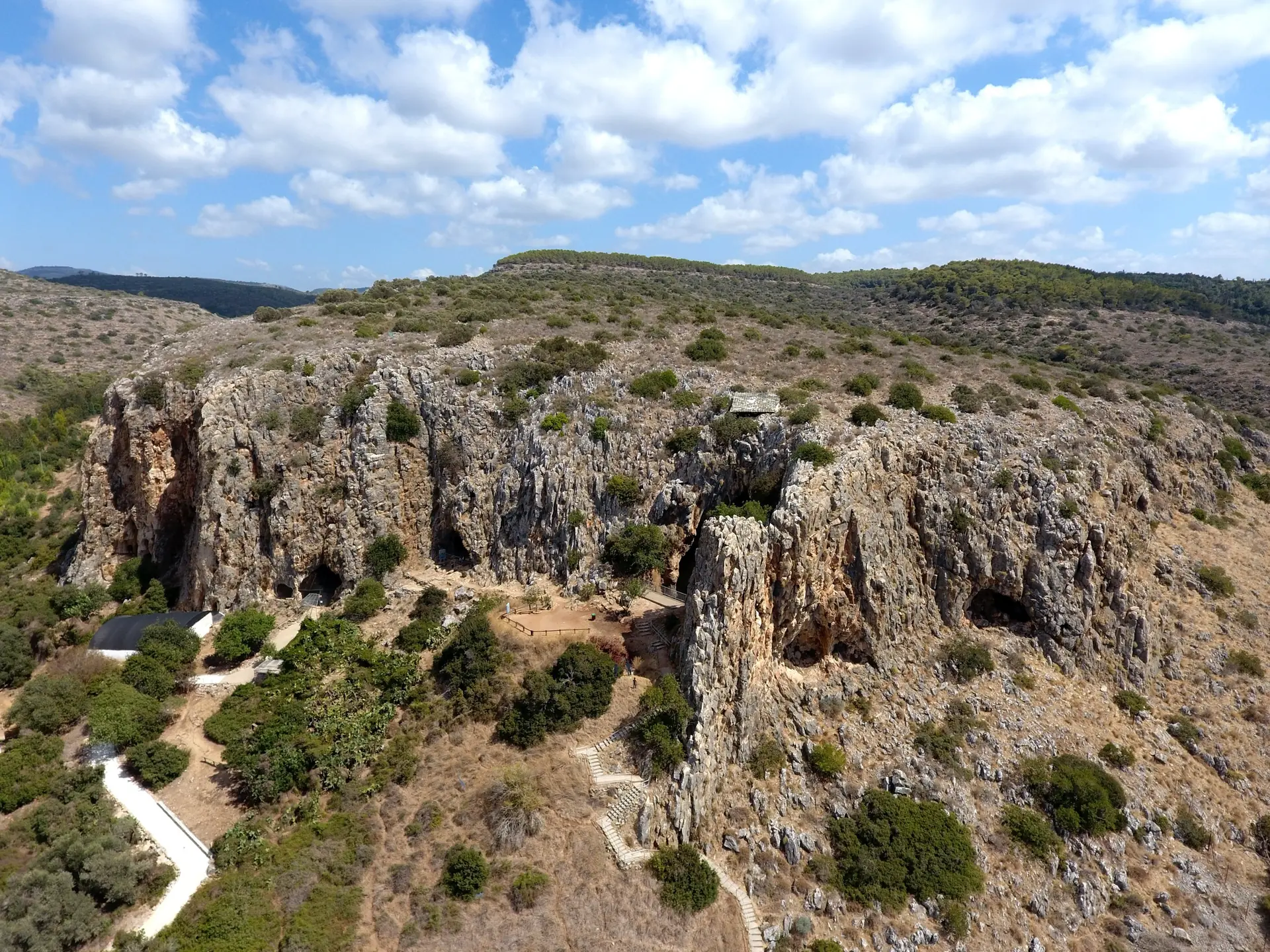
Long before writing and the stories of the Bible, the Levantine corridor saw the first humans to leave Africa pass through, then Neanderthals and Homo sapiens, before some of the earliest known villages took root there. This page brings together the prehistoric sites of Israel: those you can visit, and those worth knowing about even though you cannot go in.
🔎 Reading the dates
Ages are given in years before present. Where a date is given in BCE, add about 2,000 years to convert it.
Four prehistoric sites to visit
Each one has its own page, with access details, how long to allow for the visit and a button to add it to your itinerary.
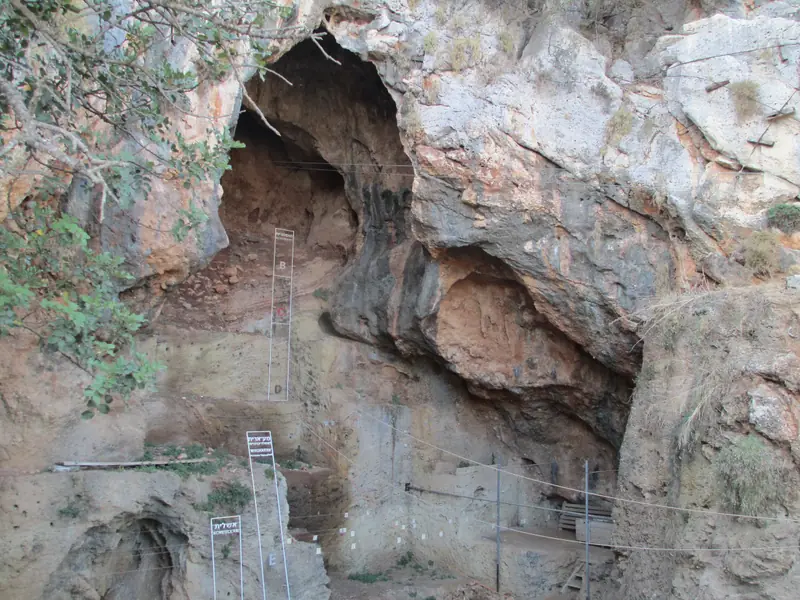
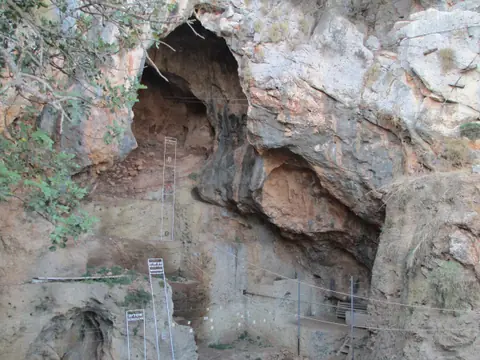 Western slope of Mount CarmelNahal Me'arot Caves: 500,000 Years of Human Evolution on Mount CarmelOn the western slope of Mount Carmel, four caves in a limestone cliff hold at least 500,000 years of human history, from Neanderthals to Natufian villages.View site →
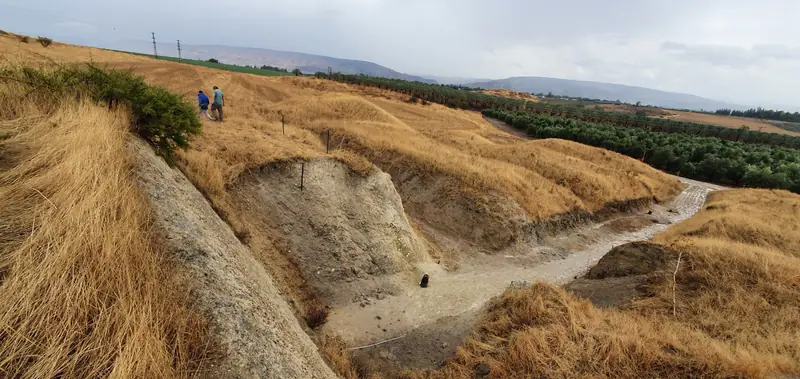
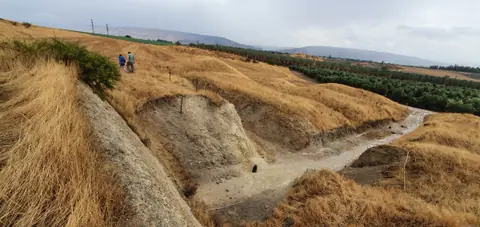 Jordan Valley, south of the Sea of Galilee'Ubeidiya: Among the Oldest Human Sites Outside AfricaSouth of the Sea of Galilee, very early humans lived on the shore of a vanished lake. Their stone tools are among the oldest known outside Africa.View site →
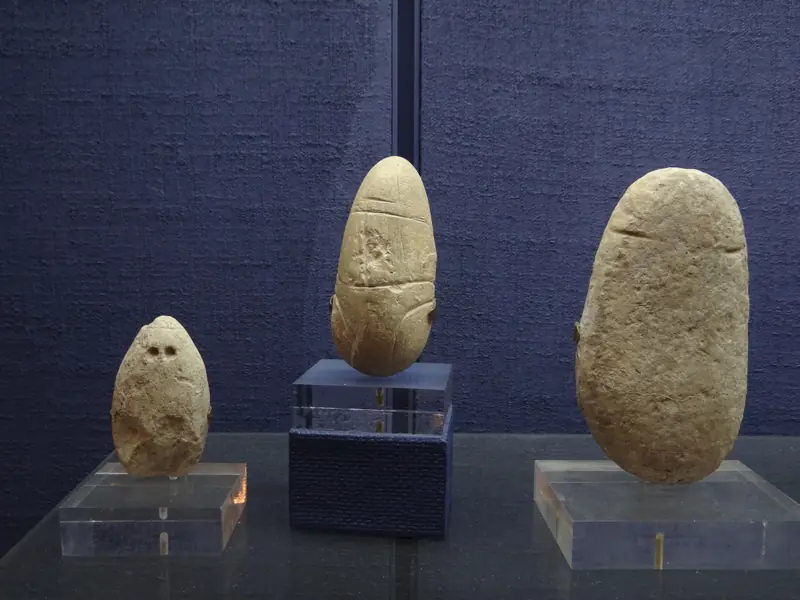
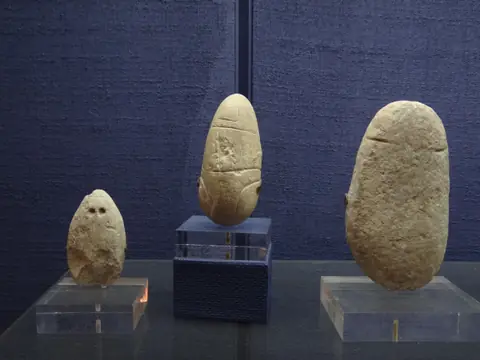 Jordan Valley, south of the Sea of GalileeSha'ar HaGolan: the Museum of Yarmukian CultureOn the banks of the Yarmuk, a village around 8,000 years old gave its name to a prehistoric culture. The kibbutz's small museum displays its pottery and figurines.View site →
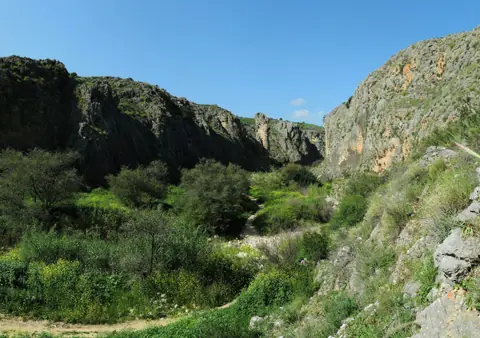 Galilee, north-west of the Sea of GalileeNahal Amud: The Valley of the Galilee NeanderthalsAbove the stream that runs down to the Sea of Galilee, a cave yielded Neanderthal skeletons. You can hike the valley, but you may not climb up to the cave.View site →
The Carmel caves are the most complete visit. 'Ubeidiya and the Sha'ar HaGolan museum, a few kilometres apart south of the Sea of Galilee, are easy to combine. At Nahal Amud you hike through the valley, but the cave itself is not accessible. Plan your itinerary with the Create my tour tool.
Five major sites closed to the public
These sites have contributed a great deal to research, but we have found no official information on visiting them.
Gesher Benot Ya'aqov: fire and cooked fish
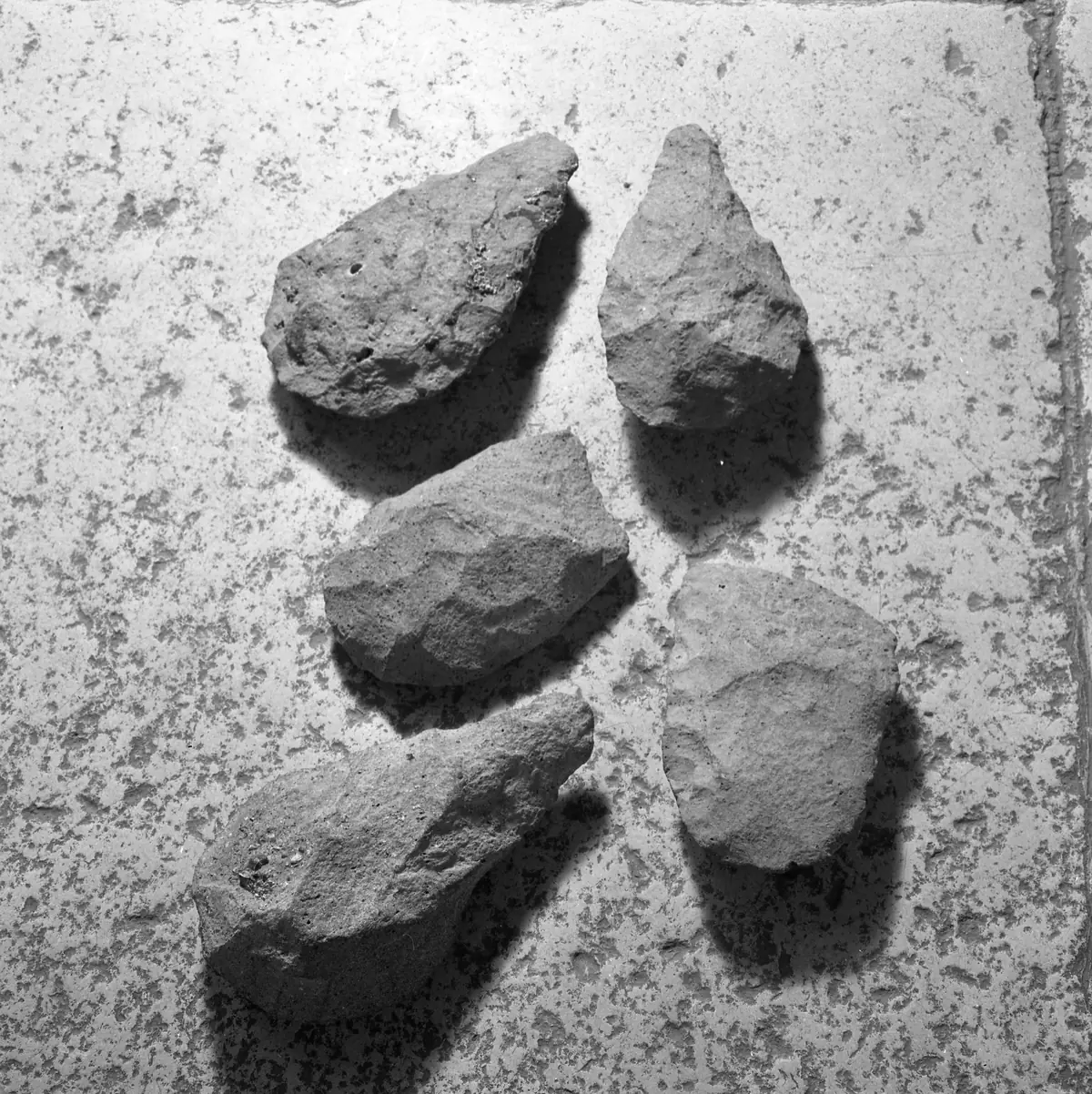
Upper Jordan Valley, about 780,000 years ago. Tools, plant and animal remains, and the oldest known evidence of cooking food: fish that had been cooked, according to a 2022 study. In 2025, the Parks Authority announced that the site would open to the public “in the future”.
Sources: Hebrew University of Jerusalem, 2022 · Israel Nature and Parks Authority, 2025 (in Hebrew)
Qesem Cave: a hearth at the centre of the cave
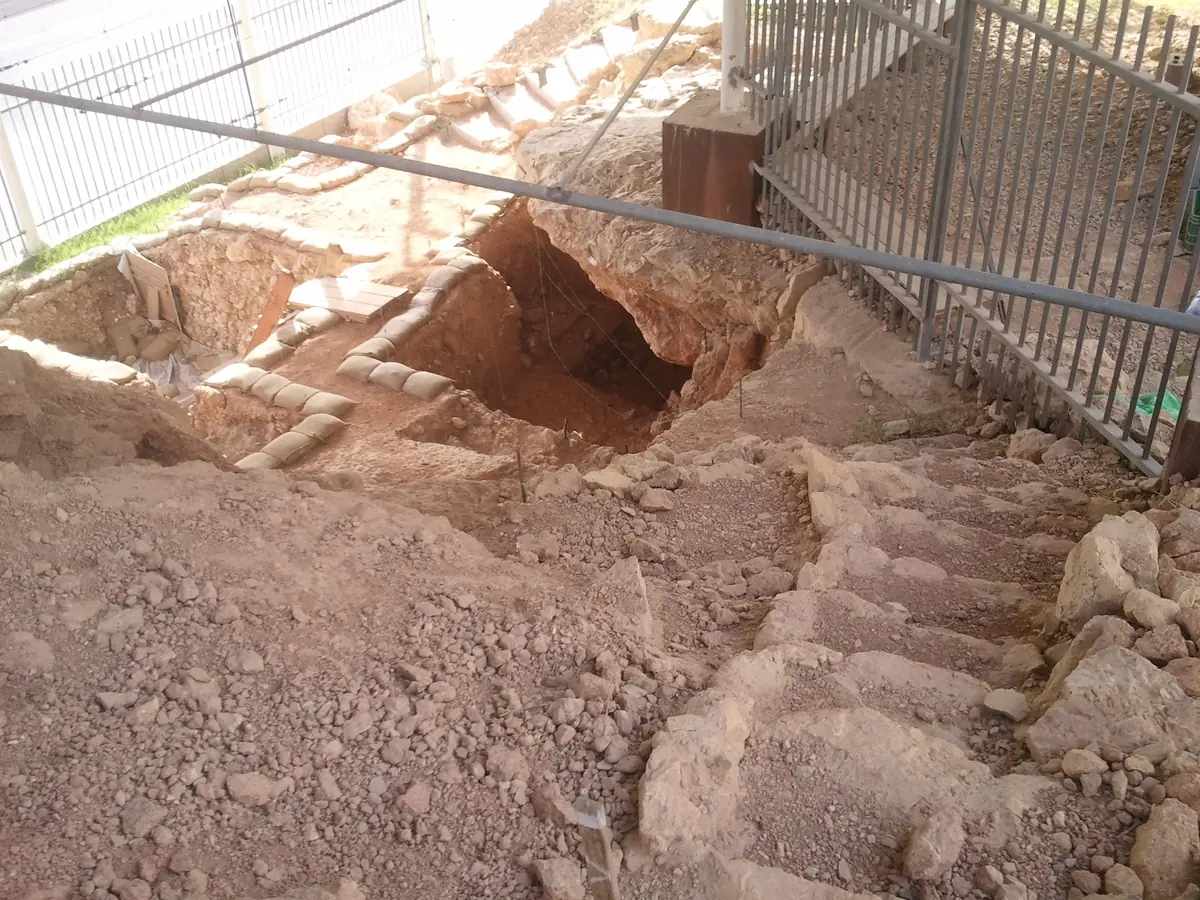
Near Rosh HaAyin, 400,000 to 220,000 years ago. A central hearth about 300,000 years old, stone tools and thousands of bones of hunted animals. A few human teeth have been found, but which species they belong to is still debated. The site is protected, roofed and fenced.
Source: Tel Aviv University
Qafzeh Cave: Homo sapiens and ochre
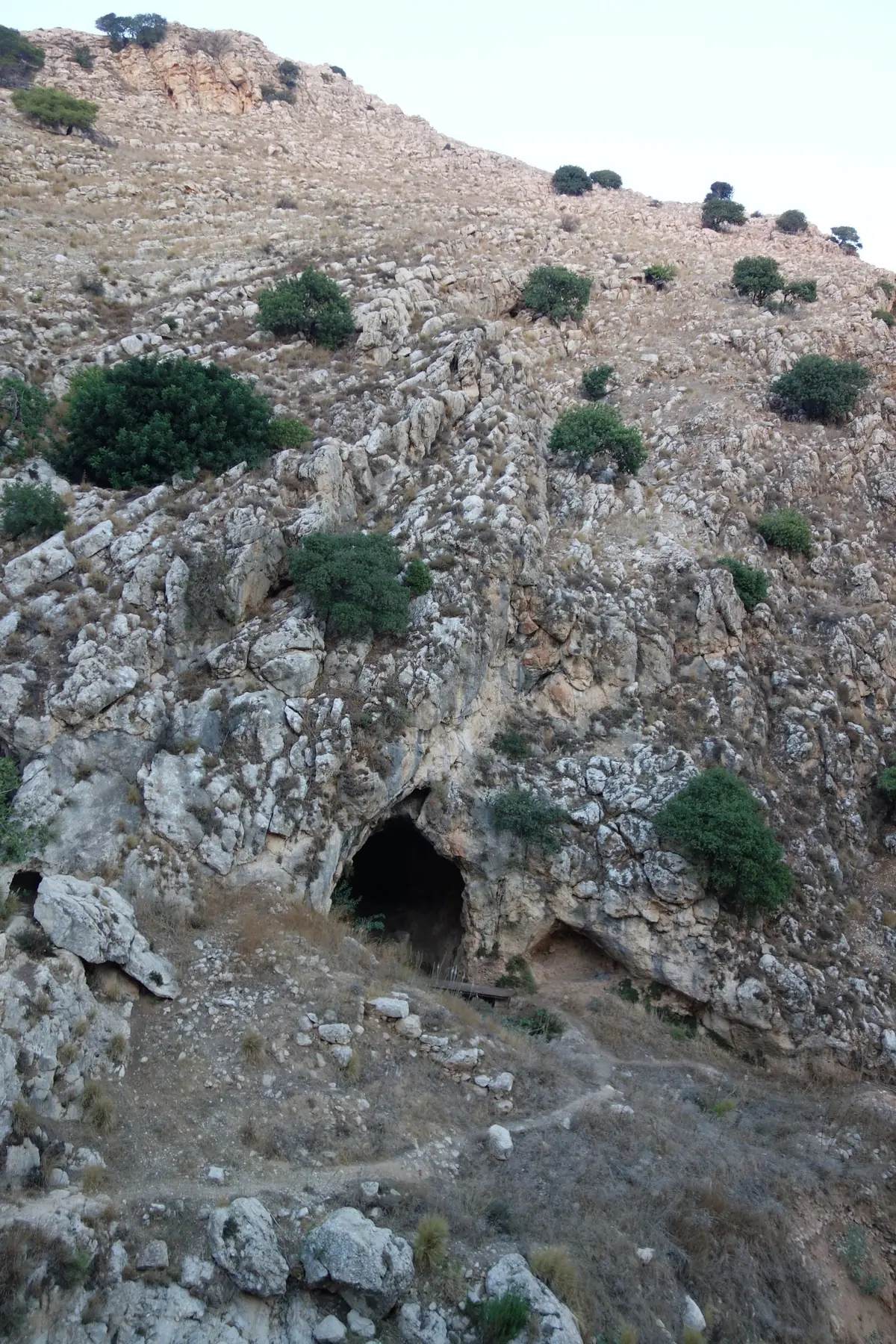
South of Nazareth, about 100,000 years ago. The remains of up to fifteen Homo sapiens and 71 pieces of red ochre, found near the bones. The Smithsonian sees them as the oldest known intentional burials and a ritual use of ochre: these are interpretations.
Source: Smithsonian Institution
Eynan-Mallaha: a village before farming
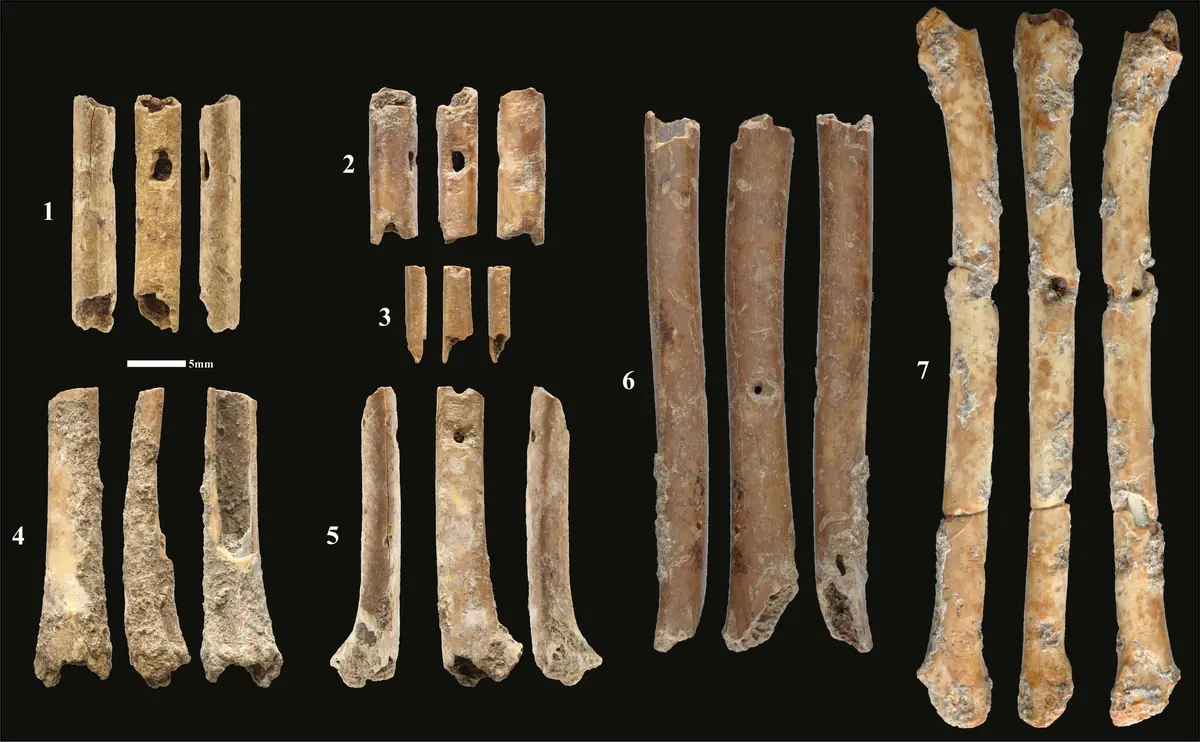
Hula Valley, between 12,500 and 9,700 BCE (about 14,500 to 11,700 years before present). Round houses and Natufian burials: hunter-gatherers settle in a village, some three millennia before farming replaced hunting and gathering. Settling down is not yet farming.
Source: French Ministry of Culture
Motza: a large Neolithic village
West of Jerusalem, about 9,000 years ago. The largest prehistoric settlement discovered in Israel according to the Antiquities Authority, with 2,000 to 3,000 inhabitants, alleys and courtyards. Not to be confused with the Iron Age temple at Tel Motza, some 6,000 years more recent.
Sources: ʿAtiqot 120, 2026 · Israel Antiquities Authority, 2019
Key dates, from oldest to most recent
- at least 1.9 million years — 'Ubeidiya, according to a 2026 study (1.2 to 1.6 million according to earlier estimates)
- about 780,000 years — Gesher Benot Ya'aqov: fire and cooking
- at least 500,000 years — first occupations of the Carmel caves
- 400,000 to 220,000 years — Qesem Cave
- about 100,000 years — Homo sapiens at Qafzeh and Skhul
- 70,000 to 50,000 years — Neanderthals of Amud Cave
- about 14,500 to 11,700 years — Natufian villages (Eynan, el-Wad on Mount Carmel)
- about 9,000 years — Motza, a large Neolithic village
- about 8,000 years — Sha'ar HaGolan, pottery and figurines
For what came next, the mound of Jericho and its Neolithic tower show the beginnings of village life on an open site.
Prehistory and the biblical narrative
Prehistory describes populations on the basis of dated remains; the Genesis account of origins does not place itself on a timeline. So we do not try to match these sites with Adam, Eve or Noah. The places that Jewish and Christian traditions associate with Adam and Eve are presented on our page The Origins.
Sources and references
- UNESCO, “Sites of Human Evolution at Mount Carmel: The Nahal Me'arot / Wadi el-Mughara Caves”
- A. Matmon et al., Quaternary Science Reviews 378, 2026: the age of the Acheulean site of 'Ubeidiya
- Hebrew University of Jerusalem, press release on 'Ubeidiya, EurekAlert, 19 February 2026
- Hebrew University of Jerusalem, cooked fish at Gesher Benot Ya'aqov, November 2022
- Tel Aviv University, Qesem Cave
- Smithsonian Institution, “Qafzeh: Oldest Intentional Burial”
- French Ministry of Culture, French archaeology abroad, “Eynan-Mallaha”
- D. Yegorov, A. Eirikh-Rose and H. Khalaily, “Walking through the Alleys of Motza”, ʿAtiqot 120, 2026
- Museum of Yarmukian Culture, Sha'ar HaGolan
- Israel Nature and Parks Authority, Amud Stream Nature Reserve
Frequently asked questions about prehistory in Israel
Where can you see prehistory in Israel?
The most complete visit is the Nahal Me'arot caves on Mount Carmel, a UNESCO World Heritage Site. You can also see the 'Ubeidiya site, which is free to access, the Museum of Yarmukian Culture at Sha'ar HaGolan, and go hiking at Nahal Amud.
What is the oldest prehistoric site in Israel?
'Ubeidiya, south of the Sea of Galilee, is among the oldest known sites of humans outside Africa. A 2026 study proposes at least 1.9 million years, compared with 1.2 to 1.6 million according to earlier estimates; this revised date still needs to be confirmed.
Did Neanderthals and Homo sapiens live in Israel?
Yes. Neanderthal remains have been found notably at Amud and at Tabun on Mount Carmel, and Homo sapiens remains about 100,000 years old at Qafzeh and Skhul.
Can you visit Amud Cave?
No. You can hike in the Nahal Amud reserve, but according to the Parks Authority there is no path leading to the cave and visitors may not climb up to it.
Are these sites connected with Adam and Eve?
No. They document the prehistory of the region, without making it possible to identify the figures of Genesis. The traditions about Adam and Eve are presented on our page The Origins.
Places to visit
Nahal Me'arot Caves: 500,000 Years of Human Evolution on Mount Carmel
On the western slope of Mount Carmel, four caves in a limestone cliff hold at least 500,000 years of human history, from Neanderthals to Natufian villages.
'Ubeidiya: Among the Oldest Human Sites Outside Africa
South of the Sea of Galilee, very early humans lived on the shore of a vanished lake. Their stone tools are among the oldest known outside Africa.
Sha'ar HaGolan: the Museum of Yarmukian Culture
On the banks of the Yarmuk, a village around 8,000 years old gave its name to a prehistoric culture. The kibbutz's small museum displays its pottery and figurines.
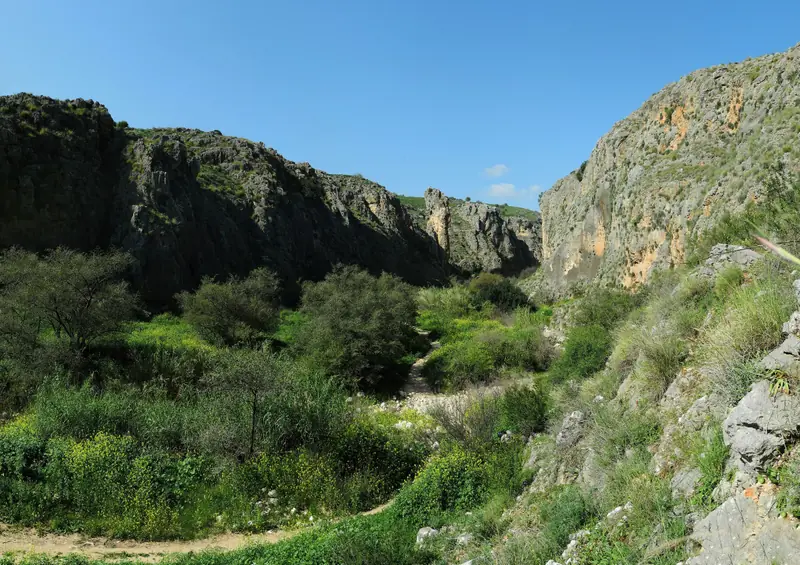
Nahal Amud: The Valley of the Galilee Neanderthals
Above the stream that runs down to the Sea of Galilee, a cave yielded Neanderthal skeletons. You can hike the valley, but you may not climb up to the cave.
Read next

The Flood Around the World: Ancient Stories and Archaeological Witnesses
India, China, Greece, the Americas, Mesopotamia: flood stories around the world and three ancient tablets that record them, set beside the story of Noah.

Where Was the Garden of Eden? The Four Rivers, Mesopotamia and Hebron
Tigris, Euphrates, the Persian Gulf or Hebron? What Genesis says about the Garden of Eden, what scholars suggest, and the traditions that link it to Israel.