 Story 4 · Joshua's conquestJudea and Samaria (Area A)
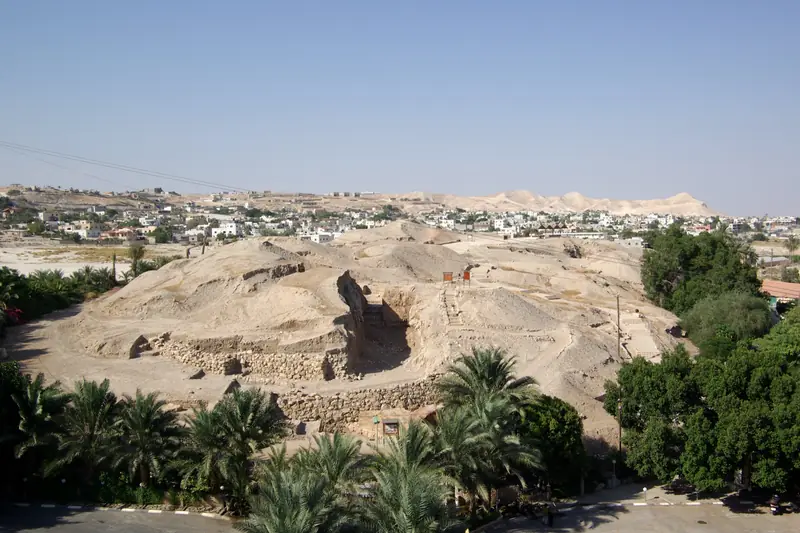
Jericho
The first city faced in Canaan: Rahab, the spies and the fall of the walls.
On site: Tell es-Sultan, its 10,000-year-old Neolithic tower, Kenyon's trench and the spring of Ein es-Sultan.
1500–1200 BCE
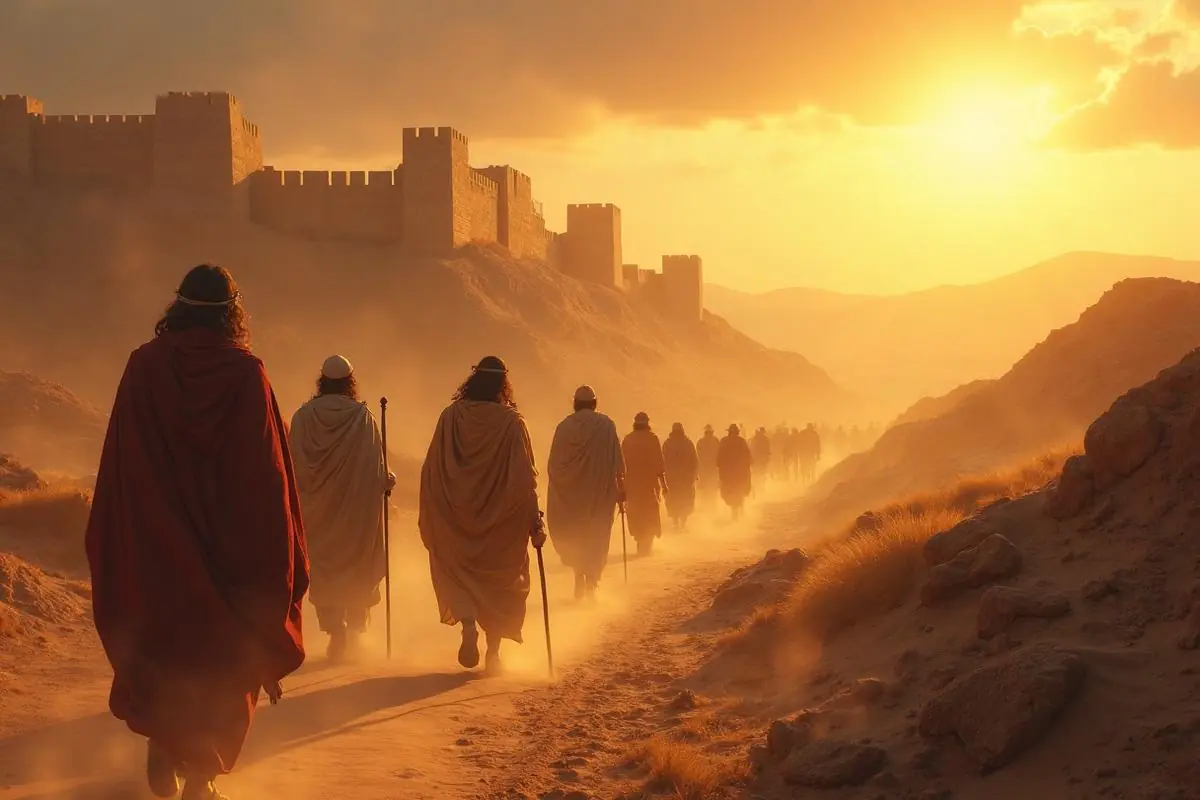
From the Egypt of the Ramesside pharaohs to Sinai, from Transjordan to Canaan: what the text tells, what excavations show and the places you can visit today.
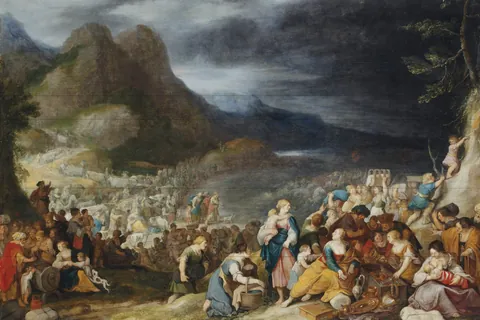
Credit: Hans Jordaens III · public domain · Wikimedia Commons
Period 3 of 10 · Old Testament
The story crosses three countries. The Jordan Valley, Samaria, the Shephelah and Galilee can be visited from Israel and added to your tour in one click; Sinai, Mount Nebo and, in the far south, Timna Park round off the journey.
Story 4 · Joshua's conquestJudea and Samaria (Area A)The first city faced in Canaan: Rahab, the spies and the fall of the walls.
On site: Tell es-Sultan, its 10,000-year-old Neolithic tower, Kenyon's trench and the spring of Ein es-Sultan.
 Story 4 · Joshua's conquest
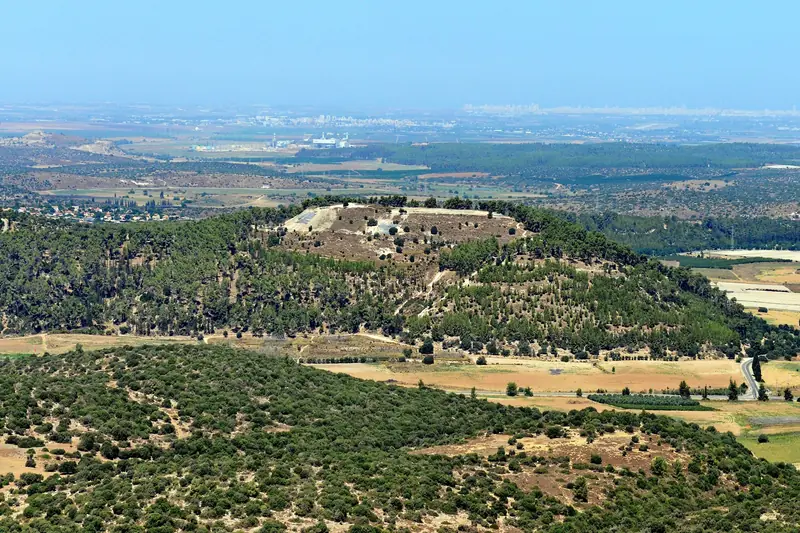
The end of the pursuit of the Amorite kings, where 'great stones' fall from heaven 'unto Azekah'.
On site: The lookout over the Elah Valley, the walk around the summit and, in season, the Lautenschläger expedition's excavations.
 Story 4 · Joshua's conquest
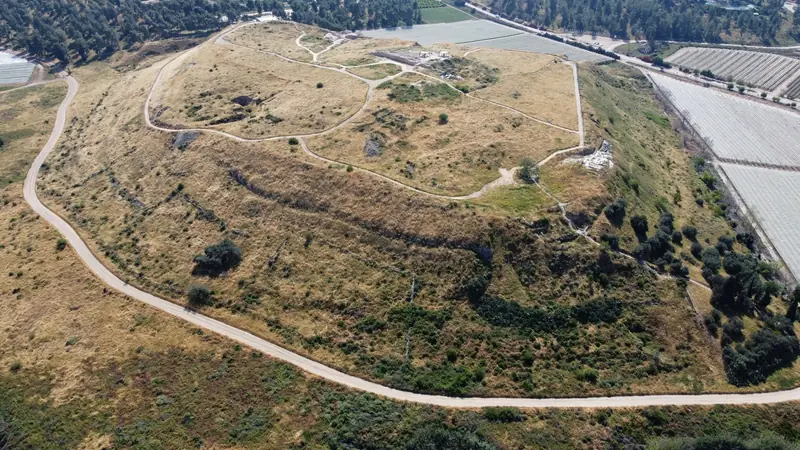
The Canaanite royal city taken 'on the second day' by Joshua; its last Canaanite city actually burned after 1200 BCE.
On site: The mound and its Canaanite temples explained by panels, the Assyrian siege ramp and the visitor centre film.
 Story 5 · Canaanite city-states
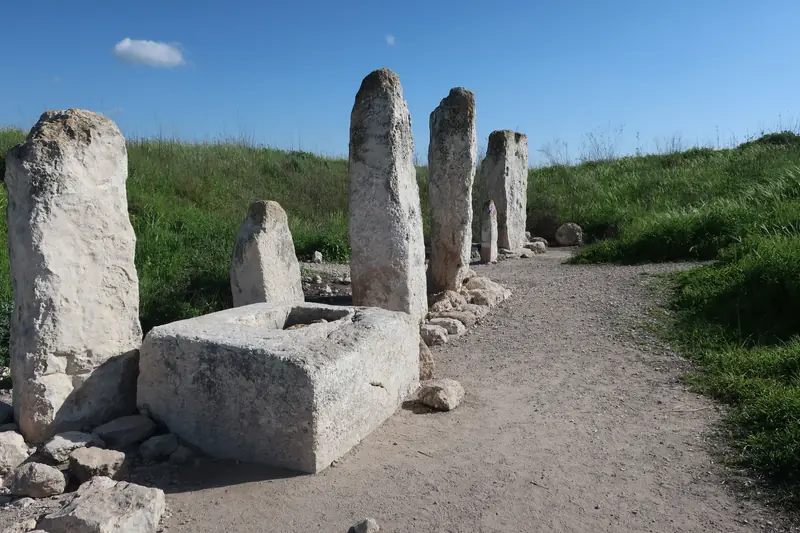
King Horam defeated by Joshua, but the Canaanites never driven out: the very example of the Canaan that remained.
On site: The ten standing stones, the Canaanite gate, the water system and the six-chambered gate.
 Story 4 · Joshua's conquest
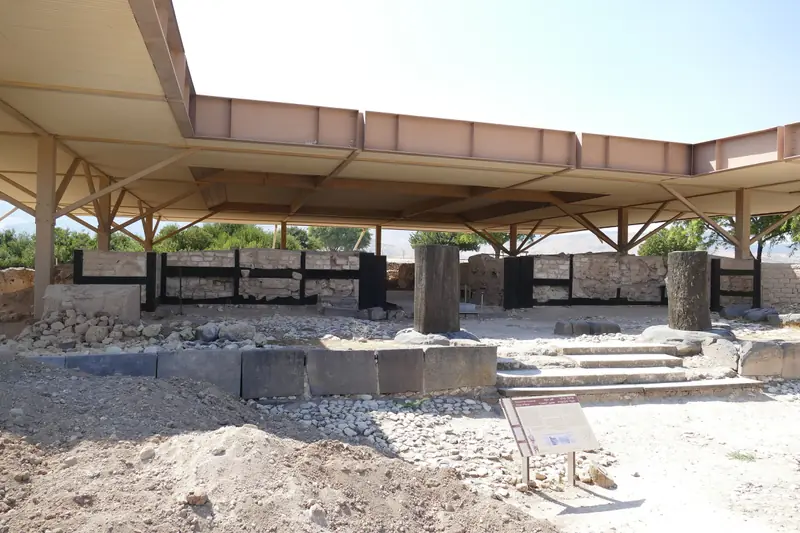
'The head of all those kingdoms', the only city burned by Joshua in the north; the palace did burn in the 13th century.
On site: The Canaanite palace destroyed by fire, the six-chambered gate and the Iron Age water system.
 Story 5 · Canaanite city-states
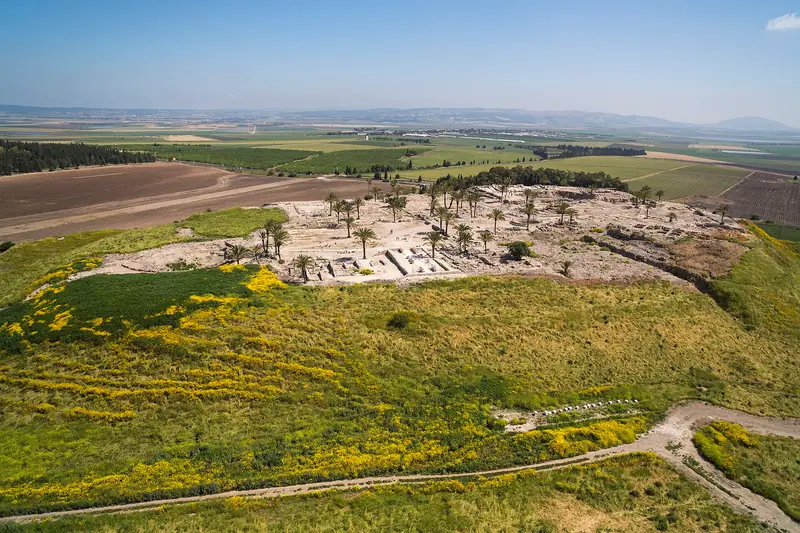
A Canaanite city under Egyptian control, whose king Joshua defeats, though Manasseh never drives out its people.
On site: The sacred area and its round altar, the Canaanite gate, the 'stables', the water system and the view over the Jezreel Valley.
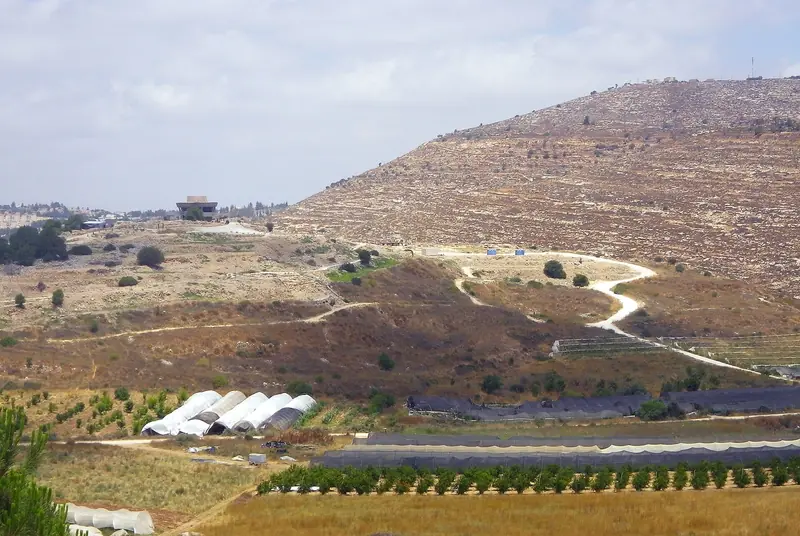 Story 4 · Joshua's conquestJudea and Samaria (Area C)
With the land subdued, the congregation sets up the Tent of Meeting here and casts lots for the tribal territories.
On site: The mound and its excavation areas, the Middle Bronze Age ramparts, the northern terrace and the Seer's Tower show.
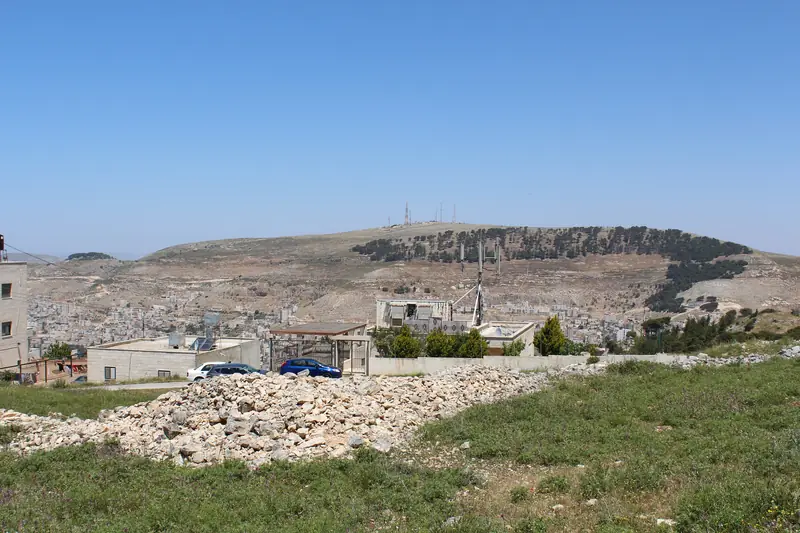 Story 4 · Joshua's conquestCoordination advised
The altar on Mount Ebal, the Law read facing Gerizim and the covenant renewed by Joshua at Shechem.
On site: The Tell Balata archaeological park, its ramparts and fortress temple, between Mount Ebal and Mount Gerizim.
Plan my tour
8 stops in Israel, about 13 hours of visits in total. The tour is planned day by day, with driving times.
Visit these places: build my tour (8 stops) →Or add the places one by one with the "Add" button.
Sample itinerary
A suggestion to take as it is or to adapt: the planner works out driving times and spreads the stops day by day.
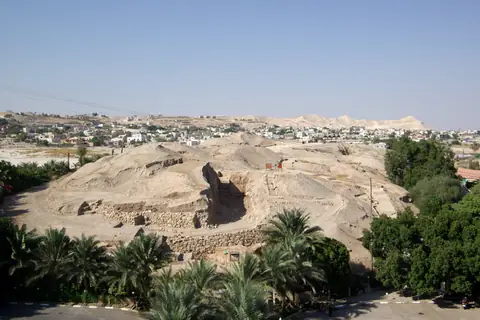 Jericho⏱ 90 min
 Shiloh⏱ 120 min
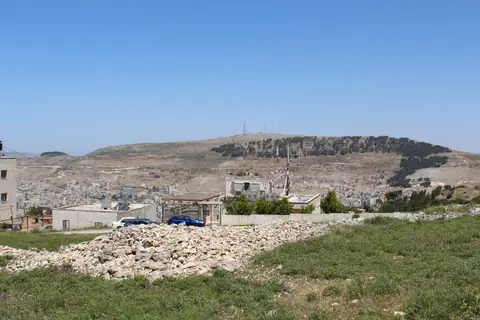 Shechem — Joshua⏱ 90 min
The mound of Jericho and its Neolithic tower in the morning, then Shiloh and the Tent of Meeting, and Shechem between Ebal and Gerizim (coordination advised).
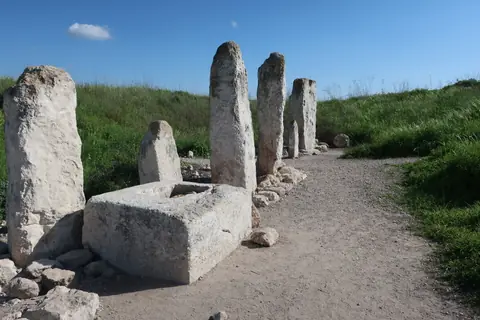 Tel Gezer⏱ 90 min
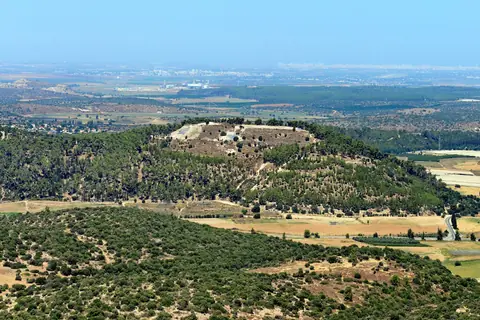 Tel Azekah⏱ 60 min
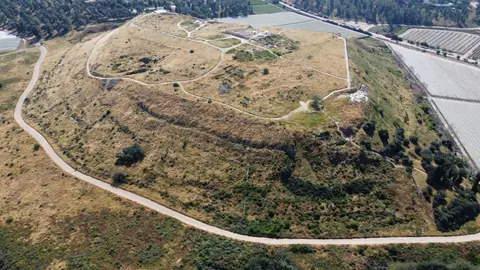 Tel Lachish⏱ 90 min
Tel Gezer and its standing stones, the Tel Azekah lookout over the Elah Valley, then Tel Lachish and its siege ramp.
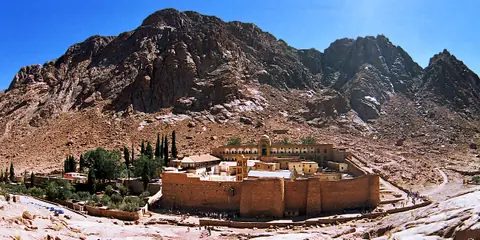 Saint Catherine, South Sinai (Egypt)Mount SinaiThe mountain where tradition places the burning bush and the giving of the Ten Commandments.View site →
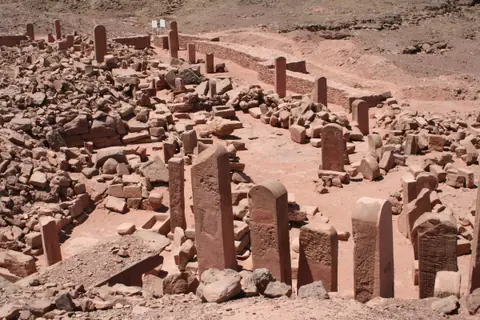 South-western Sinai, EgyptSerabit el-KhadimEgyptian turquoise mines and their Proto-Sinaitic inscriptions: the desert of the narrative, with no proven link to Moses.View site →
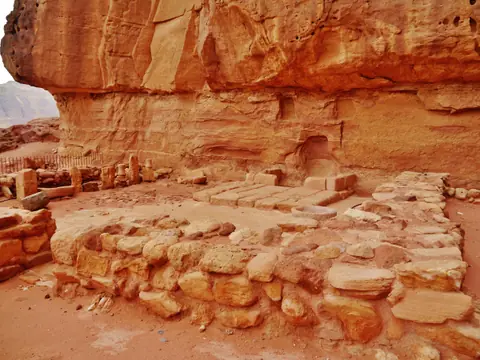 Arava Valley, north of EilatTimnaThe copper mines of Ramesside Egypt and a small copper serpent: the setting of the desert, not a proven stage of the Exodus.View site →
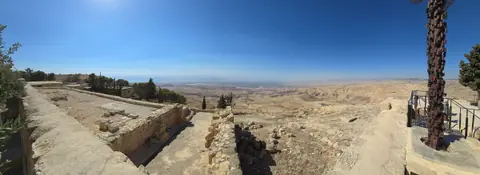
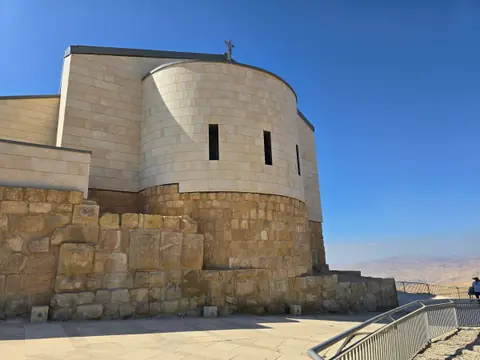 Madaba, JordanMount NeboThe summit from which Moses views the Promised Land before dying in the land of Moab.View site →
The Exodus in the Bible, the departure from Egypt under the leadership of Moses, is the founding event of the Hebrew people: the book of Exodus recounts the bondage, the plagues of Egypt, the crossing of the sea and the giving of the Law at Sinai; Numbers and Deuteronomy, the march through the wilderness to the plains of Moab; the book of Joshua, the conquest of Canaan. This page follows the story step by step, giving for each place the biblical text (in English and in the original Hebrew), what excavations have actually uncovered and what you can see on the ground. It is the third stage of the Old Testament timeline, between the Patriarchs and the Judges.
The story finds echoes in the discoveries of the ancient Near East, but those echoes remain indirect: no Egyptian source mentions Moses or a mass departure of Hebrew slaves, and the excavations at Jericho and Ai have sparked long debates. We therefore always distinguish three things: what the text says, what tradition holds (often much later) and what archaeology shows. What comes before, from Abraham to Joseph, is covered in the period of the Patriarchs.
🔎 A note on dates
The range "1500–1200 BCE" is an editorial reference point: it covers the Late Bronze Age, the period in which most scholars who grant the narrative a historical basis place the Exodus. It is not an established date for the event. Several places presented here carry the story into the early Iron Age (after 1200: Shiloh, Mount Ebal, the hill-country villages), and many of the visible monuments are much later: the Byzantine basilica on Mount Nebo, the sixth-century St Catherine's Monastery, Iron Age fortresses. We point this out at every stage.
The map of places to visit, at the top of the page, shows the places that have a visitor page. It does not trace the route of the Exodus, which has not been established.
 1
Exodus 1–15
Moses in Egypt
Bondage, the ten plagues, the departure from Egypt and the crossing of the Sea of Reeds.
📍 No site in Israel
2
Exodus 19–20; Numbers 13–21
Sinai and the wilderness
Forty years in the wilderness: the covenant at Sinai, the spies of Kadesh and the bronze serpent.
📍 3 places to visit
1
Exodus 1–15
Moses in Egypt
Bondage, the ten plagues, the departure from Egypt and the crossing of the Sea of Reeds.
📍 No site in Israel
2
Exodus 19–20; Numbers 13–21
Sinai and the wilderness
Forty years in the wilderness: the covenant at Sinai, the spies of Kadesh and the bronze serpent.
📍 3 places to visit
 3
Numbers 20–24; Deuteronomy 34
Moab and Mount Nebo
The death of Aaron, Sihon and Balaam, then Moses' last view of the promised land.
📍 1 place to visit
4
Joshua 3–24
Joshua's conquest
The Jordan, the walls of Jericho, Ai, Gibeon, the Shephelah, Hazor, then Shiloh and Shechem.
📍 7 places to visit
3
Numbers 20–24; Deuteronomy 34
Moab and Mount Nebo
The death of Aaron, Sihon and Balaam, then Moses' last view of the promised land.
📍 1 place to visit
4
Joshua 3–24
Joshua's conquest
The Jordan, the walls of Jericho, Ai, Gibeon, the Shephelah, Hazor, then Shiloh and Shechem.
📍 7 places to visit
 5
Joshua 16–17; Judges 1
Canaanite city-states
A mosaic of city-states under Egyptian control, where many Canaanites remain.
📍 2 places to visit
5
Joshua 16–17; Judges 1
Canaanite city-states
A mosaic of city-states under Egyptian control, where many Canaanites remain.
📍 2 places to visit
Story 1 · Exodus 1–15
"The LORD shall fight for you, and ye shall hold your peace."
Exodus 14:14 (KJV)
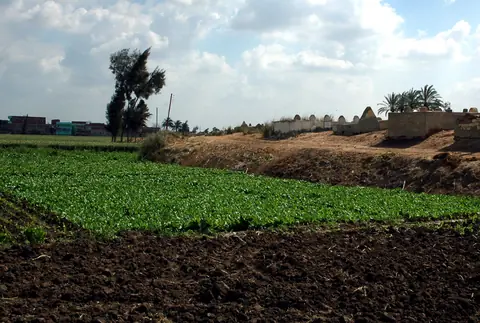
No site to visit for this story: Pi-Ramesses, Avaris and Pithom lie beneath fields in Egypt, and the place where the sea was crossed has not been established. The Merneptah Stele can be seen in the Egyptian Museum in Cairo.
The book of Exodus opens with a change of reign: after Joseph's death, a pharaoh who did not know him enslaves Jacob's descendants. The narrative names two cities built by their labour, Pithom and Raamses, then describes the birth of Moses, the ten plagues of Egypt and the departure from the land. The place names of the eastern Delta are the main point of contact between the text and Egyptian archaeology.
 Egypt, eastern DeltaPi-Ramesses (Qantir)No regular public visits confirmed; to be arranged with a specialistPage coming soon
In the Bible (Exodus 1:11; 12:37; Numbers 33:3). Raamses is one of the two store cities built by the Hebrews, and later the starting point of the departure from Egypt, towards Succoth.
"And the children of Israel journeyed from Rameses to Succoth, about six hundred thousand on foot that were men, beside children."
Exodus 12:37 (KJV)
וַיִּסְעוּ בְנֵי־יִשְׂרָאֵל מֵרַעְמְסֵס סֻכֹּתָה כְּשֵׁשׁ־מֵאוֹת אֶלֶף רַגְלִי הַגְּבָרִים לְבַד מִטָּף
שמות יב, לז
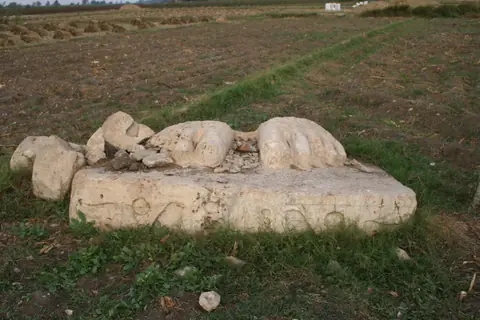
Archaeology. Pi-Ramesses, "the house of Ramesses", the Delta capital founded by Ramesses II in the 13th century BCE, has been located at Qantir, next to Tell el-Dab'a. The mission of the Pelizaeus-Museum in Hildesheim has been excavating there since 1980; geophysical survey has revealed the plan of a vast city, with palaces, bronze workshops and chariot stables. The city's name is often put forward as an argument for dating the Exodus to the 13th century; it may also reflect the time when the narrative was written down. Abandoned towards the end of the second millennium, the city served as a quarry: many of its monuments were reused at Tanis, which is therefore not Pi-Ramesses.
What to see today. Almost nothing still standing: the site lies beneath fields and villages. Statues and objects from Qantir are on display in Egyptian museums; at Tanis (San el-Hagar), which is open to visitors, you can see blocks and colossi of Ramesses II brought from Pi-Ramesses.
 Egypt, eastern DeltaAvaris (Tell el-Dab'a)Excavation site; current access for visitors not confirmedPage coming soon
In the Bible (Exodus 1:7–10). Jacob's descendants multiply in the land of Goshen, until they alarm a new king of Egypt.
"Now there arose up a new king over Egypt, which knew not Joseph."
Exodus 1:8 (KJV)
וַיָּקָם מֶלֶךְ־חָדָשׁ עַל־מִצְרָיִם אֲשֶׁר לֹא־יָדַע אֶת־יוֹסֵף
שמות א, ח
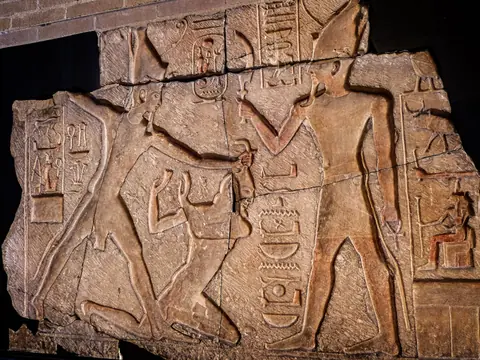
Archaeology. Tell el-Dab'a, excavated since 1966 by the Austrian Archaeological Institute under the direction of Manfred Bietak, is ancient Avaris. The site has revealed a population of Levantine origin settled in the Delta from the Middle Kingdom onwards, and then the capital of the Hyksos, a dynasty of Canaanite origin driven out by Pharaoh Ahmose around 1530 BCE. These discoveries show that Semites lived in large numbers in the eastern Delta; they prove neither the presence of Joseph nor that of Moses. Some historians think that the memory of the expulsion of the Hyksos may have fed the memory of the Exodus. For the Egyptian background of Joseph, see the period of the Patriarchs.
What to see today. A landscape of fields and excavated mounds; the finds are in Egyptian museums. Avaris and Qantir are neighbours, but they are two distinct sites.
 Egypt, between the Delta and IsmailiaPithom (Wadi Tumilat)Excavation sites; regular tourist access not confirmedPage coming soon
In the Bible (Exodus 1:11). Pithom is the second store city built by the Hebrews for Pharaoh.
"Therefore they did set over them taskmasters to afflict them with their burdens. And they built for Pharaoh treasure cities, Pithom and Raamses."
Exodus 1:11 (KJV)
וַיָּשִׂימוּ עָלָיו שָׂרֵי מִסִּים לְמַעַן עַנֹּתוֹ בְּסִבְלֹתָם וַיִּבֶן עָרֵי מִסְכְּנוֹת לְפַרְעֹה אֶת־פִּתֹם וְאֶת־רַעַמְסֵס
שמות א, יא
Archaeology. The Egyptian name Per-Atum, "domain of the god Atum", refers to a locality in the Wadi Tumilat, the corridor linking the Delta to the eastern desert. Two sites compete for the identification. Tell el-Maskhuta, where Édouard Naville believed he had found Pithom in 1883, has yielded a settlement of the Hyksos period and then a town founded around 600 BCE; it appears to have been unoccupied in the New Kingdom. Tell el-Retaba, excavated since 2007 by a Polish-Slovak mission, has revealed a New Kingdom fortress, from Ramesses II to Ramesses III. Around 1200 BCE, Papyrus Anastasi VI reports Shasu herders from Edom being allowed to water their flocks at the pools of Per-Atum: a scene that sheds light on the setting of the narrative. These two sites are not two certain biblical Pithoms, but two hypotheses.
What to see today. Excavation mounds with few visitor facilities, near Ismailia.
Between the birth of Moses and the departure from Egypt, the book of Exodus places the burning bush, the ten plagues and the first Passover (Exodus 3–12). Then comes the crossing of the sea, which the Hebrew text calls yam suph, the "Sea of Reeds", rendered "Red Sea" as early as the Greek Septuagint. Many locations have been proposed for Succoth, Etham, Pi-hahiroth and Baal-zephon, on the Bitter Lakes, Lake Timsah or the Mediterranean coast; none is established archaeologically, so we do not suggest a "crossing site" to visit.
יְהוָה יִלָּחֵם לָכֶם וְאַתֶּם תַּחֲרִישׁוּן
שמות יד, יד
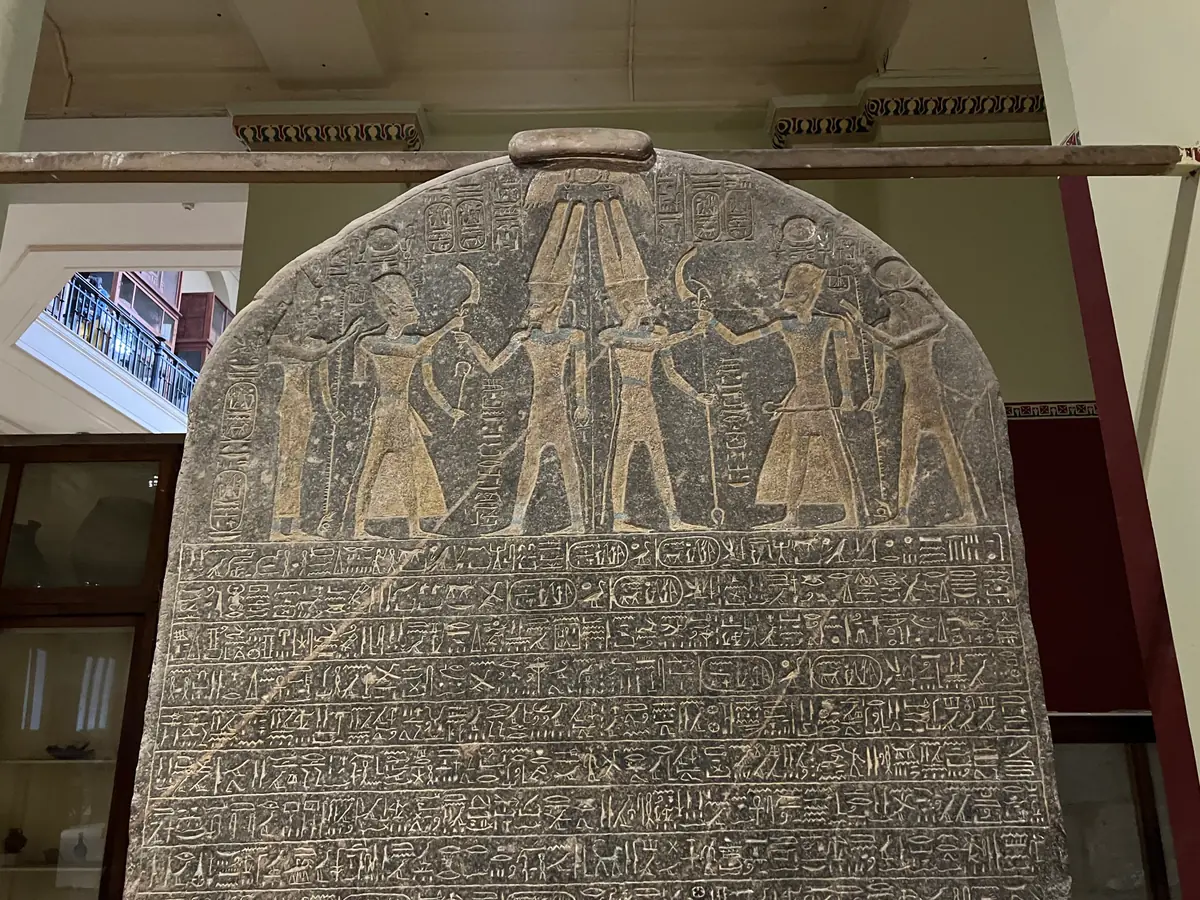
Set up around 1208 BCE by Merneptah, son and successor of Ramesses II, this granite stele celebrates his victories. It contains the oldest known mention of Israel outside the Bible: "Israel is laid waste, his seed is not." The hieroglyphic sign accompanying the name denotes a people rather than a city or territory: a group called Israel was therefore already living in Canaan by the end of the 13th century. The same stele names Ashkelon and Gezer. Found at Thebes by Flinders Petrie in 1896, it is kept in the Egyptian Museum in Cairo.
Two main dates compete. The "early date", around 1446 BCE, rests on 1 Kings 6:1, which counts 480 years between the Exodus and the building of Solomon's Temple. The "late date", in the 13th century under Ramesses II, rests on the mention of the city of Raamses and on the appearance of Israelite villages in the hills of Canaan around 1200. Many historians, finally, think that the narrative, written down much later, preserves the memory of smaller groups who came out of Egypt. For the Egyptian background of the Joseph stories, see our article Joseph and Imhotep.
Story 2 · Exodus 19–20; Numbers 13–21
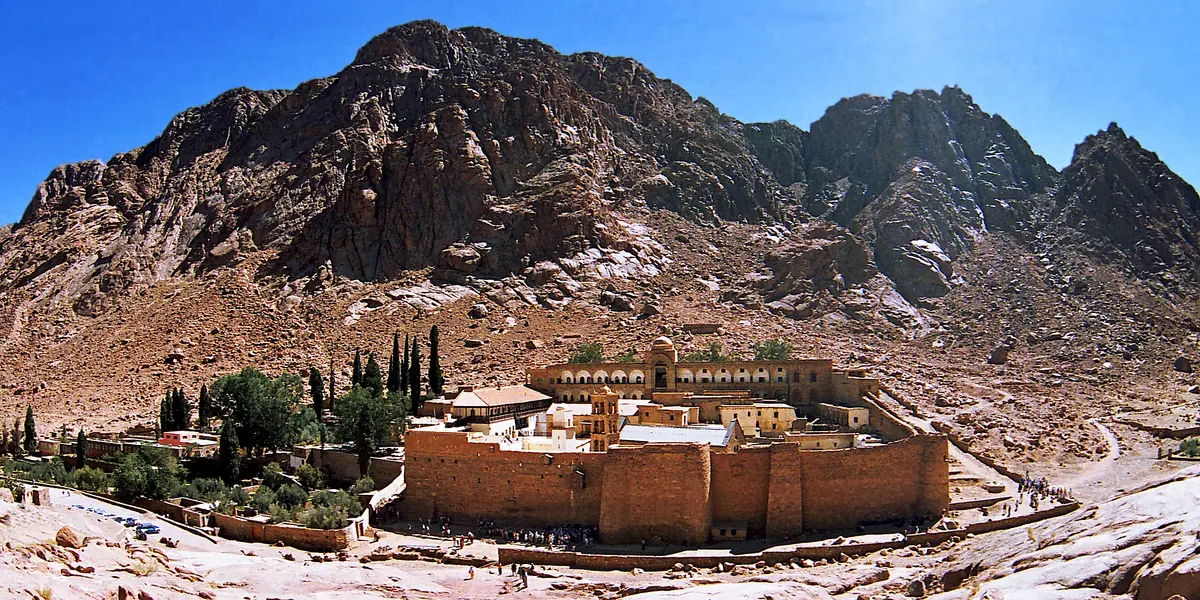
"And the LORD came down upon mount Sinai, on the top of the mount: and the LORD called Moses up to the top of the mount; and Moses went up."
Exodus 19:20 (KJV)
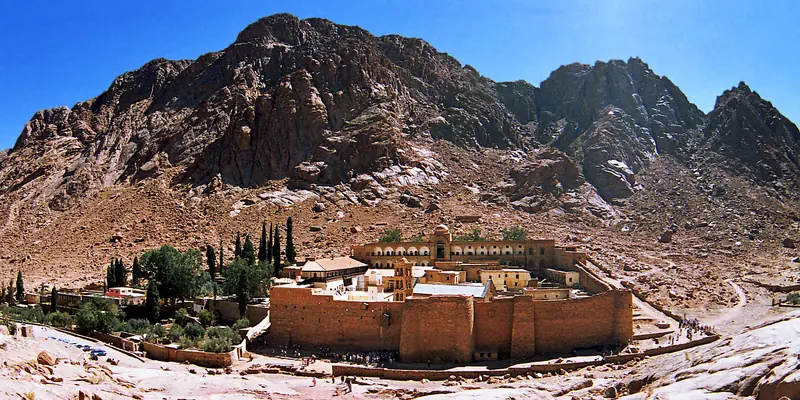 Story 2 · Sinai and the wilderness
The mountain where tradition places the burning bush and the giving of the Ten Commandments.
On site: Jebel Musa (2,285 m) and its summit at sunrise, St Catherine's Monastery fortified in the 6th century.
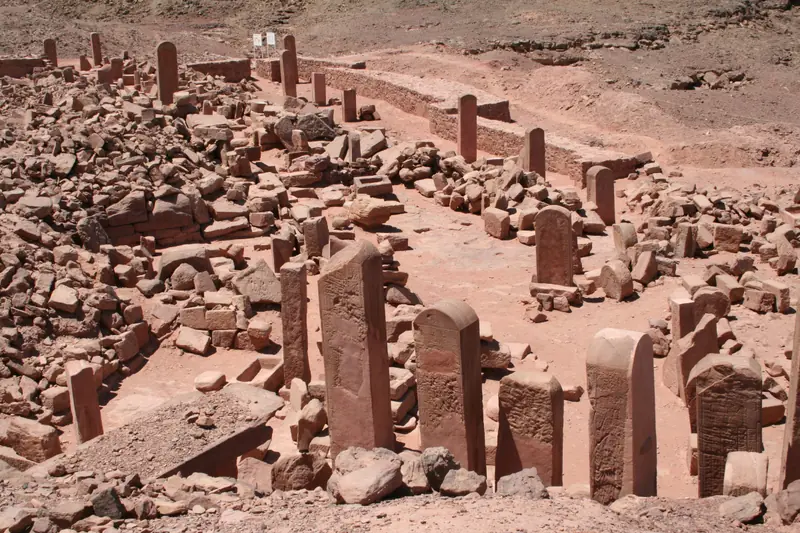 Story 2 · Sinai and the wilderness
Egyptian turquoise mines and their Proto-Sinaitic inscriptions: the desert of the narrative, with no proven link to Moses.
On site: The ruins of the Temple of Hathor on its plateau, the standing stelae and the mine galleries.
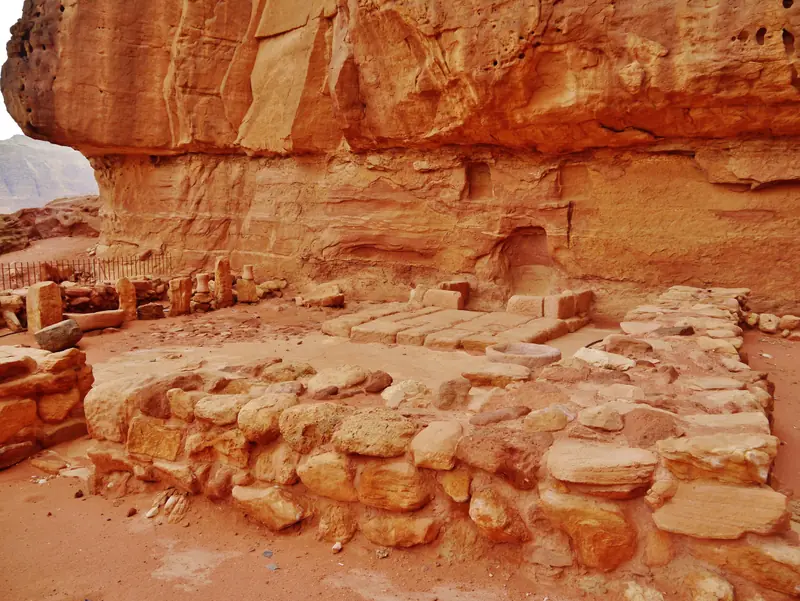 Story 2 · Sinai and the wilderness
The copper mines of Ramesside Egypt and a small copper serpent: the setting of the desert, not a proven stage of the Exodus.
On site: Solomon's Pillars, the Temple of Hathor, the chariot engravings and the modern reconstruction of the Tabernacle.
After crossing the sea, the Israelites march for forty years through the wilderness. The high point of the story is the covenant at Sinai, where Moses receives the Ten Commandments, followed by the building of the Tabernacle, the portable sanctuary that travels with the people. The stages of the narrative (Marah, Elim, Rephidim, Sinai, Kadesh) are hard to locate: surveys of Sinai have found traces of nomadic occupation from various periods, but no encampment that can be securely attributed to a large Late Bronze Age population. We must therefore distinguish the places of tradition (Jebel Musa, Kadesh) from the context sites (Timna, Serabit el-Khadim), which shed light on the world of the desert without being proven stages of Moses' journey.
Egyptian texts shed light on the world of the nomads. In the 14th century BCE, a geographical list of Amenhotep III carved in the temple of Soleb, in Sudan, mentions a "land of the Shasu of Yhw", often linked with the divine name YHWH and located south of Canaan, towards Edom and Midian.
Saint Catherine, South Sinai (Egypt)Mount Sinai – Jebel Musa and Saint Catherine's MonasteryIn the heart of the South Sinai mountains, a Christian tradition sixteen centuries old places the burning bush and the giving of the Law here. Yet the identification of biblical Sinai is still debated.View site →
In the Bible (Exodus 3:1–6; 19–20; 1 Kings 19:8). At Mount Horeb, Moses sees the burning bush; at Sinai, three months after leaving Egypt, God comes down upon the mountain and gives the Ten Commandments. The prophet Elijah returns there, fleeing Queen Jezebel.
וַיֵּרֶד יְהוָה עַל־הַר סִינַי אֶל־רֹאשׁ הָהָר וַיִּקְרָא יְהוָה לְמֹשֶׁה אֶל־רֹאשׁ הָהָר וַיַּעַל מֹשֶׁה
שמות יט, כ
Tradition and archaeology. Since late antiquity, Christian tradition has placed Sinai at Jebel Musa, in the south of the peninsula: the pilgrim Egeria climbed it around 383. St Catherine's Monastery, fortified under Justinian in the sixth century and a UNESCO World Heritage Site, preserves the memory of the burning bush. No archaeological evidence links this massif to the events of the narrative, and other locations have been proposed (Har Karkom in the Negev, peaks in north-western Arabia), none of which commands a consensus.
What to see today. The climb up Jebel Musa (2,285 m), often at night to see the sunrise, and the monastery with its churches, icons and library. In the same region, an ancient tradition identifies the oasis of Feiran with Rephidim (Exodus 17), without archaeological proof.
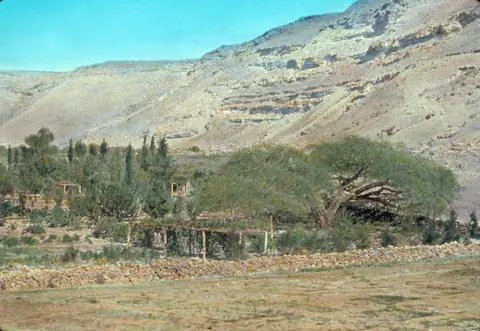 Egypt, north-eastern SinaiKadesh-Barnea (Tell el-Qudeirat)No public visits confirmedPage coming soon
In the Bible (Numbers 13–14; 20; Deuteronomy 1:46). From Kadesh, Moses sends twelve spies to explore Canaan; after their report, the people refuse to go forward and are condemned to wander for forty years. Miriam, Moses' sister, dies there.
"And they went and came to Moses, and to Aaron, and to all the congregation of the children of Israel, unto the wilderness of Paran, to Kadesh; and brought back word unto them, and unto all the congregation, and shewed them the fruit of the land."
Numbers 13:26 (KJV)
וַיֵּלְכוּ וַיָּבֹאוּ אֶל־מֹשֶׁה וְאֶל־אַהֲרֹן וְאֶל־כָּל־עֲדַת בְּנֵי־יִשְׂרָאֵל אֶל־מִדְבַּר פָּארָן קָדֵשָׁה וַיָּשִׁיבוּ אוֹתָם דָּבָר וְאֶת־כָּל־הָעֵדָה וַיַּרְאוּם אֶת־פְּרִי הָאָרֶץ
במדבר יג, כו
Archaeology. Kadesh-Barnea is generally identified with Tell el-Qudeirat, near the most abundant spring in northern Sinai (Ein el-Qudeirat). Rudolph Cohen's excavations (1976–1982) uncovered three successive fortresses there, all from the Iron Age, several centuries after the supposed time of the Exodus; no Late Bronze Age level has been identified. The identification remains plausible for the name and the geography, but not for the chronology of the narrative.
What to see today. The site is in Egypt, in north-eastern Sinai, an area where no visits are currently offered. It should not be confused with the modern Israeli localities that bear a similar name.
Arava Valley, north of EilatTimna Park: copper mines, the Temple of Hathor and the Exodus desertIn the Arava Valley, a red sandstone landscape where the Egypt of the Ramesside pharaohs mined copper: a context site for understanding the desert of the Exodus story.View site →
In the Bible (Numbers 21:4–9). Bitten by serpents in the wilderness, the Israelites are healed by looking at the bronze serpent made by Moses. Timna is not named in this story: the connection comes from an object found on the site.
"And Moses made a serpent of brass, and put it upon a pole, and it came to pass, that if a serpent had bitten any man, when he beheld the serpent of brass, he lived."
Numbers 21:9 (KJV)
וַיַּעַשׂ מֹשֶׁה נְחַשׁ נְחֹשֶׁת וַיְשִׂמֵהוּ עַל־הַנֵּס וְהָיָה אִם־נָשַׁךְ הַנָּחָשׁ אֶת־אִישׁ וְהִבִּיט אֶל־נְחַשׁ הַנְּחֹשֶׁת וָחָי
במדבר כא, ט
Archaeology. In the Arava valley, the copper mines of Timna were worked by Egypt in the 13th and 12th centuries BCE. In 1969 Beno Rothenberg excavated a small shrine of the goddess Hathor there, later remodelled as a tent sanctuary, in which a small copper serpent with a gilded head was found. Recent excavations by Erez Ben-Yosef have revealed intensive copper production in the 11th–10th centuries BCE, attributed to local, probably Edomite, populations. Timna thus sheds light on the desert of the Late Bronze and Iron Ages; it is not a proven Israelite encampment.
What to see today. Timna Park: mine shafts, rock carvings, "Solomon's Pillars" (a natural formation), the Hathor shrine and a modern full-size reconstruction of the Tabernacle, which is an educational display and not an archaeological discovery.
South-western Sinai, EgyptSerabit el-Khadim: the Temple of Hathor and the origins of the alphabetOn a plateau in south-western Sinai, a shrine of Egyptian miners where Semitic workers left some of the oldest known alphabetic inscriptions.View site →
In the Bible (Exodus 15:22). No biblical episode takes place at Serabit el-Khadim. The site sheds light on the setting of the narrative: the desert that the Israelites enter after the sea, travelled for centuries by Egyptian expeditions.
"So Moses brought Israel from the Red sea, and they went out into the wilderness of Shur; and they went three days in the wilderness, and found no water."
Exodus 15:22 (KJV)
וַיַּסַּע מֹשֶׁה אֶת־יִשְׂרָאֵל מִיַּם־סוּף וַיֵּצְאוּ אֶל־מִדְבַּר־שׁוּר וַיֵּלְכוּ שְׁלֹשֶׁת־יָמִים בַּמִּדְבָּר וְלֹא־מָצְאוּ מָיִם
שמות טו, כב
Archaeology. On a plateau in south-western Sinai, the Egyptians mined turquoise from the Middle to the New Kingdom and built a temple to Hathor, "Lady of Turquoise". In 1904–1905 Flinders Petrie recorded there the so-called Proto-Sinaitic inscriptions, left by Semitic workers: in 1916 Alan Gardiner read in them the name of the goddess Baalat, and these signs are among the ancestors of the alphabet. No inscription or remains mention Moses or the Hebrews.
What to see today. The ruins of the temple, its standing stelae and the mine galleries, at the end of a climb on foot.
Story 3 · Numbers 20–24; Deuteronomy 34
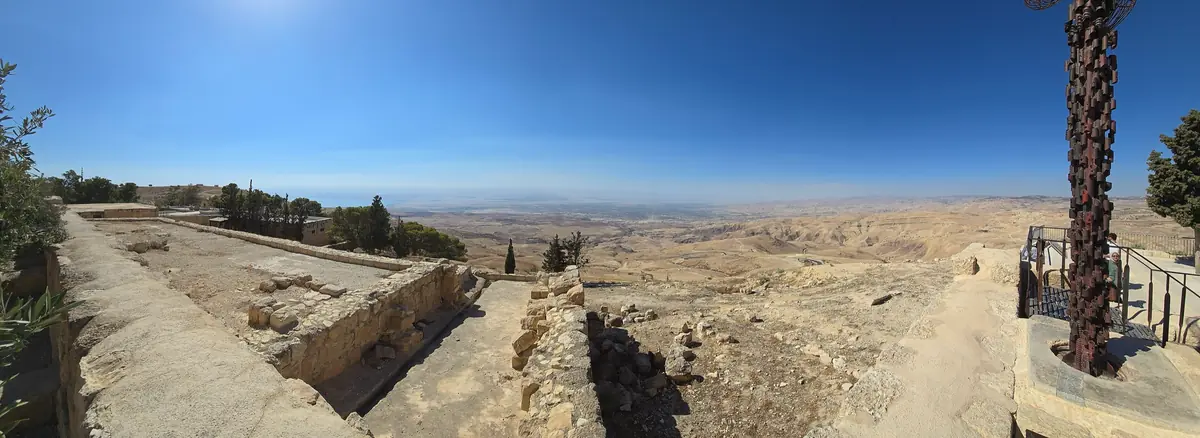
"And Moses went up from the plains of Moab unto the mountain of Nebo, to the top of Pisgah, that is over against Jericho. And the LORD shewed him all the land of Gilead, unto Dan…"
Deuteronomy 34:1 (KJV)
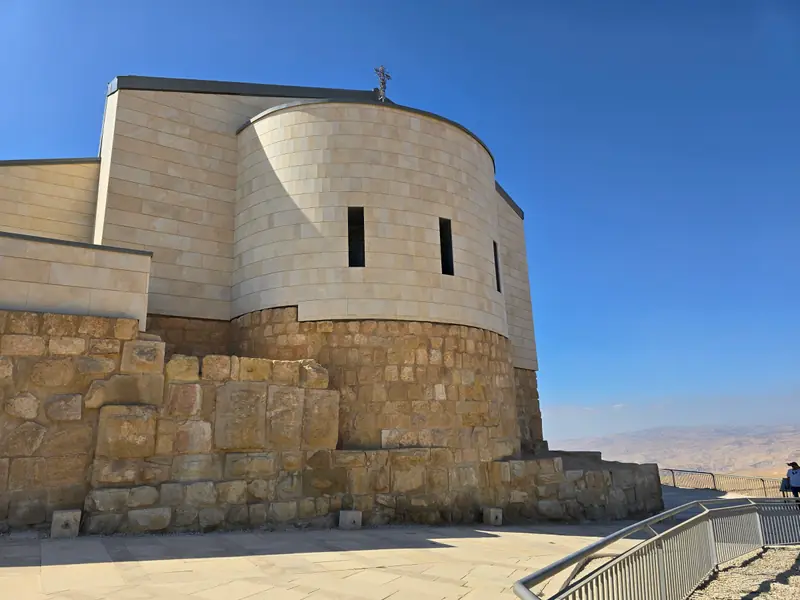 Story 3 · Moab and Mount Nebo
The summit from which Moses views the Promised Land before dying in the land of Moab.
On site: The Memorial of Moses, its Byzantine mosaics and the viewing terrace over the Jordan Valley and the Dead Sea.
The book of Numbers leads the people from Kadesh to the plains of Moab, opposite Jericho, skirting Edom: the death of Aaron on Mount Hor, the victory over Sihon king of Heshbon, the episode of the seer Balaam, then Moses' last address, Deuteronomy. These stages lie in present-day Jordan; almost all the visible remains there postdate 1200 BCE.
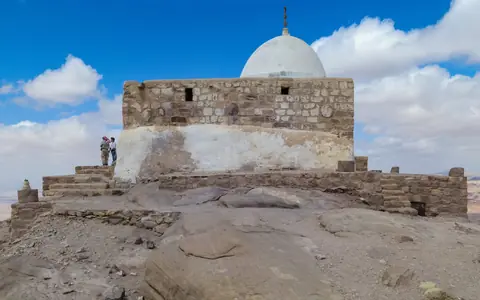 Jordan, near PetraJebel Haroun (Mount Aaron)Long hike from Petra; access to the shrine to be arranged locallyPage coming soon
In the Bible (Numbers 20:22–29; 33:38–39). On Mount Hor, "by the coast of the land of Edom", Moses passes Aaron's high-priestly garments to his son Eleazar, and Aaron dies on the summit.
"And Moses stripped Aaron of his garments, and put them upon Eleazar his son; and Aaron died there in the top of the mount: and Moses and Eleazar came down from the mount."
Numbers 20:28 (KJV)
וַיַּפְשֵׁט מֹשֶׁה אֶת־אַהֲרֹן אֶת־בְּגָדָיו וַיַּלְבֵּשׁ אֹתָם אֶת־אֶלְעָזָר בְּנוֹ וַיָּמָת אַהֲרֹן שָׁם בְּרֹאשׁ הָהָר וַיֵּרֶד מֹשֶׁה וְאֶלְעָזָר מִן־הָהָר
במדבר כ, כח
Tradition and archaeology. Since Flavius Josephus (1st century CE), a tradition has placed Mount Hor near Petra. The summit of Jebel Haroun bears a small medieval Muslim shrine dedicated to Aaron; a University of Helsinki mission excavated a Byzantine monastery on the slopes below. This is a traditional location, not an authenticated tomb. The Nabataean facades of nearby Petra date from the last centuries BCE and the first centuries CE: they have no connection with the Exodus.
What to see today. The panorama over the mountains of Edom and the Arava, and the white shrine on the summit, visible from afar.
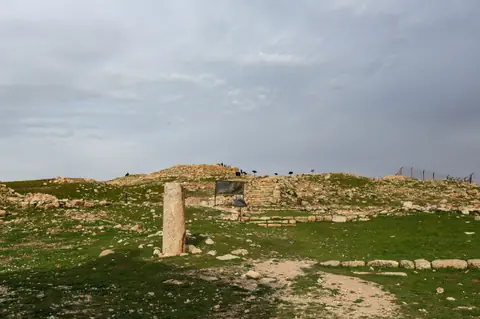 Jordan, south of AmmanHeshbon (Tell Hisban)Archaeological site with information panels; biblical identification debatedPage coming soon
In the Bible (Numbers 21:13–31; Deuteronomy 2:24–37). Having reached the Arnon, the border of Moab, Israel asks Sihon, the Amorite king of Heshbon, for passage, defeats him and occupies his cities as far as the Jabbok.
"For Heshbon was the city of Sihon the king of the Amorites, who had fought against the former king of Moab, and taken all his land out of his hand, even unto Arnon."
Numbers 21:26 (KJV)
כִּי חֶשְׁבּוֹן עִיר סִיחֹן מֶלֶךְ הָאֱמֹרִי הִוא וְהוּא נִלְחַם בְּמֶלֶךְ מוֹאָב הָרִאשׁוֹן וַיִּקַּח אֶת־כָּל־אַרְצוֹ מִיָּדוֹ עַד־אַרְנֹן
במדבר כא, כו
Archaeology. Tell Hisban has preserved the name of Heshbon. The Andrews University excavations, begun in 1968, found no Late Bronze Age city there: the earliest occupation dates from the beginning of the Iron Age. Some scholars therefore look for Sihon's Heshbon elsewhere, for example at Tell Jalul; others consider that the narrative reflects a later geography. Further south, Dibon (Dhiban) and Aroer, on the edge of the Arnon gorge (Wadi Mujib), are known above all for the Iron Age kingdom of Moab: the stele of King Mesha, found at Dhiban and now in the Louvre, dates from the 9th century BCE.
What to see today. At Tell Hisban, a trail with information panels (Iron Age, Roman, Byzantine and Mamluk remains); the Wadi Mujib gorge can be seen from the King's Highway, though no trail marks out a route of Moses.
 Jordan, Jordan ValleyTell Deir 'AllaExcavation site; current visiting arrangements to be checkedPage coming soon
In the Bible (Numbers 22–24). Alarmed to see Israel encamped in the plains of Moab, King Balak sends for the seer Balaam to curse it; instead, Balaam pronounces blessings.
"He sent messengers therefore unto Balaam the son of Beor to Pethor, which is by the river of the land of the children of his people, to call him, saying, Behold, there is a people come out from Egypt: behold, they cover the face of the earth, and they abide over against me."
Numbers 22:5 (KJV)
וַיִּשְׁלַח מַלְאָכִים אֶל־בִּלְעָם בֶּן־בְּעוֹר פְּתוֹרָה אֲשֶׁר עַל־הַנָּהָר אֶרֶץ בְּנֵי־עַמּוֹ לִקְרֹא־לוֹ לֵאמֹר הִנֵּה עַם יָצָא מִמִּצְרַיִם הִנֵּה כִסָּה אֶת־עֵין הָאָרֶץ וְהוּא יֹשֵׁב מִמֻּלִי
במדבר כב, ה
Archaeology. At Tell Deir 'Alla, Dutch excavations (Leiden University) uncovered a Late Bronze Age sanctuary and then, in 1967, fragments of a text painted on a plastered wall that introduces "Balaam son of Beor", a "seer of the gods". The text dates from the 9th or 8th century BCE: it is an extra-biblical attestation of the figure of Balaam, not proof of his encounter with Moses. The fragments are kept in Amman.
What to see today. The mound, in the Jordan Valley, near the point where the Jabbok enters it.
Madaba, JordanMount Nebo – Moses' Last View of the Promised LandOn a spur of the mountains of Moab, Deuteronomy has Moses gaze at the land he will never enter. Since the 4th century, a Christian sanctuary has kept that memory alive.View site →
In the Bible (Deuteronomy 32:48–52; 34:1–8). From the top of Pisgah, Moses looks out over the promised land that he will not reach; he dies in the land of Moab, and "no man knoweth of his sepulchre unto this day".
וַיַּעַל מֹשֶׁה מֵעַרְבֹת מוֹאָב אֶל־הַר נְבוֹ רֹאשׁ הַפִּסְגָּה אֲשֶׁר עַל־פְּנֵי יְרֵחוֹ וַיַּרְאֵהוּ יְהוָה אֶת־כָּל־הָאָרֶץ אֶת־הַגִּלְעָד עַד־דָּן
דברים לד, א
Tradition and archaeology. Christian tradition has placed Mount Nebo at Ras Siyagha, near Madaba, since the 4th century: Egeria visited a church there. From the 1930s onwards, the Franciscans excavated a Byzantine basilica and its mosaics on the site. No tomb of Moses has been identified, in keeping with the text itself.
What to see today. The Memorial of Moses, its Byzantine mosaics and the panorama over the Jordan Valley, the Dead Sea and Jericho.
Story 4 · Joshua 3–24
"So the people shouted when the priests blew with the trumpets: and it came to pass, when the people heard the sound of the trumpet, and the people shouted with a great shout, that the wall fell down flat, so that the people went up into the city, every man straight before him, and they took the city."
Joshua 6:20 (KJV)
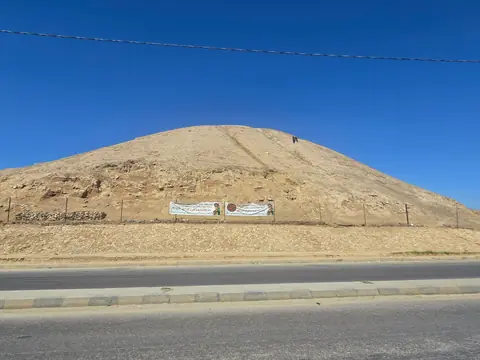
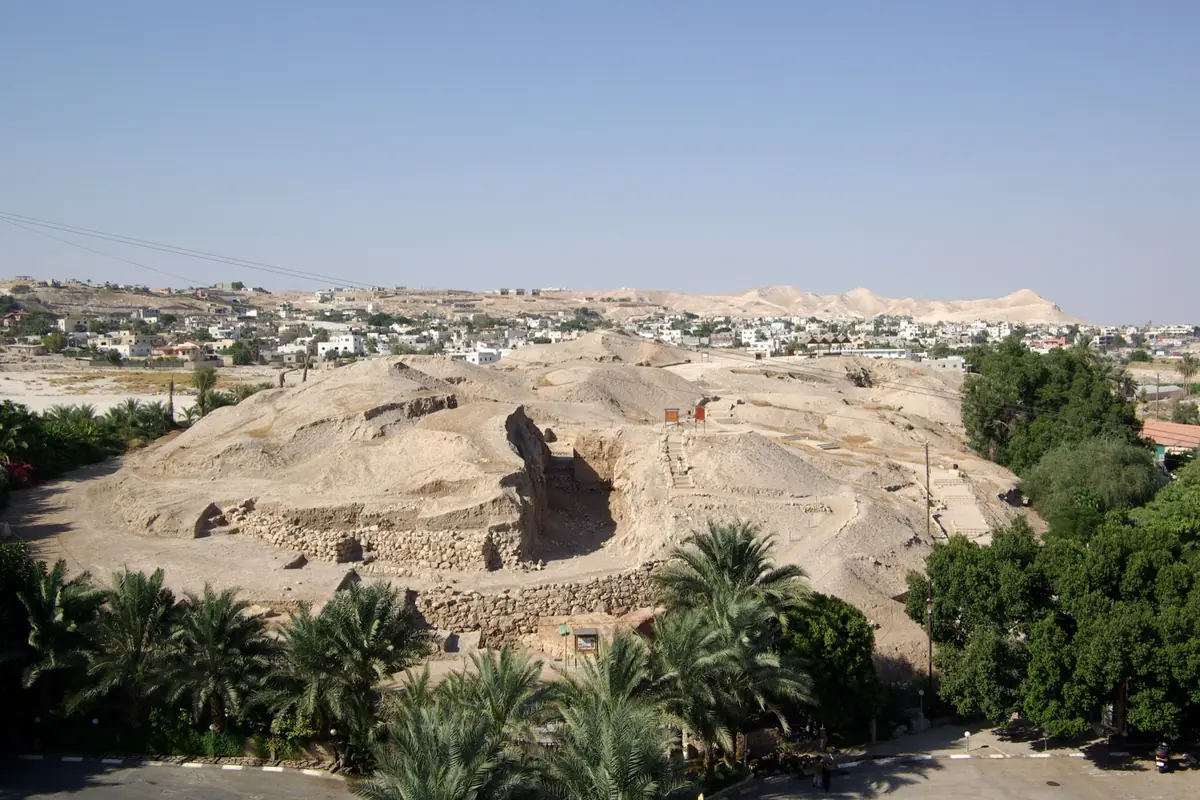
Story 4 · Joshua's conquestJudea and Samaria (Area A)The first city faced in Canaan: Rahab, the spies and the fall of the walls.
On site: Tell es-Sultan, its 10,000-year-old Neolithic tower, Kenyon's trench and the spring of Ein es-Sultan.
Story 4 · Joshua's conquestThe end of the pursuit of the Amorite kings, where 'great stones' fall from heaven 'unto Azekah'.
On site: The lookout over the Elah Valley, the walk around the summit and, in season, the Lautenschläger expedition's excavations.
Story 4 · Joshua's conquestThe Canaanite royal city taken 'on the second day' by Joshua; its last Canaanite city actually burned after 1200 BCE.
On site: The mound and its Canaanite temples explained by panels, the Assyrian siege ramp and the visitor centre film.
Story 5 · Canaanite city-statesKing Horam defeated by Joshua, but the Canaanites never driven out: the very example of the Canaan that remained.
On site: The ten standing stones, the Canaanite gate, the water system and the six-chambered gate.
Story 4 · Joshua's conquest'The head of all those kingdoms', the only city burned by Joshua in the north; the palace did burn in the 13th century.
On site: The Canaanite palace destroyed by fire, the six-chambered gate and the Iron Age water system.
Story 4 · Joshua's conquestJudea and Samaria (Area C)With the land subdued, the congregation sets up the Tent of Meeting here and casts lots for the tribal territories.
On site: The mound and its excavation areas, the Middle Bronze Age ramparts, the northern terrace and the Seer's Tower show.
Story 4 · Joshua's conquestCoordination advisedThe altar on Mount Ebal, the Law read facing Gerizim and the covenant renewed by Joshua at Shechem.
On site: The Tell Balata archaeological park, its ramparts and fortress temple, between Mount Ebal and Mount Gerizim.
The book of Joshua describes a swift conquest: the crossing of the Jordan, the fall of Jericho, the capture of Ai, the alliance with Gibeon, the southern campaign, then victory in the north as far as Hazor; it closes with the setting up of the Tent of Meeting at Shiloh and the covenant at Shechem. The book of Judges paints a more nuanced picture of gradual settlement, tribe by tribe, among the Canaanites. The archaeological evidence, complex to interpret, also reflects this diversity: some cities were indeed destroyed at the end of the Late Bronze Age, while others were uninhabited at the time or were destroyed later.
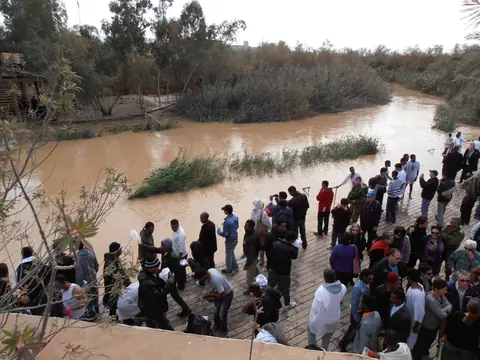 Jordan Valley, east of JerichoQasr al-YahudDeveloped site, reached via Route 90; check conditionsPage coming soon
In the Bible (Joshua 3–4). The priests carrying the ark of the covenant step into the Jordan in flood; the waters stop and the people cross on dry ground. Twelve stones taken from the river are set up at Gilgal.
"And the priests that bare the ark of the covenant of the LORD stood firm on dry ground in the midst of Jordan, and all the Israelites passed over on dry ground, until all the people were passed clean over Jordan."
Joshua 3:17 (KJV)
וַיַּעַמְדוּ הַכֹּהֲנִים נֹשְׂאֵי הָאָרוֹן בְּרִית־יְהוָה בֶּחָרָבָה בְּתוֹךְ הַיַּרְדֵּן הָכֵן וְכָל־יִשְׂרָאֵל עֹבְרִים בֶּחָרָבָה עַד אֲשֶׁר־תַּמּוּ כָּל־הַגּוֹי לַעֲבֹר אֶת־הַיַּרְדֵּן
יהושע ג, יז
Tradition. Qasr al-Yahud, "the castle of the Jews", is the place where tradition commemorates both Joshua's crossing and the baptism of Jesus; opposite, on the Jordanian bank, the site of Al-Maghtas (Bethany beyond the Jordan) is a UNESCO World Heritage Site. No exact crossing point has been demonstrated, and Gilgal has not been located with certainty.
What to see today. A developed access point to the river, and churches and monasteries of various denominations, facing the Jordanian bank.
Jericho, Jordan ValleyJericho (Tell es-Sultan): the walls of JoshuaRahab, the Jordan crossing and the falling walls: the Book of Joshua set against a century of excavation at one of the oldest towns in the world.View site →
In the Bible (Joshua 2; 6). Two spies are hidden by Rahab; then the people march around the city for seven days, and on the seventh, at the sound of the trumpets, the wall falls down.
וַיָּרַע הָעָם וַיִּתְקְעוּ בַּשֹּׁפָרוֹת וַיְהִי כִשְׁמֹעַ הָעָם אֶת־קוֹל הַשּׁוֹפָר וַיָּרִיעוּ הָעָם תְּרוּעָה גְדוֹלָה וַתִּפֹּל הַחוֹמָה תַּחְתֶּיהָ וַיַּעַל הָעָם הָעִירָה אִישׁ נֶגְדּוֹ וַיִּלְכְּדוּ אֶת־הָעִיר
יהושע ו, כ
Archaeology. In the 1930s John Garstang believed he had found at Tell es-Sultan the collapsed walls of Joshua's Jericho, which he dated to about 1400 BCE. Kathleen Kenyon resumed excavations from 1952 to 1958: she assigned those walls to the Early Bronze Age and dated the destruction of the great fortified city to the end of the Middle Bronze Age, around 1550 BCE. For the Late Bronze Age she found only meagre traces of occupation, largely erased by erosion. In 1990 Bryant Wood proposed a return to a destruction around 1400; this view remains a minority one. An Italian-Palestinian mission has been continuing research on the site since 1997.
What to see today. The mound, its Neolithic tower (c. 8000 BCE, long before Joshua), the excavation trenches and the spring of Ein es-Sultan, at the foot of the site, inscribed by UNESCO in 2023.
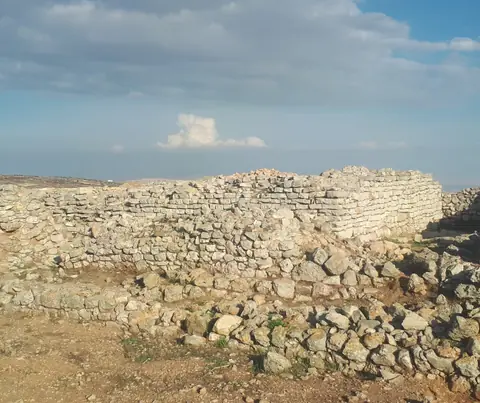 Judea and Samaria, east of BethelAi (et-Tell)Current public access not confirmedPage coming soon
In the Bible (Joshua 7–8; 12:9, 16). After an initial failure, Joshua takes Ai by means of an ambush laid between Ai and Bethel, and burns it. The king of Bethel appears in the list of defeated kings.
"And Joshua burnt Ai, and made it an heap for ever, even a desolation unto this day."
Joshua 8:28 (KJV)
וַיִּשְׂרֹף יְהוֹשֻׁעַ אֶת־הָעָי וַיְשִׂימֶהָ תֵּל־עוֹלָם שְׁמָמָה עַד הַיּוֹם הַזֶּה
יהושע ח, כח
Archaeology. Ai, whose name means "the ruin", is generally identified with et-Tell. The excavations of Judith Marquet-Krause (1933–1935) and later Joseph Callaway revealed a large Early Bronze Age city, destroyed around 2400 BCE, followed by a long abandonment until a modest village of the early Iron Age: there was no fortified city to conquer in the Late Bronze Age. Some scholars see the story as an explanation for the origin of an impressive ruin; others propose another location, such as Khirbet el-Maqatir, and the debate remains unresolved. Nearby Bethel (Beitin) has its own page, devoted to the Patriarchs: Bethel, the sanctuary of the Patriarchs.
What to see today. A mound with few visitor facilities, near the village of Deir Dibwan.
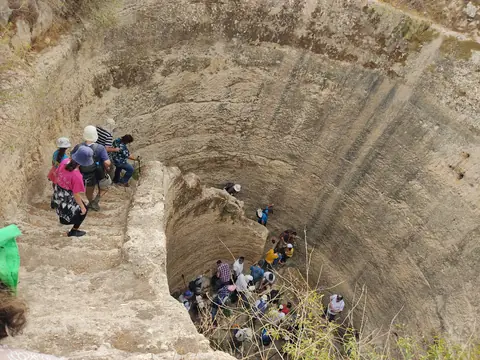 Judea and Samaria, north-west of JerusalemGibeon (el-Jib)Visit to be arranged; current access not confirmedPage coming soon
In the Bible (Joshua 9–10). The Gibeonites obtain an alliance with Israel by a ruse; when five Amorite kings attack them, Joshua comes to their aid. This is where the text places the famous words "Sun, stand thou still upon Gibeon" (Joshua 10:12).
"And when the inhabitants of Gibeon heard what Joshua had done unto Jericho and to Ai…"
Joshua 9:3 (KJV)
וְיֹשְׁבֵי גִבְעוֹן שָׁמְעוּ אֵת אֲשֶׁר עָשָׂה יְהוֹשֻׁעַ לִירִיחוֹ וְלָעָי
יהושע ט, ג
Archaeology. The identification of Gibeon with el-Jib is one of the most secure: James Pritchard's excavations (Penn Museum, 1956–1962) found jar handles inscribed with the name of the city. The great rock-cut well and the winemaking installations date from the Iron Age; the Late Bronze Age is represented only by a few tombs. The site therefore does not directly illuminate the episode of Joshua.
What to see today. The great circular pool and its rock-cut staircase, on the edge of the village of el-Jib.
Joshua 10 strings together a series of victories in the Shephelah and the Judean Hills: Makkedah, Libnah, Lachish, Gezer, Eglon, Hebron and Debir. Several of these cities remain poorly located: Libnah is sometimes placed at Tel Burna, Eglon at Tel 'Eton, Debir at Khirbet Rabud; these identifications are proposals, and these excavations are not set up for visitors.
Shephelah, Valley of Elah, Britannia ParkTel Azekah: The Pursuit of the Amorite Kings (Joshua 10)On a wooded hill commanding the Valley of Elah, Azekah marks the end of the pursuit of the Amorite kings. Excavations there have revealed a Canaanite city destroyed by fire.View site →
In the Bible (Joshua 10:10–11). After the battle of Gibeon, the Amorite kings flee down the descent of Beth-horon; the text describes a deadly hail that pursues them as far as Azekah.
"And it came to pass, as they fled from before Israel, and were in the going down to Beth-horon, that the LORD cast down great stones from heaven upon them unto Azekah, and they died."
Joshua 10:11 (KJV)
וַיְהִי בְּנֻסָם מִפְּנֵי יִשְׂרָאֵל הֵם בְּמוֹרַד בֵּית־חוֹרֹן וַיהוָה הִשְׁלִיךְ עֲלֵיהֶם אֲבָנִים גְּדֹלוֹת מִן־הַשָּׁמַיִם עַד־עֲזֵקָה וַיָּמֻתוּ
יהושע י, יא
Archaeology. The excavations conducted since 2012 by Tel Aviv University and Heidelberg University have revealed a Late Bronze Age Canaanite city, with a temple, violently destroyed at the end of that period. The exact date of this destruction, and who was responsible for it, are still debated. Azekah reappears in the story of Goliath (1 Samuel 17) and on the eve of the fall of Judah (Jeremiah 34:7).
What to see today. The top of the mound, in Britannia Park, with a wide panorama over the Elah Valley.
Shephelah, near Kiryat GatTel Lachish: The Canaanite City Taken by JoshuaA royal Canaanite city under Egyptian rule, Lachish is one of the southern cities Joshua is said to have taken. Its excavations tell a more complex, and longer, story.View site →
In the Bible (Joshua 10:3, 31–32). The king of Lachish joins the coalition against Gibeon; Joshua takes the city "on the second day".
"And the LORD delivered Lachish into the hand of Israel, which took it on the second day, and smote it with the edge of the sword, and all the souls that were therein, according to all that he had done to Libnah."
Joshua 10:32 (KJV)
וַיִּתֵּן יְהוָה אֶת־לָכִישׁ בְּיַד יִשְׂרָאֵל וַיִּלְכְּדָהּ בַּיּוֹם הַשֵּׁנִי וַיַּכֶּהָ לְפִי־חֶרֶב וְאֶת־כָּל־הַנֶּפֶשׁ אֲשֶׁר־בָּהּ כְּכֹל אֲשֶׁר־עָשָׂה לְלִבְנָה
יהושע י, לב
Archaeology. Lachish was an important Canaanite city in the Late Bronze Age: its kings wrote to Pharaoh in the Amarna letters, and excavations have uncovered several temples from this period. The last Canaanite city was destroyed around the middle of the 12th century BCE, that is, after 1200: a significant gap with the chronology usually proposed for Joshua. Most of the visible remains belong to the Judahite city besieged by Sennacherib in 701 BCE (see Judges and Kings).
What to see today. The Iron Age city gate, the palace-fort and the Assyrian siege ramp.
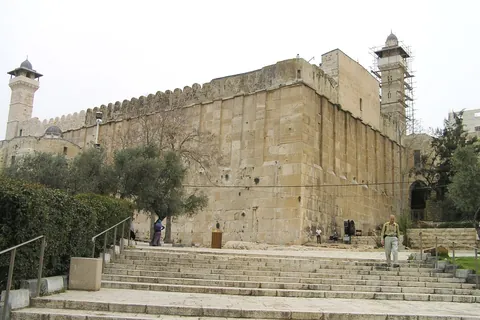 Hebron, Judaean HillsTomb of the Patriarchs – HebronA sacred site venerated by the three monotheistic religions, the traditional burial place of Abraham, Isaac and Jacob.View site →
In the Bible (Numbers 13:22; Joshua 10:36–39; 14:6–15; 15:13–19). Hebron is visited by the spies sent by Moses, then taken by Joshua and given to Caleb; Othniel son of Kenaz captures Debir, then called Kirjath-sepher.
"And Joshua blessed him, and gave unto Caleb the son of Jephunneh Hebron for an inheritance."
Joshua 14:13 (KJV)
וַיְבָרְכֵהוּ יְהוֹשֻׁעַ וַיִּתֵּן אֶת־חֶבְרוֹן לְכָלֵב בֶּן־יְפֻנֶּה לְנַחֲלָה
יהושע יד, יג
Archaeology. Ancient Hebron lies at Tel Rumeida, a mound separate from the Tomb of the Patriarchs featured in the card above: a Middle Bronze Age city wall and many later remains can be seen there. For Debir, the old proposal of Tell Beit Mirsim has given way, for many scholars, to Khirbet Rabud, south of Hebron, an undeveloped site.
What to see today. The Tomb of the Patriarchs and, separately, the Tel Rumeida archaeological park.
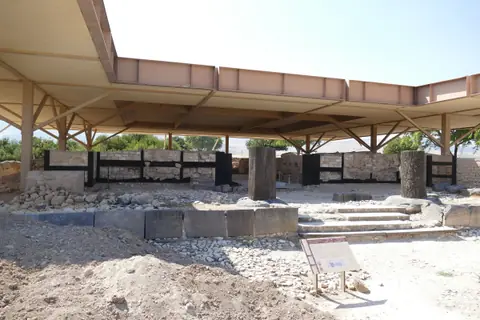 Upper Galilee, near Rosh PinaTel Hazor: the Canaanite capital of Joshua 11"The head of all those kingdoms": the largest Canaanite city in the land, its destruction by fire and an archaeological debate that is still open.View site →
In the Bible (Joshua 11:1–13; Judges 4). Jabin, king of Hazor, gathers the kings of the north at the waters of Merom; Joshua defeats them, takes Hazor and burns it. The book of Judges again mentions a Jabin, king of Canaan, reigning in Hazor in the time of Deborah.
"And Joshua at that time turned back, and took Hazor, and smote the king thereof with the sword: for Hazor beforetime was the head of all those kingdoms."
Joshua 11:10 (KJV)
וַיָּשָׁב יְהוֹשֻׁעַ בָּעֵת הַהִיא וַיִּלְכֹּד אֶת־חָצוֹר וְאֶת־מַלְכָּהּ הִכָּה בֶחָרֶב כִּי־חָצוֹר לְפָנִים הִיא רֹאשׁ כָּל־הַמַּמְלָכוֹת הָאֵלֶּה
יהושע יא, י
Archaeology. Hazor was the largest Canaanite city in the land, mentioned in the Mari archives and the Amarna letters. Yigael Yadin (1955–1958) and later Amnon Ben-Tor uncovered a violent destruction by fire in the 13th century BCE, which struck the ceremonial palace of the upper city. Ben-Tor attributes it to the Israelites; other archaeologists suggest an internal revolt, a conflict between Canaanite cities or the action of the "Sea Peoples". It is one of the rare cases in which a destruction at the end of the Late Bronze Age coincides with the narrative, without establishing who was responsible.
What to see today. The Canaanite palace and, dated separately, the Iron Age gate and water system.
Samarian hills, between Bethel and ShechemShiloh (Tel Shiloh): sanctuary of the Tent of MeetingIsrael's first great sanctuary according to the Bible: Joshua sets up the Tent of Meeting here, Hannah prays for a son, and Samuel grows up beside the priest Eli.View site →
In the Bible (Joshua 18:1–10; 1 Samuel 1–4). With the land subdued, the congregation of Israel sets up the Tent of Meeting at Shiloh; there Joshua casts lots for the territories of the tribes. Shiloh remains the sanctuary of the Ark until the time of Eli and Samuel.
"And the whole congregation of the children of Israel assembled together at Shiloh, and set up the tabernacle of the congregation there. And the land was subdued before them."
Joshua 18:1 (KJV)
וַיִּקָּהֲלוּ כָּל־עֲדַת בְּנֵי־יִשְׂרָאֵל שִׁלֹה וַיַּשְׁכִּינוּ שָׁם אֶת־אֹהֶל מוֹעֵד וְהָאָרֶץ נִכְבְּשָׁה לִפְנֵיהֶם
יהושע יח, א
Archaeology. Tel Shiloh was excavated by a Danish team (1926–1932) and then by Israel Finkelstein (1981–1984): the site, occupied in the Middle Bronze Age and, more modestly, in the Late Bronze Age, became at the beginning of the Iron Age a major village with large storage buildings, destroyed by fire in the mid-11th century BCE. This later phase, after 1200, belongs mainly to the period of the Judges. Recent excavations have revived the debate over the location of the Tabernacle, which has not been demonstrated.
What to see today. The mound, its excavations and a visitor centre with an audiovisual presentation.
Nablus, Samarian hillsShechem: Joshua Renews the CovenantBetween Mount Ebal and Mount Gerizim, Joshua has the Law read aloud, then gathers the tribes at Shechem and asks them to choose whom they will serve.View site →
In the Bible (Joshua 8:30–35; 24). Joshua builds an altar on Mount Ebal and has the Law read facing Gerizim; at the end of his life he gathers the tribes at Shechem and renews the covenant there. The bones of Joseph, brought up from Egypt, are buried there.
"So Joshua made a covenant with the people that day, and set them a statute and an ordinance in Shechem."
Joshua 24:25 (KJV)
וַיִּכְרֹת יְהוֹשֻׁעַ בְּרִית לָעָם בַּיּוֹם הַהוּא וַיָּשֶׂם לוֹ חֹק וּמִשְׁפָּט בִּשְׁכֶם
יהושע כד, כה
Archaeology. In the 14th century BCE, the Amarna letters show Shechem's king, Labayu, extending his influence over the highlands; the fortress temple of Tell Balata, built in the Middle Bronze Age, is still in use. On Mount Ebal, Adam Zertal excavated in the 1980s an early Iron Age structure that he interpreted as Joshua's altar; its function is still debated. The remains on Mount Gerizim (Samaritan sanctuary and town) are much later.
What to see today. The Tell Balata archaeological park, Jacob's Well and the panorama from Mount Gerizim. The same place is presented for Abraham and for Jacob.
Surveys carried out from the 1970s onwards revealed the appearance, around 1200 BCE, of several hundred small villages in the central hills: so-called "four-room houses", collared-rim jars, cisterns and an absence of pig bones. Most archaeologists see them as the first Israelites. Their origin (groups from outside, settling pastoralists or a population emerging from Canaanite society itself) remains one of the great debates of biblical archaeology. The rest of this story is told in Judges and Kings.
Story 5 · Joshua 16–17; Judges 1
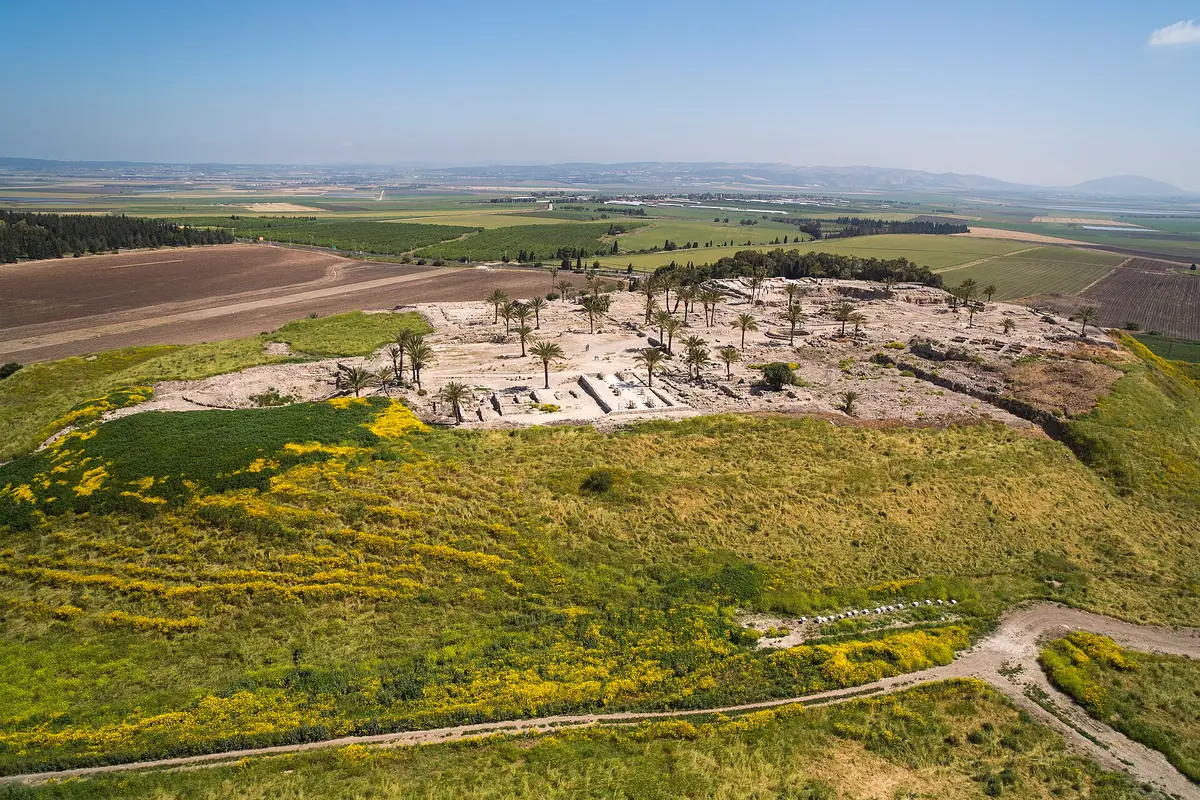
"And they drave not out the Canaanites that dwelt in Gezer: but the Canaanites dwell among the Ephraimites unto this day, and serve under tribute."
Joshua 16:10 (KJV)
Story 5 · Canaanite city-statesKing Horam defeated by Joshua, but the Canaanites never driven out: the very example of the Canaan that remained.
On site: The ten standing stones, the Canaanite gate, the water system and the six-chambered gate.
Story 5 · Canaanite city-statesA Canaanite city under Egyptian control, whose king Joshua defeats, though Manasseh never drives out its people.
On site: The sacred area and its round altar, the Canaanite gate, the 'stables', the water system and the view over the Jezreel Valley.
In the Late Bronze Age, Canaan is not an empty land: it is a mosaic of city-states under Egyptian domination. In the 14th century BCE, the Amarna letters show the kings of Gezer, Megiddo, Lachish, Shechem and Jerusalem writing to Pharaoh and complaining about their neighbours and the 'Apiru. Under the Ramesside pharaohs, Egypt kept garrisons at Beth-shean, Jaffa (ancient Joppa) and Aphek. Visiting these cities means seeing the world described in the book of Joshua, and understanding why the text itself acknowledges that many Canaanites remained in the land.
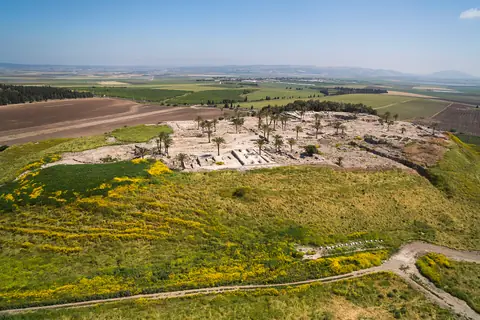
Shephelah, between Jerusalem and Tel AvivTel Gezer: The Canaanite City from Joshua to SolomonA powerful Canaanite city that the Book of Joshua says was never taken, named by the pharaohs of the Amarna age and by Merneptah, then rebuilt under Solomon.View site →
In the Bible (Joshua 10:33; 16:10; Judges 1:29). Horam, king of Gezer, is defeated when he comes to the aid of Lachish; but the city itself is not taken, and the text makes a point of saying so.
וְלֹא הוֹרִישׁוּ אֶת־הַכְּנַעֲנִי הַיּוֹשֵׁב בְּגָזֶר וַיֵּשֶׁב הַכְּנַעֲנִי בְּקֶרֶב אֶפְרַיִם עַד־הַיּוֹם הַזֶּה וַיְהִי לְמַס־עֹבֵד
יהושע טז, י
Archaeology. Gezer, an important city on the road between the coast and Jerusalem, appears in the Amarna letters and on the Merneptah Stele ("Gezer is captured"). Its most spectacular monuments, the Canaanite gate and the row of large standing stones, date from the Middle Bronze Age, before 1500 BCE; the six-chambered gate, attributed to the time of Solomon (1 Kings 9:15–17), is from the Iron Age.
What to see today. The standing stones, the Canaanite gate, the water system and the Iron Age gate.
Jezreel Valley, GalileeTel Megiddo: a Canaanite city in the time of JoshuaA Canaanite city the Bible says was defeated but never dispossessed: four thousand years of history at the crossroads of Egypt and Mesopotamia.View site →
In the Bible (Joshua 12:21; 17:11–13; Judges 1:27). The king of Megiddo is among the defeated kings, but the city remains Canaanite: the tribe of Manasseh fails to drive out its inhabitants.
"Yet the children of Manasseh could not drive out the inhabitants of those cities; but the Canaanites would dwell in that land."
Joshua 17:12 (KJV)
וְלֹא יָכְלוּ בְּנֵי מְנַשֶּׁה לְהוֹרִישׁ אֶת־הֶעָרִים הָאֵלֶּה וַיּוֹאֶל הַכְּנַעֲנִי לָשֶׁבֶת בָּאָרֶץ הַזֹּאת
יהושע יז, יב
Archaeology. Around 1457 BCE, Thutmose III defeated a coalition of Canaanite kings before Megiddo: it is the first battle for which a detailed account has survived. In the 14th century, its king Biridiya wrote to Pharaoh in the Amarna letters. Excavations uncovered a Canaanite palace and a hoard of ivories from the end of the Late Bronze Age. The visible water system, "stables" and gates date from the Iron Age.
What to see today. The round altar and the Early Bronze Age temples, the Canaanite gate, the Iron Age complexes and the water tunnel.
These sites do not yet have an IsraBible page. They round out a visit for anyone who wants to see Late Bronze Age Canaan, bearing in mind that their most visible remains often belong to other periods.
Further north, Tel Dan, ancient Laish, conquered by the tribe of Dan (Joshua 19:47; Judges 18), marks the transition to the period of the Judges.
For those not leaving just yet: three objects that shed light on these stories, in Cairo, London and Chicago.
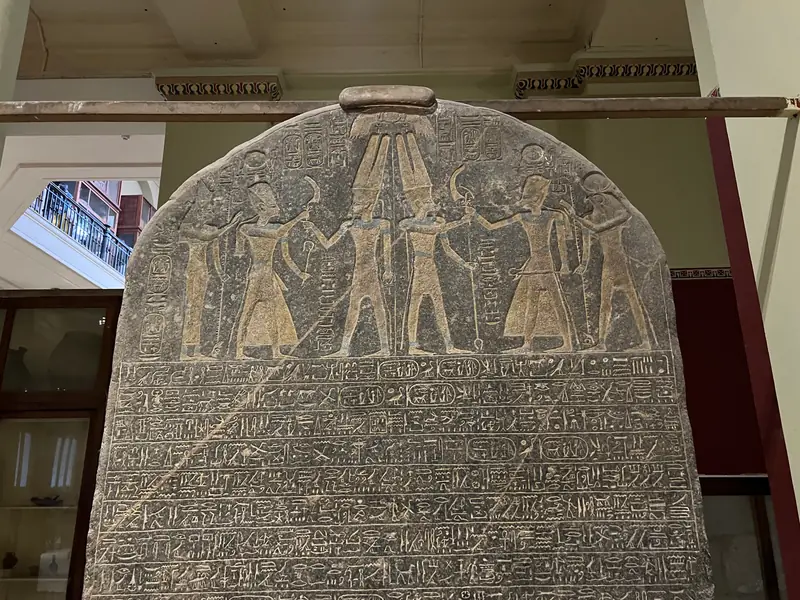
📍 Egyptian Museum, Cairo
Set up around 1208 BCE, it carries the oldest mention of Israel outside the Bible: a people already present in Canaan at the end of the 13th century.
Story 1 →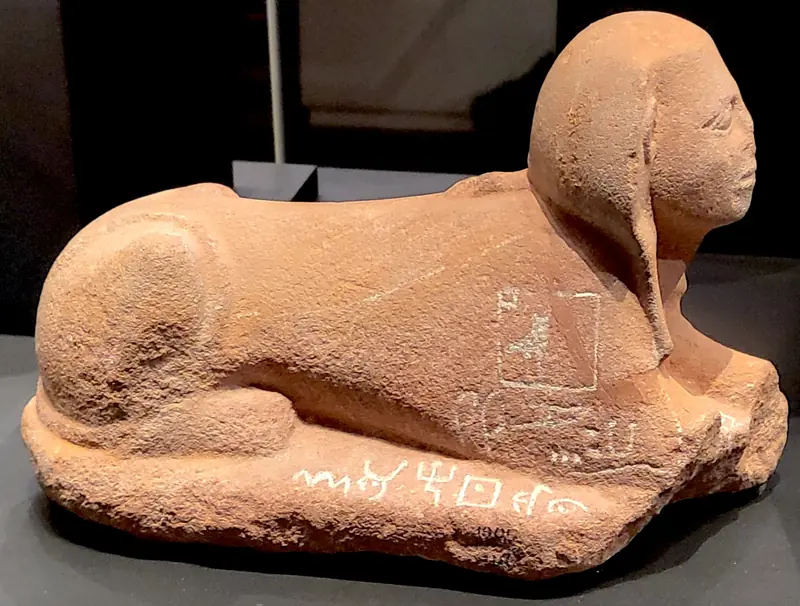
📍 British Museum, London
A small sandstone sphinx bearing a hieroglyphic and a Proto-Sinaitic inscription: these signs, left by Semitic workers, are among the ancestors of the alphabet.
Story 2 →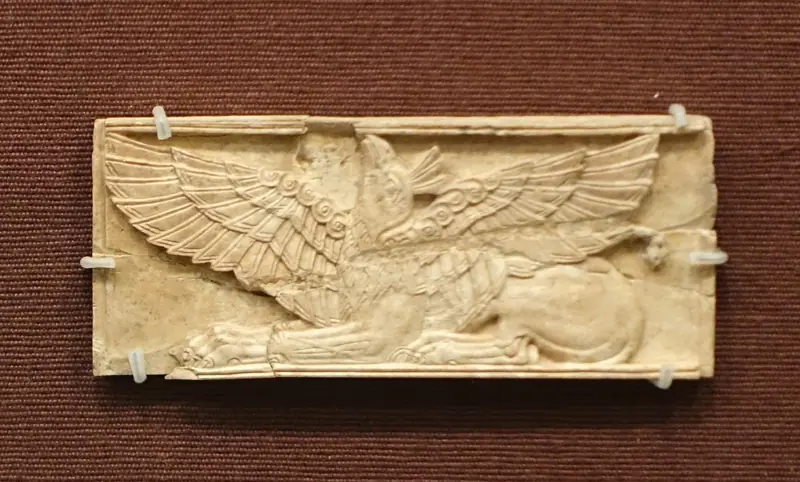
📍 Oriental Institute, Chicago
A griffin plaque from the hoard of ivories of the end of the Late Bronze Age, found in the Canaanite palace: the luxury of a city-state under Egyptian control.
Story 5 →The map of the sites, at the top of the page, shows the places that have a visitor page; it does not represent the route of the Exodus. For a visit, it is better to group the sites by region than to follow the order of the narrative, which crosses three countries.
⚠️ Access conditions
Jericho and Shechem (Nablus) are in areas of Judea and Samaria under Palestinian administration, Shiloh and Qasr al-Yahud in other areas of Judea and Samaria: access conditions vary with the security situation and the traveller's nationality. Travelling to Jordan or Egypt means crossing a border, and travel advice for Sinai changes over time. Check before you go and use a licensed guide or agency.
To combine the stops in Israel and Judea and Samaria according to the time you have, use our Plan my tour planner.
These works represent different approaches, from the most confident about the historicity of the narratives to the most critical: reading them side by side lets you form your own view.
Not directly. No Egyptian source mentions Moses or a mass departure of Hebrews. Archaeology does, however, illuminate the context: Semites living in the Delta, the great building projects of Ramesses II, and the Merneptah Stele, which attests a people named Israel in Canaan around 1208 BCE. Many scholars think the narrative preserves the memory of a smaller group.
The chronology derived from 1 Kings 6:1 places it around 1446 BCE; most scholars who grant it a historical core prefer the 13th century, under Ramesses II, because of the mention of the city of Raamses (Exodus 1:11). Others see it as a composite memory written down in the first millennium BCE. The 1500–1200 range shown on this page is a reference point, not an established date.
A granite stele set up around 1208 BCE by Pharaoh Merneptah to celebrate his victories. It lists "Israel" among the defeated peoples of Canaan: it is the oldest known mention of Israel outside the Bible. It is kept in the Egyptian Museum in Cairo.
The collapsed walls that John Garstang attributed to Joshua's time were redated by Kathleen Kenyon: the great fortified city was destroyed around 1550 BCE, and the site was sparsely occupied in the Late Bronze Age. A minority of scholars argue for a destruction around 1400 BCE. The question is still debated.
Tradition, attested since late antiquity, identifies it with Jebel Musa, at whose foot stands St Catherine's Monastery. Other hypotheses exist (Har Karkom in the Negev, mountains in north-western Arabia), but none is confirmed by archaeology.
No. They are Egyptian mining sites that shed light on the world of the desert in the Late Bronze Age. No remains or inscriptions there attest the presence of Moses or the Hebrews. At Timna, the Tabernacle shown to visitors is a modern reconstruction.
Around 1200 BCE, hundreds of small villages appear in the central hills, with a material culture close to that of the Canaanites but a few distinctive features, such as four-room houses and the absence of pork. Archaeologists debate their origin: conquest, gradual settlement of pastoralists or an internal transformation of Canaanite society.
No. It shows the places that have a visitor page. The route of the Exodus, the stages in the wilderness and the place where the sea was crossed have not been established, so we do not trace any historical route.
In Israel: Tel Hazor, Tel Megiddo, Tel Gezer, Tel Azekah, Tel Lachish and Timna Park. In Judea and Samaria, depending on access conditions: Jericho, Shiloh and Shechem. In Jordan: Mount Nebo. In Egyptian Sinai: St Catherine's Monastery, Jebel Musa and, on an organised excursion, Serabit el-Khadim.