
Mount of Olives
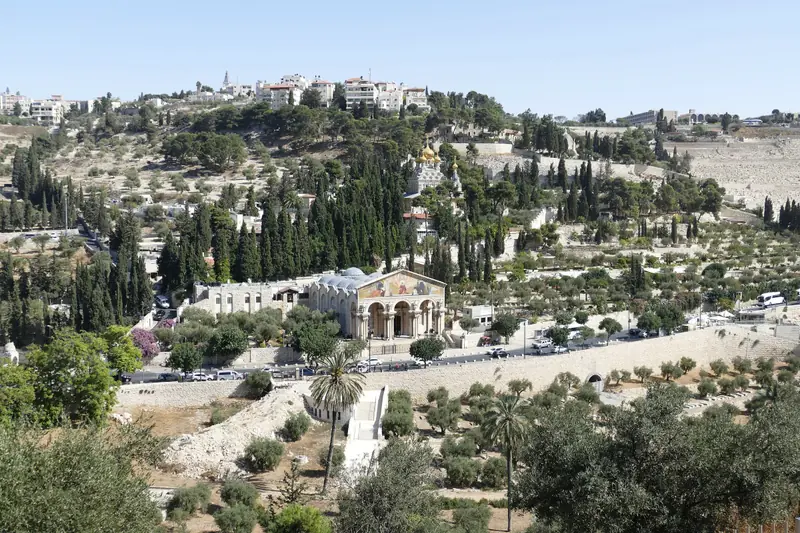
Gethsemane and the view of the Old City
Page coming soon
c. AD 30
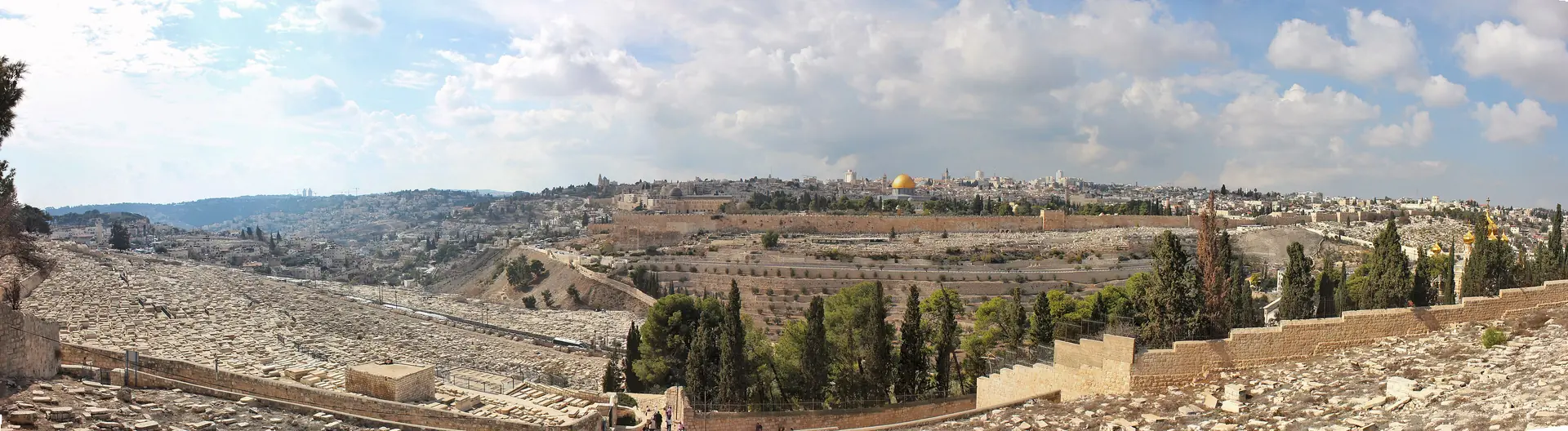
One week in Jerusalem, from the entry by the Mount of Olives to the empty tomb: the heart of the four Gospels.
Credit: Beko · CC BY-SA 4.0 · Wikimedia Commons
Around AD 30, under the Roman prefect Pontius Pilate, Jesus went up to Jerusalem for Passover. The four Gospels tell this last week in detail: the entry into the city from the Mount of Olives, the teaching in the Temple, the last meal, the arrest in Gethsemane, the trial, the crucifixion and the Resurrection.
Several archaeological finds shed light on this account: an inscription bearing Pilate's name found at Caesarea in 1961, the ossuary of a high priest named Caiaphas discovered in Jerusalem in 1990, and the Pool of Siloam uncovered in 2004.
"He is not here, but is risen."
Luke 24:6
5 places covered on this page. Tap a point on the map to open its guide.
Visit these places: build my tour (5 stops) →
Gethsemane and the view of the Old City
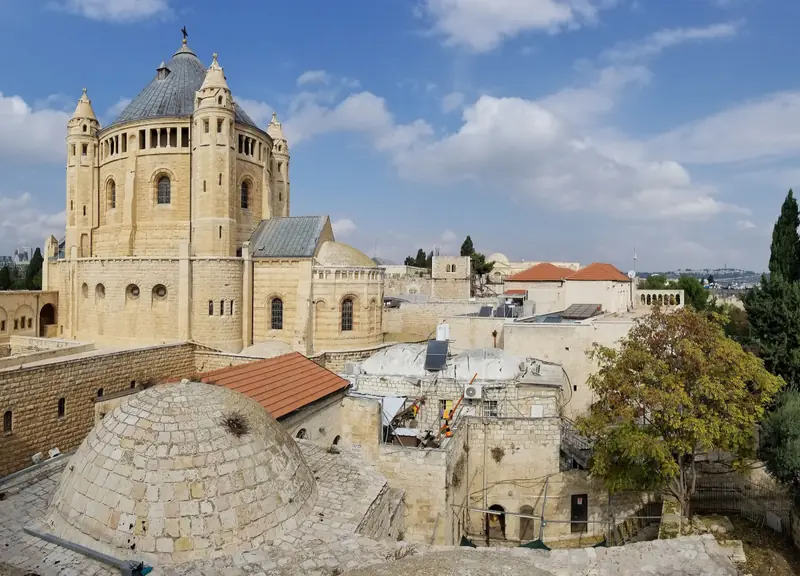
The Upper Room and David's Tomb
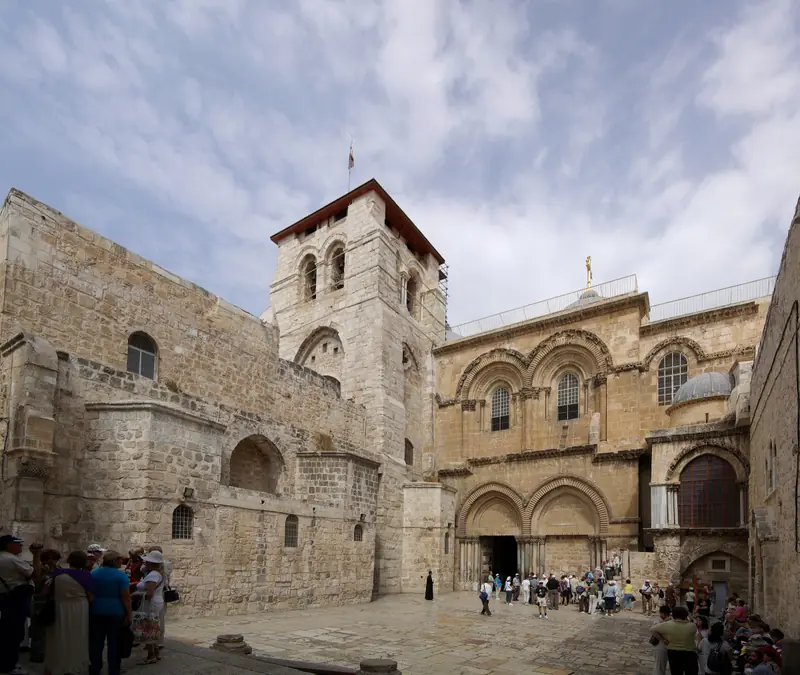
Crucifixion and tomb according to tradition
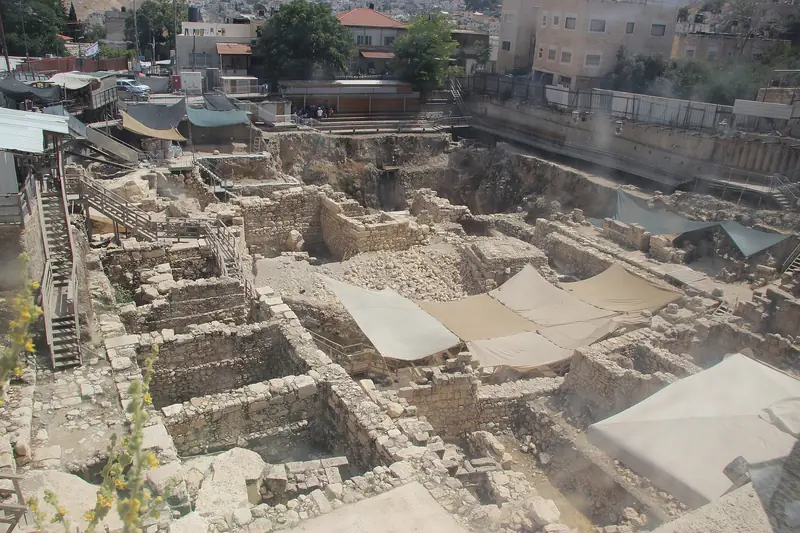
The kings' Jerusalem and Hezekiah's Tunnel
The Gospels show Jesus teaching on the Temple esplanade, enlarged by Herod a few decades earlier. The monumental stairs of the southern wall, used by pilgrims to go up to the Temple, can still be seen today.
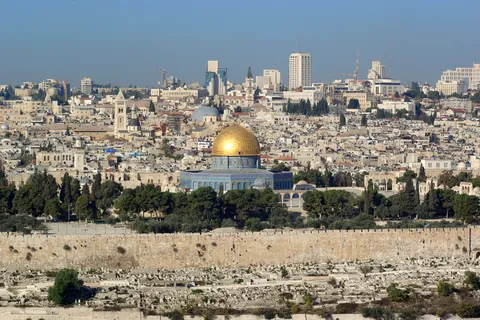 Old City of JerusalemMount Moriah: Abraham's Test, from the Biblical Story to the Temple MountWhere tradition places Abraham's test now stands the Temple Mount, one of the holiest sites in Judaism and Islam.View site →
 Tradition places the last meal in the Upper Room (Cenacle) on Mount Zion; the present Gothic-style hall dates from the Crusader period. At the foot of the Mount of Olives, the garden of Gethsemane keeps very old olive trees, next to the Church of All Nations (1924).
In the 4th century, Emperor Constantine had an old quarry and burial ground cleared, then outside the city walls, which the Christian community of Jerusalem identified as Golgotha. The Church of the Holy Sepulchre, rebuilt by the Crusaders in the 12th century, houses the rock of Calvary and the tomb, whose Edicule was restored in 2016-2017.
For the historical background, see the Second Temple period; for what happened next, the Apostles and the early Church.
No proof allows us to say so, but the site has been venerated since at least the 4th century, and it did lie outside the walls in the 1st century, as the Gospels describe. Another, more recent tradition points to the "Garden Tomb", north of the Old City.
At the foot of the Mount of Olives, facing the Old City, next to the Church of All Nations, also called the Basilica of the Agony. Very old olive trees grow there.
Its present route took shape between the Middle Ages and the 18th century. It starts near the Antonia fortress, but many historians think Pilate held court at Herod's palace instead, near today's Jaffa Gate.
The Pontius Pilate inscription found at Caesarea in 1961, the ossuary bearing the name Caiaphas discovered in Jerusalem in 1990, and the heel bone of a 1st-century crucified man, Yehohanan, found in 1968, which shows how crucifixion was carried out.
A full day: the Mount of Olives in the morning, then Mount Zion, the Old City and the Holy Sepulchre in the afternoon.