 Story 2 · David and SolomonRestricted access
Mount Moriah
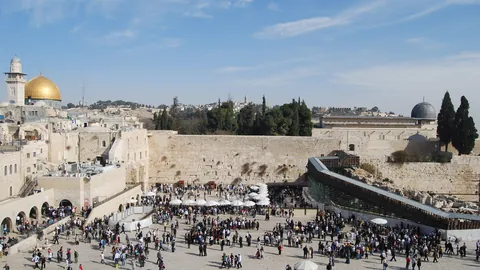
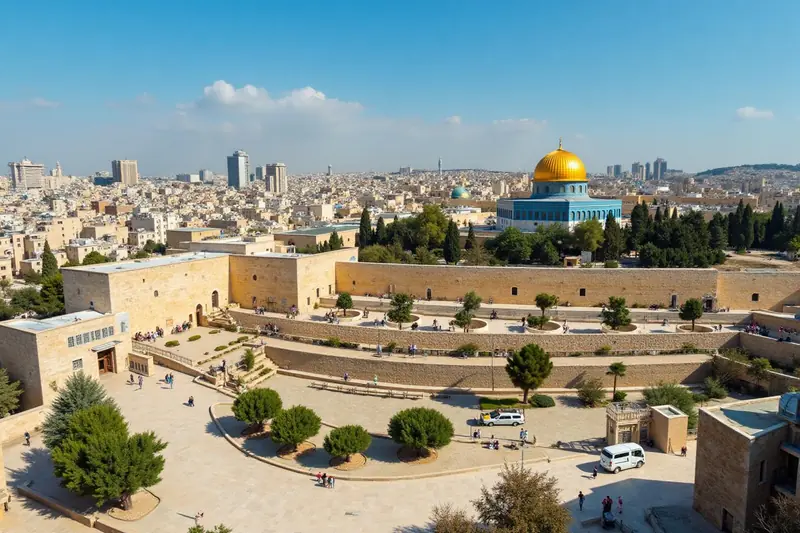
According to the Bible, Solomon built the First Temple here; no excavation is possible.
On site: The esplanade, the Dome of the Rock and, below, the Western Wall and the Ophel excavations.
1200–586 BCE
From charismatic leaders to the kingdoms of Israel and Judah: six centuries of biblical history illuminated by Iron Age excavations and inscriptions.
Credit: Jan van den Hoecke · public domain · Wikimedia Commons
Period 4 of 10 · Old Testament
Seven places keep the memory of these stories, from Tel Dan to Ein Gedi; three of them are in Judea and Samaria, where access depends on current conditions. Add them to your itinerary in one click.
Story 2 · David and SolomonRestricted accessAccording to the Bible, Solomon built the First Temple here; no excavation is possible.
On site: The esplanade, the Dome of the Rock and, below, the Western Wall and the Ophel excavations.
 Story 2 · David and Solomon
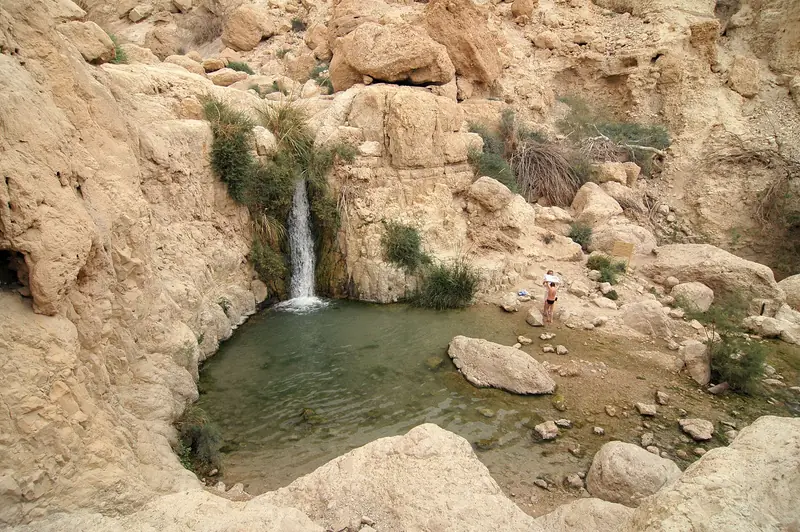
David hid here from Saul and cut off a corner of his robe in a cave (1 Samuel 24).
On site: The waterfalls of Nahal David, the Nubian ibex and the ancient synagogue with its bird mosaic.
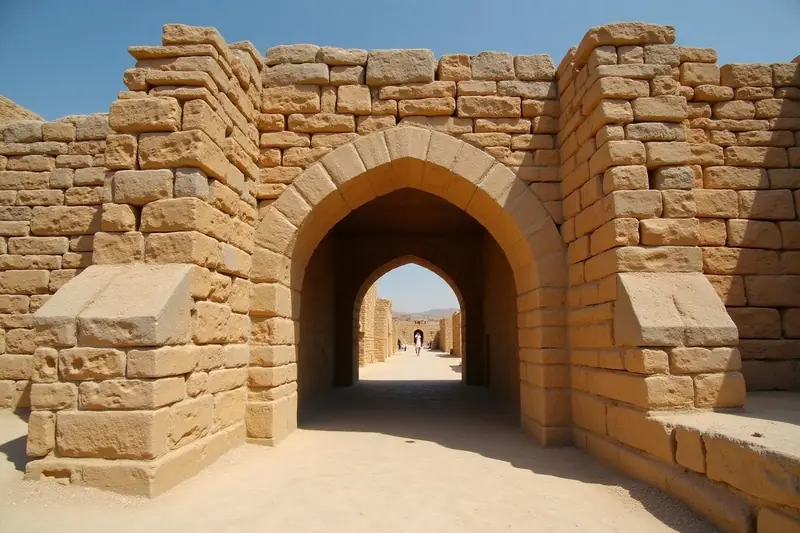 Story 3 · The two kingdoms
The "House of David" stele was found here in 1993; Jeroboam had set up a royal sanctuary on the site.
On site: The Israelite gate, Jeroboam's high place with its reconstructed altar, and the springs of the Jordan.
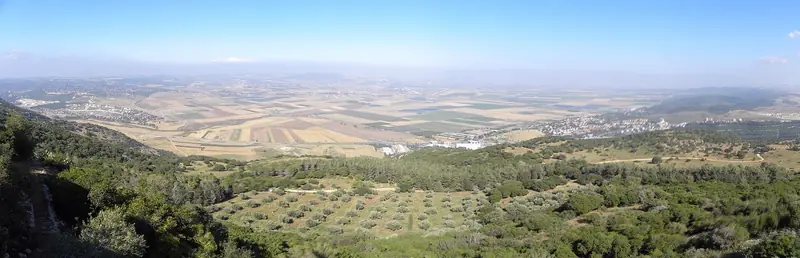 Story 3 · The two kingdoms
Elijah confronted the prophets of Baal here in the reign of Ahab, king of Israel (1 Kings 18).
On site: The Muhraqa monastery, its statue of Elijah and, from the roof, the view over the Jezreel Valley.
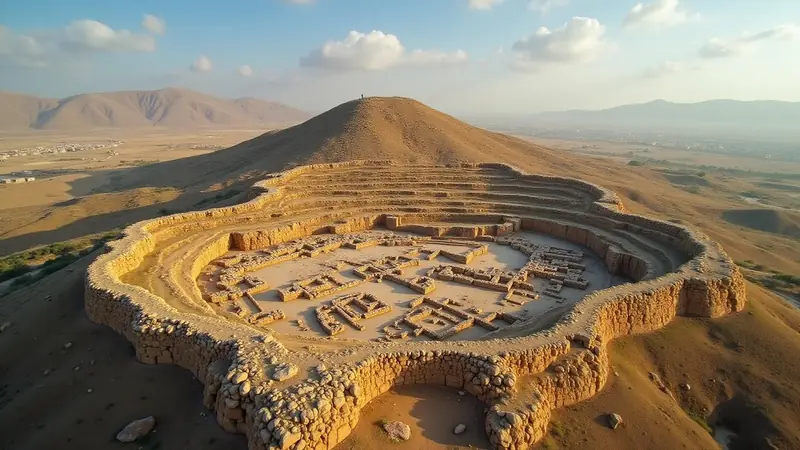 Story 1 · The JudgesCheck access
Abimelech reigned here briefly (Judges 9); Israel gathered here when the kingdom split (1 Kings 12).
On site: The ramparts and fortress-temple of Tel Balata, often linked with the "house of the god Berith" of Judges 9.
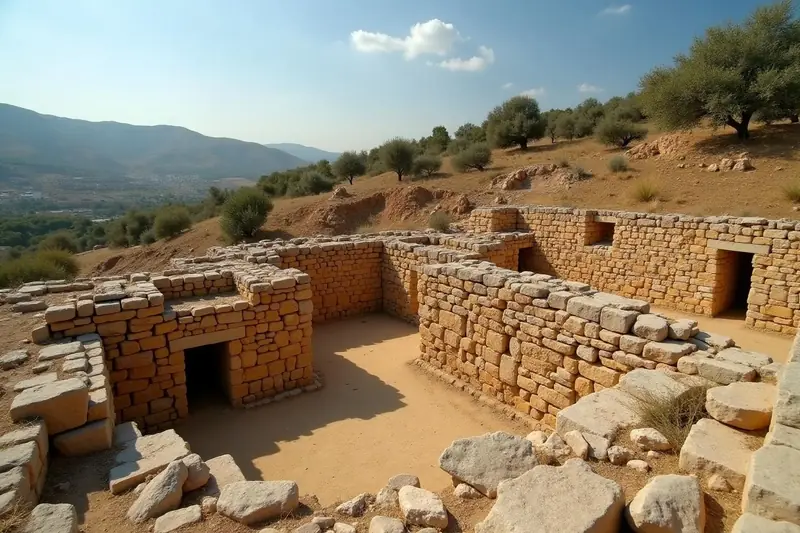 Story 3 · The two kingdomsCheck access
Jeroboam's second royal sanctuary, with Dan; Deborah judged Israel between Ramah and Bethel.
On site: Scattered remains in the village of Beitin and at Burj Beitin; no royal sanctuary has been identified.
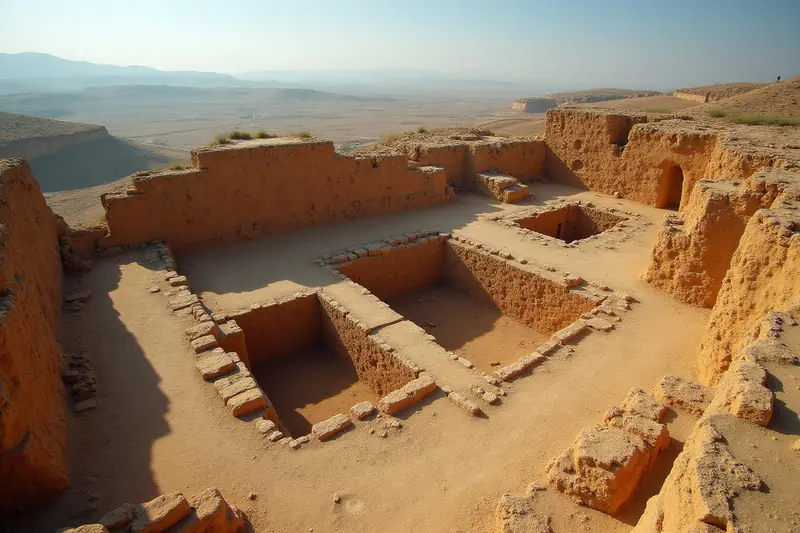 Story 3 · The two kingdomsCheck access
In Elisha's time the Aramean army surrounded the prophet here (2 Kings 6); a Hebrew bulla of the 9th–8th century was found on the site.
On site: An undeveloped mound without visitor facilities; the main interest is the landscape of the Dothan valley.
Plan my tour
7 stops in Israel, about 12 hours of visits in total. The tour is planned day by day, with driving times.
Visit these places: build my tour (7 stops) →Or add the places one by one with the "Add" button.
Sample itinerary
A suggestion to use as it is or to adapt: the planner works out driving times and spreads the stops over the days.
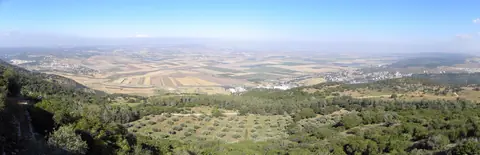 Mount Carmel⏱ 60 min
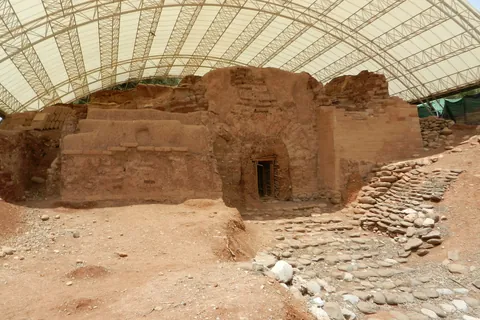 Tel Dan⏱ 120 min
Mount Carmel and Muhraqa in the morning, then Tel Dan, its Israelite gate and its high place in the afternoon.
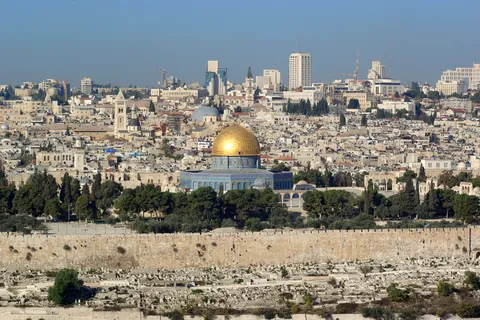 Mount Moriah⏱ 150 min
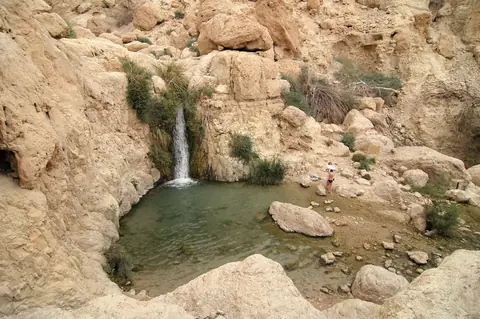 Ein Gedi⏱ 180 min
The Temple Mount and the Western Wall in the morning, then the Ein Gedi oasis in the afternoon.
The period of the Judges and Kings (1200–586 BCE) corresponds to the Iron Age in the land of Israel. It spans the era of the Judges, charismatic tribal leaders; the rise of the monarchy under Saul, David and Solomon; and the parallel history of the kingdoms of Israel and Judah, down to the fall of Samaria (722–720 BCE) and the destruction of Jerusalem by Babylon (586 BCE). It is the fourth of the five great periods of the Old Testament in Israel.
It is also one of the periods best documented by archaeology: for the first time, extra-biblical inscriptions name kings of Israel and Judah, and Assyrian annals intersect with the account of the books of Kings. Some questions nonetheless remain hotly debated, starting with the extent of the kingdom of David and Solomon.
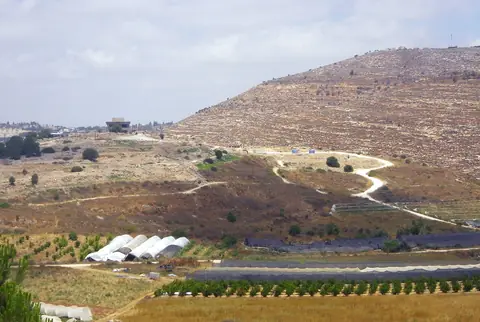 1
Judges; 1 Samuel 1–7
The Judges
Charismatic leaders, the sanctuary at Shiloh and the Philistine threat.
📍 2 places to visit
1
Judges; 1 Samuel 1–7
The Judges
Charismatic leaders, the sanctuary at Shiloh and the Philistine threat.
📍 2 places to visit
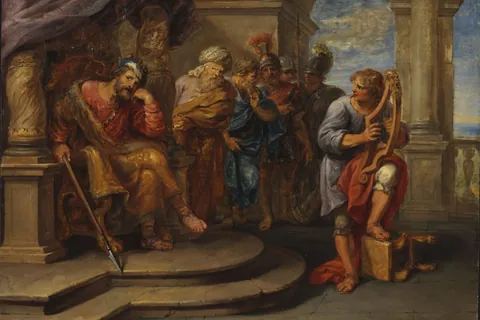 2
1–2 Samuel; 1 Kings 1–11
David and Solomon
Jerusalem as capital, the First Temple and the debate over the "United Monarchy".
📍 2 places to visit
2
1–2 Samuel; 1 Kings 1–11
David and Solomon
Jerusalem as capital, the First Temple and the debate over the "United Monarchy".
📍 2 places to visit
 3
1 Kings 12 – 2 Kings 25
The two kingdoms
Two kingdoms, the first inscriptions naming their kings, and Assyria.
📍 5 places to visit
3
1 Kings 12 – 2 Kings 25
The two kingdoms
Two kingdoms, the first inscriptions naming their kings, and Assyria.
📍 5 places to visit
Story 1 · Judges; 1 Samuel 1–7
"In those days there was no king in Israel: every man did that which was right in his own eyes."
Judges 21:25 (KJV)
Story 1 · The JudgesCheck accessAbimelech reigned here briefly (Judges 9); Israel gathered here when the kingdom split (1 Kings 12).
On site: The ramparts and fortress-temple of Tel Balata, often linked with the "house of the god Berith" of Judges 9.
Story 3 · The two kingdomsCheck accessJeroboam's second royal sanctuary, with Dan; Deborah judged Israel between Ramah and Bethel.
On site: Scattered remains in the village of Beitin and at Burj Beitin; no royal sanctuary has been identified.
After the settlement in Canaan, the book of Judges describes a tribal society without central authority, in which charismatic leaders — Deborah, Gideon, Jephthah, Samson — rise up against outside threats: Canaanites, Midianites, Ammonites and above all the Philistines.
Excavations at sites such as Hazor, Megiddo and Gezer reveal a period of cultural transition, marked by the collapse of the Canaanite city-states and the retreat of Egyptian rule in the 12th century BCE. At the same time, hundreds of small villages appear in the hill country: the remains show a society in the making, settling down and organising itself around terraced farming and cisterns. On the coast, the Philistines, who came from the Aegean world, founded a pentapolis — Ashdod, Ashkelon, Gaza, Gath and Ekron — whose material culture, with its painted Mycenaean-style pottery, is well identified.
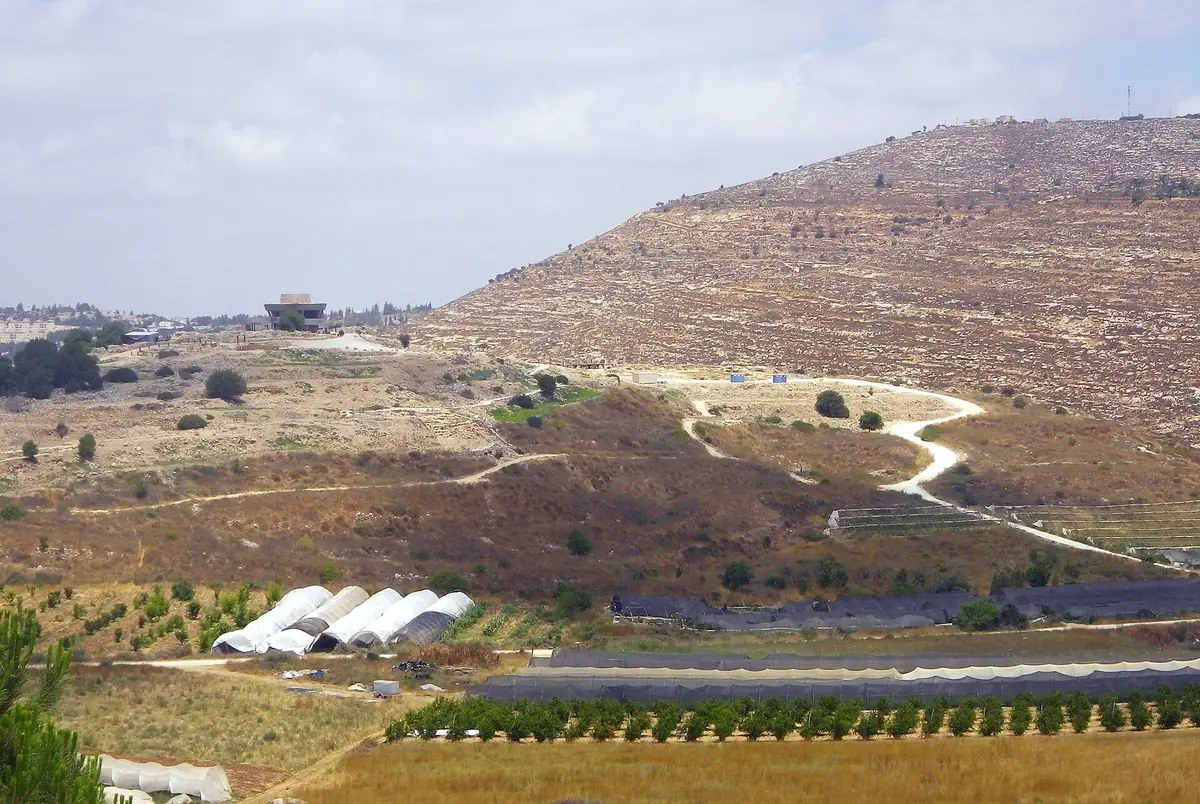
Samarian hills, between Bethel and ShechemShiloh (Tel Shiloh): sanctuary of the Tent of MeetingIsrael's first great sanctuary according to the Bible: Joshua sets up the Tent of Meeting here, Hannah prays for a son, and Samuel grows up beside the priest Eli.View site →
According to the books of Joshua and Samuel, Shiloh housed the Tabernacle and the Ark of the Covenant; it was there that the prophet Samuel grew up. Tel Shiloh, excavated by a Danish team in the 1920s and 1930s and later by Israel Finkelstein (1981–1984), yielded a substantial Iron Age I village with large storage buildings, destroyed by fire around the mid-11th century BCE. This destruction is often linked with the defeat at Ebenezer at the hands of the Philistines (1 Samuel 4) and with the memory of it preserved by the prophet Jeremiah (Jeremiah 7:12).
Story 2 · 1–2 Samuel; 1 Kings 1–11
"Nevertheless David took the strong hold of Zion: the same is the city of David."
2 Samuel 5:7 (KJV)
Story 2 · David and SolomonRestricted accessAccording to the Bible, Solomon built the First Temple here; no excavation is possible.
On site: The esplanade, the Dome of the Rock and, below, the Western Wall and the Ophel excavations.
Story 2 · David and SolomonDavid hid here from Saul and cut off a corner of his robe in a cave (1 Samuel 24).
On site: The waterfalls of Nahal David, the Nubian ibex and the ancient synagogue with its bird mosaic.
The Bible presents Saul as Israel's first king, then David, who takes Jerusalem from the Jebusites and makes it his capital, and Solomon, builder of the First Temple and of a prosperous kingdom. The extent and wealth of this "United Monarchy" of the 10th century BCE are now at the heart of archaeological debate.
On the ridge running south of the Temple Mount, excavations in the City of David have uncovered the "Stepped Stone Structure", a massive retaining wall, and a large building that archaeologist Eilat Mazar identified in 2005 as David's palace. The dating of these palatial structures — 10th or 9th century, or even earlier for part of them — remains disputed, as does the actual importance of Jerusalem at that time.
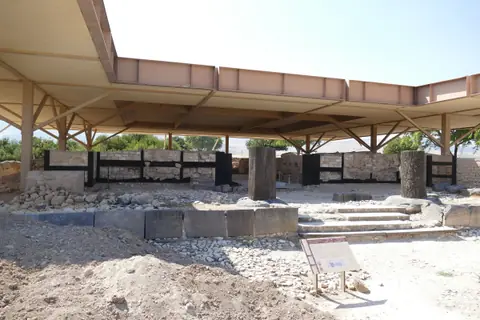 Upper Galilee, near Rosh PinaTel Hazor: the Canaanite capital of Joshua 11"The head of all those kingdoms": the largest Canaanite city in the land, its destruction by fire and an archaeological debate that is still open.View site →
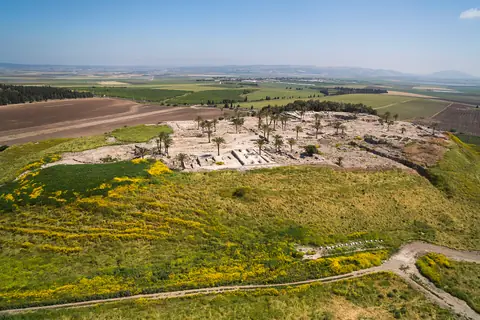 Jezreel Valley, GalileeTel Megiddo: a Canaanite city in the time of JoshuaA Canaanite city the Bible says was defeated but never dispossessed: four thousand years of history at the crossroads of Egypt and Mesopotamia.View site →
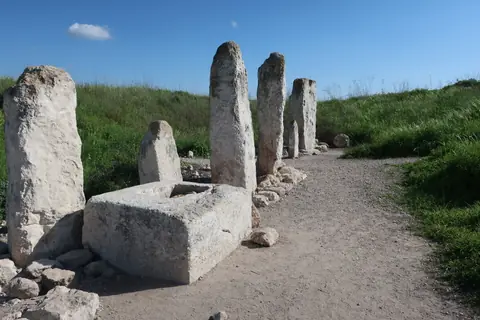 Shephelah, between Jerusalem and Tel AvivTel Gezer: The Canaanite City from Joshua to SolomonA powerful Canaanite city that the Book of Joshua says was never taken, named by the pharaohs of the Amarna age and by Merneptah, then rebuilt under Solomon.View site →
1 Kings 9:15 credits Solomon with building Hazor, Megiddo and Gezer. In the 1950s and 1960s Yigael Yadin identified at these sites six-chambered gates of almost identical plan, which he attributed to the builder king. In the 1990s Israel Finkelstein proposed a "Low Chronology" that lowers these constructions by about a century, to the time of the Omride kings of Israel; the debate, fuelled by radiocarbon dating, is not closed. The famous "Solomon's stables" at Megiddo are now dated to the 9th or 8th century, and some see them as storehouses instead.
Other sites feed the discussion, such as the fortress of Khirbet Qeiyafa overlooking the Elah Valley, the setting of the fight between David and Goliath (1 Samuel 17, where the Philistines camp near Azekah); it dates from the late 11th or early 10th century BCE, and its attribution to the kingdom of Judah, argued by its excavators, is contested by other scholars. As for the port of Ezion-geber, which Nelson Glueck identified with Tell el-Kheleifeh near Eilat and which was supposed to reveal the scale of Solomon's trade, its 10th-century dating was abandoned after the excavation records were re-examined.
Story 3 · 1 Kings 12 – 2 Kings 25
"And the rest of the acts of Hezekiah, and all his might, and how he made a pool, and a conduit, and brought water into the city, are they not written in the book of the chronicles of the kings of Judah?"
2 Kings 20:20 (KJV)
Story 3 · The two kingdomsThe "House of David" stele was found here in 1993; Jeroboam had set up a royal sanctuary on the site.
On site: The Israelite gate, Jeroboam's high place with its reconstructed altar, and the springs of the Jordan.
Story 3 · The two kingdomsElijah confronted the prophets of Baal here in the reign of Ahab, king of Israel (1 Kings 18).
On site: The Muhraqa monastery, its statue of Elijah and, from the roof, the view over the Jezreel Valley.
Story 1 · The JudgesCheck accessAbimelech reigned here briefly (Judges 9); Israel gathered here when the kingdom split (1 Kings 12).
On site: The ramparts and fortress-temple of Tel Balata, often linked with the "house of the god Berith" of Judges 9.
Story 3 · The two kingdomsCheck accessJeroboam's second royal sanctuary, with Dan; Deborah judged Israel between Ramah and Bethel.
On site: Scattered remains in the village of Beitin and at Burj Beitin; no royal sanctuary has been identified.
Story 3 · The two kingdomsCheck accessIn Elisha's time the Aramean army surrounded the prophet here (2 Kings 6); a Hebrew bulla of the 9th–8th century was found on the site.
On site: An undeveloped mound without visitor facilities; the main interest is the landscape of the Dothan valley.
After Solomon's death, around 930 BCE, the kingdom splits: Israel in the north, with Samaria as its capital from King Omri onwards, and Judah in the south, centred on Jerusalem and the Davidic dynasty. From this time on, outside sources multiply.
At Samaria, capital of the kingdom of Israel, excavations have produced a royal palace, magnificent carved ivories — recalling Ahab's "ivory house" (1 Kings 22:39) — and administrative ostraca in ancient Hebrew. In both kingdoms, hundreds of seals and seal impressions (bullae) bear names known from the Bible and document royal administration, such as the bulla of King Hezekiah unearthed on the Ophel, at the foot of the Temple Mount, and published in 2015. For a recent example of these small objects that shed light on great history, read our article on the Akkadian seal found in Jerusalem.
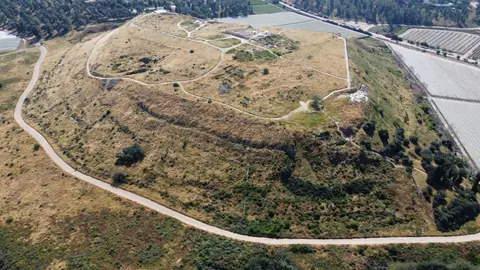 Shephelah, near Kiryat GatTel Lachish: The Canaanite City Taken by JoshuaA royal Canaanite city under Egyptian rule, Lachish is one of the southern cities Joshua is said to have taken. Its excavations tell a more complex, and longer, story.View site →
Facing the Assyrian threat, King Hezekiah (late 8th century BCE) fortified Jerusalem — a section of his "Broad Wall" is still visible in the Jewish Quarter — and had a 533-metre tunnel cut to bring water from the Gihon Spring to the Pool of Siloam, inside the city.
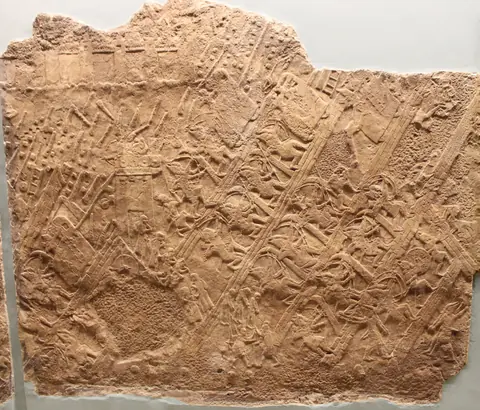
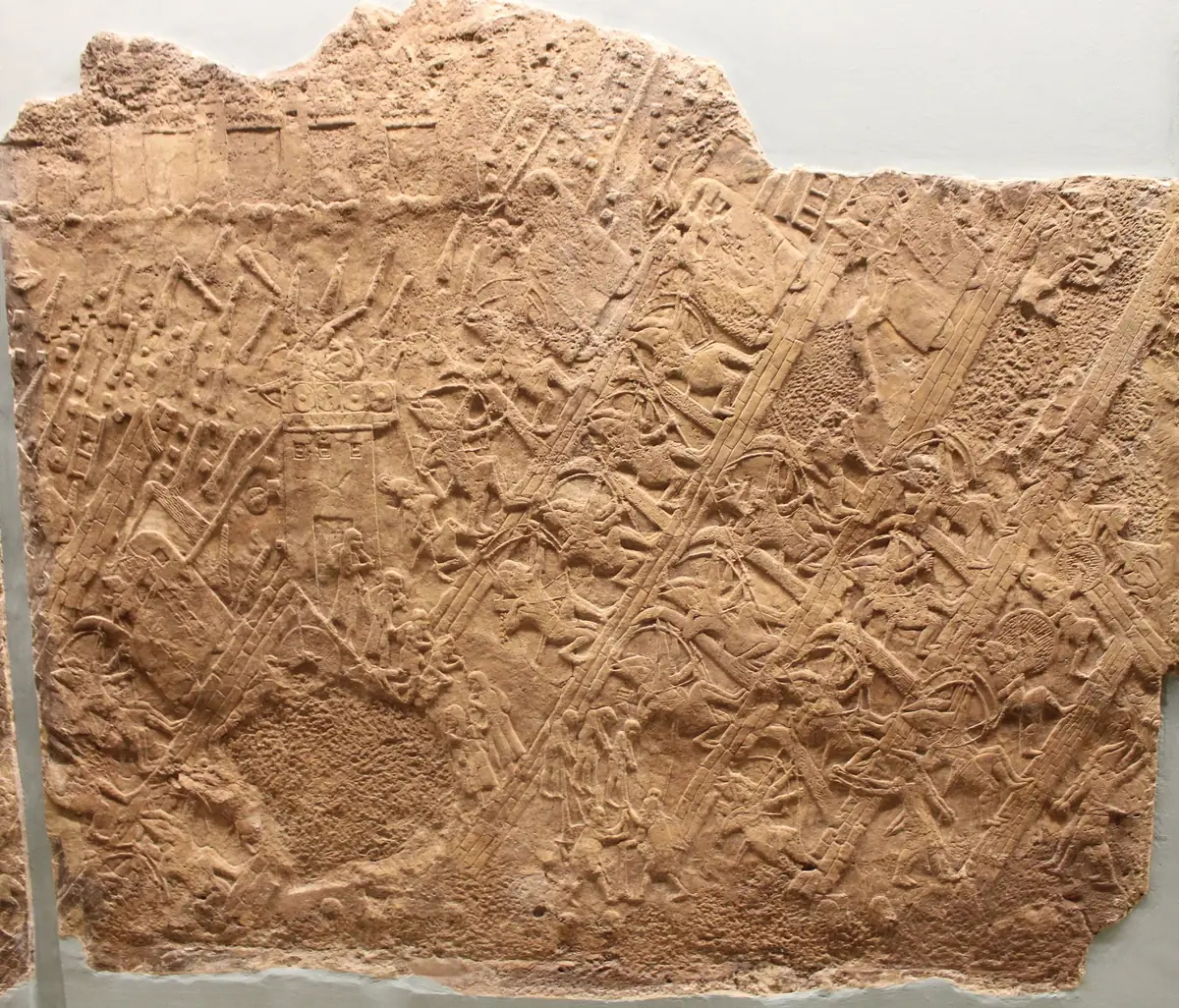
The Siloam Inscription, carved in the tunnel and discovered in 1880, describes the moment the two teams of diggers met; the original is kept at the Istanbul Archaeology Museums. In 701 BCE Sennacherib seized Lachish, the second city of Judah: the reliefs from his palace at Nineveh, now in the British Museum, depict the assault on the walls, and the Assyrian siege ramp can still be seen at Tel Lachish.
The kingdom of Judah survived for more than another century, until the campaigns of Nebuchadnezzar and the destruction of Jerusalem in 586 BCE, which opens the period of Exile and Return.
Iron Age remains are among the most spectacular in the country. Beyond the seven places presented at the top of this page, these are the other must-sees:
Charismatic leaders, military and sometimes judicial, who according to the book of Judges led one or more tribes before the monarchy was established: Othniel, Deborah, Gideon, Jephthah, Samson, down to Samuel. The book presents their story as a cycle of unfaithfulness, oppression and deliverance.
The Tel Dan Stele (9th century BCE) mentions the "House of David", that is, the dynasty bearing his name: most specialists take it as evidence that, a century and a half later, David was regarded as the founder of Judah's royal dynasty. The extent of his kingdom, on the other hand, remains debated.
No. No excavation is possible on the Temple Mount, and no remains of the First Temple have been securely identified. Sanctuaries of the same period, such as the one at Ain Dara in Syria, offer parallels to the plan described in 1 Kings 6, and objects from the First Temple period have been found around the Mount.
A 533-metre underground channel cut in the late 8th century BCE to carry water from the Gihon Spring to the Pool of Siloam, protected within Jerusalem's walls (2 Kings 20:20; 2 Chronicles 32:30). The Siloam Inscription commemorates the meeting of the two teams of diggers. Today you can walk through it in the City of David.
These reliefs from Sennacherib's palace at Nineveh, kept in the British Museum, depict the siege and capture of Lachish in 701 BCE: battering rams, archers, the siege ramp and the deportation of the inhabitants. The Assyrian ramp and the Judahite counter-ramp were found during the excavations at Tel Lachish.
The northern kingdom fell in 722–720 BCE, when the Assyrians took Samaria and deported part of its population (2 Kings 17). The kingdom of Judah survived until the capture of Jerusalem by the Babylonians in 586 BCE.
The must-sees are the City of David in Jerusalem, Tel Megiddo, Tel Hazor and Tel Beersheba (all three on the UNESCO list), Tel Lachish and Tel Dan. The Israel Museum displays the Tel Dan Stele.