
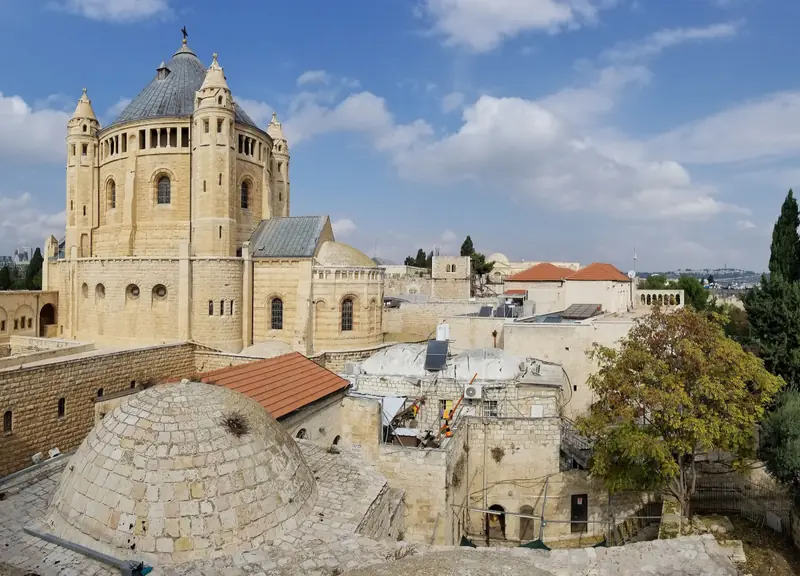
Mount Zion
The Upper Room and David's Tomb
Page coming soon
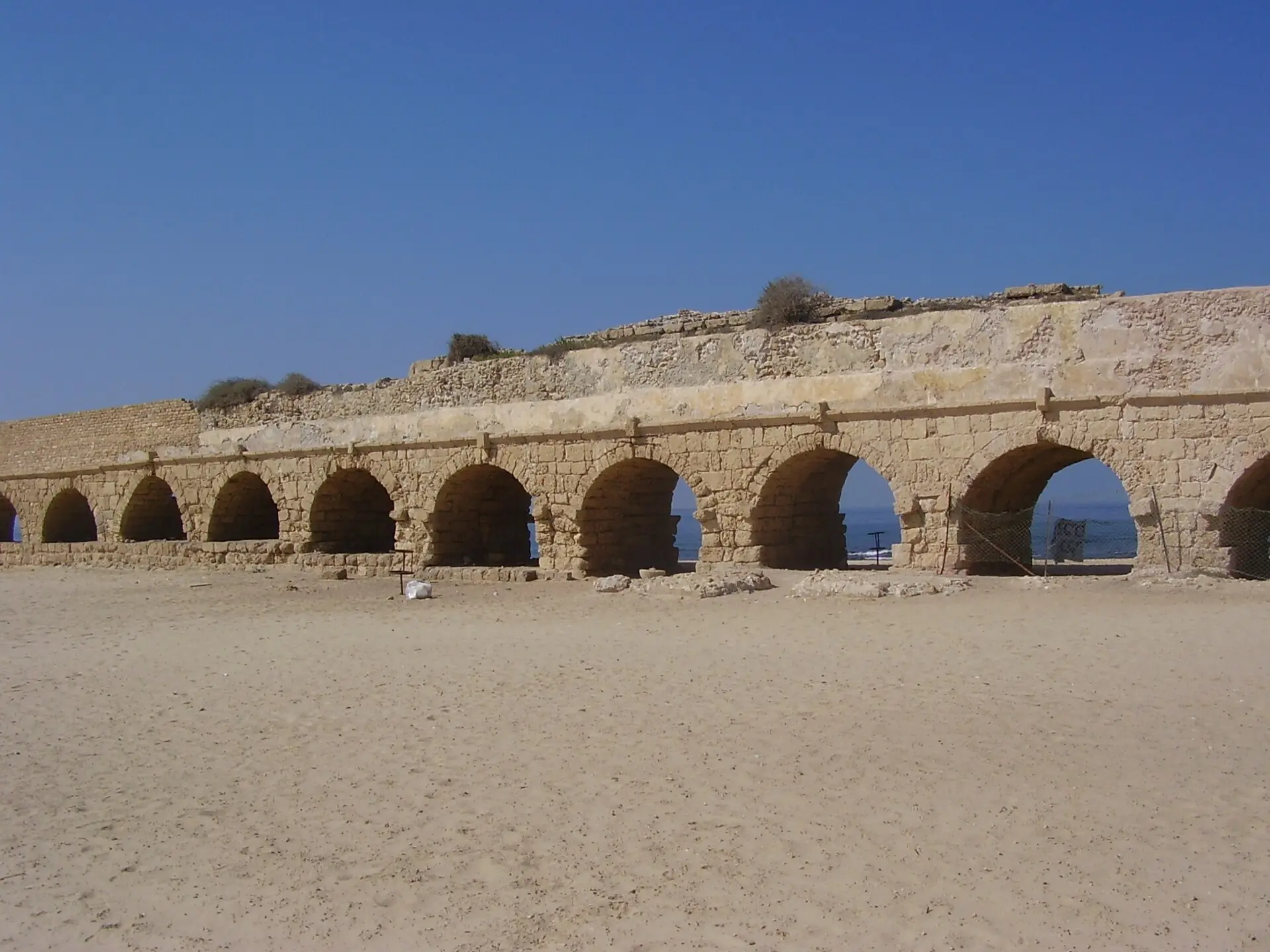
AD 30 – 70
From Jerusalem to the Mediterranean: the first disciples, Peter in Jaffa, Paul in Caesarea, until the destruction of the Temple.
Credit: Dr. Avishai Teicher · CC BY 2.5 · Wikimedia Commons
The Acts of the Apostles tell how the disciples of Jesus, gathered in Jerusalem, spread their message first in the city, then in Judea, Samaria and as far as Rome. Two coastal towns, Jaffa and Caesarea, play a key role in the story.
This period ends with the Great Jewish Revolt and the destruction of the Temple in AD 70, told in the Second Temple period.
"Ye shall be witnesses unto me both in Jerusalem, and in all Judaea, and in Samaria, and unto the uttermost part of the earth."
Acts 1:8
3 places covered on this page. Tap a point on the map to open its guide.
Visit these places: build my tour (3 stops) →
The Upper Room and David's Tomb
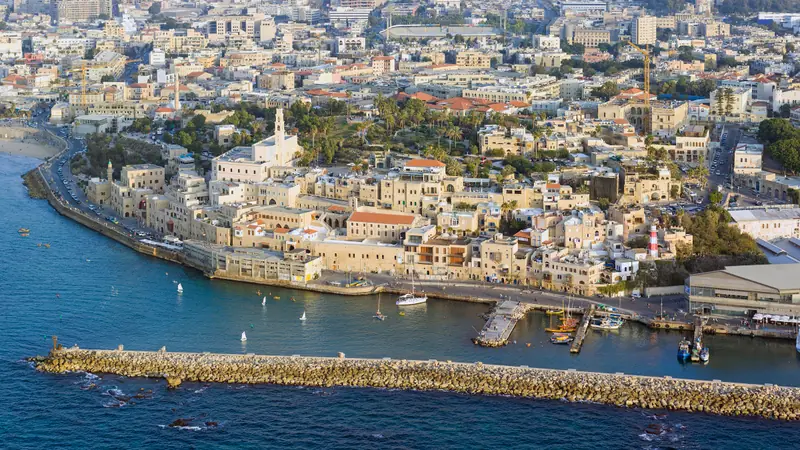
The port of Jonah and Peter
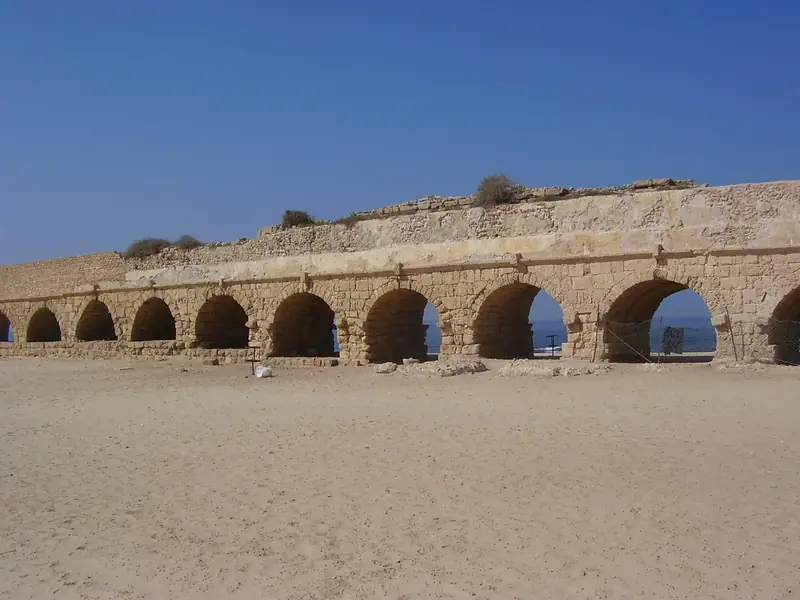
Herod's harbour city
Fifty days after Passover, at the Jewish feast of Shavuot, the disciples gathered in Jerusalem receive the Holy Spirit: this is Pentecost (Acts 2). Tradition places it in the Upper Room on Mount Zion. The first community lives in Jerusalem around Peter and James.
The account of Acts begins where that of the Passion in Jerusalem ends.
In Jaffa, Peter raises Tabitha and stays with Simon the tanner, where he receives the vision that sends him to the centurion Cornelius at Caesarea (Acts 9-10). Caesarea, the great harbour built by Herod, was also the seat of the Roman governors: Paul was held prisoner there for two years before being sent to Rome (Acts 23-26).
It was in the theatre of Caesarea that a stone engraved with the name of Pontius Pilate was found in 1961, the only known inscription from his lifetime that bears his name.
In Jerusalem, according to chapter 2 of the Acts of the Apostles. Tradition places it in the Upper Room on Mount Zion, where it also locates the last meal of Jesus.
Peter brings a disciple named Tabitha back to life, then stays with Simon the tanner, where a vision invites him to go to the centurion Cornelius at Caesarea (Acts 9-10).
Arrested in Jerusalem, he was transferred to Caesarea, seat of the Roman governor, and held there for two years under the governors Felix and then Festus. He appealed to the emperor and left for Rome (Acts 23-26).
One day is enough: Caesarea in the morning (2 to 3 hours on site), then Jaffa at the end of the day, an hour's drive to the south.
A copy is displayed on the site at Caesarea; the original is kept at the Israel Museum in Jerusalem.