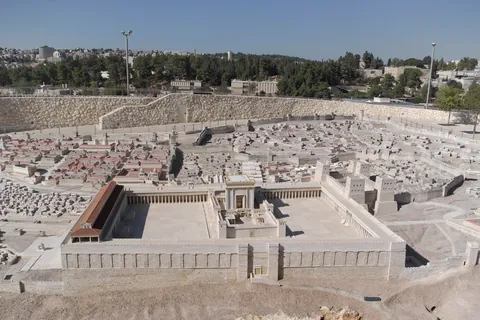
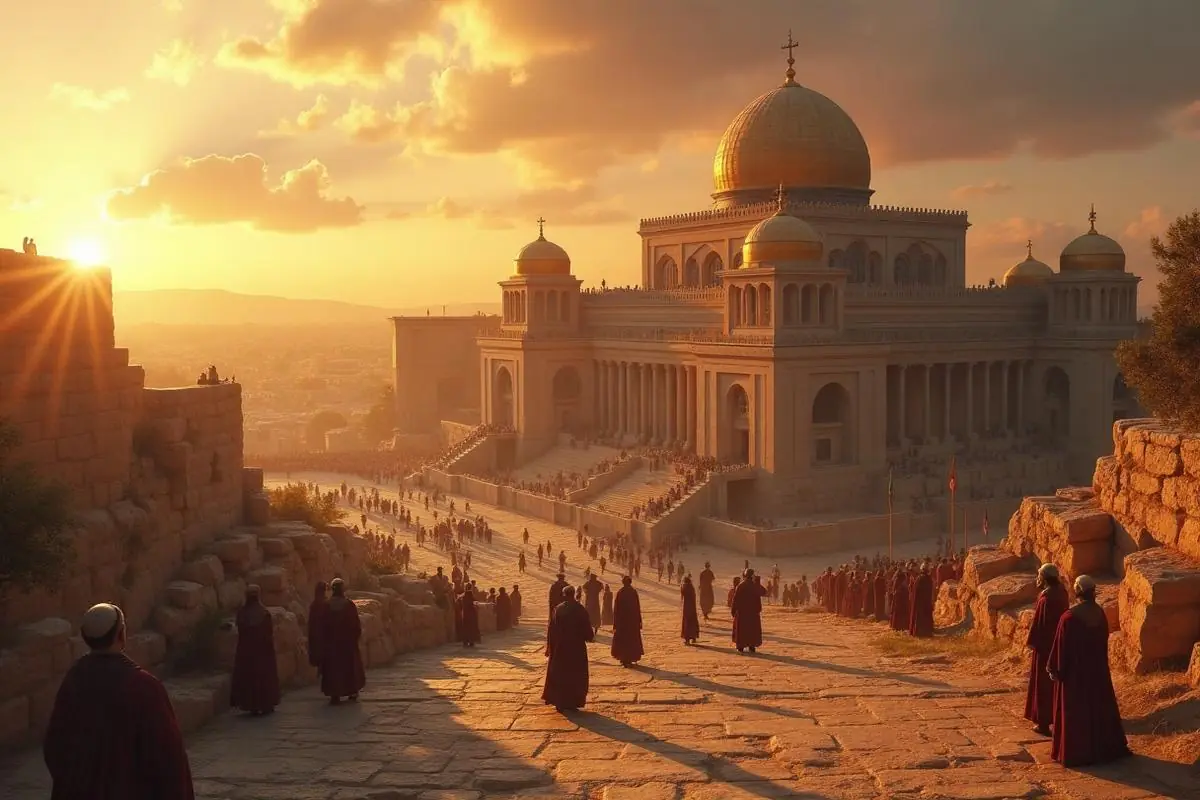
Model of ancient Jerusalem with the Temple in the middle of its esplanade

332 BCE – 70 CE

  • Between the Testaments

The Second Temple Period

From the Maccabees to Herod, from Qumran to Masada: four decisive centuries for Judaism and the birth of Christianity.

Credit: Berthold Werner · public domain · Wikimedia Commons

  • 4centuries, from 332 BCE to 70 CE
  • ≈ 900manuscripts found at Qumran
  • 8places to visit in Israel
  • ≈ 17 hof visiting time in all
  • 70CE: the Temple is destroyed

In brief

Period 6 of 10 · Between the Testaments

The chapters
Four stories, from Alexander's conquest (332 BCE) to the fall of Masada (73 or 74 CE): the Maccabees, the Hasmoneans and Qumran, Herod, the Great Revolt.
The characters
Alexander the Great, Antiochus IV, Judah the Maccabee, John Hyrcanus, Pompey, Herod the Great, Titus; Flavius Josephus tells the end of the story.
Where to visit
Jerusalem first (Temple Mount, Western Wall, City of David, Israel Museum), then the Dead Sea with Qumran and Masada; Hebron and Shechem are in Judea and Samaria.
How long
Two days: one day in Jerusalem, one day for Qumran and Masada.
  1. 1 The Origins
  2. 2 The Patriarchs
  3. 3 The Exodus
  4. 4 Judges and Kings
  5. 5 Exile and Return
  6. 6 The Second Temple
  7. 7 Birth and Childhood of Jesus
  8. 8 The Ministry in Galilee
  9. 9 The Passion in Jerusalem
  10. 10 The Apostles and the Early Church

Places to visit linked to the Second Temple

The Temple itself is gone, but Herod's esplanade, the caves of Qumran and the rock of Masada can all be visited. Eight places, from Jerusalem to the Dead Sea, to add to your tour in one click.

Story 3 · Herod and the Temple

Old City of Jerusalem · ⏱ 150 min

Mount Moriah

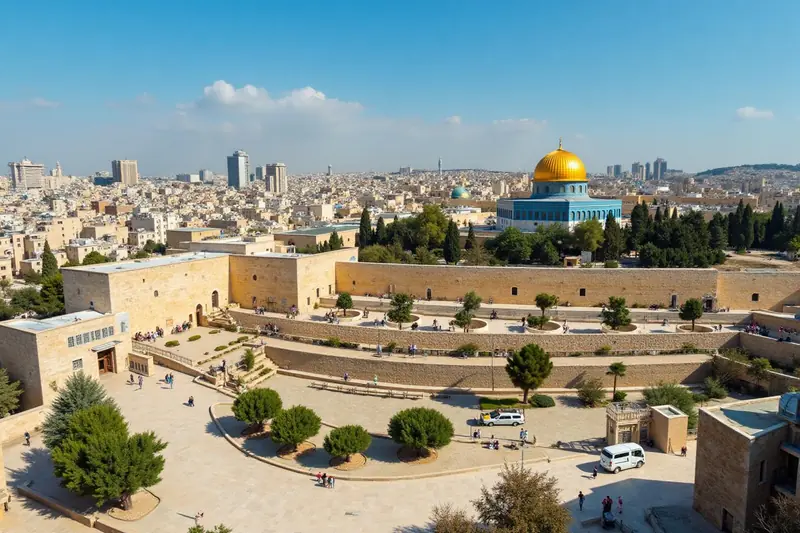
The esplanade Herod enlarged from 20–19 BCE, where the Temple destroyed in 70 CE once stood.

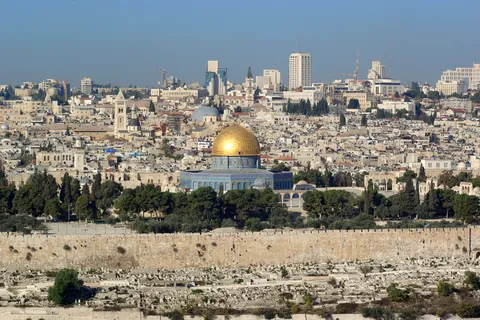
On site: The esplanade, the Dome of the Rock and, below it, the Western Wall and the archaeological park to the south.

Story 3 · Herod and the TempleControlled access

Hebron, Judaean Hills · ⏱ 90 min

Hebron

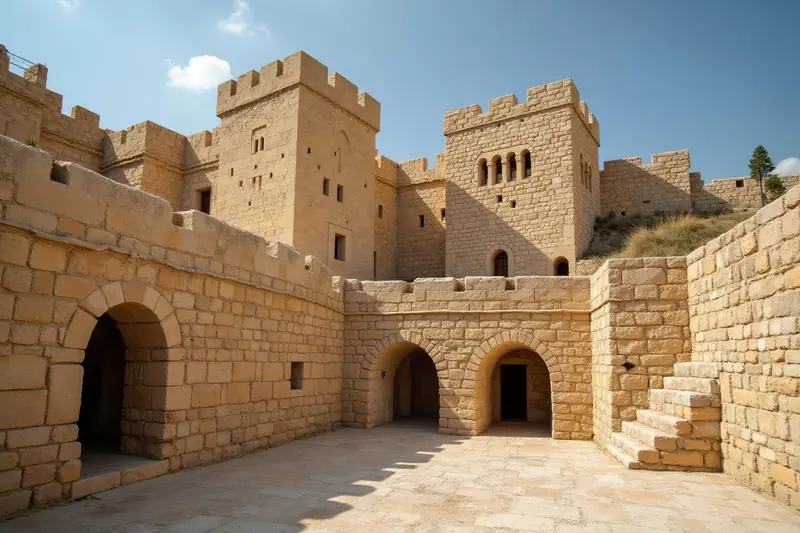
Herod built the monumental enclosure that still surrounds the Cave of Machpelah.

On site: The Herodian shell of large blocks, the prayer halls and the cenotaphs of the Patriarchs.

Story 2 · The Hasmoneans

Nablus, Samarian hills · ⏱ 90 min

Shechem

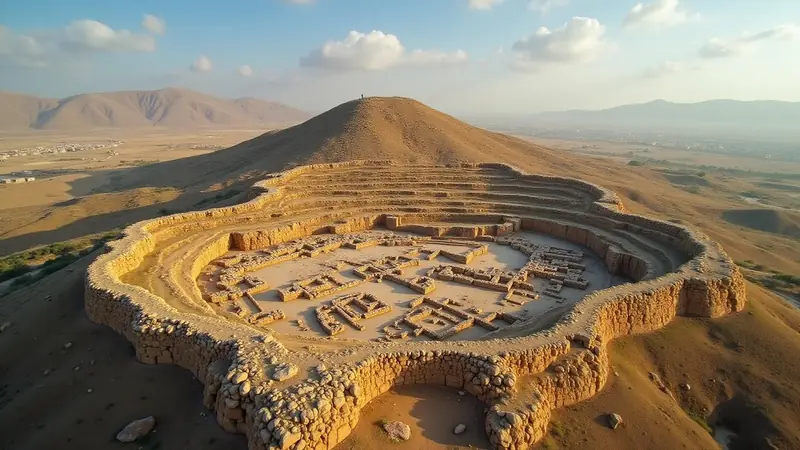
A Samaritan town in the Hellenistic period, destroyed at the end of the 2nd century BCE, when the Hasmoneans were expanding into Samaria.

On site: The ramparts, the monumental gates and the fortress-temple of Tel Balata, in the middle of Nablus.

Story 2 · The Hasmoneans

North-western shore of the Dead Sea · ⏱ 75 min

Qumran

Eleven caves yielded some 900 manuscripts copied between the 3rd century BCE and the 1st century CE.

On site: The ruins of Khirbet Qumran (tower, pools, "scriptorium") and the lookout facing Cave 4.

Story 4 · The Great Revolt

Judean Desert, western shore of the Dead Sea · ⏱ 180 min

Masada

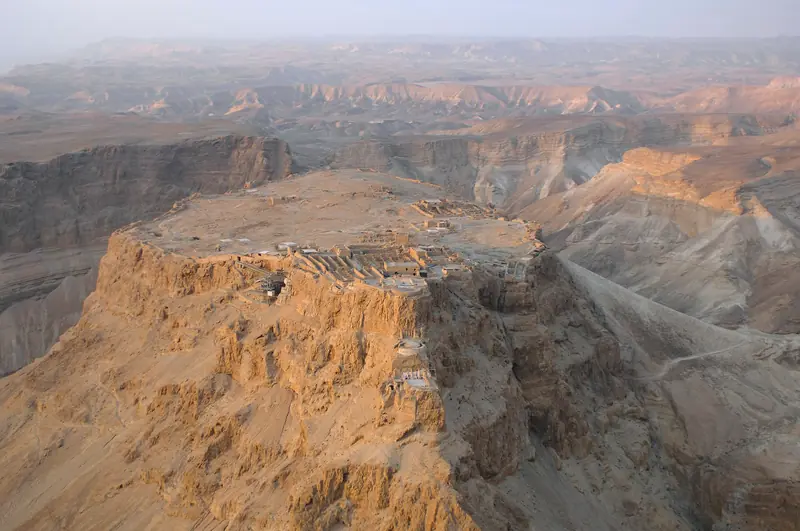
Herod's palace-fortress, then the rebels' last stronghold, which fell in 73 or 74 CE.

On site: The Northern Palace, the bathhouse, the synagogue, the cisterns and the views over the Roman ramp and camps.

Plan my tour

All these places in one tour

8 stops in Israel, about 17 hours of visits in total. The tour is planned day by day, with driving times.

Visit these places: build my tour (8 stops) →

Or add the places one by one with the "Add" button.

Sample itinerary

The Second Temple in 2 days

A suggestion to use as it is or to adapt: the planner works out driving times and spreads the stops day by day.

  1. Day 1 · Jerusalem

    • Mount Moriah⏱ 150 min
    • Western Wall⏱ 60 min
    • Israel Museum⏱ 180 min

    The Temple Mount and the Western Wall in the morning, then the Shrine of the Book and the model of Jerusalem at the Israel Museum in the afternoon.

  2. Day 2 · Dead Sea

    The ruins and caves of Qumran in the morning, then Herod's palaces and the Roman ramp at Masada.

Take this tour (5 stops) → With half a day more in Jerusalem: the City of David (Pool of Siloam) and the Burnt House in the Jewish Quarter. Hebron, Herodium, Shechem and Caesarea each need a detour.

The 4 stories, from the Maccabees to the fall of Jerusalem

The Second Temple period runs from the rebuilding of the Temple in Jerusalem, completed around 516 BCE, to its destruction by the Romans in 70 CE. This page focuses on its last four centuries, from the conquest of Alexander the Great (332 BCE) to the fall of Jerusalem: the Hellenistic age, the Hasmonean kingdom, the reign of Herod and Roman rule. The Persian beginnings of the period are covered in Exile and Return. It bridges the Old Testament and the New Testament.

It is one of the best-documented eras of ancient Jewish history. Alongside the latest books of the Bible we have the books of Maccabees, the Dead Sea Scrolls, the works of the historian Flavius Josephus and the New Testament; archaeology reveals the richness and complexity of a world in which rabbinic Judaism and Christianity took shape.

  • Ruling powersPtolemies and Seleucids, the Hasmonean kingdom, then Rome
  • Key dates164 BCE: Temple rededicated; 63 BCE: Pompey in Jerusalem; 70 CE: Temple destroyed
  • SourcesMaccabees, Josephus, the Dead Sea Scrolls, the New Testament
  • Key sitesTemple Mount, Qumran, Masada, Herodium, Caesarea
  1. 1 1 and 2 Maccabees The Maccabees Yehud, Alexander, the Seleucids, then the revolt that restored the Temple to its worship. 📍 1 place to visit
  2. 2 Flavius Josephus · Dead Sea Scrolls The Hasmoneans An independent Jewish kingdom, the currents of Judaism, and the manuscripts hidden in the caves of Qumran. 📍 3 places to visit
  3. 3 Flavius Josephus · Gospels Herod and the Temple The builder king doubles the Temple esplanade; the Gospels set the last days of Jesus there. 📍 6 places to visit
  4. 4 Flavius Josephus, The Jewish War The Great Revolt From the revolt of 66 to the burning of the Temple in 70, then Masada, the rebels' last stronghold. 📍 3 places to visit

Story 1 · 1 and 2 Maccabees

From the rebuilding to the Maccabees

Model of ancient Jerusalem with the Temple and its esplanade surrounded by porticoes, among the houses of the city
The model of Jerusalem in the Second Temple period, at the Israel Museum (Jerusalem)Credit: Berthold Werner · public domain · Wikimedia Commons

Yehud, Alexander, the Seleucids, then the revolt that restored the Temple to its worship.

The story
After the return from exile, the rebuilt Temple is the heart of the province of Yehud. The books of Maccabees tell of the desecration of the Temple by Antiochus IV in 167 BCE and its purification in 164.
Traditions
Hanukkah commemorates every year the purification of the Temple by Judah the Maccabee; in Alexandria the Septuagint, the Greek translation of the Bible, was undertaken.
What we know
Coins inscribed "Yehud", the Elephantine papyri and a few Persian and Hellenistic remains around the Temple Mount document this Judea of the high priests.

"And all the people shouted with a great shout, when they praised the LORD, because the foundation of the house of the LORD was laid."

Ezra 3:11

Places to visit for this story

Story 3 · Herod and the Temple

Old City of Jerusalem · ⏱ 150 min

Mount Moriah

The esplanade Herod enlarged from 20–19 BCE, where the Temple destroyed in 70 CE once stood.

On site: The esplanade, the Dome of the Rock and, below it, the Western Wall and the archaeological park to the south.

Read the full story 2 min read

After the return from exile, Jerusalem and its rebuilt Temple formed the heart of a small autonomous province, Yehud, led by high priests. Coins of Judea bearing the inscription "Yehud" testify to this relative autonomy, while the Elephantine papyri document the relations of Egypt's Jewish diaspora with Jerusalem. Excavations around the Temple Mount have produced a few elements from the Persian and Hellenistic periods.

In 332 BCE Alexander the Great conquered the region. After his death, Judea passed under the rule of the Ptolemies of Egypt and then, from 200 BCE, of the Seleucids of Syria. Greek culture spread among the elites; it was also in Alexandria that the Greek translation of the Bible, the Septuagint, was undertaken.

The Maccabean revolt

In 167 BCE the Seleucid king Antiochus IV Epiphanes banned the practice of Judaism and desecrated the Temple. The revolt led by the priest Mattathias and his sons, among them Judah the Maccabee, ended with the recapture of Jerusalem and the purification of the Temple in 164 BCE, commemorated by the festival of Hanukkah. Under Simon, around 140 BCE, Judea became independent in all but name: this was the beginning of the Hasmonean dynasty, which combined the high priesthood with, from Aristobulus I onwards, the royal title.

Story 2 · Flavius Josephus · Dead Sea Scrolls

The Hasmonean era

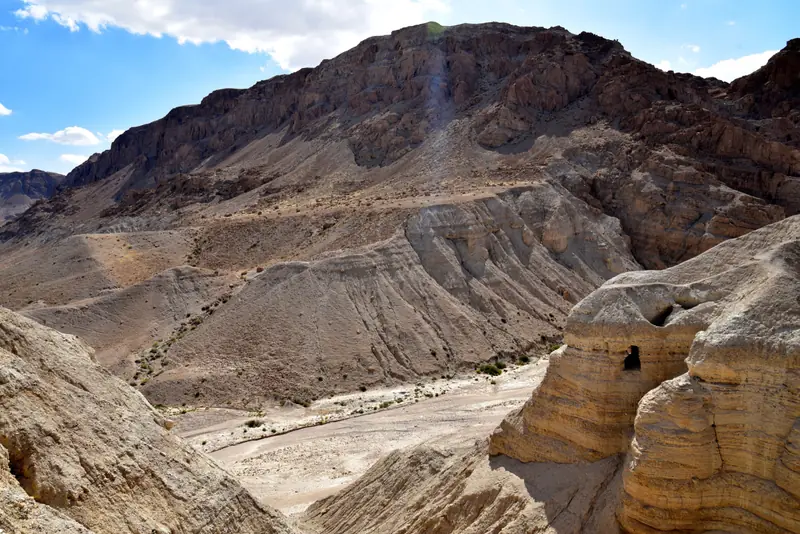
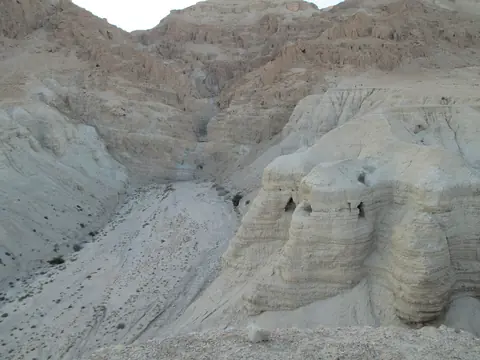
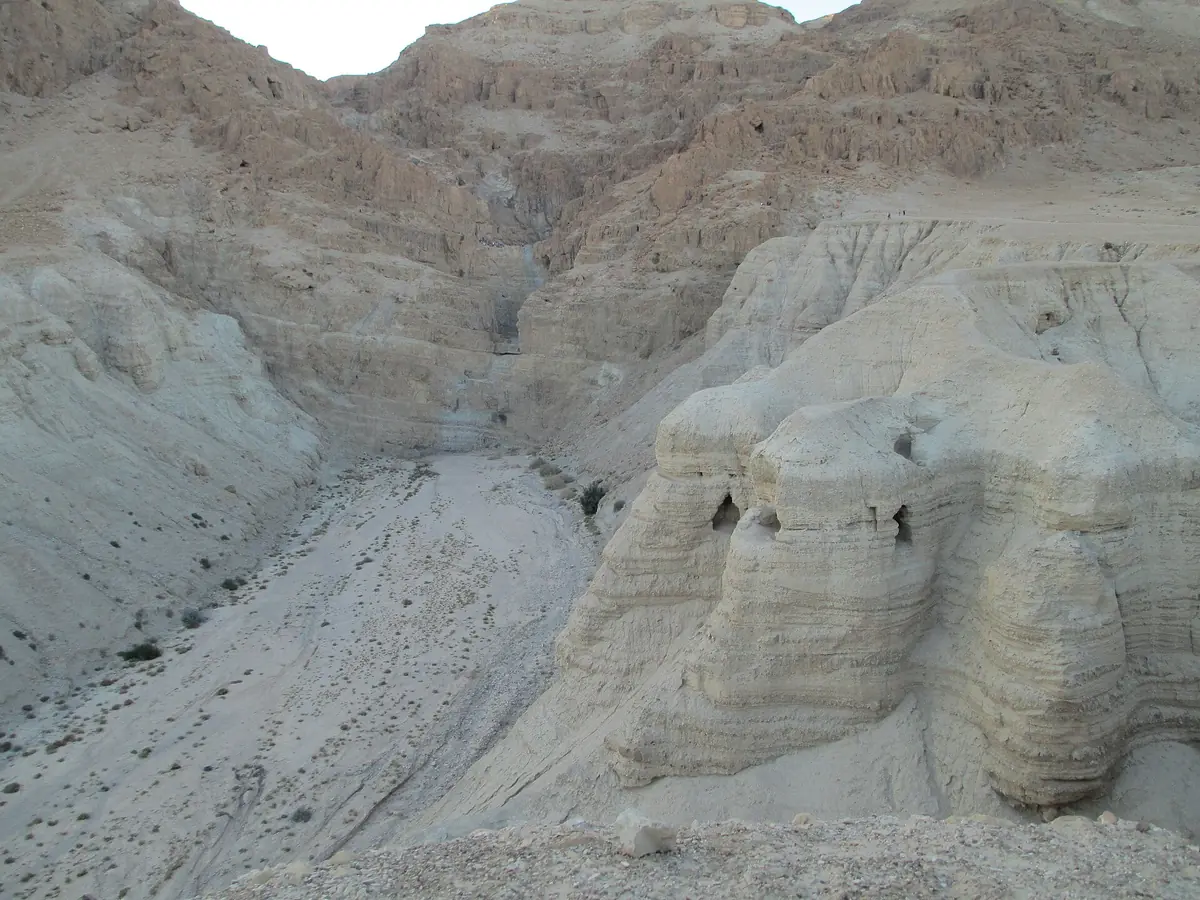
Pale marl terrace carved by erosion and pierced by several cave openings, at the edge of a dry ravine below the cliff
Wadi Qumran and the marl terrace where Cave 4 and other caves openCredit: Dr. Avishai Teicher · CC BY 2.5 · Wikimedia Commons

An independent Jewish kingdom, the currents of Judaism, and the manuscripts hidden in the caves of Qumran.

The story
Josephus describes the expansion of the kingdom under John Hyrcanus and Alexander Jannaeus, the Pharisees, Sadducees and Essenes, then the capture of Jerusalem by Pompey in 63 BCE.
Traditions
The scrolls are most often attributed to a Jewish community identified with the Essenes; other readings see Khirbet Qumran as a villa, a pottery workshop or a small fort.
What we know
Eleven caves yielded some 900 manuscripts copied between the 3rd century BCE and the 1st century CE, among them the Great Isaiah Scroll, very close to the Masoretic text; Hasmonean bronze coins are common finds.

"The grass withereth, the flower fadeth: but the word of our God shall stand for ever."

Isaiah 40:8

Places to visit for this story

Story 2 · The Hasmoneans

Nablus, Samarian hills · ⏱ 90 min

Shechem

A Samaritan town in the Hellenistic period, destroyed at the end of the 2nd century BCE, when the Hasmoneans were expanding into Samaria.

On site: The ramparts, the monumental gates and the fortress-temple of Tel Balata, in the middle of Nablus.

Story 2 · The Hasmoneans

North-western shore of the Dead Sea · ⏱ 75 min

Qumran

Eleven caves yielded some 900 manuscripts copied between the 3rd century BCE and the 1st century CE.

On site: The ruins of Khirbet Qumran (tower, pools, "scriptorium") and the lookout facing Cave 4.

Read the full story 2 min read

Under John Hyrcanus I and Alexander Jannaeus, the Hasmonean kingdom expanded into Idumea, Samaria, Galilee and part of Transjordan. The small bronze coins struck by these kings, inscribed in paleo-Hebrew script, are among the most common finds in excavations. The Hasmonean winter palaces at Jericho, with their swimming pools, bear witness to the dynasty's prosperity, and the desert fortresses — Alexandrium, Hyrcania, Machaerus and, according to Josephus, Masada — show how the kingdom organised its defence against outside pressure.

This is also when the main currents of Judaism described by Josephus took shape: Pharisees, Sadducees and Essenes. In 63 BCE, taking advantage of a civil war between two Hasmonean brothers, the Roman general Pompey captured Jerusalem: Judea entered Rome's orbit.

Qumran and the Dead Sea Scrolls
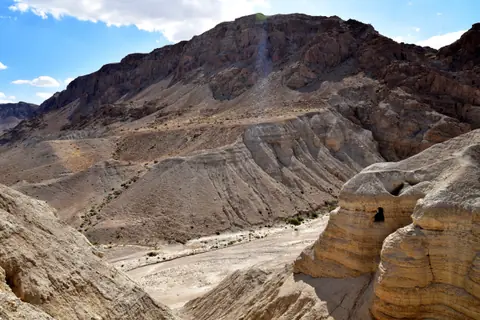
North-western shore of the Dead SeaQumran, the site of the Dead Sea Scrolls: excavations and visitingBedouin shepherds, eleven caves and some 900 manuscripts: the site that yielded the oldest known copies of the Hebrew Bible, and the riddle of who hid them.View site →

Between 1947 and 1956, eleven caves near Qumran, on the north-western shore of the Dead Sea, yielded the remains of some 900 manuscripts copied between the 3rd century BCE and the 1st century CE. About a quarter are biblical books — every book of the Hebrew Bible is represented except Esther — and they are the oldest copies known. The rest are para-biblical texts and writings specific to a community, such as the Community Rule and the War Scroll. The Great Isaiah Scroll, copied in the 2nd century BCE, is very close to the Masoretic text transmitted a thousand years later.

The nearby site of Khirbet Qumran, excavated by Roland de Vaux in the 1950s, is generally interpreted as the centre of a Jewish community, often identified with the Essenes; it was destroyed by the Romans around 68 CE. Other interpretations, such as a villa, a pottery workshop or a small fort, have been proposed.

Story 3 · Flavius Josephus · Gospels

Herod and the splendour of the Temple

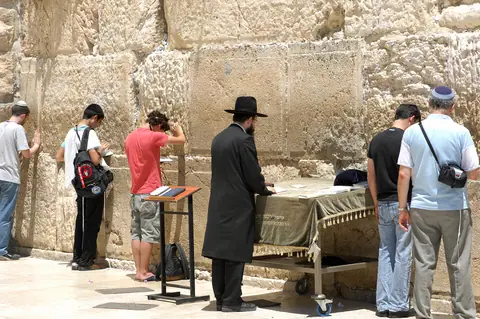
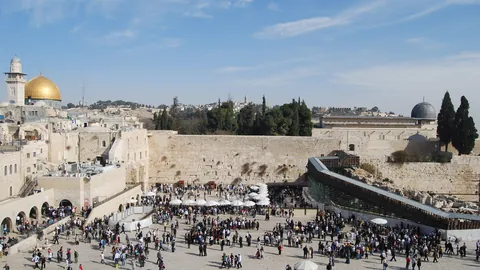
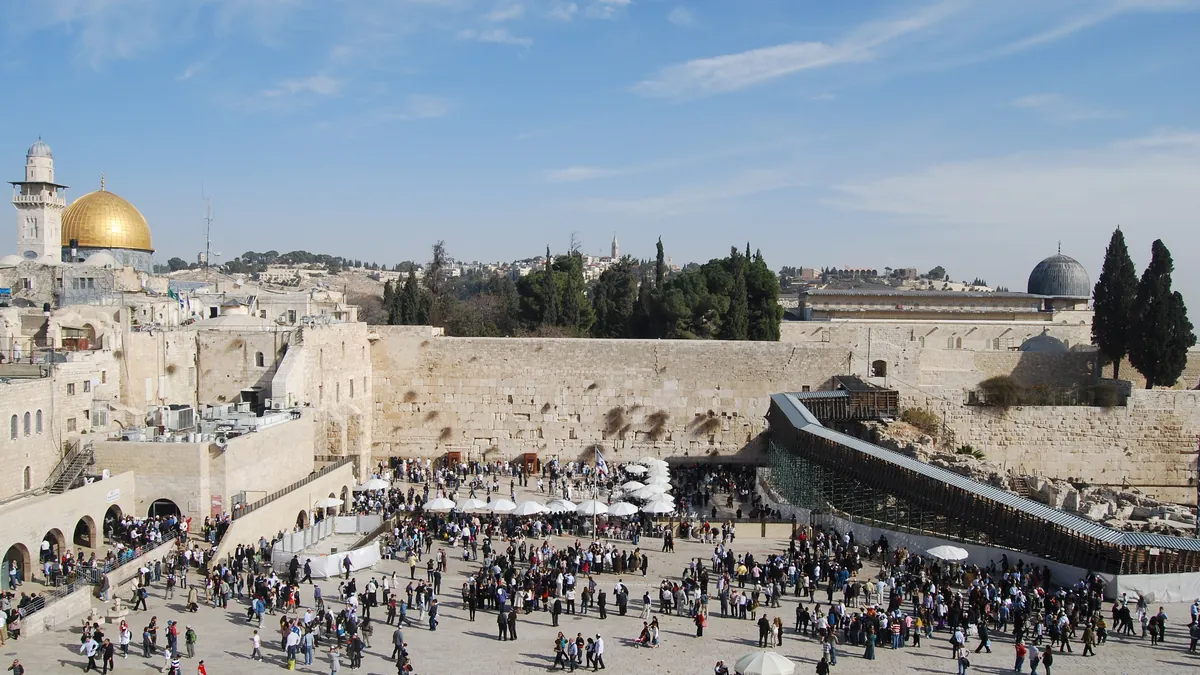
The Western Wall plaza and its crowd, with the Dome of the Rock above the wall
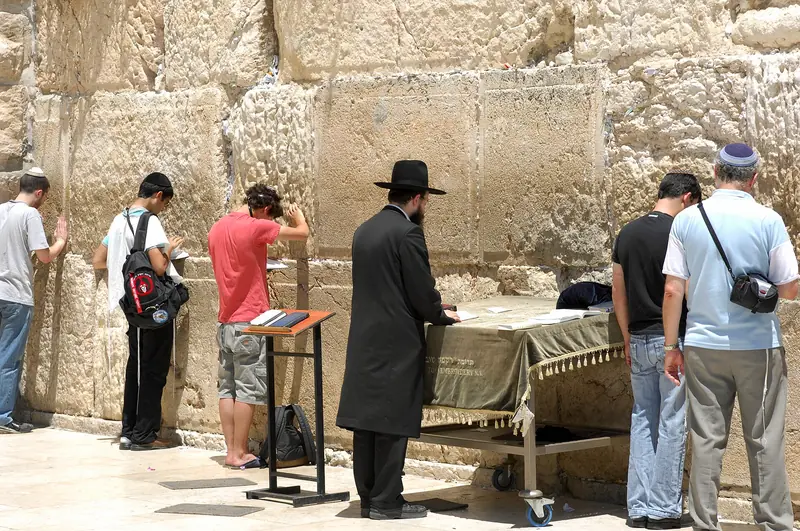
The Western Wall and, above it, the Temple Mount esplanadeCredit: CyberCop · CC BY 3.0 · Wikimedia Commons

The builder king doubles the Temple esplanade; the Gospels set the last days of Jesus there.

The story
Appointed king by the Roman Senate in 40 BCE, Herod undertook around 20–19 BCE the complete rebuilding of the Temple; the Gospels set the last part of the life of Jesus in this Jerusalem.
Traditions
The Talmud preserves the memory of the beauty of the building; Herod also raised the enclosure that still surrounds the Tomb of the Patriarchs in Hebron.
What we know
Blocks more than 13 metres long in the Western Wall Tunnels, the Herodian street, the stairways of the Huldah Gates and mikvaot at the foot of the southern wall; at Caesarea, the Pontius Pilate inscription (1961).

"Whoever has not seen Herod's building has never seen a beautiful building."

Babylonian Talmud, Bava Batra 4a

Places to visit for this story

Story 3 · Herod and the Temple
Old City of Jerusalem · ⏱ 150 min

Mount Moriah

The esplanade Herod enlarged from 20–19 BCE, where the Temple destroyed in 70 CE once stood.

On site: The esplanade, the Dome of the Rock and, below it, the Western Wall and the archaeological park to the south.

Story 3 · Herod and the TempleControlled access

Hebron, Judaean Hills · ⏱ 90 min

Hebron

Herod built the monumental enclosure that still surrounds the Cave of Machpelah.

On site: The Herodian shell of large blocks, the prayer halls and the cenotaphs of the Patriarchs.

Story 4 · The Great Revolt

Judean Desert, western shore of the Dead Sea · ⏱ 180 min

Masada

Herod's palace-fortress, then the rebels' last stronghold, which fell in 73 or 74 CE.

On site: The Northern Palace, the bathhouse, the synagogue, the cisterns and the views over the Roman ramp and camps.

Read the full story 2 min read

Appointed king of Judea by the Roman Senate in 40 BCE, Herod the Great reigned in practice from 37 to 4 BCE. A great builder, he undertook around 20–19 BCE the complete rebuilding of the Temple and roughly doubled the area of the esplanade, supported by immense retaining walls. The Talmud preserves the memory of it (Bava Batra 4a).

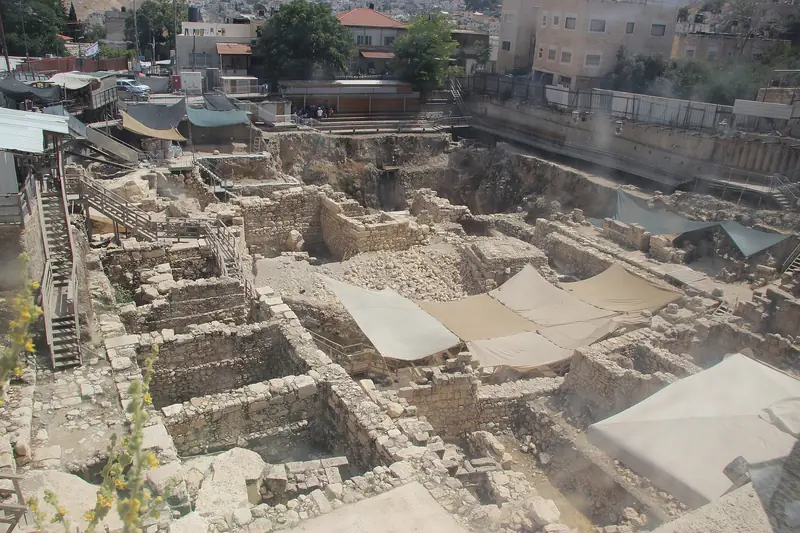
Archaeology reveals the scale of this work. Along the Western Wall, the tunnels expose colossal blocks, one of them more than 13 metres long. To the south and south-west of the esplanade, the excavations begun by Benjamin Mazar in 1968 uncovered the Herodian street and its shops, the monumental stairways leading to the Huldah Gates, the ritual baths (mikvaot) used by pilgrims and the surviving springer of Robinson's Arch. They also found a stone inscribed in Hebrew "to the place of trumpeting", fallen from the top of the wall; elsewhere in the city, a Greek inscription forbade non-Jews, on pain of death, from entering the sacred precinct.

Herod also built the harbour of Caesarea Maritima, a feat of engineering, the palace-fortresses of Masada and Herodium — where archaeologist Ehud Netzer identified in 2007 what he believed to be the king's tomb — and the enclosure of the Tomb of the Patriarchs in Hebron. His palaces reveal the luxury of the Herodian court and the influence of Roman art: frescoes, stucco, mosaics and bathhouses.

It is in this Jerusalem that the Gospels set the last part of the life of Jesus. Several discoveries echo this context: the Pontius Pilate inscription found at Caesarea in 1961, the ossuary bearing the name "Joseph son of Caiaphas" discovered in Jerusalem in 1990, and the Herodian-period Pool of Siloam, uncovered in 2004.

Story 4 · Flavius Josephus, The Jewish War

The Great Revolt and the fall of Jerusalem

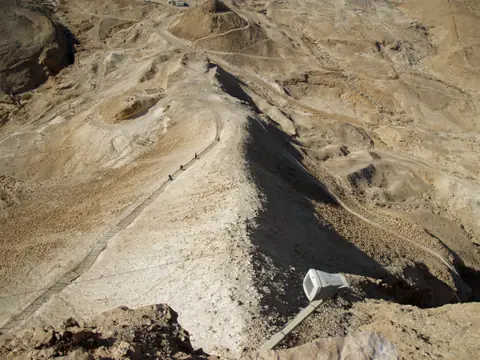
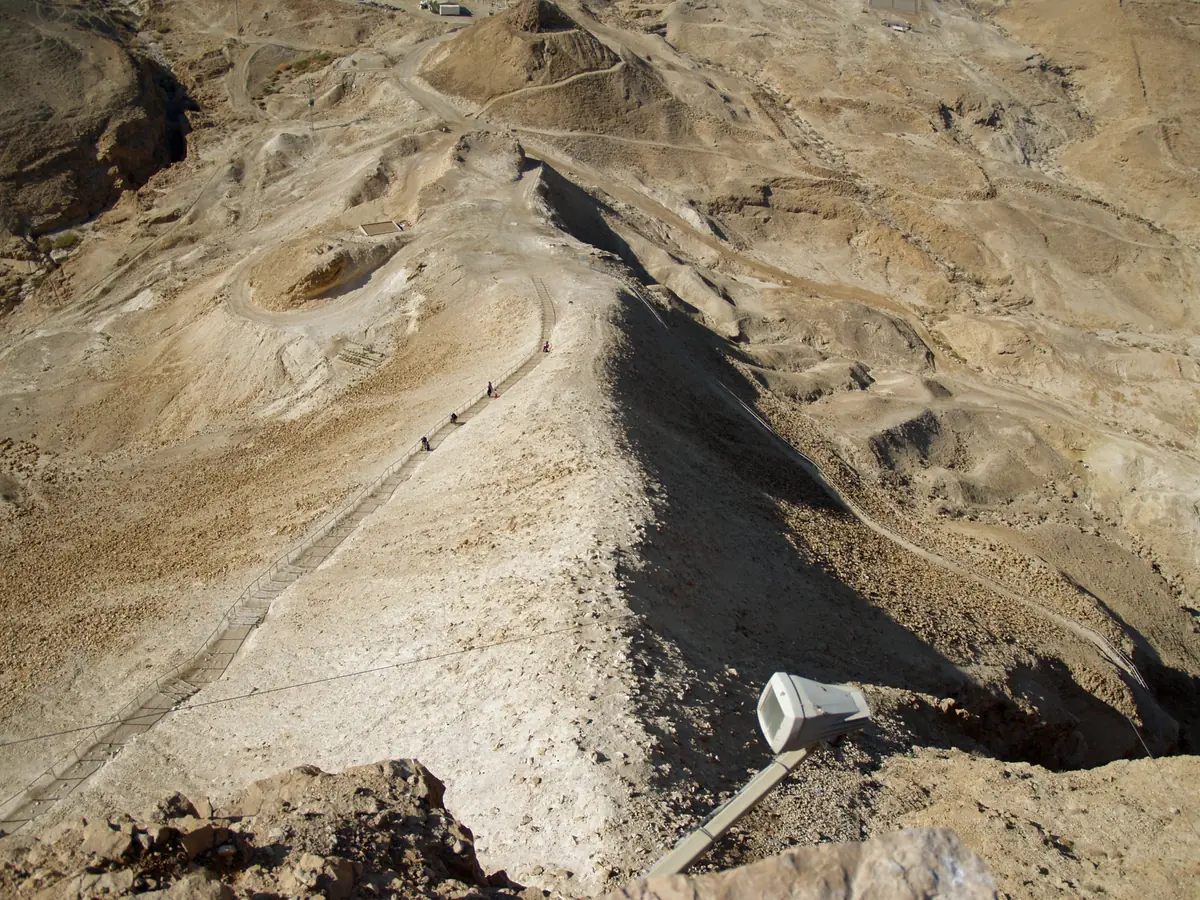
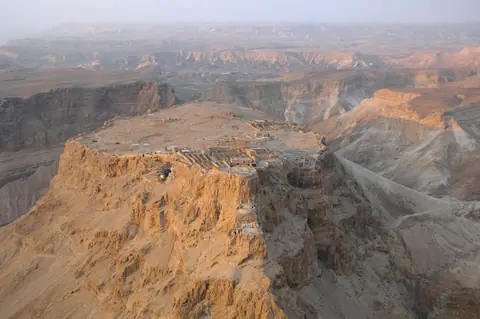
A long ramp of pale earth rising from the desert plain towards the summit of Masada, seen from above
The Roman siege ramp at Masada, on the western slope, now followed by the Ramp PathCredit: David Shankbone · CC BY-SA 3.0 · Wikimedia Commons

From the revolt of 66 to the burning of the Temple in 70, then Masada, the rebels' last stronghold.

The story
Josephus tells of the revolt of 66, the siege by Titus and the burning of the Temple in 70, then the fall of Masada in 73 or 74, where the defenders are said to have chosen death over captivity.
Traditions
Jewish tradition places the destruction of the Temple on the 9th of Av, Josephus on the 10th; in Rome, the Arch of Titus shows the menorah carried off in triumph.
What we know
The blocks hurled down onto the Herodian street, the "Burnt House" in the Jewish Quarter and, at Masada, the Roman ramp and camps; historians debate the details of Josephus's account.

"O God, the heathen are come into thine inheritance; thy holy temple have they defiled; they have laid Jerusalem on heaps."

Psalm 79:1

Places to visit for this story

Story 3 · Herod and the Temple
Old City of Jerusalem · ⏱ 150 min

Mount Moriah

The esplanade Herod enlarged from 20–19 BCE, where the Temple destroyed in 70 CE once stood.

On site: The esplanade, the Dome of the Rock and, below it, the Western Wall and the archaeological park to the south.

Story 4 · The Great Revolt

Judean Desert, western shore of the Dead Sea · ⏱ 180 min

Masada

Herod's palace-fortress, then the rebels' last stronghold, which fell in 73 or 74 CE.

On site: The Northern Palace, the bathhouse, the synagogue, the cisterns and the views over the Roman ramp and camps.

Read the full story 2 min read

After Herod's death, Judea gradually came under the direct administration of Roman prefects and procurators. Tensions culminated in 66 CE in the Great Jewish Revolt. In 70 CE, after a long siege, the legions of Titus captured Jerusalem and set the Temple on fire in the month of Av — on the 9th according to Jewish tradition, the 10th according to Josephus.

The remains of this destruction are striking: the blocks from the esplanade hurled down onto the Herodian street, still lying where they fell at the foot of Robinson's Arch, or the "Burnt House" in the Jewish Quarter, where a stone weight bears the name of the priestly family of Kathros. In Rome, the Arch of Titus, erected around 81 CE, shows on one of its reliefs Roman soldiers carrying the menorah and the Temple vessels in triumph.

The last rebels held out at Masada, which fell in 73 or 74 CE; according to Josephus, its defenders chose death over captivity, an account whose details historians still debate. The Roman siege ramp and the besiegers' camps are still visible there.

  • 332 BCE — Conquest by Alexander the Great.
  • 167–164 BCE — The Maccabean revolt and the purification of the Temple (Hanukkah).
  • 63 BCE — Pompey captures Jerusalem.
  • 37–4 BCE — Reign of Herod the Great; rebuilding of the Temple from 20–19 BCE.
  • 66–70 CE — The Great Jewish Revolt and the destruction of the Temple.
  • 73 or 74 CE — Fall of Masada.

To see in a museum

For those not leaving right away: two pieces kept in Jerusalem that shed light on these stories.

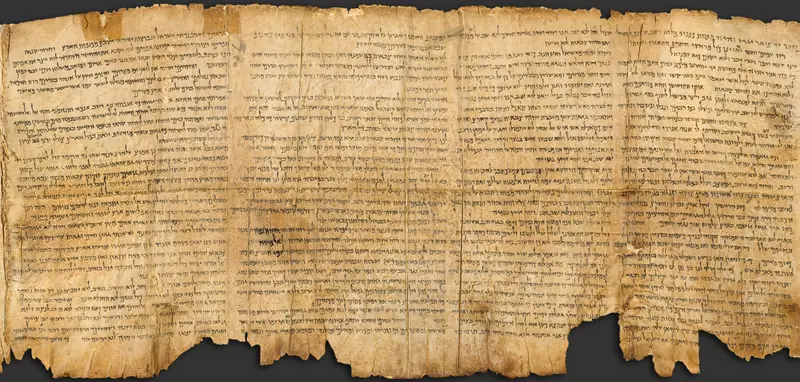
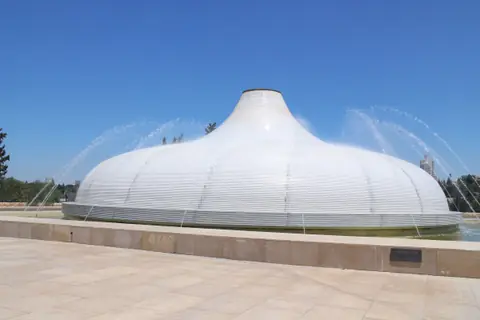
Several columns of Hebrew handwriting in black ink on yellowed parchment with torn edges

📍 Shrine of the Book, Israel Museum, Jerusalem

The Great Isaiah Scroll

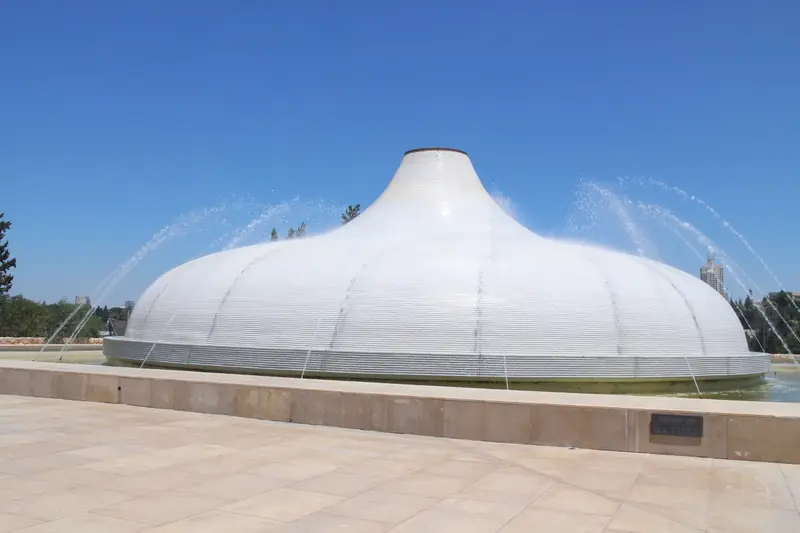
Copied in the 2nd century BCE and very close to the Masoretic text transmitted a thousand years later; a facsimile is displayed at the centre of the Shrine, the originals in rotation.

Story 2 →
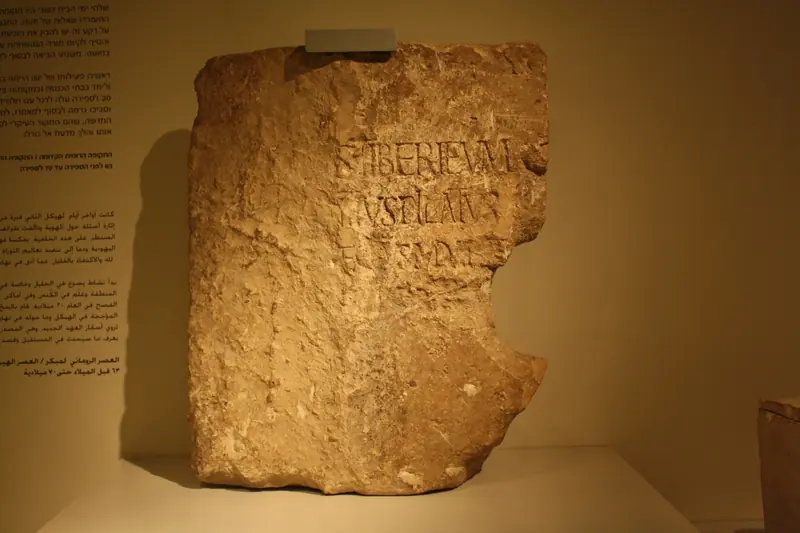
A worn limestone block with three lines of Latin inscription, including the name of Pilate, displayed in a museum gallery

📍 Israel Museum, Jerusalem

The Pilate Stone

Found in 1961 in the theatre of Caesarea, the Latin inscription bears the name of Pontius Pilate: a direct echo of the world of the Gospels.

Story 3 →

Frequently asked questions

When does the Second Temple period begin and end?

Strictly speaking, it runs from the rebuilding of the Temple, completed around 516 BCE, to its destruction by the Romans in 70 CE. On IsraBible, the Persian beginnings are covered under Exile and Return, and this page covers the period from 332 BCE to 70 CE.

What does Hanukkah have to do with this period?

Hanukkah commemorates the purification and rededication of the Temple by Judah the Maccabee in 164 BCE, after its desecration by the Seleucid king Antiochus IV. The story is told in the books of Maccabees.

Who wrote the Dead Sea Scrolls?

Most scholars attribute them, at least in part, to a Jewish community living at Qumran and often identified with the Essenes described by Josephus and Pliny the Elder. Others think some scrolls came from Jerusalem or from other groups. They were copied between the 3rd century BCE and the 1st century CE.

What remains of Herod's Temple?

The Temple itself disappeared in 70 CE, but the esplanade Herod created survives with its retaining walls, of which the Western Wall is a section. Excavations at the foot of the southern and western walls have uncovered the streets, stairways and gates through which pilgrims reached the Temple.

What does the Arch of Titus show?

Erected in Rome around 81 CE in honour of the emperor Titus, it depicts on a relief the triumphal procession of Roman soldiers carrying off the spoils of the Temple in Jerusalem, including the seven-branched menorah.

What happened at Masada?

A fortress built up by the Hasmoneans and turned into a palace by Herod, Masada was the last stronghold of the Jewish rebels after the fall of Jerusalem. According to Josephus, its defenders took their own lives in 73 or 74 CE rather than surrender. Historians debate the details of the account, but the Roman ramp and camps are clearly visible.

Which Second Temple sites can I visit in Jerusalem?

The Western Wall and its tunnels, the Southern Wall archaeological park (Davidson Center), the Pool of Siloam and the pilgrims' street in the City of David, the Burnt House and the Wohl Museum in the Jewish Quarter, and the Israel Museum with the Shrine of the Book and the model of Jerusalem.

Free PDF guide

The 25 must-see biblical sites in Israel

Our selection in one PDF: what the Bible says, what you will see on site and tips to prepare each visit.

Your details are only used to send you the guide and invite you to our WhatsApp group. Privacy policy