
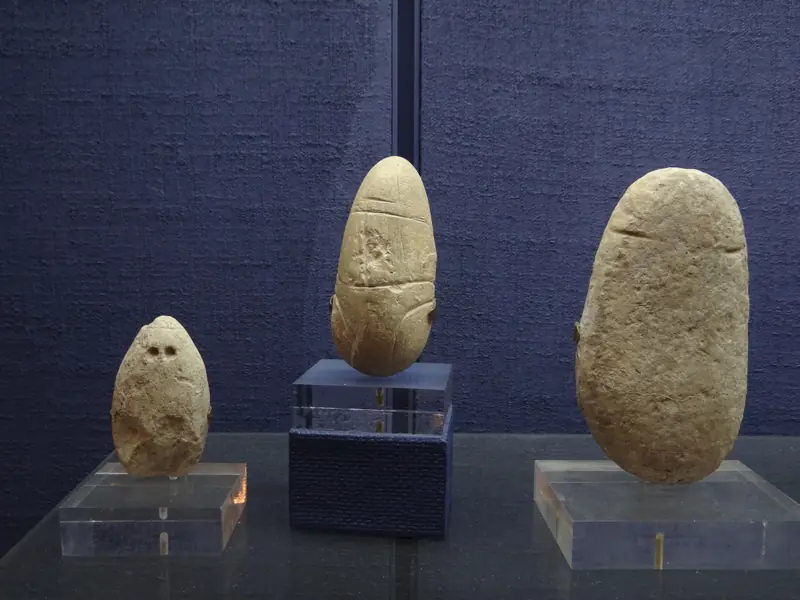
Sha'ar HaGolan: the Museum of Yarmukian Culture
On the banks of the Yarmuk, a village around 8,000 years old gave its name to a prehistoric culture. The kibbutz's small museum displays its pottery and figurines.
Prehistory
South of the Sea of Galilee, very early humans lived on the shore of a vanished lake. Their stone tools are among the oldest known outside Africa.
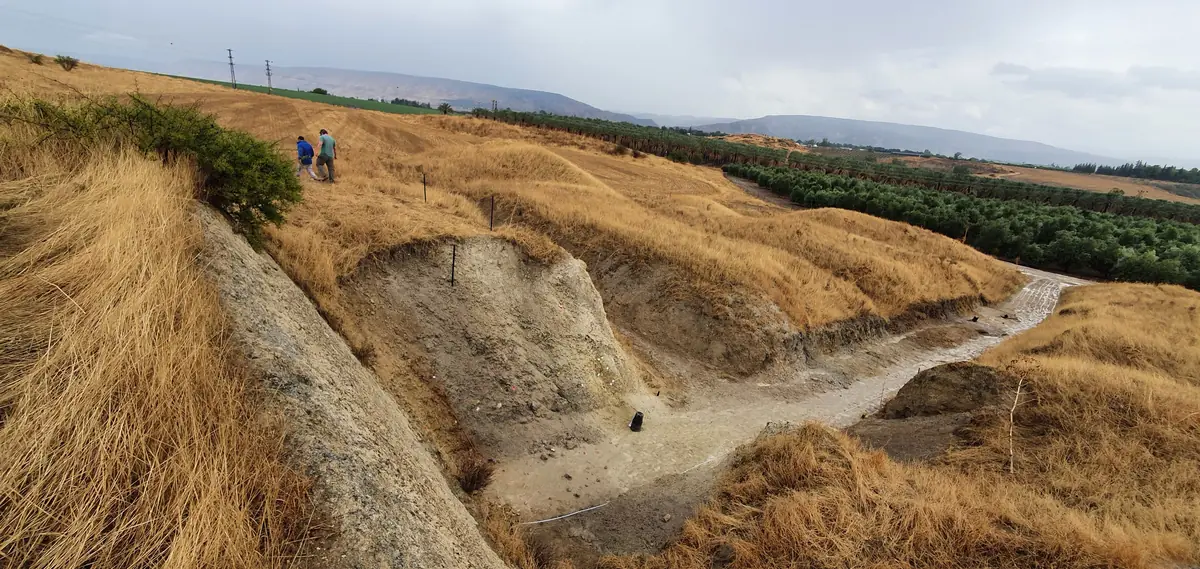
'Ubeidiya is a prehistoric site in the Jordan Valley, south of the Sea of Galilee, near Kibbutz Beit Zera. Humans lived here on the shore of an ancient lake. They left behind Acheulean stone tools and many animal remains.
The site is among the oldest known sites of humans outside Africa. A study published in 2026 dates it to at least 1.9 million years ago. It is one of the stops in our overview of prehistoric sites in Israel.
In brief
History
Archaeology
'Ubeidiya lies in the Jordan Valley, south of the Sea of Galilee, near Kibbutz Beit Zera. Archaeologists have been working here since 1960. The layers of ground preserve traces of an ancient lake, on whose shore humans lived.
The excavations have produced Acheulean stone tools, a stone-working tradition of early humans. They have also yielded many animal remains.
According to the Hebrew University of Jerusalem's press release, 'Ubeidiya is "among the oldest known sites of humans outside Africa". It bears witness to the first dispersals of the genus Homo out of Africa. These humans passed through the Levantine corridor, the strip of land linking Africa and Asia.
Source: Hebrew University of Jerusalem press release (EurekAlert, 19 February 2026)
History
Earlier estimates placed 'Ubeidiya between 1.2 and 1.6 million years ago. A study published in 2026 in the journal Quaternary Science Reviews puts it at at least 1.9 million years. The team includes researchers from the Hebrew University of Jerusalem, the University of Haifa and the University of Tulsa, among them Ari Matmon, Omry Barzilai and Miriam Belmaker.
🔎 A recent proposal
In their modelling, the authors also consider a younger age range. The figure of at least 1.9 million years is therefore a recent proposal, still to be confirmed, not a consensus.
Source: A. Matmon et al., Quaternary Science Reviews 378, article 109871 (2026)
Plan my visit
'Ubeidiya
'Ubeidiya, near Kibbutz Beit Zera, Jordan Valley, south of the Sea of Galilee
GPS coordinates : 32.6893, 35.5567 (reference point, not the exact entrance)
Start navigation with:
The site is in the open air and there is no museum. You can see excavation areas and the "'Ubeidiya Formation", layers of ground folded and broken into a small anticline, an arch-shaped fold. The ancient living surfaces are now tilted at about 70 degrees. A hut is used by the excavation teams.
According to the Israel Nature and Parks Authority, drive to the gate of Kibbutz Beit Zera. Before the gate, turn right along the fence, then left at the first bend. After about 100 m, turn right at the junction and go down to the bridge over the Jordan, then cross it. Climb for about 1 km to an old grey hut on the left, and turn left. Check the route before you set off.
To see prehistoric finds on display, the Sha'ar HaGolan museum is a few kilometres to the east.
Source: Israel Nature and Parks Authority, site page (in Hebrew)
Around the site

Baptisms in the Jordan
On the banks of the Yarmuk, a village around 8,000 years old gave its name to a prehistoric culture. The kibbutz's small museum displays its pottery and figurines.
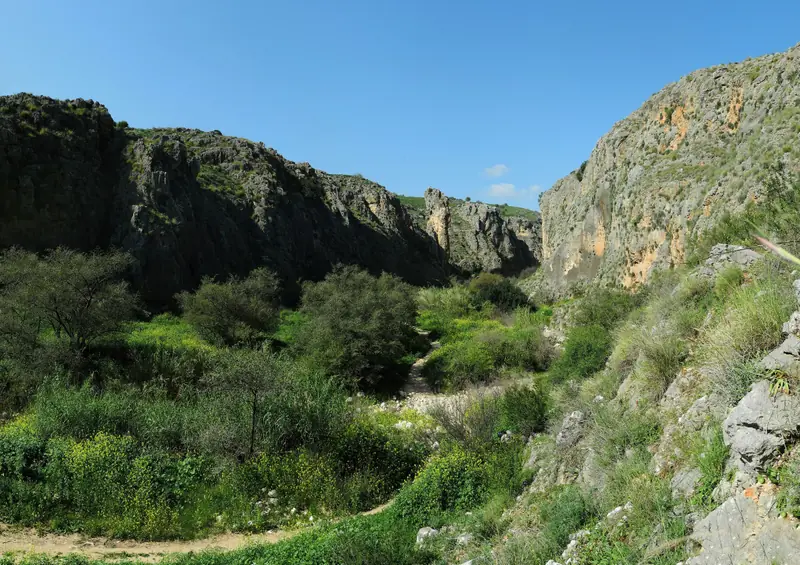
Above the stream that runs down to the Sea of Galilee, a cave yielded Neanderthal skeletons. You can hike the valley, but you may not climb up to the cave.

The fishing village where Jesus settled, taught in the synagogue and stayed with Peter: what the Gospels say, what the excavations found and what you can see today.
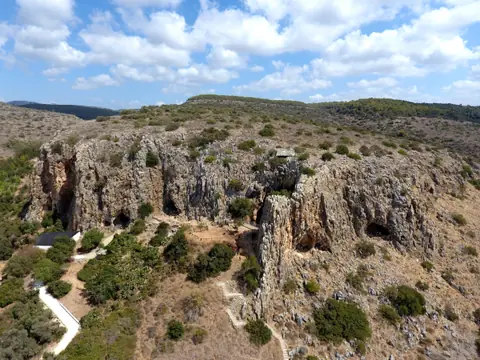 PrehistoryPrehistory in Israel: From the First Humans to the First VillagesFour prehistoric sites to visit in Israel and five more closed to the public: over a million years of human history, from Mount Carmel to the Jordan.Read the article →
 In the Jordan Valley, south of the Sea of Galilee, near Kibbutz Beit Zera. GPS coordinates are given in the "Getting there & GPS" section.
Earlier estimates ranged from 1.2 to 1.6 million years. A study published in 2026 proposes at least 1.9 million years, combining three dating methods. This is a recent proposal that still needs confirming: the authors also consider a younger range.
That cannot be claimed. 'Ubeidiya is among the oldest known sites of humans outside Africa. It bears witness to the first movements of the genus <em>Homo</em> out of Africa, through the Levantine corridor.
Excavation areas, folded layers of ground and ancient living surfaces tilted at about 70 degrees. There is no museum. A visit takes about 45 minutes; entry is free, from sunrise to sunset.
No: 'Ubeidiya documents prehistory and cannot be used to identify the figures of Genesis, whose story is presented on our page on <a href="/en/origines#creation-eden">Creation and the Garden of Eden</a>.