
Nahal Me'arot Caves: 500,000 Years of Human Evolution on Mount Carmel
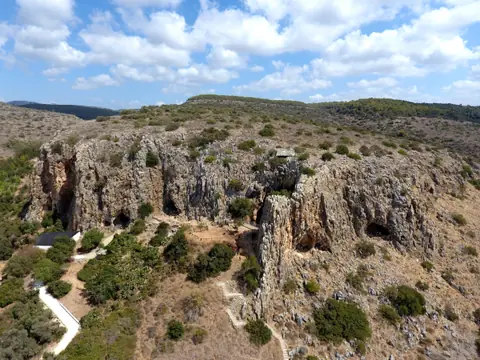
On the western slope of Mount Carmel, four caves in a limestone cliff hold at least 500,000 years of human history, from Neanderthals to Natufian villages.
Prehistory
Above the stream that runs down to the Sea of Galilee, a cave yielded Neanderthal skeletons. You can hike the valley, but you may not climb up to the cave.
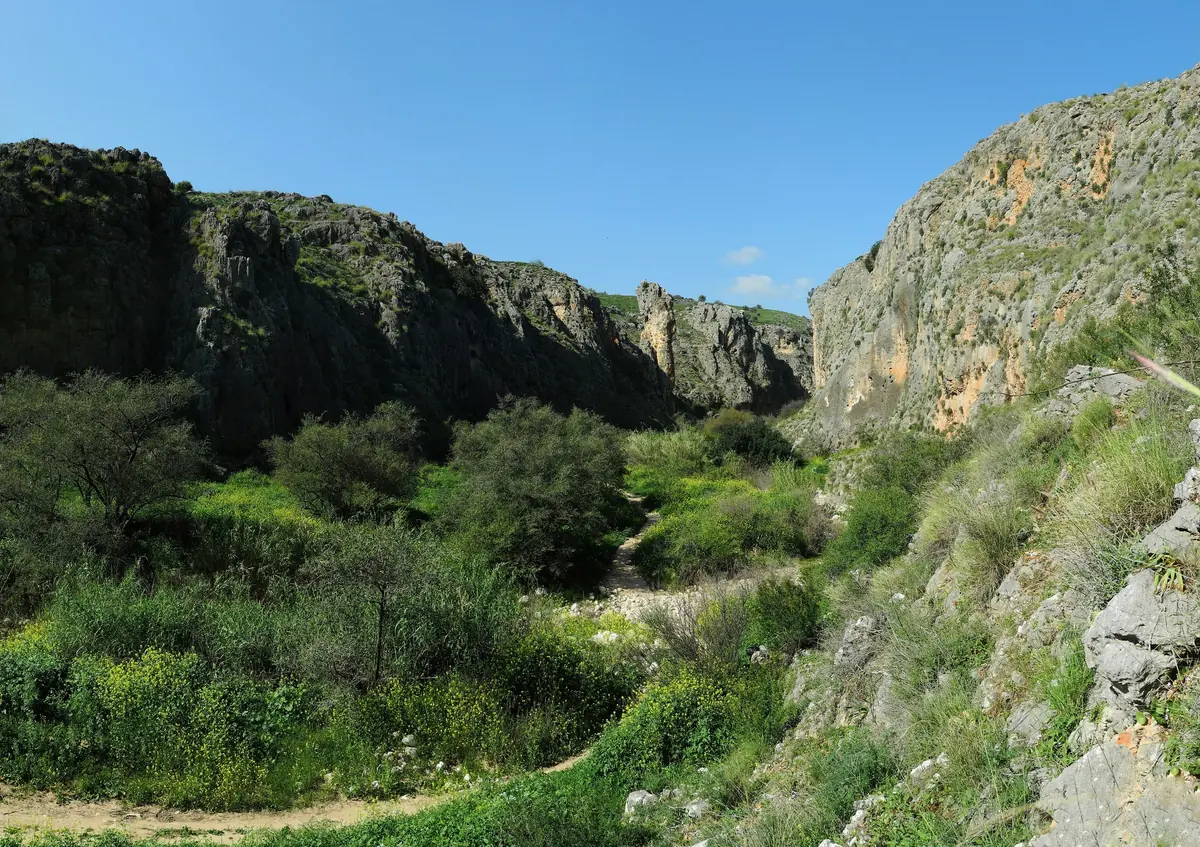
Nahal Amud (Wadi Amud) is a Galilee stream that flows down to the Sea of Galilee from the north-west. Its name comes from the "Amud", a natural rock pillar standing in the lower valley. Some thirty metres above it is the mouth of Amud Cave, where Neanderthals dating from about 70,000 to 50,000 years ago were found.
The upper part of the stream is a nature reserve open to hikers. The cave itself cannot be visited: no path leads to it and climbing up is not allowed. From the trail, you can see the cliff and the pillar. The site is one of the key stops in Israel's prehistory.
In brief
History
Archaeology
Amud Cave opens in the cliff, some thirty metres above the rock pillar. Its occupation layers belong to the Mousterian culture. The human remains found there date from about 70,000 to 50,000 years before present.
A Japanese expedition began excavating the cave in 1961. In 1964 it uncovered the almost complete skeleton of an adult man. He stood about 1.70 m tall, and his skull had a capacity of about 1,750 cm³.
Later, the excavations yielded the skeleton of an infant aged about 10 months, covered by a deer jaw. Its study made it possible to recognise Neanderthal features. Together, the adult and the infant are what Amud Cave is known for.
Source: Israel Nature and Parks Authority, Amud Stream Nature Reserve
History
Amud Cave is not the only one in the valley. Also in Nahal Amud lies Zuttiyeh Cave, nicknamed the "Cave of the Skull". It yielded "Galilee Man", more than 350,000 years old according to the Nature and Parks Authority. Entry is prohibited because the cave is home to bats: you can only see it from outside.
At Nahal Amud, prehistory is read in the landscape: the cliff, the pillar, the openings in the rock. If you want to walk into prehistoric caves set up for visitors, head instead to the Nahal Me'arot caves, which are open to the public.
Plan my visit
Nahal Amud
Nahal Amud Nature Reserve, Galilee, north-west of the Sea of Galilee
GPS coordinates : 32.8724, 35.5017 (reference point, not the exact entrance)
Start navigation with:
The upper part of the stream is a nature reserve open to visitors, with an entrance fee. If you come in through another access point, you pay on the way out. Booking ahead is recommended. Allow about 2 hours of walking, of moderate difficulty: bring proper walking shoes and water.
⚠️ Amud Cave cannot be visited
According to the Israel Nature and Parks Authority, there is no path leading to the cave today, and visitors may not climb up to it. Zuttiyeh Cave is closed too. Stay on the trails: from there you can see the cliff and the pillar.
The GPS point on this page marks the pillar, in the lower valley. It is not a car park: access is via the reserve's trails. Before you set off, check the opening hours and the last entry time for the trails, which is earlier than closing time.
Nahal Amud flows down to the Sea of Galilee. After the hike, you can head to Capernaum, on the lakeshore.
Source: Israel Nature and Parks Authority, Amud Stream Nature Reserve
Around the site
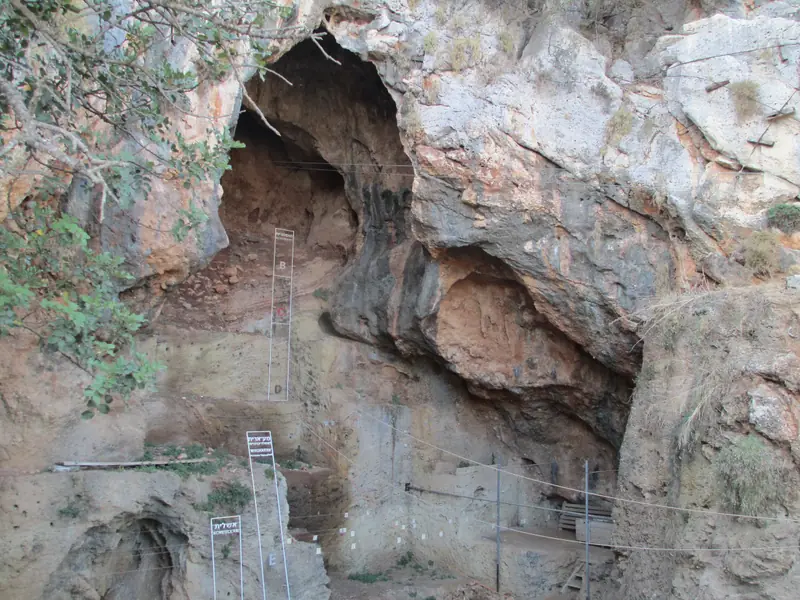
On the western slope of Mount Carmel, four caves in a limestone cliff hold at least 500,000 years of human history, from Neanderthals to Natufian villages.
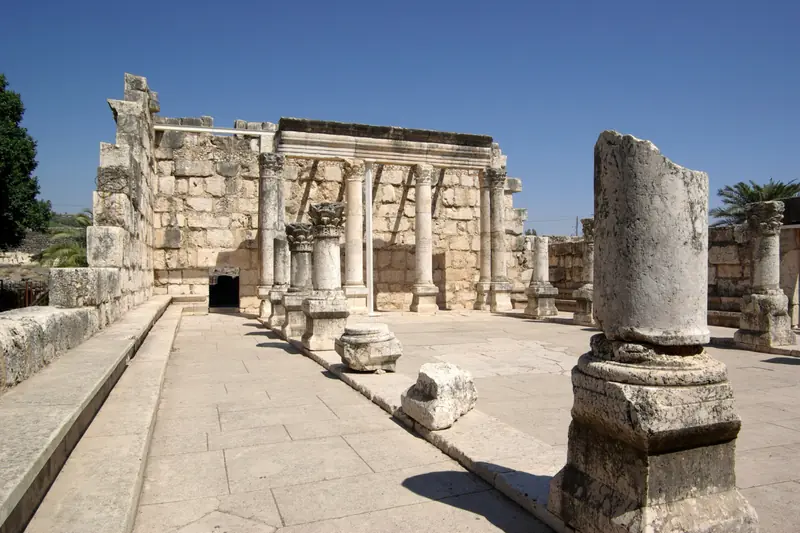
The fishing village where Jesus settled, taught in the synagogue and stayed with Peter: what the Gospels say, what the excavations found and what you can see today.
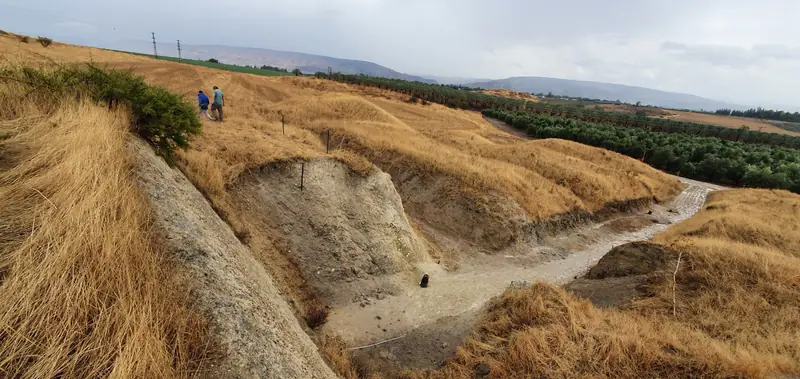
South of the Sea of Galilee, very early humans lived on the shore of a vanished lake. Their stone tools are among the oldest known outside Africa.
 PrehistoryPrehistory in Israel: From the First Humans to the First VillagesFour prehistoric sites to visit in Israel and five more closed to the public: over a million years of human history, from Mount Carmel to the Jordan.Read the article →
 No. According to the Israel Nature and Parks Authority, no path leads to the cave and visitors may not climb up to it. You can, however, hike in the Nahal Amud Nature Reserve and see the cliff and the pillar from the trail.
Human remains from about 70,000 to 50,000 years ago, linked to the Mousterian culture: in 1964, the almost complete skeleton of an adult man, then that of an infant aged about 10 months, whose study made it possible to recognise Neanderthal features.
Allow about 2 hours, at moderate difficulty. The reserve charges an entrance fee and booking is recommended. Bring walking shoes and water, and check the last entry time for the trails.
Amud and Zuttiyeh caves can only be seen from outside. To walk into prehistoric caves, go to the Nahal Me'arot caves, which are open to the public.
No: these finds document prehistory and cannot identify the figures of Genesis, which we cover in <a href="/en/origines#creation-eden">the stories of the beginnings</a>.