
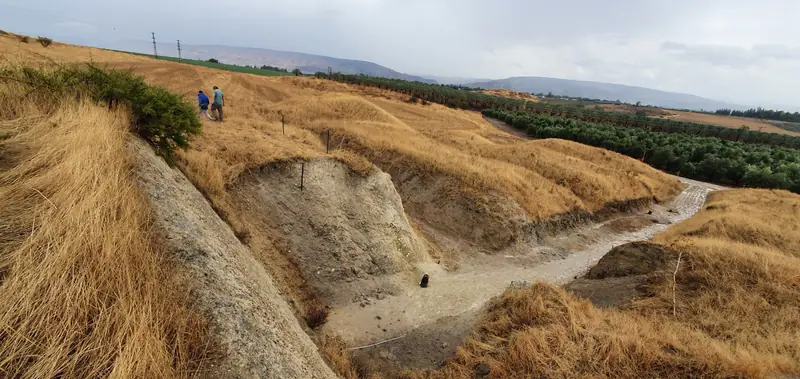
'Ubeidiya: Among the Oldest Human Sites Outside Africa
South of the Sea of Galilee, very early humans lived on the shore of a vanished lake. Their stone tools are among the oldest known outside Africa.
Prehistory
On the banks of the Yarmuk, a village around 8,000 years old gave its name to a prehistoric culture. The kibbutz's small museum displays its pottery and figurines.
Sha'ar HaGolan is a kibbutz in the Jordan Valley, south of the Sea of Galilee, on the banks of the Yarmuk River. Nearby, archaeologists found a Neolithic village around 8,000 years old, which gave its name to the Yarmukian culture.
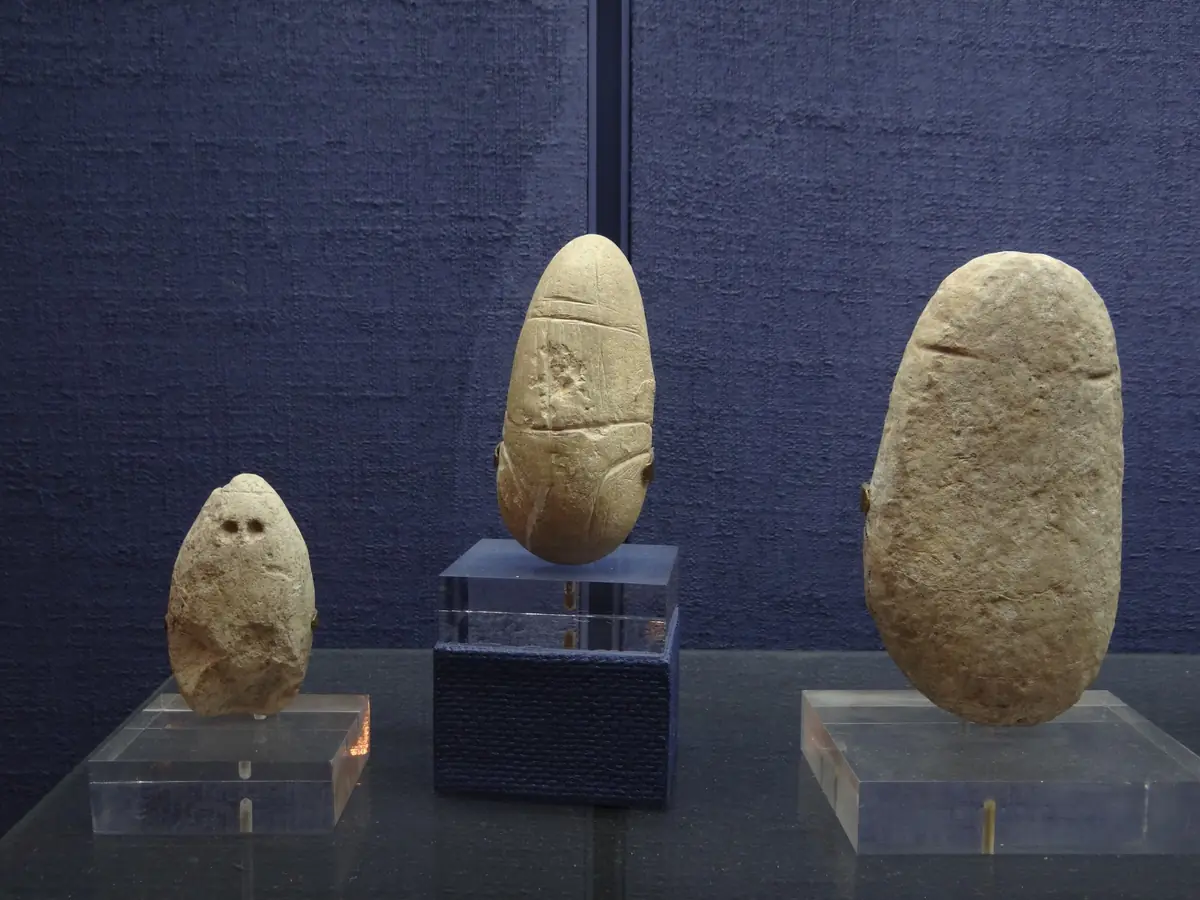
The Museum of Yarmukian Culture, on the kibbutz, displays some 300 objects found on site: some of the oldest pottery in Israel and some striking figurines. It is one of the places where you can see the prehistory of Israel up close.
In brief
History
Archaeology
The museum describes the site as "an 8,000-year-old Neolithic village on the bank of the Yarmuk". Its inhabitants lived in a permanent village: they farmed the land and made their own objects. It was one of the first farming communities in the region.
Archaeologists use the term Yarmukian culture for the villages that share the same style of pottery and figurines. Sha'ar HaGolan is its reference site: it gave its name to the culture, after the nearby river.
The site was excavated by Yosef Garfinkel of the Hebrew University of Jerusalem. Today, the kibbutz museum is where you can see the objects from this village.
Sources: Museum of Yarmukian Culture · Wikipedia, Yarmukian culture
Archaeology
According to the museum, the pottery from Sha'ar HaGolan is the oldest known in Israel. The vessels are decorated with incised herringbone patterns, a typical feature of this culture.
The village has yielded many figurines. The clay ones mostly show seated women, along with a few men. Around a hundred others are simple limestone pebbles on which a few engraved lines suggest a face. In all, some 300 objects are on display.
They shed light on the daily life of the first farmers: their homes, their crafts, their skills. The figurines hint at beliefs, but these remain hard to reconstruct. It is best to see them as witnesses to a world whose language and rituals we do not know.
Plan my visit
Sha'ar HaGolan
Museum of Yarmukian Culture, Kibbutz Sha'ar HaGolan, Jordan Valley 15145
GPS coordinates : 32.6857, 35.6055 (reference point, not the exact entrance)
Start navigation with:
According to the museum's website, to be checked before you go, it is open on Sunday, Tuesday, Wednesday and Thursday from 9 am to 1 pm, on Friday from 9 am to 12 noon and on Saturday from 10 am to 1 pm. Monday is not listed. Visits at other times are possible by prior request, by e-mail to [email protected]. The page mentions neither online booking nor prices.
It is the museum that you visit. We found no information about access to the remains of the village. Allow about an hour.
The prehistoric site of 'Ubeidiya lies a few kilometres to the west. To follow the theme of the first villages, the mound of Jericho and its Neolithic tower also shows the beginnings of village life.
Source: Museum of Yarmukian Culture, page accessed 11/10/2026
Around the site
South of the Sea of Galilee, very early humans lived on the shore of a vanished lake. Their stone tools are among the oldest known outside Africa.
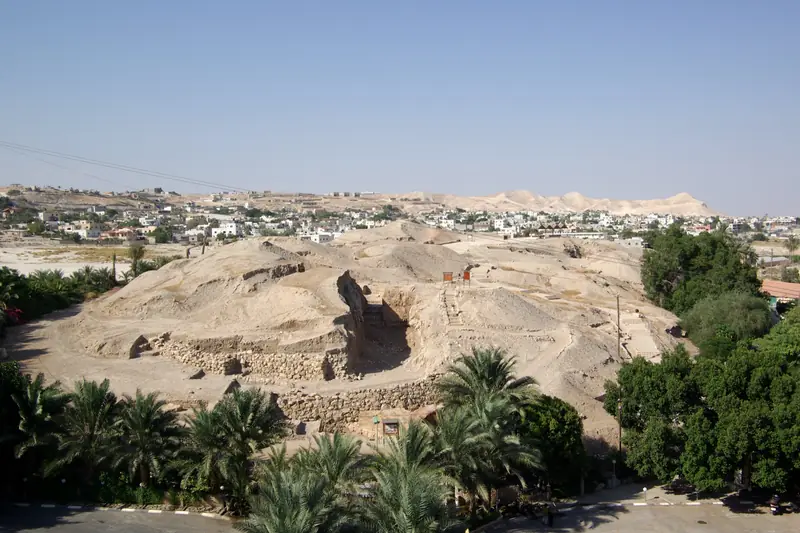
Rahab, the Jordan crossing and the falling walls: the Book of Joshua set against a century of excavation at one of the oldest towns in the world.
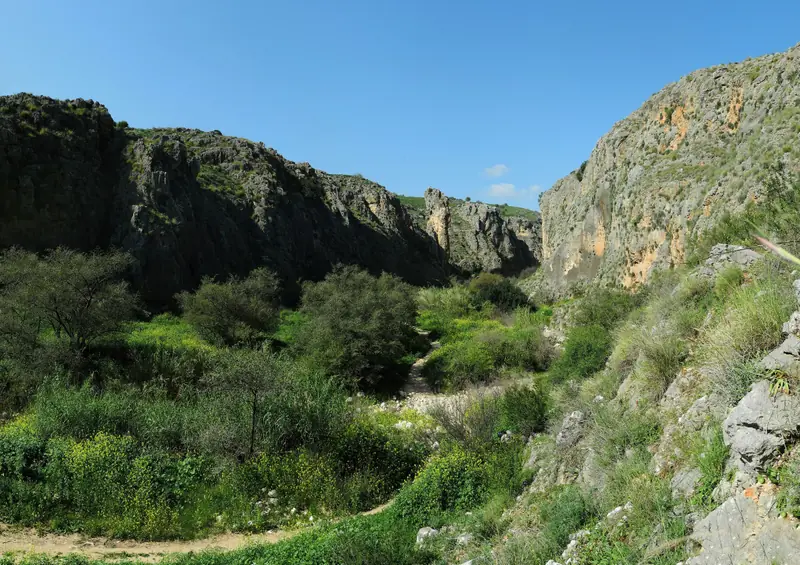
Above the stream that runs down to the Sea of Galilee, a cave yielded Neanderthal skeletons. You can hike the valley, but you may not climb up to the cave.
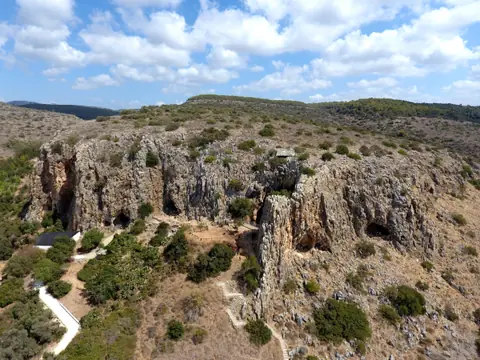 PrehistoryPrehistory in Israel: From the First Humans to the First VillagesFour prehistoric sites to visit in Israel and five more closed to the public: over a million years of human history, from Mount Carmel to the Jordan.Read the article →
 On Kibbutz Sha'ar HaGolan, in the Jordan Valley, south of the Sea of Galilee, near the Yarmuk River. The GPS coordinates are in the “Getting there & GPS” section.
It is the name archaeologists give to Neolithic villages around 8,000 years old that share the same style of pottery and figurines. The village of Sha'ar HaGolan, on the banks of the Yarmuk, is its reference site and gave it its name.
According to its website, the museum opens in the mornings from Sunday to Saturday, except Monday, which is not listed: usually 9 am to 1 pm, until 12 noon on Friday and from 10 am on Saturday. Other times are possible by prior request. Check before you go.
We found no information about access to the remains. What you can visit is the kibbutz museum, which displays some 300 objects from the excavations.
The site of 'Ubeidiya, a few kilometres to the west, is another prehistoric site to explore. The mound of Jericho also shows the beginnings of village life, with its Neolithic tower. Our guide to prehistoric sites in Israel covers the other places to visit.