
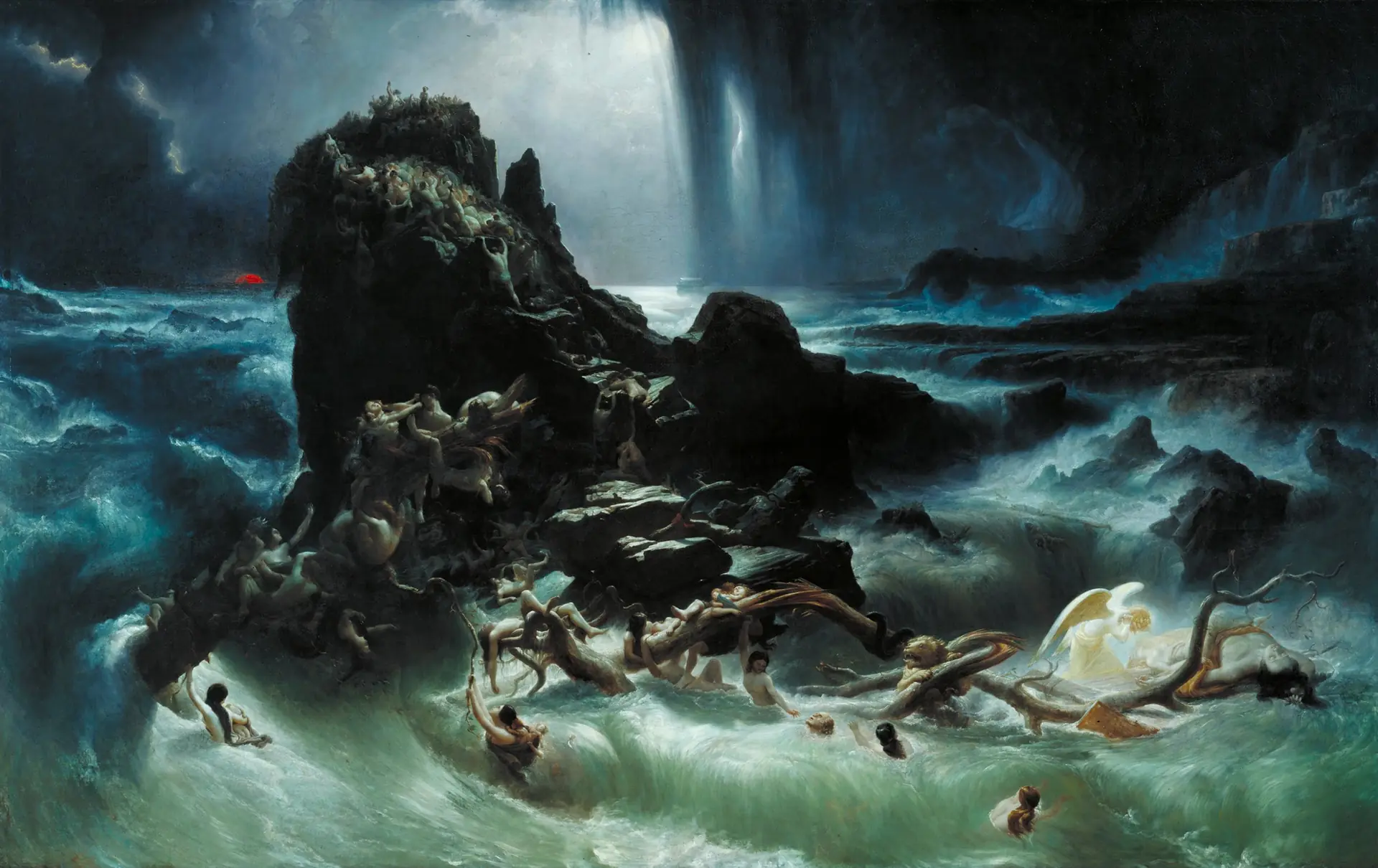
217 cultures are said to have a flood story, according to a figure quoted by physicist Moshe Kaveh in his text Science and the Flood, which refers to a book by Charles Sellier and David Balsiger. The count shows how widespread the theme is: waters overrun the inhabited world, a catastrophe upends humanity, then life begins again.
In India, the theme appears in the story of Manu. In Greece, it belongs to Deucalion and Pyrrha. In China, Nüwa steps in to restore a ruined world. Choctaw, Hopi, Maya, Aztec and Inca traditions also speak of disasters caused by water. These stories share resemblances, but also important differences: they were not all recorded at the same time, and not all of them tell of a family surviving in an ark.
Alongside these traditions, a few objects bring us face to face with the texts of antiquity: a tablet of the Epic of Gilgamesh, a prism bearing the Sumerian King List, and a tablet of the story now called the Eridu Genesis.
- Biblical textGenesis 6 to 9
- Stories counted217 cultures, according to Sellier and Balsiger
- Best-known tabletGilgamesh, Tablet XI (British Museum)
- Oldest document shownSumerian King List, c. 1800 BCE
Flood stories on several continents
India: Manu and the saving fish
In the Śatapatha Brāhmaṇa, Manu takes in a small fish that asks for his protection. Once grown, the fish warns him of a coming flood and tells him to prepare a boat. When the waters rise, Manu ties his vessel to the fish's horn, and the fish leads him to a mountain.
The warning, the boat and the refuge on high ground recall parts of the Noah story, while belonging to a different religious tradition (text and translation, University of Frankfurt).
China: Nüwa mends the world
The Huainanzi describes a catastrophe in which the pillars of heaven collapse, the earth breaks apart and the waters spread. The goddess Nüwa restores order: she patches the sky with stones of five colours and stops the flood.
Her role is that of a restoring deity, so this story should be kept apart from a tale of sailing and survival like Noah's (the story as presented in The World of Chinese Mythology).
Greece: Deucalion and Pyrrha
In the account handed down by Pseudo-Apollodorus, Prometheus warns his son Deucalion of a catastrophe sent by Zeus. Deucalion builds a chest, stocks it with provisions and shelters in it with Pyrrha.
After nine days and nine nights on the waters, they reach Mount Parnassus. Their story continues with the birth of a new humanity from the stones they throw over their shoulders (Pseudo-Apollodorus, Library 1.7.2).
The Choctaw and the Hopi: separate traditions
A Choctaw story collected by ethnologist John R. Swanton tells of a man who warns the villages that a flood is coming. The waters end up covering the land. The recorded versions have a complex history: some were altered through contact with the biblical account (review of Swanton's work in Nature, 1932).
In some versions of the Hopi tradition, a flood destroys the Third World. Spider Woman protects survivors inside hollow reeds before they pass into a new world. This is one version among several Hopi emergence stories (study by Christine F. Hellyer, University of Georgia).
Mexico: Teocipactli and Aztec traditions
In 19th-century collections of Mexican traditions, Teocipactli appears as another name for Coxcox, a flood survivor accompanied by his wife. This identification should be tied to the sources that report it, as names and episodes vary from one version to another (collection by Hubert Howe Bancroft).
The Aztec tradition of successive Suns also tells of a world destroyed by water: the people of the Fourth Sun are swallowed up and turned into fish (references gathered by Allen J. Christenson, note 123).
The Maya and the Inca
In the Popol Vuh of the K'iche' Maya, a humanity made of wood is destroyed by a catastrophe that includes a flood. These beings had failed to recognise their makers. The story thus links destruction to a stage in the creation of the world (Popol Vuh, translated by Allen J. Christenson).
In the Inca traditions recorded in the 16th century by Pedro Sarmiento de Gamboa, Viracocha does away with a first humanity. The flood is called unu pachakuti, an expression for an upheaval of the world by water. Here we know the story only through a chronicle written after the Spanish conquest (Sarmiento de Gamboa, History of the Incas).
The Epic of Gilgamesh: the Flood on a tablet from Nineveh
At Nineveh, near present-day Mosul in northern Iraq, 19th-century excavations brought thousands of tablets out of the ground, linked to the library of the Assyrian king Ashurbanipal. Austen Henry Layard, then Hormuzd Rassam, played a major part in these discoveries (excavation timeline, Ashurbanipal Library Project).
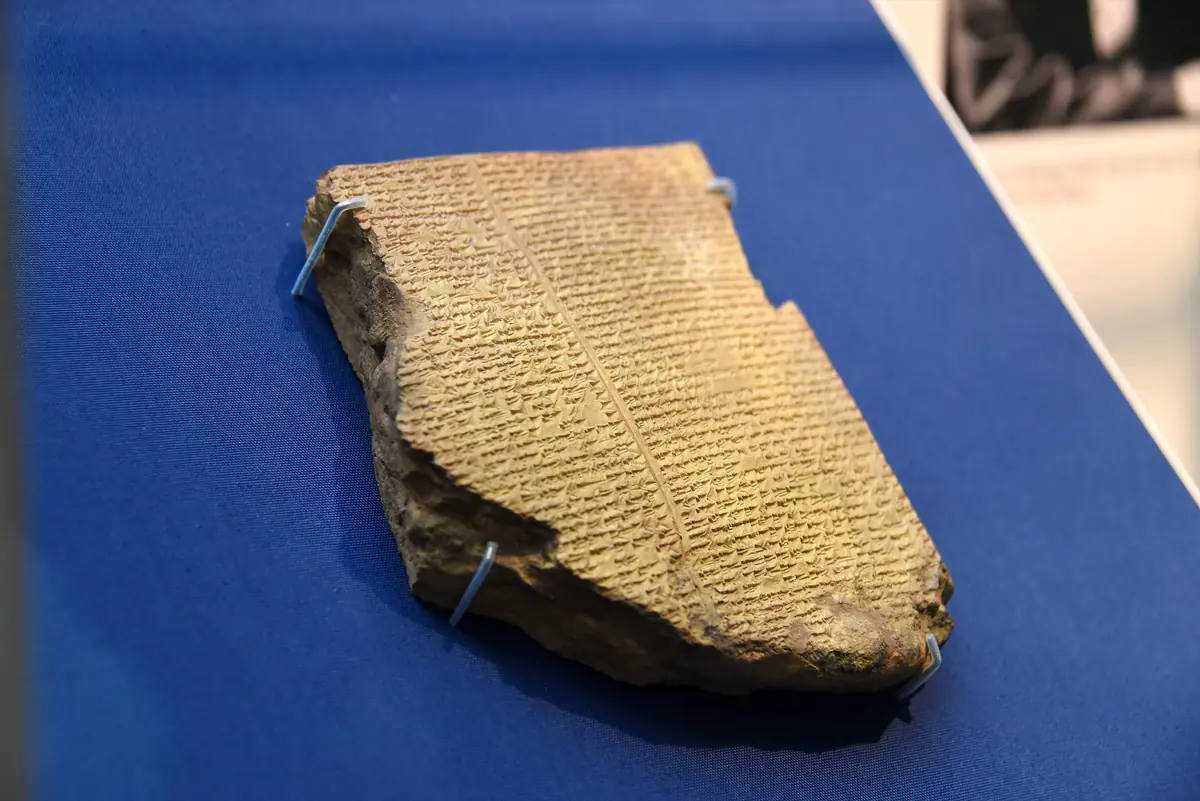
Among these objects is the famous Tablet XI of the Epic of Gilgamesh, kept at the British Museum under number K.3375. This copy dates from the 7th century BCE.
On it, Gilgamesh meets Uta-Napishtim, a man who survived a flood. Warned of the gods' plan, he builds a boat and takes on board his family, animals and craftsmen. After the disaster, he releases a dove, a swallow and a raven in turn to find out whether the waters have gone down.
In 1872, George Smith identified the Flood story while deciphering the tablet. Its likeness to the story of Noah struck readers at once: a divine warning, a vessel, living creatures saved, and birds sent out over the waters.
🔎 Who survives the Flood?
One distinction matters: the survivor of the Flood is Uta-Napishtim, who tells his story to Gilgamesh. Gilgamesh himself is searching for the secret of immortality (British Museum notice on Google Arts & Culture).
The Sumerian King List: before and after the Flood
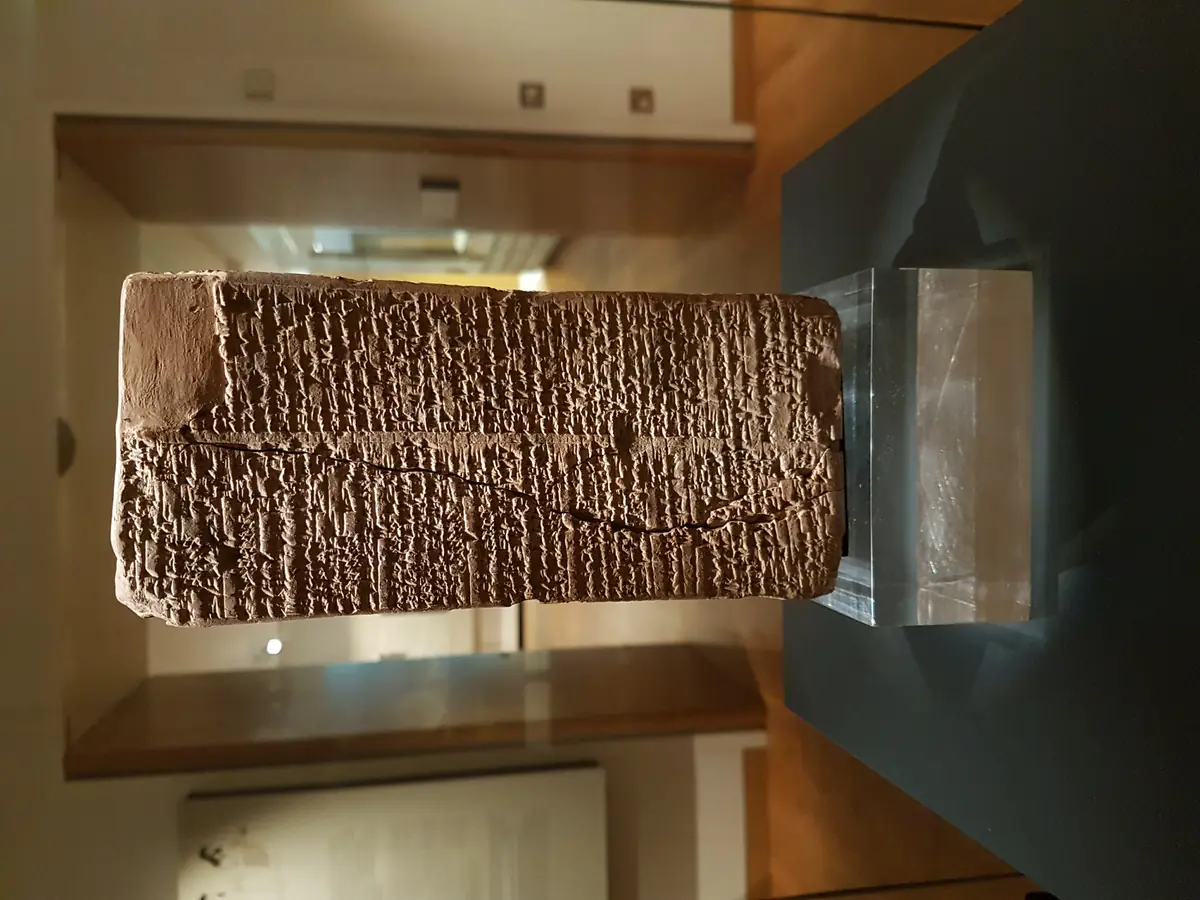
In Oxford, England, the Ashmolean Museum holds another document: the Weld-Blundell Prism, which carries a particularly complete version of the Sumerian King List.
Dated to around 1800 BCE, this clay object has four sides covered in cuneiform writing. It lists cities, their rulers and the length of their reigns.
The text opens with kings credited with extraordinarily long reigns. Then the Flood marks a break: once it has passed, kingship comes down from heaven again and a new line of rulers begins. The list therefore includes kings placed before the Flood and others after it. It shows the place of the cataclysm in the way Mesopotamia pictured its past.
The Ashmolean stresses that the document mixes mythical, legendary and historical material. Its date is when the prism was made, not a date for the Flood itself (Ashmolean Museum notice). The very long lifespans in the genealogy from Adam to Noah in Genesis 5 belong to the same literary genre, as explained on our page the Origins, from Creation to Babel.
The Eridu Genesis: a tablet found at Nippur
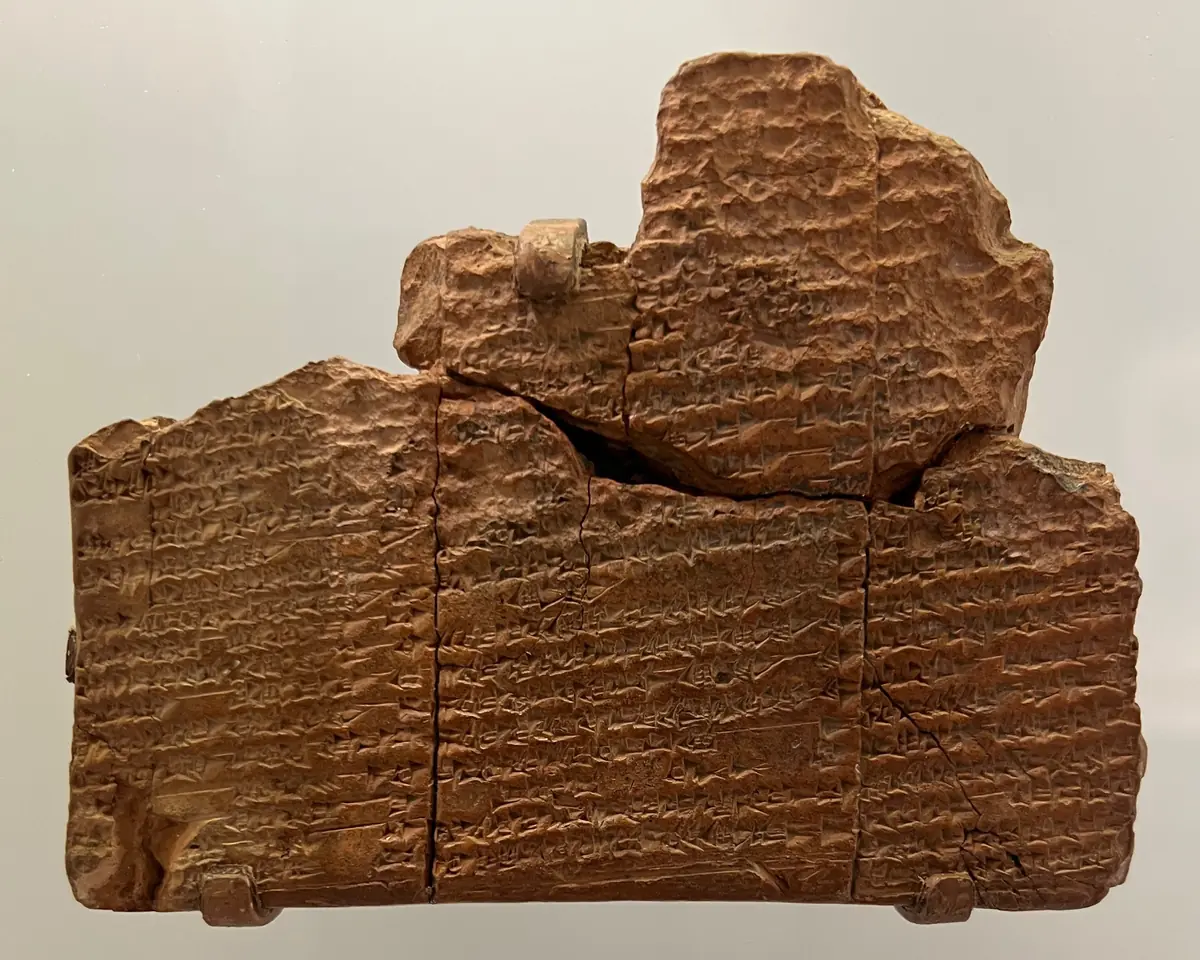
The third object comes from Nippur, in Iraq. Kept at the Penn Museum in Philadelphia under number CBS10673, formerly B10673, the fragment is dated by the museum to around 1650 BCE.
Its inscription, in the Sumerian language, speaks of the creation of humans, the first cities and a flood. The story is known today as the Eridu Genesis. Despite that title, the tablet shown here was found at Nippur (Penn Museum notice).
The hero is called Ziusudra. Warned of the coming destruction, he survives aboard a large boat. The surviving passages describe a storm of seven days and seven nights, then the return of the sun. Ziusudra then offers a sacrifice and receives eternal life.
The tablet is incomplete: several stages of the story are missing. Even so, the lines that survive are enough to show that a Sumerian story existed linking catastrophe, survival and the preservation of life (translation by the University of Oxford).
What these objects tell us
These three objects let us study ancient texts on physical supports kept in museums. They show that the Flood held an important place in the literature and memory of the ancient Near East.
They do not all give the same information, though. The Gilgamesh tablet tells an adventure, the King List organises the past around a break, and the Eridu Genesis ties the origins of humanity to a catastrophe.
Their existence proves that the stories they carry existed. It is not enough, on its own, to show that all the world's traditions describe one and the same worldwide flood.
For readers of the Bible, these comparisons are also an invitation to look at what is distinctive about the story of Noah in Genesis. Leaving the ark leads to a covenant between God and Noah, his descendants and all living creatures. The bow in the clouds becomes its sign.
"I do set my bow in the cloud, and it shall be for a token of a covenant between me and the earth."
Genesis 9:13
אֶת־קַשְׁתִּי נָתַתִּי בֶּעָנָן וְהָיְתָה לְאוֹת בְּרִית בֵּינִי וּבֵין הָאָרֶץ
בראשית ט, יג
From the biblical story to the mountains of Ararat
Genesis has the ark come to rest on the mountains of Ararat. The text names a mountain range; identifying it with the peak now called Mount Ararat is a matter of the history of traditions.
"And the ark rested in the seventh month, on the seventeenth day of the month, upon the mountains of Ararat."
Genesis 8:4
Mount Ararat and the Durupınar site
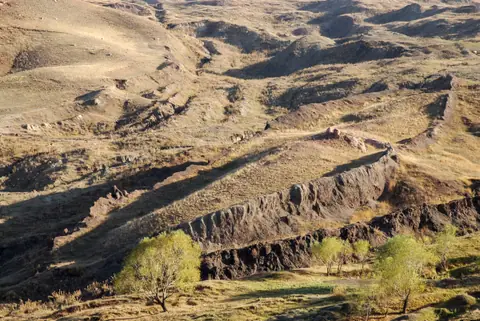 Doğubayazıt, Ağrı province (Turkey)Mount Ararat – Noah's Ark and the Durupınar SiteFor two centuries, explorers have searched for Noah's Ark on Mount Ararat and at its foot. In 2026, a team drilled the Durupınar site for the first time. Here is what we know, what remains to be proven, and how to see the mountain.View site →
This association has made the region, in eastern Turkey, one of the best-known places linked to Noah. Our page on Mount Ararat and the Durupınar site covers their history, their geography and how to visit.
The search for Noah's Ark
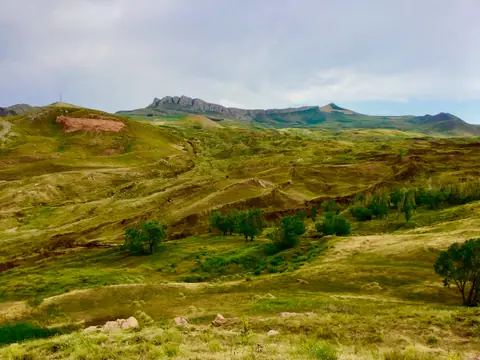 ArchaeologyNoah's Ark Scans: what does the research on Noah's Ark reveal?Radar, core drilling, petrified wood: what the Noah's Ark Scans project found at Durupınar in 2026, and why Noah's Ark has not been found yet.Read the article →
Looking for possible remains of the ark is a separate investigation. To understand the methods used, the announcements and the questions still open, read our article on the drilling campaigns carried out at Durupınar in 2026.
In Israel: Noah's altar on Mount Moriah
Jewish tradition also links Noah to Jerusalem: according to Maimonides, on leaving the ark he built his altar on the spot where the altar of the Temple would later stand, on the Temple Mount. You can add this stop to your itinerary with the free Create my tour tool.
From stories passed down across continents to signs pressed into clay, the Flood still raises the same question: how do societies tell of the destruction of a world, and of the chance to begin again?
Sources and references
- M. Kaveh, "Science and the Flood", in the booklet "Did the Flood Happen and Where?", p. 6 (figure of 217 cultures after C. Sellier and D. Balsiger)
- Śatapatha Brāhmaṇa 1.8.1: Manu and the fish (text and translation, TITUS, University of Frankfurt)
- Yang Lihui and Deming An, The World of Chinese Mythology: Nüwa and the Huainanzi
- Pseudo-Apollodorus, Library 1.7.2: Deucalion and Pyrrha (Theoi Project)
- J. R. Swanton, Source Material for the Social and Ceremonial Life of the Choctaw Indians, reviewed in Nature, 1932
- C. F. Hellyer, PhD dissertation, University of Georgia, 2013: Hopi emergence stories
- H. H. Bancroft, The Native Races, vol. 3: Coxcox and Teocipactli
- Popol Vuh, translation and notes by Allen J. Christenson (Mesoweb), p. 71 and note 123
- P. Sarmiento de Gamboa, History of the Incas (Sacred Texts)
- Ashurbanipal Library Project: timeline of the Nineveh excavations (Oracc, University of Pennsylvania)
- British Museum, The Flood Tablet, K.3375 (Google Arts & Culture)
- Ashmolean Museum, The Sumerian King List, AN1923.444
- Penn Museum, Flood Tablet / Deluge Tablet, CBS10673
- The Flood story, translation (ETCSL, University of Oxford)
- Genesis 8 (Sefaria)
- Genesis 9 (Sefaria)
Frequently asked questions about the Flood
Did the Flood really happen?
The Mesopotamian tablets prove that flood stories existed nearly 4,000 years ago, not that a flood covered the whole earth. At Ur, Kish and Shuruppak, archaeologists found clay layers left by great floods of the Tigris and Euphrates, at different dates. No geological evidence points to a single worldwide flood.
What is the difference between Noah's Flood and the Gilgamesh flood?
Both stories share the divine warning, the boat, the animals saved and the birds released over the waters. In Gilgamesh, the survivor is Uta-Napishtim, the gods decide on the disaster together and the hero receives immortality. In Genesis, one God acts, and leaving the ark leads to a covenant with all humanity, sealed by the rainbow (Genesis 9).
What is the oldest known flood story?
The oldest surviving texts come from Mesopotamia. The Sumerian King List prism, around 1800 BCE, already mentions the Flood as a break in history. The first full narratives, the Sumerian Eridu Genesis (hero: Ziusudra) and the Epic of Atrahasis, are copied on tablets from the 17th century BCE.
How many cultures have a flood story?
The figure of 217 cultures, put forward by Charles Sellier and David Balsiger, is often quoted. It should be read with care: not all these stories feature an ark or a family saved, some were recorded late, and a few, such as some Choctaw versions, were reshaped by contact with the Bible.
Where can you see the Flood tablets?
Tablet XI of Gilgamesh (K.3375) is held at the British Museum in London, the Sumerian King List prism (AN1923.444) at the Ashmolean Museum in Oxford, and the Eridu Genesis tablet (CBS10673) at the Penn Museum in Philadelphia. Check each museum's website to see whether the object is on display when you visit.
Where did Noah's Ark come to rest?
Genesis says "upon the mountains of Ararat" (Genesis 8:4), a region rather than a specific peak. Tradition identified it with Mount Ararat in eastern Turkey, near which lies the Durupınar site. Our Mount Ararat page explains how to get there; no remains of the ark have been authenticated.
Places to visit
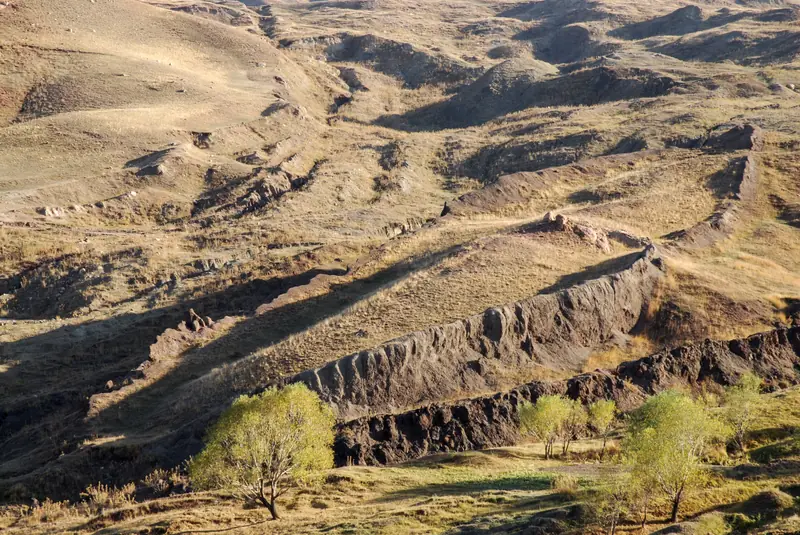
Mount Ararat – Noah's Ark and the Durupınar Site
For two centuries, explorers have searched for Noah's Ark on Mount Ararat and at its foot. In 2026, a team drilled the Durupınar site for the first time. Here is what we know, what remains to be proven, and how to see the mountain.
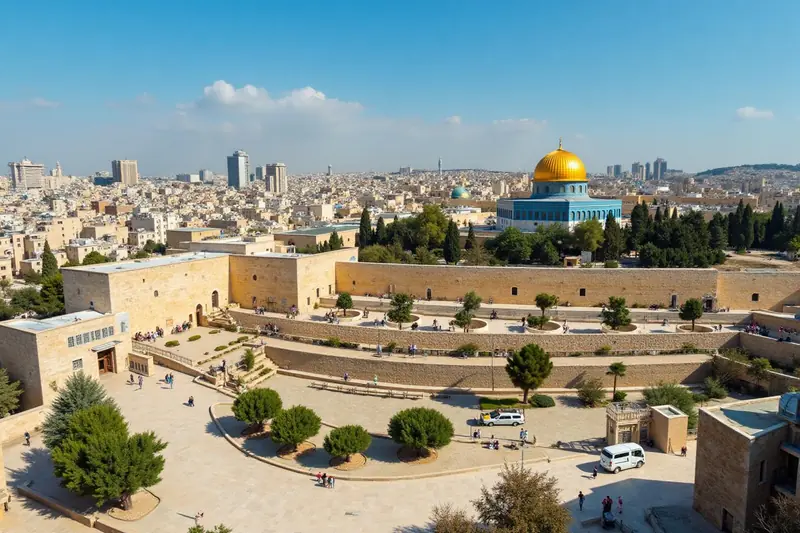
Mount Moriah: Abraham's Test, from the Biblical Story to the Temple Mount
Where tradition places Abraham's test now stands the Temple Mount, one of the holiest sites in Judaism and Islam.
Read next
Where Was the Garden of Eden? The Four Rivers, Mesopotamia and Hebron
Tigris, Euphrates, the Persian Gulf or Hebron? What Genesis says about the Garden of Eden, what scholars suggest, and the traditions that link it to Israel.
Prehistory in Israel: From the First Humans to the First Villages
Four prehistoric sites to visit in Israel and five more closed to the public: over a million years of human history, from Mount Carmel to the Jordan.