
Beersheba: the Well of the Oath and Abraham's Tamarisk
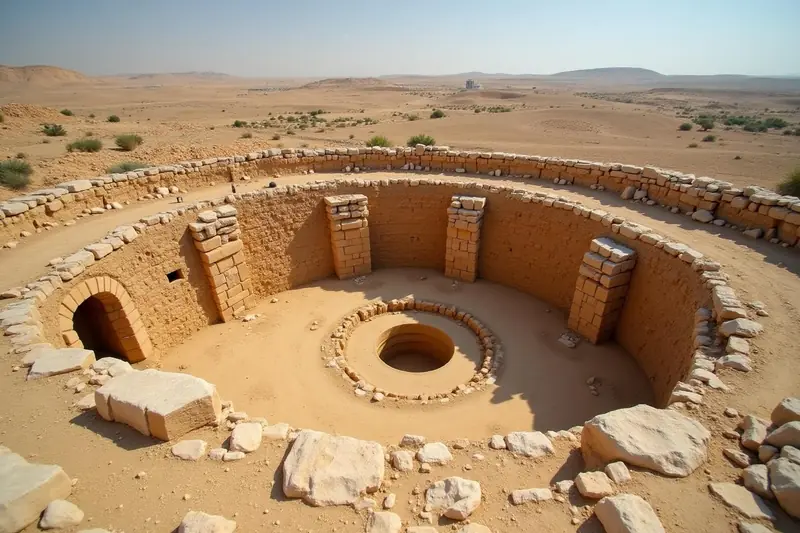
At Beersheba, Abraham seals a covenant with Abimelech over a well, plants a tamarisk and calls on the name of the Everlasting God.
Biblical period: The Patriarchs
Where tradition places Abraham's test now stands the Temple Mount, one of the holiest sites in Judaism and Islam.
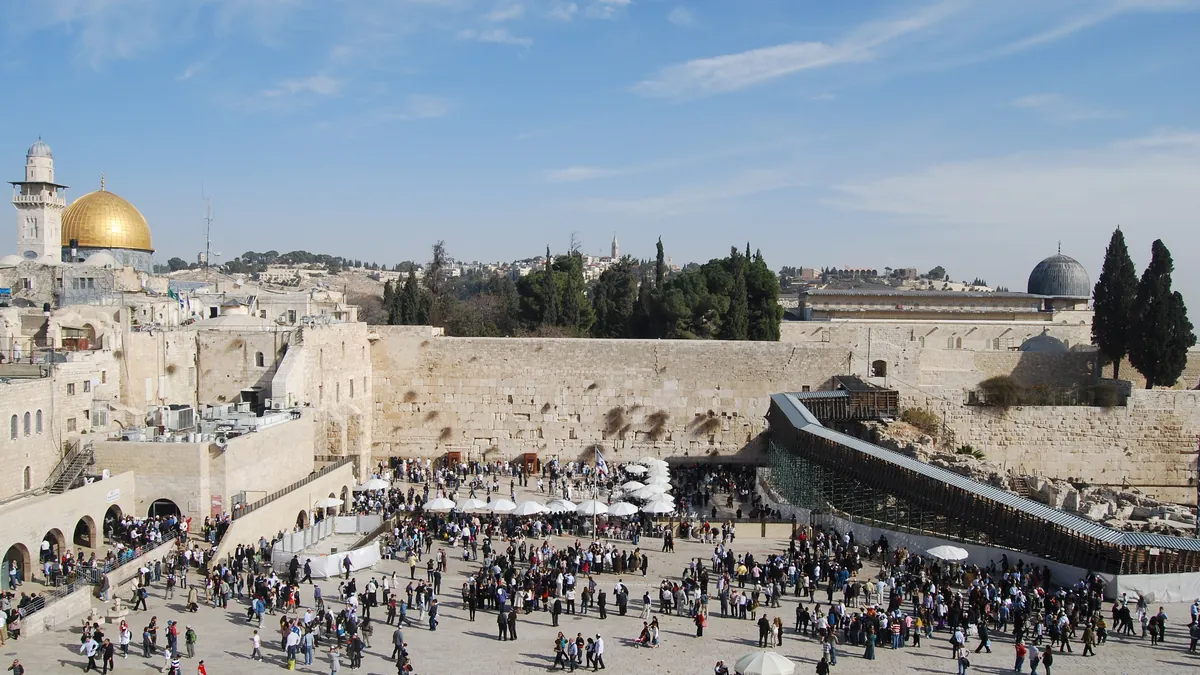
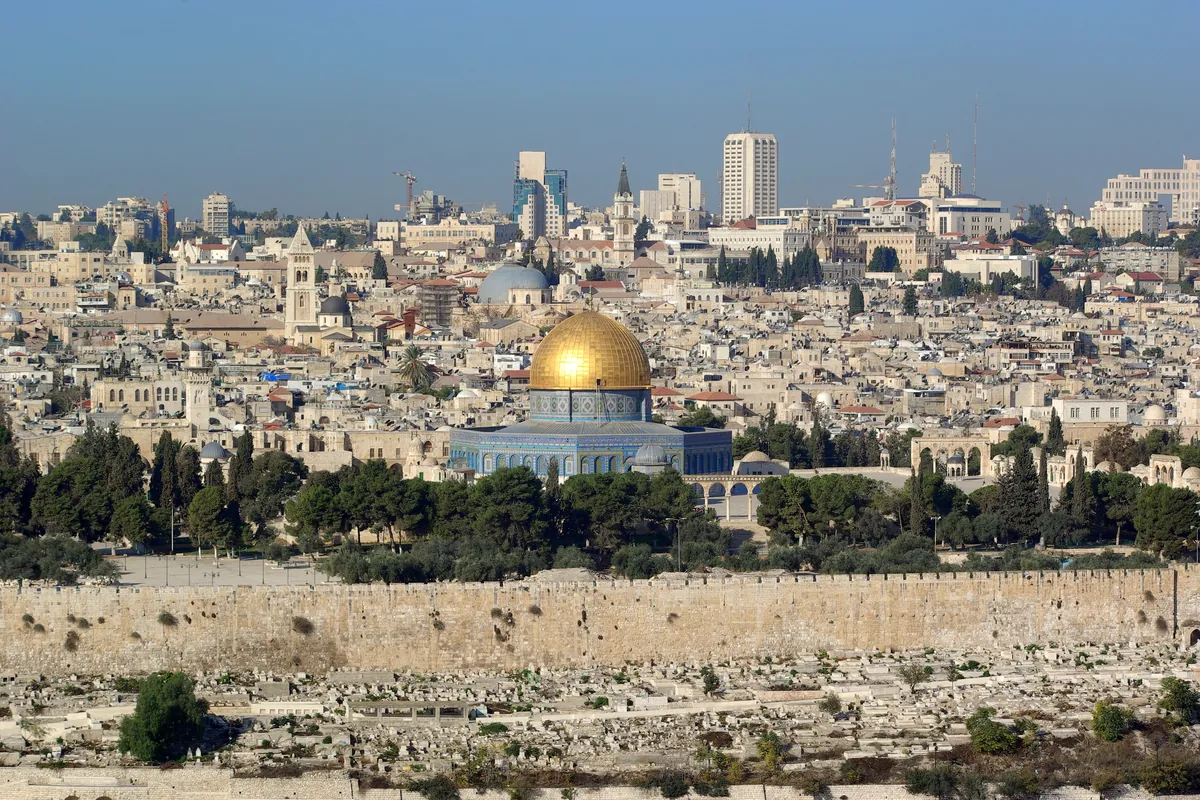
According to Jewish tradition, Mount Moriah is the hill in Jerusalem where Abraham was called to offer up his son Isaac (Genesis 22) and where Solomon later built the Temple (2 Chronicles 3:1). It is identified with the Temple Mount (Har HaBayit), known in Arabic as al-Haram al-Sharif, the Noble Sanctuary, at the heart of the Old City.
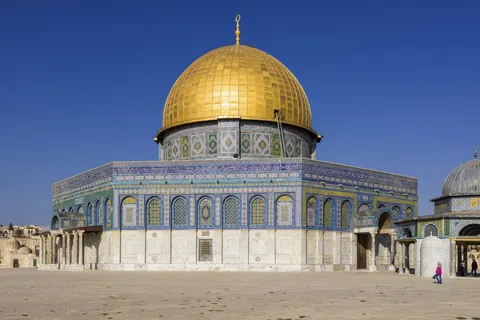
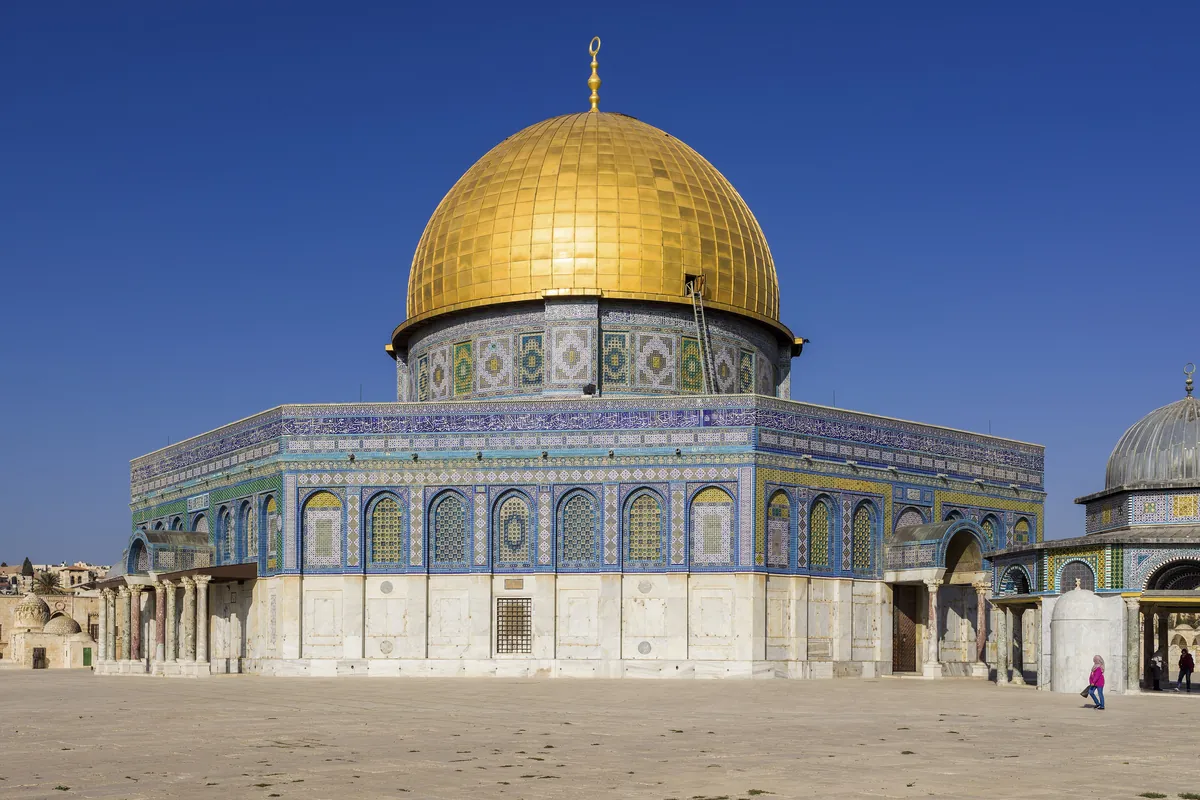
This founding story, shared by the three monotheistic faiths, portrays Abraham's obedience and God's faithfulness to his covenant: Mount Moriah has become the symbol of faith tested and confirmed. Crowned today by the Dome of the Rock, the site is at once a major biblical landmark, a key place for archaeology and a highly sensitive sacred space, open to visitors under strict conditions.
In brief
History & Bible
Bible story
"Take now thy son, thine only son Isaac, whom thou lovest, and get thee into the land of Moriah; and offer him there for a burnt offering upon one of the mountains which I will tell thee of."
Genesis 22:2
After years of waiting, Abraham has at last received from Sarah the son of the promise, Isaac. Then God asks the unthinkable: to offer that son as a burnt offering. The narrator tells the reader from the very first verse that this is a test (Genesis 22:1) — but Abraham does not know it.
This harrowing demand tests both Abraham's faith and his understanding of God. The text records no objection: the man who had pleaded for Sodom and Gomorrah (Genesis 18) simply "rose up early in the morning" and set out. That silence has fed centuries of Jewish, Christian and Muslim commentary.
Abraham sets out with Isaac, two servants and the wood for the offering. The journey lasts three days — three days of silent walking towards the ordeal. "On the third day Abraham lifted up his eyes, and saw the place afar off" (22:4); he then leaves the servants behind and goes on alone with his son.
Isaac carries the wood, Abraham the fire and the knife. Isaac's question still echoes today: "Where is the lamb for a burnt offering?" Abraham's answer reveals the depth of his faith: "My son, God will provide himself a lamb for a burnt offering" (22:7-8).
When they reach the appointed place, Abraham builds an altar, lays the wood in order and binds Isaac. Jewish tradition calls this episode the Akedah, the "Binding" of Isaac, after the Hebrew verb used in verse 9. The word stresses the physical act, but also the spiritual bond between Abraham and God. Abraham stretches out his hand and takes the knife: his trust in God outweighs even his love for his son.
Isaac's point of view — his age, his silence, his consent — is explored on a dedicated page: the Binding of Isaac told from the son's side.
 Old City of JerusalemThe Binding of Isaac on Mount Moriah: the Silent Faith of the SonOn Mount Moriah, Isaac, the son of the promise, climbs with his father towards the altar: a story of trust, substitution and mercy.View site →
"Lay not thine hand upon the lad, neither do thou any thing unto him: for now I know that thou fearest God, seeing thou hast not withheld thy son, thine only son from me."
Genesis 22:12
At the critical moment, the angel of the LORD stops Abraham's hand. Looking up, Abraham sees a ram caught in a thicket by its horns and offers it in place of his son. The test concerned Abraham's faithfulness; it does not end in a human sacrifice — a point that many readers, ancient and modern, consider central.
Abraham names the place "The LORD will provide" (Hebrew YHWH yireh, "Jehovah-jireh" in the King James Version), hence the saying "In the mount of the LORD it shall be seen" (22:14). God then renews his promise: descendants as numerous "as the stars of the heaven, and as the sand which is upon the sea shore" (22:17), in whom "shall all the nations of the earth be blessed" (22:18). Abraham then returns to Beersheba, where he was living (22:19).
Tradition and identification
Genesis 22 speaks only of "the land of Moriah" and of "one of the mountains" that God will point out. The name appears just once more in the Bible, to locate Solomon's Temple:
"Then Solomon began to build the house of the LORD at Jerusalem in mount Moriah, where the LORD appeared unto David his father, in the place that David had prepared in the threshingfloor of Ornan the Jebusite."
2 Chronicles 3:1
This verse links three moments: Abraham's test, the threshing floor David bought to build an altar (2 Samuel 24:18-25) and the building of the Temple. The traditional identification of Mount Moriah with the Temple Mount rests on this connection.
🔎 Tradition and history
Identifying Mount Moriah with the Temple Mount is an ancient tradition, already attested in the Hebrew Bible (the Book of Chronicles), but it cannot be verified by archaeology. What can be studied is the history of the holy site itself, over nearly three millennia.
History
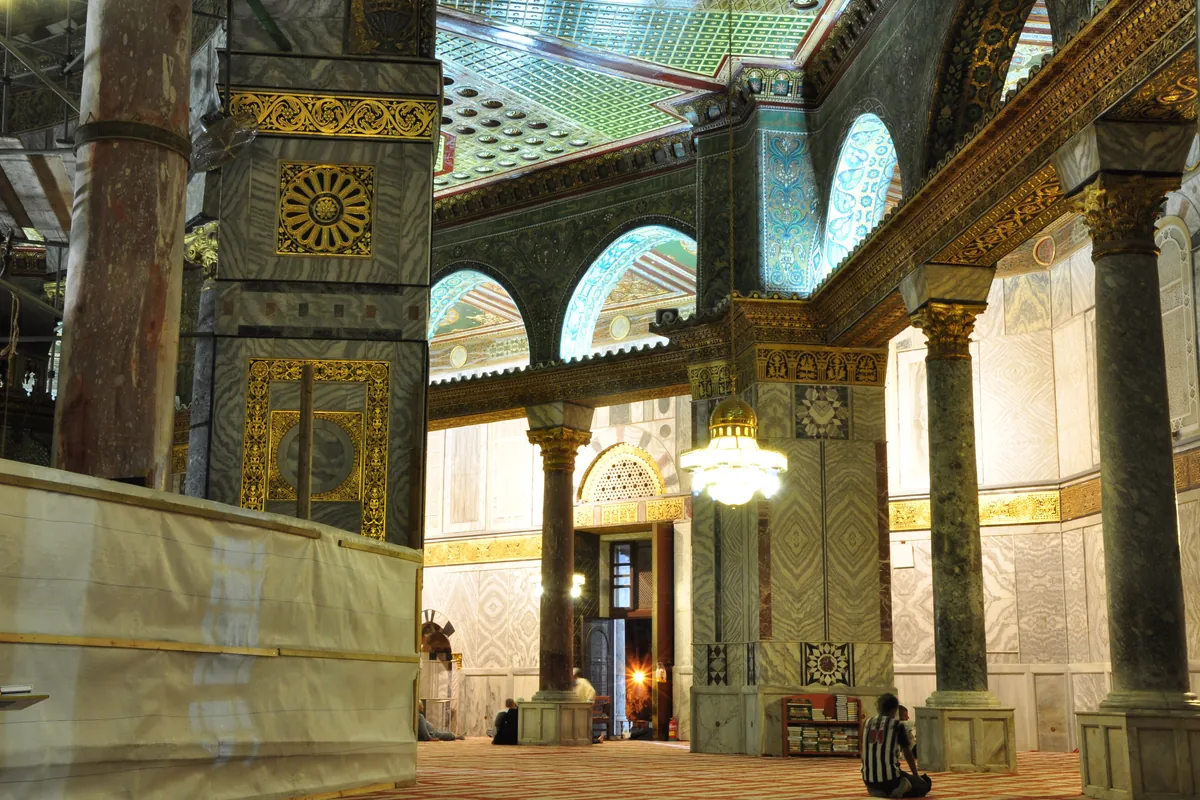
Beneath the cupola of the Dome of the Rock lies a broad outcrop of limestone, the Foundation Stone (Even HaShetiyah). The Mishnah (Yoma 5:2) mentions a "foundation stone" in the Holy of Holies of the Second Temple; Jewish tradition sees it as the heart of the Temple, even the starting point of Creation, and as the place of the Binding of Isaac. Muslim tradition associates it with the Night Journey of the Prophet Muhammad; a small cave hollowed out beneath the rock is known as the "Well of Souls".
The exact location of the Holy of Holies is still debated: most scholars place it on this rock or immediately next to it, but other hypotheses exist.
Archaeology
No archaeological excavation is permitted on the platform itself because of its religious and political status. The remains of the First and Second Temples have therefore never been uncovered: our knowledge comes from research carried out all around the enclosure.
At the foot of the Temple Mount, a tiny cuneiform inscription recently shed light on contacts between Judah and Assyria in the First Temple period: see our article on the Akkadian seal found in Jerusalem.
📜 Key point
Archaeology sheds light on the history of the Temple and of Jerusalem; it can neither confirm nor refute the story of Abraham, which belongs to religious memory. The continuous veneration of the site, however, is well documented over almost three thousand years.
Plan my visit
Mount Moriah
Temple Mount (Haram al-Sharif), Old City of Jerusalem — visitor entrance through the Mughrabi Gate, from the Western Wall plaza
GPS coordinates : 31.7780, 35.2354 (reference point, not the exact entrance)
Start navigation with:
The holiest site in Judaism and the third holiest in Islam, the platform is a Muslim place of prayer administered by the Waqf. Non-Muslim visitors are admitted during limited time slots, through a single entrance, under the supervision of the Israeli police.
⚠️ Changing hours
Visiting times vary with the day of the week, Jewish and Muslim holidays and the security situation; access may be closed without notice. Check the latest information the day before and on the day itself.
Around the site
Same stop in your tour: the page below tells the same site from another angle.
Old City of JerusalemThe Binding of Isaac on Mount Moriah: the Silent Faith of the SonOn Mount Moriah, Isaac, the son of the promise, climbs with his father towards the altar: a story of trust, substitution and mercy.View site → 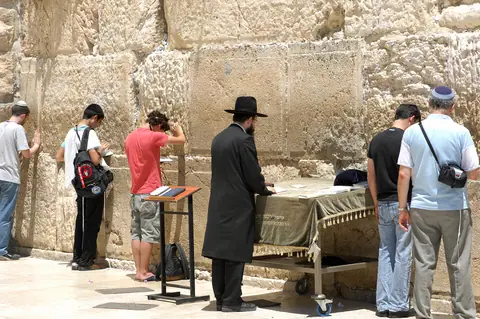
The Temple retaining wall
From David's flight to the agony of Jesus, the hill facing the Temple Mount holds three thousand years of Jewish and Christian memory.
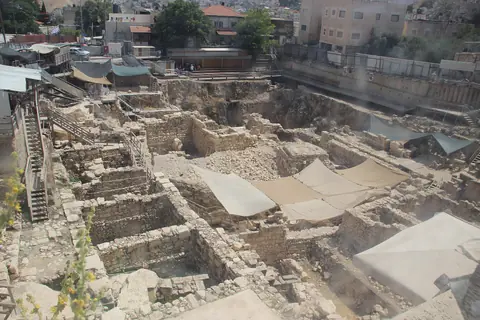
The kings' Jerusalem and Hezekiah's Tunnel
The rock of Calvary and the tomb venerated since the 4th century, under one roof shared by six Christian communities: Gospel account, history, archaeology and visiting.
At Beersheba, Abraham seals a covenant with Abimelech over a well, plants a tamarisk and calls on the name of the Everlasting God.
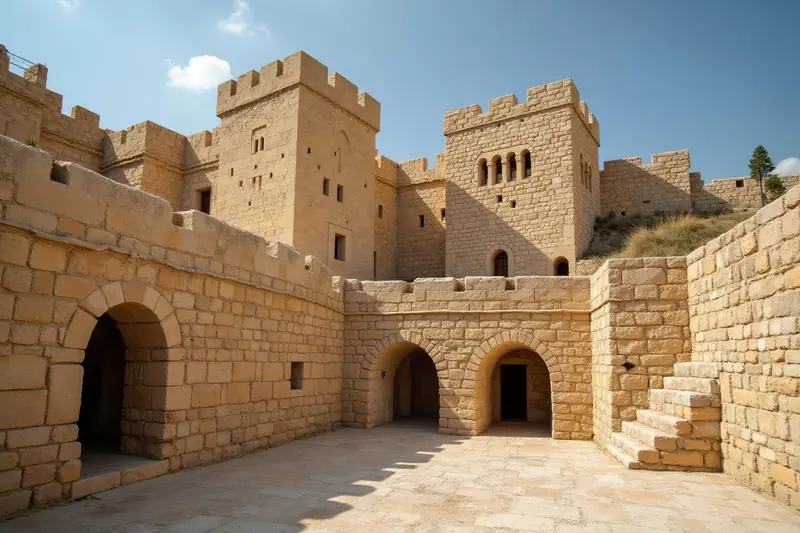
A sacred site venerated by the three monotheistic religions, the traditional burial place of Abraham, Isaac and Jacob.
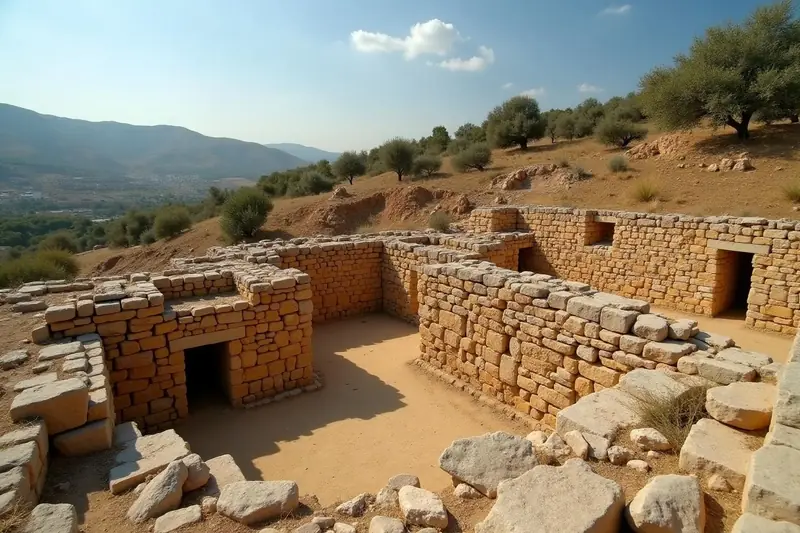
After Shechem, Abraham builds an altar "between Bethel and Ai" and calls on the name of the LORD, then returns there after his stay in Egypt (Genesis 12:8; 13:1-4).
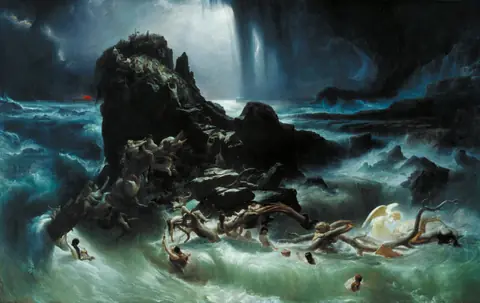 OriginsThe Flood Around the World: Ancient Stories and Archaeological WitnessesIndia, China, Greece, the Americas, Mesopotamia: flood stories around the world and three ancient tablets that record them, set beside the story of Noah.Read the article →
 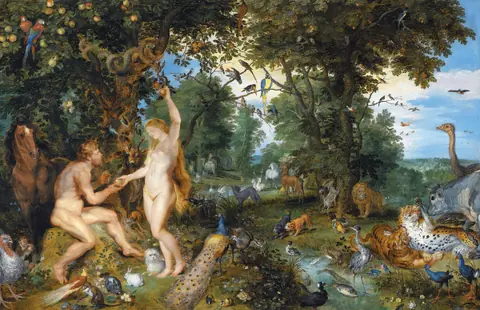 OriginsWhere Was the Garden of Eden? The Four Rivers, Mesopotamia and HebronTigris, Euphrates, the Persian Gulf or Hebron? What Genesis says about the Garden of Eden, what scholars suggest, and the traditions that link it to Israel.Read the article →
 Tradition identifies it with the Temple Mount in the Old City of Jerusalem, where the Dome of the Rock stands today. The identification rests on 2 Chronicles 3:1; Genesis 22 speaks only of "the land of Moriah". The Samaritans place the site of the sacrifice on Mount Gerizim.
The text simply says that God tested Abraham (Genesis 22:1). Tradition sees it as revealing the depth of his faith and obedience; the outcome also shows that God does not want the child's death, but faithfulness.
The supreme test of Abraham's faith and the symbol of trusting obedience to God. The ram offered in Isaac's place is often read as a rejection of human sacrifice and a sign of divine mercy.
According to 2 Chronicles 3:1, Solomon built the Temple "in mount Moriah". Jewish tradition therefore identifies Mount Moriah with the site of the First and then the Second Temple, destroyed in 70 CE.
It is the rock that rises beneath the cupola of the Dome of the Rock (Even HaShetiyah). Jewish tradition sees it as the site of the Holy of Holies and of the Binding of Isaac; Muslim tradition links it to the Prophet's Night Journey.
Yes. Non-Muslims can reach the platform through the Mughrabi Gate during limited, changing time slots, after a security check. Modest dress is required, and hours should be checked the day before and on the day itself.
No: entry to the Dome of the Rock and the al-Aqsa Mosque is reserved for Muslim worshippers. Visitors can admire the buildings from the outside, on the platform.
Because of the site's sanctity and political sensitivity, no excavation is permitted there. Research focuses on the area around the enclosure (Western Wall, Ophel) and on sifting debris removed from the platform.
The Western Wall and its tunnels, the Jerusalem Archaeological Park south of the enclosure, the City of David and the view from the Mount of Olives. To follow the story further, Beersheba and Hebron recall the lives of Abraham and Isaac.