
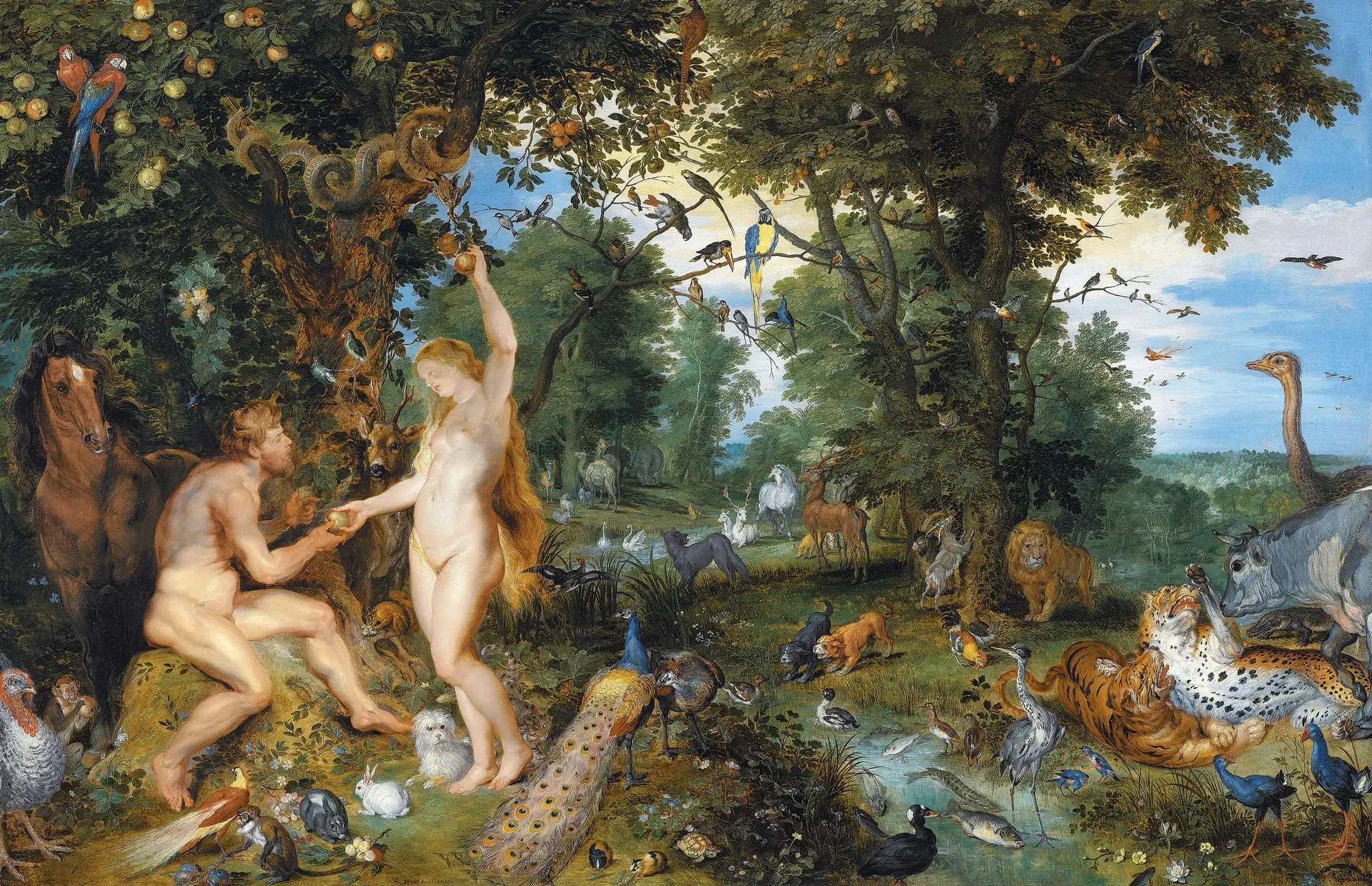
Where is the Garden of Eden? Nobody knows. Genesis places it "eastward" and describes it as watered by a river that splits into four branches, including the Tigris and the Euphrates: the text looks towards Mesopotamia, today's Iraq. The other two rivers have never been identified, and no archaeological discovery makes it possible to locate the garden.
Jewish tradition offers another answer, spiritual rather than geographical: Adam and Eve are said to rest in Hebron, in the Cave of Machpelah, and this cave is said to be the gateway to the Garden of Eden. Here is what the text says, what scholars have made of it and what the traditions tell.
- TextGenesis 2:8-14 (Torah portion Bereshit)
- Main clueThe Tigris and the Euphrates
- LocationUnknown, no archaeological evidence
- In IsraelHebron and Jerusalem, according to tradition
What does the Bible say about where Eden was?
The second creation account (Genesis 2:4–3:24) is the only passage that gives any geography. It first distinguishes two things: Eden, a region, and the garden that God plants in it.
"And the LORD God planted a garden eastward in Eden; and there he put the man whom he had formed."
Genesis 2:8
The east is seen from the writer's own land, Canaan. The same direction comes back twice: the cherubim guard the garden "at the east" (Genesis 3:24), and Cain settles in the land of Nod, "on the east of Eden" (Genesis 4:16).
The four rivers of Genesis 2
The text then adds a description that reads like a map.
"And a river went out of Eden to water the garden; and from thence it was parted, and became into four heads."
Genesis 2:10
וְנָהָר יֹצֵא מֵעֵדֶן לְהַשְׁקוֹת אֶת־הַגָּן וּמִשָּׁם יִפָּרֵד וְהָיָה לְאַרְבָּעָה רָאשִׁים
בראשית ב, י
| River | What the text says | Identification |
|---|---|---|
| Pishon | It surrounds the land of Havilah, where there is gold, bdellium and the shoham stone (Genesis 2:11-12) | Unknown |
| Gihon | It surrounds the land of Cush (Genesis 2:13) | Unknown |
| Hiddekel | It flows east of Assyria (Genesis 2:14) | The Tigris |
| Perat | No details (Genesis 2:14) | The Euphrates |
So two names out of four are certain. The Tigris and the Euphrates rise in the mountains of eastern Turkey, cross Syria and Iraq, then meet before the Persian Gulf. One problem remains: in reality, these rivers do not come from a common source. This gap is what feeds the theories.
What does the word "Eden" mean?
In Hebrew, the root 'dn expresses pleasure and abundance: eden suggests "delight". The Septuagint, the Greek translation of the Bible, rendered the garden as paradeisos, a word of Persian origin meaning an enclosed park, which gave us "paradise". Eden was long linked to the Sumerian edin, "steppe", but in 1984 the Assyriologist Alan Millard showed that this link was weak and that a meaning of "place of abundance" rested on a more secure Aramaic parallel.
What are the main theories about its location?
Southern Mesopotamia
This is the most widespread view among scholars. There the Tigris and the Euphrates form vast marshes, and the kings of Mesopotamia loved irrigated gardens planted with trees and plants brought from afar. The authors of Genesis may have drawn the image of an ideal garden from this landscape, and from Mesopotamian stories such as that of Dilmun, the pure land of Sumerian myths. Our page The Origins sets out these parallels with the texts of Babylon.
Beneath the waters of the Persian Gulf
In the 1980s, the American archaeologist Juris Zarins suggested looking for Eden at the bottom of the Persian Gulf, a plain that was dry during the last ice age and later covered by the sea. On satellite images, he identified the Pishon with the Wadi al-Batin, a now-dry valley coming from Arabia, and the Gihon with the Karun, a river in Iran. The idea drew wide attention, notably in Smithsonian Magazine in 1987, but it has never been confirmed by excavation.
The northern mountains
Other readers take the text the other way round: if a river "goes out" of Eden, one should go up towards the sources. Those of the Tigris and the Euphrates lie in the highlands of eastern Turkey and Armenia, the region of Mount Ararat, where Genesis also brings Noah's ark to rest (see our Mount Ararat page). This reading fits the terrain, but it does no better at identifying the Pishon and the Gihon.
The Nile and the Ganges: ancient readings
Readers in antiquity thought on a much larger scale. The Septuagint translates the land of Cush as "Ethiopia", which makes the Gihon the Nile. In the 1st century, the Jewish historian Flavius Josephus identified the Pishon with the Ganges and the Gihon with the Nile (Antiquities of the Jews I, 1, 3). In the 11th century, Rashi saw the Pishon as the Nile, "the river of Egypt". For these authors, the four rivers embraced the known world.
A place that is not on the map
Many readers, Jewish and Christian alike, and some scholars consider the question to be wrongly put. For them, the Garden of Eden is an ideal place, the "garden of God", which the Bible itself places elsewhere in other texts: the prophet Ezekiel associates it with "the holy mountain of God" (Ezekiel 28:13-14). The geography of Genesis 2 would then say that this garden is the source of life for the whole earth, rather than give an address.
🔎 What archaeology says
No excavation has uncovered a site that can be identified with the Garden of Eden, and archaeologists do not expect to find one. This story belongs to a different register from datable history: it answers questions about humanity, freedom and loss.
Why is the entrance to the Garden of Eden said to be in Hebron?
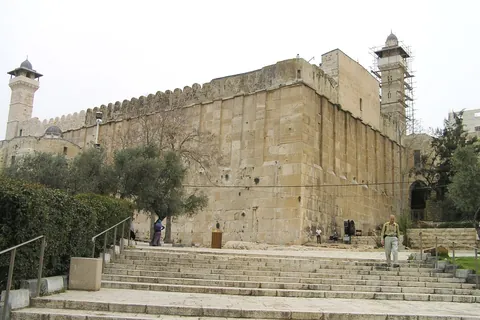 Hebron, Judaean HillsTomb of the Patriarchs – HebronA sacred site venerated by the three monotheistic religions, the traditional burial place of Abraham, Isaac and Jacob.View site →
Jewish tradition does not say that the Garden of Eden was in Hebron. It says that Adam and Eve are buried there, and that their tomb opens onto the garden. This link rests on several texts, from the Talmud to the Middle Ages.
Adam and Eve in the Cave of Machpelah
The Bible calls Hebron by another name, Kiryat Arba, literally the "city of four": "And Sarah died in Kirjatharba; the same is Hebron in the land of Canaan" (Genesis 23:2). The Talmud explains this name by the four couples said to rest in the Cave of Machpelah: Adam and Eve, Abraham and Sarah, Isaac and Rebecca, Jacob and Leah (Eruvin 53a). The Midrash Bereshit Rabbah (58:4) gives the same list among other explanations.
The Bible itself mentions only the patriarchs and their wives in the cave (Genesis 23, 25:9-10, 49:29-31 and 50:13). The presence of Adam and Eve is a tradition, ancient and widely handed down, but with no support in the biblical text.
Abraham and the scent of the garden
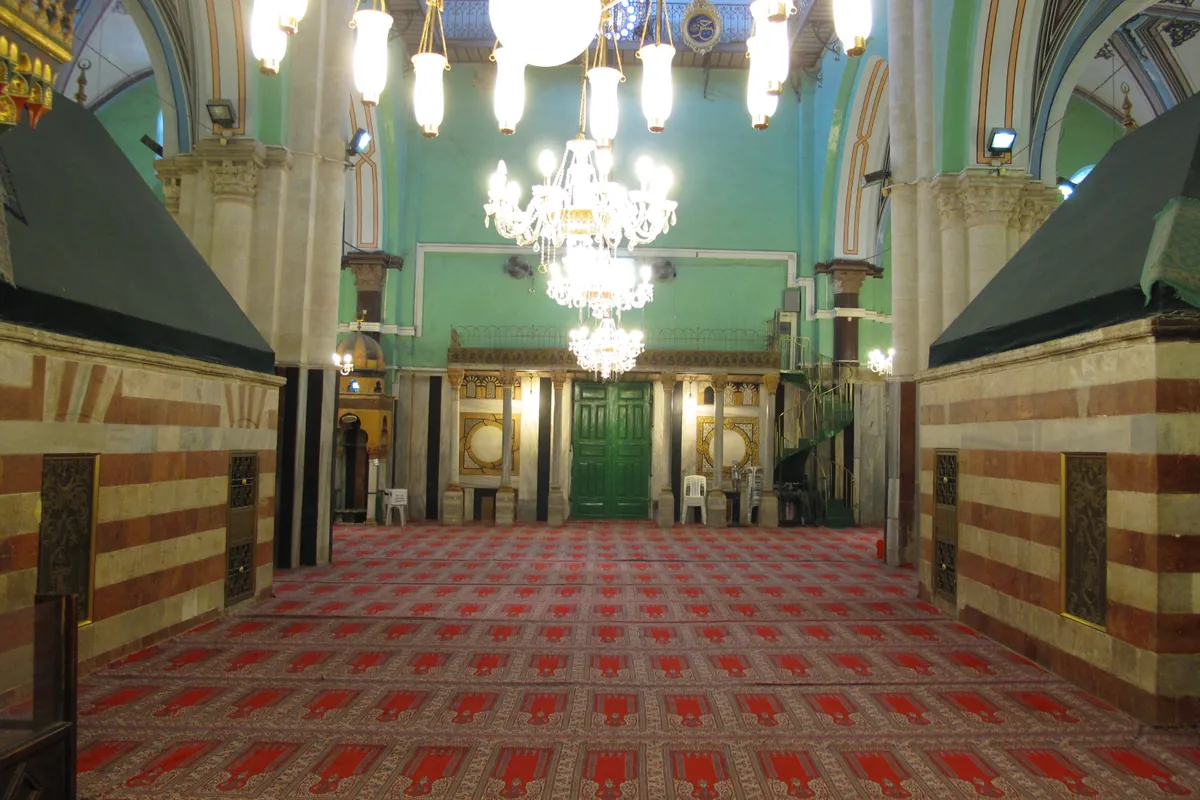
An 8th-century midrash, the Pirkei de-Rabbi Eliezer (chapter 36), explains why Abraham was so attached to this cave. When he welcomes three visitors at Mamre and runs to fetch a calf (Genesis 18:7), the animal runs off into the cave. Abraham follows it and finds Adam and Eve lying there, lights burning above them and a sweet scent around them. That is why he later wants to buy it to bury Sarah.
The Zohar, the major book of Kabbalah (13th century), takes up the story and goes further (Zohar I, 127a): Abraham understands that the cave is the entrance to the Garden of Eden. In this tradition, the souls of the righteous reach Gan Eden through the Cave of Machpelah. This text is the origin of the idea that "the Garden of Eden is in Hebron".
"The greatest man among the Anakim"
A verse in the book of Joshua strengthened the link. It says that Hebron was formerly called Kiryat Arba and that this name came from "the greatest man among the Anakim", a race of giants (Joshua 14:15). In Hebrew, "the man" is ha-adam.
וְשֵׁם חֶבְרוֹן לְפָנִים קִרְיַת אַרְבַּע הָאָדָם הַגָּדוֹל בָּעֲנָקִים הוּא
יהושע יד, טו
Around 405, Saint Jerome translated this passage into Latin, in the Vulgate, as "Adam, the greatest among the Enacim, was laid there". For centuries, Christian readers of the Latin Bible therefore read that Adam was buried in Hebron.
The pilgrims' field of red earth
In the Middle Ages, Christian pilgrims added a stop to their visit to Hebron: the "Damascene field" (ager damascenus), where Adam was said to have been shaped from red earth, echoing the Hebrew wordplay between adam and adamah, the ground. In the 13th century, the Dominican Burchard of Mount Sion placed it "a good bowshot from the double cave". Despite its name, this field has nothing to do with Damascus.
🔎 Text, tradition, geography
These traditions do not contradict Genesis; they read it differently. The biblical text places Eden in the east, near the Tigris and the Euphrates; tradition places in Hebron the tomb of the first couple and a passage to the garden. One speaks of a region, the other of a place of memory.
Which other places in Israel are linked to Adam and Eden?
Mount Moriah, where Adam was created
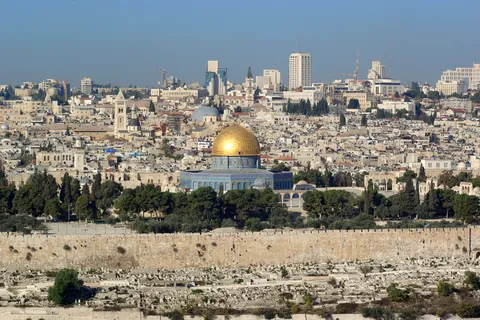 Old City of JerusalemMount Moriah: Abraham's Test, from the Biblical Story to the Temple MountWhere tradition places Abraham's test now stands the Temple Mount, one of the holiest sites in Judaism and Islam.View site →
Another Jewish tradition places in Jerusalem not the garden, but the creation of Adam. According to Maimonides (Mishneh Torah, Laws of the Temple 2:2), Adam was formed from the earth of the spot where the Temple altar would stand, and offered the first sacrifice there. The Sages put it in one sentence: "man was created from the place of his atonement".
The prophets, for their part, use the Garden of Eden as an image of the restored land: God "will make her wilderness like Eden" (Isaiah 51:3). And the name of one of the four rivers, Gihon, is also that of the spring that supplies Jerusalem, where Solomon was anointed king (1 Kings 1:33-39). Finally, the Talmud considers a "gate" to the garden in the Land of Israel: according to Resh Lakish, if Gan Eden is in Israel, its entrance is at Beit She'an (Eruvin 19a).
Golgotha and the Chapel of Adam
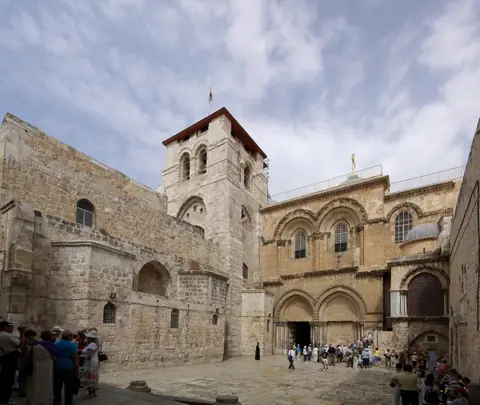 Jerusalem, Old City (Christian Quarter)The Church of the Holy Sepulchre in Jerusalem: Golgotha, the Tomb and VisitingThe rock of Calvary and the tomb venerated since the 4th century, under one roof shared by six Christian communities: Gospel account, history, archaeology and visiting.View site →
Christians have a different tradition for Adam's tomb: several Church Fathers place it beneath Golgotha, in Jerusalem, where Jesus was crucified. The skull seen at the foot of many crucifixes refers to this idea. In the Church of the Holy Sepulchre, the Chapel of Adam, beneath Calvary, shows a crack in the rock.
Seeing these places in Israel
You cannot visit the Garden of Eden, but you can go to the places the traditions connect with it. In Hebron, about thirty kilometres south of Jerusalem, the enclosure of the Tomb of the Patriarchs is open to visitors; the cave itself, below, is not open to the public. The site is sensitive: check the security guidelines before you go. In Jerusalem, the Temple Mount and the Church of the Holy Sepulchre, with the Chapel of Adam, are in the Old City.
These stops fit easily into a route in the footsteps of Abraham, described in our article Abraham, father of monotheism. To plan your trip day by day, build your route with the free tool Create my tour.
Sources and references
- Genesis 2:8-14 (Hebrew text and translations on Sefaria)
- Babylonian Talmud, Eruvin 53a: the four couples of Kiryat Arba (Sefaria)
- Babylonian Talmud, Eruvin 19a: the entrance to Gan Eden according to Resh Lakish (Sefaria)
- Bereshit Rabbah 58:4 (Sefaria)
- Pirkei de-Rabbi Eliezer, chapter 36 (Sefaria)
- Maimonides, Mishneh Torah, Laws of the Temple 2:2 (Sefaria)
- Rashi on Genesis 2:11 (Sefaria)
- Flavius Josephus, Antiquities of the Jews, Book I (W. Whiston translation, Project Gutenberg)
- Vulgate, Joshua 14:15 (Latin text)
- N. Golding, "Cave of the Patriarchs (Machpelah)", Chabad.org: the cave as the entrance to the Garden of Eden according to the Zohar
- A. Hilhorst, "Ager Damascenus: Views on the Place of Adam's Creation", Warszawskie Studia Teologiczne 20/2 (2007), summary on Medievalists.net
- Encyclopaedia Judaica, "Garden of Eden" (Jewish Virtual Library)
- C. Moss, "Was the Garden of Eden a real place? Here's what archaeologists think", National Geographic, 19 September 2025
Frequently asked questions about the Garden of Eden
Where is the Garden of Eden today?
Nobody knows. Genesis places it "eastward", watered by a river that splits into four branches including the Tigris and the Euphrates, which points to Mesopotamia, today's Iraq. The other two rivers, the Pishon and the Gihon, have never been identified, and no excavation has found the garden.
Is the Garden of Eden in Hebron?
Not according to the biblical text, which places it in the east. But according to Jewish tradition, Adam and Eve are buried in the Cave of Machpelah in Hebron (Talmud, Eruvin 53a), and the Zohar makes this cave the entrance to the Garden of Eden, through which the souls of the righteous pass.
What are the four rivers of the Garden of Eden?
The Pishon, which surrounds the land of Havilah; the Gihon, which surrounds the land of Cush; the Hiddekel, that is, the Tigris; and the Perat, that is, the Euphrates (Genesis 2:10-14). Only the Tigris and the Euphrates are identified with certainty.
Are Adam and Eve buried in Hebron?
This is an ancient Jewish tradition: the Talmud explains the name Kiryat Arba, the "city of four", by the four couples buried in the Cave of Machpelah, including Adam and Eve. The Bible mentions only the patriarchs and their wives in the cave. Christian tradition places Adam's tomb beneath Golgotha instead.
Did the Garden of Eden exist?
Archaeology cannot answer: no site has been identified as the Garden of Eden. Many scholars see it as a story inspired by the gardens and landscapes of Mesopotamia, and many believers as a spiritual truth rather than a point on the map.
What does the word Eden mean?
In Hebrew, eden suggests delight and abundance. The Greek translation of the Bible rendered the garden as paradeisos, a word of Persian origin meaning an enclosed park, which gave the word "paradise".
Can you visit places linked to the Garden of Eden in Israel?
Yes, the ones that tradition connects with it: the Tomb of the Patriarchs in Hebron, where Adam and Eve are said to rest, the Temple Mount in Jerusalem, where Adam was created according to Maimonides, and the Chapel of Adam in the Holy Sepulchre. You can add them to your itinerary with Create my tour.
Places to visit
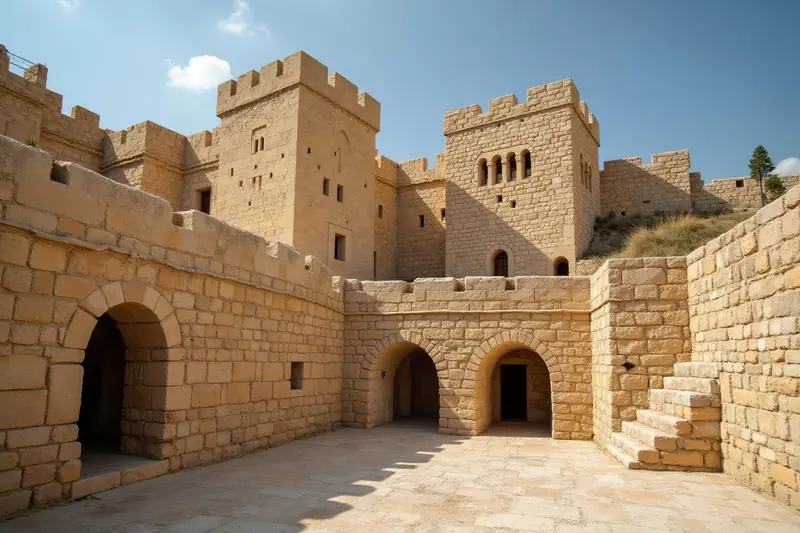
Tomb of the Patriarchs – Hebron
A sacred site venerated by the three monotheistic religions, the traditional burial place of Abraham, Isaac and Jacob.
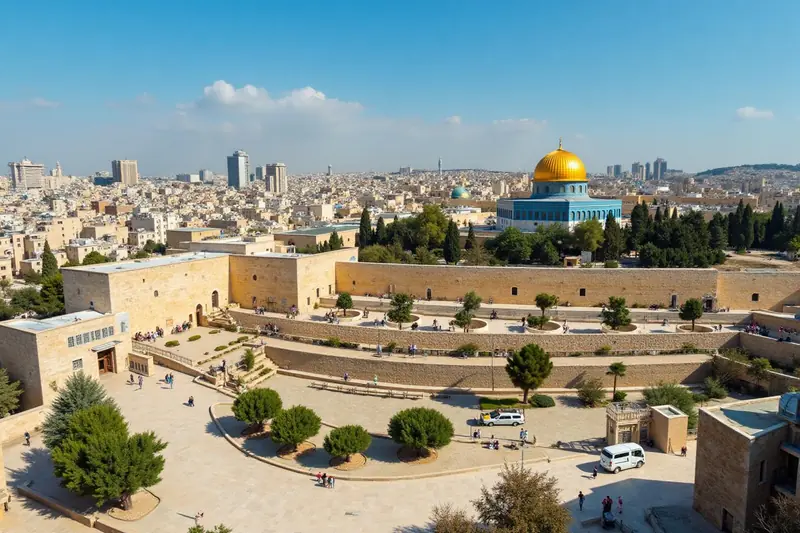
Mount Moriah: Abraham's Test, from the Biblical Story to the Temple Mount
Where tradition places Abraham's test now stands the Temple Mount, one of the holiest sites in Judaism and Islam.
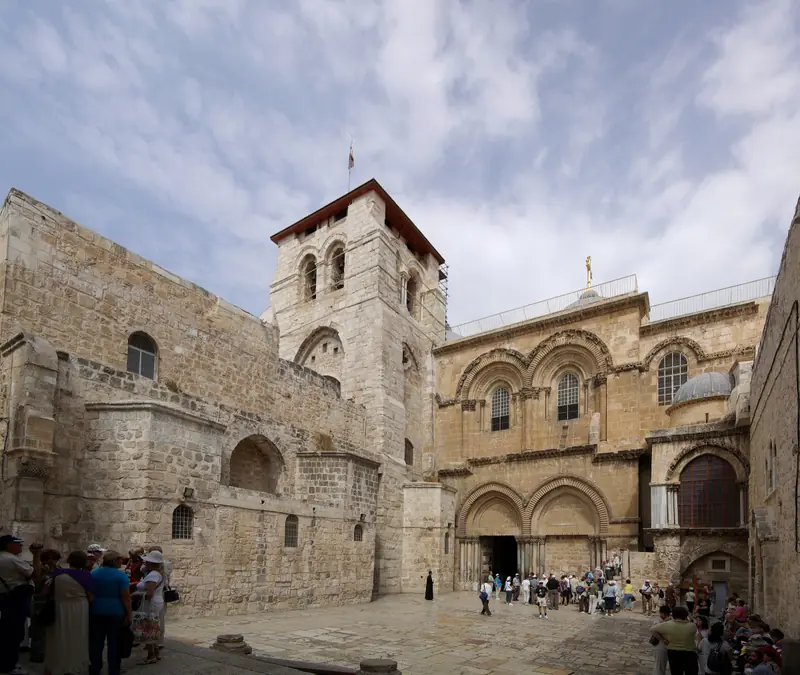
The Church of the Holy Sepulchre in Jerusalem: Golgotha, the Tomb and Visiting
The rock of Calvary and the tomb venerated since the 4th century, under one roof shared by six Christian communities: Gospel account, history, archaeology and visiting.
Read next
The Flood Around the World: Ancient Stories and Archaeological Witnesses
India, China, Greece, the Americas, Mesopotamia: flood stories around the world and three ancient tablets that record them, set beside the story of Noah.
Prehistory in Israel: From the First Humans to the First Villages
Four prehistoric sites to visit in Israel and five more closed to the public: over a million years of human history, from Mount Carmel to the Jordan.