
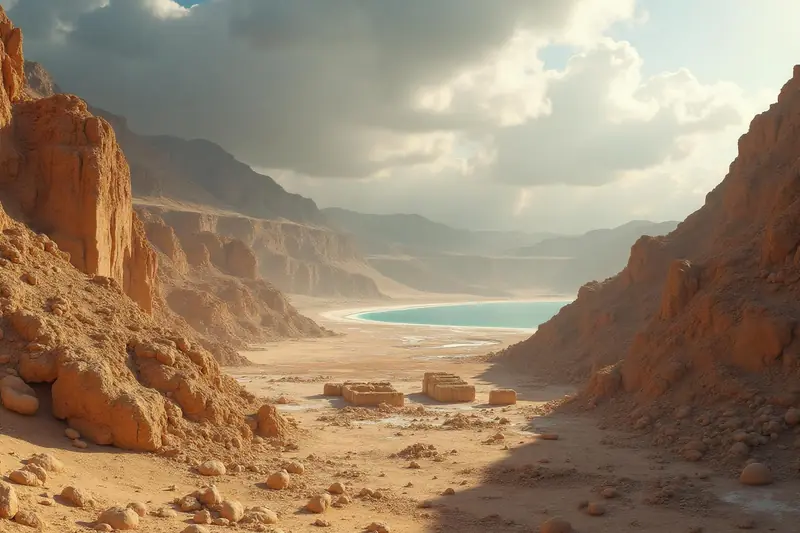
Sodom and Gomorrah: the Cities of the Plain and the Valley of Siddim
From the Genesis narrative to the excavations at Bab edh-Dhra and Tall el-Hammam: what we know — and what we do not — about the cities destroyed near the Dead Sea.
Biblical period: The Patriarchs
Above Ghor Safi, a Byzantine sanctuary preserves the tradition of Lot’s refuge after the destruction of Sodom.
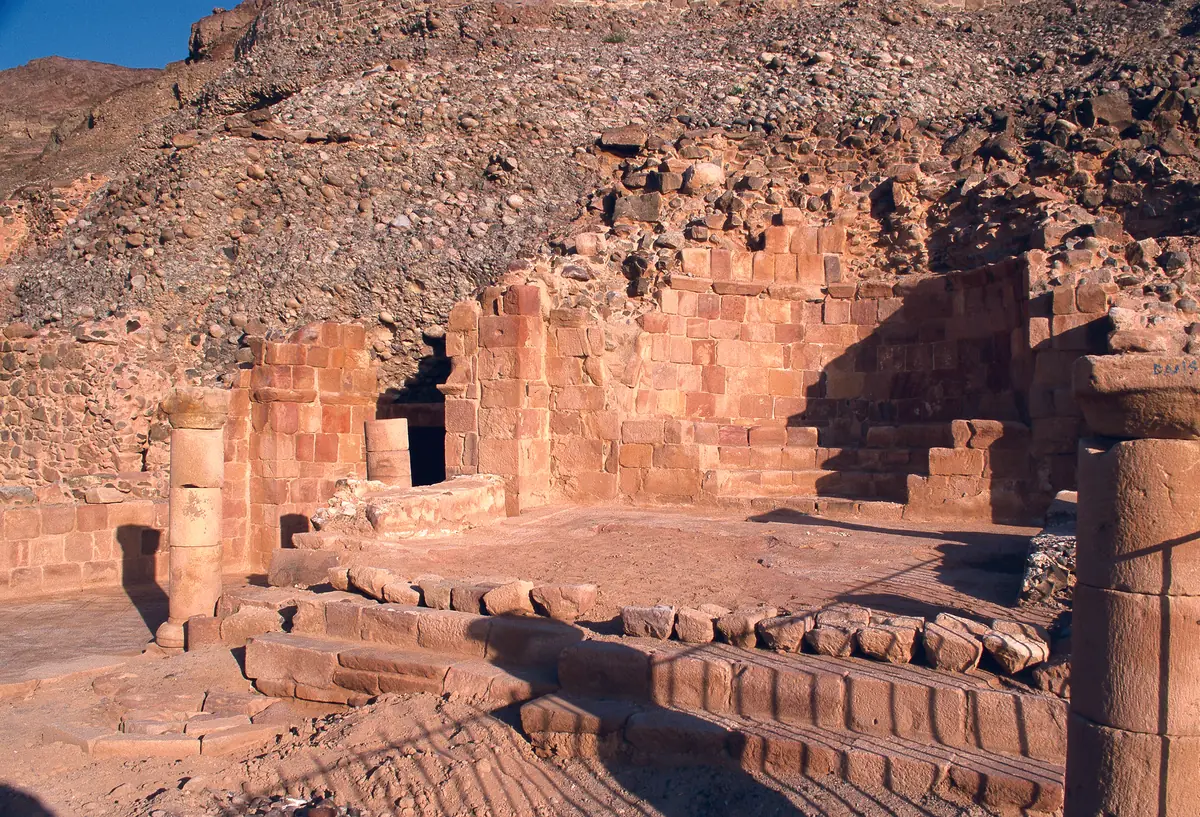
Lot’s Cave lies on the hillside above Ghor Safi, southeast of the Dead Sea in Jordan. At Deir Ain Abata, a church and monastic complex grew around a cave connected by Christian tradition with Lot and his daughters.
This is a place of religious memory with archaeological remains. The sanctuary documents pilgrimage and local tradition; it does not demonstrate that Lot occupied this particular cave.
In brief
History & Bible
Bible story
Lot first reaches Zoar, spared at his request. Afraid to remain there, he then moves into the mountains with his two daughters and settles in a cave. Genesis names neither the mountain nor the cave. The identification at Deir Ain Abata belongs to the later interpretation of this account.
Archaeology
The surviving structures belong to the Christian sanctuary of the Byzantine and subsequent periods. The church and associated buildings show how pilgrims gave architectural form to religious memory. The setting of the biblical narrative, the development of the local tradition and the date of the visible masonry must be considered separately.
Tradition and identification
The hillside setting illustrates the contrast between plain and mountains in Genesis 19. Questions about the destroyed cities are discussed on the page about Sodom and the cities of the Plain. The guide to the Dead Sea in the Bible introduces the wider region.
Plan my visit
Lot’s Cave
Sanctuary of Lot, Deir Ain Abata, near Ghor Safi, Jordan
The marker locates the sanctuary. Confirm the arrival point and authorised walking approach locally.
GPS coordinates : 31.0468, 35.5025 (reference point, not the exact entrance)
Start navigation with:
The approach includes an uphill walk in exposed terrain. Heat, mobility and path conditions affect its difficulty. Ask the site or a local operator which areas are open. Allow approximately one hour as an indicative visit, excluding travel and additional rests. Inclusion on a biblical itinerary does not automatically mean admission is covered by a tourist pass.
What's next
These sites share a story but are not necessarily close to each other: distances are given in a straight line.
From the Genesis narrative to the excavations at Bab edh-Dhra and Tall el-Hammam: what we know — and what we do not — about the cities destroyed near the Dead Sea.
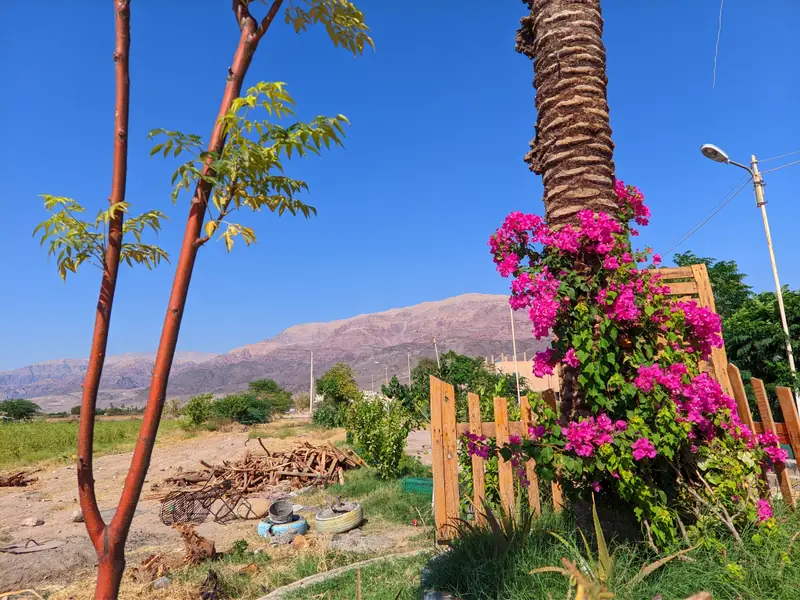
Southeast of the Dead Sea, the Ghor Safi region provides a setting for exploring historic Zoara and the memory of Zoar.
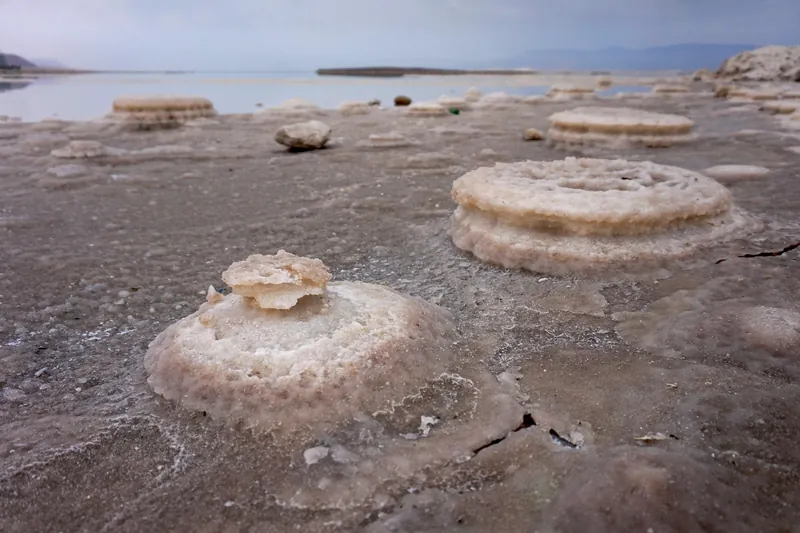
The biblical Salt Sea is a landscape of cliffs, oases and salt-lined shores, best explored through individual visitor sites.
It is a traditional identification, not an attribution demonstrated by archaeology.
No. This sanctuary is in Jordan, near Ghor Safi.
They mainly document the Christian sanctuary, centuries after the traditional setting of the Genesis story.
Yes. There is an uphill approach; confirm current conditions before visiting.
Do not assume so. The official biblical trail distinguishes itinerary stops from included attractions. Check both pass and site conditions.