
Tomb of the Patriarchs – Hebron
A sacred site venerated by the three monotheistic religions, the traditional burial place of Abraham, Isaac and Jacob.
Biblical period: The Patriarchs
From the Genesis narrative to the excavations at Bab edh-Dhra and Tall el-Hammam: what we know — and what we do not — about the cities destroyed near the Dead Sea.
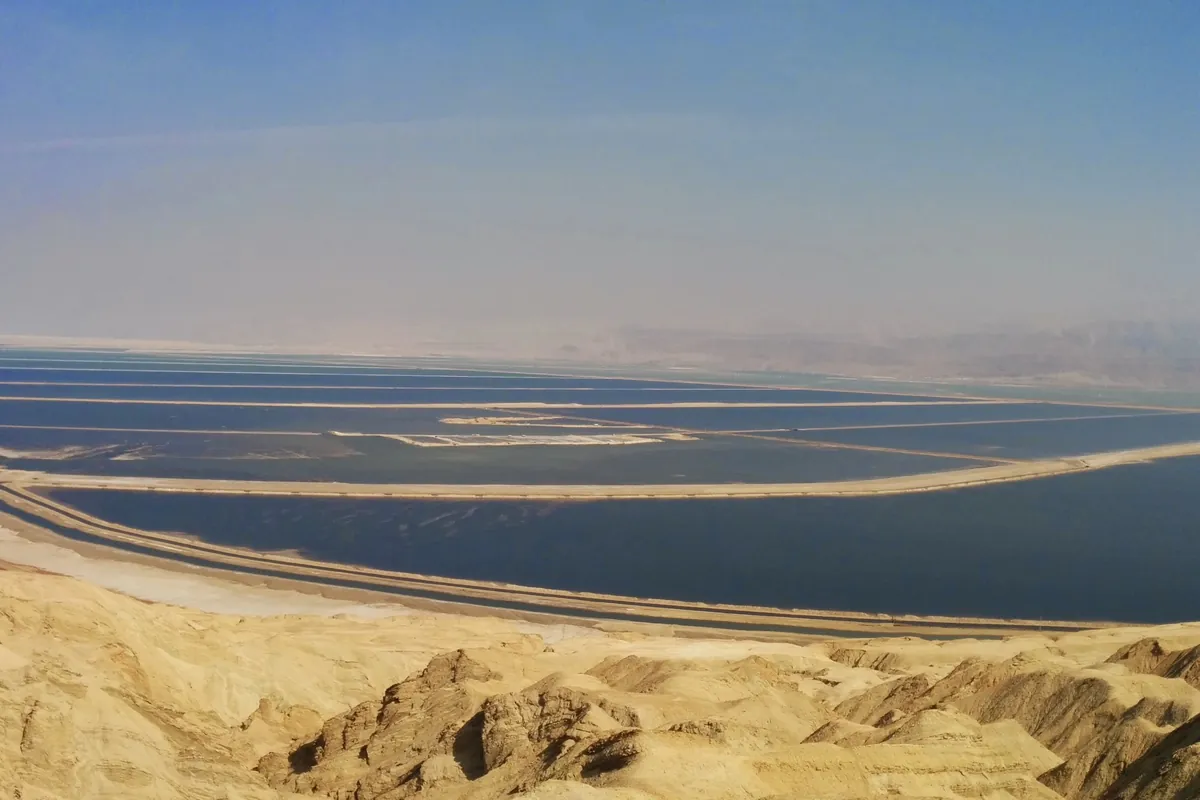
Sodom and Gomorrah, mentioned in Genesis 13–19, are the best known of the "cities of the Plain" — in Hebrew the kikkar, the "circle" of the Jordan — a region described as fertile before it was destroyed by "brimstone and fire". Bywords for corruption and divine judgement, the two cities have never been located with certainty. Tradition places them south of the Dead Sea, near Mount Sodom (Har Sedom) and the ancient Valley of Siddim, while other scholars look further north, around Tall el-Hammam in the Jordan Valley.
This page retraces the biblical story — the kings of the Plain, Lot's flight, his wife turned into a pillar of salt, the little town of Zoar — then presents the main archaeological theories (Bab edh-Dhra, Numeira, Tall el-Hammam) and the landscapes you can visit around the Dead Sea today.
In brief
History & Bible
Bible story
The story begins further north. When the flocks of Abram and Lot grow too large to graze together, the two men part ways between Bethel and Ai. Lot chooses the plain of the Jordan, "well watered every where", and pitches his tent as far as Sodom (Genesis 13:10-12).
"And Lot lifted up his eyes, and beheld all the plain of Jordan, that it was well watered every where, before the LORD destroyed Sodom and Gomorrah, even as the garden of the LORD, like the land of Egypt, as thou comest unto Zoar."
Genesis 13:10
Before their fall, the cities of the Plain formed a confederation of five kingdoms, listed in Genesis 14:2:
"All these were joined together in the vale of Siddim, which is the salt sea."
Genesis 14:3
The Valley of Siddim "was full of slimepits" — bitumen pits (Genesis 14:10). The Dead Sea still throws up lumps of natural asphalt today, which is why the Greeks called it Lake Asphaltites. It was here that the kings of the Plain were defeated by a coalition from the east and Lot was taken captive — before Abraham rescued him after a pursuit all the way to Dan. An old interpretation holds that this once-fertile plain was later covered by the Dead Sea; however, no submerged city has ever been found in the southern basin.
Bible story
The Bible and Jewish tradition portray Sodom as a city of violence and extreme selfishness, where prosperity had replaced compassion. The prophet Ezekiel sums up its sin:
"Behold, this was the iniquity of thy sister Sodom, pride, fulness of bread, and abundance of idleness was in her and in her daughters, neither did she strengthen the hand of the poor and needy."
Ezekiel 16:49
The midrash develops this picture: strangers were mistreated and helping the poor was a crime. One tradition (Pirkei de-Rabbi Eliezer 25) tells how Paltit, one of Lot's daughters, was burned alive for secretly feeding a beggar, and how her cry rose up to God. The biblical text itself speaks of the "cry" (tse'aqah) of Sodom reaching the LORD:
"I will go down now, and see whether they have done altogether according to the cry of it, which is come unto me; and if not, I will know."
Genesis 18:21
At the oaks of Mamre, near Hebron, Abraham then intercedes for the city: God would spare it if only ten righteous people could be found there (Genesis 18:23-32). Two angels are sent to Sodom to see the situation for themselves.
Bible story
Welcomed into Lot's house, the two messengers are threatened by the men of the city, who demand that they be handed over. Faced with this violence, the angels warn Lot:
"For we will destroy this place, because the cry of them is waxen great before the face of the LORD; and the LORD hath sent us to destroy it."
Genesis 19:13
At dawn they urge Lot to flee with his wife and two daughters, commanding them not to look back. As "brimstone and fire" rain down on Sodom and Gomorrah (Genesis 19:24), Lot runs with his daughters; his wife turns around.
"But his wife looked back from behind him, and she became a pillar of salt."
Genesis 19:26
The Hebrew verb used here, nabat, means "to look, to gaze"; many commentators read it as a lingering look full of regret — a sign of attachment to the city she was leaving. Her gesture has become an image of the danger of clinging to the past and hesitating to obey: "Remember Lot's wife," Jesus would later say (Luke 17:32). That morning, from the heights near Hebron, Abraham looks down towards the plain, "and, lo, the smoke of the country went up as the smoke of a furnace" (Genesis 19:28).
Bible story
Zoar (formerly Bela) is the only one of the five cities of the Plain to be spared. Its name suggests smallness — the Hebrew root ts-'-r means "to be small" — and that is precisely the argument Lot uses when he asks to take refuge there:
"Behold now, this city is near to flee unto, and it is a little one: Oh, let me escape thither, (is it not a little one?) and my soul shall live."
Genesis 19:20
God agrees, and Zoar is spared from the fire (Genesis 19:21-22). Lot and his daughters shelter there before moving up into the mountains, where they live in a cave (Genesis 19:30). The little town thus becomes a symbol of mercy surviving the destruction of its powerful neighbours.
Lying at the south-eastern end of the Dead Sea, surrounded by palm groves and springs but also by bitumen pits, Zoar most likely corresponds to the Ghor es-Safi area in Jordan, home to the Byzantine town of Zoara shown on the Madaba Map. Bronze Age tombs have been found there, together with occupation continuing into the Byzantine period, when the town was a Christian pilgrimage site. Nearby, at Deir 'Ain 'Abata, a Byzantine monastery was dedicated to Lot around a cave venerated as his refuge.
Archaeology
📌 Where things stand
No inscription has ever identified Sodom or Gomorrah. The sites below are candidates put forward by scholars: each has features compatible with the biblical account, but none of the identifications is generally accepted.
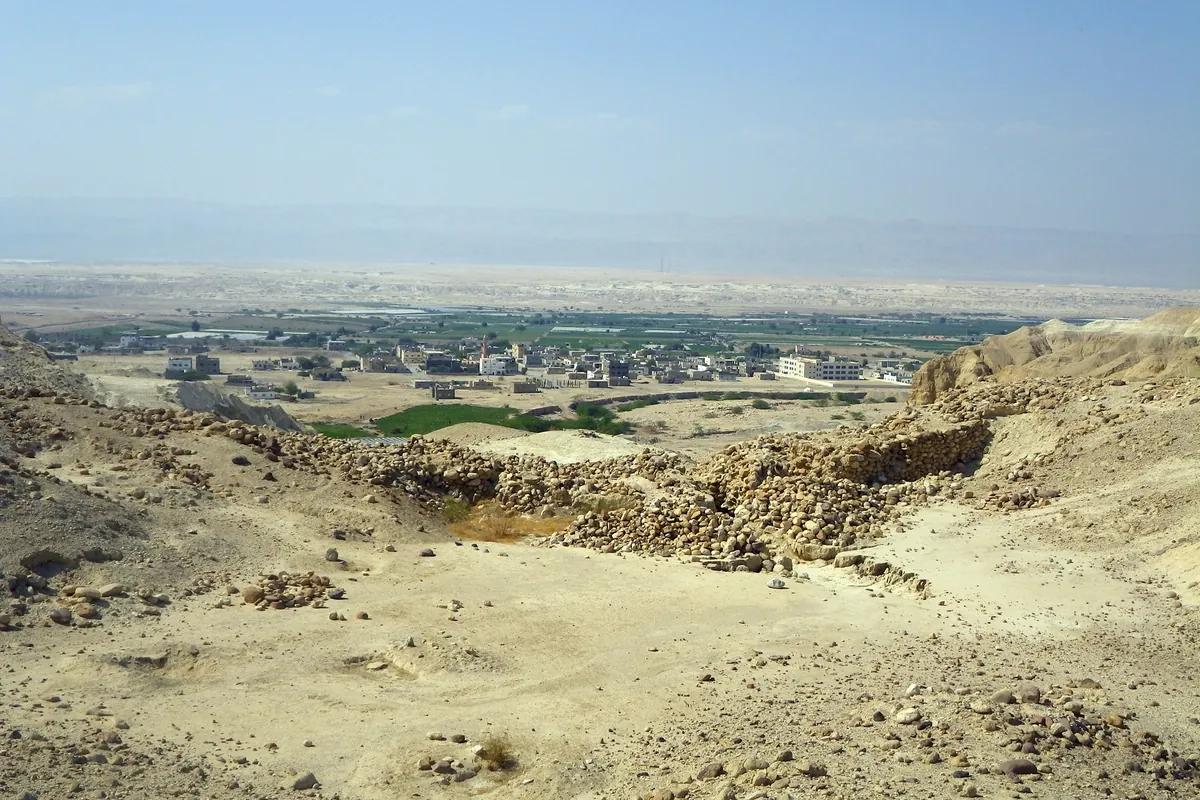
On the eastern shore, near the mouth of Wadi Kerak and the Lisan Peninsula, these Early Bronze Age sites in Jordan show traces of destruction by fire in a region rich in bitumen — features reminiscent of the Valley of Siddim.
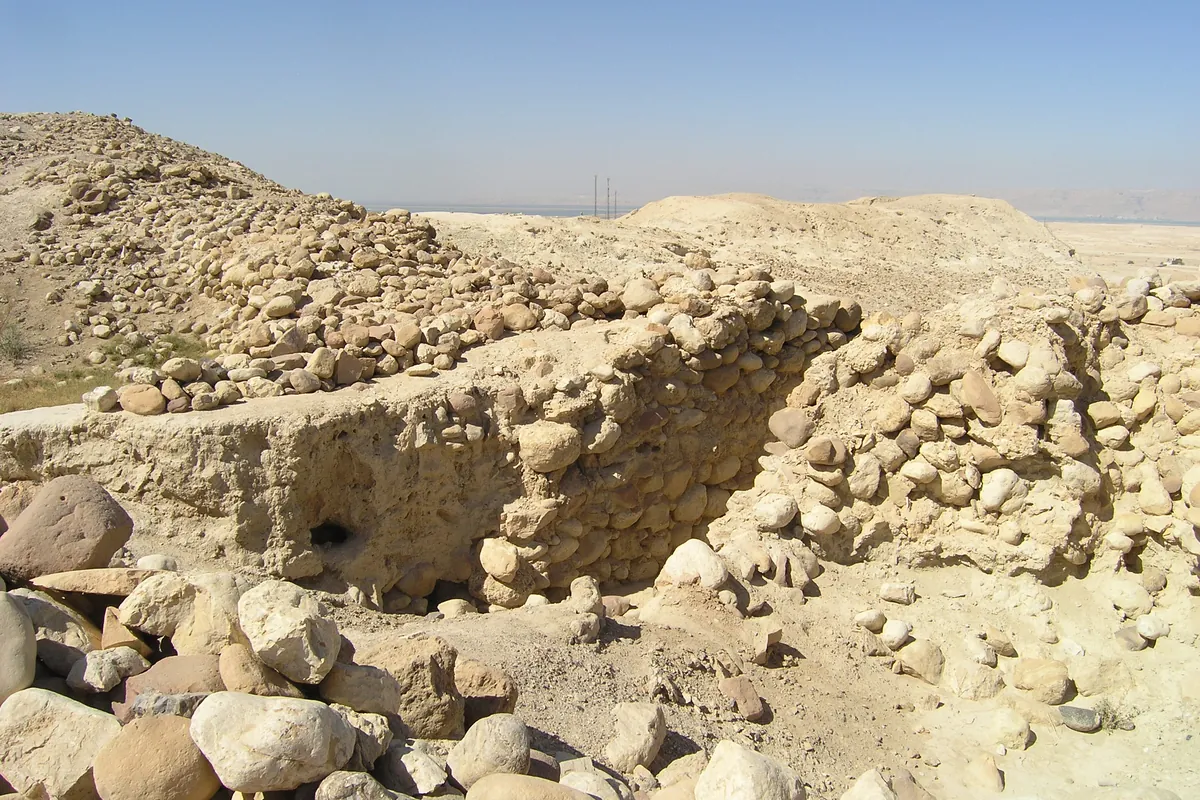
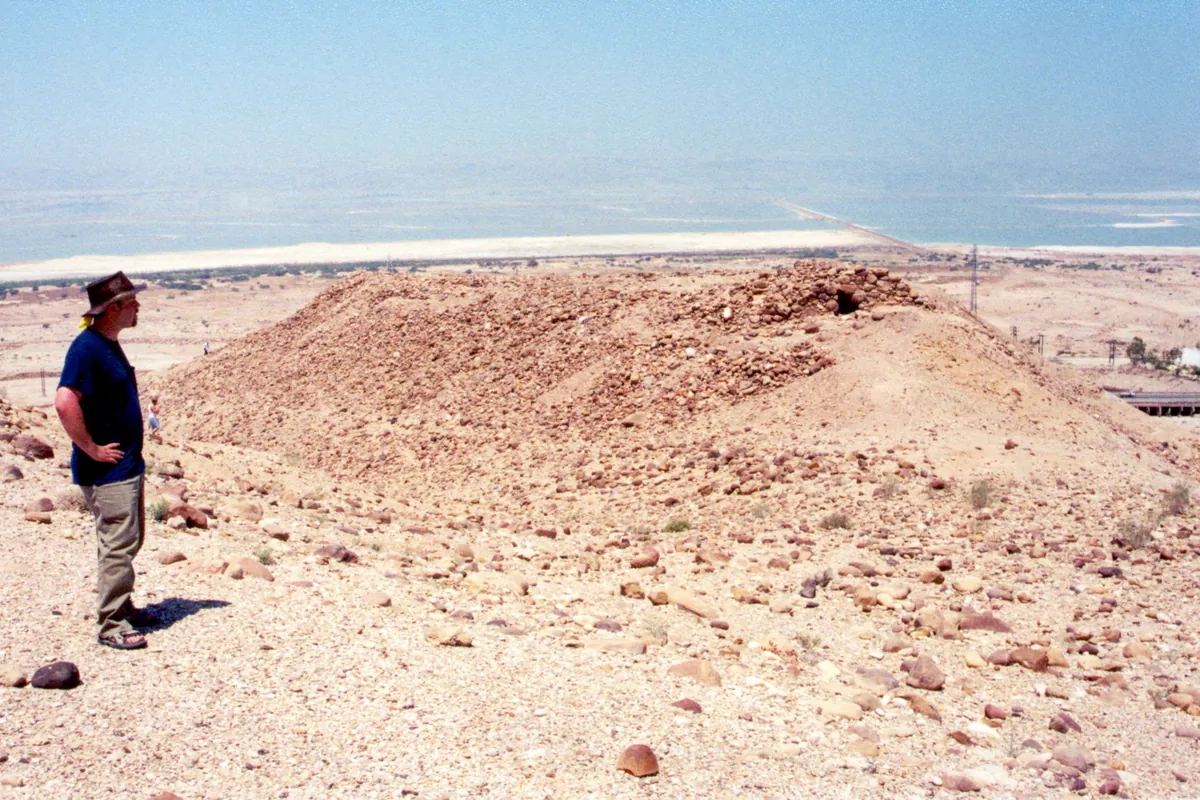
Excavations by Paul Lapp (1965–1967), continued by Walter Rast and Thomas Schaub, uncovered a fortified town and one of the largest Early Bronze Age cemeteries in the Near East. The cemetery is estimated to contain some 20,000 shaft tombs, as well as charnel houses holding the remains of many individuals. These burials point to a site of considerable size and importance — far more than a simple village.
The town suffered destruction and fires, notably at the end of the Early Bronze Age III; Numeira, further south, was destroyed by fire at around the same time — traditionally dated to about 2350 BCE, possibly earlier according to revised radiocarbon dates. After Rast and Schaub identified five Early Bronze Age sites along the south-eastern shore (Bab edh-Dhra, Numeira, es-Safi, Feifa and Khanazir), some writers, such as Bryant Wood, proposed that these were the five cities of the Plain, with Bab edh-Dhra and Numeira as Sodom and Gomorrah. The excavators themselves remained cautious, and the gap with the chronology usually assigned to Abraham is still debated.
💡 Scholarly note
The cemetery excavations are published in R. T. Schaub and W. E. Rast, Bab edh-Dhra': Excavations in the Cemetery Directed by Paul W. Lapp (1965-67), Winona Lake, Eisenbrauns, 1989. The cemetery reflects collective burial practices (shaft tombs, burial chambers and charnel houses), consistent with a major town.
North of the Dead Sea, about a dozen kilometres from its shore, Tall el-Hammam overlooks the Jordanian side of the Jordan plain — the kikkar that Lot is said to have surveyed from Bethel. Since 2005, a team led by Steven Collins (Trinity Southwest University) has been excavating a large Bronze Age city here, which it identifies with Sodom; other scholars prefer to identify it with Abel-shittim (Numbers 33:49). The excavators report in particular:
In 2021, a team led by Ted Bunch proposed in the journal Scientific Reports that the city had been destroyed by the airburst of a cosmic object comparable to the Tunguska event (1908): the shock wave would have thrown salty Dead Sea spray over the plain, leaving it barren for centuries. The hypothesis has been strongly contested. The paper was corrected in 2022 and 2023, including over images and data, and was then retracted by the journal in 2025, a decision several of its authors disputed.
For its supporters, Tall el-Hammam matches the description of a great city of the kikkar, prosperous and then suddenly wiped out. Critics point to the chronology, the lack of any direct textual link, and the very ancient tradition locating Sodom south of the Dead Sea — where the Arabic name of Mount Sodom, Jebel Usdum, seems to preserve its memory.
🔗 Learn more (the excavators' perspective): TallElHammam.com
At Tall el-Hammam, the excavators describe human bones caught in the destruction layer, melted pottery and vitrified structures. According to supporters of the airburst hypothesis, these materials imply temperatures far higher than an ordinary fire (over 1,500 °C). These interpretations remain disputed: critics suggest other causes, such as fires caused by warfare, earthquakes, or certain firing and weathering processes.
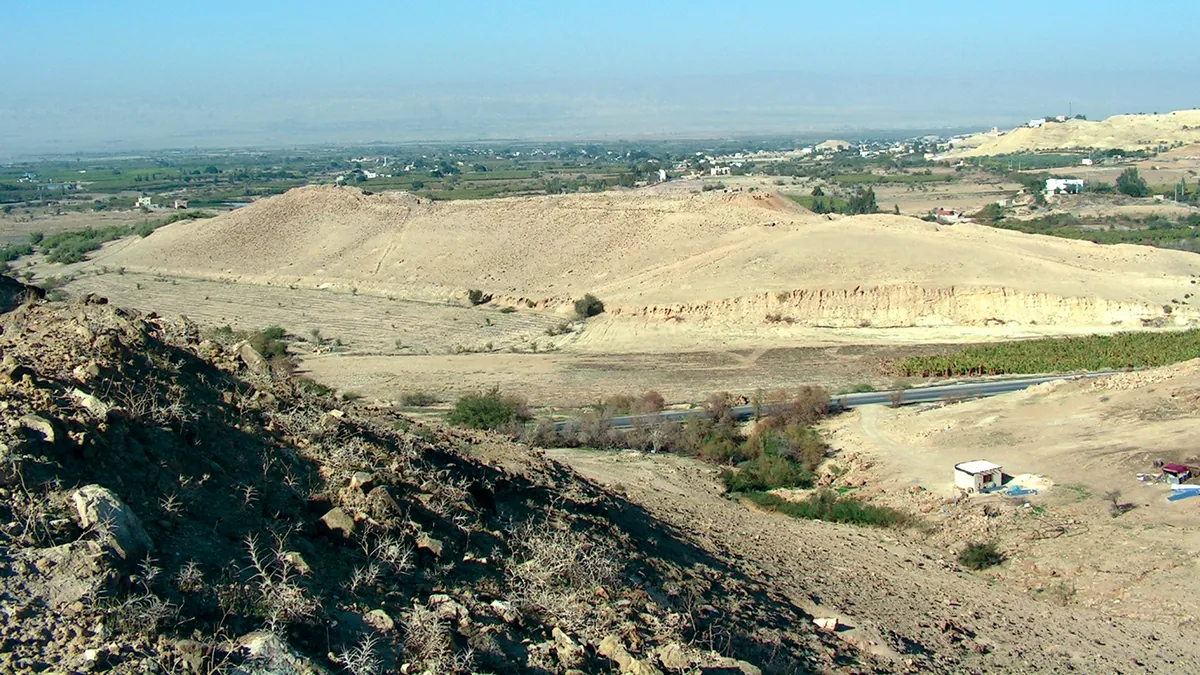
This documentary presents the arguments of those who identify Tall el-Hammam with Sodom: signs of extreme heat, vitrified pottery, melted structures and a massive destruction layer. In the view of this site's author, these are among the most striking arguments yet put forward for a real catastrophe whose memory may have been passed down to the Genesis account; they should nonetheless be weighed against the criticisms set out above.
Plan my visit
Sodom and Gomorrah
Mount Sodom (Har Sedom), Route 90, southern Dead Sea basin — "Lot's wife" viewpoint
GPS coordinates : 31.0719, 35.3969 (reference point, not the exact entrance)
Start navigation with:
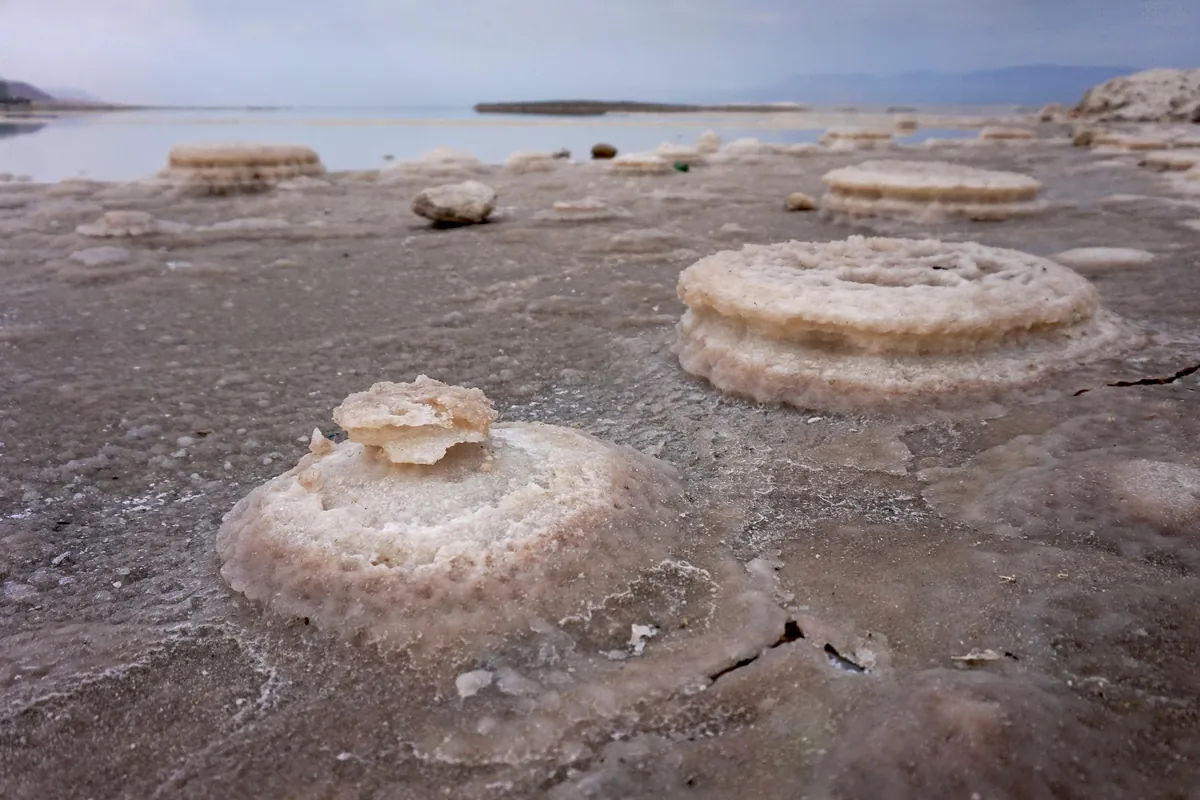
The candidate sites of Bab edh-Dhra, Numeira and Tall el-Hammam are in Jordan. On the Israeli side, the landscape of the Dead Sea's southern basin is the best way to picture the ancient Valley of Siddim.
☀️ Extreme heat
October to April is the best time to visit. In summer, avoid hiking during the day; carry plenty of water, a hat and sun protection, and respect any trail or cave closures.
Around the site
A sacred site venerated by the three monotheistic religions, the traditional burial place of Abraham, Isaac and Jacob.
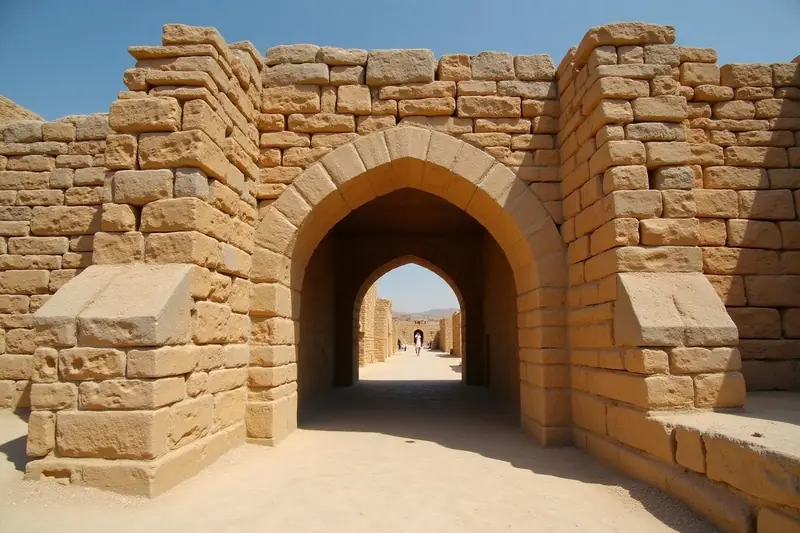
From Genesis 14 to the "House of David" stele: archaeology, nature and biblical history at the springs of the Jordan.
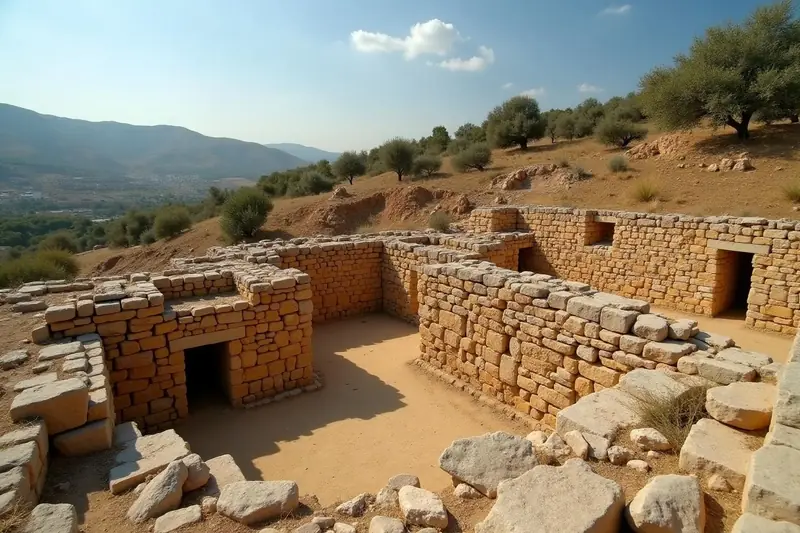
After Shechem, Abraham builds an altar "between Bethel and Ai" and calls on the name of the LORD, then returns there after his stay in Egypt (Genesis 12:8; 13:1-4).
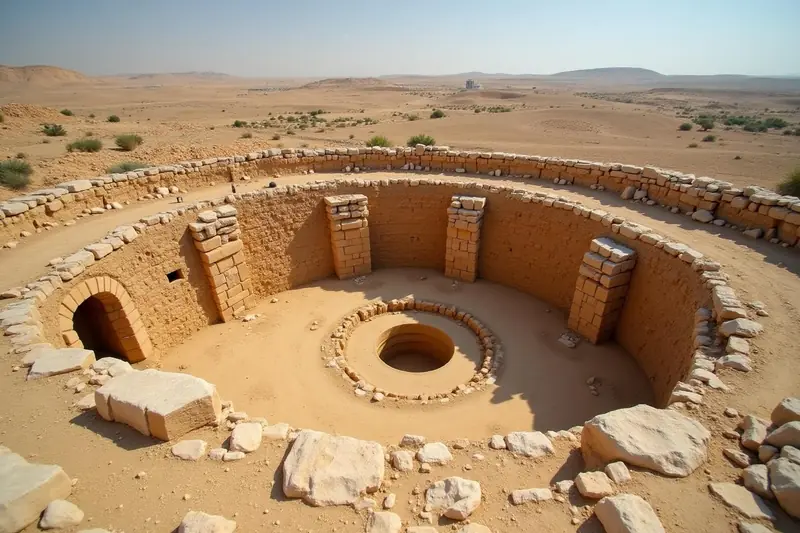
At Beersheba, Abraham seals a covenant with Abimelech over a well, plants a tamarisk and calls on the name of the Everlasting God.
No. Several sites have been proposed, including Bab edh-Dhra and Numeira (south-east of the Dead Sea) and Tall el-Hammam (to the north). Each has features compatible with the biblical account, but none of the identifications is generally accepted and no inscription names Sodom.
According to Genesis 14:2, the five kings of the Plain were Bera (Sodom), Birsha (Gomorrah), Shinab (Admah), Shemeber (Zeboiim) and the king of Bela, that is Zoar. They formed an alliance in the Valley of Siddim.
According to the Bible, for its violence and injustice: the townspeople attack Lot's guests (Genesis 19), and Ezekiel 16:49 speaks of pride, abundance and the refusal to help the poor. Jewish tradition adds that even helping a needy person was treated as a crime there.
The Bible does not give her name. She became a pillar of salt after looking back at the burning city despite the angels' command (Genesis 19:26). The Hebrew verb (nabat) is often read as a gaze full of regret and attachment to the past.
Zoar (formerly Bela) lay at the south-eastern end of the Dead Sea. It is generally placed in the Ghor es-Safi area in Jordan, where Bronze Age tombs and Byzantine occupation (the Zoara of the Madaba Map) have been found.
Mentioned in Genesis 14:3 and 14:10, it is the valley "full of slimepits" (bitumen pits) where the battle of the kings took place, and which the text identifies with the Salt Sea. An old interpretation holds that it was covered by the Dead Sea after the destruction, but no submerged city has been found there.
A large Bronze Age mound north of the Dead Sea in Jordan, excavated since 2005 by Steven Collins's team, which identifies it with Sodom. An airburst destruction hypothesis published in 2021 has been strongly contested: the paper was corrected in 2022 and 2023 and then retracted by the journal in 2025.
Bab edh-Dhra, Numeira and Tall el-Hammam are in Jordan, so visits must be arranged from there, ideally with a local guide. In Israel you can explore the southern Dead Sea basin, Mount Sodom (Har Sedom) and its salt formations.
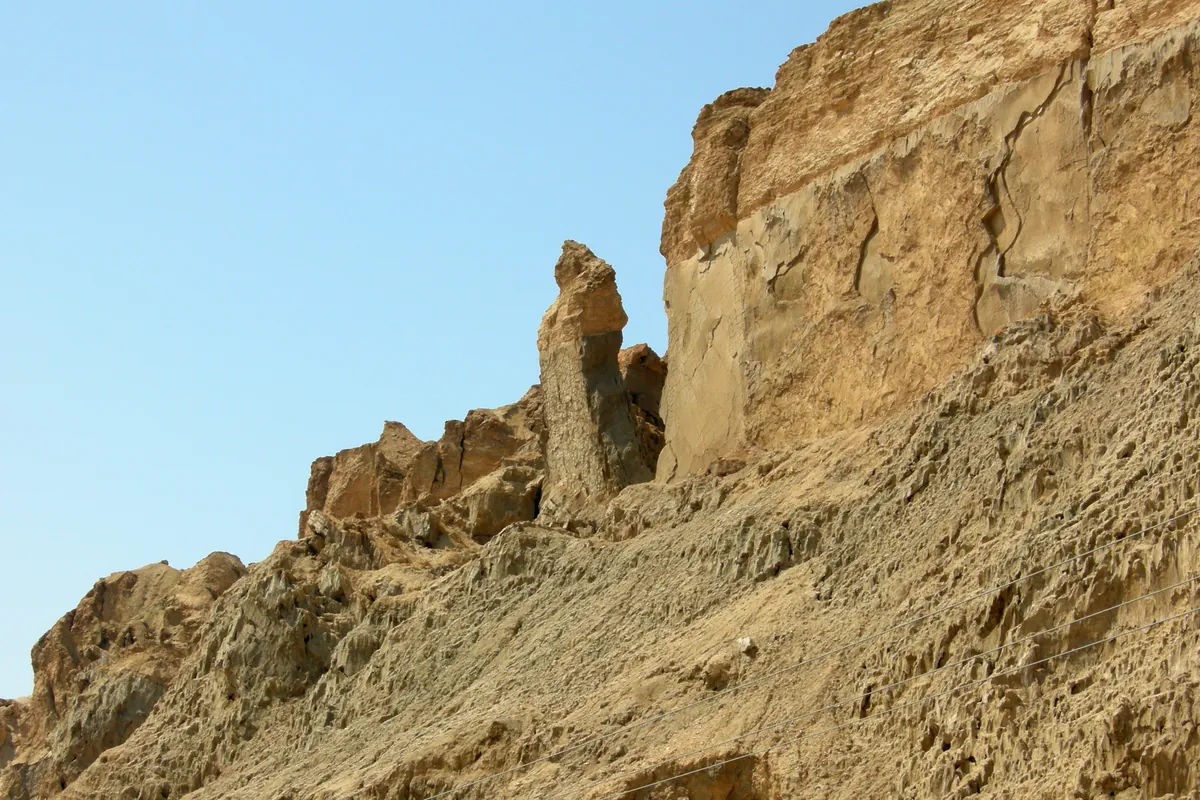
On the eastern flank of Mount Sodom, a natural salt pillar about 20 metres high is traditionally nicknamed "Lot's wife". It is a geological formation shaped by erosion and the dissolution of salt, and can be seen from Route 90.
The Masada plateau, the oasis of Ein Gedi and Qumran, home of the Dead Sea Scrolls, along the Dead Sea, or the sites of the Patriarchs: Hebron, Bethel and Beersheba. A "Bible & Nature" itinerary lets you explore the whole region.