
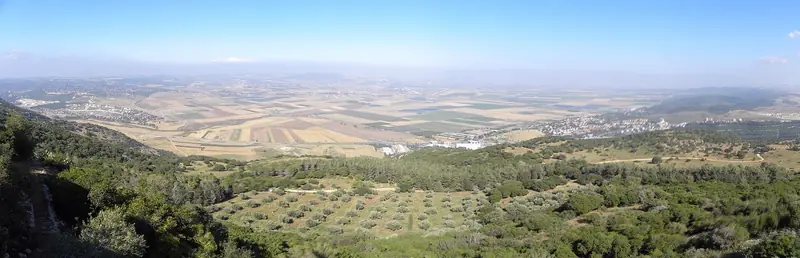
Mount Carmel, Elijah's Mountain: Muhraqa, Haifa and Visiting
Fire from heaven, a little cloud rising from the sea and the hermits who gave their name to the Carmelite order: a mountain overlooking the Jezreel Valley and Haifa Bay.
Prehistory
On the western slope of Mount Carmel, four caves in a limestone cliff hold at least 500,000 years of human history, from Neanderthals to Natufian villages.
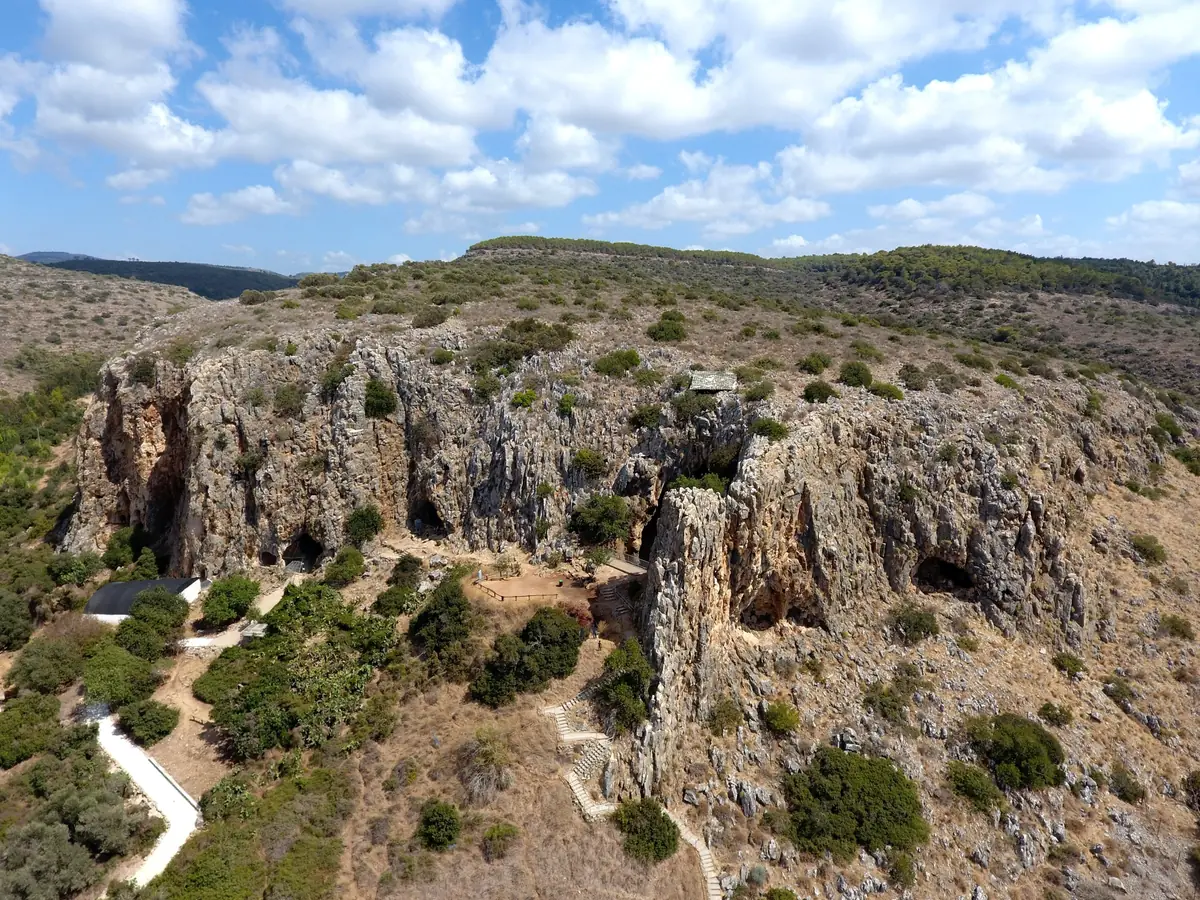
The Nahal Me'arot Caves (Wadi el-Mughara, "the valley of the caves") open into a limestone cliff on the western slope of Mount Carmel, above the coastal plain. Four caves, Tabun, Jamal, el-Wad and Skhul, preserve at least 500,000 years of human evolution. The site has been on the UNESCO World Heritage List since 2012.
The nature reserve is visited on foot, along a short trail linking three of the caves. It is a key stop in our overview of prehistoric sites in Israel.
In brief
History
Archaeology
According to UNESCO, the deposits in the caves span at least 500,000 years. Three major cultures follow one another:
Tabun Cave has yielded Neanderthal remains. Skhul Cave has yielded Homo sapiens, dated to about 90,000 years ago according to the Israel Nature and Parks Authority. Both groups are associated with the same Mousterian culture. For UNESCO, this is the only site that shows them together within that culture.
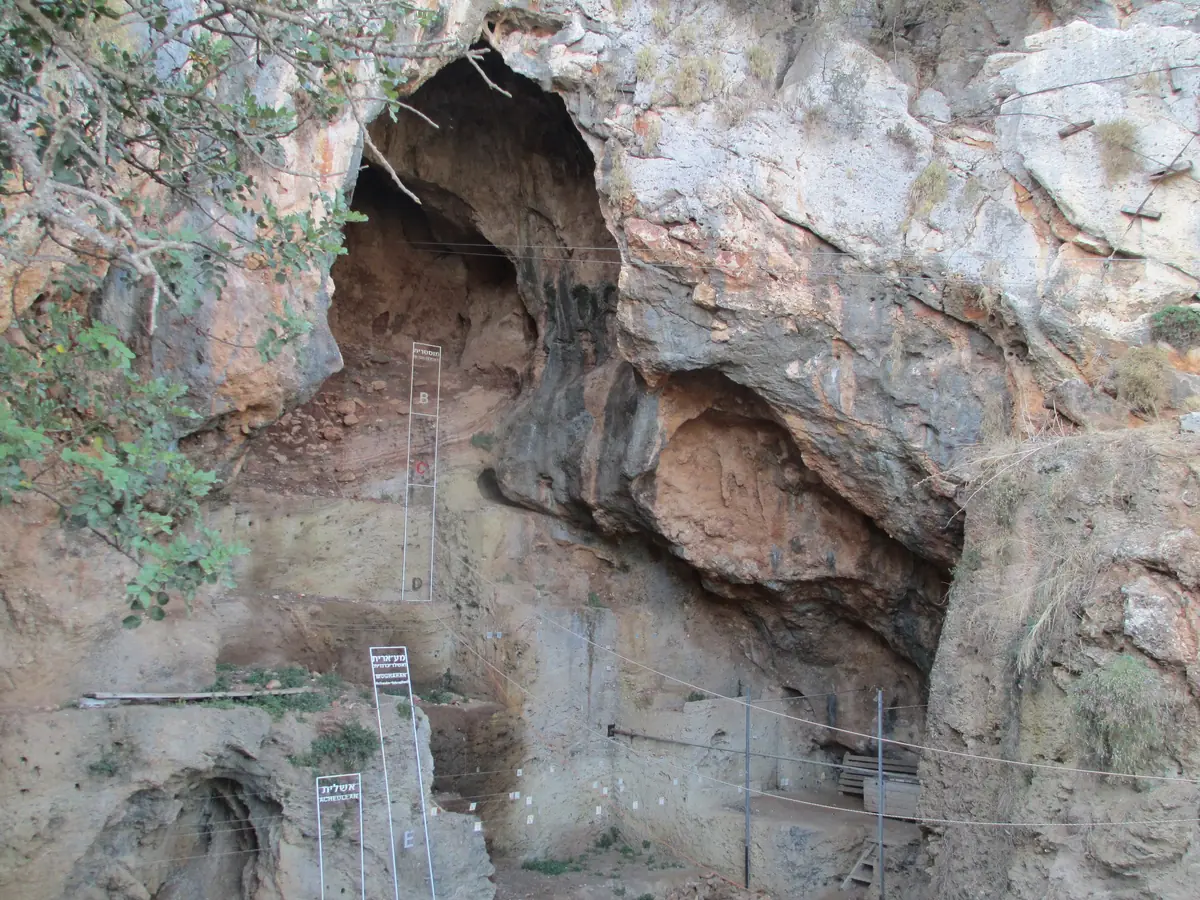
Much later, el-Wad Cave was occupied by Natufians. Traces of villages and burials have been found there.
Sources: UNESCO, Sites of Human Evolution at Mount Carmel · Israel Nature and Parks Authority, Nahal Me'arot Nature Reserve
History
The caves were excavated from the late 1920s onwards by the prehistorian Dorothy Garrod.
Tabun Cave holds about 20 m of deposits built up over time. Archaeologists from the University of Haifa are still digging there today. At the entrance you can see the excavation section, its ladders and its measuring grid.
El-Wad Cave runs 70 m into the rock. According to the Parks Authority, it was occupied in the Aurignacian, about 40,000 to 20,000 years ago, and later by the Natufians.
The valley became a nature reserve in 1971. In 2012, UNESCO inscribed the "Sites of Human Evolution at Mount Carmel: The Nahal Me'arot / Wadi el-Mughara Caves" on the World Heritage List, under criteria (iii) and (v). The property covers 54 hectares.
Sources: Israel Nature and Parks Authority · UNESCO, property no. 1393
Plan my visit
Nahal Me'arot Caves
Nahal Me'arot Nature Reserve, Route 4, 8 km north of Fureidis Junction, western slope of Mount Carmel
GPS coordinates : 32.6686, 34.9681 (reference point, not the exact entrance)
Start navigation with:
The "Prehistoric Man" trail links the Tabun, Jamal and el-Wad caves. Jamal Cave houses exhibitions. In el-Wad Cave you will find the reconstruction of a burial and an audiovisual show. A short trail leads to Skhul Cave. To make a longer visit, the reserve also offers a botanical trail (blue markings) and a circular geological trail.
The reserve is run by the Israel Nature and Parks Authority. There is an entrance fee and booking is recommended. On site: car park, snack bar, shop and toilets. The trails slope and include steps.
The Muhraqa monastery, the traditional site of Elijah's sacrifice, is about 11 km away. These are two separate visits, which can be combined in one day with Caesarea Maritima. For Elijah and the rest of the range, see our page on Mount Carmel.
Source: Israel Nature and Parks Authority, Nahal Me'arot Nature Reserve
Around the site
Fire from heaven, a little cloud rising from the sea and the hermits who gave their name to the Carmelite order: a mountain overlooking the Jezreel Valley and Haifa Bay.
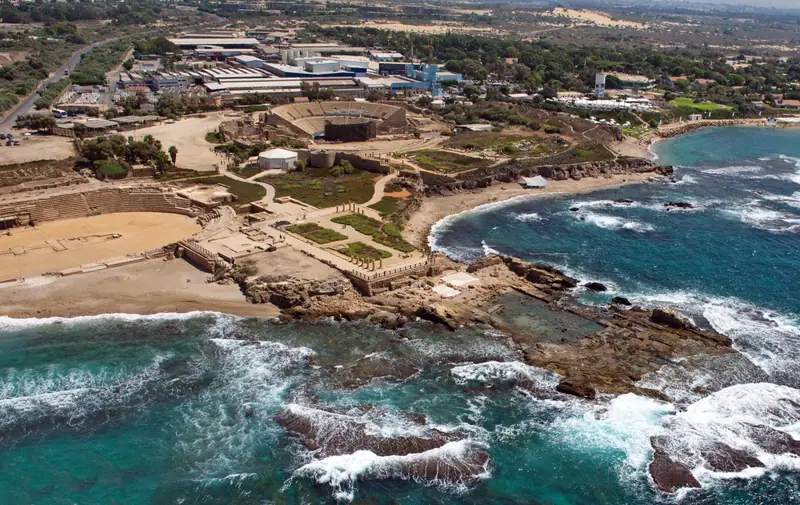
Herod's great harbour and the seat of the Roman governors, where Peter baptised Cornelius and Paul was held for two years: an archaeological park on the Mediterranean shore.
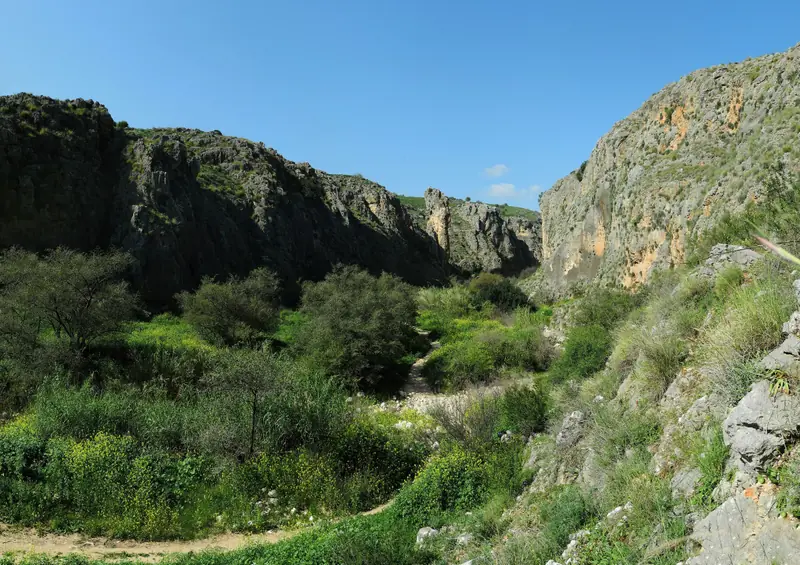
Above the stream that runs down to the Sea of Galilee, a cave yielded Neanderthal skeletons. You can hike the valley, but you may not climb up to the cave.
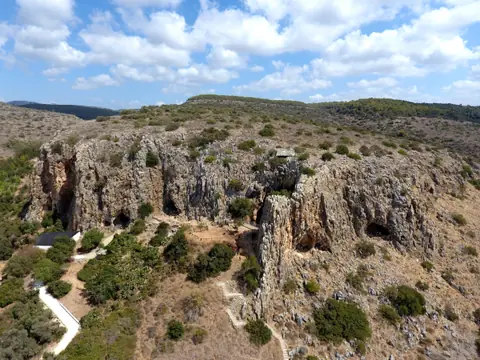 PrehistoryPrehistory in Israel: From the First Humans to the First VillagesFour prehistoric sites to visit in Israel and five more closed to the public: over a million years of human history, from Mount Carmel to the Jordan.Read the article →
 On the western slope of Mount Carmel, above the coastal plain. Access is via Route 4, 8 km north of Fureidis Junction. Coming from the north, continue to Geva Carmel and turn back.
At least 500,000 years of human evolution, according to UNESCO: Neanderthal remains at Tabun, <em>Homo sapiens</em> at Skhul (about 90,000 years old according to the Parks Authority), then Natufian villages and burials at el-Wad.
The Prehistoric Man trail passes Tabun, Jamal (exhibitions) and el-Wad (reconstruction of a burial and an audiovisual show). A short trail leads to Skhul; a botanical trail and a geological trail complete the visit.
About 1 hour 30 minutes. There is an entrance fee, booking is recommended and last entry is one hour before closing: check the hours with the Israel Nature and Parks Authority before you go.
No. Tradition places Elijah's sacrifice at Muhraqa, about 11 km away: that is a separate visit. The caves document prehistory and cannot identify the figures of Genesis (see <a href="/en/origines#creation-eden">the stories of the beginnings</a>).