
Bethel: Jacob's Dream Between Heaven and Earth
At Bethel, Jacob has one of the Bible's greatest spiritual experiences: a dream in which a ladder joins earth to heaven.
Biblical period: The Patriarchs
At the ford of the Jabbok, Jacob wrestles all night with a mysterious opponent. He comes away wounded, blessed and bearing a new name: Israel.
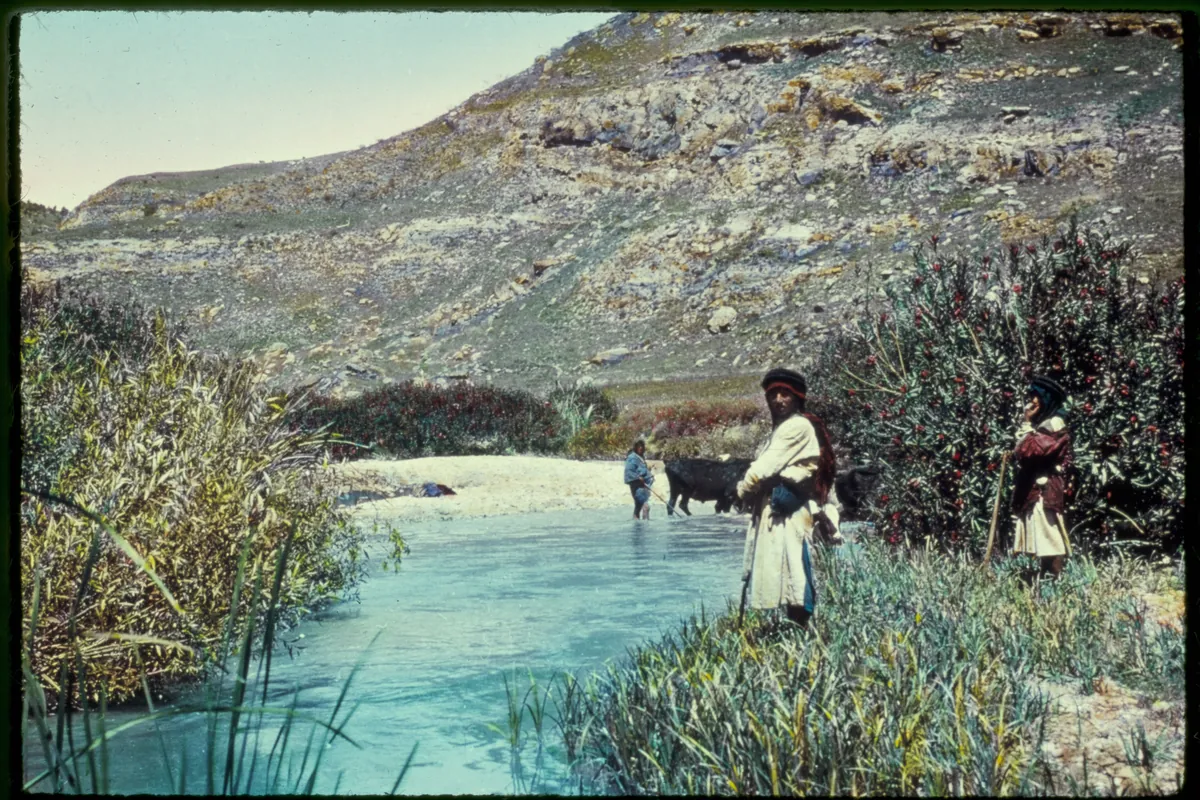
Peniel (or Penuel) is the place where, according to Genesis 32, Jacob wrestled with the angel — the text speaks of a mysterious "man" — all night long at the ford of the Jabbok River, on the eve of his reunion with his brother Esau. Wounded in the hip but blessed, he received a new name there: Israel, "he who has striven with God". The place name means "face of God".
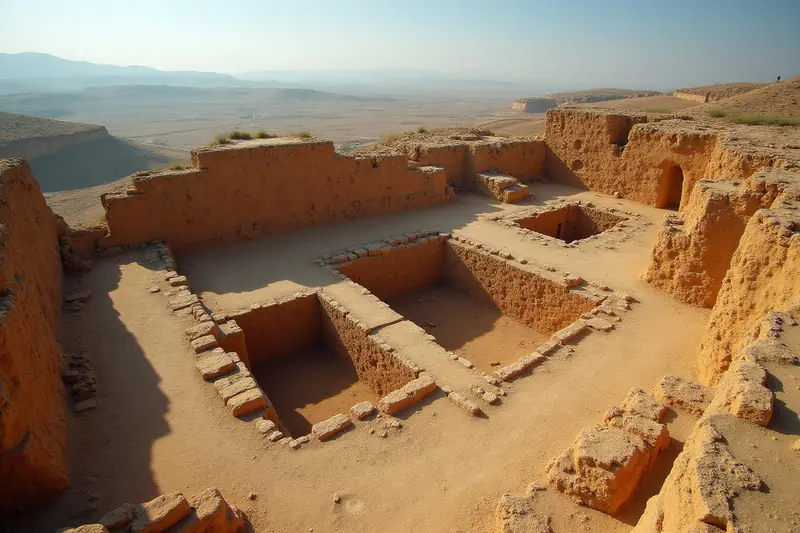
Most scholars locate Peniel on the twin hills of Tulul adh-Dhahab, in the Jabbok Valley (today the Nahr az-Zarqa) in Jordan. The site has few visitor facilities, but its landscape brings to life one of the most enigmatic stories in Genesis.
"And Jacob called the name of the place Peniel: for I have seen God face to face, and my life is preserved."
Genesis 32:30
In brief
History & Bible
Bible story
After twenty years with his uncle Laban in Haran, Jacob is returning to Canaan with his family and flocks. He knows he must face Esau, the brother he deprived of his birthright and their father's blessing. On the way, angels of God come to meet him, and he names the place Mahanaim, "two camps" (Genesis 32:1-2). During the night he sends his two wives, his two maidservants and his eleven children across the ford of the Jabbok, then remains alone on the bank.
"And Jacob was left alone; and there wrestled a man with him until the breaking of the day."
Genesis 32:24
Alone, Jacob confronts the unknown. This is not a warrior's fight, but that of a man facing himself and God. The struggle lasts until daybreak; seeing that he cannot prevail, the opponent strikes the hollow of Jacob's thigh and puts his hip out of joint.
Wounded, Jacob still refuses to give in and demands a blessing before letting him go: "I will not let thee go, except thou bless me" (Genesis 32:26).
📖 A man, an angel or God?
Genesis speaks of "a man"; Jacob then declares that he has seen "God face to face"; the prophet Hosea mentions an angel: "he had power over the angel, and prevailed" (Hosea 12:4). This ambiguity, probably intentional, has fuelled Jewish and Christian commentary for centuries.
Verse numbers follow English Bibles (King James Version); in the Hebrew Bible and the Jewish Publication Society translations, they are one verse higher (Genesis 32:25-33).
Bible story
"Thy name shall be called no more Jacob, but Israel: for as a prince hast thou power with God and with men, and hast prevailed."
Genesis 32:28
This moment seals Jacob's transformation. His first name recalled the heel ('aqev) — he was born holding Esau's heel — and the cunning of one who supplants his brother. He becomes Israel, a name the story links to the Hebrew verb sarah, "to strive": the one who has striven with God and come out alive. Linguists suggest other meanings for the name ("God strives", "God rules"), but it is the story's own explanation that has shaped tradition.
This new identity marks the end of his flight and the beginning of a calling: to be the father of a people that will bear his name. When Jacob in turn asks his opponent's name, the stranger evades the question — "Wherefore is it that thou dost ask after my name?" — and blesses him (Genesis 32:29).
🔎 A fresh start
Jacob is no longer the "supplanter", but Israel, the one who perseveres before God. The name is confirmed to him at Bethel (Genesis 35:10), the very place where he had dreamt of the ladder reaching to heaven while fleeing from Esau.
Peniel means "face of God" in Hebrew; the text also uses the form Penuel, which appears in later books of the Bible. The place becomes a symbol of the encounter between human frailty and divine power.
Jacob learns that faith is not an easy peace but a tension between struggle and trust. Peniel is where one discovers oneself through confrontation with God. In every tradition that reads this story, Peniel stands for the moment when the human soul measures itself against the absolute and emerges transformed.
"And as he passed over Penuel the sun rose upon him, and he halted upon his thigh."
Genesis 32:31
Jacob leaves Peniel limping, but transformed. The wound becomes the tangible sign of the encounter. It is a reminder that every authentic spiritual experience leaves its mark: the imprint of vulnerability and inner change.
The story closes by explaining a custom: "Therefore the children of Israel eat not of the sinew which shrank, which is upon the hollow of the thigh, unto this day" (Genesis 32:32). This prohibition of the sciatic nerve (gid hanasheh) is still observed in the Jewish dietary laws.
Archaeology
Most scholars locate Peniel at Tulul adh-Dhahab ("the hills of gold"), two twin hills enclosed by a meander of the Jabbok where the river leaves the gorges of the Gilead highlands to join the Jordan Valley. The Jabbok, today the Nahr az-Zarqa (Zarqa River), is the second-largest tributary of the Jordan after the Yarmuk.
A widely held hypothesis, put forward notably by the archaeologist Israel Finkelstein, identifies the small eastern hill (Tell adh-Dhahab ash-Sharqi) with Penuel and the large western hill (al-Gharbi) with Mahanaim. Other scholars assign both hills to Mahanaim or propose different locations. No inscription names the site: the identification rests on biblical geography.
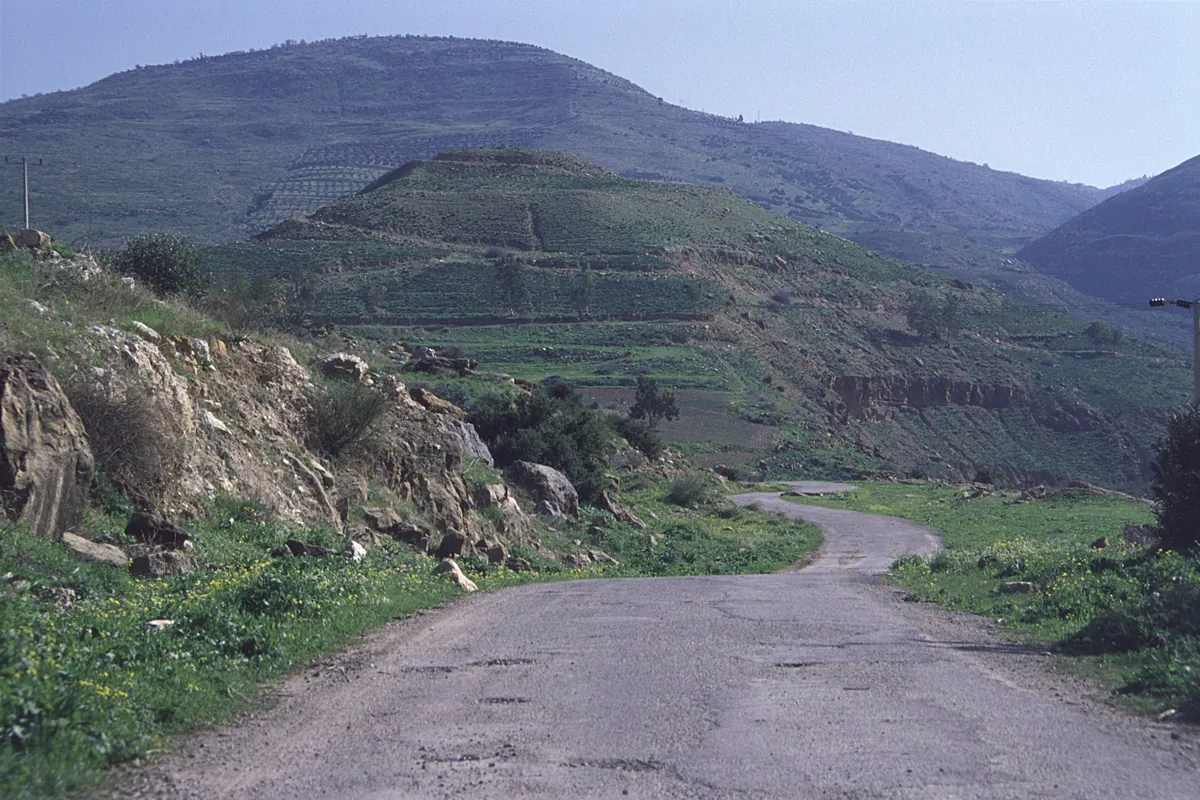
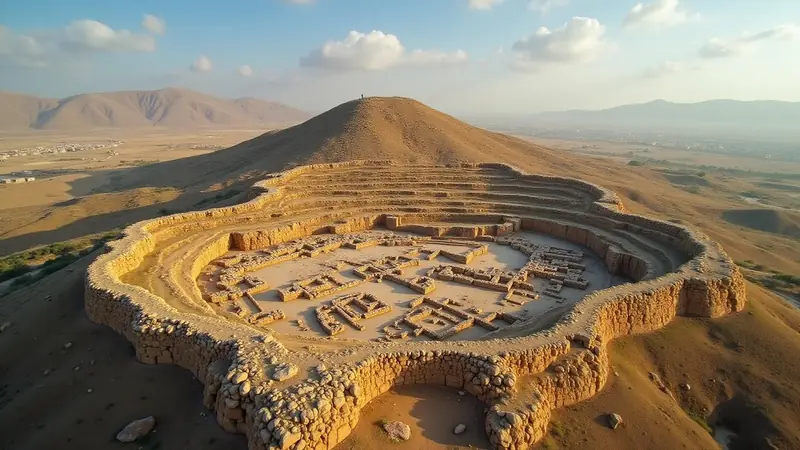
Surveyed in the early 1980s, the two hills have been excavated since 2005 by a team from TU Dortmund University led by Thomas Pola, in cooperation with Jordan's Department of Antiquities. The work has uncovered fortifications from the Late Bronze and Iron Ages, buildings from the Persian and Hellenistic periods, and a monumental peristyle building from the late Hellenistic or early Herodian period.
None of these levels can be linked directly to the story of Jacob, which belongs to tradition rather than archaeological proof. The Iron Age remains do, however, fit the biblical references to a fortified Penuel.
Gideon tears down the tower of Penuel after its inhabitants refuse to feed his troops (Judges 8:8-9, 17), and King Jeroboam I, after building Shechem, "built Penuel" — that is, fortified it (1 Kings 12:25).
🔎 A strategic crossing point
The ford of the Jabbok controlled one of the routes linking the Transjordanian highlands to the Jordan Valley and Canaan — the route the story has Jacob take on his way back from Haran. This position explains Peniel's historical importance.
In Jewish tradition, Jacob's struggle represents every person's inner quest in the face of conscience. The Midrash (Genesis Rabbah 77) and Rashi identify the opponent as Esau's guardian angel: the night-time struggle anticipates the next day's meeting between the two brothers, which ends in reconciliation (Genesis 33).
In Christian tradition, the Church Fathers read it as an image of persevering prayer and of the transformation brought about by any encounter with the divine.
The scene has also inspired artists: Rembrandt (c. 1659, Berlin), Eugène Delacroix in the Chapel of the Holy Angels at the church of Saint-Sulpice in Paris (1861), and Paul Gauguin in Vision after the Sermon (1888).
Peniel thus becomes a universal archetype: the inner struggle that comes before the light. In the morning, Jacob continues on to Succoth and then to Shechem, where he settles in Canaan (Genesis 33:17-18).
✨ The timeless message of Peniel
Everyone goes through their own night at the ford of the Jabbok. In the story, transformation comes only after the struggle.
To place Peniel within the whole cycle of Abraham, Isaac and Jacob, explore the Patriarchs itinerary.
Plan my visit
Peniel
Tulul adh-Dhahab, Nahr az-Zarqa (Jabbok) valley, about 6.5 km east of Tell Deir Alla, Jordan
GPS coordinates : 32.1857, 35.6866 (reference point, not the exact entrance)
Start navigation with:
Around the site
At Bethel, Jacob has one of the Bible's greatest spiritual experiences: a dream in which a ladder joins earth to heaven.
Between Mount Ebal and Mount Gerizim, the place of God's first promise and Abraham's first altar in the Promised Land (Genesis 12:6-7).
At Dothan, Joseph is thrown into a pit by his jealous brothers and then sold to a caravan bound for Egypt: a turning point in Genesis that seals his destiny.
A sacred site venerated by the three monotheistic religions, the traditional burial place of Abraham, Isaac and Jacob.
Most likely at Tulul adh-Dhahab, twin hills in the Jabbok Valley (Nahr az-Zarqa) in Jordan, about 6.5 km east of Tell Deir Alla. This identification, based on biblical geography, remains a hypothesis.
The text gives no reason: "a man" attacks him in the night. Tradition sees it as Jacob's inner, spiritual struggle before facing his brother Esau, whom he feared; the Midrash identifies the opponent as Esau's guardian angel.
Genesis 32 speaks of "a man", Jacob says he saw "God face to face", and the prophet Hosea speaks of an angel (Hosea 12:4). Jewish commentators generally see an angel; many Christian readers see a manifestation of God himself.
According to the story, "he who has striven with God": the name is linked to the Hebrew verb sarah, "to strive". It is given to Jacob at Peniel and confirmed at Bethel (Genesis 35:10).
It means "face of God" in Hebrew. Jacob named the place because he had "seen God face to face" and his life was spared (Genesis 32:30). The Bible also uses the form Penuel.
Because his opponent struck the hollow of his thigh: the wound becomes the sign of a divine encounter. It is also the origin of the prohibition on eating the sciatic nerve (gid hanasheh), still observed in Jewish tradition (Genesis 32:32).
Yes, but you must cross into Jordan (valid passport, visa depending on nationality). The site is undeveloped: plan on a local guide or driver and good shoes, and check border and security conditions before you go.
Tell Deir Alla, often identified with Succoth, where Jacob stopped after Peniel (Genesis 33:17) and where the Balaam inscription was discovered; further north-east, the ancient city of Jerash.