
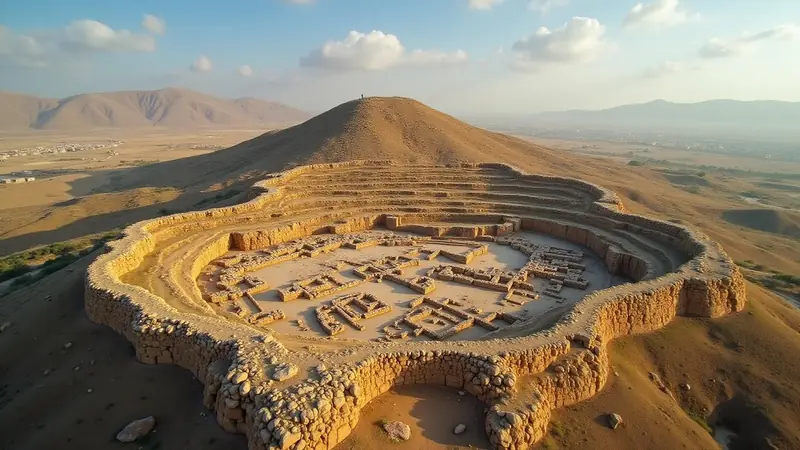
Shechem (Tel Balata) – Abraham's First Altar in Canaan
Between Mount Ebal and Mount Gerizim, the place of God's first promise and Abraham's first altar in the Promised Land (Genesis 12:6-7).
Biblical period: The Patriarchs
At Dothan, Joseph is thrown into a pit by his jealous brothers and then sold to a caravan bound for Egypt: a turning point in Genesis that seals his destiny.
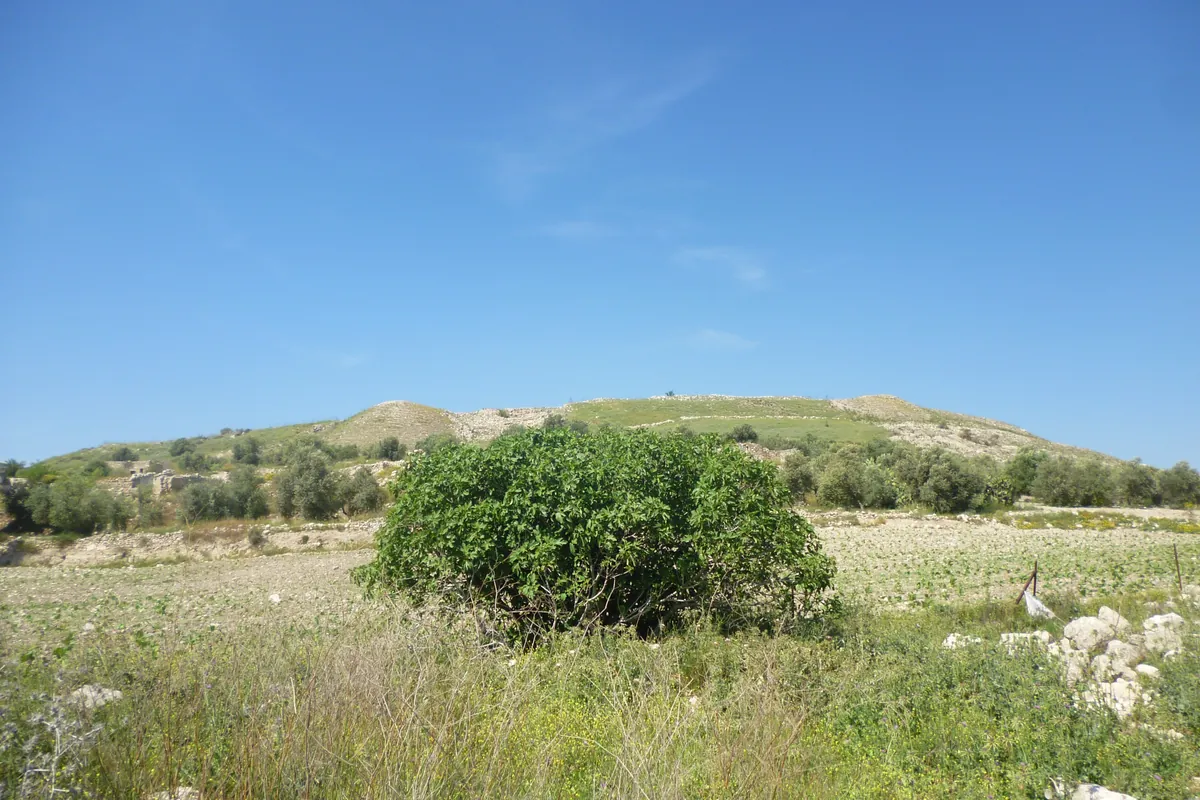
Dothan is the place where, according to Genesis 37, Joseph was sold by his brothers. Sent by his father Jacob to see how they were faring, Joseph finds them in the pastures of Dothan, north of Shechem. He is met not with brotherhood but with jealousy: thrown into an empty pit (a cistern), he is then sold to a caravan of Ishmaelites on its way to Egypt — an event that would shape the destiny of all Israel.
The ancient town is identified with Tel Dothan, a large mound in the hills of northern Samaria, about ten kilometres south-west of Jenin. Excavated between 1953 and 1964, it has yielded remains ranging from the Early Bronze Age to the Iron Age.
"And when they saw him afar off, even before he came near unto them, they conspired against him to slay him."
Genesis 37:18
In brief
History & Bible
Bible story
Joseph sets out from the vale of Hebron to join his brothers, who are grazing the flocks at Shechem. Not finding them there, he learns from a stranger that they have moved further north (Genesis 37:14-17).
"And the man said, They are departed hence; for I heard them say, Let us go to Dothan. And Joseph went after his brethren, and found them in Dothan."
Genesis 37:17
Dothan lies in a small, fertile plain in northern Samaria, well suited to grazing, on a pass linking the Jezreel Valley to the coastal plain — one of the trade routes that led down to Egypt.
This pass, much used by caravans, makes the biblical scene plausible: the arrival of Ishmaelite merchants coming from Gilead, east of the Jordan, with camels carrying spices, balm and myrrh (Genesis 37:25). A place of transit, Dothan becomes the setting for a turning point: Joseph leaves the land of his fathers, carried off towards a foreign destiny.
Bible story
Joseph's brothers, angered by his dreams and by their father's favouritism — symbolised by the coat of many colours — decide to get rid of him. "Behold, this dreamer cometh," they say to one another (Genesis 37:19).
Reuben, the eldest, opposes murder and suggests throwing him into a pit instead, secretly intending to bring him back to their father (Genesis 37:21-22). At Dothan, the brothers strip Joseph of his coat and throw him into the pit.
"And they took him, and cast him into a pit: and the pit was empty, there was no water in it."
Genesis 37:24
This pit, a symbol of abandonment, paradoxically becomes the starting point of his future rise. Cisterns cut into the limestone to collect rainwater are common in the region; empty in the dry season, they could serve as a makeshift prison.
Bible story
"What profit is it if we slay our brother, and conceal his blood? Come, and let us sell him to the Ishmeelites, and let not our hand be upon him; for he is our brother and our flesh."
Genesis 37:26-27
It is Judah, Jacob's fourth son, who proposes selling Joseph rather than killing him. Joseph is sold for twenty pieces of silver (Genesis 37:28) and taken to Egypt, where he is sold on to Potiphar, an officer of Pharaoh (Genesis 37:36). The decision saves his life, but opens a long period of trials before the final reconciliation.
When Reuben returns to the pit, he finds it empty and tears his clothes. The brothers dip Joseph's coat in the blood of a goat and let Jacob conclude that a wild beast has devoured him (Genesis 37:29-33).
🔎 Ishmaelites or Midianites?
The story alternates between Ishmaelites and Midianite merchants (Genesis 37:25-28, 36; 39:1). Medieval Jewish commentators offered several readings: for Rashi, Joseph was sold several times over; for Rashbam, it was the Midianites who pulled him out of the pit without the brothers' knowledge. Modern critical scholarship tends to see the trace of two narrative traditions woven together.
Archaeology
The biblical town is identified with Tel Dothan, about ten kilometres south-west of Jenin, next to the village of Bir al-Basha. In the 4th century, Eusebius of Caesarea already placed it 12 miles north of Sebaste (ancient Samaria), which is consistent with the modern location.
The excavations led by the American archaeologist Joseph P. Free (Wheaton College) revealed a very long occupation: a heavily fortified Canaanite town in the Early Bronze Age, occupation in the Middle and Late Bronze Ages, then an Iron Age town. In a house from that period, excavators found a clay bulla inscribed in Hebrew with the name Abisur (late 9th or early 8th century BCE); a four-horned stone altar from the 9th century was also later identified among the finds. The results have more recently been published by Daniel Master and colleagues.
📖 Tradition and archaeology
The Middle Bronze Age levels show that Dothan was inhabited in the period traditionally associated with the patriarchs, but no discovery relates directly to Joseph. Several historians also consider that some details of the story — camel caravans, the spice trade — rather reflect the time when it was written down, in the 1st millennium BCE.
Dothan reappears later in the Bible, in the time of the prophet Elisha: the king of Aram sends an army there to capture him, and the prophet's servant sees the mountain full of chariots of fire — another deliverance linked to the same place (2 Kings 6:13-17).
"And Elisha prayed, and said, LORD, I pray thee, open his eyes, that he may see. And the LORD opened the eyes of the young man; and he saw: and, behold, the mountain was full of horses and chariots of fire round about Elisha."
2 Kings 6:17
The story of Dothan illustrates the tension between human malice and divine purpose. What looks like betrayal becomes an instrument of salvation. Many years later, after Jacob's death, Joseph tells his brothers:
"But as for you, ye thought evil against me; but God meant it unto good, to bring to pass, as it is this day, to save much people alive."
Genesis 50:20
Dothan marks the beginning of Joseph's exile, but also the first step towards redemption: having risen to govern Egypt, he will save his family from famine. This forced departure foreshadows the story of the people of Israel — the descent into Egypt, then the Exodus: trial before deliverance.
In spiritual tradition, Dothan symbolises trust in spite of betrayal: believing that God's hand is at work even when all seems lost. For Joseph's Egyptian career and the parallels that have been proposed with Imhotep, read our article Joseph and Imhotep.
✨ Hope in the midst of trial
Joseph's story prefigures the destiny of the people of Israel: from exile to redemption, from suffering to glory. It ends with the reconciliation of the brothers.
To place Dothan within the whole story, from Abraham's call to the descent into Egypt, explore the Patriarchs itinerary.
Plan my visit
Dothan
Tel Dothan, near Bir al-Basha, about 10 km south-west of Jenin (northern Samaria)
GPS coordinates : 32.4135, 35.2399 (reference point, not the exact entrance)
Start navigation with:
Around the site
Between Mount Ebal and Mount Gerizim, the place of God's first promise and Abraham's first altar in the Promised Land (Genesis 12:6-7).
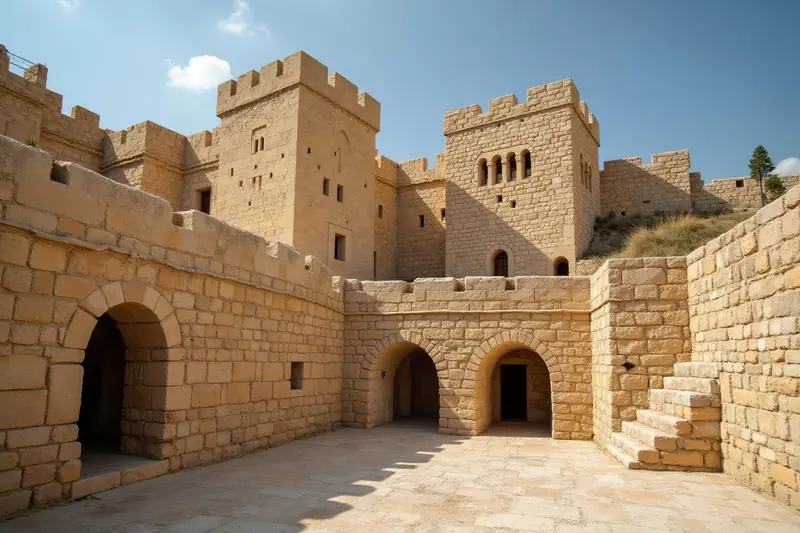
A sacred site venerated by the three monotheistic religions, the traditional burial place of Abraham, Isaac and Jacob.
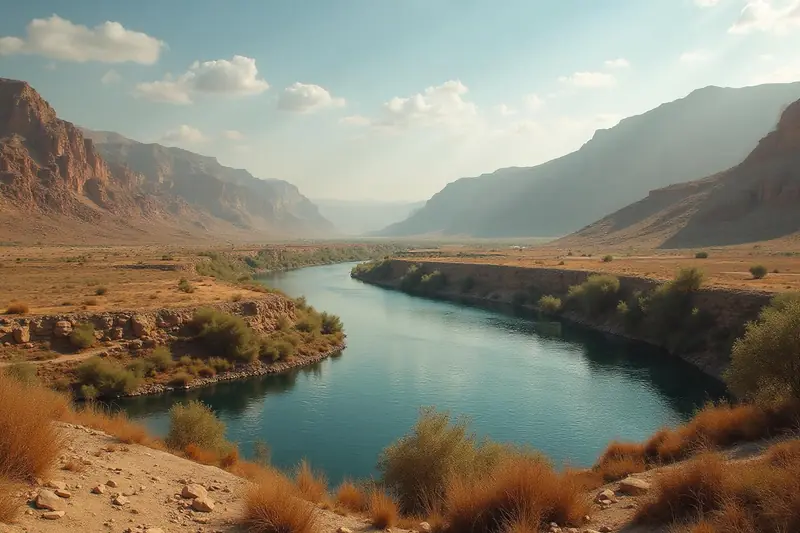
At the ford of the Jabbok, Jacob wrestles all night with a mysterious opponent. He comes away wounded, blessed and bearing a new name: Israel.
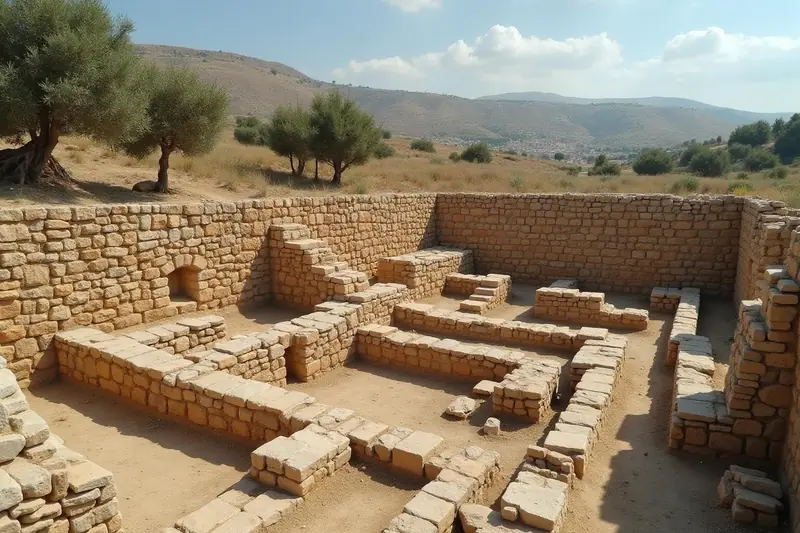
At Bethel, Jacob has one of the Bible's greatest spiritual experiences: a dream in which a ladder joins earth to heaven.
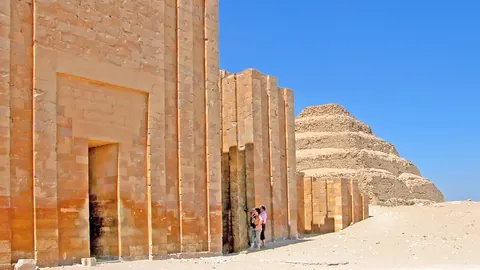 Ancient EgyptJoseph and Imhotep: One and the Same Man?The Famine Stela, the Saqqara galleries, the canal of Joseph: the theory that identifies the biblical Joseph with the sage Imhotep, its case and its limits.Read the article →
 At Tel Dothan, an archaeological site in the hills of northern Samaria, about ten kilometres south-west of Jenin and some twenty kilometres north of Nablus (Shechem).
Out of jealousy and hatred: Joseph was Jacob's favourite son, who had given him a coat of many colours, and his dreams seemed to announce that he would rule over his brothers (Genesis 37:3-11).
Judah, Jacob's fourth son, to avoid shedding their brother's blood. Reuben, the eldest, had earlier prevented the murder by suggesting the pit, intending to rescue him.
The text mentions both. Depending on the reading, the Midianites acted as middlemen, the two terms refer to the same merchants, or the story combines two traditions. The price given is twenty pieces of silver (Genesis 37:28).
No cistern at Tel Dothan can be identified with the one in the story. An old tradition points to a "Joseph's Well" in Galilee (Jubb Yussuf), but the biblical text clearly places the episode at Dothan.
Emptiness, descent and loss — but also the starting point of a rise: from the pit, Joseph would eventually become the governor of Egypt.
Dothan is also where Elisha, surrounded by the Aramean army, let his servant see the horses and chariots of fire around them, a symbol of divine protection (2 Kings 6:13-17).
The mound is not developed for tourism and lies in Judea and Samaria, where access conditions vary. Check the situation before you go and preferably visit with a guide.