
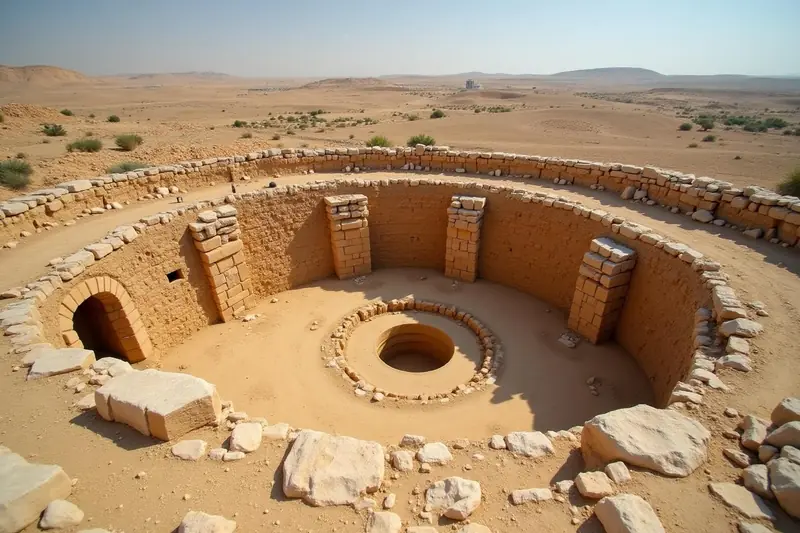
Beersheba: the Well of the Oath and Abraham's Tamarisk
At Beersheba, Abraham seals a covenant with Abimelech over a well, plants a tamarisk and calls on the name of the Everlasting God.
Biblical period: The Patriarchs
A sacred site venerated by the three monotheistic religions, the traditional burial place of Abraham, Isaac and Jacob.
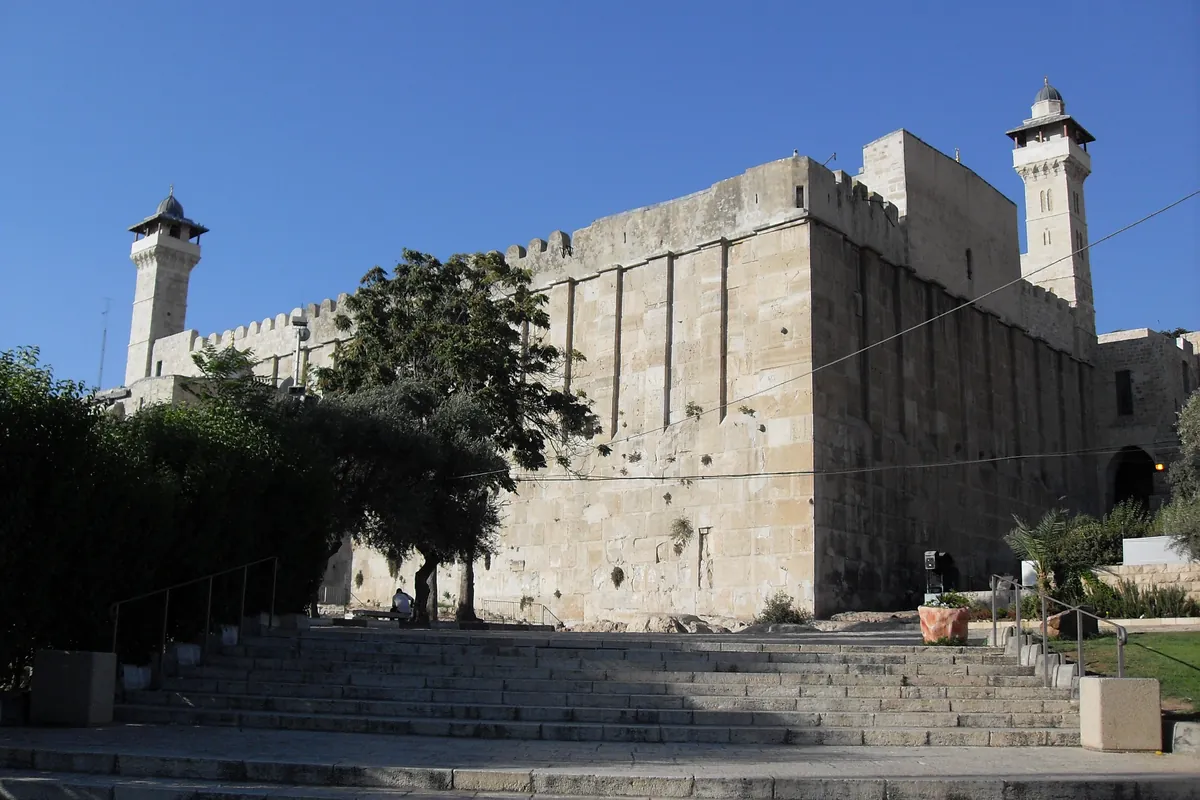
In Hebron, the monumental enclosure known as the Tomb of the Patriarchs — also called the Cave of the Patriarchs or the Cave of Machpelah, and by Muslims the Ibrahimi Mosque — honours the memory of Abraham & Sarah, Isaac & Rebekah, and Jacob & Leah (Rachel is venerated at her tomb in Bethlehem). According to Genesis 23, Abraham bought the cave and its field to bury Sarah: a founding act that rooted his family in Canaan.
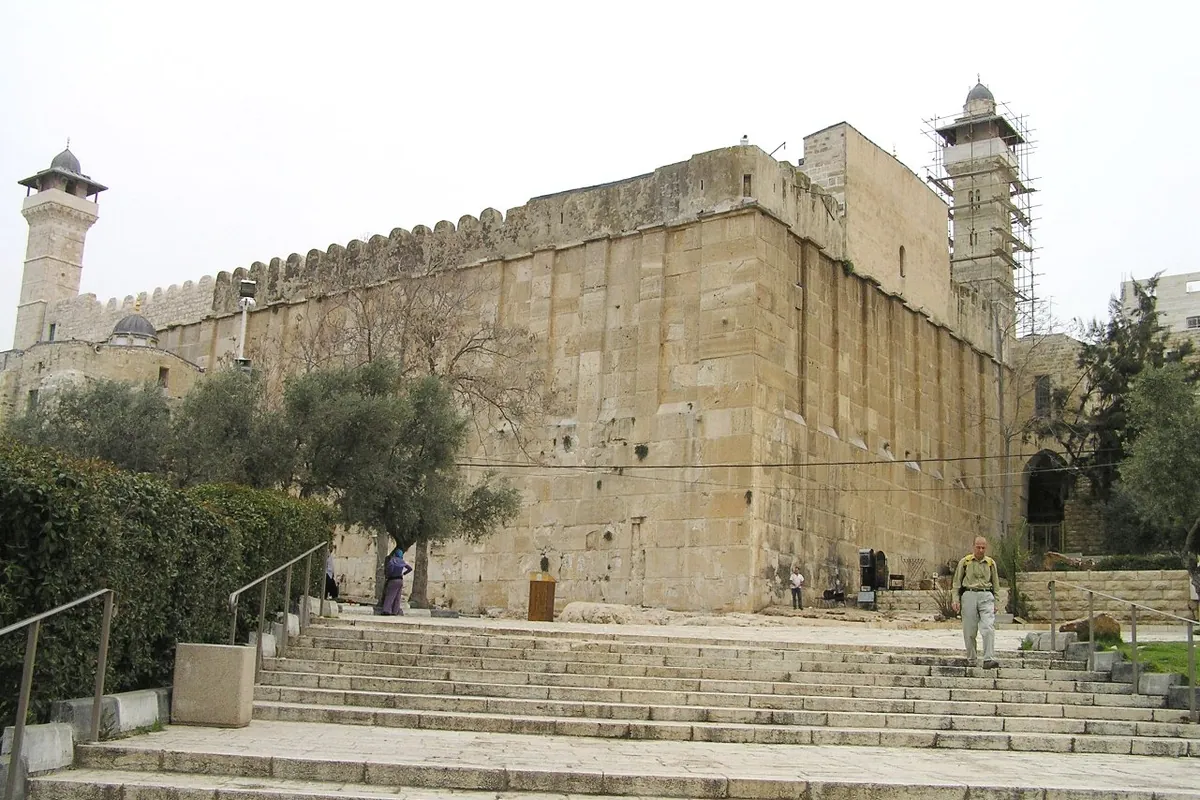
The building visible today — a Herodian enclosure of large drafted-margin ashlars (1st century BCE) — went through Byzantine, Crusader, Mamluk and Ottoman phases. A holy place for both Jews and Muslims (al-Ḥaram al-Ibrāhīmī), the site is at once spiritual, historic and sensitive: it should be visited with respect and careful preparation.
In brief
History & Bible
Bible story
Abraham acquires the Cave of Machpelah and the adjoining field from Ephron the Hittite to bury Sarah — the family's first landholding in Canaan. The detailed transaction (four hundred shekels of silver, "current money with the merchant") closely follows the legal customs of the time: a public negotiation, explicit mention of "the field, and the cave which was therein, and all the trees", and witnesses "at the gate of his city". Tradition associates the burials of Abraham, Isaac, Rebekah, Jacob and Leah with this cave.
"And the field of Ephron, which was in Machpelah, which was before Mamre, the field, and the cave which was therein, and all the trees that were in the field, that were in all the borders round about, were made sure unto Abraham for a possession in the presence of the children of Heth, before all that went in at the gate of his city."
Genesis 23:17-18
Machpelah symbolises covenant and rootedness: the promise becomes land acquired. From late antiquity to the present day, the site has nourished the pilgrimages and liturgies of the Jewish, Christian and Muslim traditions. This continuity of veneration over more than two millennia bears witness to the site's importance in Abrahamic memory.
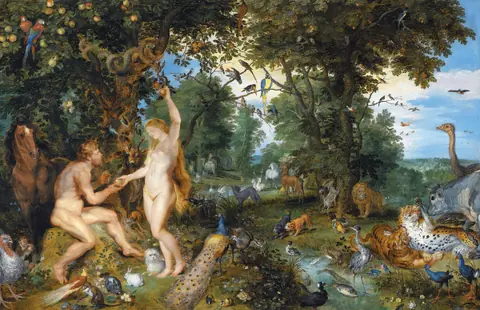 OriginsWhere Was the Garden of Eden? The Four Rivers, Mesopotamia and HebronTigris, Euphrates, the Persian Gulf or Hebron? What Genesis says about the Garden of Eden, what scholars suggest, and the traditions that link it to Israel.Read the article →
Jewish tradition adds a fourth couple to the patriarchs: according to the Talmud (Eruvin 53a), Adam and Eve also rest in the cave, hence the name Kiryat Arba, the "city of four" (Genesis 23:2). The Zohar makes Machpelah the entrance to the Garden of Eden, through which the souls of the righteous pass. These traditions are not found in the biblical text, which mentions only the patriarchs and their wives in the cave.
To follow Abraham's steps before Hebron, see Shechem and Bethel; for the next generation, read the section Isaac and Rebekah at Machpelah below and Tel Beersheba. The wider context is covered in the Patriarchal period and our article on Abraham, father of monotheism.
Bible story
A generation after the purchase of the cave, Hebron becomes the place where Isaac's life comes to an end. Sarah dies "in Kirjatharba; the same is Hebron" (Genesis 23:2); from there Abraham sends his servant to Mesopotamia to find Rebekah (Genesis 24). She becomes Isaac's wife, and his only one: "he took Rebekah, and she became his wife; and he loved her" (24:67), the first time the Bible speaks of a man's love for his wife.
"And his sons Isaac and Ishmael buried him in the cave of Machpelah, in the field of Ephron the son of Zohar the Hittite, which is before Mamre."
Genesis 25:9
Abraham dies at 175. His two sons, separated since Hagar and Ishmael were sent away (Genesis 21), come together to carry him into the cave bought for Sarah. For the Jewish and Muslim traditions, which see Isaac and Ishmael respectively as an ancestor, it is a powerful scene: the shared mourning of one Abrahamic family. "After the death of Abraham, God blessed his son Isaac" (25:11): the blessing passes to the next generation, whose life unfolds between Gerar, Beersheba and Hebron.
After his twenty years in Haran, Jacob finds his father again "unto Mamre, unto the city of Arbah, which is Hebron, where Abraham and Isaac sojourned" (Genesis 35:27). Isaac dies there at 180, the longest-lived of the three patriarchs, "old and full of days". Just as Isaac and Ishmael did for Abraham, "his sons Esau and Jacob buried him" (35:29), reconciled after years of rivalry.
"There they buried Abraham and Sarah his wife; there they buried Isaac and Rebekah his wife; and there I buried Leah."
Genesis 49:31
The Bible does not recount Rebekah's death, but this verse, spoken by the dying Jacob in Egypt, attests that she rests with Isaac at Machpelah.
🔎 A surprising chronology
Isaac's death is recounted in chapter 35, before the story of Joseph. Yet according to the ages given in Genesis, Isaac would have lived about twelve more years after Joseph was sold by his brothers at Dothan — a detail noted by commentators, including Rashi.
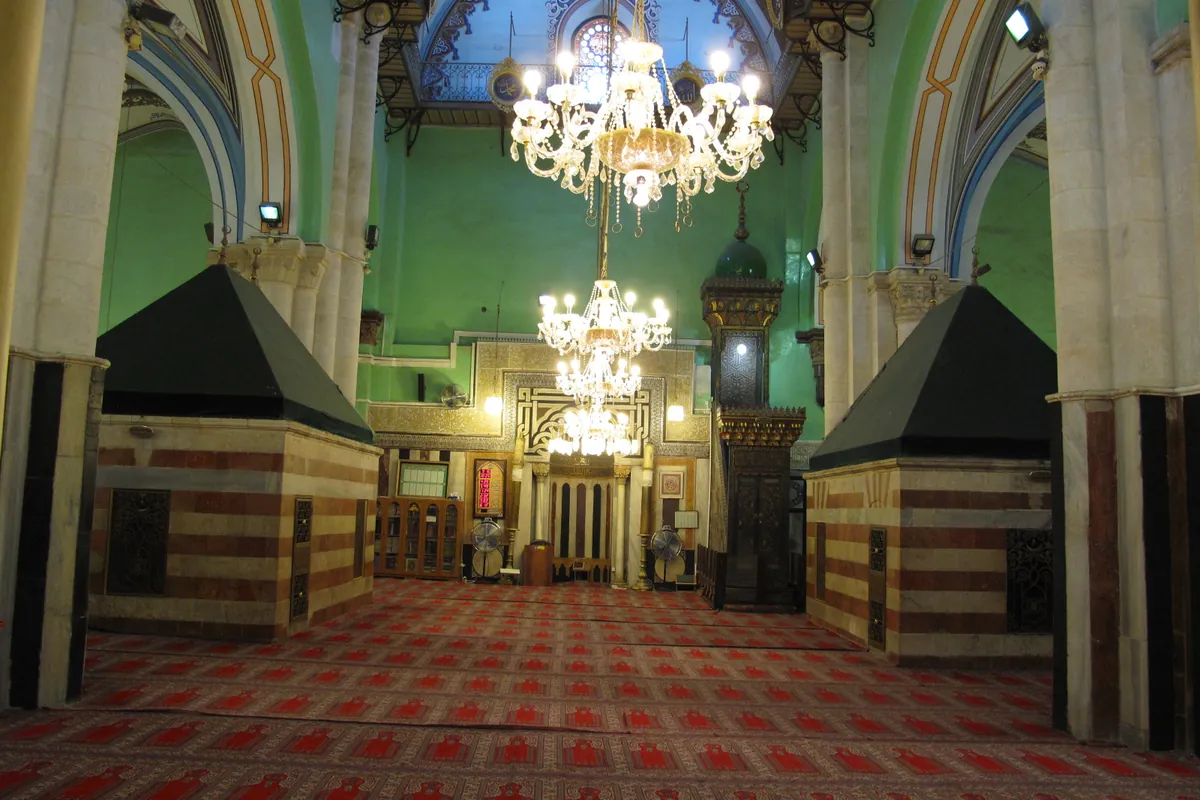
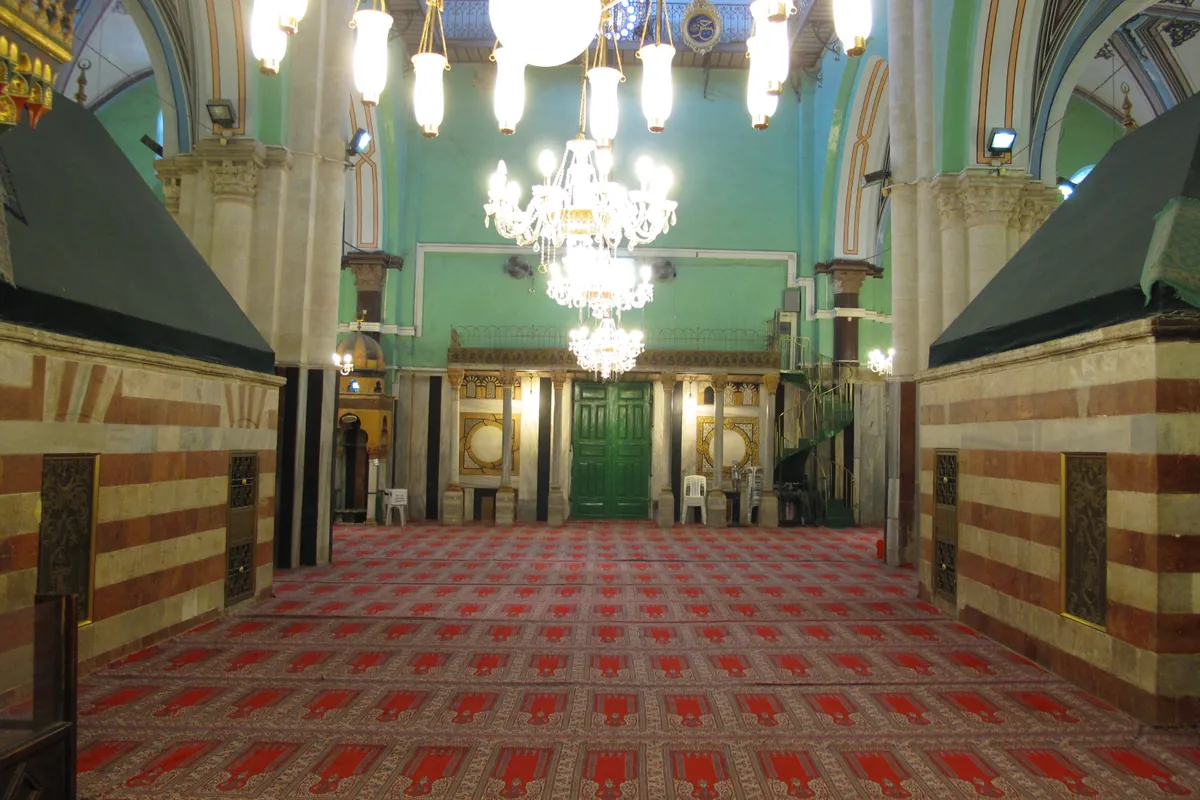
Inside the Herodian enclosure, the cenotaphs of Isaac and Rebekah stand in the largest hall, which incorporates the church built by the Crusaders in the 12th century and now serves as a mosque. It houses the carved wooden minbar made in 1091 for Ascalon and moved here by Saladin, one of the oldest to survive, as well as the narrow opening down to the underground chambers, explored briefly in 1968 and 1981. Since the 1990s the hall has belonged to the Muslim section of the sanctuary: visitors on the Jewish side can enter it only on about ten days a year, on holidays, and the same applies in reverse to the halls on the Jewish side. From 1267 to 1967, Jews were not allowed beyond the "seventh step" of the outer staircase.
Archaeology
The great rectangular enclosure visible today is attributed to Herod the Great (c. 37–4 BCE). Large drafted-margin ashlars, tight joints and pilasters in shallow relief: the stylistic kinship with the walls of the Temple Mount in Jerusalem is striking. The enclosure forms a monumental shell above the cave, which is not open to the public.
🔎 Historical note
The consensus attributes the enclosure to Herod, with possible earlier (Hasmonean) phases and numerous later alterations. Its present state is the result of successive periods layered on top of one another, the Herodian enclosure remaining the major ancient structure.
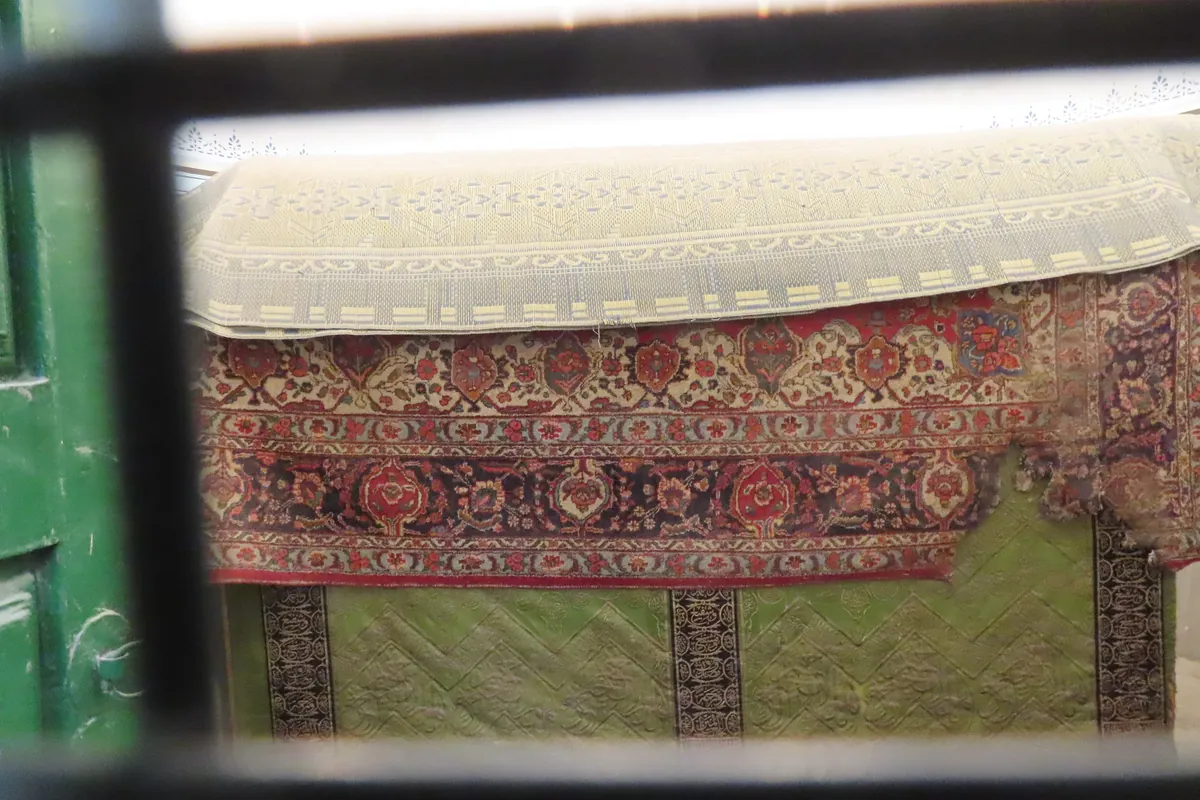
A majestic Herodian shell, separate Jewish and Muslim prayer halls, and richly decorated symbolic cenotaphs. The actual cave lies below and is not open to the public; visitors admire the architecture and the prayer spaces according to the rules of each tradition.
Plan my visit
Hebron
Patriarchs' Street, Hebron Old City (about 30 km south of Jerusalem)
GPS coordinates : 31.5247, 35.1107 (reference point, not the exact entrance)
Start navigation with:
The site is an active place of worship for Jews and Muslims: the spaces are separate, and access alternates on certain days (religious holidays, commemorations). This arrangement reflects the spiritual importance of the place for both Abrahamic traditions.
Around the site
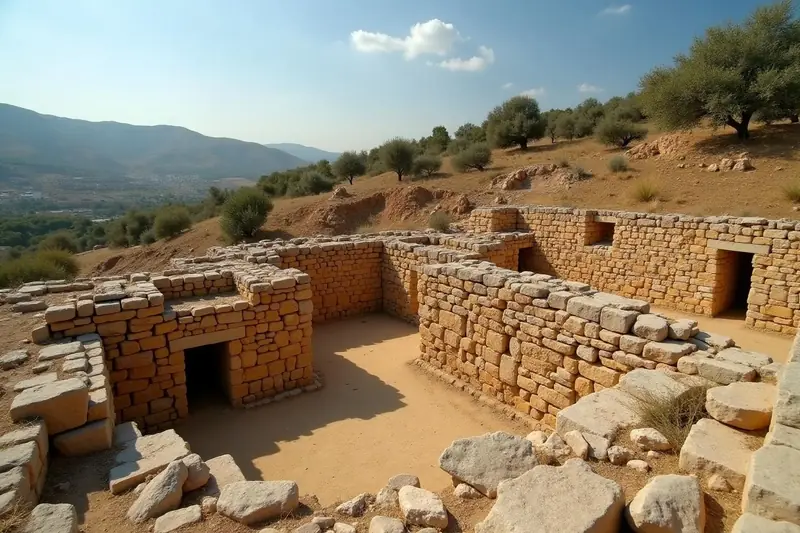
At Beersheba, Abraham seals a covenant with Abimelech over a well, plants a tamarisk and calls on the name of the Everlasting God.
After Shechem, Abraham builds an altar "between Bethel and Ai" and calls on the name of the LORD, then returns there after his stay in Egypt (Genesis 12:8; 13:1-4).
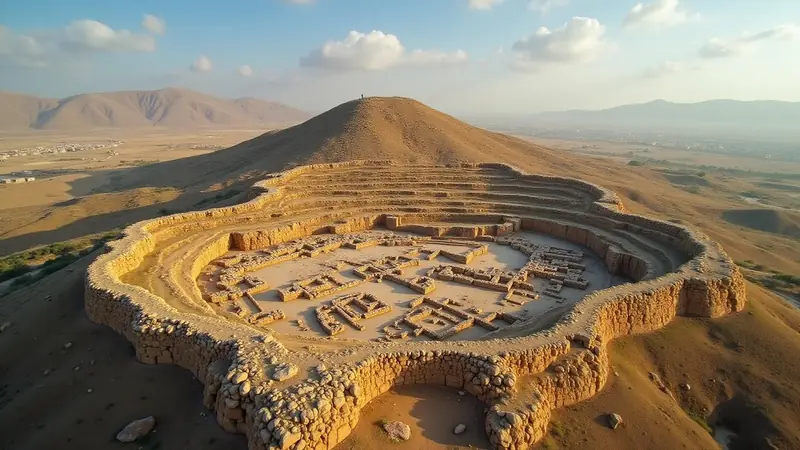
Between Mount Ebal and Mount Gerizim, the place of God's first promise and Abraham's first altar in the Promised Land (Genesis 12:6-7).
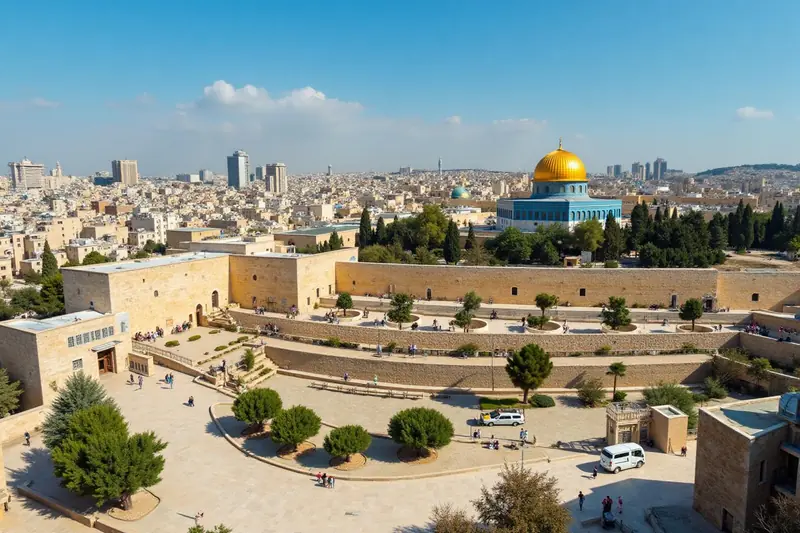
Where tradition places Abraham's test now stands the Temple Mount, one of the holiest sites in Judaism and Islam.
OriginsWhere Was the Garden of Eden? The Four Rivers, Mesopotamia and HebronTigris, Euphrates, the Persian Gulf or Hebron? What Genesis says about the Garden of Eden, what scholars suggest, and the traditions that link it to Israel.Read the article →  PatriarchsAbraham: Father of Monotheism and Founding FigureFrom Ur of the Chaldees to Hebron: Abraham's journey according to Genesis, his place in the three monotheistic faiths and what archaeology can say.Read the article →
 Abraham & Sarah, Isaac & Rebekah, and Jacob & Leah. Rachel, for her part, is venerated at Rachel's Tomb in Bethlehem. These six patriarchal figures are central to Jewish and Muslim tradition. According to a Jewish tradition (Talmud, Eruvin 53a), Adam and Eve rest there too.
No: the underground cave is not open to the public, for reasons of security and sanctity. Visitors see the Herodian enclosure and the prayer halls with their richly decorated symbolic cenotaphs.
Yes. The archaeological consensus attributes the monumental enclosure to Herod the Great (late 1st century BCE), with possible earlier (Hasmonean) phases and later Byzantine, Crusader, Mamluk and Ottoman additions.
The Herodian enclosure with its large drafted-margin ashlars is the main ancient feature visible. The interiors are mostly medieval and modern.
45 to 90 minutes, depending on crowds and security checks.
Yes, but with strict rules of worship and access that may alternate depending on the day. Modest dress is required.
The site can be visited all year round. Weekday mornings outside busy periods are best.
Beersheba, Mamre / Tel Rumeida, Bethel, Shechem and Rachel's Tomb in Bethlehem.
They are two names for the same holy place: al-Ḥaram al-Ibrāhīmī ("the Sanctuary of Abraham"), known in English as the Ibrahimi Mosque, is the Arabic name; the Tomb or Cave of the Patriarchs, or the Cave of Machpelah (Me'arat HaMachpela in Hebrew), are its English and Hebrew names.
Rules vary from one area to another. Photography is generally restricted, or even prohibited, in the prayer halls.
According to Genesis, in the Cave of Machpelah in Hebron, with Rebekah (Genesis 49:31), beside Abraham and Sarah, Jacob and Leah. His cenotaph stands in the Isaac Hall of the Tomb of the Patriarchs, in the Muslim section of the sanctuary.
His two sons, Isaac and Ishmael, who buried him together in the Cave of Machpelah, before Mamre (Genesis 25:9). Isaac himself was later buried by Esau and Jacob (Genesis 35:29).