
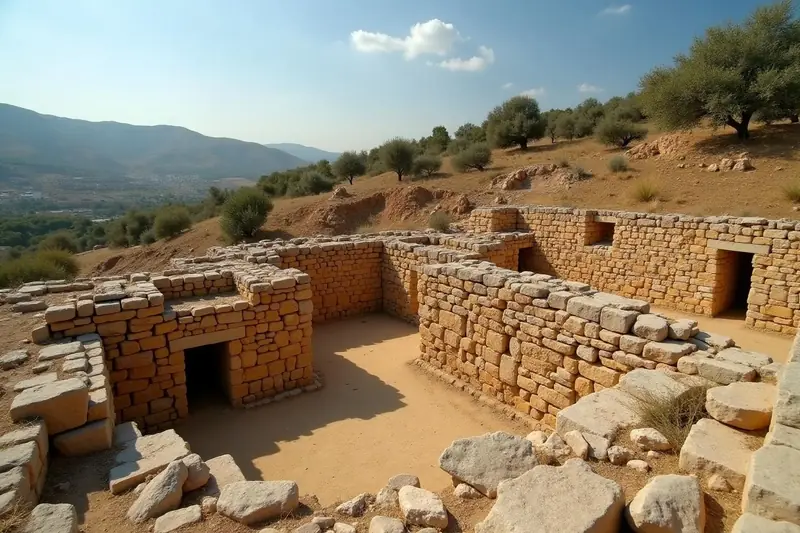
Bethel – Abraham's Altar Between Bethel and Ai
After Shechem, Abraham builds an altar "between Bethel and Ai" and calls on the name of the LORD, then returns there after his stay in Egypt (Genesis 12:8; 13:1-4).
Biblical period: The Patriarchs
Between Mount Ebal and Mount Gerizim, the place of God's first promise and Abraham's first altar in the Promised Land (Genesis 12:6-7).
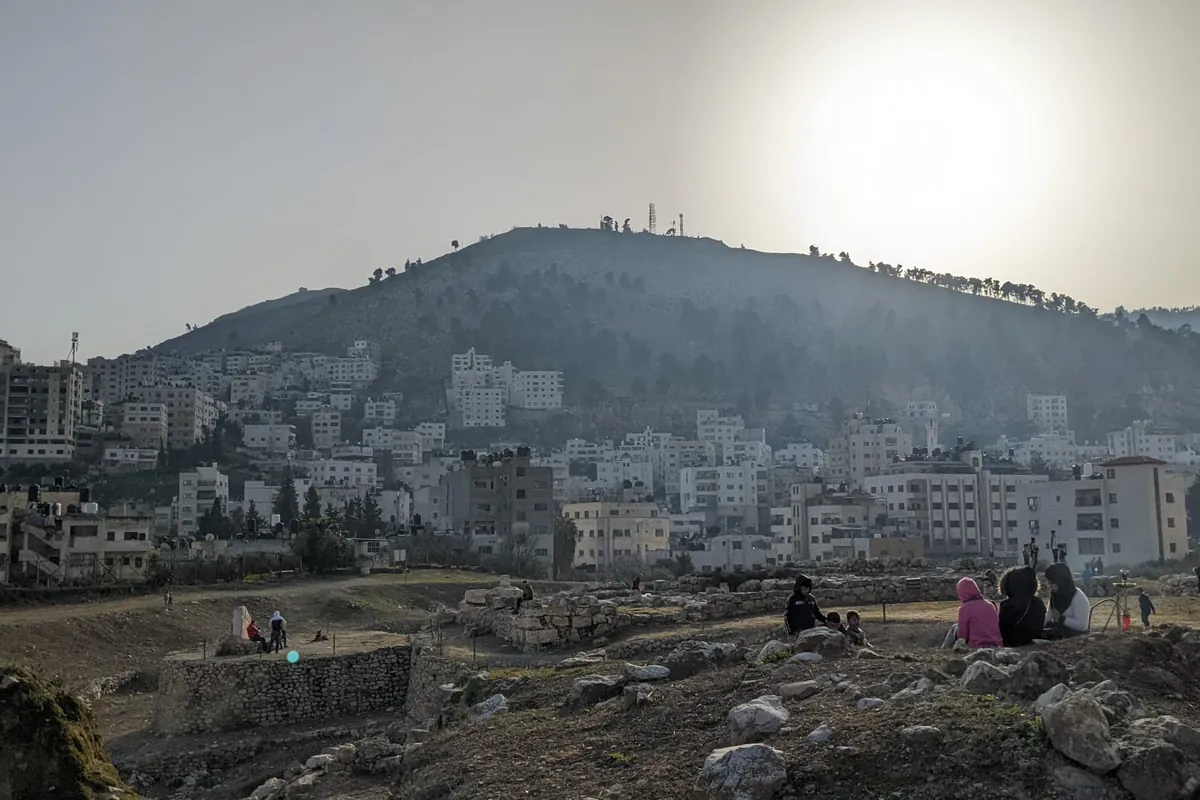
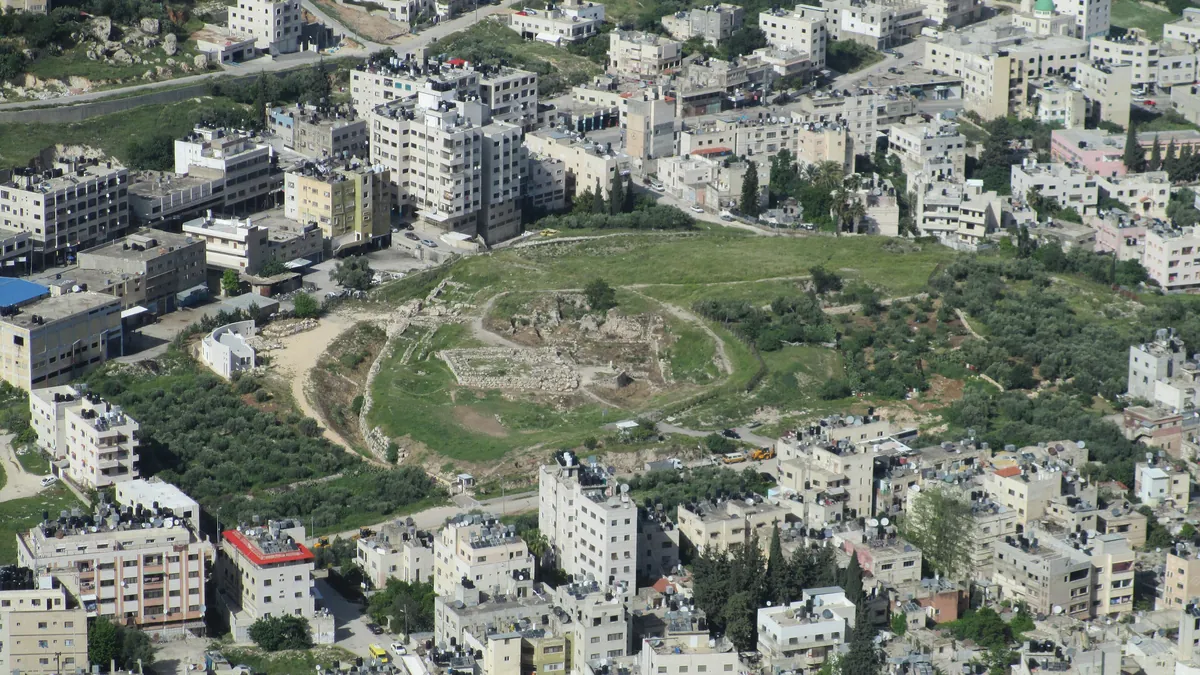
Set in the pass between Mount Ebal and Mount Gerizim, Shechem — known today as the archaeological site of Tel Balata (Tell Balata), on the eastern edge of Nablus — is where the Bible places God's first promise to Abraham in the land and Abraham's first altar in the Promised Land (Genesis 12:6-7). It is here, "unto the oaks of Moreh", that the patriarch first enters Canaan in the biblical narrative.
A strategic crossroads of the central highlands, Shechem runs through the whole biblical story: Jacob builds an altar here, Joseph is buried here, Joshua renews the covenant here, and the kingdom of Israel splits here. The tell preserves the ramparts, gates and fortress-temple of a powerful Middle Bronze Age Canaanite city.
In brief
History & Bible
Bible story
"And Abram passed through the land unto the place of Shechem, unto the terebinth of Moreh. And the Canaanite was then in the land. And the LORD appeared unto Abram, and said: 'Unto thy seed will I give this land'; and he builded there an altar unto the LORD, who appeared unto him."
Genesis 12:6-7 (JPS 1917)
Shechem is Abraham's first stop in the Promised Land. Here God appears to him for the first time in the land and promises it to his descendants; here Abraham builds his first altar — the act that, in the narrative, inaugurates the worship of Abraham's God in Canaan.
The altar Abraham builds at Shechem carries great symbolic weight: it is the first act of worship performed in the Promised Land. This gesture of adoration and gratitude makes Shechem a founding place of the patriarchal story. The "oaks" (or "terebinth") of Moreh probably refer to a prominent tree used as a landmark — perhaps a place of oracles, since "Moreh" can mean "the one who teaches".
The choice of Shechem is no accident. Lying at the heart of the land, between Mount Ebal and Mount Gerizim, the site symbolises a spiritual taking of possession. Abraham's altar opens a tradition continued by Jacob's altar at Shechem (Genesis 33:18-20) and culminating in the covenant renewal under Joshua (Joshua 24).
Lying between Mount Ebal (≈ 940 m) to the north and Mount Gerizim (≈ 880 m) to the south, Shechem controls the junction of two major ancient routes: the north–south ridge route through the highlands and the east–west corridor linking the Jordan Valley to the coastal plain. This position explains the city's early importance — and why the narrative places Abraham's first promise and first altar here.
Abraham then continues south and stops on the mountain between Bethel and Ai, where he builds another altar (Genesis 12:8), before moving on to the Negev. This route, marked out by altars, traces a spiritual geography that later generations would retrace — see also our article on Abraham.
Bible story
Two generations later, Jacob returns from Paddan-aram after twenty years with Laban. Having passed through Peniel, where he received the name Israel, and made peace with Esau, he makes Shechem his first major stop in Canaan. There he buys from the sons of Hamor, for a hundred kesitah, the parcel of ground where he has pitched his tent — just as Abraham bought the Cave of Machpelah at Hebron, the promise takes the shape of an actual plot of land — and builds an altar.
"And he bought a parcel of a field, where he had spread his tent, at the hand of the children of Hamor, Shechem's father, for an hundred pieces of money. And he erected there an altar, and called it El-elohe-Israel."
Genesis 33:19-20
It is the first altar the narrative attributes to Jacob; at Bethel, twenty years earlier, he had set up a pillar (28:18). Its name, El-Elohe-Israel, "God, the God of Israel", marks a turning point: Jacob, now Israel, proclaims that the God of his fathers has become his own God, echoing his vow at Bethel: "then shall the LORD be my God" (28:21).
The stay is also marked by tragedy: Dinah, the daughter of Jacob and Leah, is taken and violated by Shechem, son of Hamor (Genesis 34). Simeon and Levi kill the men of the city, a violence Jacob condemns (34:30; 49:5-7). At God's command he leaves Shechem for Bethel, after burying his household's idols and earrings "under the oak which was by Shechem" (35:4).
The field Jacob bought stays in the family memory: it is to Shechem that Joseph is sent to join his brothers before finding them at Dothan (37:12-17), and it is there that his bones, brought up from Egypt, are buried "in a parcel of ground which Jacob bought" (Joshua 24:32). Two nearby places of memory belong to this story: Joseph's Tomb, a few hundred metres from the tell, a sensitive site with very restricted access, and Jacob's Well, preserved inside a Greek Orthodox church, where John's Gospel sets the meeting of Jesus and the Samaritan woman (John 4:5-6). The field itself has not been identified archaeologically.
Bible story
The first place in Canaan named on Abraham's journey, the first divine appearance in the land, the first altar.
To see today: the archaeological site of Tel Balata, the pass between Ebal and Gerizim, and views over this natural crossroads.
The purchase of the field, the El-Elohe-Israel altar, the story of Dinah and the purification under the oak: see the section Jacob at Shechem above.
To see: Jacob's Well (a Christian tradition linked to John 4), a few hundred metres from the tell, and nearby Joseph's Tomb (a sensitive site with very restricted access).
"And Joshua gathered all the tribes of Israel to Shechem […] choose you this day whom ye will serve […] but as for me and my house, we will serve the LORD."
Joshua 24:1, 15 (KJV)
To see: Mount Gerizim (Samaritan tradition, remains of the Samaritan temple) and Mount Ebal (a structure some interpret as Joshua's altar, Joshua 8:30-35).
🔎 Historical note
Identifying the Mount Ebal structure as "Joshua's altar" is a debated hypothesis among archaeologists. Some see it as an early Israelite altar (Iron Age I), others as an agricultural installation or a lookout post. There is no scholarly consensus on this identification.
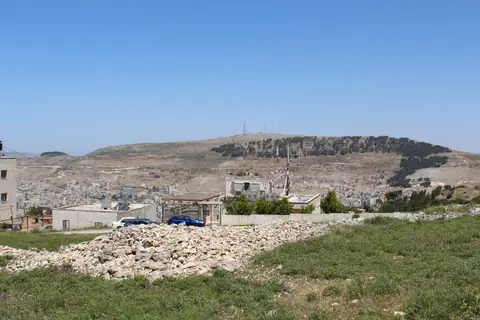 Nablus, Samarian hillsShechem: Joshua Renews the CovenantBetween Mount Ebal and Mount Gerizim, Joshua has the Law read aloud, then gathers the tribes at Shechem and asks them to choose whom they will serve.View site →
 Archaeology
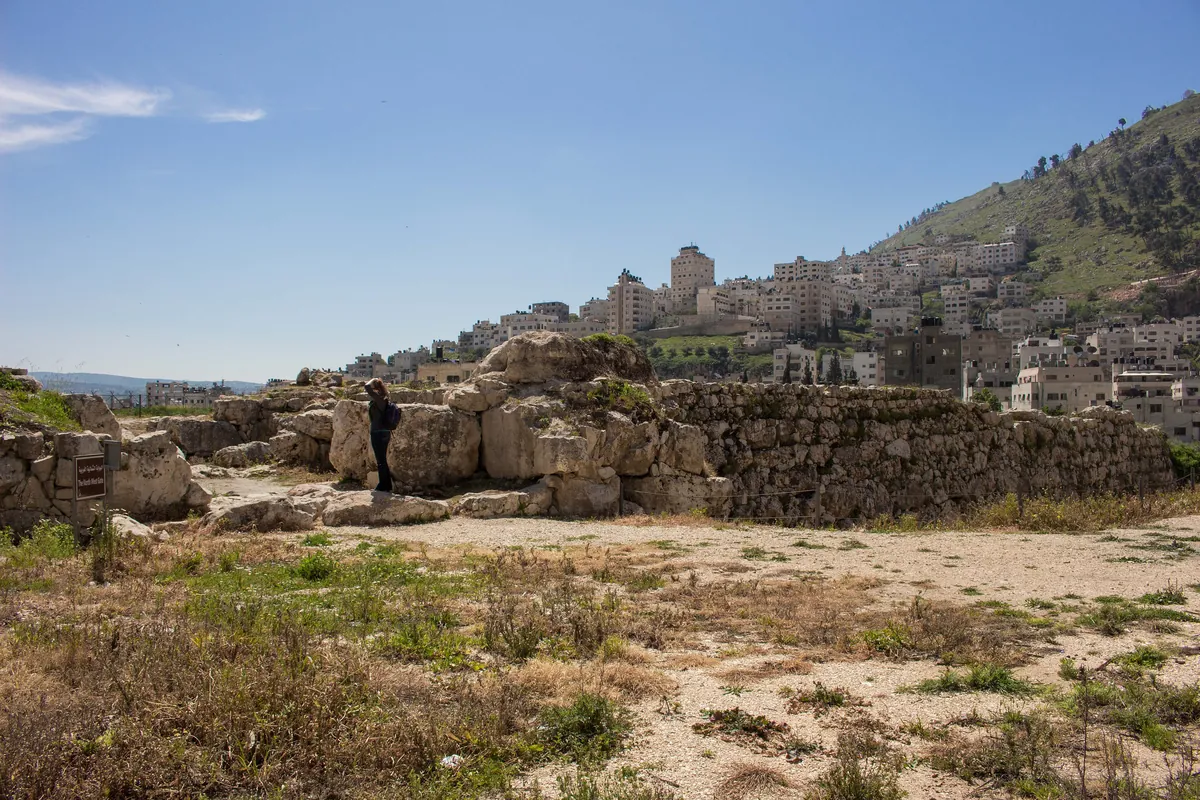
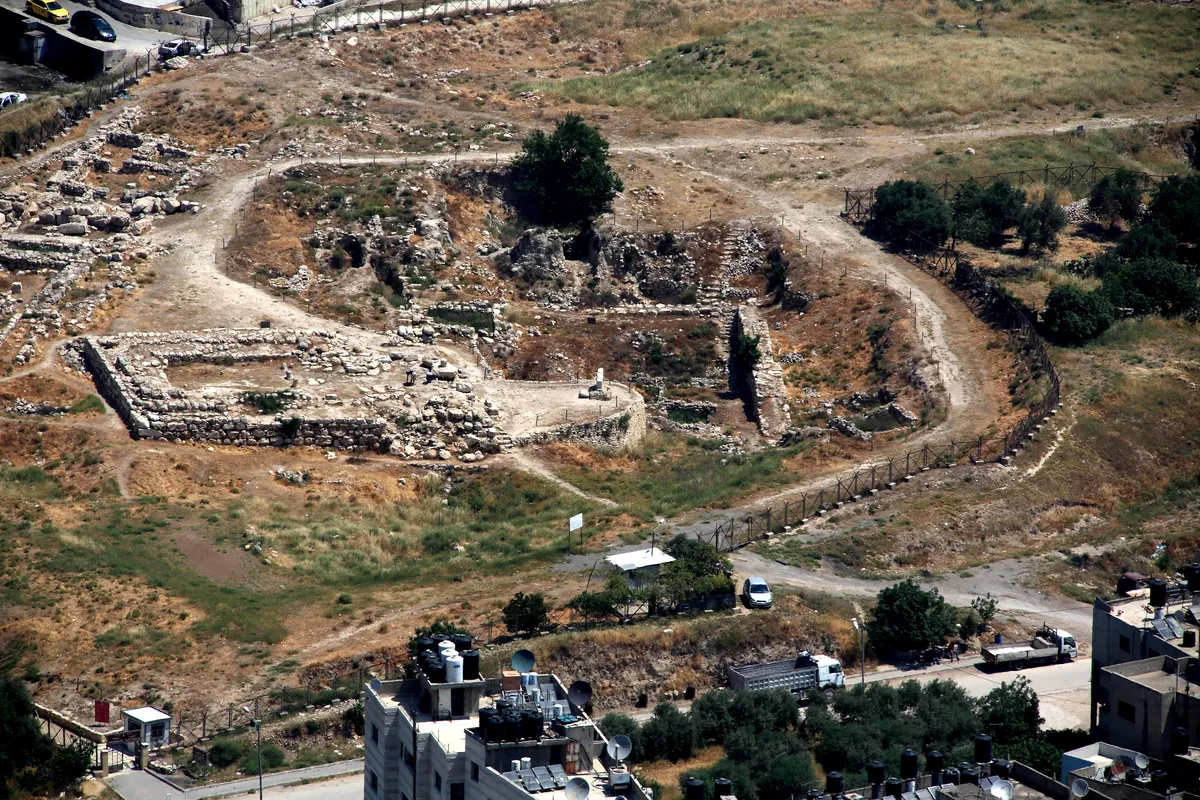
The Tel Balata archaeological park reveals a fortified Canaanite city of the Middle Bronze and Iron Ages: massive ramparts, monumental gates flanked by towers, a fortress-temple, cultic areas and successive rebuilding phases. The fortifications reached their peak in the Middle Bronze Age II (17th–16th centuries BC), the so-called "Hyksos" period.
Later levels attest Israelite occupation in the Iron Age, then a Samaritan town in the Hellenistic period, destroyed at the end of the 2nd century BC. The Roman city of Neapolis — today's Nablus — was founded in AD 72 a little further west. This material setting is consistent with Shechem's importance in the texts, without allowing Abraham's altar to be identified.
Shechem is one of the few Canaanite cities mentioned outside the Bible as early as the 2nd millennium BC: the stela of Khu-Sebek (19th century BC) records an Egyptian campaign against "Sekmem", and the Amarna letters (14th century BC) mention Labayu, the unruly ruler of the Shechem region.
💡 Archaeological note
The excavations at Tel Balata (1913-1914, 1926-1934, 1956-1973) established an occupation sequence running from the Chalcolithic (4th millennium BC) to the Hellenistic period. The Middle Bronze Age levels correspond to the period in which the patriarchal narratives are usually set: they attest the city's antiquity and importance, but no find can be linked directly to Abraham or Jacob.
Plan my visit
Shechem
Tel Balata, eastern edge of Nablus (≈ 50 km north of Jerusalem)
GPS coordinates : 32.2134, 35.2819 (reference point, not the exact entrance)
Start navigation with:
Around the site
Same stop in your tour: the page below tells the same site from another angle.
Nablus, Samarian hillsShechem: Joshua Renews the CovenantBetween Mount Ebal and Mount Gerizim, Joshua has the Law read aloud, then gathers the tribes at Shechem and asks them to choose whom they will serve.View site → After Shechem, Abraham builds an altar "between Bethel and Ai" and calls on the name of the LORD, then returns there after his stay in Egypt (Genesis 12:8; 13:1-4).
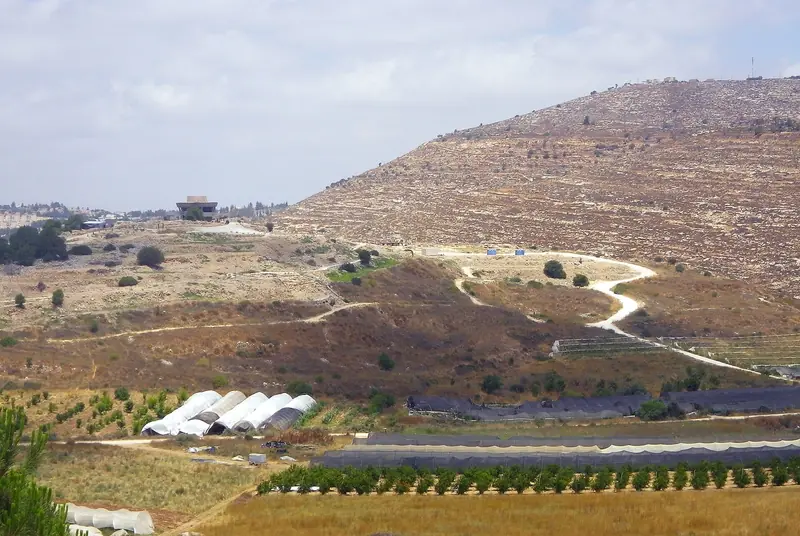
Israel's first great sanctuary according to the Bible: Joshua sets up the Tent of Meeting here, Hannah prays for a son, and Samuel grows up beside the priest Eli.
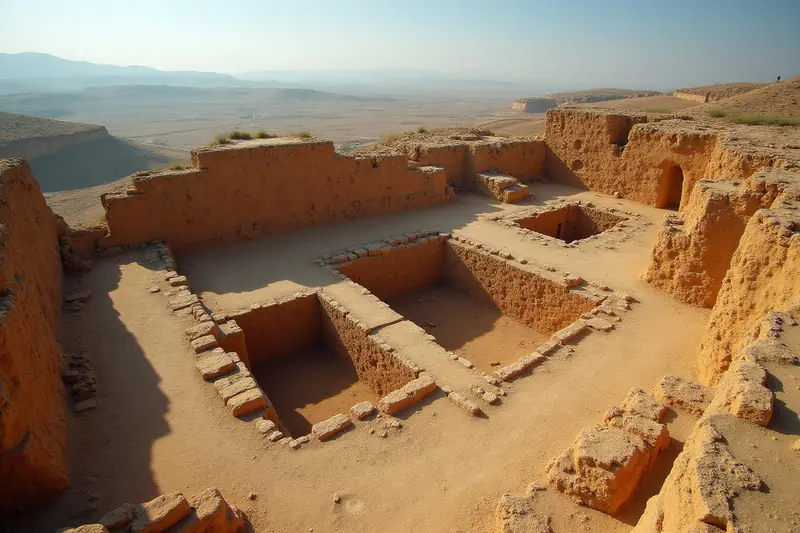
At Dothan, Joseph is thrown into a pit by his jealous brothers and then sold to a caravan bound for Egypt: a turning point in Genesis that seals his destiny.
A sacred site venerated by the three monotheistic religions, the traditional burial place of Abraham, Isaac and Jacob.
 Ancient EgyptJoseph and Imhotep: One and the Same Man?The Famine Stela, the Saqqara galleries, the canal of Joseph: the theory that identifies the biblical Joseph with the sage Imhotep, its case and its limits.Read the article →
  PatriarchsAbraham: Father of Monotheism and Founding FigureFrom Ur of the Chaldees to Hebron: Abraham's journey according to Genesis, his place in the three monotheistic faiths and what archaeology can say.Read the article →
 Shechem is the site of Tel Balata, on the eastern edge of Nablus, in the pass between Mount Ebal and Mount Gerizim, about 50 km north of Jerusalem. GPS coordinates and Waze, Google Maps and Apple Maps links are in the "Getting there & GPS" section. Check access conditions and local guidance before you set off.
Cyclopean ramparts, two monumental gates, towers, the fortress-temple and its standing stones, plus occupation levels from the Bronze to the Iron Age. Information panels line the route and the tell offers fine views of Mount Ebal and Mount Gerizim. Allow 60 to 90 minutes.
Because, according to Genesis 12:6-7, Shechem is the first place in Canaan where God appears to Abram and where he builds an altar. He builds a second one between Bethel and Ai (Genesis 12:8), then another at Hebron, by the oaks of Mamre (Genesis 13:18).
No. No remains allow Abraham's altar or the "oaks of Moreh" to be identified. Tel Balata does, however, confirm that an important city stood at Shechem in the Middle Bronze Age, the period in which the patriarchs are traditionally placed.
The site is debated: some see an ancient altar compatible with early Israelite worship; others see an agricultural or ritual structure of a different kind. It should be presented as a debated hypothesis, not as a certainty.
No. According to 1 Kings 12:28-29, Jeroboam placed the golden calves at Bethel and Dan. Shechem nevertheless played a major political role at the time: Israel gathered there for Rehoboam, and Jeroboam first made it his residence (1 Kings 12:1, 25).
A few hundred metres from Tel Balata. Jacob's Well lies inside a Greek Orthodox church and is associated with Jesus' meeting with the Samaritan woman (John 4). Joseph's Tomb, venerated by tradition (Joshua 24:32), is a sensitive site with very restricted access.
Shechem is the ancient city whose ruins form Tel Balata. Nablus takes its name from Neapolis, the "new city" founded by the Romans in AD 72 a little further west. In Hebrew, the modern city is still called Shekhem.
"God, the God of Israel" (or "El is the God of Israel"). Jacob, who has just received the name Israel at Peniel (Genesis 32:28), proclaims through the name of his altar at Shechem that the God of his fathers is now his own God.
According to Genesis 34, Dinah, Jacob's daughter, is taken and violated by Shechem, son of Hamor. Her brothers Simeon and Levi take revenge by killing the men of the city. Jacob condemns the violence, then leaves Shechem for Bethel (Genesis 35).