
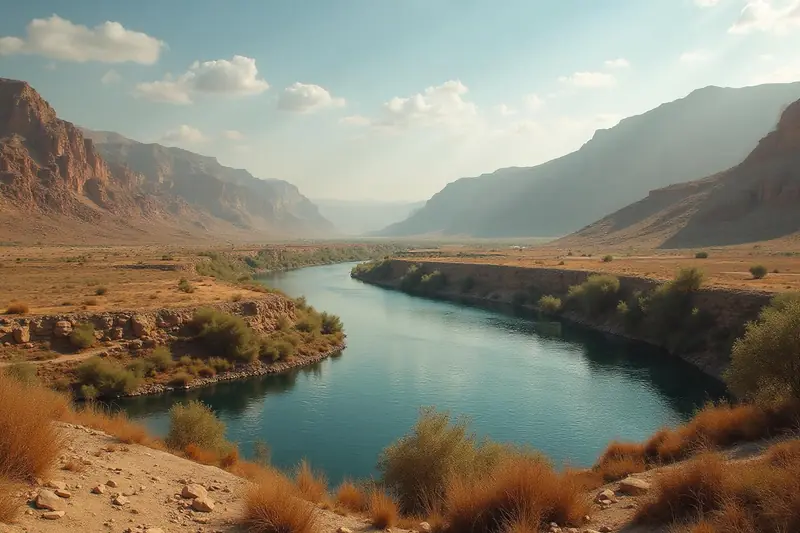
Peniel: Jacob Wrestling with the Angel
At the ford of the Jabbok, Jacob wrestles all night with a mysterious opponent. He comes away wounded, blessed and bearing a new name: Israel.
Biblical period: The Patriarchs
At Bethel, Jacob has one of the Bible's greatest spiritual experiences: a dream in which a ladder joins earth to heaven.
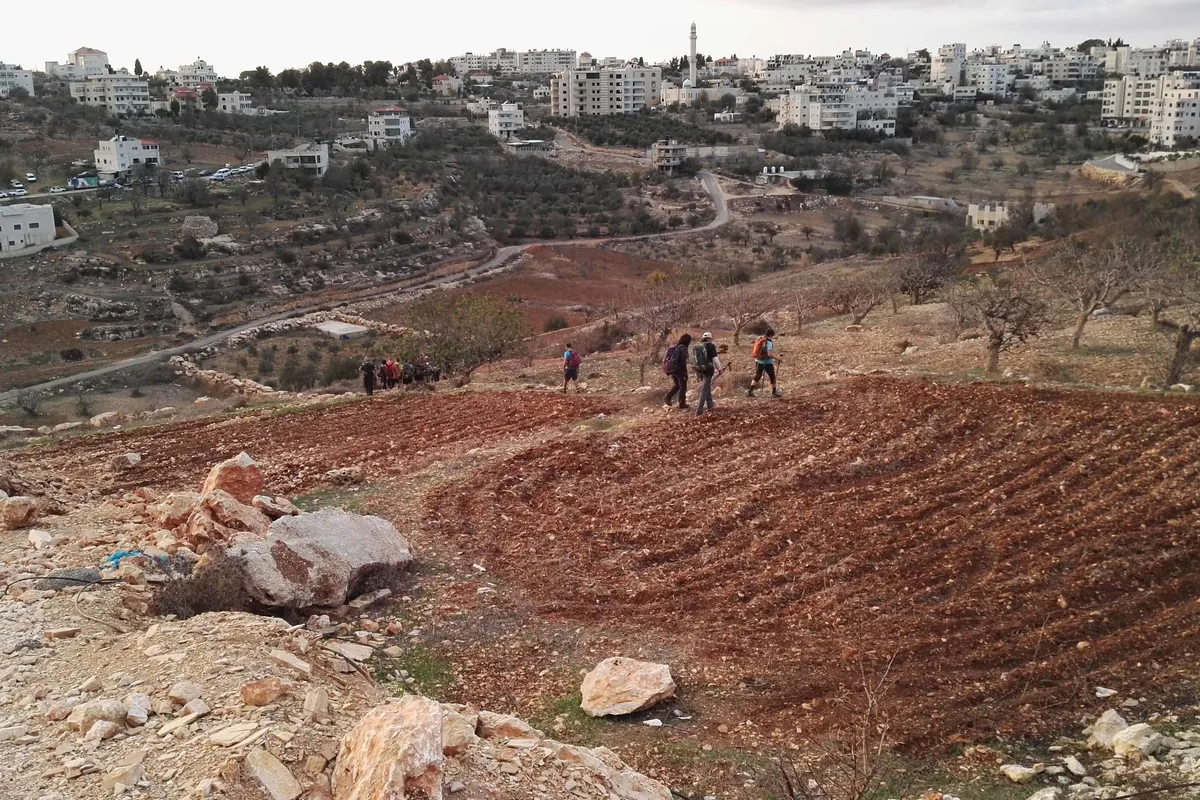
At Bethel — the "house of God", generally identified with the village of Beitin, north of Jerusalem — Jacob has one of the Bible's greatest spiritual experiences: Jacob's dream, in which a ladder joins earth to heaven and the angels of God ascend and descend on it (Genesis 28:10-22).
Fleeing Esau, alone on the road to Haran, Jacob discovers here that God has not abandoned him. Jacob's ladder becomes a symbol of God's presence in the midst of exile, and Bethel the starting point of his spiritual journey — a place where, before him, Abraham had already built an altar.
History & Bible
Bible story
"And Jacob went out from Beer-sheba, and went toward Haran. And he lighted upon a certain place, and tarried there all night, because the sun was set; and he took of the stones of that place, and put them for his pillows, and lay down in that place to sleep."
Genesis 28:10-11 (KJV)
Jacob leaves Beersheba, the home of his father Isaac, alone and anxious: having obtained the blessing intended for his brother (Genesis 27), he is fleeing Esau's anger and heading for Haran, to his uncle Laban. On the way, he stops to sleep in the open, his head resting on a stone.
This moment of solitude becomes the place of a divine revelation.
Bible story
"And he dreamed, and behold a ladder set up on the earth, and the top of it reached to heaven: and behold the angels of God ascending and descending on it."
Genesis 28:12 (KJV)
Jacob glimpses the link between the visible world and the spiritual world. The ladder symbolises communication between God and humankind; it also confirms that God is watching over him, even in exile. The Hebrew word sullam, found only here in the Bible, may denote a stairway or ramp, like those of the stepped temples of Mesopotamia.
🪜 The symbolism of the ladder
Bethel becomes the bridge between heaven and earth, the place where God comes down into human life.
Bible story
"I am the LORD God of Abraham thy father, and the God of Isaac: the land whereon thou liest, to thee will I give it, and to thy seed."
Genesis 28:13 (KJV)
God renews to Jacob the promise made to Abraham and Isaac: blessing, descendants as numerous "as the dust of the earth", and possession of the land (Genesis 28:14).
This time, however, the promise is personal: God speaks directly to Jacob and assures him of His presence wherever he goes.
"And, behold, I am with thee, and will keep thee in all places whither thou goest, and will bring thee again into this land; for I will not leave thee, until I have done that which I have spoken to thee of."
Genesis 28:15 (KJV)
Bible story
On waking, Jacob exclaims: "How dreadful is this place! this is none other but the house of God, and this is the gate of heaven" (Genesis 28:17).
"And Jacob rose up early in the morning, and took the stone that he had put for his pillows, and set it up for a pillar, and poured oil upon the top of it. And he called the name of that place Bethel: but the name of that city was called Luz at the first."
Genesis 28:18-19 (KJV)
Jacob marks this sacred place by setting up a standing stone (matzevah), a witness to the renewed covenant, and names it Bethel, "house of God". He also makes a vow there: if God keeps him and brings him back in peace, "then shall the LORD be my God", and he will give Him a tenth of all he receives (Genesis 28:20-22).
✨ A first direct revelation
This is where God reveals Himself directly to Jacob for the first time, marking the start of his spiritual journey.
History
Twenty years later, in Laban's house, God introduces Himself to Jacob as "the God of Bethel, where thou anointedst the pillar" (Genesis 31:13). After the tragedy at Shechem, Jacob returns to Bethel at God's command (Genesis 35): he purifies his household, builds an altar there which he calls El-beth-el, and God confirms his name Israel (Genesis 35:7-15). Deborah, Rebekah's nurse, is buried below Bethel under the "oak of weeping" (Allon-bacuth, Genesis 35:8).
Bethel later becomes a major centre of worship in Israel, even before Jerusalem: the ark stands there in the time of the Judges, and Jeroboam later founds a royal sanctuary there (1 Kings 12:28-29).
🤝 God's faithfulness
This place stands for God's faithfulness: even when Jacob goes far away, God keeps the bond — and the promise to bring him back (Genesis 28:15) is fulfilled at Bethel itself.
Archaeology
Ancient Bethel is generally identified with Beitin, about 17 km north of Jerusalem. Excavations by W. F. Albright and J. L. Kelso (1934, 1954-1960) uncovered Middle Bronze Age walls and a gate, Late Bronze and Iron Age settlement, and Byzantine remains. By its nature, no material trace can be linked to Jacob's dream: the story belongs to religious memory rather than to archaeology.
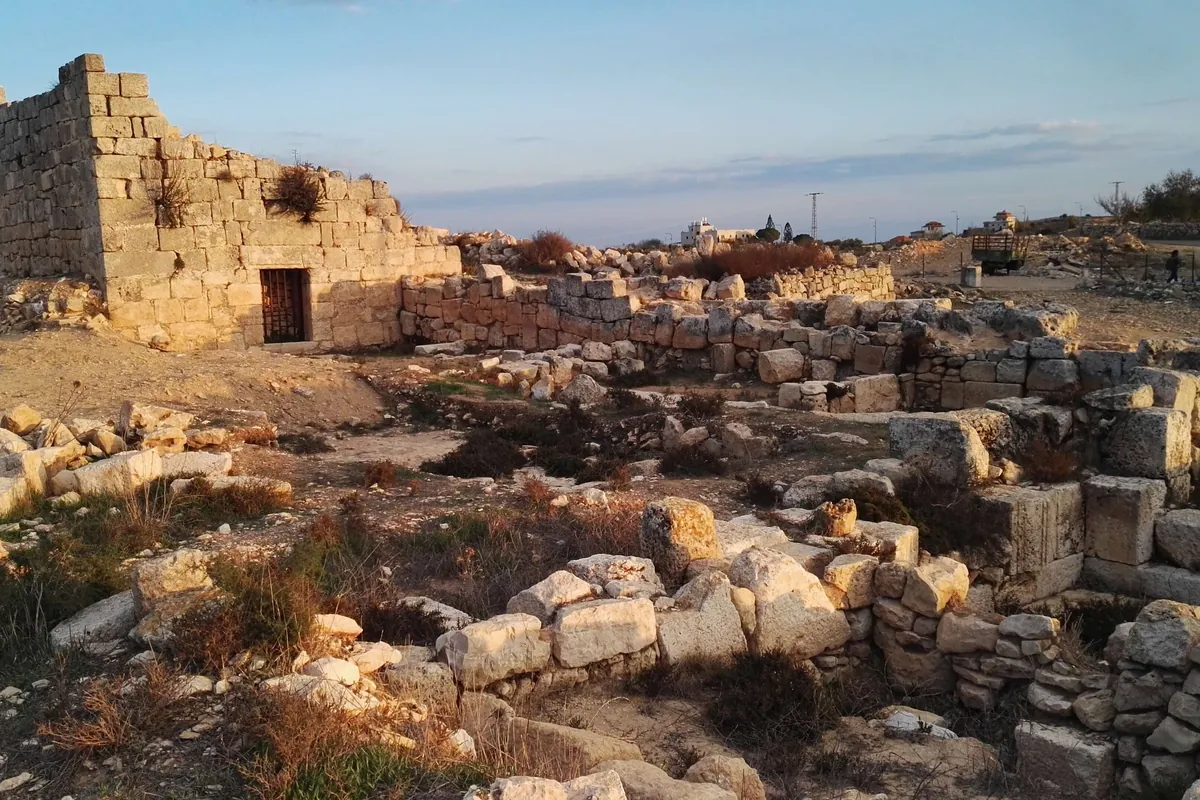
The excavations, the debated identifications and the later history of the sanctuary are covered on the Bethel archaeology page.
Visit the place
This story takes place at Bethel. The place page gathers the archaeology, GPS access and visiting tips.
 Beitin, near RamallahBethel – Abraham's Altar Between Bethel and AiAfter Shechem, Abraham builds an altar "between Bethel and Ai" and calls on the name of the LORD, then returns there after his stay in Egypt (Genesis 12:8; 13:1-4).View site →
Around the site
At the ford of the Jabbok, Jacob wrestles all night with a mysterious opponent. He comes away wounded, blessed and bearing a new name: Israel.
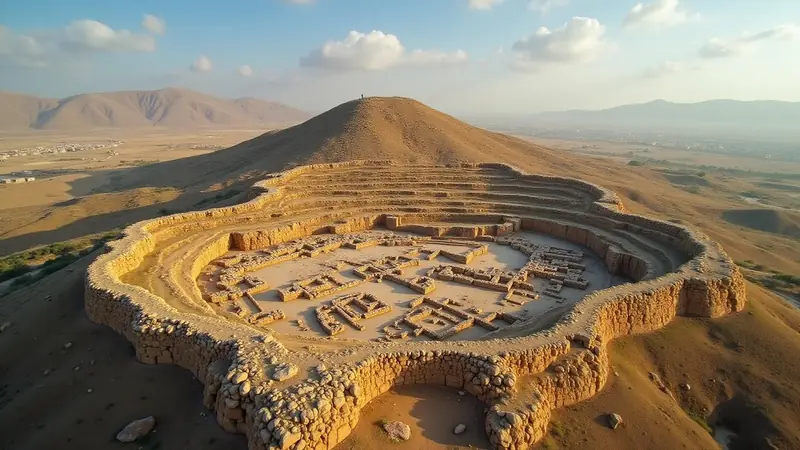
Between Mount Ebal and Mount Gerizim, the place of God's first promise and Abraham's first altar in the Promised Land (Genesis 12:6-7).
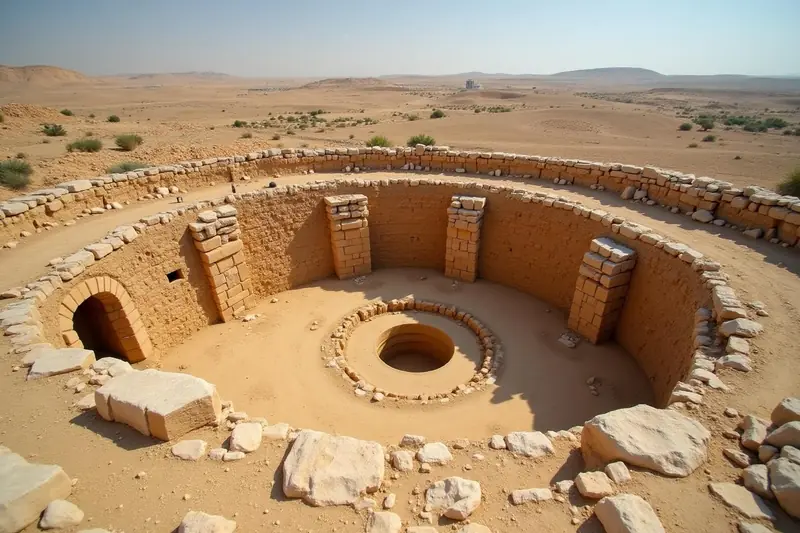
At Beersheba, Abraham seals a covenant with Abimelech over a well, plants a tamarisk and calls on the name of the Everlasting God.
According to the story, Jacob simply stops there because the sun has set (Genesis 28:11). This chance halt becomes a place of revelation: tradition sees in it God's choice to reveal His presence to him and renew the covenant of his fathers.
"House of God", Beit El in Hebrew. On waking, Jacob exclaims: "this is none other but the house of God, and this is the gate of heaven" (Genesis 28:17). The town was formerly called Luz.
The link between the earthly and the divine world. Jewish tradition reads it as God protecting Jacob in exile and as an image of prayer rising upwards; Christian tradition connects it with John 1:51. The Hebrew word sullam may mean a stairway rather than a ladder.
The Bible places it near Luz, renamed Bethel, generally identified with Beitin. A rabbinic tradition links "the place" with Mount Moriah. No archaeological evidence allows the dream to be located precisely.
No trace of it is known. A medieval legend identifies it with the "Stone of Scone", on which Scottish kings were crowned, but that stone is a sandstone of Scottish origin.
Yes. After his years with Laban and the tragedy at Shechem, God tells him to go up to Bethel (Genesis 35:1). There he builds the altar El-beth-el and God confirms his name Israel.
Beitin, in Judea and Samaria, preserves scattered ancient remains and offers a panorama over the central highlands. Check access conditions before you go, and do not confuse the site with the modern settlement of Beit El.