
In brief
In October 2025, the Israel Antiquities Authority announced the discovery, at the foot of the Western Wall, of a clay bulla bearing an inscription in Akkadian cuneiform. It is the first Assyrian inscription from the First Temple period ever found in Jerusalem.
- The fragment is barely 2.5 cm across and dates from the late 8th to the mid-7th century BCE.
- Its clay comes from the Tigris basin: the bulla was made in Assyria and then sent to Jerusalem.
- It sheds light on the Assyrian pressure on Judah described in Kings and Isaiah, under Hezekiah, Manasseh or Josiah.
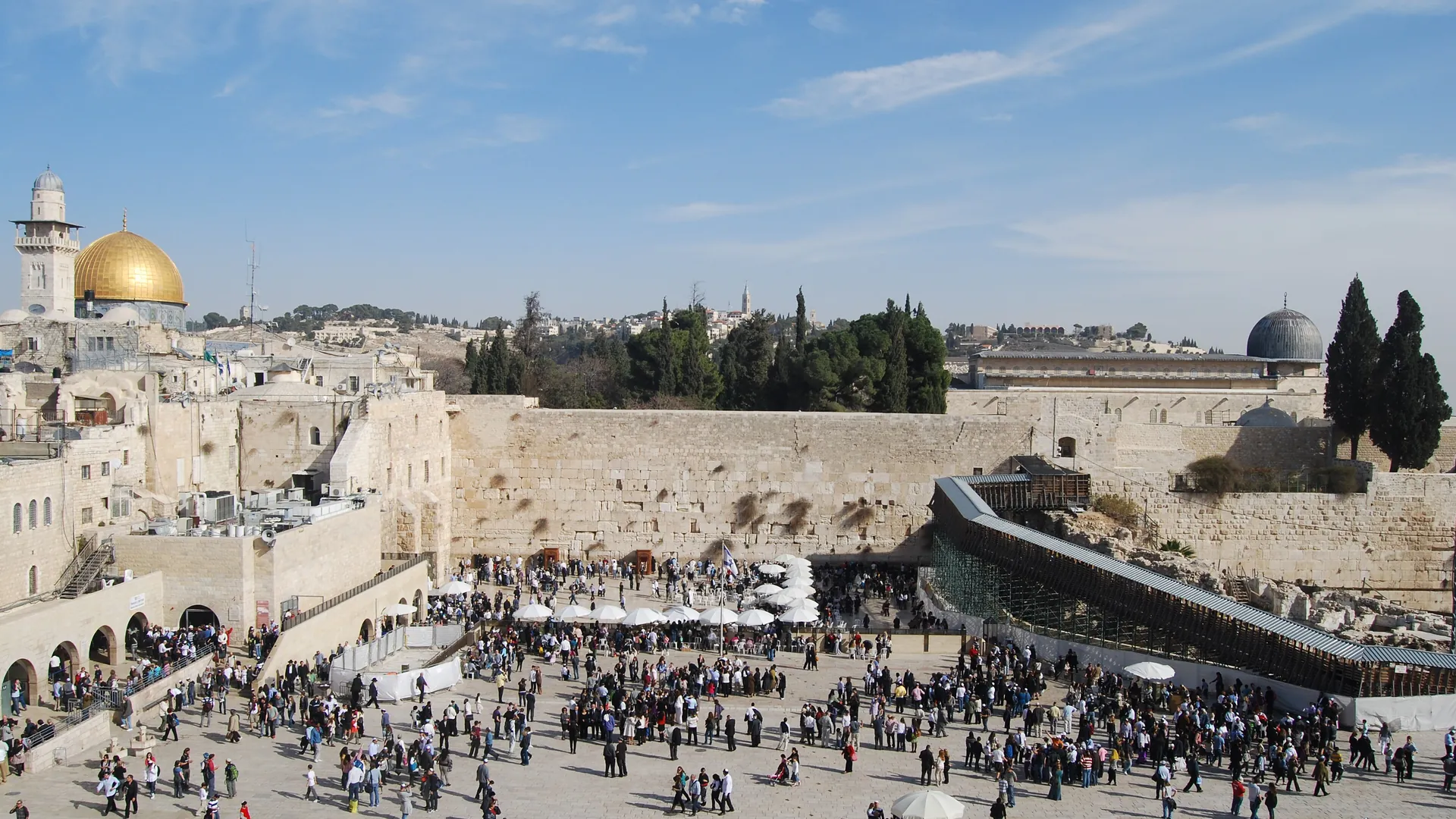
In October 2025, the Israel Antiquities Authority (IAA) and the City of David Foundation announced an exceptional find: a fragment of a bulla — a clay sealing — bearing an inscription in Akkadian cuneiform, discovered at the foot of the Western Wall near the Temple Mount. Dated to the First Temple period (late 8th to mid-7th century BCE), this Assyrian seal is the first Assyrian inscription from that period ever found in Jerusalem.
Tiny — barely 2.5 cm across — it provides rare written evidence of official relations between the Kingdom of Judah and the Assyrian Empire, which the Bible describes in the books of Kings and Isaiah.
A Rare Find at the Foot of the Temple Mount
The fragment comes from excavations in the Davidson Archaeological Park, along the Western Wall and north of the City of David. Directed for the IAA by Dr Ayala Zilberstein, the dig reached an impressive First Temple-period building, in an area close to the great Second Temple-period drainage channel where that channel had not survived.
The excavated soil was then wet-sifted as part of the "Archaeological Experience" project in the Emek Tzurim National Park. That is where this small inscribed clay fragment was spotted — a fine illustration of why systematic sifting matters in urban archaeology.
🧩 In brief
A 2.5 cm clay fragment, inscribed in Akkadian and sent from Assyria: direct evidence of an administrative channel between the Assyrian Empire and the Kingdom of Judah, in the heart of Jerusalem.
What the Inscription Says
The text, written in Akkadian — the diplomatic and administrative language of the Assyrian Empire — was deciphered by the Assyriologist Peter Zilberg (Bar-Ilan University) together with Filip Vukosavović. Though very fragmentary, it mentions:
- a late payment, probably a tax or tribute;
- a date: the first day of the month of Av (the Babylonian month Abu, whose name was later adopted by the Hebrew calendar);
- the title of an Assyrian officer, "the one who holds the reins", a high-ranking official connected with the royal court, known from Assyrian sources and responsible for delivering official messages.
Researchers believe it is most likely a fragment of an inscribed royal sealing that accompanied an official document or consignment sent to Jerusalem: a kind of imperial "tax notice".
Clay from Assyria
Petrographic analysis, carried out by Dr Anat Cohen-Weinberger (IAA) with the Geological Survey of Israel, shows that the clay does not come from Jerusalem. Its mineral composition matches the geology of the Tigris basin, home to the great Assyrian cities: Nineveh, Ashur or Nimrud (ancient Kalhu). The bulla was therefore made in Assyria before being sent to Jerusalem.
This detail is crucial: this is not a local copy or a scribal exercise, but an object dispatched from the heart of the empire to the capital of Judah.
Judah Under Assyrian Domination
At the end of the 8th century BCE, Assyria dominated the Near East. The northern Kingdom of Israel fell in 722–720 BCE; the smaller Kingdom of Judah became a vassal and had to pay tribute. King Ahaz had already placed himself under the protection of Tiglath-Pileser III (2 Kings 16:7-8). His son Hezekiah rebelled: in 701 BCE, Sennacherib laid waste the cities of Judah, including Lachish, and threatened Jerusalem.
"And Hezekiah king of Judah sent to the king of Assyria to Lachish, saying, I have offended; return from me: that which thou puttest on me will I bear. And the king of Assyria appointed unto Hezekiah king of Judah three hundred talents of silver and thirty talents of gold."
2 Kings 18:14 (KJV)
Sennacherib's annals, inscribed on clay prisms, tell the same campaign from the Assyrian side: the king claims to have shut Hezekiah up in Jerusalem "like a bird in a cage". Sennacherib was later murdered by two of his sons, who escaped "into the land of Ararat" (2 Kings 19:37), the kingdom of Urartu around Mount Ararat. Under Manasseh, Hezekiah's son, Judah became a loyal vassal again: his name appears among the tributary kings in the inscriptions of Esarhaddon and Ashurbanipal.
The bulla belongs to this context. According to the researchers, it may date from the reign of Hezekiah, of Manasseh, or even the early reign of Josiah. A late payment naturally brings Hezekiah's revolt to mind, but the surviving fragment names no king, so caution is required.
Why This Discovery Matters
- A first for the First Temple period — it is the first Assyrian inscription from that period found in Jerusalem. A much older fragment of a cuneiform tablet, from the Amarna age (14th century BCE), was discovered on the Ophel in 2010, but it belongs to an entirely different context.
- Written evidence — administrative exchanges between the Assyrian court and Jerusalem were until now known only from the Bible and the Assyrian annals; they are now attested by a document found in the city itself.
- A topographical clue — its discovery near the Temple Mount suggests that official documents circulated in this area, close to royal power and the Temple.
Jerusalem in the First Temple Period
 Old City of JerusalemMount Moriah: Abraham's Test, from the Biblical Story to the Temple MountWhere tradition places Abraham's test now stands the Temple Mount, one of the holiest sites in Judaism and Islam.View site →
The object offers a direct window onto a rapidly expanding Jerusalem at the end of the 8th century BCE. The city spread beyond the City of David onto the western hill, was enclosed by a new rampart — the "Broad Wall" uncovered in the Jewish Quarter — and gained Hezekiah's Tunnel to protect its water supply (2 Kings 20:20). Around the Temple Mount, the Mount Moriah of tradition, stood the Temple and the royal buildings.
The Akkadian bulla complements other evidence of Judahite administration from this period, such as the "lmlk" ("belonging to the king") seal impressions on storage jars and the Hebrew bullae found in the City of David. Together they reveal a centralised state able to maintain a direct diplomatic relationship with the greatest power of its time.
To see the Jerusalem of the First Temple, the City of David can be visited at the foot of the Temple Mount, and Lachish lies in the Shephelah: plan your tour with the City of David and Lachish.
IsraBible Analysis: Between Empire and Faith
This seal illustrates the paradox of Judah: a small kingdom caught in the orbit of great empires, yet holding on to its spiritual calling. While politics imposed tribute, the prophets reminded the people that ultimate trust belonged neither to Assyria nor to Egypt, but to God:
"Woe to them that go down to Egypt for help; and stay on horses, and trust in chariots, because they are many; and in horsemen, because they are very strong; but they look not unto the Holy One of Israel, neither seek the LORD!"
Isaiah 31:1 (KJV)
A simple clay fragment thus meets the biblical text: behind the accounts of tribute and sieges stood very real officials, deadlines and dispatches. To place this discovery in the history of the kingdoms of Israel and Judah, explore our feature on the age of the Judges and Kings.
Sources and references
- City of David — "Rare Ancient Assyrian Inscription Found" (October 2025)
- The Times of Israel — "Biblical tax notice: 1st-ever Assyrian inscription found near Jerusalem's Temple Mount", 22 October 2025
- i24NEWS (French edition) — report on the discovery, 22 October 2025
- E. Mazar, W. Horowitz, T. Oshima and Y. Goren, "A Cuneiform Tablet from the Ophel in Jerusalem", Israel Exploration Journal 60 (2010)
- 2 Kings 16–21 and Isaiah 36–37 (Hebrew text and translations on Sefaria)
Frequently asked questions
Where was the Assyrian bulla found?
In Israel Antiquities Authority excavations in the Davidson Archaeological Park, at the foot of the Western Wall and north of the City of David. The fragment was spotted while the excavated soil was being sifted at Emek Tzurim.
What is a bulla?
A bulla is a small lump of clay pressed to seal a document, a sack or a container, often stamped with a seal. This one also bears a cuneiform inscription, which makes it an administrative document in its own right.
Why is it described as a "first"?
It is the first Assyrian inscription from the First Temple period found in Jerusalem. An older cuneiform fragment, from the Amarna age, had been discovered on the Ophel in 2010.
Which king of Judah is involved?
The surviving fragment names no king. Researchers date it between the late 8th and mid-7th century BCE, covering the reigns of Hezekiah, Manasseh or the early reign of Josiah.
Where does the bulla's clay come from?
Petrographic analysis points to clay from the Tigris basin, the region of the great Assyrian cities such as Nineveh, Ashur or Nimrud. The bulla was therefore made in Assyria and then sent to Jerusalem.
What biblical context does it illuminate?
Assyrian tribute and pressure on Judah, as told in 2 Kings 16–21 and Isaiah 36–37, in particular Sennacherib's campaign against Hezekiah in 701 BCE.
Places to visit
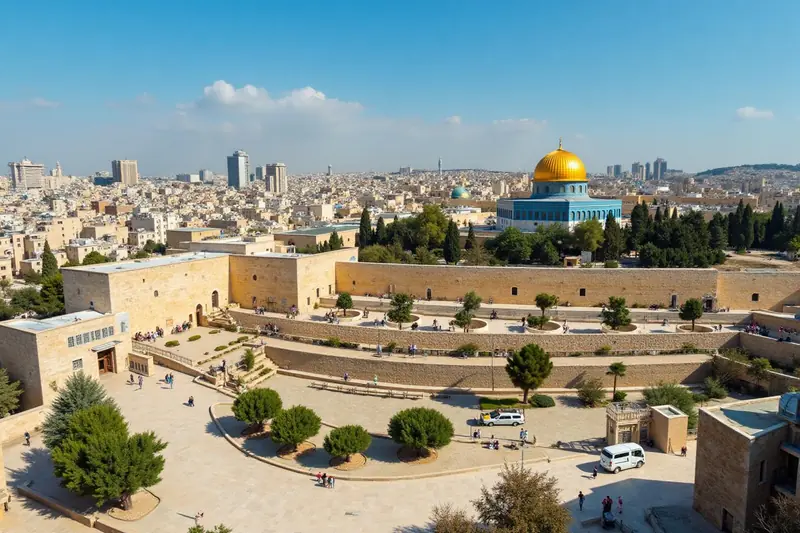
Mount Moriah: Abraham's Test, from the Biblical Story to the Temple Mount
Where tradition places Abraham's test now stands the Temple Mount, one of the holiest sites in Judaism and Islam.
Read next
The Flood Around the World: Ancient Stories and Archaeological Witnesses
India, China, Greece, the Americas, Mesopotamia: flood stories around the world and three ancient tablets that record them, set beside the story of Noah.
Where Was the Garden of Eden? The Four Rivers, Mesopotamia and Hebron
Tigris, Euphrates, the Persian Gulf or Hebron? What Genesis says about the Garden of Eden, what scholars suggest, and the traditions that link it to Israel.