
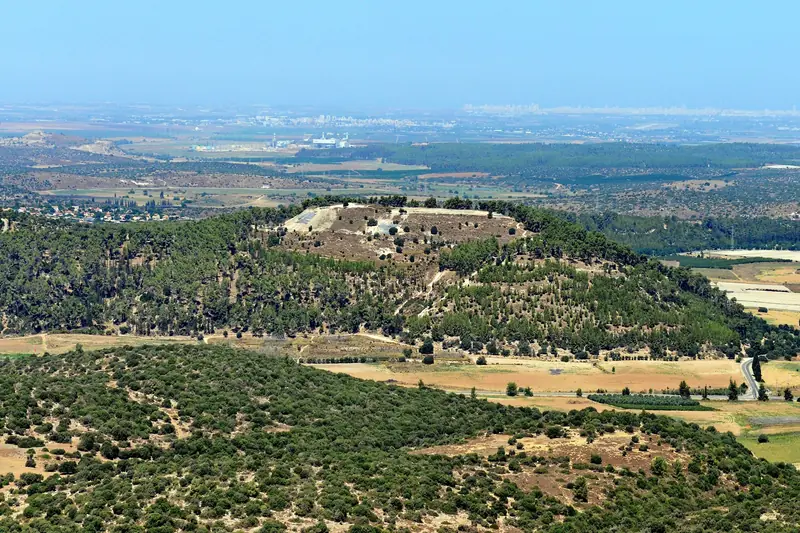
Tel Azekah: The Pursuit of the Amorite Kings (Joshua 10)
On a wooded hill commanding the Valley of Elah, Azekah marks the end of the pursuit of the Amorite kings. Excavations there have revealed a Canaanite city destroyed by fire.
1500–1200 BCE
A royal Canaanite city under Egyptian rule, Lachish is one of the southern cities Joshua is said to have taken. Its excavations tell a more complex, and longer, story.
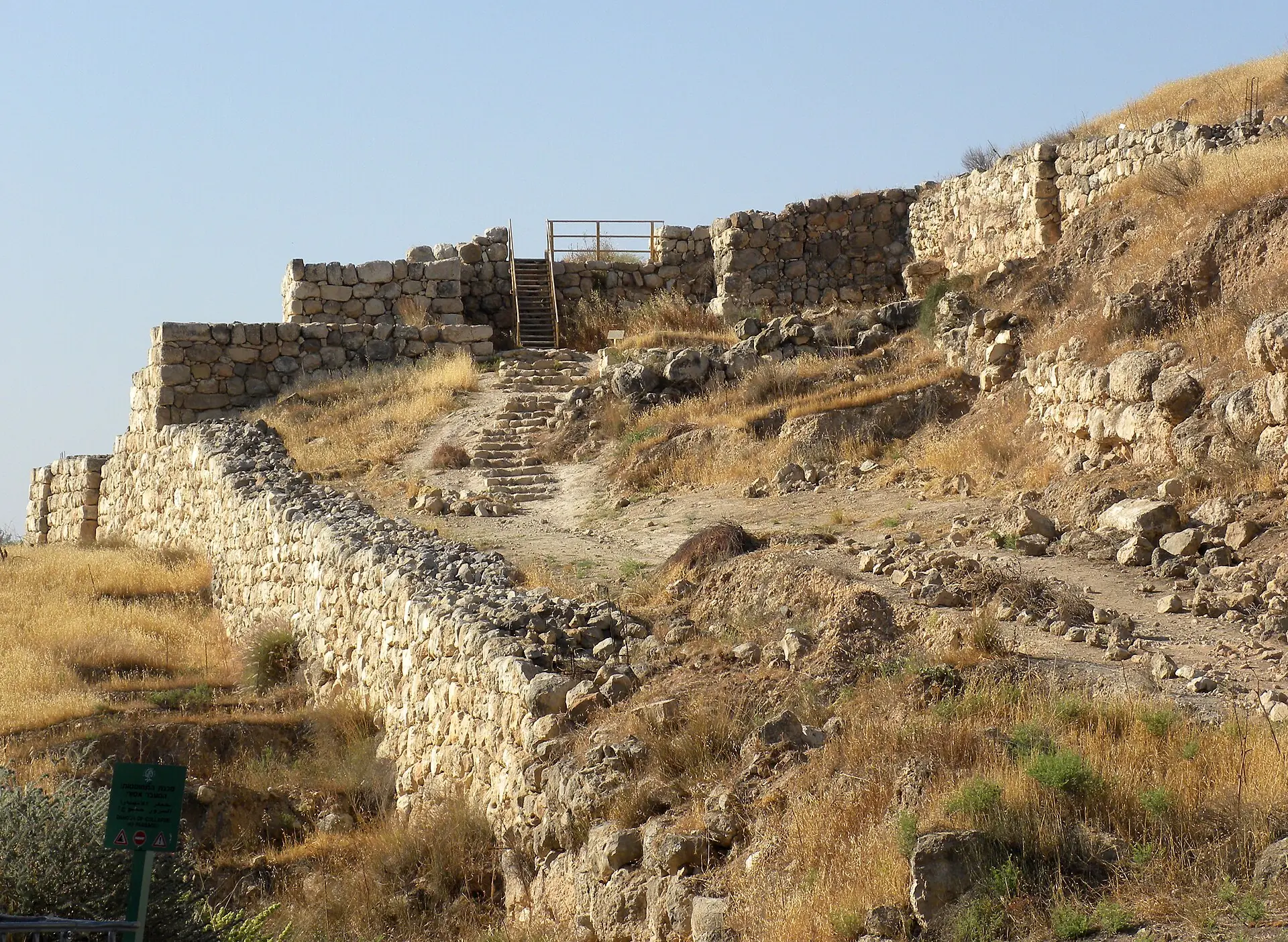
Credit: Wilson44691 · CC BY-SA 3.0 · Wikimedia Commons
Tel Lachish (Lakish, Tell ed-Duweir in Arabic) is one of the largest mounds in the Shephelah, the low hills between the coastal plain and the Judean mountains. In the Late Bronze Age it was a Canaanite city-state ruled by a local king and subject to Egypt. The Book of Joshua lists it among the five Amorite cities that joined forces against Gibeon, then describes how it was taken "on the second day" (Joshua 10:31-32).
On the ground, archaeology reveals a prosperous Canaanite city, rich in temples and Egyptian objects, which was destroyed by fire around 1150–1130 BCE, later than the dates usually proposed for Joshua. This page separates the biblical account, what the excavations show and what you can see today in the national park, where most of the visible remains belong to the later city of Judah.
After Joshua makes a treaty with the Gibeonites, Adoni-zedek, king of Jerusalem, calls on four southern kings to punish Gibeon. The king of Lachish is named Japhia.
"Wherefore Adoni-zedek king of Jerusalem sent unto Hoham king of Hebron, and unto Piram king of Jarmuth, and unto Japhia king of Lachish, and unto Debir king of Eglon, saying:"
Joshua 10:3 (JPS 1917)
וַיִּשְׁלַח אֲדֹנִי־צֶדֶק מֶלֶךְ יְרוּשָׁלִַם אֶל־הוֹהָם מֶלֶךְ־חֶבְרוֹן וְאֶל־פִּרְאָם מֶלֶךְ־יַרְמוּת וְאֶל־יָפִיעַ מֶלֶךְ־לָכִישׁ וְאֶל־דְּבִיר מֶלֶךְ־עֶגְלוֹן לֵאמֹר
יהושע י, ג
The five armies besiege Gibeon; Joshua routs them and pursues them by the ascent of Beth-horon as far as Azekah and Makkedah (Joshua 10:10). The five kings hide in a cave at Makkedah, where they are captured and put to death (Joshua 10:16-27).
The narrative then moves quickly through a southern campaign: Makkedah, Libnah, then Lachish, Eglon, Hebron and Debir. Lachish is the only city in this account whose capture is explicitly placed "on the second day".
"And Joshua passed from Libnah, and all Israel with him, unto Lachish, and encamped against it, and fought against it. And the LORD delivered Lachish into the hand of Israel, and he took it on the second day, and smote it with the edge of the sword, and all the souls that were therein, according to all that he had done to Libnah."
Joshua 10:31-32 (JPS 1917)
וַיַּעֲבֹר יְהוֹשֻׁעַ וְכָל־יִשְׂרָאֵל עִמּוֹ מִלִּבְנָה לָכִישָׁה וַיִּחַן עָלֶיהָ וַיִּלָּחֶם בָּהּ. וַיִּתֵּן יְהוָה אֶת־לָכִישׁ בְּיַד יִשְׂרָאֵל וַיִּלְכְּדָהּ בַּיּוֹם הַשֵּׁנִי וַיַּכֶּהָ לְפִי־חֶרֶב וְאֶת־כָּל־הַנֶּפֶשׁ אֲשֶׁר־בָּהּ כְּכֹל אֲשֶׁר־עָשָׂה לְלִבְנָה
יהושע י, לא-לב
The next verse adds that Horam, king of Gezer, came up to help Lachish and was defeated (Joshua 10:33). The king of Lachish then appears in the list of defeated kings (Joshua 12:11), and the city is allotted to the tribe of Judah, in the Shephelah (Joshua 15:39).
📖 What the text does not say
Joshua 10 does not mention Lachish being burned. The book even states that Israel burned none of the cities "that stood on their mounds", save Hazor (Joshua 11:13). This detail matters when the account is compared with the destruction layers found by archaeologists.
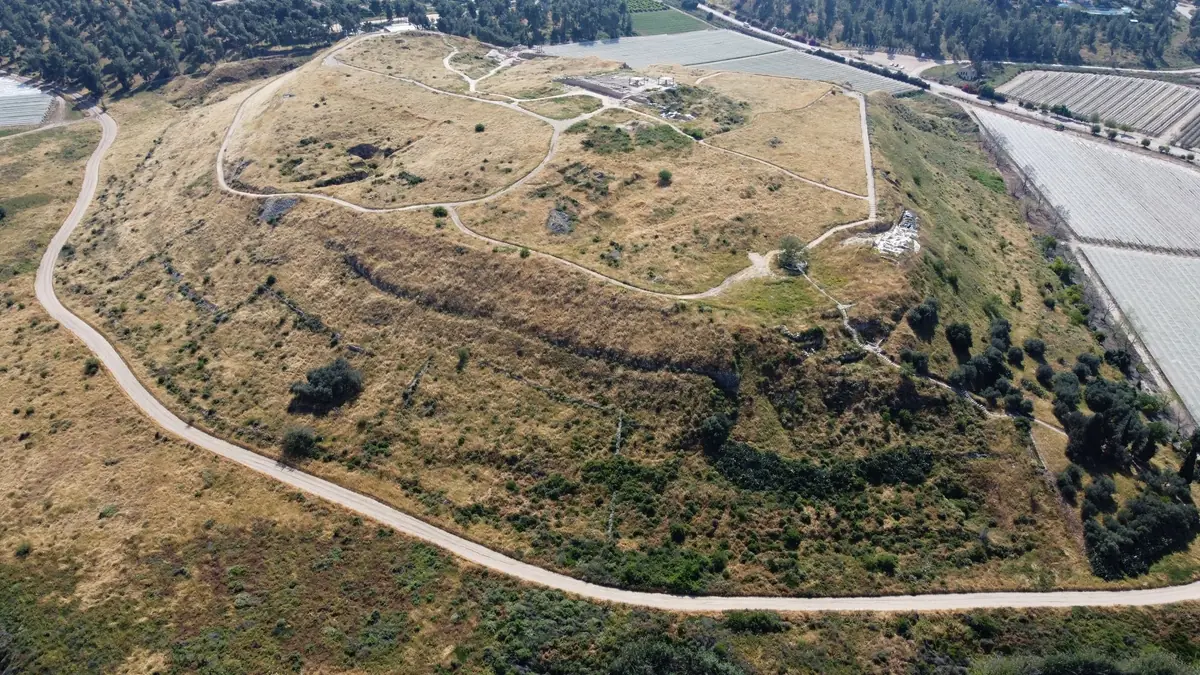
The site's outline, with its steep slopes and sharp corners, goes back to the Middle Bronze Age (17th–16th century BCE). A huge bank of earth and stones, a glacis, then surrounded the fortified city. That city was destroyed in the mid-16th century BCE; Lachish slowly revived in the Late Bronze Age (c. 1550–1200 BCE) and became one of the most prosperous cities of southern Canaan.
In the 14th century BCE, the Amarna letters, a diplomatic correspondence in Akkadian found in Egypt, mention Lachish several times. Rulers of the city, among them Zimreddi (or Zimrida) and Shipti-Baal, write to Pharaoh to assure him of their loyalty. Abdi-Heba, king of Jerusalem, reports for his part that Zimreddi was killed by his own servants. These tablets show a land split into small rival principalities, all vassals of Egypt: the same political background that the coalition of Joshua 10, with its five kings of neighbouring cities, assumes.
In the 1930s the British expedition uncovered, at the north-western foot of the mound, a sanctuary built in the old moat of the Middle Bronze Age fortifications: the Fosse Temple. Enlarged in three phases between the 15th and 13th centuries BCE, it yielded hundreds of vessels, jewellery and offerings, as well as a jug bearing a short inscription in early alphabetic script. It was destroyed by fire around the end of the 13th or the beginning of the 12th century BCE, together with the Level VII city.
The last Canaanite city, known as Level VI, was large, densely populated and apparently unwalled. On the summit, David Ussishkin's team excavated a temple whose architecture shows strong Egyptian influence. In 2016–2017 the Fourth Expedition found a second 12th-century BCE sanctuary in the north-eastern corner of the mound: two standing stones in the holy of holies, bronze cauldrons, jewellery, scarabs and two bronze "smiting god" figurines with a raised arm, often identified with Baal or Resheph.
The best-documented destruction, that of Level VI, took place after 1200 BCE, in the middle or second half of the 12th century. It is later than both dates usually proposed for Joshua: around 1400 BCE according to the chronology derived from 1 Kings 6:1, or the 13th century according to the "low" chronology. Even the end of Level VII, around 1200, cannot be attributed to any particular group: no inscription or weapon identifies the attackers. Scholars point to conflicts between Canaanite cities, Egypt's withdrawal, the "Sea Peoples" or internal unrest.
⚖️ Narrative and archaeology
Archaeology does not confirm an Israelite capture of Lachish at the end of the Late Bronze Age, nor does it allow the account of Joshua 10 to be dated. Many historians think the chapter was written down much later, under the kings of Judah, when Lachish was the kingdom's second city. Other readers keep a more historical reading of the text. Either way, the ruins visible on the summit are not those of Japhia's city.
What visitors notice first at Tel Lachish belongs to another era, covered in our page on Judges and Kings. Refounded in the Iron Age, Lachish became Judah's main stronghold after Jerusalem, with a double wall, a large gate and a palace-fort built on a podium.
During Hezekiah's revolt against Assyria, Sennacherib besieged and took Lachish; it was to Lachish that Hezekiah sent him his submission (2 Kings 18:14). At the south-western corner of the mound lies the Assyrian siege ramp, a mass of stones piled against the slope and, according to the Parks Authority, the only Assyrian siege ramp known in the Near East. The defenders answered it with a counter-ramp inside the walls.
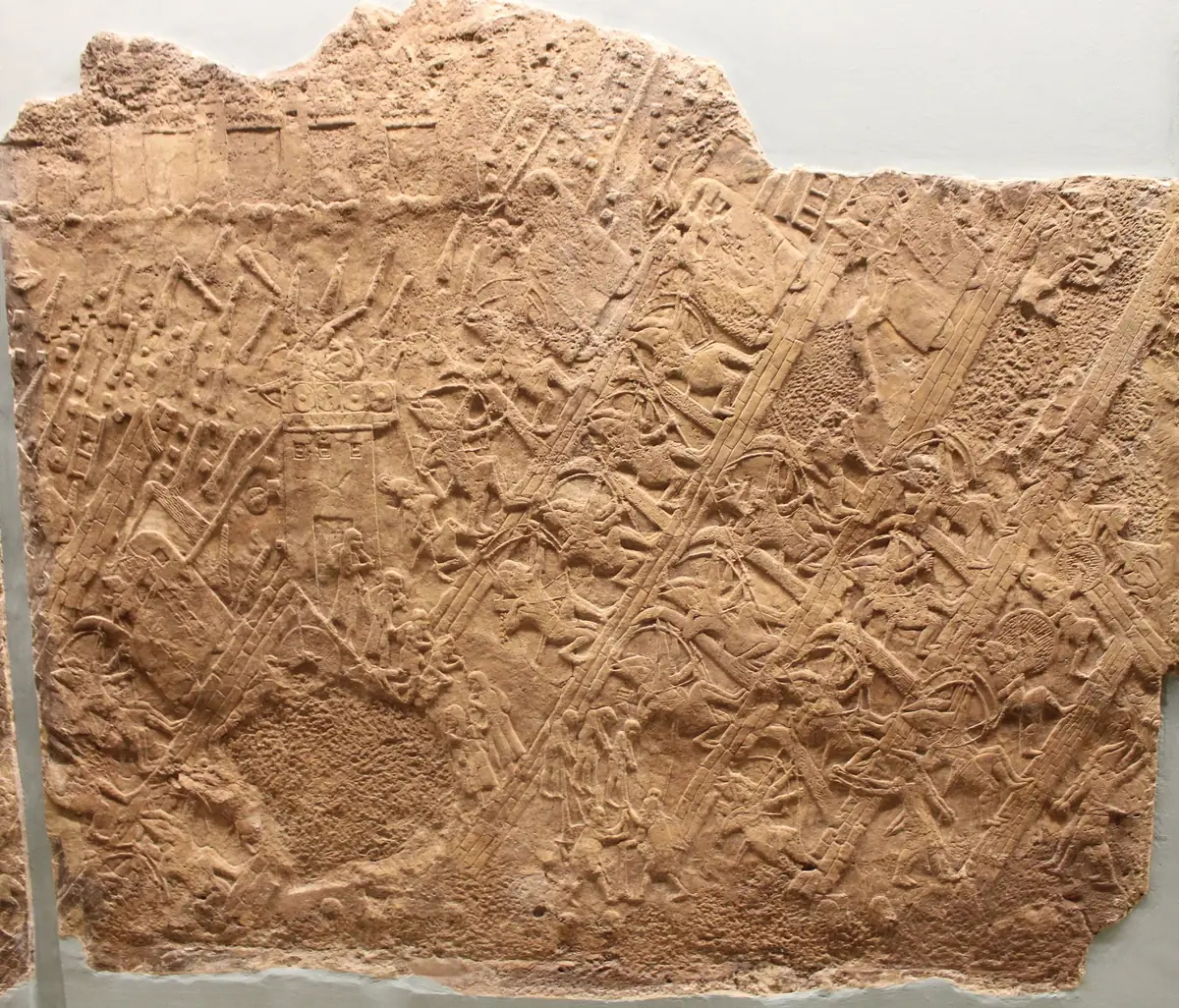
Sennacherib had the assault carved on the walls of a room in his palace at Nineveh. These Lachish reliefs, now in the British Museum in London, show battering rams, archers and the deportation of the inhabitants.
In the gate burned by the Babylonians, Starkey found ostraca in 1935: letters written in ink on potsherds. Letter 4 ends with "we cannot see Azekah", an echo of Jeremiah 34:7, where Lachish and Azekah are the last fortified cities of Judah.
The site is a national park run by the Israel Nature and Parks Authority. A visitor centre screens an introductory film; you then explore the mound on your own along marked paths with recent signage.
Tel Lachish: The Canaanite City Taken by Joshua
Tel Lachish National Park, near Moshav Lakhish, about 5 km south-west of Beit Guvrin (Waze: "Tel Lachish National Park")
GPS coordinates : 31.5655, 34.8492
Start navigation with:
On a wooded hill commanding the Valley of Elah, Azekah marks the end of the pursuit of the Amorite kings. Excavations there have revealed a Canaanite city destroyed by fire.
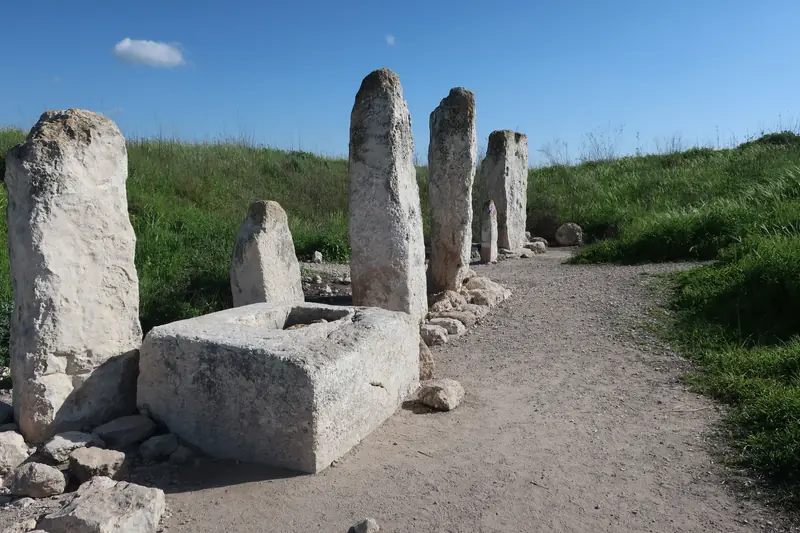
A powerful Canaanite city that the Book of Joshua says was never taken, named by the pharaohs of the Amarna age and by Merneptah, then rebuilt under Solomon.
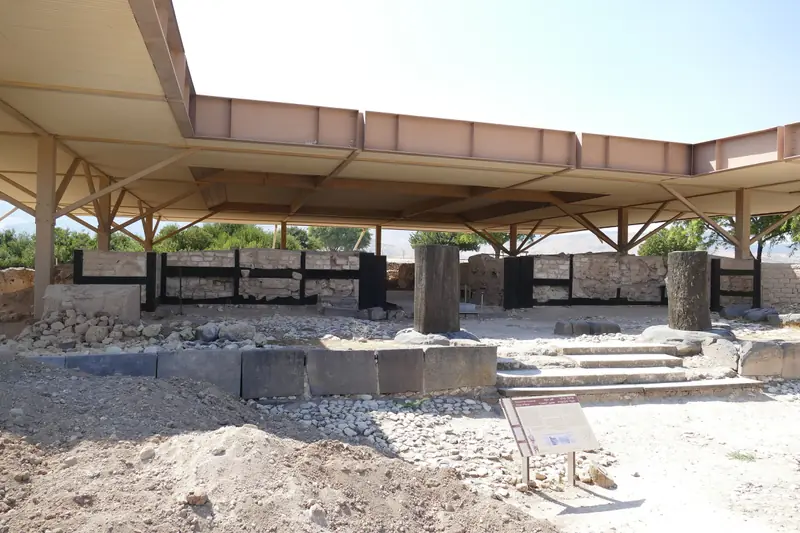
"The head of all those kingdoms": the largest Canaanite city in the land, its destruction by fire and an archaeological debate that is still open.
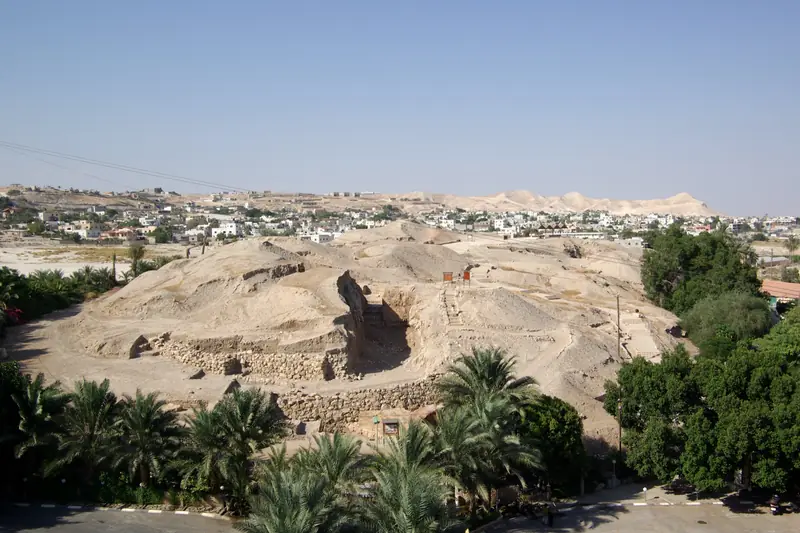
Rahab, the Jordan crossing and the falling walls: the Book of Joshua set against a century of excavation at one of the oldest towns in the world.
Tel Lachish lies in the Shephelah in southern Israel, near Moshav Lakhish, about 5 km south-west of Beit Guvrin and some 40 km south-west of Jerusalem as the crow flies. GPS coordinates are in the "Getting there & GPS" section.
The Book of Joshua says so (Joshua 10:31-32). Archaeology shows two destructions of the Canaanite city, around 1200 and then around 1150–1130 BCE, with no clue as to who caused them. The second, better-dated one is later than the dates proposed for Joshua. The question remains open and also depends on how the account itself is dated.
A Canaanite sanctuary built at the foot of the mound, in the old moat of the Middle Bronze Age fortifications, used in three phases from the 15th to the 13th century BCE. It was excavated in the 1930s and is not set up for visitors.
In the 14th century BCE, rulers such as Zimreddi (Zimrida) and Shipti-Baal wrote to Pharaoh. None of them is called Japhia, the king named in Joshua 10:3; the letters cover only a few decades of the 14th century.
Mainly the city of Judah: the gate, the podium of the palace-fort, the walls, the well and the Assyrian siege ramp of 701 BCE. The Canaanite levels are explained by the signage and the visitor centre film.
The originals, from Sennacherib's palace at Nineveh, are displayed in the British Museum in London. Some of the Lachish letters are kept at the Israel Museum in Jerusalem.