
Tomb of the Patriarchs – Hebron
A sacred site venerated by the three monotheistic religions, the traditional burial place of Abraham, Isaac and Jacob.
Biblical period: The Patriarchs
At Beersheba, Abraham seals a covenant with Abimelech over a well, plants a tamarisk and calls on the name of the Everlasting God.
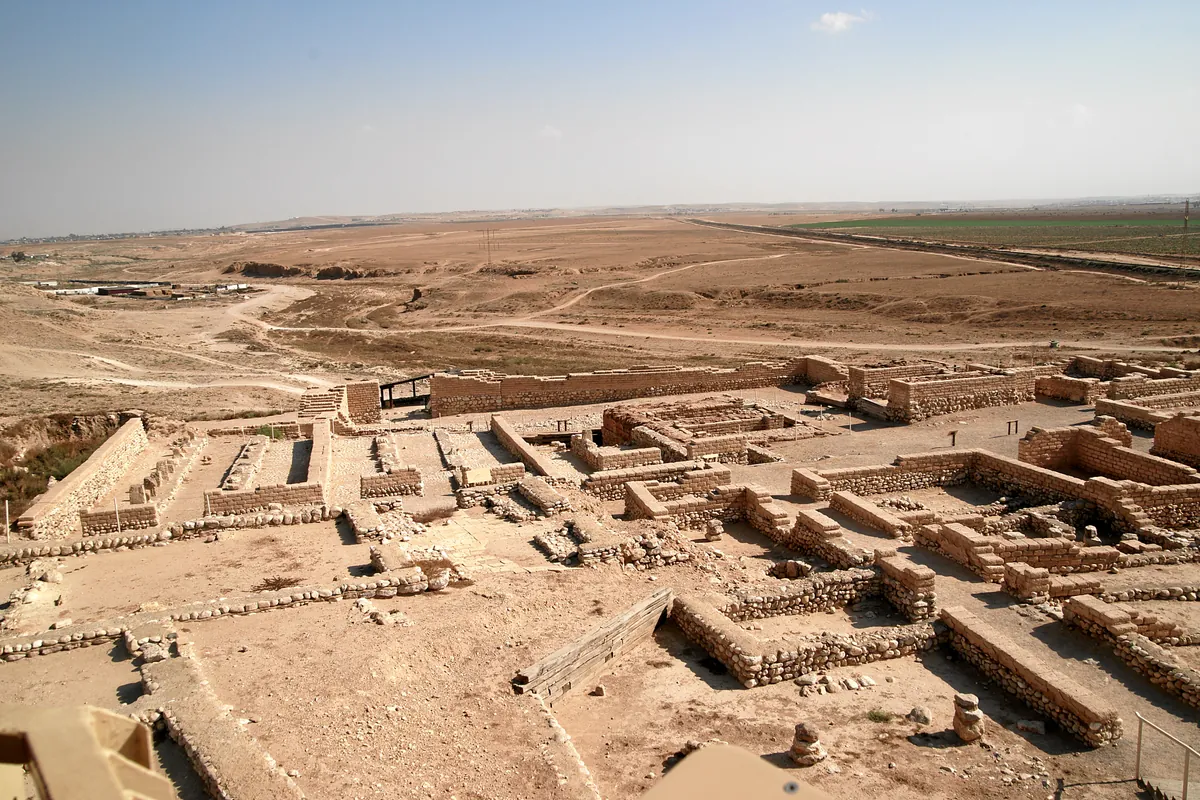
On the edge of the Negev desert, Beersheba (Be'er Sheva in Hebrew) is a key stop on Abraham's journey. It was here that the patriarch made a covenant of peace with Abimelech, king of Gerar, over a disputed well. He gave seven ewe lambs as a pledge of good faith, giving the place its name: the well of the oath, or "well of seven".
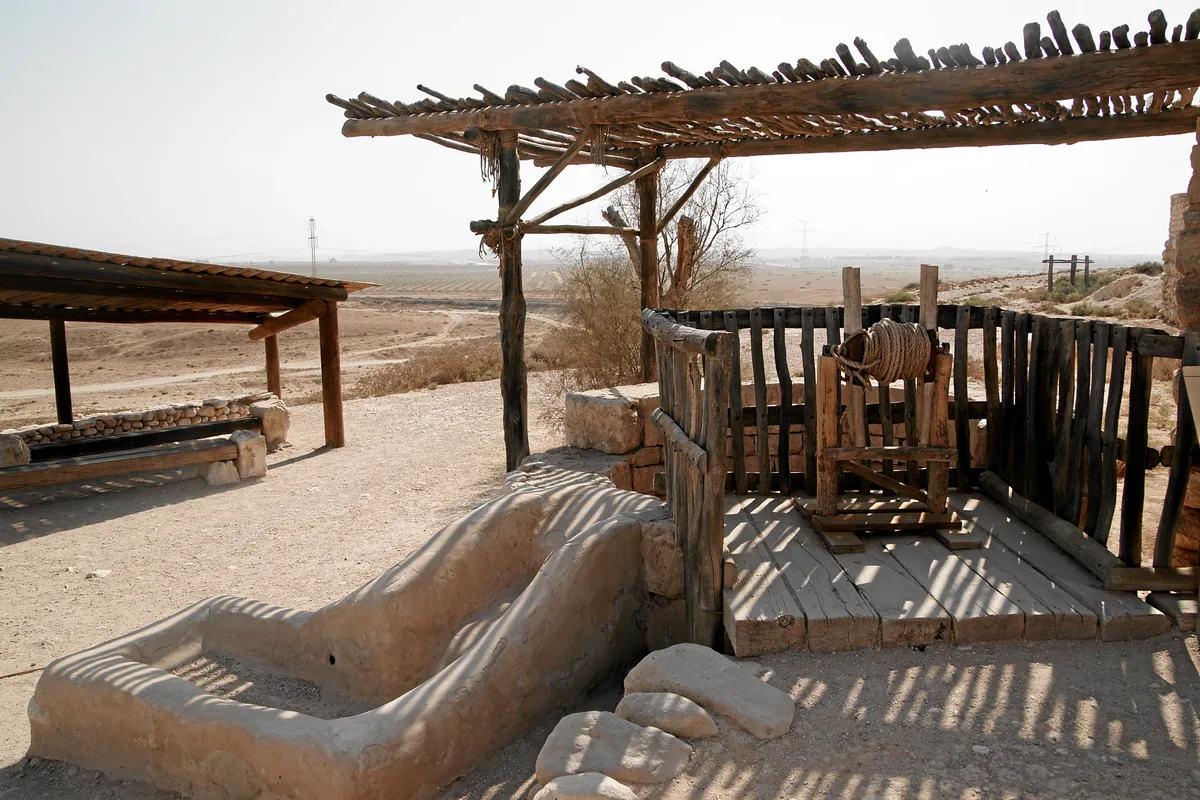
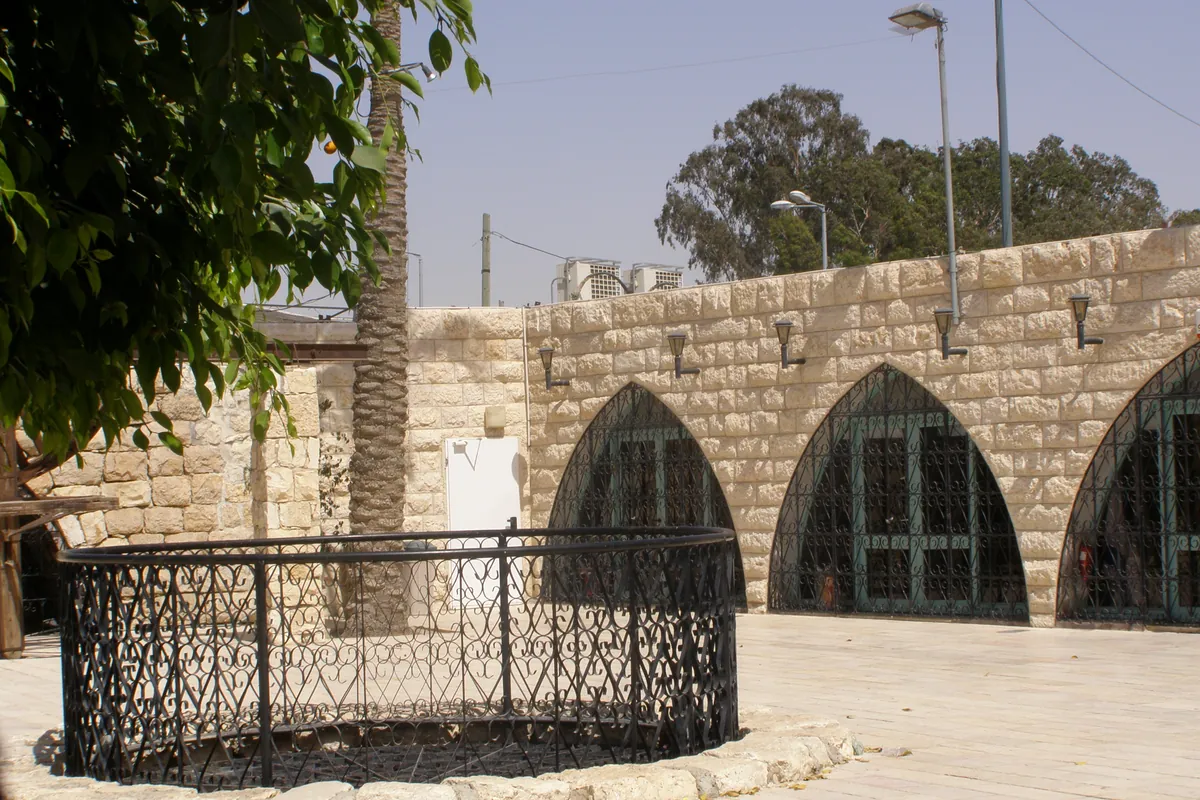
Abraham then planted a tamarisk and called on the name of the LORD, the Everlasting God (Genesis 21:22-34). Today, the Abraham's Well visitor centre in the Old City and the archaeological site of Tel Be'er Sheva, a UNESCO World Heritage Site, keep alive a memory where divine promise meets human ingenuity in the face of the desert.
In brief
History & Bible
Bible story
In Genesis 21:22-34, Abimelech king of Gerar, together with Phichol, the commander of his army, comes to offer Abraham a covenant. Abraham first complains about a well that Abimelech's servants have seized, then sets apart seven ewe lambs and gives them to Abimelech as a sign of good faith.
"For these seven ewe lambs shalt thou take of my hand, that they may be a witness unto me, that I have digged this well."
Genesis 21:30
This is how Beersheba got its name: well of the oath or well of seven.
"Thus they made a covenant at Beersheba: then Abimelech rose up, and Phichol the chief captain of his host, and they returned into the land of the Philistines."
Genesis 21:32
The oath establishes Beersheba as a place of covenant and peace, of mutual recognition between people under the gaze of God. A generation later, Isaac would reopen his father's wells and renew the covenant with Abimelech in this very place (Genesis 26).
Bible story
The name plays on two words from the same root: sheva, "seven", and the verb nishba', "to swear" — perhaps because swearing an oath originally meant "binding oneself by seven". The place name thus points both to the seven lambs and to the oath that was sworn. Beersheba becomes a symbol of a promise sealed in faithfulness and of faith made tangible: a well dug, a word kept.
"Wherefore he called that place Beersheba; because there they sware both of them."
Genesis 21:31
In the time of the Judges and the Kings, Beersheba marked the southern limit of the land: the phrase "from Dan even to Beersheba" means the whole of Israel, from Tel Dan at the springs of the Jordan to the Negev (Judges 20:1; 1 Samuel 3:20).
Bible story
After the oath, Abraham plants a tamarisk (eshel in Hebrew) at Beersheba. Planting a tree in the desert is an affirmation of life in the midst of drought. The Negev tamarisk (Tamarix aphylla), deep-rooted and tolerant of salt, gives precious shade for decades: it becomes the visible sign of an enduring, forward-looking faith.
"And Abraham planted a tamarisk-tree in Beer-sheba, and called there on the name of the LORD, the Everlasting God."
Genesis 21:33 (JPS 1917)
The gesture binds together land, water and faith, turning Beersheba into a sanctuary of a living covenant. Jewish tradition has also read it as an act of hospitality: the Talmud (Sotah 10a) debates whether the eshel was an orchard or an inn, and a later reading sees in its letters the initials of "eating, drinking, lodging" — Abraham welcoming desert travellers.
Bible story
A generation later, Beersheba becomes Isaac's main home. Driven out of Gerar by the envy of the Philistines, who had stopped up the wells dug in Abraham's time, he reopens his father's wells and "called their names after the names by which his father had called them" (Genesis 26:18). In the valley of Gerar his servants dig three wells whose names tell of a passage from conflict to peace: Esek ("contention"), Sitnah ("hostility") and Rehoboth ("wide spaces", 26:20-22). Then "he went up from thence to Beersheba" (26:23).
"I am the God of Abraham thy father: fear not, for I am with thee, and will bless thee, and multiply thy seed for my servant Abraham's sake."
Genesis 26:24
On the very night of his arrival, God renews for the son the promise made to the father. Isaac answers with three gestures that sum up the life of the patriarchs: "he builded an altar there, and called upon the name of the LORD, and pitched his tent there"; and his servants dig a well (26:25).
Abimelech then comes from Gerar with Ahuzzath and Phichol: "We saw certainly that the LORD was with thee" (26:28). Where Abraham had sworn an oath with a king of the same name, Isaac renews a pact of peace, sealed with a feast. That same day his servants report: "We have found water." Isaac names the well Shebah, "therefore the name of the city is Beersheba unto this day" (26:33).
📜 Two stories for one name
Genesis explains the name Beersheba twice: through Abraham's oath and the seven ewe lambs (21:31), then through the well of Shebah dug under Isaac (26:33). Scholars see parallel traditions here; the traditional reading sees Isaac giving the place back the name chosen by his father.
Beersheba thus becomes Isaac's spiritual centre. It is probably here that he blesses Jacob and Esau (Genesis 27), since Jacob "went out from Beersheba" towards Haran (28:10). Isaac ends his days at Hebron, where he rests with Rebekah; his ordeal on Mount Moriah has a page of its own.
Archaeology
About 4 km east of the modern city, Tel Be'er Sheva (Tell es-Seba') was excavated by Yohanan Aharoni (1969–1976) and later by Ze'ev Herzog. It reveals a small planned town of the Iron Age, with:
Inscribed on the UNESCO World Heritage List in 2005 together with Megiddo and Hazor (the "Biblical Tels"), the site illustrates the continuity of Abraham's memory: a place where water, oath and altar come together. The fortified town visible today, however, is much later than the period tradition assigns to the patriarchs.
Excavated in the 1950s by the French archaeologist Jean Perrot, Bir Abu Matar, on the banks of Nahal Beersheba, dates back to the Chalcolithic period (c. 4500–3700 BCE). It revealed:
This "Beersheba culture" shows a very early mastery of water and of survival in the Negev, long before the patriarchs.
💡 Abraham's Beersheba
The covenant of Genesis 21 has left no direct archaeological trace: it is the name, the wells and the memory of the place that link Beersheba to the patriarch. It belongs to a landscape already shaped for thousands of years by human ingenuity and the art of living with the desert.
Plan my visit
Beersheba
Tel Be'er Sheva National Park, near Tel Sheva and Omer, about 4 km east of Beersheba (Negev)
GPS coordinates : 31.2449, 34.8404 (reference point, not the exact entrance)
Start navigation with:
Around the site
A sacred site venerated by the three monotheistic religions, the traditional burial place of Abraham, Isaac and Jacob.
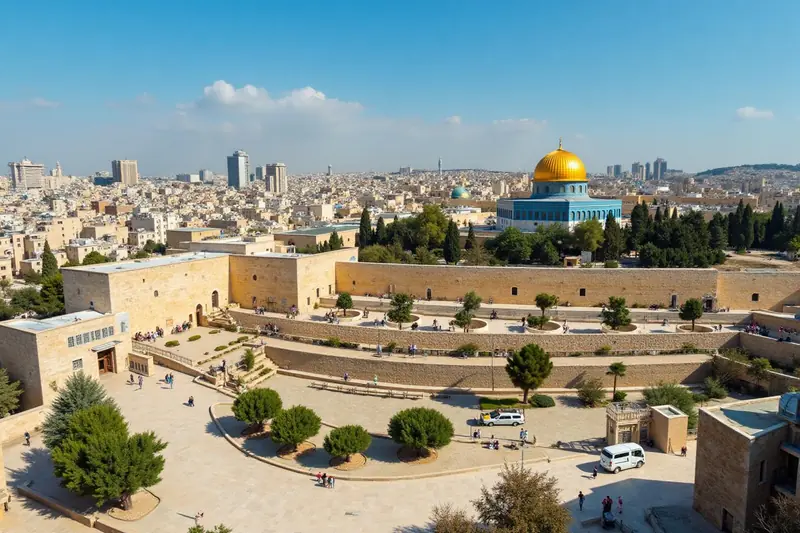
Where tradition places Abraham's test now stands the Temple Mount, one of the holiest sites in Judaism and Islam.
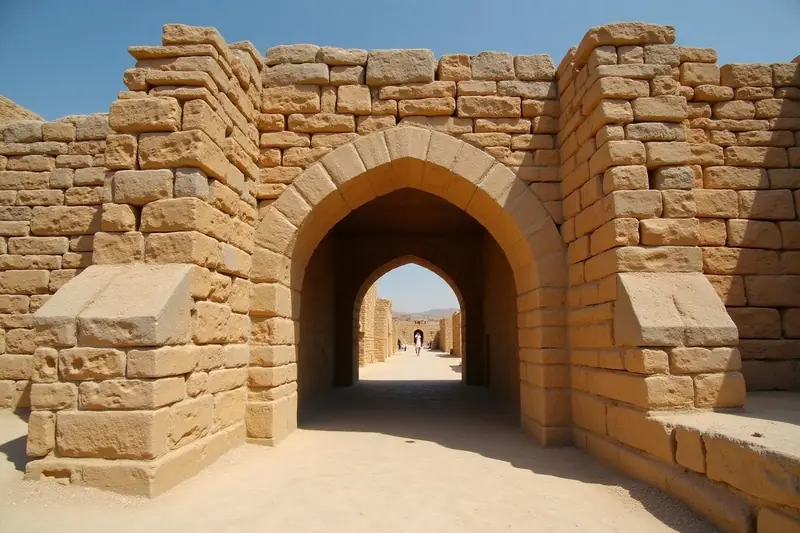
From Genesis 14 to the "House of David" stele: archaeology, nature and biblical history at the springs of the Jordan.
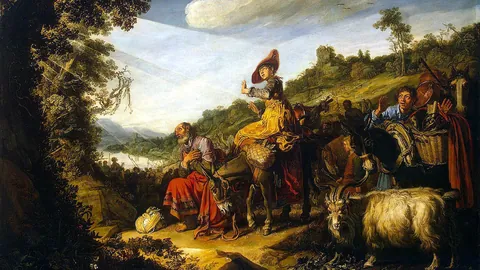 PatriarchsAbraham: Father of Monotheism and Founding FigureFrom Ur of the Chaldees to Hebron: Abraham's journey according to Genesis, his place in the three monotheistic faiths and what archaeology can say.Read the article →
 Because Abraham and Abimelech, king of Gerar, made a covenant there over a well dug by Abraham, who gave seven ewe lambs as a witness (Genesis 21:22-34). In Hebrew, sheva means "seven", and the same root gives the verb "to swear".
Faith that takes root and life in the heart of the desert: a deep-rooted tree that gives shade for decades, a visible sign of divine blessing. Jewish tradition also sees it as a symbol of Abraham's hospitality.
Yes. In Beersheba's Old City, a visitor centre has been built around an old well traditionally associated with the patriarch, and a large ancient well lies near the gate of Tel Be'er Sheva. Neither can be linked to Abraham with certainty: they are places of memory.
The archaeological site of ancient Beersheba, about 4 km east of the modern city: a small fortified Iron Age town with its well, water system, ring-shaped plan and a reassembled horned altar. It has been a UNESCO World Heritage Site since 2005.
Geographically, yes: it is a Chalcolithic village (c. 4500–3700 BCE) on the banks of Nahal Beersheba, excavated by Jean Perrot. It shows that the region had mastered water management and copper metallurgy long before the age of the patriarchs. The site is not set up for visitors.
Allow 1–1.5 hours for Tel Be'er Sheva and about an hour for the Abraham's Well visitor centre in the Old City — half a day including travel.
After reopening his father's wells in the region of Gerar, Isaac goes up to Beersheba: he builds an altar there, renews the covenant with Abimelech, and his servants dig the well of Shibah (Genesis 26:23-33). See the section Isaac at Beersheba.
Water, a word kept and faith: three symbols of God's faithfulness and of peace between people. Beersheba is a reminder that a dispute can be settled by an oath honoured and a resource shared.
"Contention", "hostility" and "wide spaces". These three wells, dug by Isaac's servants in the valley of Gerar, tell the story of a passage from conflict to peace (Genesis 26:19-22), before he goes up to Beersheba.
Yes: after the night-time revelation, "he builded an altar there, and called upon the name of the LORD, and pitched his tent there" (Genesis 26:25). No remains on the mound can be attributed to him, however.