
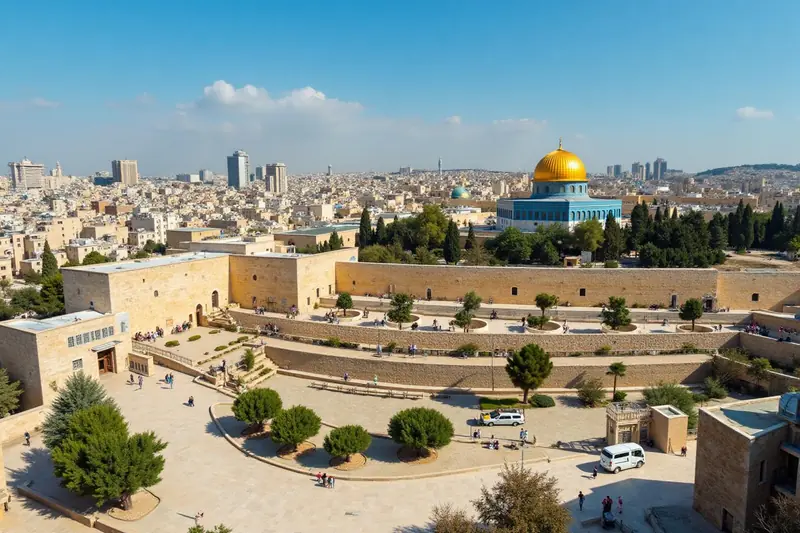
Mount Moriah: Abraham's Test, from the Biblical Story to the Temple Mount
Where tradition places Abraham's test now stands the Temple Mount, one of the holiest sites in Judaism and Islam.
c. AD 30
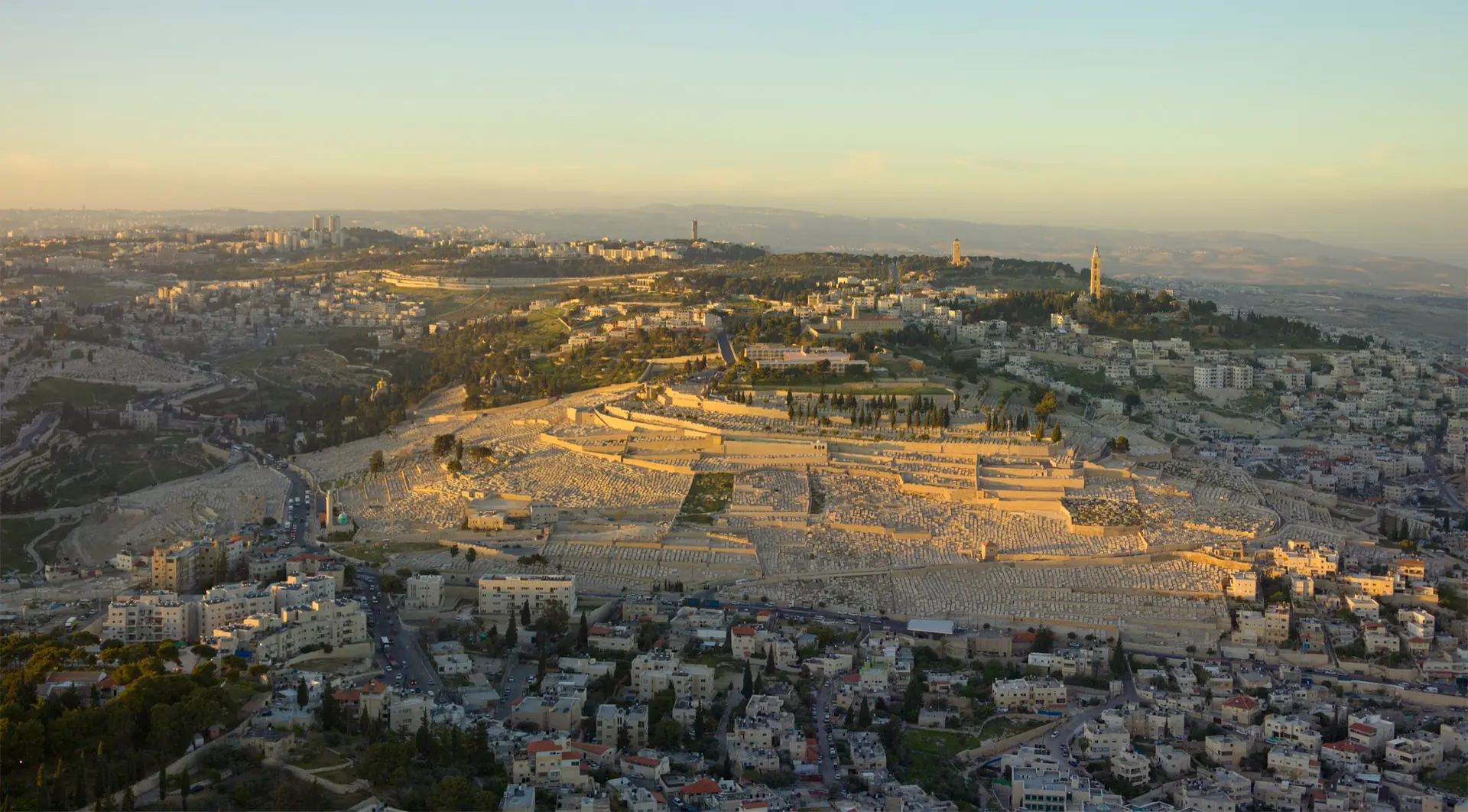
From David's flight to the agony of Jesus, the hill facing the Temple Mount holds three thousand years of Jewish and Christian memory.
Credit: Andrew Shiva / Wikipedia · CC BY-SA 4.0 · Wikimedia Commons
Just east of the Old City, across the Kidron Valley, the Mount of Olives is the hill from which the whole of Jerusalem and the Temple Mount can be seen. This is where the Bible has David climb in tears, where the prophet Zechariah foretells the coming of the Lord, and where the Gospels place the Palm Sunday entry, the discourse on the end of the age, the agony of Jesus in the Garden of Gethsemane and the Ascension.
Gethsemane lies at the foot of the mount, next to the Church of All Nations, also known as the Basilica of the Agony. Further up the slope stand Dominus Flevit, the Pater Noster, the Chapel of the Ascension and, facing the Temple, the oldest Jewish cemetery still in use. This guide separates what the texts say, what tradition holds and what archaeology has found, then suggests a walking route from the summit down to the garden.
The ridge, about 820 m high, rises some 80 m above the city. It is first named during Absalom's revolt: driven out of Jerusalem by his own son, King David flees towards the desert over the hill.
"And David went up by the ascent of mount Olivet, and wept as he went up, and had his head covered, and he went barefoot: and all the people that was with him covered every man his head, and they went up, weeping as they went up."
2 Samuel 15:30 (KJV)
The Book of Kings blames Solomon for building high places to foreign gods "in the hill that is before Jerusalem" (1 Kings 11:7). King Josiah defiles them during his reform; the text then speaks of "the mount of corruption" (2 Kings 23:13). As the Mount of Corruption, or Mount of Offence, the name has stuck to the southern summit of the ridge.
In Ezekiel's vision, the glory of the Lord goes up from the city and stands "upon the mountain which is on the east side of the city" (Ezekiel 11:23). The prophet Zechariah announces a day when God will come to fight for Jerusalem:
"And his feet shall stand in that day upon the mount of Olives, which is before Jerusalem on the east, and the mount of Olives shall cleave in the midst thereof toward the east and toward the west, and there shall be a very great valley."
Zechariah 14:4 (KJV)
This verse underlies an enduring Jewish tradition: the resurrection of the dead will begin on the Mount of Olives when the Messiah comes. The Mishnah, which calls it the "Mount of Anointing" (Har HaMishḥa), also records that beacon fires were lit there to announce the new moon (Rosh Hashanah 2:4) and that a causeway linked it to the Temple for the rite of the red heifer (Parah 3:6).
The Gospels show Jesus often crossing the hill on the way to Bethany, where he stays with Lazarus, Martha and Mary. Luke notes that during the last week "at night he went out, and abode in the mount that is called the mount of Olives" (Luke 21:37). To place these episodes within the whole of that week, see the Passion in Jerusalem.
Arriving at Bethphage, "unto the mount of Olives", Jesus sends for a young donkey (Matthew 21:1-7). The crowd spreads garments and branches on the road, then acclaims him "at the descent of the mount of Olives" (Luke 19:37). At the sight of the city, the tone changes:
"And when he was come near, he beheld the city, and wept over it, saying, If thou hadst known, even thou, at least in this thy day, the things which belong unto thy peace!"
Luke 19:41-42 (KJV)
Every Palm Sunday a procession sets out from Bethphage and walks down the mount to the Old City.
"And as he sat upon the mount of Olives, the disciples came unto him privately, saying, Tell us, when shall these things be? and what shall be the sign of thy coming, and of the end of the world?"
Matthew 24:3 (KJV)
Seated opposite the Temple whose destruction he foretells, Jesus delivers the so-called Olivet Discourse (Matthew 24–25, Mark 13). Tradition places it in the grotto of the Pater Noster, where the teaching of the Lord's Prayer is also remembered.
The Book of Acts places Jesus's departure on the mount: two men in white tell the disciples that he "shall so come in like manner" (Acts 1:11).
"Then returned they unto Jerusalem from the mount called Olivet, which is from Jerusalem a sabbath day's journey."
Acts 1:12 (KJV)
In his Gospel, Luke sets the same scene "as far as to Bethany" (Luke 24:50), on the far side of the hill. The two indications are compatible, but neither points to a precise spot.
The name comes from the Hebrew and Aramaic gat shemanim, "oil press". Only Matthew and Mark use it, for "a place called Gethsemane" (Matthew 26:36, Mark 14:32); Luke simply mentions the Mount of Olives (Luke 22:39) and John a "garden" across the brook Kidron (John 18:1). The phrase "Garden of Gethsemane" combines these indications.
After the Last Supper, Jesus withdraws from his disciples to pray, finds them asleep three times, then is arrested on the spot by a band sent by the chief priests and led by Judas (Matthew 26:36-56).
"And he went a little further, and fell on his face, and prayed, saying, O my Father, if it be possible, let this cup pass from me: nevertheless not as I will, but as thou wilt."
Matthew 26:39 (KJV)
Luke adds that "his sweat was as it were great drops of blood" (Luke 22:44), hence the name Basilica of the Agony given to the church built over the rock of the prayer.
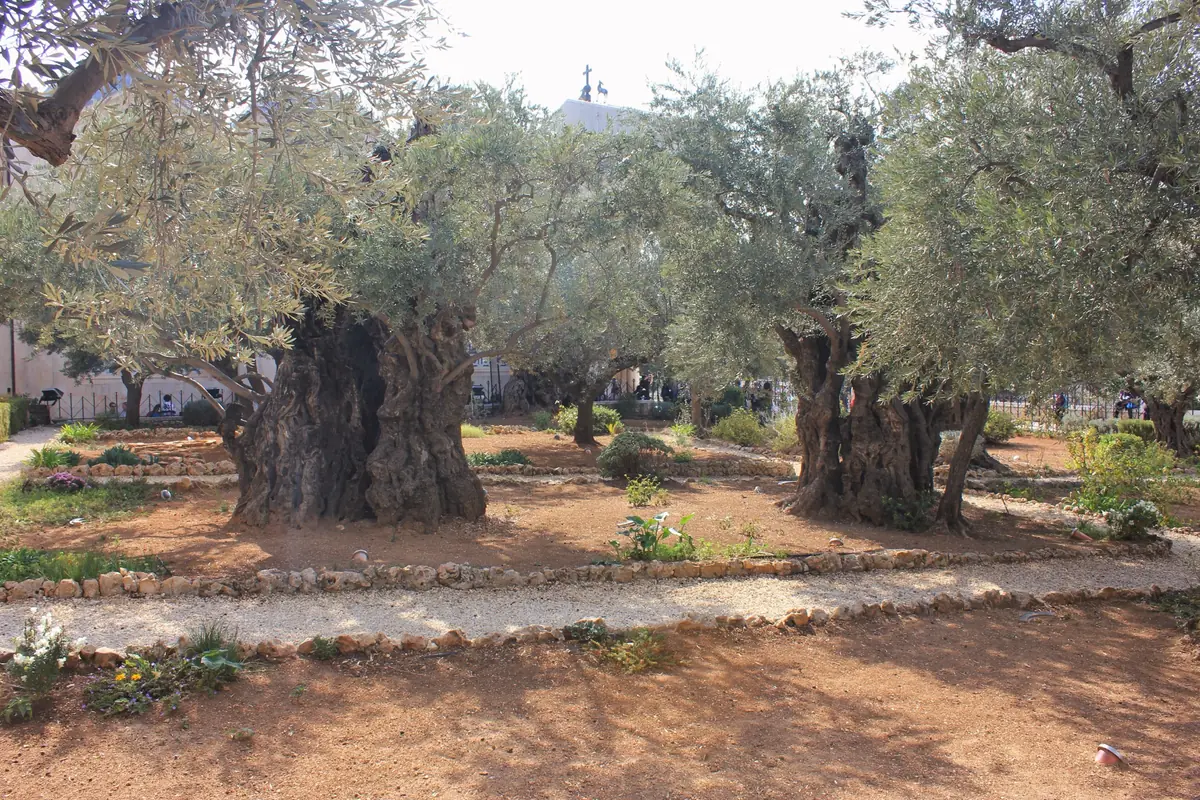
The Franciscan garden, owned by the Custody of the Holy Land since 1681, has eight very old olive trees. In 2012 a team from the Italian National Research Council (CNR) radiocarbon-dated the oldest parts of three trunks to 1092, 1166 and 1198. The others, hollow inside, could not be dated. DNA shows that all eight trees come from the same parent plant, which suggests replanting, perhaps in the Crusader period. The roots may be older than the trunks, but none of the trees can be dated to the 1st century: the historian Josephus reports that Titus had the trees around Jerusalem cut down during the siege of AD 70.
The present basilica stands on the foundations of a late 4th-century Byzantine church, described by the pilgrim Egeria around 383 and destroyed in the 8th century, and of a Crusader chapel abandoned in the 14th century. In 2020, while digging an access tunnel, the Israel Antiquities Authority and the Studium Biblicum Franciscanum uncovered a Jewish ritual bath (mikveh) from the Second Temple period. Standing apart from any dwelling, it may be linked to an oil press, where workers had to be ritually pure: a clue that fits the name "Gethsemane".
🔎 Tradition and history
The place of the prayer has been venerated since at least the 4th century. The Gospel text does not allow a precise rock to be identified, but the location, at the foot of the mount and opposite the Temple, matches the indications of John and the Synoptic Gospels.
The easiest way is to take a taxi or bus to the summit, then walk down the very steep road to Gethsemane. Allow 1 to 2 km on foot, including the visits.
The small Chapel of the Ascension, an octagonal Crusader-era shrine, replaces the round church founded around 390 by Poimenia. Turned into a mosque after 1187, it belongs to the Islamic Waqf; it keeps a stone in which tradition sees the footprint of Jesus. Nearby, the cloister of the Pater Noster, a French national property run by Carmelite nuns, stands on the remains of the Eleona basilica built under Constantine and destroyed in 614. Its walls display the Lord's Prayer in more than a hundred languages. The bell towers visible from afar belong to the Russian Convent of the Ascension and the Augusta Victoria hospice.
The lookout in front of the Seven Arches Hotel offers the most famous view of Jerusalem. Just below, the Tombs of the Prophets, traditionally attributed to Haggai, Zechariah and Malachi, are in fact a catacomb with burial niches (kokhim) from the 1st century BC, reused in the Byzantine period.
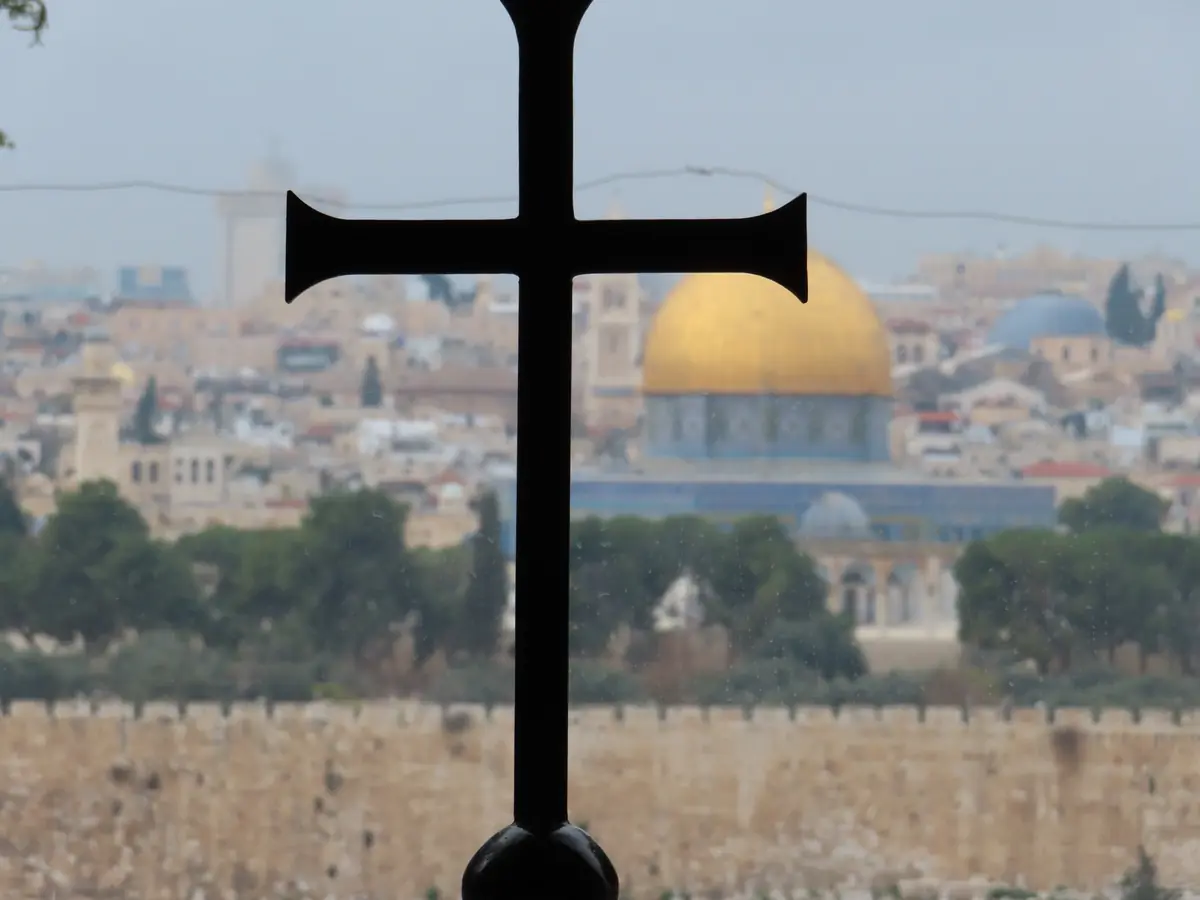
Halfway down, the teardrop-shaped Franciscan chapel of Dominus Flevit ("the Lord wept") commemorates Luke 19:41. It was built in 1955 by the architect Antonio Barluzzi. Excavations by Father Bellarmino Bagatti (1953-1955) revealed a Second Temple period necropolis rich in ossuaries and the mosaics of a Byzantine monastery. The apse window frames the Dome of the Rock.
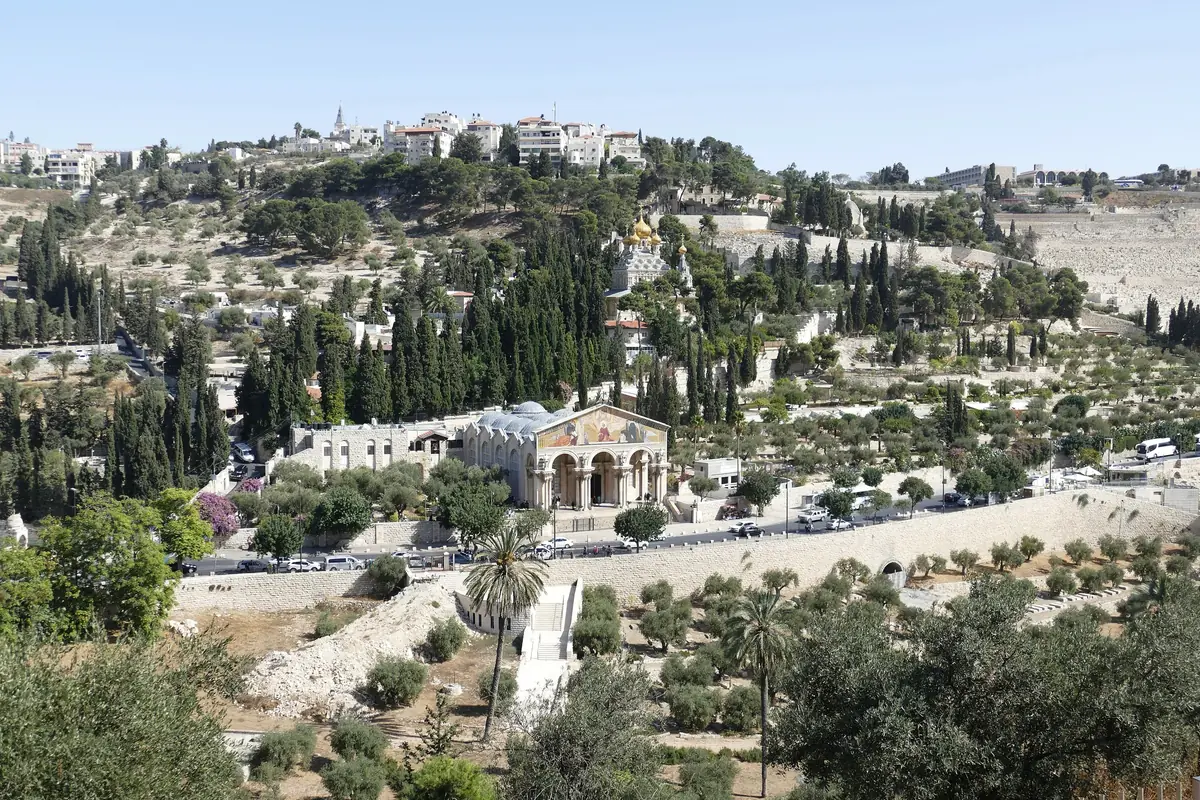
Its seven gilded onion domes can be recognised from far away. Built in 1888 by Tsar Alexander III in memory of his mother, this Russian Orthodox church holds the tombs of Grand Duchess Elizabeth and of Princess Alice of Battenberg. It opens only a few hours a week.
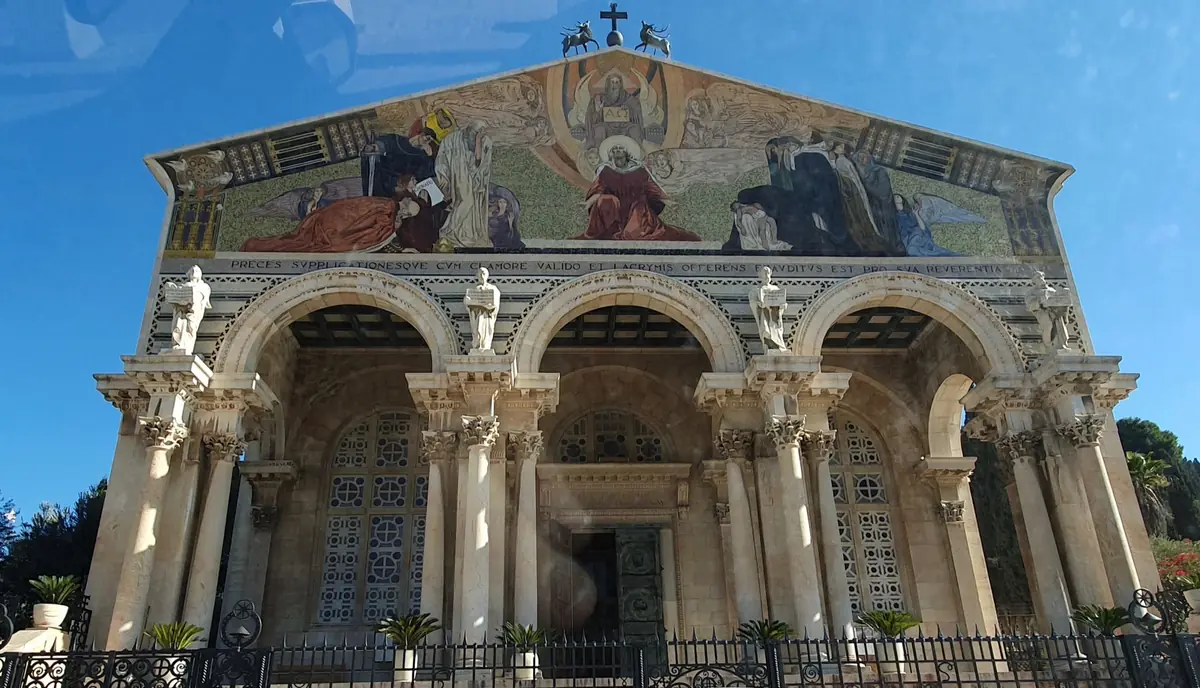
Completed in 1924 by Barluzzi, the Church of All Nations takes its name from the twelve countries that funded it, whose coats of arms decorate the domes. Its façade bears a large mosaic; inside, light filtered through violet alabaster windows and a midnight-blue ceiling evoke the night of the agony. The rock of the prayer emerges in front of the altar. The garden with its ancient olive trees adjoins the church.
Across the road, a staircase of 47 steps leads down to the Tomb of the Virgin Mary, behind a 12th-century façade, held by the Greek Orthodox and Armenian Churches. Next to it, the Franciscan Grotto of Gethsemane is linked by tradition to the disciples' rest and the arrest. From there you only have to cross the Kidron to enter the Old City through the Lions' Gate.
 Old City of JerusalemMount Moriah: Abraham's Test, from the Biblical Story to the Temple MountWhere tradition places Abraham's test now stands the Temple Mount, one of the holiest sites in Judaism and Islam.View site →
The whole western slope is covered with white tombstones: the Mount of Olives Jewish cemetery is the oldest and largest Jewish cemetery still in use. Tombs are attested here from the time of the kings of Judah, and it is estimated to hold between 70,000 and 150,000 graves. Many have wished to be buried here, facing the Temple Mount, so as to be among the first to rise again according to the tradition drawn from Zechariah 14:4. Among others lie Eliezer Ben-Yehuda, who revived Hebrew, the writer Shmuel Yosef Agnon and Prime Minister Menachem Begin.
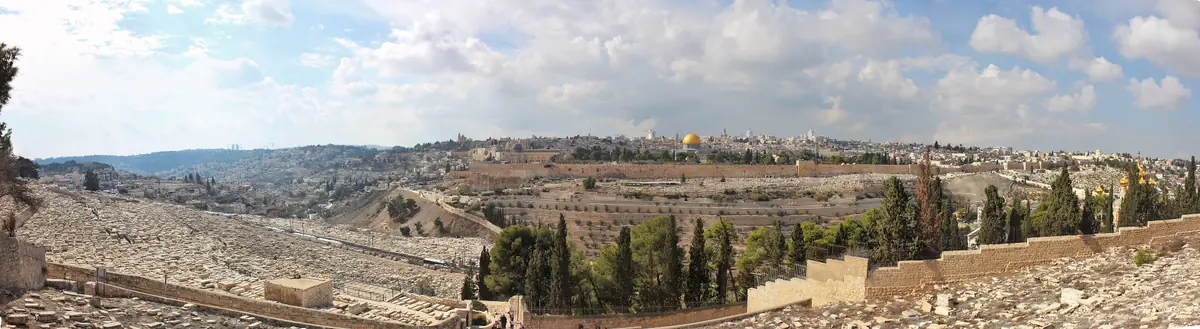
Between 1948 and 1967 the cemetery suffered heavy damage: tens of thousands of tombstones were broken or reused, and a road was cut through the graves. It has been restored since, but acts of vandalism were still reported in the 2010s. At the foot of the slope, in the Kidron Valley, stand the funerary monuments known as the Tomb of Absalom and the Tomb of Zechariah, from the Second Temple period. After the walk down, the visit naturally continues into the Old City as far as the Holy Sepulchre, where tradition places the crucifixion and the tomb of Jesus.
The Mount of Olives and the Garden of Gethsemane in Jerusalem
Mount of Olives, East Jerusalem: Garden of Gethsemane and Church of All Nations at the foot of the mount, on the Jericho road opposite the Lions' Gate; lookout at the top, in the at-Tur neighbourhood
GPS coordinates : 31.7792, 35.2396
Start navigation with:
Where tradition places Abraham's test now stands the Temple Mount, one of the holiest sites in Judaism and Islam.
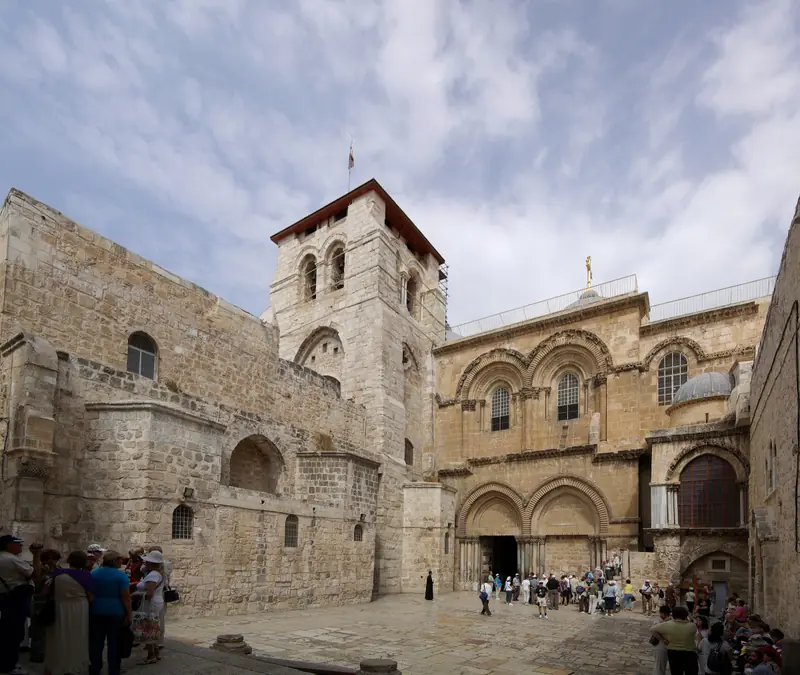
The rock of Calvary and the tomb venerated since the 4th century, under one roof shared by six Christian communities: Gospel account, history, archaeology and visiting.
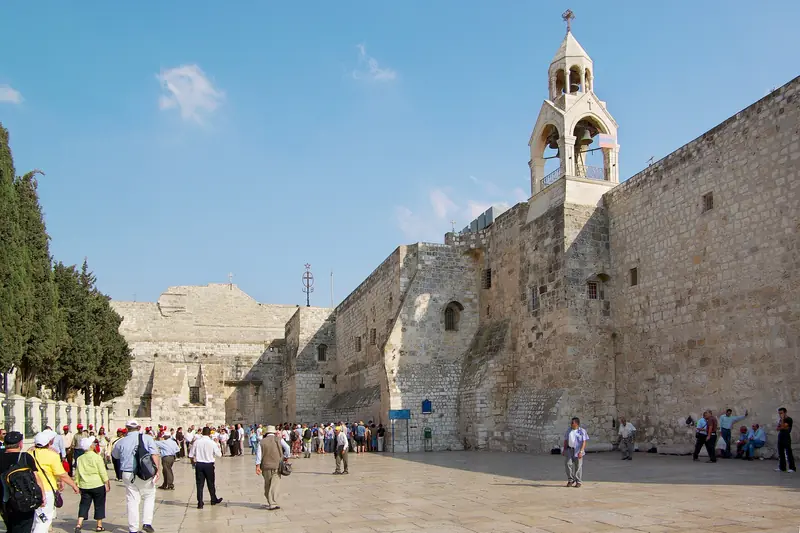
The town of Ruth and David, where the Gospels place the birth of Jesus: a cave venerated since the 2nd century, beneath one of the oldest churches in the world still in use.
Gethsemane comes from the Hebrew and Aramaic <em>gat shemanim</em>, "oil press". The name recalls that the place, at the foot of the Mount of Olives, was used to press olives.
Yes, at the foot of its western slope, next to the Church of All Nations. The Gospels combine both: Matthew and Mark speak of "a place called Gethsemane", Luke of "the mount of Olives" and John of "a garden" across the Kidron.
David climbs it in tears when fleeing Absalom (2 Samuel 15:30) and Zechariah foretells the coming of the Lord there (Zechariah 14:4). In the New Testament it is the setting of the Palm Sunday entry, the Olivet Discourse (Matthew 24), the agony in Gethsemane (Matthew 26:36-46; Luke 22:39-46) and the Ascension (Acts 1:12).
In Jerusalem, just east of the Old City, from which it is separated by the Kidron Valley. The Garden of Gethsemane is at the foot of the slope, opposite the Lions' Gate; the summit, at about 820 m, is in the at-Tur neighbourhood.
Not the visible trunks. A 2012 study by the Italian CNR dated the oldest parts of three trees to 1092, 1166 and 1198. All eight trees are genetically from the same parent, which points to medieval replanting. They are nonetheless among the oldest dated olive trees in the world.
The Jewish cemetery has been in use for nearly three thousand years. According to a tradition drawn from Zechariah 14:4, the resurrection of the dead will begin on the Mount of Olives when the Messiah comes, so people have wished to be buried there, facing the Temple Mount. It is estimated to hold between 70,000 and 150,000 graves.
Zechariah 14:4 announces that the Lord's feet "shall stand in that day upon the mount of Olives" and that the mount will split in two. Acts reports that after the Ascension two men in white announce that Jesus "shall so come in like manner" (Acts 1:11). Jews and Christians read these texts in the light of their own traditions.
The main ones are the Church of All Nations (Basilica of the Agony) and the Garden of Gethsemane, Dominus Flevit, the Pater Noster, the Chapel of the Ascension, the Russian Church of Mary Magdalene and the Tomb of the Virgin Mary. They can all be visited in sequence walking down from the summit.