
In brief
A few authors suggest that Joseph, the vizier of Genesis, was the Egyptian sage Imhotep, adviser to King Djoser. Both figures are linked to dreams and to the end of a seven-year famine. Most Egyptologists, however, reject this identification.
- Imhotep lived under the Third Dynasty, around 2650 BCE, at least eight centuries before the dates proposed for Joseph.
- The Famine Stele, carved in the Ptolemaic period, tells of Djoser's dream and the end of seven years of scarcity.
- Imhotep's tomb has never been found; according to the Bible, Joseph's bones were buried at Shechem (Joshua 24:32).
On the banks of the Nile, the memory of Joseph still seems to linger. In the Bible he is the slave who became vizier, the interpreter of dreams and the saviour of Egypt. In Egyptian tradition, Imhotep — adviser to King Djoser, builder of Saqqara, physician and sage — is also linked to the end of a seven-year famine. Two names, two languages, yet two strikingly similar stories: that of a man who understood before anyone else that survival depended on grain and water.
"And Joseph gathered corn as the sand of the sea, very much, until he left numbering; for it was without number."
Genesis 41:49 (KJV)
A Fascinating — and Minority — Hypothesis
The idea that Joseph and Imhotep might be one and the same person is not new. As early as 1891, the German Egyptologist Heinrich Brugsch published the Famine Stela under a telling title: Die biblischen sieben Jahre der Hungersnoth ("The Seven Biblical Years of Famine"). In the 20th century, authors who favoured a revised Egyptian chronology went further and simply identified Joseph with Djoser's sage. In their view, striking clues emerge from stone, from water and from Egypt's collective memory.
This investigation does not claim to prove an absolute truth. It explores the convergences between two traditions — one biblical, the other pharaonic — that seem to tell the same story under different names, while setting out the objections honestly.
⚠️ Before you read
Identifying Joseph with Imhotep is a minority hypothesis. Egyptology places Imhotep in the Third Dynasty, around the 27th century BCE, long before any date proposed for Joseph; the Famine Stela itself was carved more than two thousand years after Djoser. We present the arguments of its supporters alongside the specialists' responses.
The Egyptian Historical Context
The Old Kingdom and the Third Dynasty
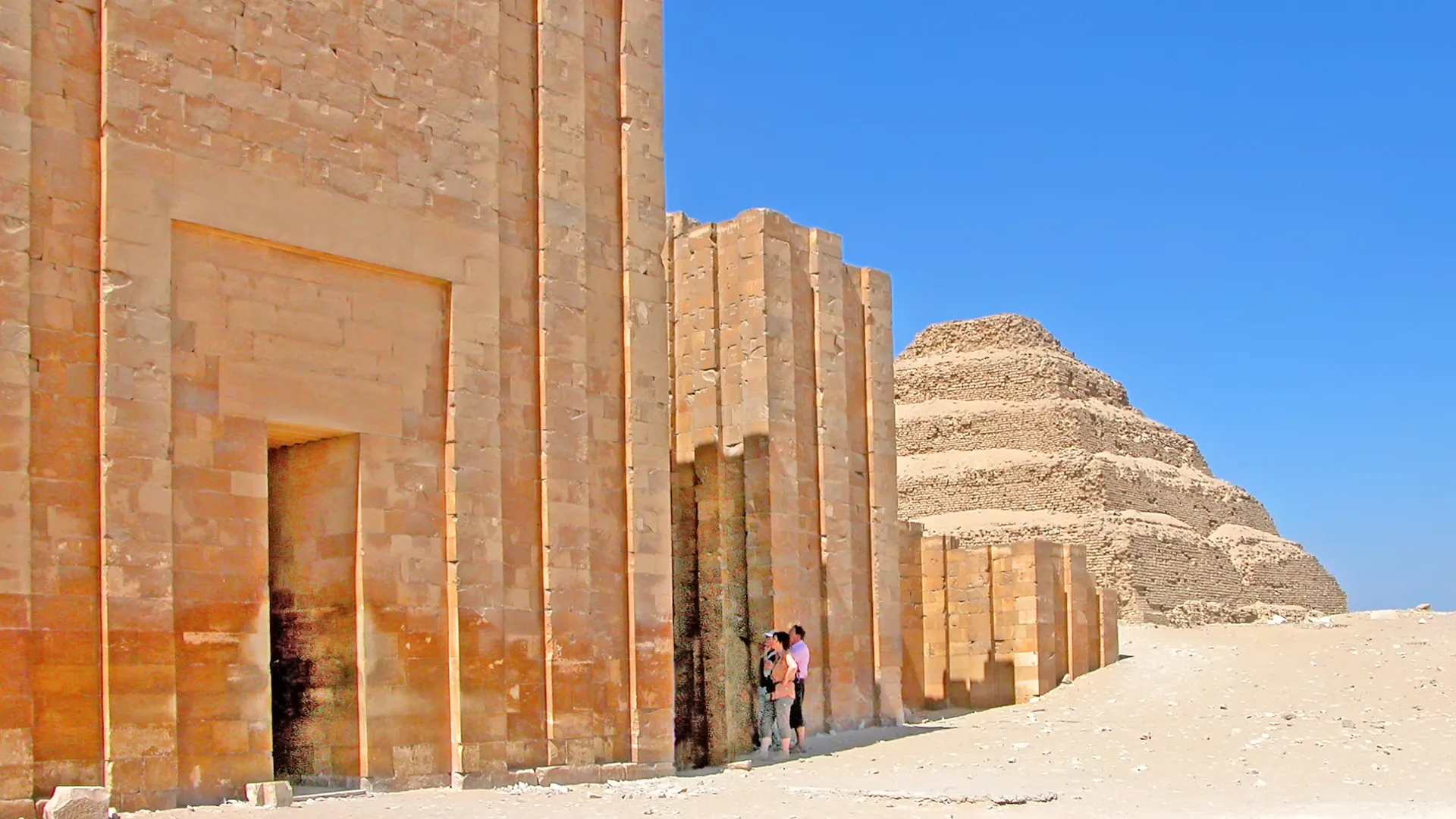
According to the conventional chronology, Djoser reigned around 2650 BCE, at the start of the Old Kingdom. His reign was a time of prosperity, architectural innovation and centralised administration. At Saqqara, the necropolis of Memphis, he raised the Step Pyramid, the first great monument of dressed stone in history, whose design is attributed to Imhotep.
Who was Imhotep?
Imhotep is one of the few private individuals of the Old Kingdom whose name is attested in his own lifetime: it appears on the base of a statue of Djoser found at Saqqara, with his titles of chancellor of the king of Lower Egypt, "first after the king", administrator of the great palace, high priest of Heliopolis, builder and sculptor. Later tradition made him Djoser's vizier, an architect of genius, a physician and a sage.
The vizier's role
The vizier was the second figure in the Egyptian state, responsible for administration, justice and the management of resources. The office closely matches the position Pharaoh gives to Joseph:
"Thou shalt be over my house, and according unto thy word shall all my people be ruled: only in the throne will I be greater than thou."
Genesis 41:40 (KJV)
Joseph and Imhotep, Parallel Destinies
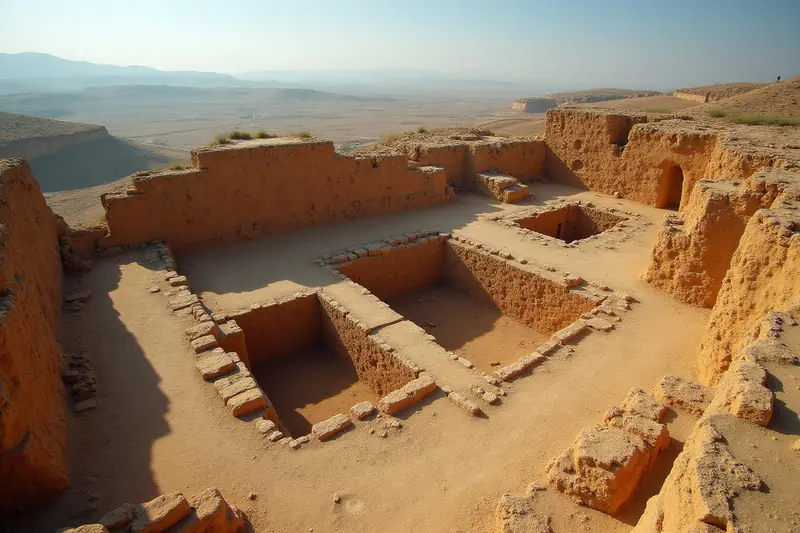
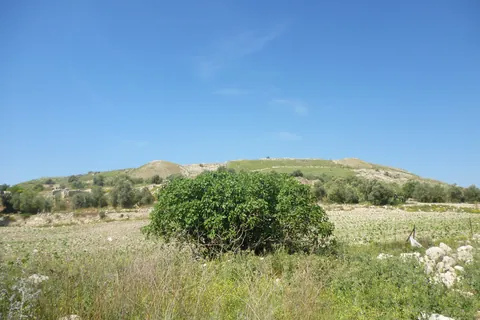 Dothan Valley, SamariaDothan: Joseph Sold by His BrothersAt Dothan, Joseph is thrown into a pit by his jealous brothers and then sold to a caravan bound for Egypt: a turning point in Genesis that seals his destiny.View site →
One is a Hebrew, the other an Egyptian. Yet both read the signs, advise the king and build prosperity on foresight. They embody the same archetype: the wise, inspired administrator who saves lives through knowledge.
Joseph, sold by his brothers at Dothan to merchants bound for Egypt (Genesis 37), rises from prison to palace by interpreting a dream. Imhotep, who according to a late tradition came from a family of builders, rises to the highest offices of state through his wisdom. Both men turn an imminent crisis into an opportunity for national salvation.
Beyond the biographical parallels, it is their civilising role that stands out: Joseph reorganises the Egyptian economy (Genesis 47:13-26), while Imhotep transforms architecture and administration. Both leave a lasting mark on a people's memory.
Striking Parallels in the Narratives
The interpretation of dreams
Joseph interprets Pharaoh's dream: seven fat cows and seven lean ones, seven full ears of grain and seven withered ones (Genesis 41). In the Famine Stela, too, a king facing seven years of scarcity turns to Imhotep to understand the cause of the disaster, and the resolution comes through a royal dream.
The rise to power
Joseph, first a slave and then a prisoner, becomes second in the kingdom in a single day. Imhotep, who was not of royal blood, reaches the highest offices thanks to his exceptional abilities.
Managing the famine
Joseph has a fifth of the harvest set aside during the seven years of plenty, then distributes grain during the seven years of famine (Genesis 41:34-36). The Stela credits Imhotep with finding the cause of the disaster, which leads to the end of the famine.
A link with Heliopolis
Pharaoh gives Joseph as his wife Asenath, daughter of Potipherah, "priest of On" (Genesis 41:45) — On being the biblical name of Heliopolis. Imhotep, as it happens, bore the title of high priest of Heliopolis. Supporters of the identification consider this one of their most interesting arguments.
The title of "saviour"
The Egyptian name given to Joseph, Zaphnath-paaneah, is rendered in Saint Jerome's Latin Vulgate as Salvator mundi, "saviour of the world". Imhotep, for his part, was deified after his death and worshipped as a god of healing and protection — an extremely rare honour for a non-royal figure.
The Famine Stela: Djoser's Dream
Carved on a granite boulder on Sehel Island, near Aswan, where it still stands, the Famine Stela was discovered in 1889 by the American Charles Wilbour. Its text presents itself as a decree of Djoser, dated to the eighteenth year of his reign: for seven years the Nile flood has failed, grain is scarce and the land is suffering.
In distress, the king asks Imhotep, the chief lector priest, about the source of the Nile. Imhotep consults the sacred books at Hermopolis and reveals that the flood depends on the god Khnum, lord of the springs at Elephantine. The god then appears to the king in a dream and promises an end to the famine; in return, Djoser grants Khnum's temple the revenues of a territory south of Elephantine. A pharaoh, a dream, an inspired adviser, a seven-year famine… It is hard not to think of Joseph.
🔎 Historical note
The stela was carved in the Ptolemaic period, probably under Ptolemy V (2nd century BCE), more than two thousand years after Djoser. Many Egyptologists see it as a text composed by the priests of Khnum to support their claims to those lands. The motif of "seven years of famine" was also widespread in the ancient Near East: the Epic of Gilgamesh already mentions it.
The Saqqara Galleries: Granaries of Salvation?
Beneath the Step Pyramid and around its enclosure, 20th-century excavations — notably those of Jean-Philippe Lauer, who devoted his life to Djoser's complex — revealed an impressive network of underground galleries and storerooms. Some galleries run for dozens of metres; those cut beneath the pyramid yielded tens of thousands of stone vessels, many inscribed with the names of earlier kings.
For supporters of the identification, this vast storage system recalls the task entrusted to Joseph: gathering grain during the years of plenty. Most Egyptologists see these spaces instead as funerary installations, intended to provide the dead king with supplies for eternity.
The Bahr Yussef, "the Waterway of Joseph"
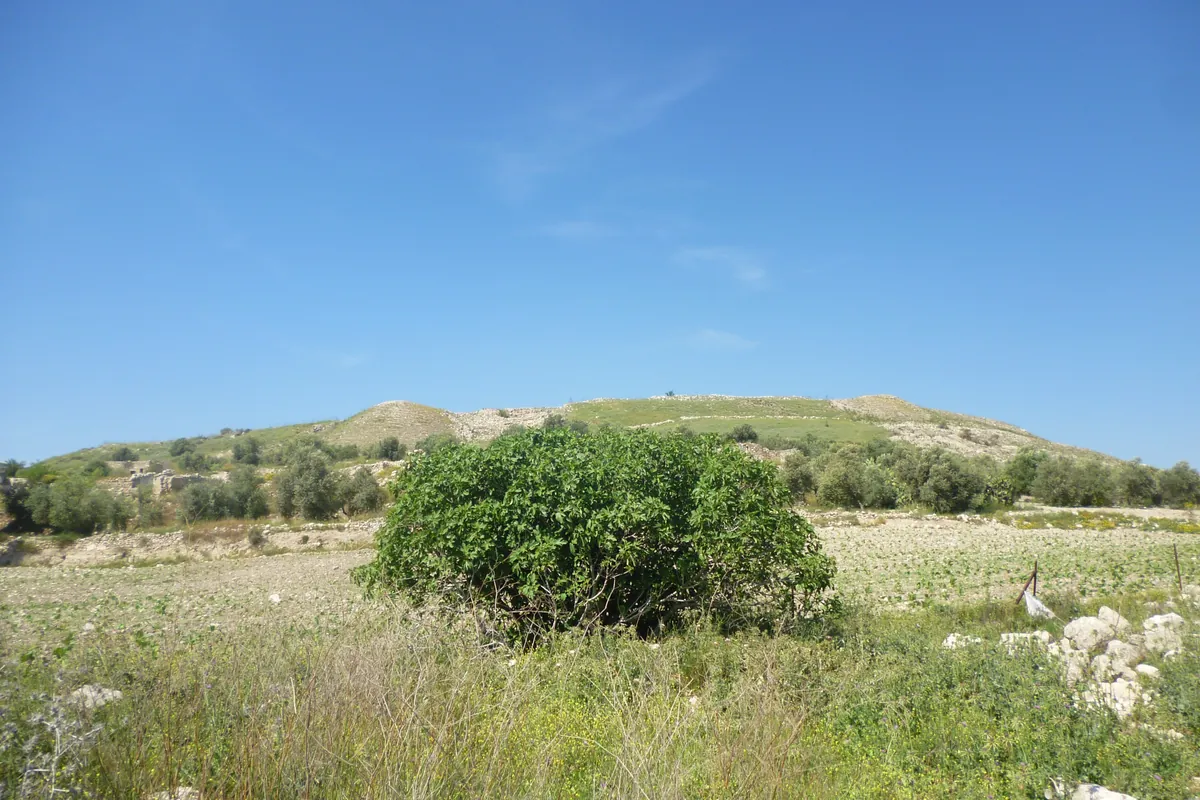
To this day, a canal links the Nile valley to the Fayum oasis: the Bahr Yussef, literally "the waterway of Joseph". Originally a former branch of the Nile, the channel was developed as early as the Middle Kingdom (Twelfth Dynasty) to regulate the Fayum's water supply and bring its land under cultivation.
Tradition links its Arabic name to the prophet Yusuf — the biblical Joseph, Pharaoh's minister — although it is not known when the name was given. It recalls the wisdom attributed to Joseph: anticipating the cycles of the Nile, channelling water, feeding the people. Egypt's waterways thus preserve his name — Yossef, the man of grain and water — as if the land itself still bore his signature.
The Mystery of the Missing Tombs
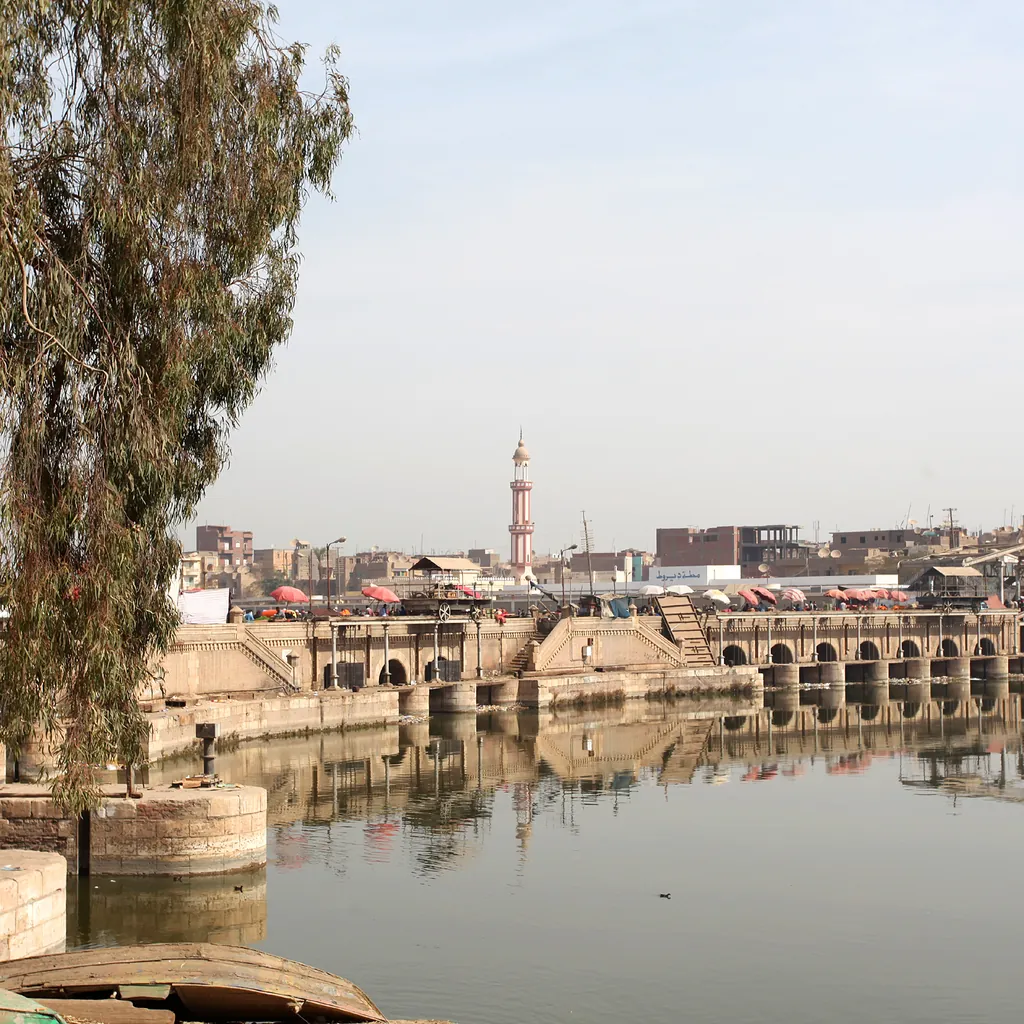
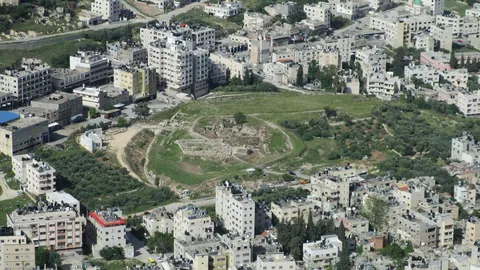 Nablus, Samarian hillsShechem (Tel Balata) – Abraham's First Altar in CanaanBetween Mount Ebal and Mount Gerizim, the place of God's first promise and Abraham's first altar in the Promised Land (Genesis 12:6-7).View site →
Despite more than a century of research, no tomb of Imhotep has been identified. The British archaeologist Walter Bryan Emery searched for it at length in North Saqqara in the 1960s: he uncovered galleries of mummified ibises and falcons linked to the cult of the deified sage, but not his burial.
The Bible, for its part, states that Joseph was embalmed and placed in a coffin in Egypt (Genesis 50:26), then that his bones were carried away at the Exodus (Exodus 13:19) and buried in Canaan:
"And the bones of Joseph, which the children of Israel brought up out of Egypt, buried they in Shechem, in a parcel of ground which Jacob bought of the sons of Hamor the father of Shechem for an hundred pieces of silver."
Joshua 24:32 (KJV)
Two phantom burials, two memories on the move: one erased by the sand, the other carried away by faith. Enough to make one wonder: what if these two absences told of the same disappearance? To this day, tradition venerates Joseph's Tomb at Shechem, at the entrance to Nablus.
Crossed Chronologies: Djoser and Joseph's Pharaoh
Conventional Egyptian chronology rests partly on the king lists of Manetho, a priest of the 3rd century BCE, cross-checked against other ancient lists, astronomical data and radiocarbon dating. It places Djoser around 2650 BCE. Biblical chronology, however, puts Joseph much later:
| Reference point | Proposed date | Basis |
|---|---|---|
| Reign of Djoser, career of Imhotep | c. 2670–2650 BCE | Conventional Egyptian chronology |
| Joseph in Egypt (early dating) | c. 1900–1800 BCE | Traditional biblical chronology (1 Kings 6:1; Exodus 12:40) |
| Joseph in Egypt (late dating) | c. 1700–1600 BCE | Assumes an Exodus in the 13th century BCE |
The gap is therefore at least eight centuries. To make the two figures coincide, some authors, such as Donovan Courville in the 1970s, proposed a radical revision: Egyptian dynasties presented as successive would in fact have partly overlapped, and the Old Kingdom would be contemporary with the Middle Bronze Age, the age of the patriarchs. Djoser would then become a contemporary of Jacob and Joseph.
Other, better-known revisions do not reach the same conclusion: David Rohl's "New Chronology" lowers some dates by several centuries, but places Joseph in the Twelfth Dynasty, under Amenemhat III, not under Djoser. These revisions remain highly contested; yet they keep alive a fascinating question: do Egyptian and biblical names sometimes refer to the same events, told by two different peoples?
Alternative Theories and Academic Debate
Supporters of the identification
Authors such as Donovan Courville (The Exodus Problem and Its Ramifications, 1971), and later David Down and John Ashton (Unwrapping the Pharaohs, 2006), have argued that Joseph and Imhotep were one and the same. Their case rests on biographical similarities, the Famine Stela, the link with Heliopolis and chronological revision. The theory circulates mainly among readers committed to a literal historical reading of the Bible.
The sceptics
The vast majority of Egyptologists reject the hypothesis for several reasons: a chronological gap of at least eight centuries; the absence of any Egyptian inscription mentioning a Hebrew vizier named Joseph; the late and political character of the Famine Stela; and finally the Egyptian setting of the Joseph story (personal names, titles, customs), which most specialists place in the second or first millennium BCE rather than the Old Kingdom.
The question of the name
The Egyptian name Imhotep means "he who comes in peace". Joseph receives from Pharaoh the name Zaphnath-paaneah (Genesis 41:45), whose meaning is still debated: Jewish tradition explains it as "revealer of hidden things", the Vulgate as "saviour of the world", while some Egyptologists recognise a formula along the lines of "the god has spoken: he will live". The two names do not match, but in antiquity one person could bear several names in different settings.
Inspired Intelligence: Two Figures of the Sage
Imhotep mastered stone, Joseph mastered foresight. Both governed through knowledge — one building pyramids, the other building reserves. They illustrate the same principle: true wisdom unites heaven and earth.
In Egyptian tradition, Imhotep is celebrated as architect, physician, priest and scribe; scribes poured a libation to him before writing, and a famous harper's song already quotes his words as those of a model sage. In the Bible, Joseph is interpreter, administrator and economist. Both share an essential quality: inspiration.
"And Pharaoh said unto his servants, Can we find such a one as this is, a man in whom the Spirit of God is?"
Genesis 41:38 (KJV)
A telling detail: Joseph dies at the age of one hundred and ten (Genesis 50:26), the ideal lifespan of an accomplished life according to Egyptian texts. This spiritual dimension sets both men apart from ordinary officials: they govern not by force, but by wisdom.
Cultural and Religious Impact Through the Centuries
Egypt's memory of Imhotep
More than two thousand years after his death, Imhotep was worshipped in Egypt as a god of medicine and wisdom. In the Late and Ptolemaic periods, sanctuaries were dedicated to him at Saqqara, Memphis and on the island of Philae. The Greeks identified him with Asclepius, calling him Imouthes. No other Egyptian high official ever received such an honour.
Jewish memory of Joseph
In Jewish tradition, Joseph is the model of the righteous man in exile, who remains faithful in adversity: he is called Yosef HaTzaddik, "Joseph the Righteous". His story foreshadows that of the people of Israel: going down to Egypt, suffering there, then being delivered.
A universal figure
Joseph is also a major figure in the Qur'an, whose twelfth surah bears his name. Whether or not one accepts the identification with Imhotep, one thing is clear: both figures embody the ideal of the sage in the service of the common good, and their influence spans the millennia.
An Open Enigma
No evidence compels belief, and the chronological objections are serious. But for those who defend the hypothesis, the clues keep adding up:
- a seven-year famine;
- a sage who became second only to the king;
- a link with the priesthood of Heliopolis;
- vast storerooms at Saqqara;
- a canal that bears Joseph's name;
- a tomb that has never been found;
- a memory that endures in names and in stone.
Together they form a silent melody: that of one man sung by two civilisations — or, more prosaically, that of two figures of the sage shaped by Egypt and Israel from shared motifs. The reader must judge. To place Joseph in the line of Abraham, Isaac and Jacob, explore our feature on the Patriarchs and our article on Abraham.
In Israel, two places from the story can be visited: Dothan, where Joseph is sold by his brothers, and Shechem, where tradition places his tomb (access is restricted). Add them to your tour in the footsteps of Joseph.
Sources and references
- Genesis 37–50, Exodus 13:19 and Joshua 24:32 (Hebrew text and translations on Sefaria)
- Heinrich Brugsch, Die biblischen sieben Jahre der Hungersnoth nach dem Wortlaut einer altägyptischen Felsen-Inschrift, Leipzig, 1891
- Paul Barguet, La Stèle de la famine à Séhel, Cairo, IFAO, 1953
- Miriam Lichtheim, Ancient Egyptian Literature, vol. III: The Late Period, Berkeley, University of California Press, 1980 (translation of the Famine Stela)
- Jean-Philippe Lauer, Fouilles à Saqqarah : la pyramide à degrés, Cairo, Service des antiquités de l'Égypte, 1936–1939
- Dietrich Wildung, Imhotep und Amenhotep. Gottwerdung im alten Ägypten, Munich, Deutscher Kunstverlag, 1977
- Donovan A. Courville, The Exodus Problem and Its Ramifications, Loma Linda, Challenge Books, 1971
- John Ashton and David Down, Unwrapping the Pharaohs, Green Forest, Master Books, 2006
- David Rohl, A Test of Time, London, Century, 1995
Frequently asked questions
Were Joseph and Imhotep the same person?
A few authors have argued so, but the vast majority of Egyptologists reject the idea: Imhotep lived under the Third Dynasty, around 2650 BCE, at least eight centuries before any date proposed for Joseph.
What is the Famine Stela?
An inscription carved in the Ptolemaic period on a boulder on Sehel Island, near Aswan. It tells how King Djoser, after seven years of poor Nile floods, consults Imhotep and then sees the god Khnum in a dream, who promises an end to the famine.
What is the Bahr Yussef?
A canal, still flowing, that links the Nile valley to the Fayum oasis. Its Arabic name means "the waterway of Joseph"; tradition connects it with the prophet Yusuf, although the channel was already developed in the Middle Kingdom.
Has Imhotep's tomb been found?
No. Despite searches, notably by Walter B. Emery at North Saqqara in the 1960s, no tomb has been identified. It remains one of Egyptology's most intriguing mysteries.
Where is Joseph buried according to the Bible?
Joseph was embalmed in Egypt; his bones were carried away at the Exodus and buried at Shechem (Joshua 24:32). Tradition venerates his tomb at the entrance to Nablus.
Why are these parallels so striking?
Because they combine the same motifs: a king, a dream, an inspired sage and seven years of famine. Specialists point out, however, that these motifs were widespread in the ancient Near East, which can explain the similarities without the two figures being the same person.
Places to visit
Dothan: Joseph Sold by His Brothers
At Dothan, Joseph is thrown into a pit by his jealous brothers and then sold to a caravan bound for Egypt: a turning point in Genesis that seals his destiny.
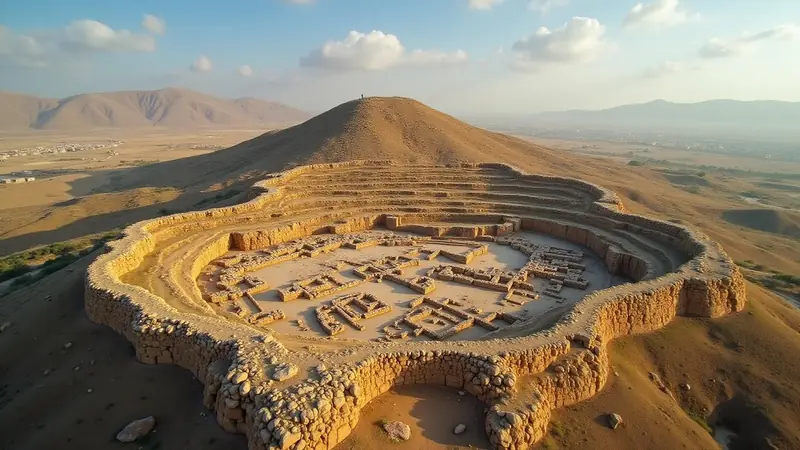
Shechem (Tel Balata) – Abraham's First Altar in Canaan
Between Mount Ebal and Mount Gerizim, the place of God's first promise and Abraham's first altar in the Promised Land (Genesis 12:6-7).
Read next
The Flood Around the World: Ancient Stories and Archaeological Witnesses
India, China, Greece, the Americas, Mesopotamia: flood stories around the world and three ancient tablets that record them, set beside the story of Noah.
Where Was the Garden of Eden? The Four Rivers, Mesopotamia and Hebron
Tigris, Euphrates, the Persian Gulf or Hebron? What Genesis says about the Garden of Eden, what scholars suggest, and the traditions that link it to Israel.