
Mahanaim: Jacob's Camp of Angels and David's Refuge
Jacob sees the angels of God there, Saul's son reigns there, and David waits there for the outcome of Absalom's revolt: a town of Gilead on the Jabbok.
Biblical period: The Patriarchs
The wooded hills east of the Jordan, between the Yarmuk and the Jabbok, where the Bible places the covenant of Jacob and Laban, the balm of the caravans and several episodes of Judges and Kings.
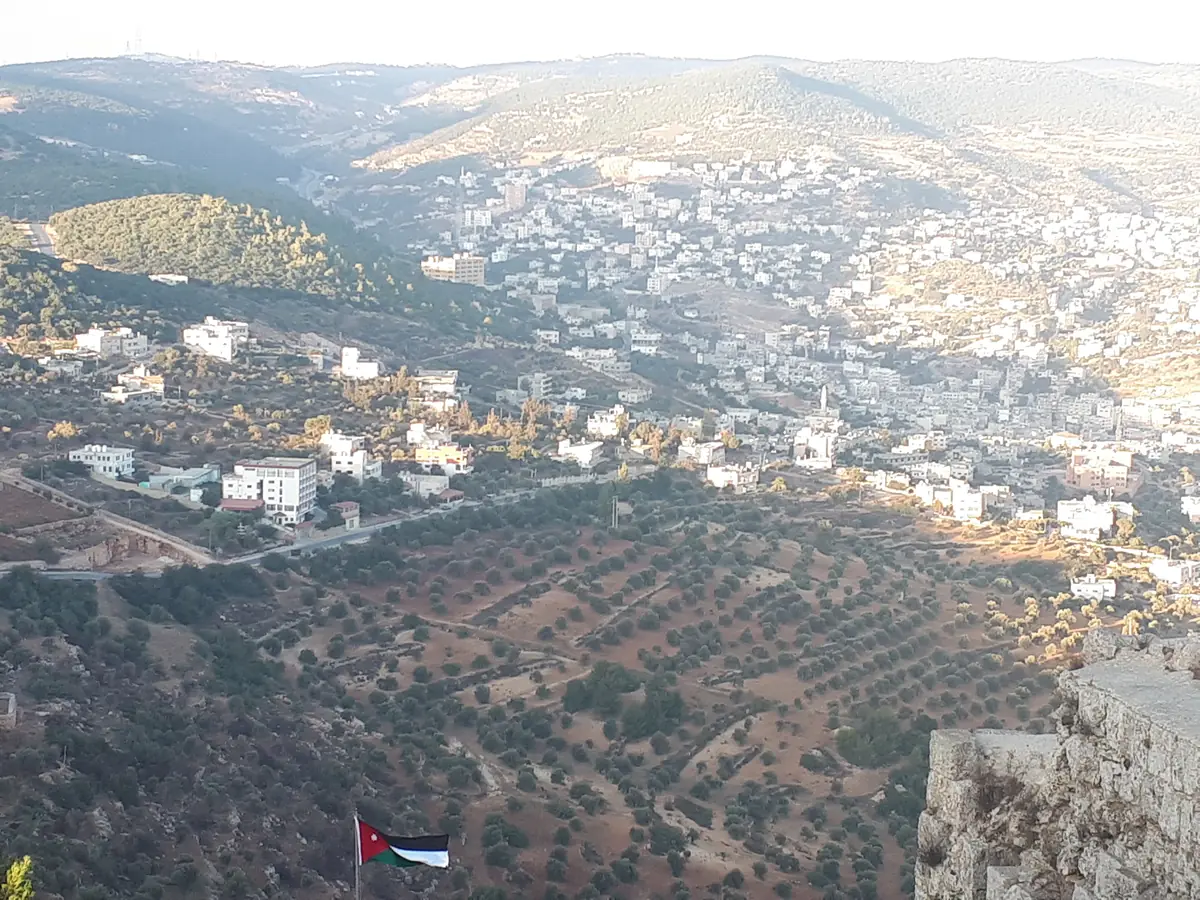
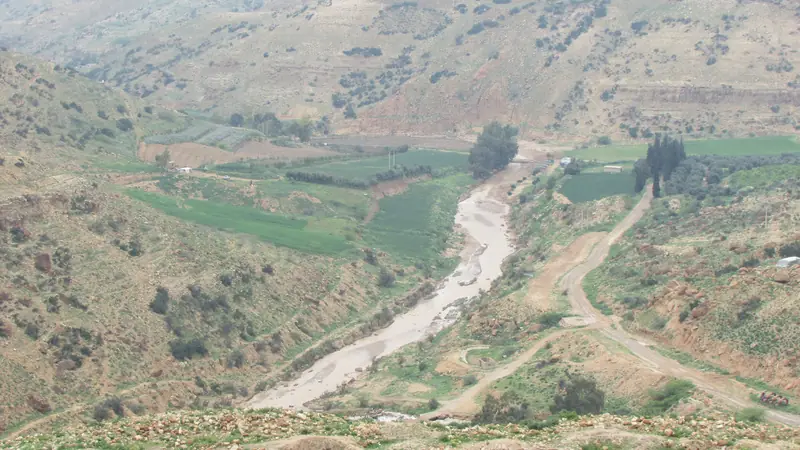
In the Bible, Gilead is the hill country east of the Jordan River, today in north-west Jordan, around Ajloun, Jerash and Salt. The Jabbok (Nahr az-Zarqa) cuts through it; the Yarmuk to the north and the area of Heshbon to the south are the limits most often given, although the extent of the name varies from one text to another.
It is in Gilead that Jacob, returning from Haran, makes a covenant with Laban over a heap of stones, the Galeed. The region returns with the balm of the caravans, the tribes of Reuben, Gad and Manasseh, Jephthah, Jabesh, Elijah and Ramoth. This page presents a region: it points you to the concrete sites you can visit.
In brief
Plan my visit
| What this page covers | A region, not a single site: Gilead covers the hills east of the Jordan, between the Yarmuk and the area of Heshbon, on both sides of the Jabbok. |
|---|---|
| Duration | One day for two or three stops (for example the Ajloun forest, Wadi Yabis and Jerash); more for the Jabbok valley and Tell er-Rumeith. Travel time is extra. |
| Access from Israel | Gilead is in Jordan. From northern Israel, the Jordan River crossing (Sheikh Hussein Bridge), near Beit She'an, is the closest. Border crossing opening times change: check with the authorities before leaving. |
| Entry requirements | A valid passport and, depending on nationality, a Jordanian visa. Check the current rules for your nationality before you go. |
| On the ground | The tells have few or no facilities and are sometimes on private land. Bring good shoes and water, and use a local guide or driver for isolated sites. |
| Seasons | Spring and autumn are the most pleasant. Winter can be cold and rainy on the Ajloun heights; summer is very hot in the Jordan Valley. |
| ⚠️ Safety | Check your government's travel advice for Jordan and for the border crossing before leaving. |
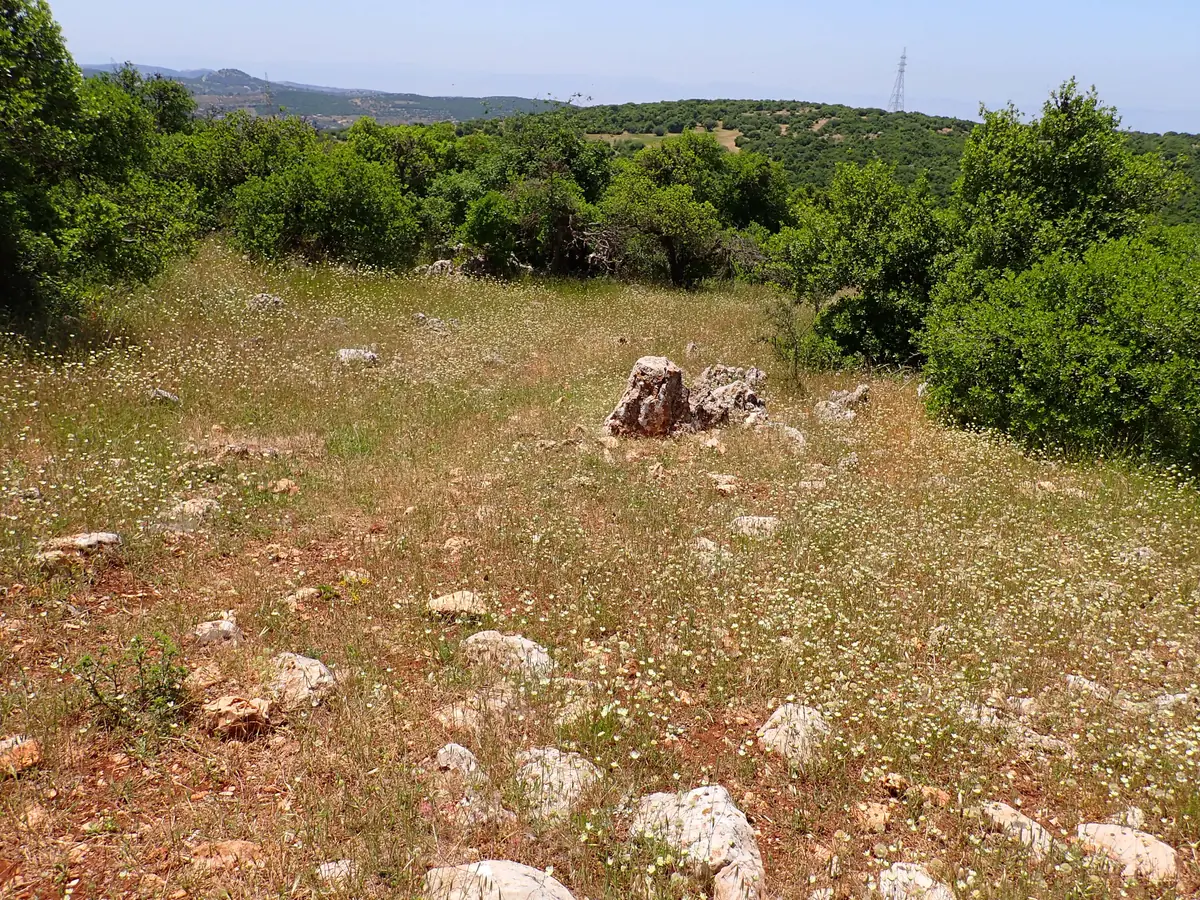
Gilead has no single entrance: you discover it in stages, by car, from Amman or from the northern Jordan Valley. The Ajloun hills give the closest picture of the wooded "mountains of Gilead": the Ajloun Forest Reserve, managed by the Royal Society for the Conservation of Nature (RSCN), protects about 13 km² of evergreen oak, strawberry tree, carob and pistachio, with marked trails.
The two most visited monuments in the region are later than the Hebrew Bible: Jerash, ancient Gerasa, is a large Roman-period city, and Ajloun Castle (Qal'at ar-Rabad) was built at the end of the 12th century by one of Saladin's generals. They round off a day well, as long as they are presented for what they are.
The minor archaeological sites are rarely developed and sometimes on private land: a local guide or driver is useful to find them and to check that they can be accessed.
Nearby
This page covers a region. Choose a specific site on the map to add to your itinerary.
History & Bible
Bible story
After twenty years working for Laban in Haran, Jacob leaves in secret with his wives, children and flocks. He crosses the river and heads for "the mount Gilead" (Genesis 31:21). Laban pursues him for seven days and overtakes him in these hills (31:23-25).
The quarrel is about Jacob's flight and about the teraphim, Laban's household idols, which Rachel has taken without telling anyone. It ends in a covenant. Jacob sets up a pillar, his kinsmen gather stones into a heap and they eat there on the heap (31:45-46).
"And Laban said, This heap is a witness between me and thee this day. Therefore was the name of it called Galeed."
Genesis 31:48
Laban calls the heap Jegar-sahadutha, in Aramaic; Jacob calls it Galeed, in Hebrew (31:47). Both mean "heap of witness". These are the only two Aramaic words in the Torah, which underlines the border between the two families. Through this wordplay, the story links the name Gilead (Gil'ad) to the Galeed. Linguists rather see an older regional name, perhaps related to the rugged terrain.
The place is also called Mizpah, "watchtower" (31:49): each man promises not to pass the heap to harm the other (31:52). The location is unknown; no stones visible today can be attributed to it.
📖 The end of parashat Vayetzei
This episode closes parashat Vayetzei (Genesis 28:10 to 32:3). Jacob then continues to Mahanaim, the "two camps", and on to the ford of the Jabbok, where he wrestles all night at Peniel (Genesis 32).
Bible story
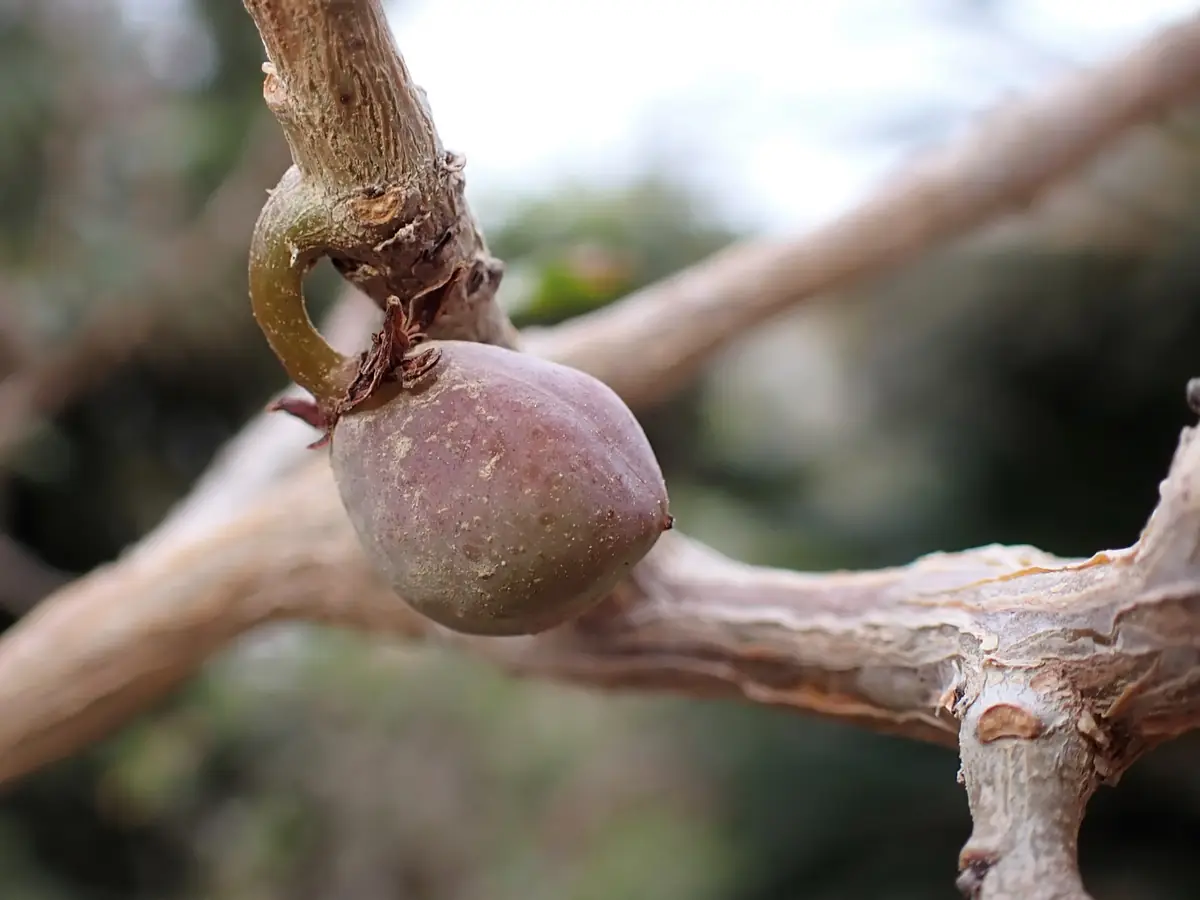
Gilead was known for its aromatic products. When Joseph's brothers throw him into a pit near Dothan, they see a caravan passing on its way down to Egypt.
"Behold, a company of Ishmeelites came from Gilead with their camels bearing spicery and balm and myrrh, going to carry it down to Egypt."
Genesis 37:25
Joseph is sold to these merchants. The text follows a real trade route: from Transjordan, travellers crossed the Jordan, then the Jezreel Valley and the coastal plain to Egypt. Balm also appears among the gifts Jacob later sends to Egypt (Genesis 43:11).
The prophet Jeremiah turns balm into an image of healing that does not come: "Is there no balm in Gilead; is there no physician there?" (Jeremiah 8:22). He uses the image again for Egypt: "Go up into Gilead, and take balm" (Jeremiah 46:11).
The Hebrew word tsori refers to a medicinal resin, but the plant has not been identified with certainty. The balsam tree (Commiphora gileadensis) is often proposed, and its scientific name comes from this tradition; others suggest mastic or terebinth, which grow in the region. In antiquity, the most famous balsam was grown in the oases of Jericho and Ein Gedi, not in Gilead. Gilead may have been a producing region, or simply a stage on the caravan route.
Bible story
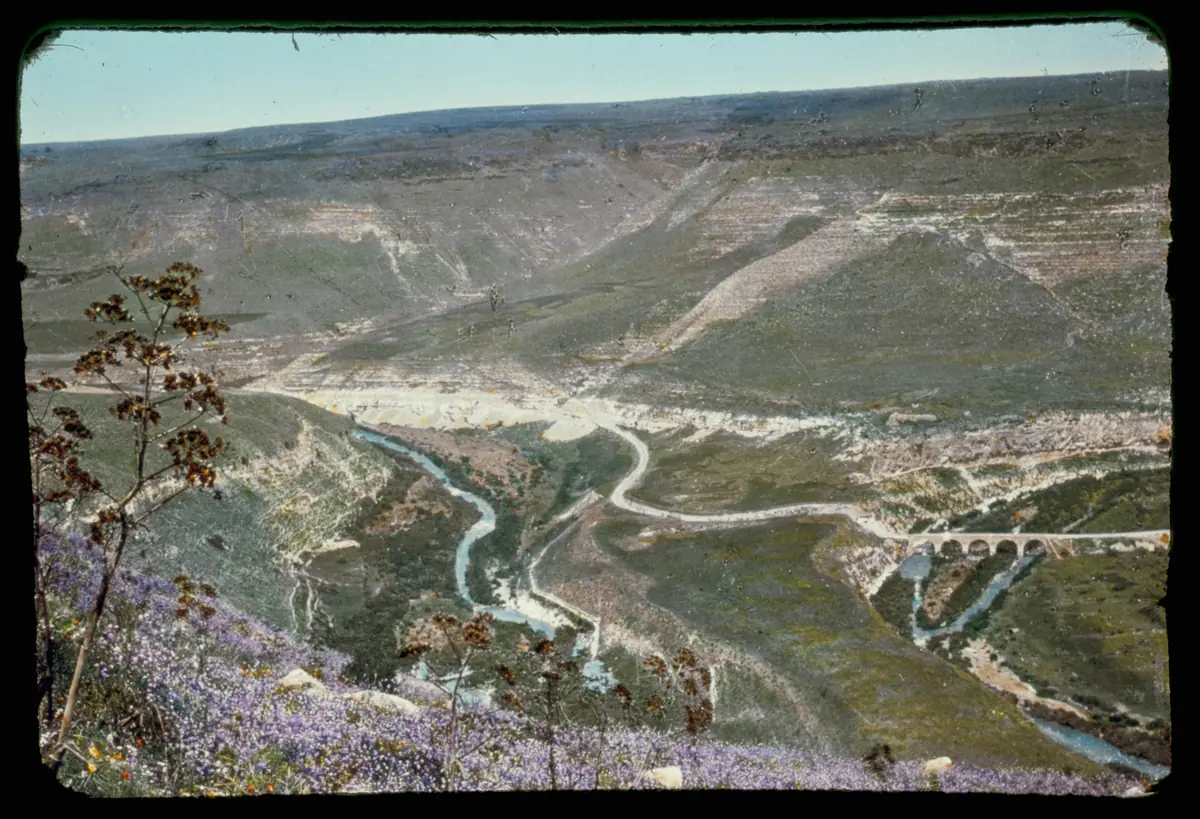
Before the entry into Canaan, the tribes of Reuben and Gad, who own large herds, notice that "the land of Jazer, and the land of Gilead" suit their cattle (Numbers 32:1). They ask to settle there instead of crossing the Jordan. Moses agrees, on condition that their men fight alongside the other tribes until Canaan is conquered (32:20-22).
The text adds the half-tribe of Manasseh: the descendants of Machir son of Manasseh take Gilead (32:39-40). Deuteronomy details the division. Reuben and Gad receive southern Gilead, from the Arnon to the Jabbok; the rest of Gilead and Bashan, to the north, go to half of Manasseh (Deuteronomy 3:12-16). The Jabbok thus marks the line between two halves of Gilead.
Gilead then remains a contact zone with the Ammonites to the east and the Arameans to the north. Several cities of refuge are set there, including Ramoth-Gilead (Deuteronomy 4:43; Joshua 20:8). Archaeologically, the hills of Gilead have many Iron Age villages; neither texts nor excavations, however, make it possible to draw precise tribal borders on a modern map.
Bible story
"Now Jephthah the Gileadite was a mighty man of valour, and he was the son of an harlot: and Gilead begat Jephthah."
Judges 11:1
Driven out by his half-brothers, Jephthah lives on the margins, in the land of Tob. When the Ammonites attack Gilead, the elders come to fetch him and make him their leader at Mizpah (Judges 11:4-11). Before the battle he makes a vow: to offer as a burnt offering whatever first comes out of his house if he returns victorious. When he comes home to Mizpah, it is his only daughter who comes out to meet him (11:30-40). This dramatic story has been widely discussed in Jewish tradition, which debates the validity of such a vow.
A war then sets the men of Gilead against those of Ephraim. The Gileadites hold the fords of the Jordan and ask fugitives to say "shibboleth": those who say "sibboleth" are recognised as Ephraimites (Judges 12:5-6). The word has entered several languages to mean a password or marker of identity. Jephthah judges Israel for six years and is buried in a city of Gilead (12:7).
The location remains unknown. The name Gilead survives in the village and Khirbet Jal'ad, north of Salt, and some place Mizpah there; archaeologist Israel Finkelstein notes, however, that the site has mostly produced Byzantine remains and suggests looking in northern Gilead instead. Nothing firmly links this Mizpah to the one of Jacob and Laban.
Bible story
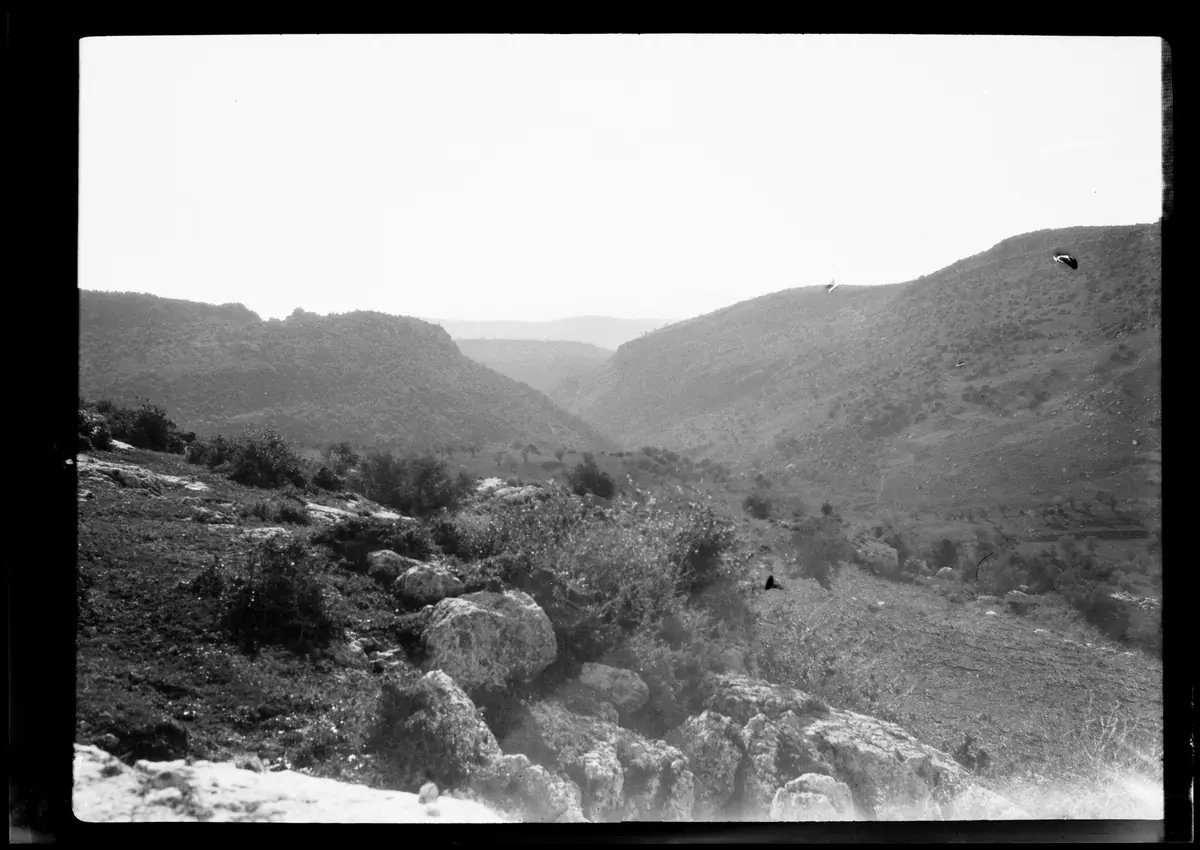
At the start of Saul's reign, Nahash the Ammonite besieges Jabesh-Gilead. He offers to spare the inhabitants if they let him put out their right eyes (1 Samuel 11:1-2). Messengers from Jabesh alert Israel; Saul gathers the people, attacks at dawn and rescues the town. This victory comes before the renewal of his kingship at Gilgal (11:11-15).
At the end of his life, Saul dies with his sons on Mount Gilboa, and the Philistines hang their bodies on the wall of Beth-shan. The men of Jabesh walk all night, take down the bodies, burn them and bury the bones under the tamarisk tree at Jabesh, then fast for seven days (1 Samuel 31:11-13). David thanks them for this act (2 Samuel 2:4-7).
The name Jabesh survives in that of Wadi Yabis (Wadi al-Yabis), which runs down from the Ajloun hills to the Jordan Valley. Two Iron Age sites along this stream are proposed: Tell el-Maqlub, on a hill above a bend in the wadi, often preferred, and Tell Abu al-Kharaz, further west, which archaeologist Nelson Glueck favoured. Peter M. Fischer's Swedish excavations at Tell Abu al-Kharaz have clarified the site's history without settling the question.
Bible story
"And Elijah the Tishbite, who was of the inhabitants of Gilead, said unto Ahab…"
1 Kings 17:1
The prophet Elijah enters the story without a genealogy: he is only introduced as coming from Gilead. The location of Tishbe is unknown. One tradition places it near the village of Listib, north-west of Ajloun, where the site of Tell Mar Elias preserves the ruins of two Byzantine churches; a mosaic inscription records the dedication of the larger one to the prophet in 622. These churches bear witness to Christian pilgrimage, not to Elijah's home.
Ramoth-Gilead, a city of refuge, is contested between Israel and the Arameans of Damascus. King Ahab goes there with Jehoshaphat, king of Judah, despite the warning of the prophet Micaiah son of Imlah. He disguises himself for the battle, but an arrow shot "at a venture" wounds him fatally; he dies that same evening (1 Kings 22:29-37).
A few years later, Joram son of Ahab is wounded before Ramoth (2 Kings 8:28-29). Elisha sends a young prophet there to anoint the army commander Jehu king of Israel (2 Kings 9:1-6). Jehu sets off at once for Jezreel, driving his chariot "furiously" (9:20).
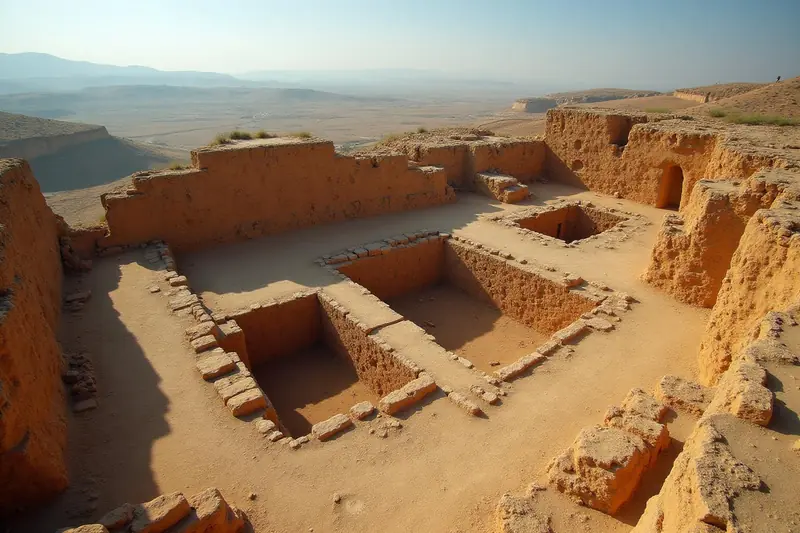
Three nearby sites are debated. Tell er-Rumeith, about 7 km south of Ramtha, was excavated by Paul Lapp in 1967: he uncovered a small Iron Age fortress destroyed several times, which fits a contested border town. Some scholars find it too small. The modern town of Ramtha and Tell el-Husn, covered by a cemetery, cannot be excavated. Old photographs labelling Salt as Ramoth reflect an identification that has since been abandoned.
These sites share a story but are not necessarily close to each other: distances are given in a straight line.
Jacob sees the angels of God there, Saul's son reigns there, and David waits there for the outcome of Absalom's revolt: a town of Gilead on the Jabbok.
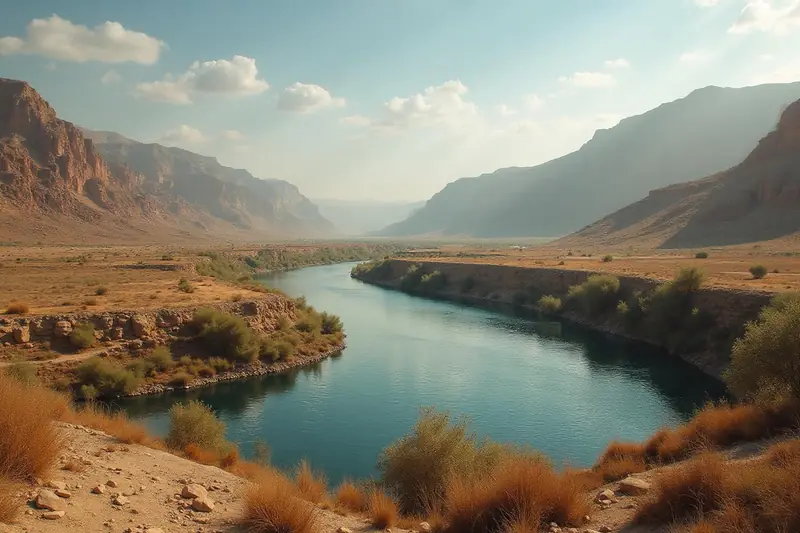
At the ford of the Jabbok, Jacob wrestles all night with a mysterious opponent. He comes away wounded, blessed and bearing a new name: Israel.
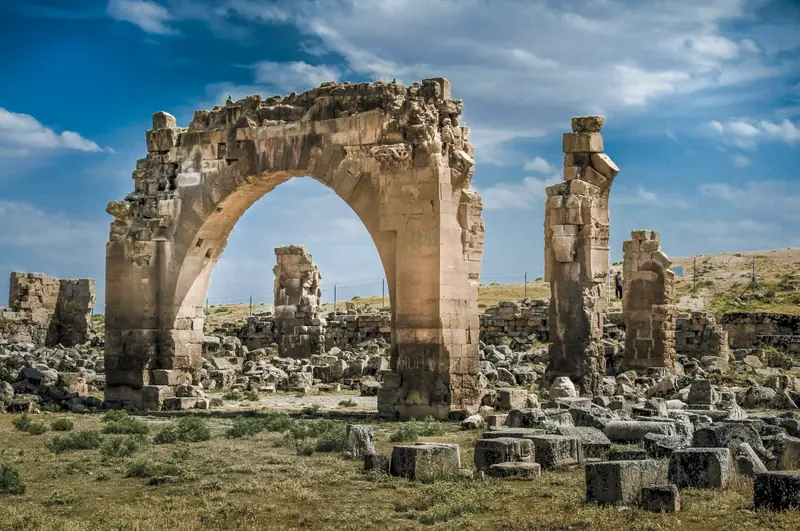
On the Harran plain near Şanlıurfa, Genesis places Abraham's family and later Jacob, who spends twenty years with his uncle Laban. The city of the moon-god Sîn has left ruins, a great medieval mosque and its famous beehive houses.
At Dothan, Joseph is thrown into a pit by his jealous brothers and then sold to a caravan bound for Egypt: a turning point in Genesis that seals his destiny.
In north-west Jordan, east of the Jordan River, around Ajloun, Jerash and Salt. The Bible places Gilead between the Yarmuk to the north and the area of Heshbon to the south, on both sides of the Jabbok (Nahr az-Zarqa), but the extent of the name varies from text to text.
Genesis 31:47-48 links it to the Galeed, the "heap of witness" raised by Jacob and Laban, which Laban calls Jegar-sahadutha in Aramaic. Linguists rather see an older regional name. The name survives in the village and Khirbet Jal'ad, north of Salt.
No. The text places the covenant on "the mount Gilead" without a more precise location, and no existing heap of stones can be attributed to it. You can, however, explore the Ajloun hills and the Jabbok valley, through which the story then takes Jacob (Genesis 32).
A medicinal resin, tsori, carried by the caravan that buys Joseph (Genesis 37:25) and mentioned by Jeremiah (8:22; 46:11). The plant has not been identified with certainty: the balsam tree Commiphora gileadensis, mastic and terebinth have been proposed. The most famous ancient balsam grew at Jericho and Ein Gedi.
Reuben, Gad and half of the tribe of Manasseh, according to Numbers 32 and Deuteronomy 3:12-16. Reuben and Gad receive southern Gilead up to the Jabbok; northern Gilead and Bashan go to half of Manasseh, through the descendants of Machir.
The location is debated. Tell er-Rumeith, about 7 km south of Ramtha, excavated by Paul Lapp in 1967, is the most often proposed; Ramtha and Tell el-Husn are the other candidates. The old identification with Salt has been abandoned.
You need to enter Jordan, with a valid passport and, depending on nationality, a visa. The Jordan River crossing (Sheikh Hussein Bridge), near Beit She'an, is the closest to northern Gilead. Border opening times and travel advice should be checked before every trip.
The Ajloun forest and its trails, Tell Mar Elias (Byzantine churches linked to Elijah) and Wadi Yabis, associated with Jabesh-Gilead. Jerash and Ajloun Castle, from the Roman and medieval periods, complete the day, with no direct link to the biblical stories.