
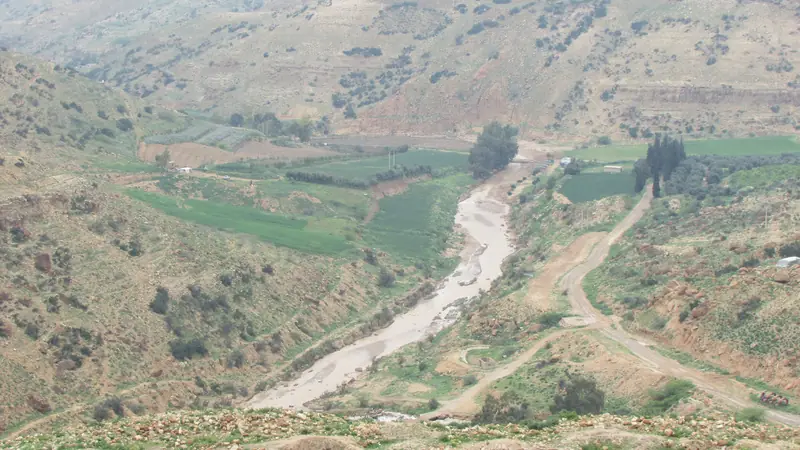
Mahanaim: Jacob's Camp of Angels and David's Refuge
Jacob sees the angels of God there, Saul's son reigns there, and David waits there for the outcome of Absalom's revolt: a town of Gilead on the Jabbok.
Biblical period: The Patriarchs
On the Harran plain near Şanlıurfa, Genesis places Abraham's family and later Jacob, who spends twenty years with his uncle Laban. The city of the moon-god Sîn has left ruins, a great medieval mosque and its famous beehive houses.
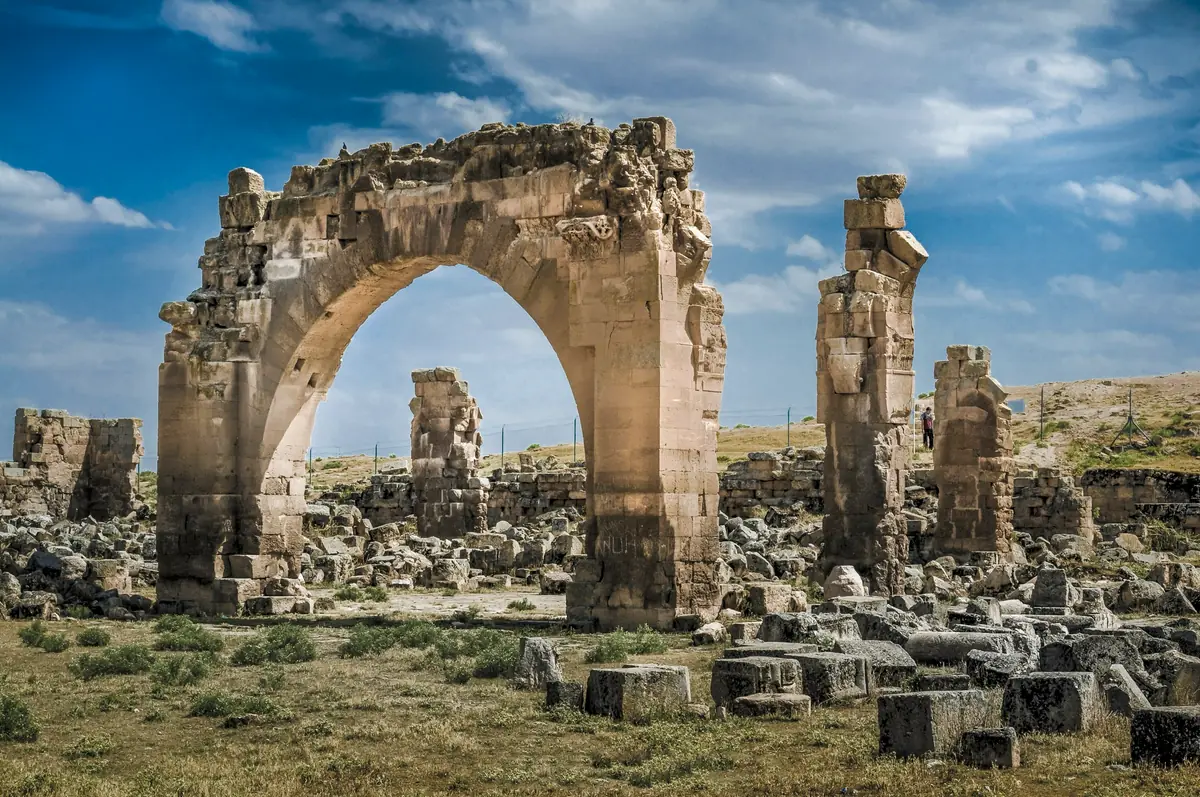
Haran, also spelled Harran (and Charran in older translations), is the city of Upper Mesopotamia where, according to Genesis, Abraham's family settles after leaving Ur, and from where Abraham sets out for Canaan at the age of 75. A generation later, his grandson Jacob takes refuge there with his uncle Laban: he meets Rachel at a well, marries Leah and Rachel, and eleven of his sons are born there.
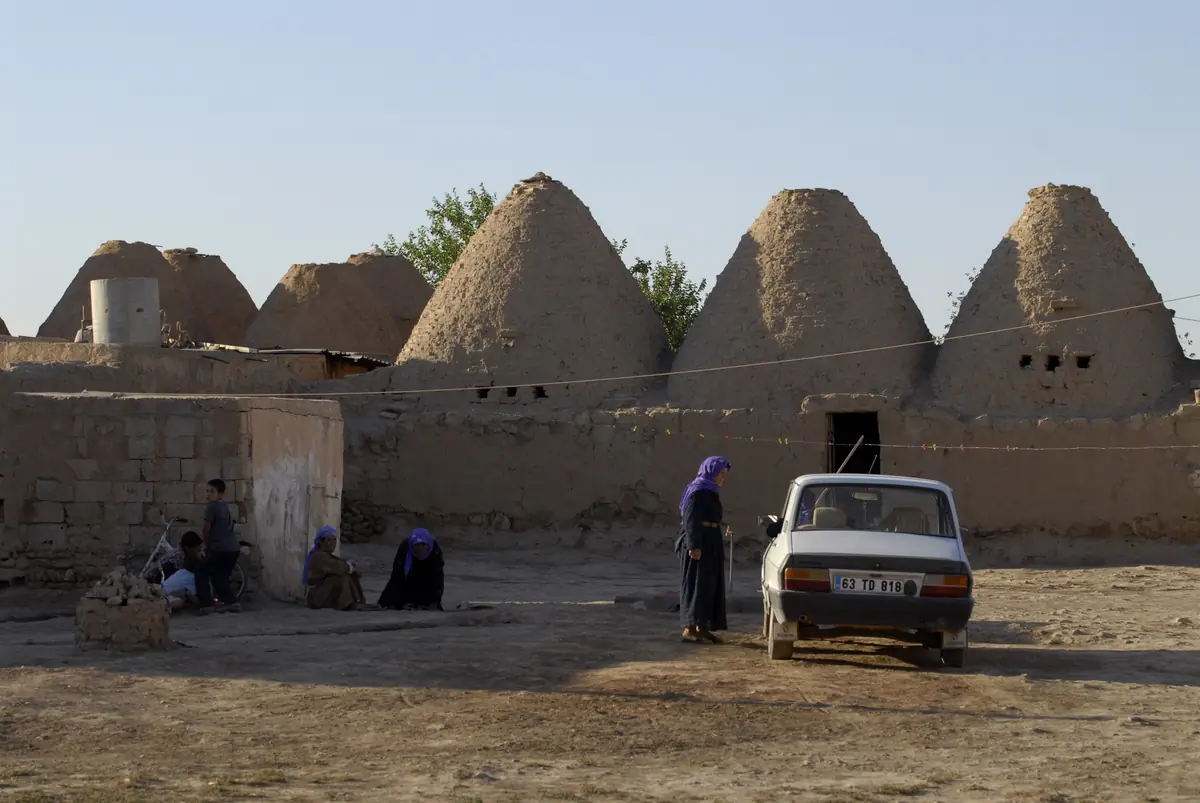
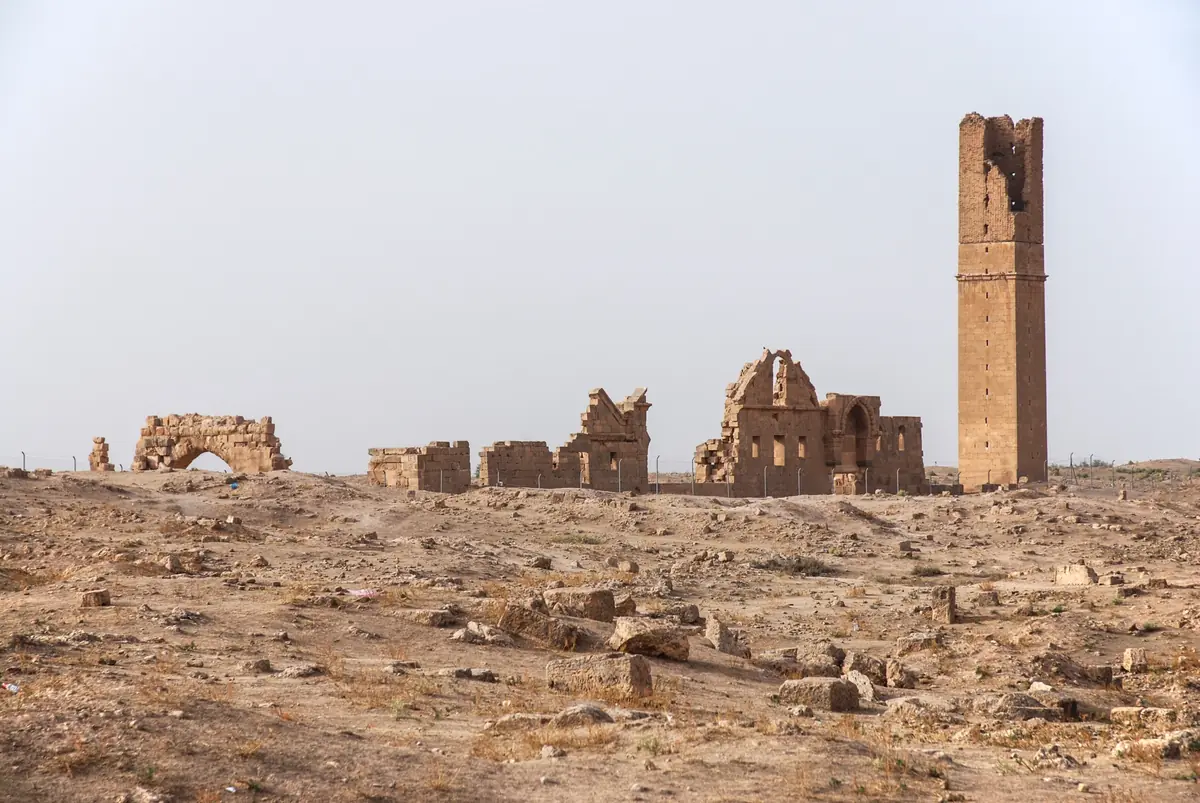
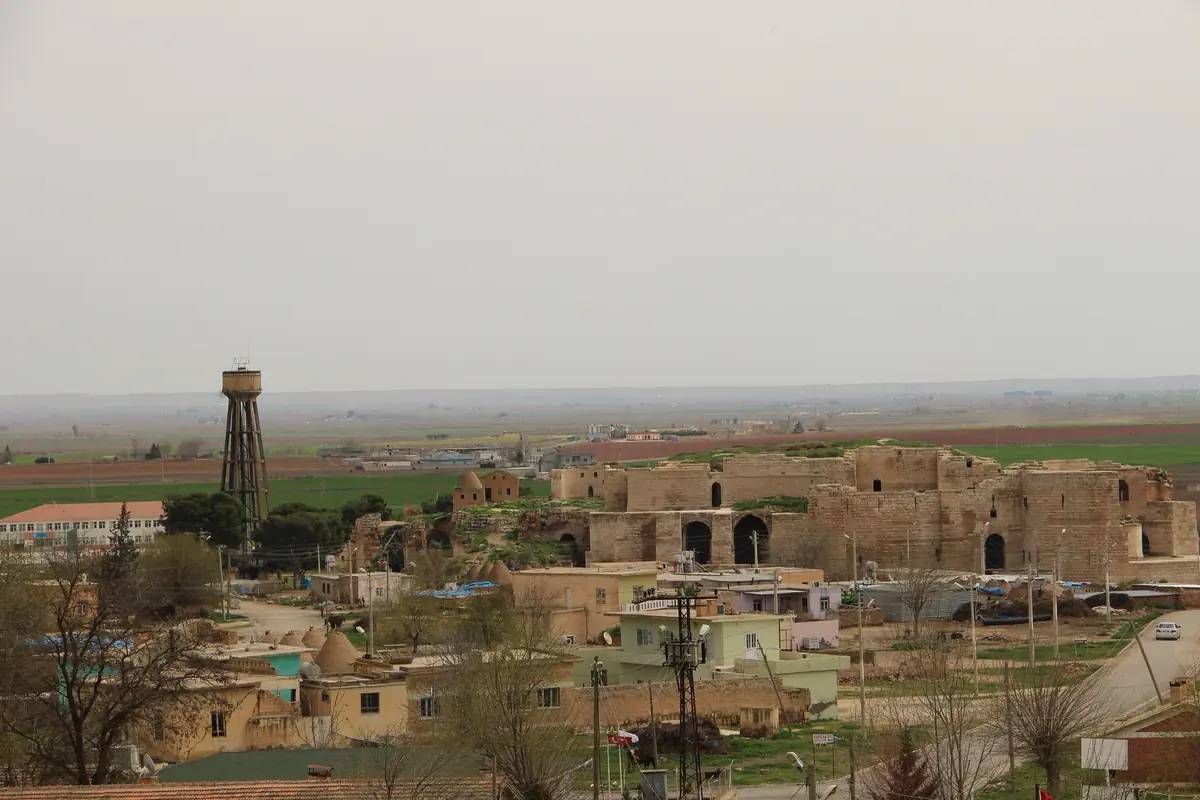
The site lies today in Turkey, about 45 km south-east of Şanlıurfa and some twenty kilometres from the Syrian border. The ancient name, Ḫarrānu ("road", "crossroads" in Akkadian), has survived to the present day. Visitors can see the ruins of the ancient city and its great mosque, a medieval citadel and a village of mud-brick beehive houses.
"They set out together from Ur of the Chaldeans for the land of Canaan; but when they had come as far as Haran, they settled there."
Genesis 11:31
In brief
Plan my visit
| Visit duration | Two to three hours on site for the great mosque, the mound, the citadel and the beehive houses, not including travel. A full day lets you combine Harran and Şanlıurfa. |
|---|---|
| Getting there | The easiest starting point is Şanlıurfa (Şanlıurfa-GAP Airport), about 45 km away: rental car, taxi, minibus or organised excursion. |
| Entry and opening times | Access conditions for the different remains may change: check them on site or with the tourist services in Şanlıurfa before your visit. |
| Best seasons | Spring and autumn. In summer the Harran plain often exceeds 40 °C: visit early in the morning, with a hat, sun protection and plenty of water. |
| Type of site | Large archaeological site with little shade and uneven ground; closed shoes recommended. The beehive houses stand in the inhabited village: respect residents' privacy. |
| ⚠️ Safety | Harran lies some twenty kilometres from the Syrian border. Check your country's official travel advice before setting off. |
Harran is visited from Şanlıurfa, served by Şanlıurfa-GAP Airport. It is about 45 km by road to the site, by car, taxi or minibus. Allow two to three hours on site for the main remains, which are spread out.
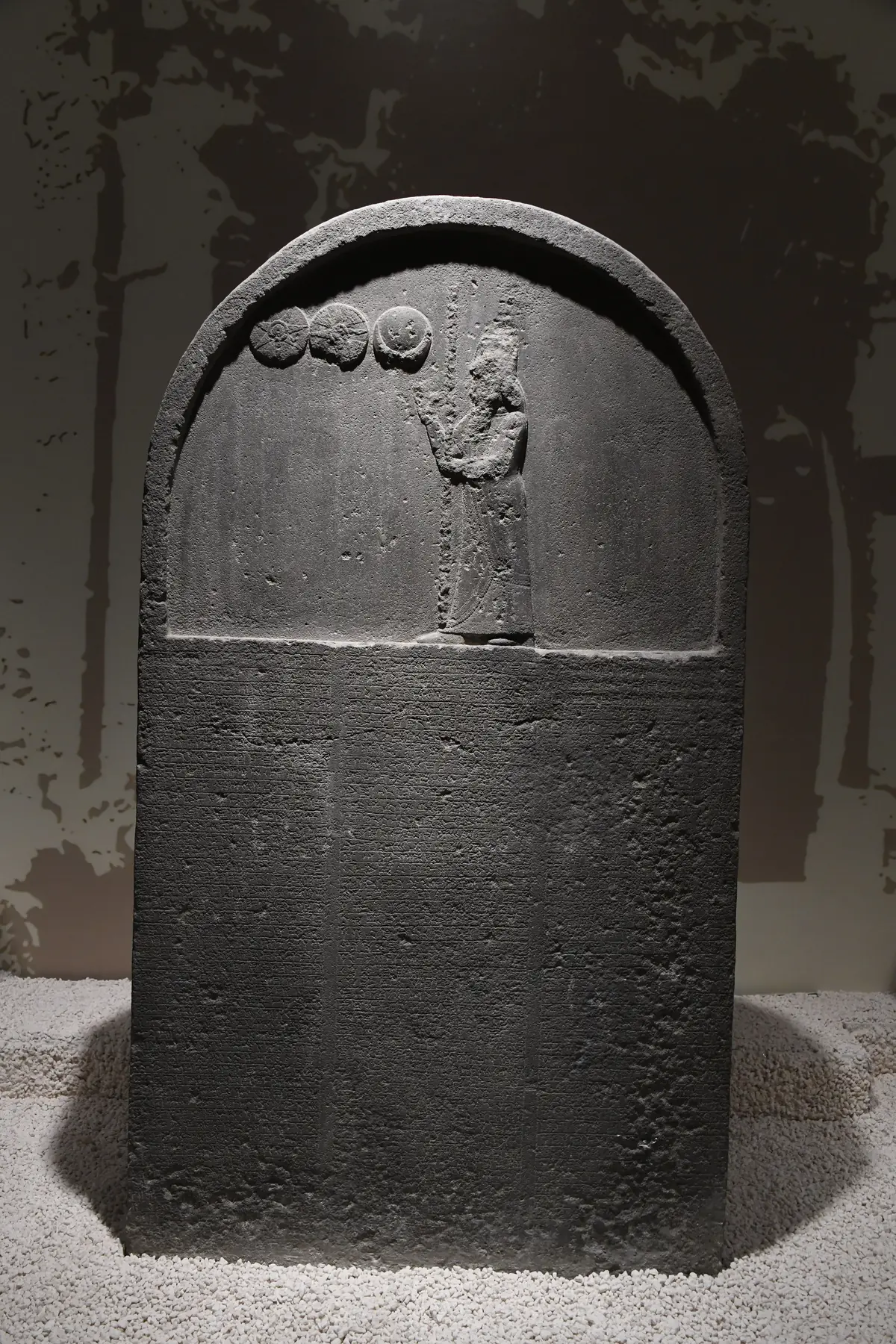
The stelae of Nabonidus and Adad-guppi found at Harran are displayed at the Şanlıurfa Archaeology Museum. Summers on the plain are very hot, often above 40 °C: visit early in the morning, in spring or autumn, with a hat and water. As the region is close to the Syrian border, check official travel advice before you go.
Nearby
No other stops are suggested here within 50 km in a straight line. Explore the map to add to your itinerary.
History & Bible
Bible story
Genesis presents Haran as an unplanned stop. Terah leaves Ur of the Chaldeans with his son Abram, his daughter-in-law Sarai and his grandson Lot, "for the land of Canaan". But the family halts on the way at Haran and settles there (Genesis 11:31). Terah dies there at the age of 205 (Genesis 11:32).
וַיֵּצְאוּ אִתָּם מֵאוּר כַּשְׂדִּים לָלֶכֶת אַרְצָה כְּנַעַן וַיָּבֹאוּ עַד־חָרָן וַיֵּשְׁבוּ שָׁם
בראשית יא, לא
It is in Haran that the call opening the story of the patriarchs is heard: to leave his land, his birthplace and his father's house for the land God will show him (Genesis 12:1). "Abram was seventy-five years old when he left Haran" (Genesis 12:4). He takes Sarai, Lot, their possessions "and the persons that they had acquired in Haran" (Genesis 12:5), and enters Canaan by way of Shechem.
Jewish commentators have read much into this last detail. The midrash (Genesis Rabbah 39) and Rashi see in it the men and women whom Abraham and Sarah had drawn to faith in one God during their stay in Haran. Rashi also notes that, by the figures in the text, Terah was still alive when Abraham left: the Bible reports his death before the departure to close his story.
📖 A clan that stayed in Haran
Nahor, Abraham's brother, and his descendants remain in the region. It is there that Abraham will send for a wife for Isaac, and there that Jacob will find refuge. The Book of Joshua recalls that Terah and his family, "beyond the River", served other gods (Joshua 24:2).
Abraham's full journey from Ur to Hebron, and the question of his birthplace (Ur in Iraq or Urfa in Turkey), are told in our article Abraham, from Ur to Canaan.
Bible story
In his old age, Abraham refuses to let Isaac marry a Canaanite woman. He sends his servant to his kin. The servant sets out with ten camels for Aram-Naharaim, "Aram of the two rivers", "to the city of Nahor" (Genesis 24:10). By the well, at the hour when the women come to draw water, he meets Rebekah, daughter of Bethuel and granddaughter of Nahor, who gives him a drink and waters his camels (Genesis 24:15-20). Her brother Laban welcomes the servant, and Rebekah agrees to leave and become Isaac's wife.
The text uses several names for the same region. Genesis 25:20 and 28:2 speak of Paddan-Aram, the "plain of Aram". Rebekah, for her part, tells Jacob plainly: "Flee at once to Haran, to my brother Laban" (Genesis 27:43). The "city of Nahor" may refer to Haran itself, where Nahor's family lived. Several historians also link it to a place called Nahur in tablets from Mari and in Assyrian texts, located in the same region but not precisely identified.
The two stories share the same structure: a meeting by a well, a young woman watering a flock, Laban welcoming the stranger. Genesis makes Haran the family's homeland, where the sons of the promise come to find their wives.
Bible story
After receiving the blessing meant for Esau, Jacob must flee his brother's anger. The Torah portion Vayetzei begins:
"Jacob left Beer-sheba, and set out for Haran."
Genesis 28:10
וַיֵּצֵא יַעֲקֹב מִבְּאֵר שָׁבַע וַיֵּלֶךְ חָרָנָה
בראשית כח, י
On the way he spends the night at Bethel, where he dreams of Jacob's ladder, then continues towards "the land of the Easterners" (Genesis 29:1).
In the open country, Jacob finds a well covered by a large stone, with shepherds waiting around it. "My friends, where are you from?" he asks. "We are from Haran" (Genesis 29:4). They know Laban, and here comes his daughter Rachel with her father's flock. Jacob rolls the stone away on his own, waters the sheep, kisses Rachel and weeps.
Jacob serves Laban seven years to marry Rachel, "and they seemed to him but a few days because of his love for her" (Genesis 29:20). On the wedding night, Laban gives him his elder daughter, Leah. Jacob marries Rachel a week later, in return for seven more years of work (Genesis 29:21-30).
Eleven sons and a daughter are born during this stay (Genesis 29:31 – 30:24): Reuben, Simeon, Levi, Judah, Issachar, Zebulun and Dinah, children of Leah; Dan and Naphtali, of Bilhah, Rachel's maid; Gad and Asher, of Zilpah, Leah's maid; and finally Joseph, Rachel's first son. Only Benjamin will be born in Canaan, on the road to Ephrath (Genesis 35:16-18).
After six more years devoted to the flocks, Jacob, now wealthy, leaves Laban in secret with his family: "Of the twenty years that I spent in your household…" (Genesis 31:41). Laban catches up with him in the hill country of Gilead, where the two men make a covenant of peace (Genesis 31:21-55). Jacob resumes his journey towards Canaan and, at Mahanaim, angels come to meet him (Genesis 32:2).
🔎 Harran's "Jacob's Well"
On the outskirts of Harran, north of the tomb of Sheikh Hayati al-Harrani and outside the walls, local people point to an old well called Bir Yakub or Yakup Kuyusu, "Jacob's Well". This is a local tradition: Genesis places the well "in the open" (Genesis 29:2) without further detail, and no archaeological evidence links it to the story.
Bible story
Haran reappears later in the Bible, this time as a city of the Assyrian empire. Around 701 BCE, the envoys of King Sennacherib try to intimidate Hezekiah, king of Judah, by listing the peoples Assyria has subdued: "Were the nations that my predecessors destroyed—Gozan, Haran, Rezeph, and the Beth-edenites in Telassar—saved by their gods?" (2 Kings 19:12, repeated in Isaiah 37:12). Haran appears here among the Aramean cities brought under Assyrian control.
In the early sixth century BCE, the prophet Ezekiel lists Haran among the trading partners of Tyre, the great Phoenician port: "Haran, Canneh, and Eden, the merchants of Sheba, Assyria, and Chilmad traded with you" (Ezekiel 27:23). Lying at the crossroads of the routes linking Mesopotamia, Anatolia and Syria, the city lived from the trade in fabrics and luxury goods.
These two mentions confirm that, for the biblical writers, Haran was a well-known city of Upper Mesopotamia, the same one found on maps and in cuneiform texts.
Archaeology
Haran is mentioned from the early second millennium BCE in the tablets from Mari. It is best known as one of the two great sanctuaries of the moon-god Sîn, alongside Ur in southern Mesopotamia. Historians often point out this parallel between the two cities of Terah's family. Once under Assyrian control, Haran became an important provincial capital.
After the fall of Nineveh in 612 BCE, the prince Ashur-uballit II withdrew to Haran and ruled what was left of the empire from there. The Babylonians and Medes took the city in 610–609 BCE. It was to support the last Assyrians that Pharaoh Necho II marched towards the Euphrates, a campaign during which King Josiah was killed at Megiddo (2 Kings 23:29).
The last king of Babylon, Nabonidus (556–539 BCE), was tied to Haran through his mother, Adad-guppi, a devotee of Sîn who, according to her inscription, died at the age of 104. Nabonidus rebuilt the Ehulhul temple. A first stele of Adad-guppi was discovered by Henri Pognon in 1906. In the 1950s, the archaeologist David Storm Rice uncovered three more stelae reused as paving in the entrances of the great mosque: two of Nabonidus and one of Adad-guppi. Whether the mosque was built over the Ehulhul itself is unknown: the temple has not yet been located with certainty.
History
Under the name Carrhae, the city gave its name to one of Rome's worst defeats: in 53 BCE, the Parthian general Surena crushed the army of Crassus, who was killed. In 363, Emperor Julian stopped here before his campaign against the Persians. The moon cult survived for a long time among those whom Arab writers called the Sabians of Harran.
The Umayyad caliph Marwan II made Haran his capital from 744 to 750. The great mosque, often described as the oldest in Anatolia, is attributed to his reign and was restored in the Ayyubid period, in the twelfth century. A local tradition places there the "first university of Islam", founded under Caliph Umar II; in any case, between the eighth and tenth centuries Haran was a centre of scholars, translators and astronomers. Its square minaret, arches and sections of wall remain.
The citadel, in the south-east of the city, is of uncertain origin (Greek inscriptions suggest a Byzantine phase) and was rebuilt in the Middle Ages. After the city was taken by the Mongols (1259–1260), Haran was abandoned in 1271. Together with Şanlıurfa, the ruins have been on Turkey's UNESCO World Heritage Tentative List since 2000.
Tradition and identification
The neighbouring city of Şanlıurfa, about 45 km to the north-west, claims an old tradition, mostly Muslim: that it is Abraham's "Ur", and therefore his birthplace. Visitors are shown a cave where he is said to have been born (Mevlid-i Halil) and the pool of Balıklıgöl, the "lake of fish". According to legend, King Nimrod had Abraham thrown onto a pyre; the fire turned into water and the logs into fish, and the sacred carp of the pool are said to be their descendants.
These stories belong to tradition. Genesis has Abraham born in "Ur of the Chaldeans", which most scholars identify with Tell el-Muqayyar in southern Iraq; the theory of a northern Ur near Harran remains a minority view. The story of Nimrod and the furnace comes from Jewish commentary (Genesis Rabbah 38) and the Quran (Sura 21), not from Genesis. Urfa's shrines remain a busy place of pilgrimage and a natural stop for anyone visiting Harran.
These sites share a story but are not necessarily close to each other: distances are given in a straight line.
Jacob sees the angels of God there, Saul's son reigns there, and David waits there for the outcome of Absalom's revolt: a town of Gilead on the Jabbok.
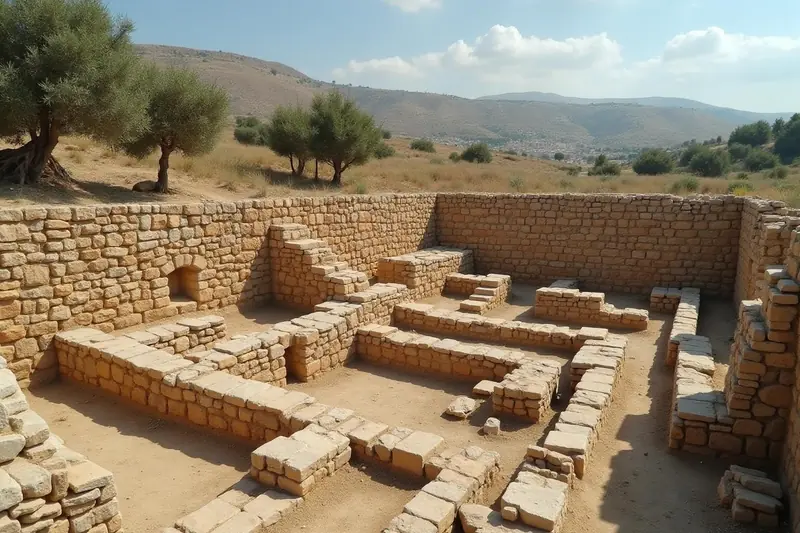
At Bethel, Jacob has one of the Bible's greatest spiritual experiences: a dream in which a ladder joins earth to heaven.
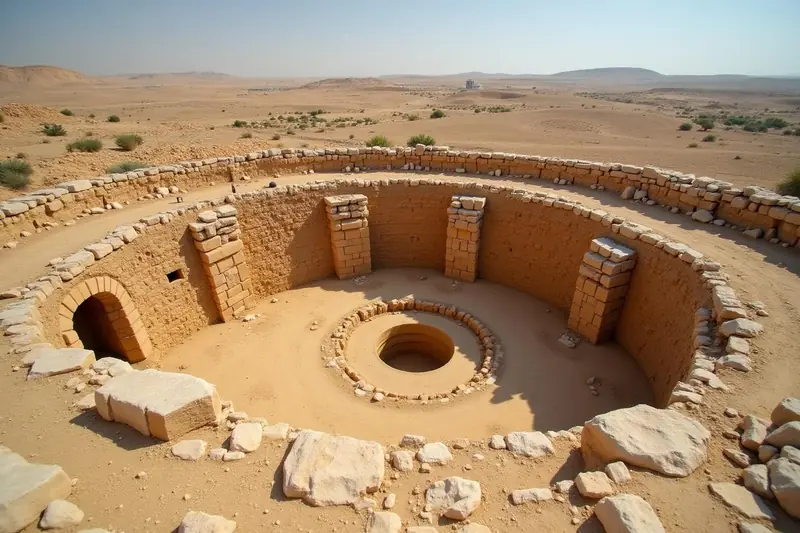
At Beersheba, Abraham seals a covenant with Abimelech over a well, plants a tamarisk and calls on the name of the Everlasting God.
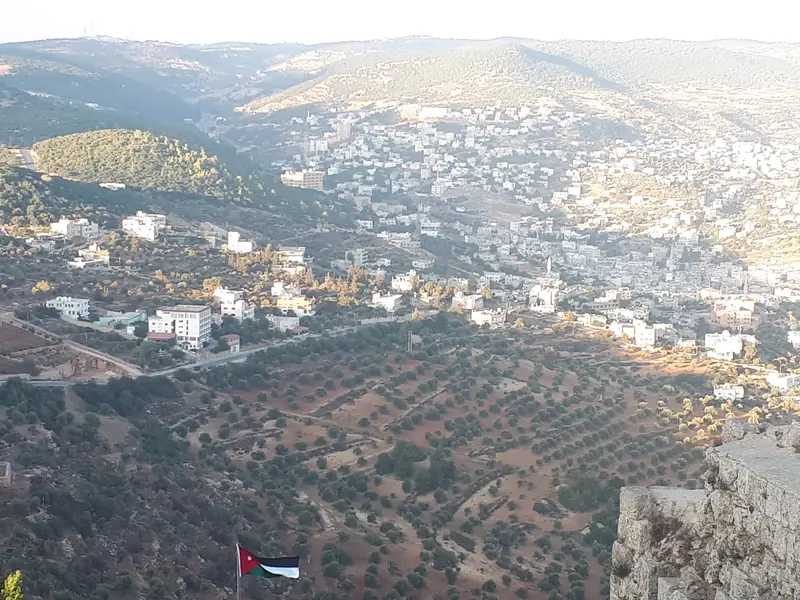
The wooded hills east of the Jordan, between the Yarmuk and the Jabbok, where the Bible places the covenant of Jacob and Laban, the balm of the caravans and several episodes of Judges and Kings.
In south-east Turkey, at the site of Harran (Altınbaşak village), in Şanlıurfa Province. It is about 45 km south-east of the city of Şanlıurfa and some twenty kilometres from the Syrian border.
That is the identification accepted by historians: the name Ḫarrānu appears in cuneiform texts from the second millennium BCE and has been handed down without interruption to the present name. No inscription, however, mentions Abraham, Laban or Jacob: their presence belongs to the biblical narrative.
According to Genesis 11, Abraham was born in Ur of the Chaldeans, then settled in Haran with his father Terah. Most scholars place Ur in southern Iraq; a living tradition in Turkey places it at Urfa, near Harran. Both views are presented in our article Abraham, from Ur to Canaan.
Twenty years, according to Genesis 31:41: fourteen years of service to marry Leah and Rachel, then six years to build up his flocks. Eleven of his sons and his daughter Dinah were born there; only Benjamin was born later, in Canaan.
Local people show a "Jacob's Well" (Bir Yakub) on the outskirts of Harran, near the tomb of Sheikh Hayati al-Harrani. It is a local tradition: Genesis places the well "in the open" without locating it, and no excavation has linked it to the story.
The ruins of the great mosque and its square minaret, the mound of the ancient city, the citadel, sections of the walls and the village of mud-brick beehive houses. The Nabonidus stelae found on the site are displayed at the Şanlıurfa Archaeology Museum.
Start from Şanlıurfa, served by Şanlıurfa-GAP Airport, then drive about 45 km by car, taxi, minibus or on an excursion. Allow two to three hours on site, or a full day if you add Abraham's shrines in Şanlıurfa.
In spring or autumn: in summer the plain often exceeds 40 °C and the site has little shade. Set off early with water and a hat, and check official travel advice, as the region is close to the Syrian border.