
Bethel: Jacob's Dream Between Heaven and Earth
At Bethel, Jacob has one of the Bible's greatest spiritual experiences: a dream in which a ladder joins earth to heaven.
Biblical period: The Patriarchs
Jacob sees the angels of God there, Saul's son reigns there, and David waits there for the outcome of Absalom's revolt: a town of Gilead on the Jabbok.
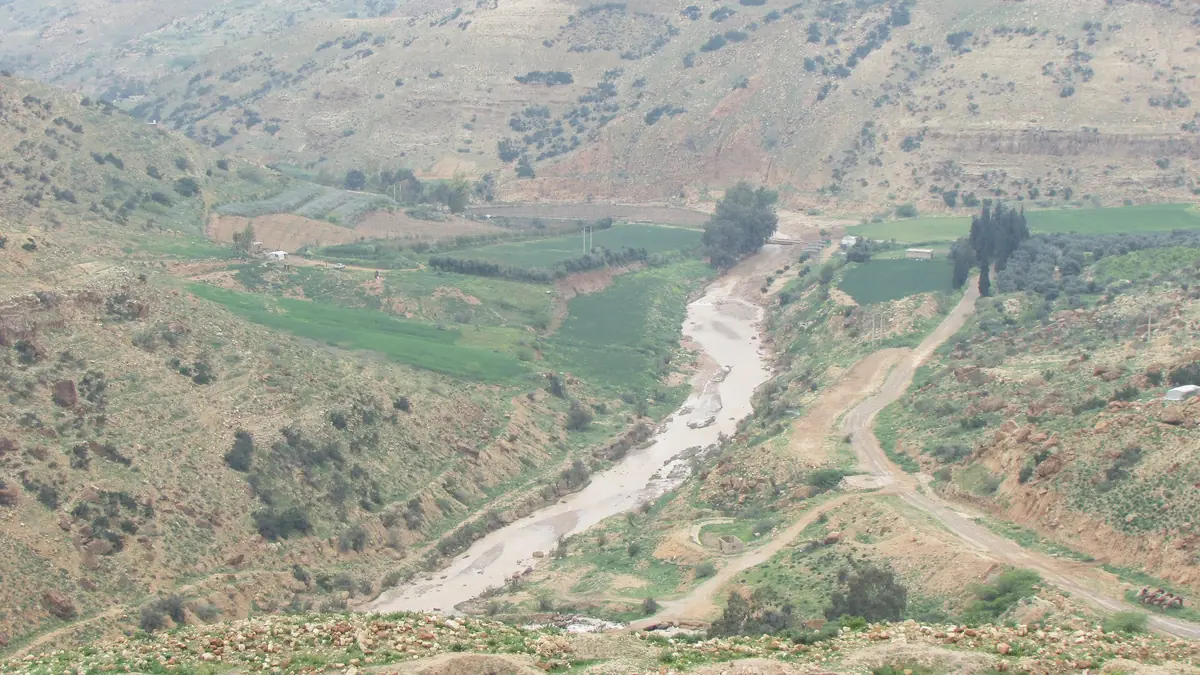
Mahanaim (Hebrew Mahanayim, "two camps") is the place where, according to Genesis, Jacob meets the angels of God on his way back from Haran and gives the place its name. The town reappears at key moments in Israel's story: a Levitical city in Gilead, the capital of Ish-bosheth son of Saul, and then the refuge of King David during the revolt of his son Absalom.
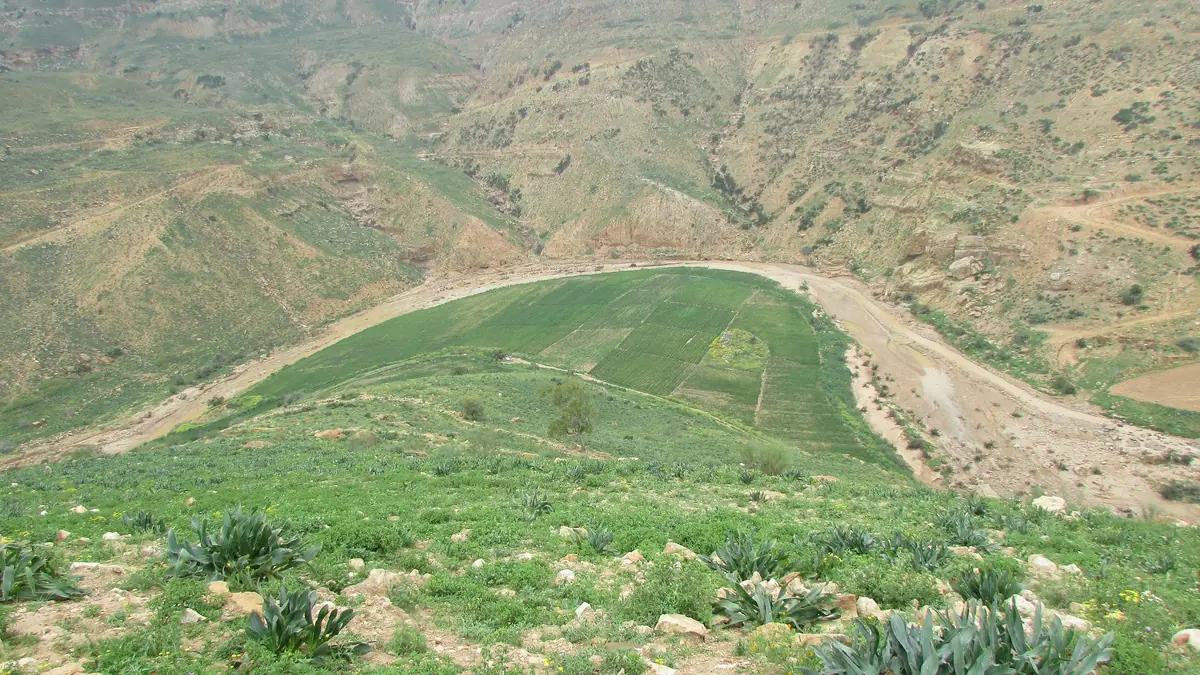
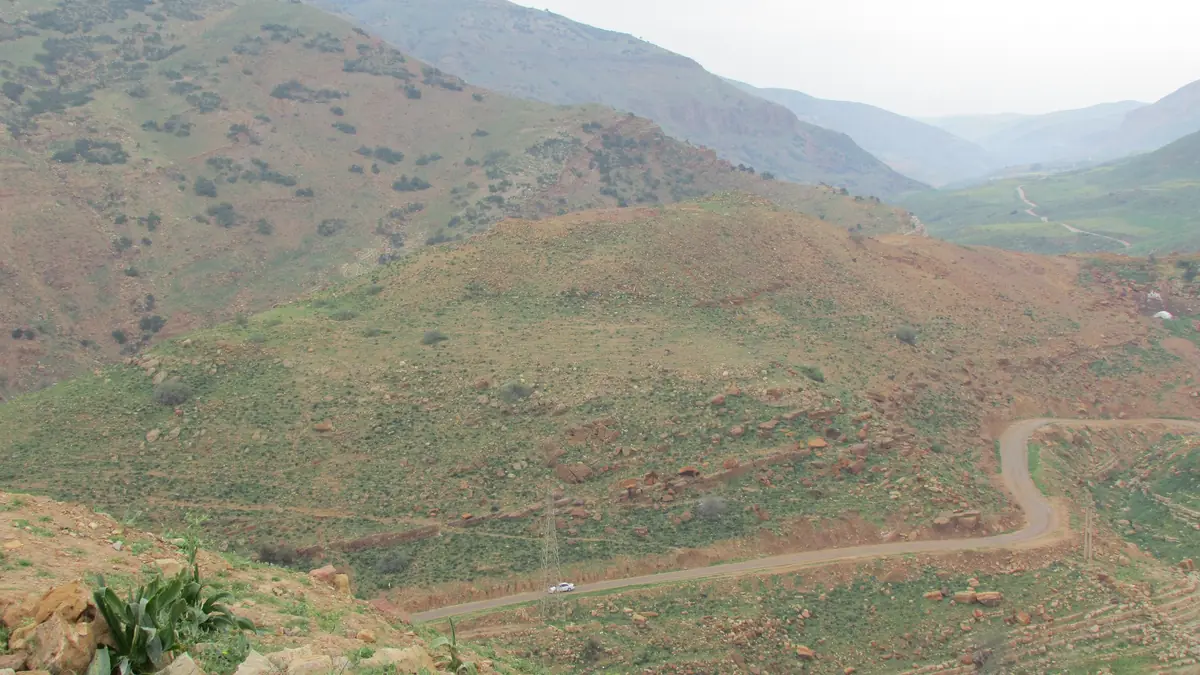
Mahanaim lay east of the Jordan, near the Jabbok River, today's Nahr az-Zarqa in Jordan. Its exact location is still debated. The most widely held view places it on the western hill of Tulul adh-Dhahab, twin hills wrapped in a meander of the river, a few hundred metres from the eastern hill that is often linked to Peniel.
In brief
Plan my visit
| Visit duration | About 1 hour on site to climb the western hill and look over the meander of the Jabbok, excluding travel. Allow half a day if you add Peniel and Tell Deir Alla. |
|---|---|
| Access from Israel | The site is in Jordan: you need to cross the border, for example at the Jordan River crossing (Sheikh Hussein) near Beit She'an, with a valid passport and, depending on nationality, a visa. Check the crossing's hours and formalities before you set off. |
| Getting there | Take the Jordan Valley road to Deir Alla, then head east into the Nahr az-Zarqa valley and along farm tracks. A suitable vehicle and a driver who knows the area are recommended. |
| Type of site | Undeveloped archaeological site: no visitor centre, no signposting, no published opening hours. Steep slopes and unstable ground; walking shoes essential. Do not pick anything up. |
| Best seasons | Spring and autumn. In summer the heat in the Jordan Valley is intense: set off early in the morning and carry plenty of water. After heavy rain the tracks can be muddy. |
| ⚠️ Safety | Check the border-crossing conditions and travel advice before you go. A local guide or driver is recommended. |
The Tulul adh-Dhahab site has no visitor facilities: no visitor centre, no known ticket office, no information panels. It is reached through the Nahr az-Zarqa valley east of Deir Alla, then along farm tracks. The climb up the western hill is on foot, over steep, stony slopes; the summit looks down on the meander of the Jabbok and across the river to the eastern hill.
A visit combines naturally with Peniel, linked to the eastern hill of the same site, and with Tell Deir Alla, often identified with Succoth, Jacob's next stop (Genesis 33:17), where the Balaam inscription was discovered. Further northeast, the ancient city of Jerash makes for a more comfortable stop.
⚠️ Before you go
Check the conditions for crossing the border between Israel and Jordan, visa requirements for your nationality and your country's travel advice. The site has suffered from illegal digging: do not pick anything up and stay on the paths. Going with a local guide or driver who knows the valley is the simplest option.
Nearby
Add other places to visit around Mahanaim.
Straight-line distances: the drive is longer.
At the ford of the Jabbok, Jacob wrestles all night with a mysterious opponent. He comes away wounded, blessed and bearing a new name: Israel.
On a spur of the mountains of Moab, Deuteronomy has Moses gaze at the land he will never enter. Since the 4th century, a Christian sanctuary has kept that memory alive.
History & Bible
Bible story
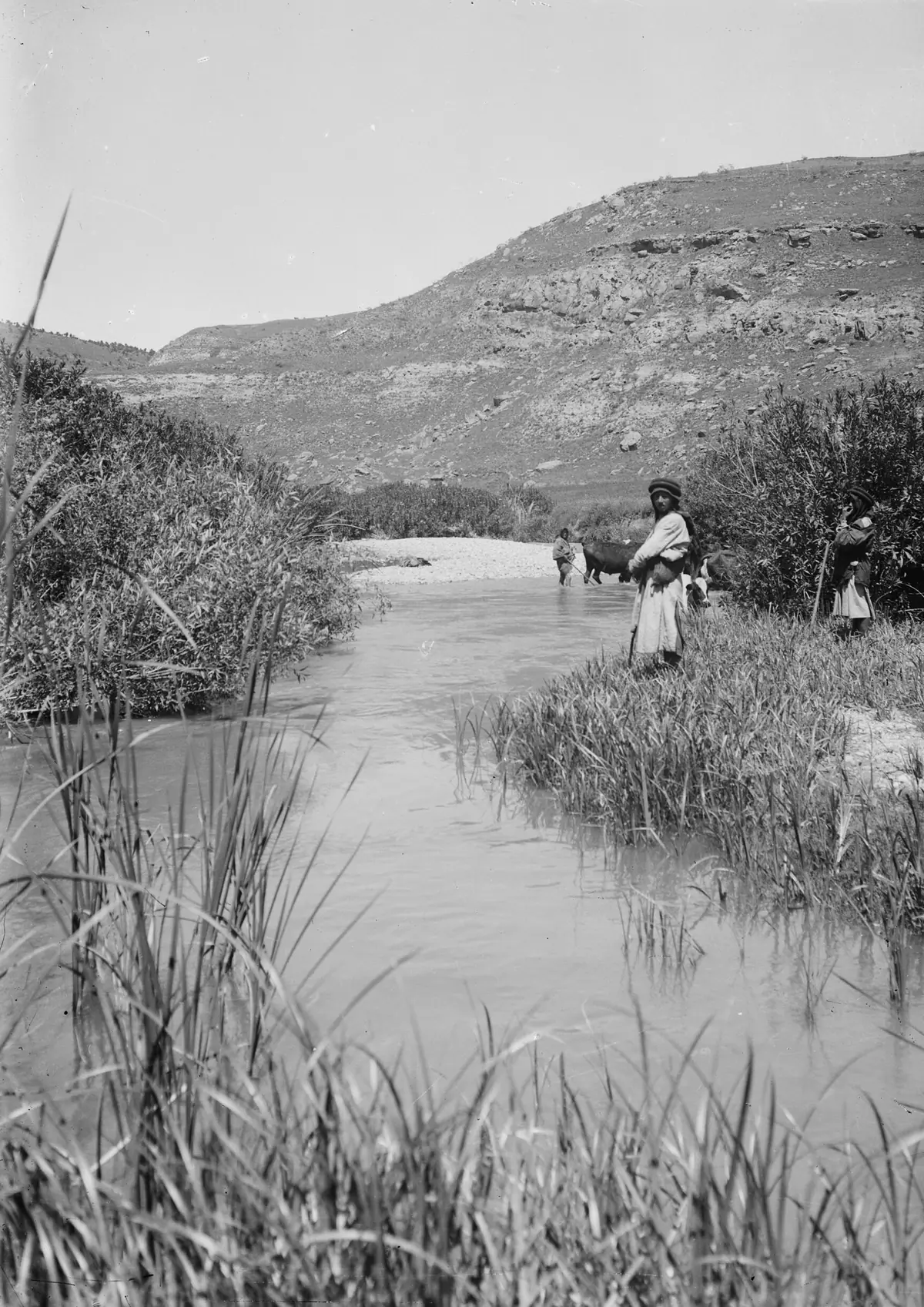
After twenty years with his uncle Laban in Haran, in upper Mesopotamia, Jacob heads back to Canaan with his wives, children and flocks. Laban has caught up with him in the hill country of Gilead, and the two men have parted after making a covenant. It is then, as Jacob sets out again, that a brief and mysterious encounter takes place.
"And Jacob went on his way, and the angels of God met him. And when Jacob saw them, he said, This is God's host: and he called the name of that place Mahanaim."
Genesis 32:1-2
The text says nothing more: the angels do not speak and deliver no message. The name comes from the Hebrew word mahaneh, "camp", in the dual form: "two camps". Commentators have offered several explanations: the angels' camp beside Jacob's camp, or, according to Rashi, two groups of angels, those who had escorted him out of the promised land and those who now welcome him back.
The theme returns a few verses later. Hearing that Esau is coming to meet him with four hundred men, Jacob is afraid and divides his people and animals "into two bands" (Genesis 32:7-8), so that one can escape if the other is attacked. That same night, at the ford of the Jabbok, he wrestles until dawn with a mysterious opponent: this is the episode of Peniel, where Jacob receives the name Israel.
📖 The end of parashat Vayetzei
The encounter with the angels of Mahanaim closes the weekly Torah portion Vayetzei (Genesis 28:10 to 32:3 in the Hebrew numbering), which opened with the dream of the ladder at Bethel: the story frames Jacob's exile between two visions of angels. See parashat Vayetzei and its places.
Verses are quoted from the King James Version. In the Hebrew Bible the numbering is one verse ahead (Genesis 32:2-3).
Bible story
When the land east of the Jordan is divided among the tribes, Mahanaim serves as a landmark. The border of Gad runs "from Mahanaim unto the border of Debir" (Joshua 13:26), and the territory of the half-tribe of Manasseh begins at Mahanaim and stretches north across all of Bashan (Joshua 13:30). The town therefore stood at the hinge between the two tribes, at the heart of the biblical region of Gilead.
Mahanaim is also listed among the cities given to the Levites. Taken from the territory of Gad together with its pasturelands, it goes to the families of Merari, alongside Ramoth in Gilead, the city of refuge (Joshua 21:38; 1 Chronicles 6:80, or 6:65 in the Hebrew numbering). These lists portray an important town of Israelite Transjordan, although the period they reflect cannot be dated precisely.
The Song of Songs speaks, about the Shulamite, of a mehollat ha-mahanayim (Song of Songs 7:1 in the Hebrew Bible, 6:13 in the KJV). The King James Version renders it "the company of two armies"; other versions understand "the dance of Mahanaim". There is no way to tell whether the poem has the town in mind or simply two groups of dancers.
Bible story
After Saul and three of his sons die on Mount Gilboa, the kingdom splits. At Hebron, the tribe of Judah anoints David king. In the north, Abner, commander of Saul's army, takes charge of the succession on behalf of a surviving son of the dead king.
"But Abner the son of Ner, captain of Saul's host, took Ishbosheth the son of Saul, and brought him over to Mahanaim; and made him king over Gilead, and over the Ashurites, and over Jezreel, and over Ephraim, and over Benjamin, and over all Israel."
2 Samuel 2:8-9
According to the text, Ish-bosheth was forty years old and reigned for two years (2 Samuel 2:10). His name, "man of shame", is probably a deliberate distortion of Eshbaal, the form preserved in Chronicles (1 Chronicles 8:33). The choice of Mahanaim is often explained by its position: across the Jordan, far from the Philistines who had won at Gilboa, in a Gilead that remained loyal to the house of Saul.
It is from Mahanaim that Abner sets out for Gibeon, where his men clash with Joab's beside the pool (2 Samuel 2:12-17), and it is to Mahanaim that he returns after marching all night through the Jordan Valley (2 Samuel 2:29). The long war between the house of Saul and the house of David (2 Samuel 3:1) ends with the murder of Abner, then of Ish-bosheth himself, killed in his house during his midday rest by two of his captains (2 Samuel 4:5-7). The text does not name the town where he died, but the story suggests he was still in his capital.
Bible story
Some decades later, Mahanaim in turn takes in King David. His son Absalom has had himself proclaimed king at Hebron and is marching on Jerusalem. David leaves the city in haste, crosses the Jordan and reaches Mahanaim (2 Samuel 17:22-24), while Absalom crosses the river in pursuit and camps in Gilead (2 Samuel 17:26).
From Mahanaim, David organises his troops into three divisions under Joab, Abishai and Ittai the Gittite. The people refuse to let him fight in person, and the king stands "by the gate side" while the army marches out by hundreds and by thousands (2 Samuel 18:1-4). Before the battle he asks his generals to deal gently with Absalom. The fighting takes place in the "wood of Ephraim"; Absalom, his head caught in the boughs of a great oak, is put to death by Joab and his men (2 Samuel 18:6-15).
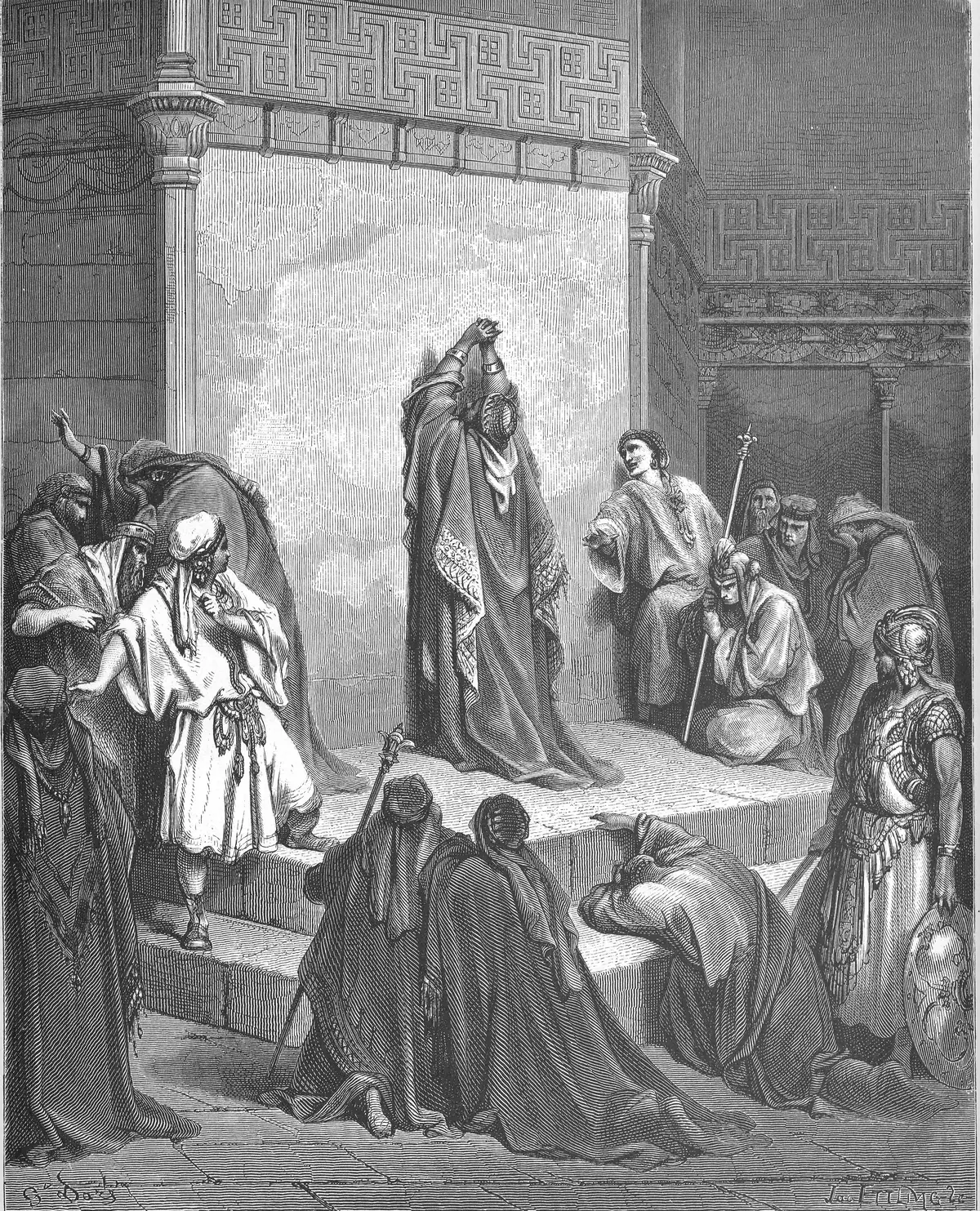
What follows takes place at the gate of Mahanaim. David is sitting "between the two gates", a watchman climbs onto the roof of the gate and sees two runners coming, Ahimaaz and then Cushi (2 Samuel 18:24-32). The second brings news of Absalom's death.
"And the king was much moved, and went up to the chamber over the gate, and wept: and as he went, thus he said, O my son Absalom, my son, my son Absalom! would God I had died for thee, O Absalom, my son, my son!"
2 Samuel 18:33 (19:1 in the Hebrew Bible)
Victory turns into mourning, to the point that the soldiers steal back into the city like men ashamed, until Joab forces the king to show himself at the gate (2 Samuel 19:1-8 in the KJV). The mention of two gates and an upper chamber implies a fortified town, a detail that archaeologists readily compare with the ramparts of Tulul adh-Dhahab, though without direct proof.
Bible story
When they arrive, David and his men are exhausted. Three leading men of Transjordan come to supply them: Shobi son of Nahash, from Rabbah, the Ammonite capital; Machir son of Ammiel, from Lo-debar; and Barzillai the Gileadite, from Rogelim.
"[They] brought beds, and basons, and earthen vessels, and wheat, and barley, and flour, and parched corn, and beans, and lentiles, and parched pulse, and honey, and butter, and sheep, and cheese of kine."
2 Samuel 17:28-29
The text gives the reason for this gesture: "The people is hungry, and weary, and thirsty, in the wilderness." The list, unusually detailed, gives an idea of what Gilead produced: cereals, pulses, honey and livestock products.
After the victory, as David crosses back over the Jordan, Barzillai accompanies him to the river. The story describes him as eighty years old, "a very great man", who "had provided the king of sustenance while he lay at Mahanaim" (2 Samuel 19:31-32 in the KJV, 19:32-33 in the Hebrew Bible). David invites him to live at his side in Jerusalem. Barzillai declines with gentle humour: at his age he can no longer taste what he eats or hear the voices of singers, and he would rather die in his own town, near the grave of his father and mother. He entrusts Chimham, probably his son, to the king, and Chimham leaves with David (2 Samuel 19:34-38).
On his deathbed, David still urges Solomon to show kindness "unto the sons of Barzillai the Gileadite", in memory of their help during the flight from Absalom (1 Kings 2:7). Barzillai has remained in tradition the model of loyal hospitality towards a king in exile.
History
The list of Solomon's twelve officers, each responsible for supplying the royal household for one month a year (1 Kings 4:7), records simply: "Ahinadab the son of Iddo had Mahanaim" (1 Kings 4:14). The town thus appears as the seat of an administrative district in Transjordan, perhaps for central Gilead. Historians debate the date of this list: some see it as a document from Solomon's time, others as a later composition reflecting the administration of the northern kingdom.
The town list of Pharaoh Shoshenq I, carved on the Bubastite Portal at Karnak and linked to his campaign in Canaan in the second half of the 10th century BCE, contains a name that most Egyptologists read as "Mahanaim", not far from a name read as "Penuel". The Bible mentions this campaign under the name Shishak, without listing these towns (1 Kings 14:25-26). If the reading is correct, Mahanaim was important enough at the time to appear on the pharaoh's list.
After the 10th century, the Bible no longer mentions Mahanaim as a living town: its name only comes back in recollections of David's story (1 Kings 2:8). When and how the town lost its importance is unknown.
Archaeology
No inscription found on site names the town: the location of Mahanaim rests on the Bible's indications, east of the Jordan and near the Jabbok. The most frequently favoured candidate is Tulul adh-Dhahab, "the hills of gold", two tells rising about 120 m above a meander of the Nahr az-Zarqa, some 6.5 km east of Tell Deir Alla. The river separates them: the large western hill (al-Gharbi) and the small eastern hill (ash-Sharqi).
Until around 1970, many scholars identified the site with Penuel. Since then, many have placed Mahanaim there. Archaeologist Israel Finkelstein and his colleagues propose dividing the site: Mahanaim on the western hill, Penuel on the eastern hill. Others argue that the dual name, "two camps", refers to both hills together, and look for Penuel elsewhere. Older proposals place Mahanaim at Tell el-Hajjaj, south of the Jabbok (Roland de Vaux, Martin Noth), or more rarely at Tell er-Reheil. The question remains open.
Since 2005, a team from TU Dortmund led by Thomas Pola has been excavating the western hill with the Jordanian Department of Antiquities, joined in 2006 by the University of Basel for geophysical survey and aerial photography. The earliest occupation, radiocarbon-dated to roughly 1300-970 BCE, is known mainly from layers and finds. The best-preserved levels are later: foundations of the Persian and Hellenistic periods, then a large building with two peristyle courtyards from the late Hellenistic period, destroyed by fire in the 1st century BCE.
The debate was revived in 2024. Israel Finkelstein and Tallay Ornan published about ten carved stone blocks reused in later buildings: lyre players, a lion, horses, palm trees, a man carrying a goat. They date them probably to the first half of the 8th century BCE, compare them with the drawings of Kuntillet Ajrud, and suggest they came from an official residence or monumental gate of the kingdom of Israel. That building has not been found: it is a reasoned hypothesis that strengthens the identification with Mahanaim without proving it. Finkelstein himself notes that there is no way to know whether kings of Israel ever stayed there.
These sites share a story but are not necessarily close to each other: distances are given in a straight line.
At Bethel, Jacob has one of the Bible's greatest spiritual experiences: a dream in which a ladder joins earth to heaven.
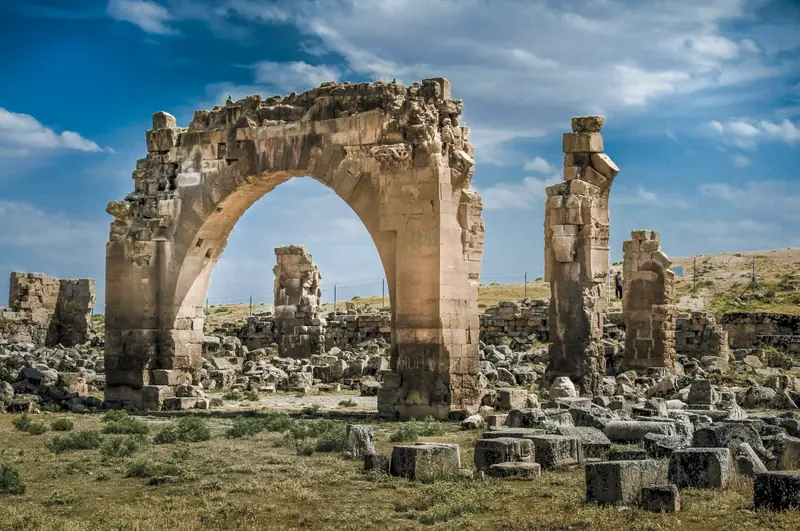
On the Harran plain near Şanlıurfa, Genesis places Abraham's family and later Jacob, who spends twenty years with his uncle Laban. The city of the moon-god Sîn has left ruins, a great medieval mosque and its famous beehive houses.
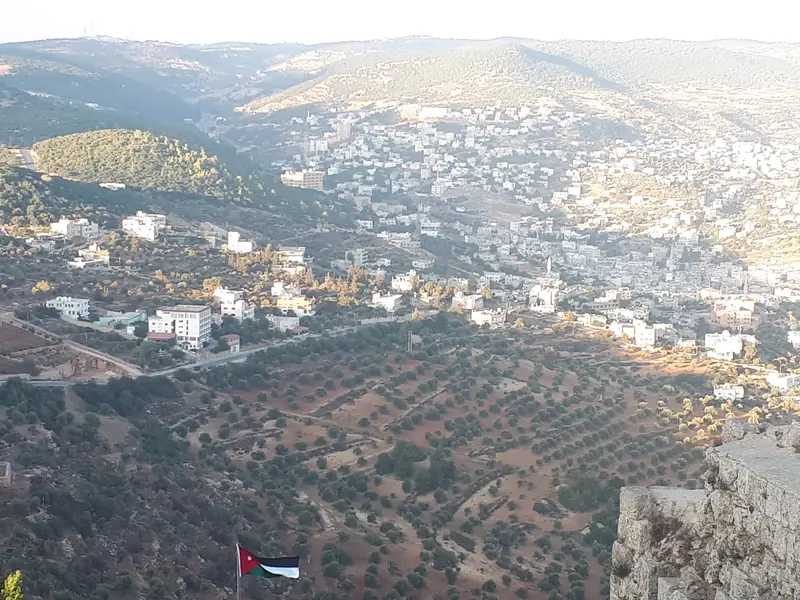
The wooded hills east of the Jordan, between the Yarmuk and the Jabbok, where the Bible places the covenant of Jacob and Laban, the balm of the caravans and several episodes of Judges and Kings.
In Jordan, east of the Jordan River, near the Jabbok (Nahr az-Zarqa). The most widely held view places it on the western hill of Tulul adh-Dhahab, about 6.5 km east of Tell Deir Alla. No inscription confirms the name: other sites have been proposed, such as Tell el-Hajjaj, south of the river.
They are two distinct places in the Bible, but they may be neighbours. According to a widespread view, defended in particular by Israel Finkelstein, Mahanaim occupied the western hill of Tulul adh-Dhahab and Peniel the eastern hill, across the Jabbok. Other scholars assign both hills to Mahanaim.
"Two camps" in Hebrew (mahanayim, the dual of mahaneh, "camp"). Jacob gives the place this name after seeing angels there: "This is God's host" (Genesis 32:2 in the KJV, 32:3 in the Hebrew Bible). Commentators see in it the angels' camp beside Jacob's, or two groups of angels.
During Absalom's revolt, David left Jerusalem and crossed the Jordan. Mahanaim, a fortified town of Gilead already used as a capital by Ish-bosheth, gave him a base far from his son's supporters and the backing of local leaders such as Barzillai (2 Samuel 17:24-29). It was there that he learned of Absalom's death.
A wealthy eighty-year-old leader from Rogelim, in Gilead, who supplied David and his men during their stay at Mahanaim (2 Samuel 17:27-29; 19:32 in the KJV). He declined to follow the king to Jerusalem and entrusted Chimham to him. David commended his sons to Solomon (1 Kings 2:7).
Not directly. In 2024 Israel Finkelstein and Tallay Ornan published carved blocks from Tulul adh-Dhahab, probably dating to the first half of the 8th century BCE, which may come from an official residence or gate of the kingdom of Israel. That building has not been excavated: it is a hypothesis, not proof.
Yes, by crossing into Jordan with a valid passport and, depending on nationality, a visa, for example at the Sheikh Hussein crossing near Beit She'an. The site is undeveloped and reached by dirt tracks: plan on a local guide or driver and good shoes, and check the crossing conditions before you leave.
Peniel, linked to the eastern hill of the same site, where Jacob wrestles with the angel; Tell Deir Alla, about 6.5 km to the west, often identified with Succoth and known for the Balaam inscription; and, further northeast, the Roman ruins of Jerash.