
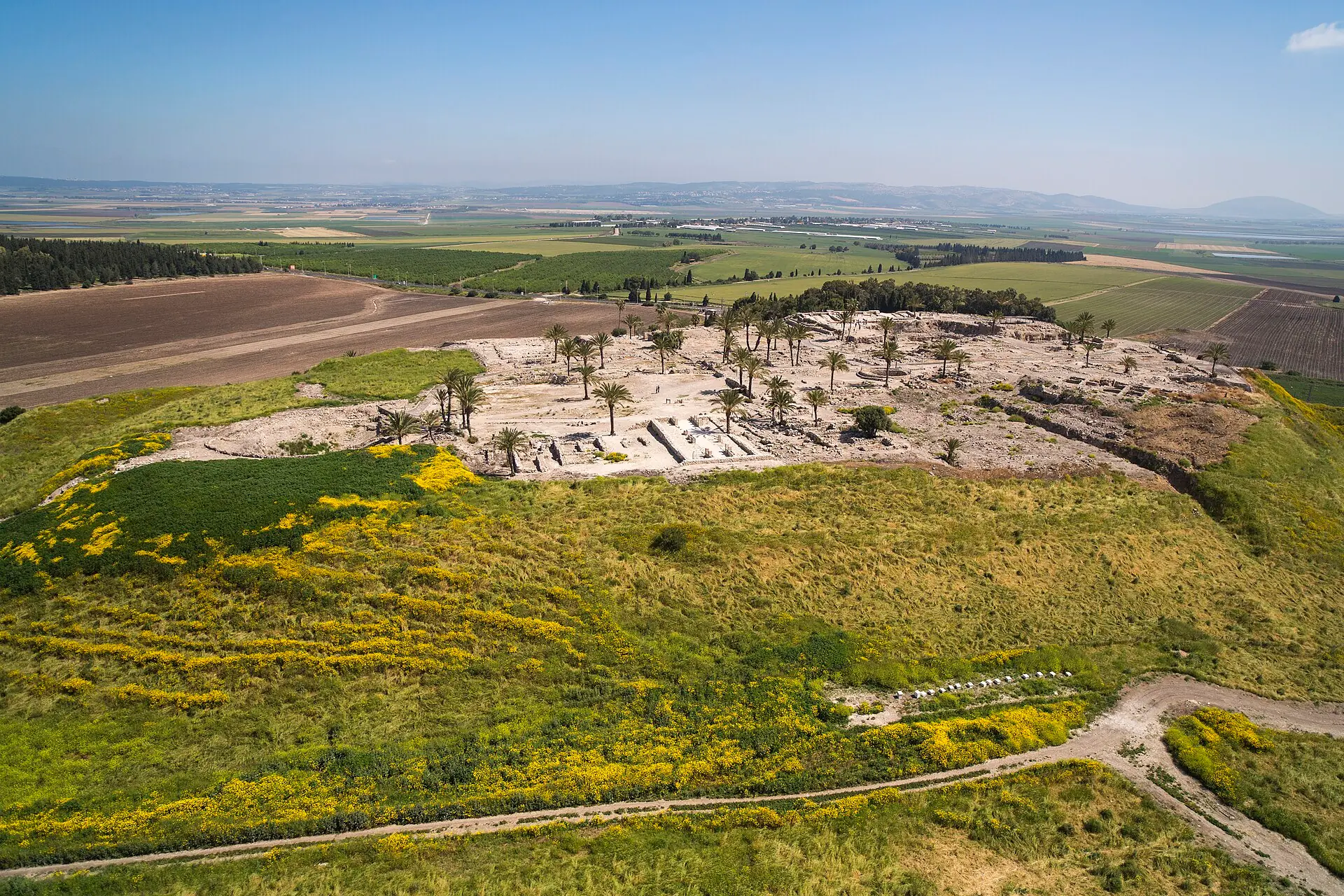
In brief
This day trip combines Tel Megiddo, a mountain bike ride in Megiddo Forest a few minutes from the mound, and the Muhraqa monastery on Mount Carmel. Leaving Netanya at 7:30, you spend about 2 hours on the mound, ride for about 2 hours, then drive up the Carmel before getting home around 4 pm.
- Tel Megiddo: the gate long attributed to Solomon, the round Canaanite altar, the "stables" and the water system (1.5 to 2 hours).
- The Mishmar HaEmek mountain bike trails, between the kibbutz and Midrach Oz, 5 km from the mound: singletracks of several levels, on the land allotted to Manasseh.
- Muhraqa, on Mount Carmel: where tradition places Elijah's challenge to the prophets of Baal (1 Kings 18), facing the Jezreel Valley.
This bike day trip around Tel Megiddo fits into a single day from central Israel. The Jezreel Valley is one of the great battlefields of the Bible: Deborah defeats the kings of Canaan here, King Josiah dies facing Pharaoh, and Elijah challenges the prophets of Baal on the Carmel that overlooks it. You visit the mound in the morning, ride the trails of Megiddo Forest a few minutes away, then finish at the Muhraqa monastery.
The plan leaves Netanya at 7:30 am and gets back around 4 pm. It assumes a car and your own bike, ideally a mountain bike. Every stop is inside Israel, on main roads. Visit times come from our place pages; driving times are estimates without traffic.
- LengthOne day, 7:30 am to 4 pm
- StopsTel Megiddo, Megiddo Forest, Muhraqa
- RidingAbout 2 hours of mountain biking, at your level
The day, hour by hour
Brown pins: the stops of the dayGrey pins: other biblical sites nearby
| Time | Stop | Duration |
|---|---|---|
| 7:30 | Leave Netanya, via Hadera and Route 65 (Wadi Ara) | About 1 h drive |
| 8:30 | Tel Megiddo: gate, round altar, "stables", lookout, water system | 1.5 to 2 h |
| 10:30 | Drive to the Mishmar HaEmek trails, between the kibbutz and Midrach Oz | A few minutes |
| 10:45 | Mountain biking on the Mishmar HaEmek trails | About 2 h |
| 12:45 | Picnic at a lookout over the Jezreel Valley | 30 min |
| 13:15 | Drive to Muhraqa, via Yokneam and Daliyat al-Karmel | About 40 min |
| 14:00 | Muhraqa: Elijah statue, roof terrace, panorama | 45 min to 1 h |
| 14:45 | Drive back to Netanya | About 1 h 15 |
If you feel tired after the ride, keep Muhraqa for another day: from the forest, Netanya is a little over an hour away. Opening hours change with the season and the day, especially on Fridays: check them the day before.
Morning: Tel Megiddo and the valley of battles
 Jezreel Valley, GalileeTel Megiddo: a Canaanite city in the time of JoshuaA Canaanite city the Bible says was defeated but never dispossessed: four thousand years of history at the crossroads of Egypt and Mesopotamia.View site →
Arrive at opening time: the mound has little shade, and you will have the site almost to yourself. The marked trail starts at the entrance pavilion, with its model and short film, and ends with the descent into the water system.
What not to miss
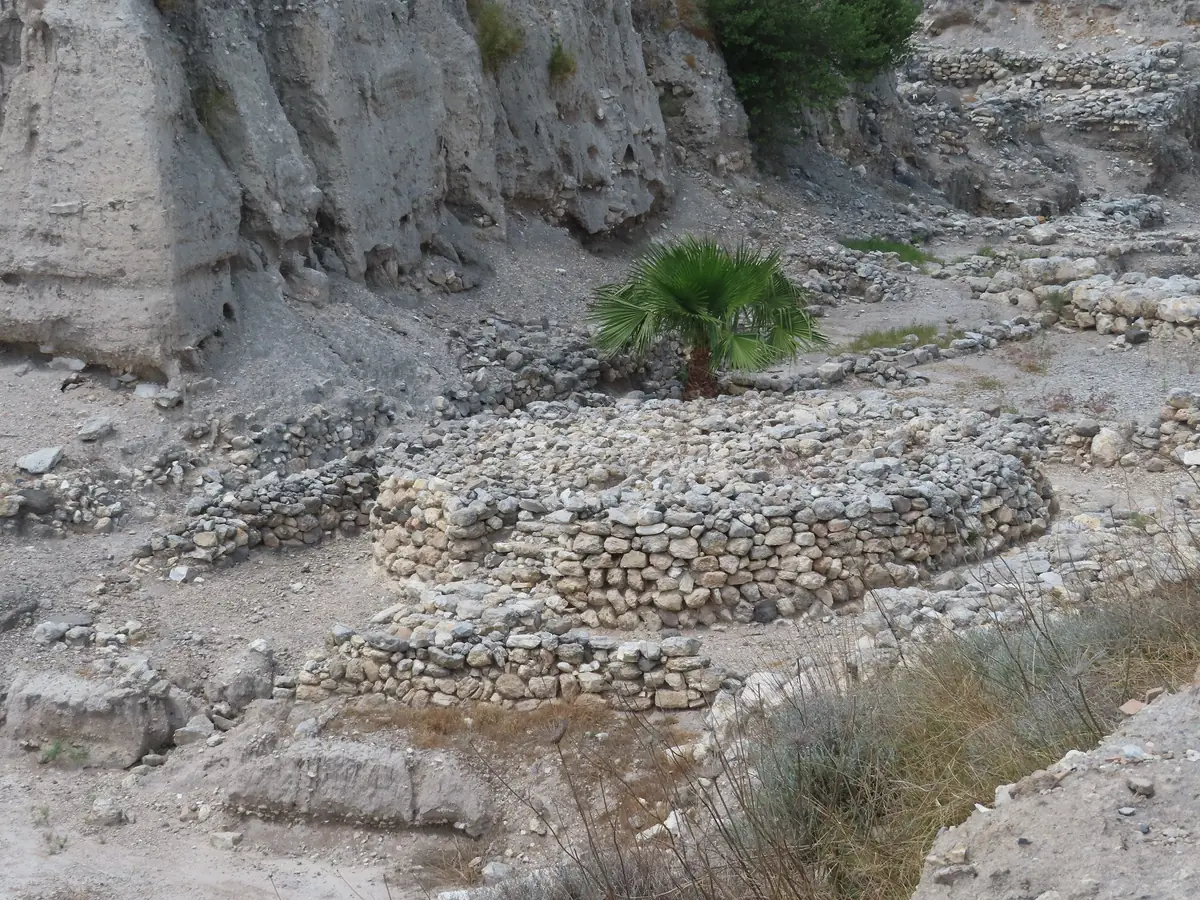
- The six-chambered gate, long attributed to Solomon on the basis of 1 Kings 9:15, which names "Hazor, Megiddo and Gezer" together. Archaeologists still debate its date, between the 10th and the 8th century BC. If you already know the great gate of Tel Hazor, the comparison is worth it.
- The round altar, about 8 metres across with seven steps, from the Early Bronze Age: it is more than a thousand years older than the time of Joshua.
- The "stables", with pillars and troughs, attributed to Ahab or to Jeroboam II; some scholars see them as storehouses instead.
- The water system: 187 steps down, 77 back up, then an exit onto a car park outside the site. Walk back along the path at the foot of the mound.
Verses to read from the lookout
From the top of the mound, the Jezreel Valley stretches to Mount Tabor and the hills of Galilee. The Song of Deborah places the defeat of the kings of Canaan here:
"The kings came and fought, then fought the kings of Canaan in Taanach by the waters of Megiddo."
Judges 5:19
Some six centuries later, the king of Judah died here:
"King Josiah went against him; and he slew him at Megiddo, when he had seen him."
2 Kings 23:29
Midday: mountain biking in Megiddo Forest
Megiddo Forest, planted by the KKL-JNF on the hills west of the moshav of Midrach Oz, is a few minutes from the national park along Route 66. It is crossed by wide forest roads and a network of narrow singletrack trails, with car parks on its edges and several lookouts over the valley.
Where I am riding: the Mishmar HaEmek trails
For my own ride, I picked the trail network between Kibbutz Mishmar HaEmek, 2 km to the north, and Midrach Oz, 2 km to the east. It is the mountain bike pin on the map at the top of this article, about 5 km from Tel Megiddo. On community maps such as OpenStreetMap and Trailforks, the trails carry the names local riders gave them:
- Easy: HaHaruvim ("the carob trees"), HaAyalot ("the does"), the White Single, Parparim ("butterflies").
- Intermediate: Anaconda.
- Difficult: Pitel, Dan 7, Yossi 2, Pinky, HaMoah and a few technical descents.
These are local trails with no official waymarking, so their condition can change from one season to the next. About 3 km to the west, the KKL-JNF Gahar singletrack, marked in blue, offers an official loop that continues onto the Nahal HaShofet singletrack, marked in yellow. In late 2026, KKL-JNF announced that the Gahar section descending towards Nahal Zehora would be closed for about two months for forestry work: check its website for the current detour. For lunch, the shaded Nahal Gahar picnic area, with its tables, is about 3 km away.
Choosing your route
- The forest roads suit any rider on a mountain bike and link the trails together.
- The singletracks are colour-coded by difficulty. Check the legend in your app before you set off: as a rule, green is easy, blue needs some experience, and the steepest trails are for skilled riders.
- For a first ride, link easy and then intermediate trails and come back along the forest roads: allow about 2 hours, breaks included.
There are many junctions, so an offline mountain bike map app such as Trailforks shows where you are at every fork. For a longer ride, the KKL-JNF cycling track between Ein HaShofet and HaZorea, in Ramat Menashe, offers 13 to 30 kilometres a little further west.
A forest on the land of Manasseh
There are no biblical remains on the trails themselves, but the landscape tells the Bible's story. These hills are called Ramat Menashe, the "Manasseh plateau", and the Book of Joshua lists Megiddo and Taanach among the towns allotted to this tribe, descended from Joseph (Joshua 17:11). From the lookouts you see the plain where the Kishon flows, the stream that, in the Song of Deborah, swept away Sisera's chariots:
"The river of Kishon swept them away, that ancient river, the river Kishon."
Judges 5:21
Close to Megiddo, a hill is named Givat Yoshiyahu, "Josiah's Hill": the Hebrew name of the king who died at Megiddo.
Afternoon: Muhraqa, on Elijah's Mount Carmel
 Haifa, Carmel rangeMount Carmel, Elijah's Mountain: Muhraqa, Haifa and VisitingFire from heaven, a little cloud rising from the sea and the hermits who gave their name to the Carmelite order: a mountain overlooking the Jezreel Valley and Haifa Bay.View site →
The small Carmelite monastery of Muhraqa stands at the end of a forest road, south of the Druze town of Daliyat al-Karmel. Tradition places Elijah's challenge to the prophets of Baal here, although the biblical text only speaks of "mount Carmel" (1 Kings 18:19-40). In the garden, a large statue depicts the prophet; from the roof terrace, the whole Jezreel Valley lies below you.
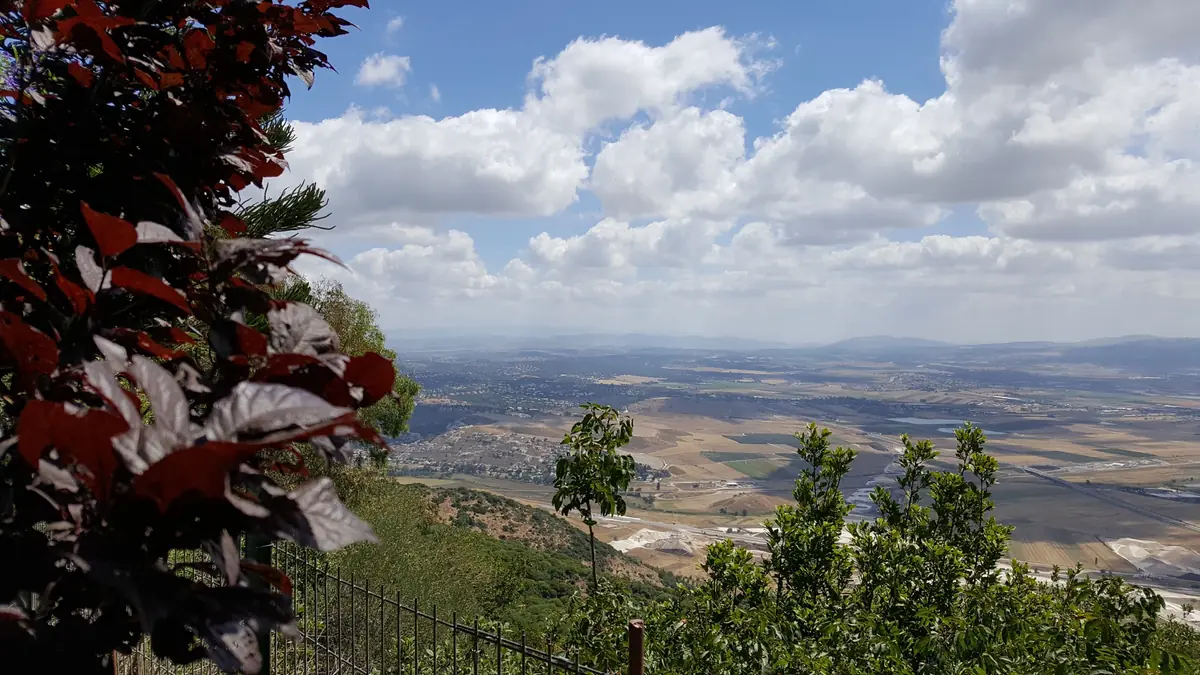
Below runs the Kishon, where the story ends:
"And Elijah said unto them, Take the prophets of Baal; let not one of them escape. And they took them: and Elijah brought them down to the brook Kishon, and slew them there."
1 Kings 18:40
Allow 45 minutes to an hour. After the ride, bring a change of clothes: shoulders and knees should be covered in this place of worship.
More biblical places around Megiddo
From the mound you can see several biblical places that deserve a second day in the valley:
- Tel Jezreel, the residence of Ahab and Jezebel, and the story of Naboth's vineyard (1 Kings 21).
- Ma'ayan Harod, the spring at the foot of Mount Gilboa where Gideon chose his three hundred men (Judges 7).
- Mount Gilboa, where Saul and Jonathan died (1 Samuel 31), with a scenic road along the top.
- Mount Tabor, where Barak gathered his troops at Deborah's command (Judges 4:6).
Tel Taanach, Megiddo's neighbour in the Song of Deborah, and Dothan, where Joseph was sold by his brothers, lie across the Green Line in Judea and Samaria. Access depends on the situation: check before you go and prefer a guided visit.
Planning the day
- The bike: bring your mountain bike and a bike rack, a helmet, a spare inner tube and at least two litres of water per person.
- The weather: after heavy rain, the valley soil turns sticky and some trails become unrideable. In summer, ride early in the morning.
- Daylight: in winter, it gets dark around 4:30 pm. Do not start a forest loop in mid-afternoon.
- Opening hours: Megiddo is run by the Israel Nature and Parks Authority and Muhraqa by the Carmelites; check each one, especially on Fridays and the eve of holidays.
- Food: bring a picnic; there is a petrol station at Megiddo Junction.
Sources and references
Questions about the Megiddo bike day trip
What level do you need to ride in Megiddo Forest?
The wide forest roads suit any rider with a mountain bike. The narrow trails are colour-coded: start with the easy ones, then move to intermediate trails if you feel comfortable. The steepest trails require good descending skills. A helmet is essential.
Can you do Megiddo, the bike ride and Muhraqa in one day from Netanya?
Yes, if you leave at 7:30 am. Allow about 1 hour's drive there, 2 hours on the mound, 2 hours of riding, 45 minutes to an hour at Muhraqa and about 1 h 15 to get back, for a return around 4 pm. From Tel Aviv, add half an hour each way.
Where do you start the bike ride?
Between Kibbutz Mishmar HaEmek and the moshav of Midrach Oz, about 5 km from the national park: this is where the trail network I chose begins, with car parks on the edge of the forest. An offline mountain bike map app such as Trailforks shows the car parks, the trails and your position.
When is it better to avoid this ride?
Right after heavy rain, when the mud sticks and damages the trails, and in the middle of the day in summer because of the heat. On Fridays and the eve of holidays, sites close earlier: check the opening hours of Megiddo and Muhraqa the day before.
Does the bike ride pass a biblical site?
There are no remains on the trails, but you ride on the hills of Ramat Menashe, the "Manasseh plateau", the tribe to which Joshua 17:11 allots Megiddo. The lookouts face the Jezreel Valley and the Kishon of the Song of Deborah (Judges 5:19-21).
How much does this day cost?
The KKL-JNF forest is free to enter. Megiddo National Park charges an entrance fee published by the Israel Nature and Parks Authority, and guidebooks say Muhraqa charges one too. Planning the day in Create my tour is free.
What other biblical sites can you visit if you stay for two days?
Tel Jezreel and Naboth's vineyard, the spring of Harod where Gideon chose his men, Mount Gilboa of Saul and Jonathan, and Mount Tabor of Deborah and Barak. Taanach and Dothan are in Judea and Samaria: check access conditions before going.
Places to visit
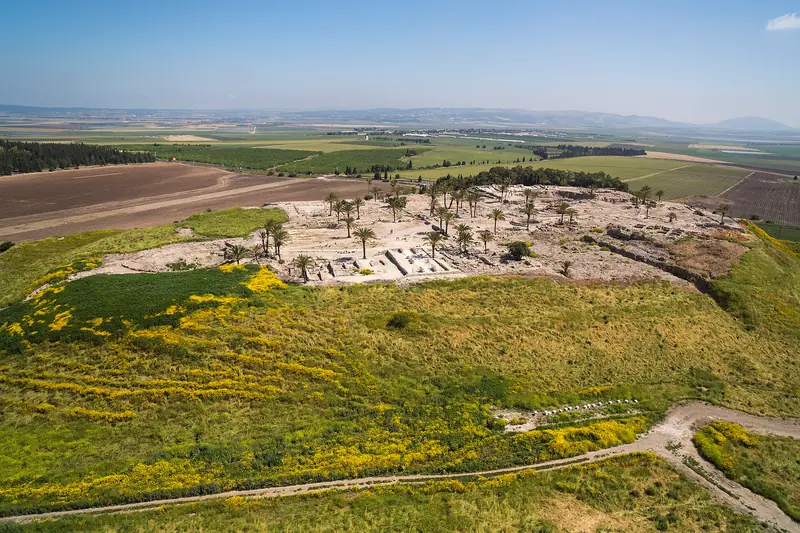
Tel Megiddo: a Canaanite city in the time of Joshua
A Canaanite city the Bible says was defeated but never dispossessed: four thousand years of history at the crossroads of Egypt and Mesopotamia.
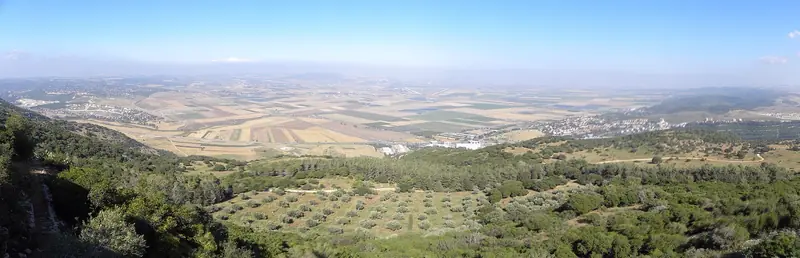
Mount Carmel, Elijah's Mountain: Muhraqa, Haifa and Visiting
Fire from heaven, a little cloud rising from the sea and the hermits who gave their name to the Carmelite order: a mountain overlooking the Jezreel Valley and Haifa Bay.
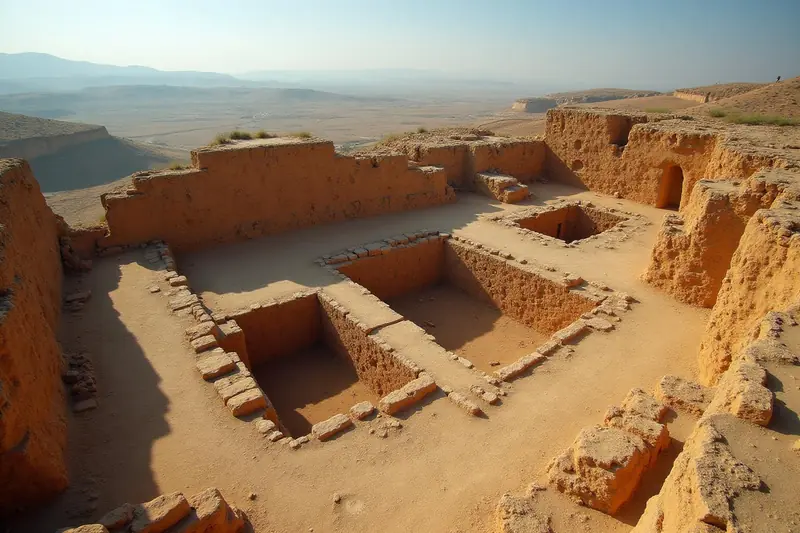
Dothan: Joseph Sold by His Brothers
At Dothan, Joseph is thrown into a pit by his jealous brothers and then sold to a caravan bound for Egypt: a turning point in Genesis that seals his destiny.
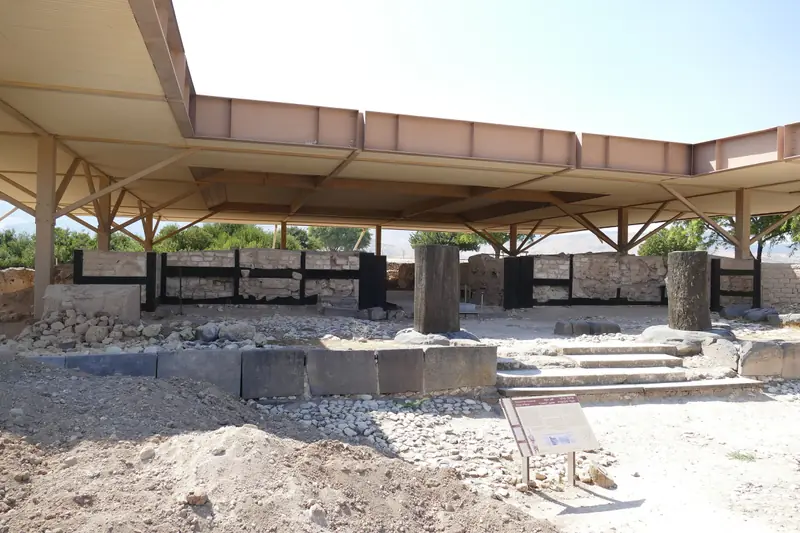
Tel Hazor: the Canaanite capital of Joshua 11
"The head of all those kingdoms": the largest Canaanite city in the land, its destruction by fire and an archaeological debate that is still open.
Read next
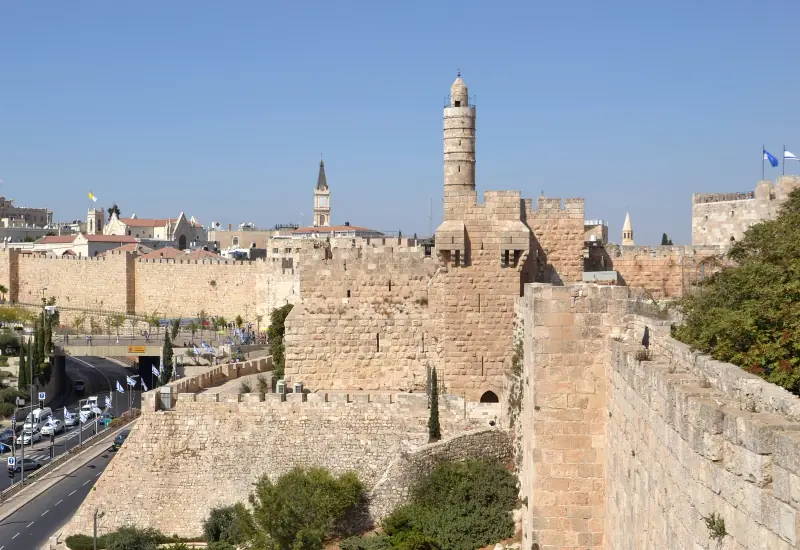
Israel in 7 Days: a Day-by-Day Itinerary of the Places of the Bible
A 7-day road trip from Caesarea to Jerusalem: 17 biblical stops, visit and driving times day by day, plus 5-day and 10-day versions.
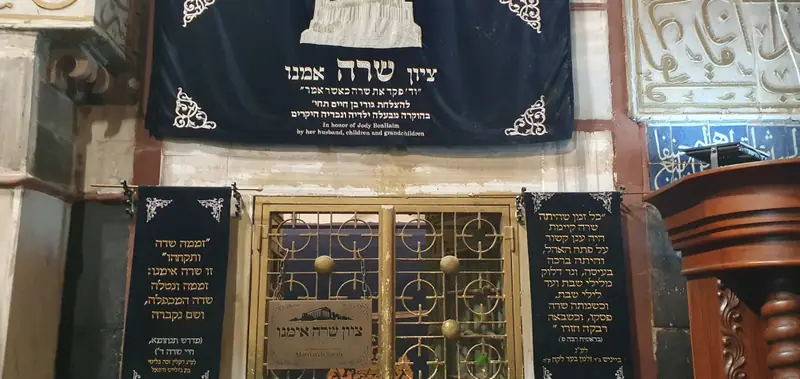
Who Was Sarah, Abraham's Wife?
Abraham's wife, Isaac's mother, buried in Hebron: what the Bible says about Sarah, and the unexpected portrait of her in a Dead Sea Scroll.