
In brief
Seven days are enough to see the main biblical sites of Israel without rushing: the coast and Galilee for the first three days, then the Jordan Valley and the Dead Sea, then two days in Jerusalem. The programme has 17 stops, about 26 hours of visits and 17 hours of driving, and never goes over 7 h 30 a day.
- Days 1 to 3: Caesarea, Mount Carmel, Megiddo, Nazareth and the shores of the Sea of Galilee.
- Days 4 and 5: the baptism site at Qasr al-Yahud, Qumran, Masada and a float in the Dead Sea.
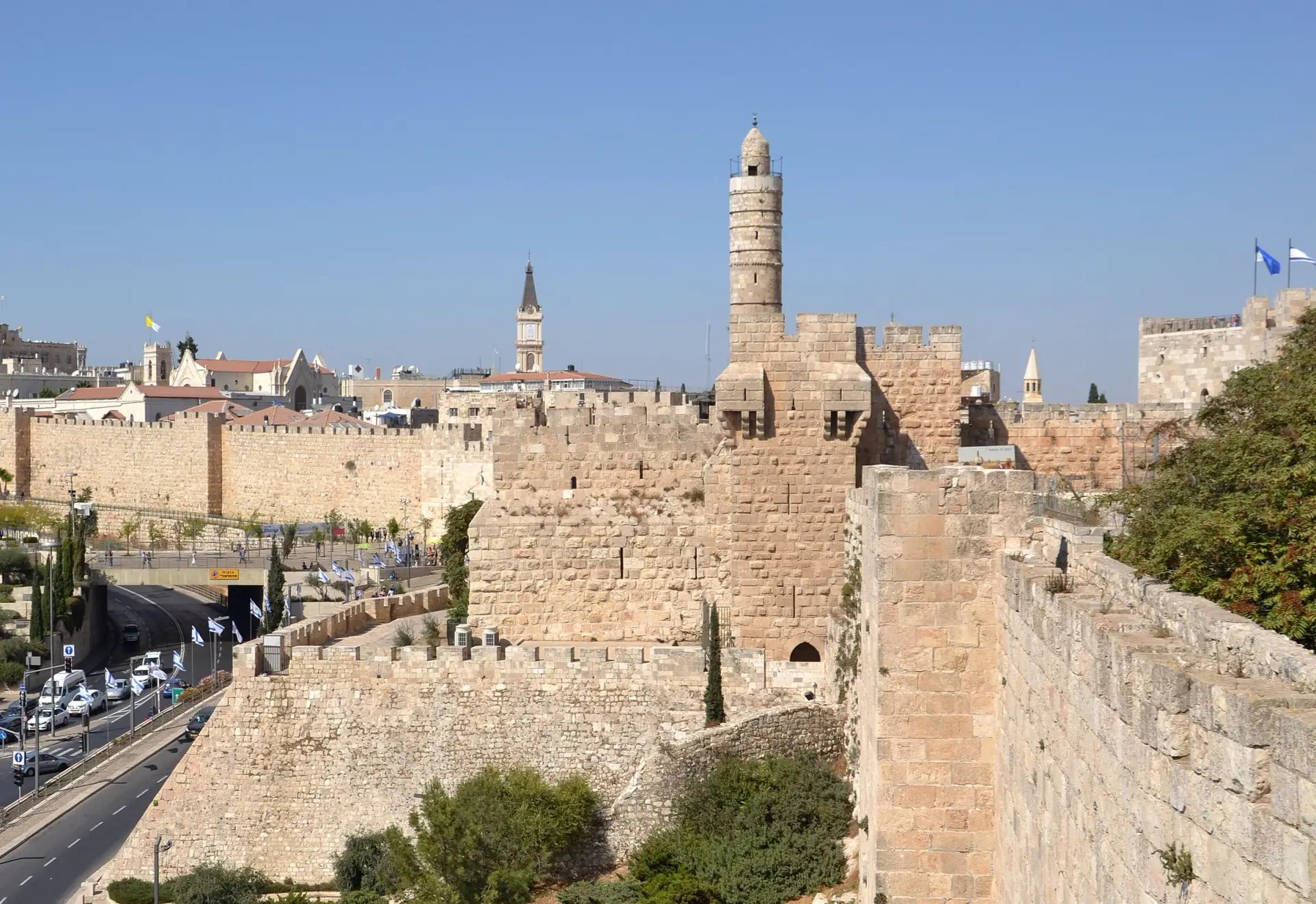
- Days 6 and 7: the Western Wall, the Temple Mount, the Holy Sepulchre, the Mount of Olives and the City of David.
The simplest way to plan an Israel itinerary for 7 days around the Bible is to head north as soon as you land, come back down through the Jordan Valley to the Dead Sea, and finish in Jerusalem. You keep the richest city for the end, and you never drive the same road twice.
This programme was worked out with the visit and driving times of our Plan my tour assistant, at the "balanced" pace: never more than 7 h 30 a day, visits and driving included. It assumes a rental car and a start at Ben Gurion Airport. It stays in Israel and on the main roads of Judea and Samaria, without entering the areas administered by the Palestinian Authority. You can open it as it is in your travel notebook, then change it.
- Length7 days, 6 nights
- Stops17 places, 11 of them with a full guide
- TimeAbout 26 h of visits and 17 h of driving
The 7-day programme at a glance
| Day | Places and night | Time |
|---|---|---|
| 1 | Caesarea Maritima, Mount Carmel Night: Haifa | Visits 3 h 30 Driving 3 h 10 |
| 2 | Tel Megiddo, Nazareth Night: Nazareth | Visits 3 h 30 Driving 2 h |
| 3 | Mount of Beatitudes, Tabgha, Capernaum, Magdala Night: Tiberias | Visits 3 h 30 Driving 2 h 40 |
| 4 | Qasr al-Yahud, Qumran Night: Jerusalem | Visits 2 h Driving 4 h |
| 5 | Masada, Dead Sea (Ein Bokek) Night: Ein Bokek | Visits 4 h 30 Driving 2 h 15 |
| 6 | Western Wall, Temple Mount, Holy Sepulchre Night: Jerusalem | Visits 4 h 15 Driving 2 h 25 |
| 7 | Mount of Olives, City of David Back to the airport | Visits 5 h Driving 40 min |
The "Driving" line includes the drive to the town where you sleep, which the assistant picks as close as possible to the last visit of the day. These are estimates without traffic, breaks or meals: leave some slack, especially in Jerusalem.
Day 1: Caesarea Maritima and Mount Carmel
Caesarea, Herod's harbour
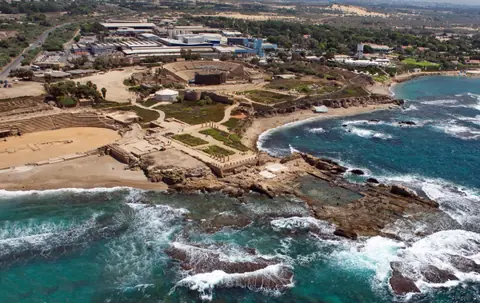 Coastal plain, between Tel Aviv and HaifaCaesarea Maritima, Herod's city: theatre, aqueduct and visitHerod's great harbour and the seat of the Roman governors, where Peter baptised Cornelius and Paul was held for two years: an archaeological park on the Mediterranean shore.View site →
From the airport, allow about 1 h 30 to reach Caesarea. The great harbour built by Herod later became the capital of the Roman governors. The Acts of the Apostles place there Peter's baptism of the centurion Cornelius (Acts 10) and Paul's two years in custody (Acts 24:27). Allow 2 to 3 hours for the national park, then stop at the aqueduct on the public beach, which you can see without a park ticket.
Mount Carmel
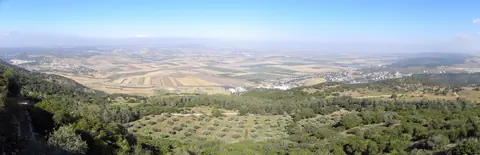 Haifa, Carmel rangeMount Carmel, Elijah's Mountain: Muhraqa, Haifa and VisitingFire from heaven, a little cloud rising from the sea and the hermits who gave their name to the Carmelite order: a mountain overlooking the Jezreel Valley and Haifa Bay.View site →
At Muhraqa, high on the Carmel, tradition places Elijah's sacrifice against the prophets of Baal (1 Kings 18). The Carmelite monastery looks out over the Jezreel Valley, which you will cross the next day. Allow 45 minutes to 1 hour, with shoulders and knees covered. Night in Haifa.
Day 2: Megiddo and Nazareth
Tel Megiddo
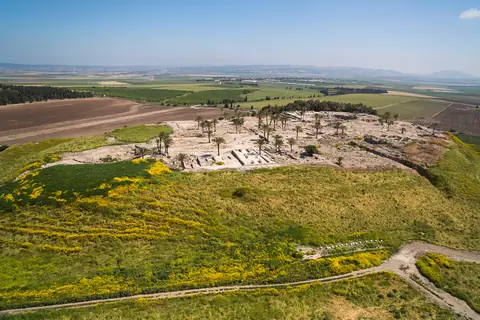 Jezreel Valley, GalileeTel Megiddo: a Canaanite city in the time of JoshuaA Canaanite city the Bible says was defeated but never dispossessed: four thousand years of history at the crossroads of Egypt and Mesopotamia.View site →
Megiddo is a Canaanite city that the Bible says was defeated but never dispossessed (Judges 1:27). Its name gave the "Armageddon" of Revelation (Revelation 16:16). Allow 1 h 30 to 2 hours, water system included, and come early in summer.
Nazareth
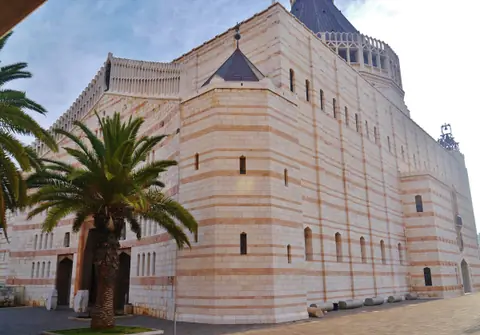 Nazareth, Lower GalileeNazareth, the Town of Jesus: Annunciation, Excavations and VisitThe Galilean village where the Gospels place the Annunciation and the childhood of Jesus, today Israel's largest Arab city: shrines, excavations and visiting tips.View site →
Nazareth is the village where the Gospel of Luke places the Annunciation (Luke 1:26-38) and the childhood of Jesus. The Basilica of the Annunciation, the Church of Saint Joseph and the souk take 2 to 3 hours. The shrines close to visitors during Mass, and parking in the centre is difficult: leave the car on the edge of the old city. Night in Nazareth.
Day 3: the Sea of Galilee, in the footsteps of Jesus
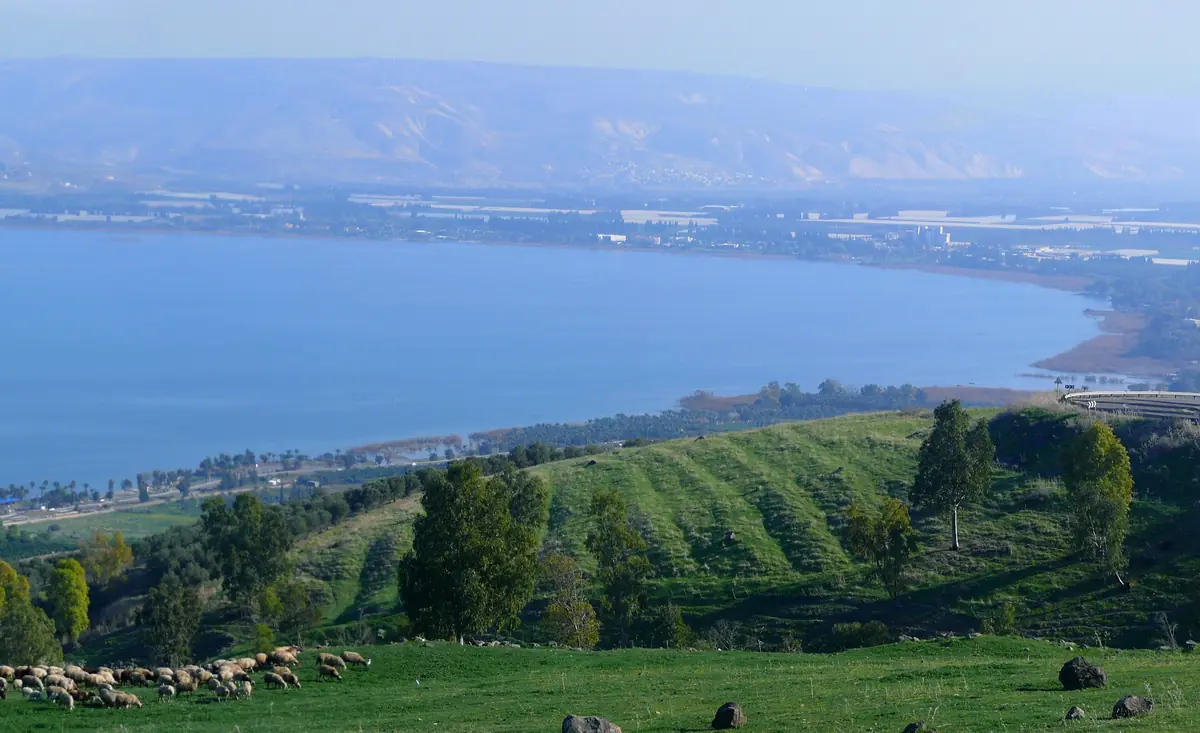
The day follows the north-west shore of the lake, where the Gospels place most of Jesus' ministry in Galilee. The Mount of Beatitudes is where tradition places the Sermon on the Mount (Matthew 5-7). The church at Tabgha commemorates the multiplication of the loaves. At Magdala you visit a first-century synagogue. Allow about 3 h 30 of visits in all.
Capernaum
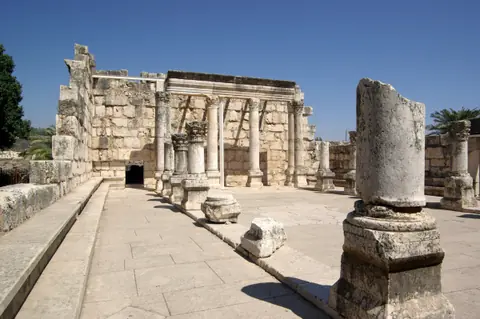 North shore of the Sea of GalileeCapernaum, the town of Jesus on the Sea of GalileeThe fishing village where Jesus settled, taught in the synagogue and stayed with Peter: what the Gospels say, what the excavations found and what you can see today.View site →
Jesus settles in Capernaum, teaches in the synagogue and stays at Peter's house (Mark 1:21-29). The Franciscan site takes about 1 hour. The lake lies about 200 metres below sea level and summer there is very hot: arrive at opening time, with shoulders and knees covered. Night in Tiberias.
Day 4: the Jordan Valley and Qumran
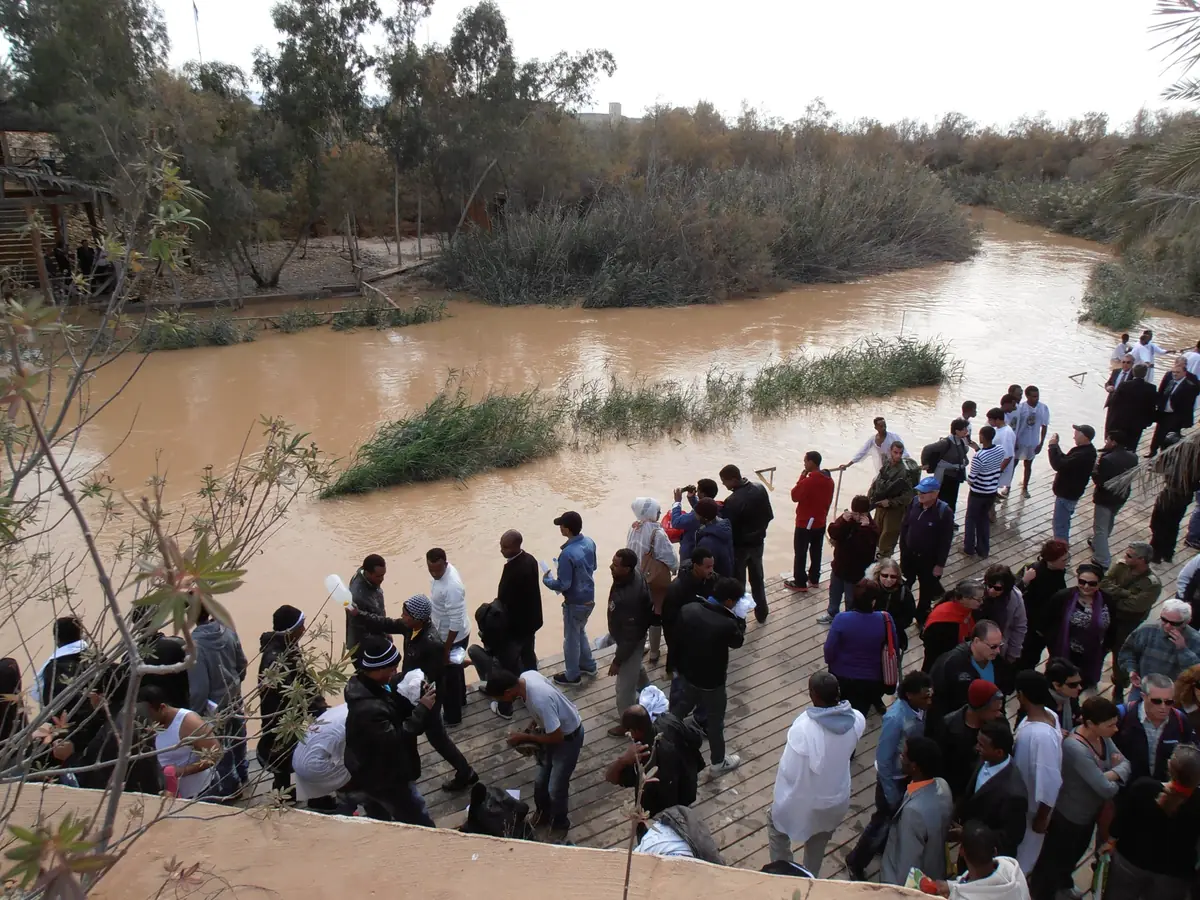
Allow about 2 h 15 driving south through the Jordan Valley to Qasr al-Yahud. Tradition places here the baptism of Jesus by John and the Israelites' crossing of the Jordan under Joshua (Joshua 3). The road runs through Judea and Samaria, in Area C, under Israeli administration: check the travel conditions before setting off.
Qumran
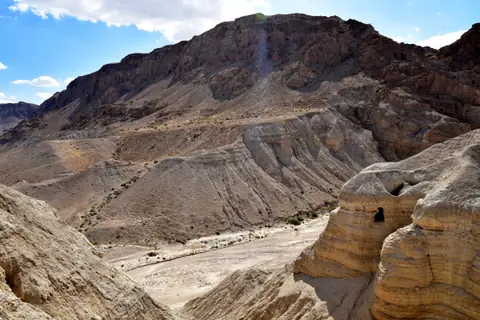 North-western shore of the Dead SeaQumran, the site of the Dead Sea Scrolls: excavations and visitingBedouin shepherds, eleven caves and some 900 manuscripts: the site that yielded the oldest known copies of the Hebrew Bible, and the riddle of who hid them.View site →
Bedouin shepherds, eleven caves and nearly 900 manuscripts: Qumran yielded the oldest known copies of the Hebrew Bible. The visit takes 1 hour to 1 h 15 with the film. From October to April the heat is bearable; in summer, come at opening time. Night in Jerusalem, about 1 hour's drive away.
Day 5: Masada and the Dead Sea
Masada
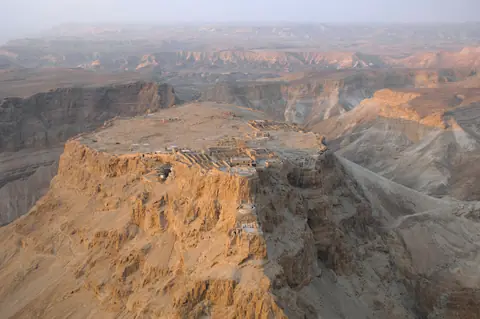 Judean Desert, western shore of the Dead SeaMasada, Herod's fortress above the Dead SeaA palace hanging on the edge of the desert, the last stronghold of the Jewish revolt against Rome, and a famous story that archaeology illuminates without settling every question.View site →
Allow about 1 h 30 driving from Jerusalem. Masada is a palace of Herod hanging on the edge of the desert, and later the last stronghold of the Jewish revolt against Rome. Allow 2 h 30 to 3 hours with the cable car, or half a day if you walk up the Snake Path for sunrise. Take at least 1 to 2 litres of water per person: there is little shade at the top.
The Dead Sea
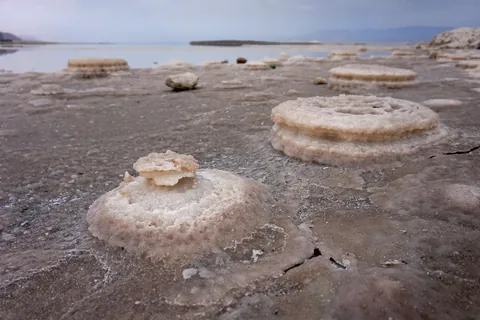 Dead Sea basinDead Sea: the biblical Salt Sea and places to visitThe biblical Salt Sea is a landscape of cliffs, oases and salt-lined shores, best explored through individual visitor sites.View site →
In the afternoon, keep 1 h 30 to float off the public beach at Ein Bokek. Swim only in the authorised areas and follow the instructions on site. If you would rather walk, the Ein Gedi reserve and its waterfalls can replace the beach, but the day then goes over the balanced pace. Night in Ein Bokek.
Day 6: Jerusalem, the Temple Mount and the Holy Sepulchre
Drive back up to Jerusalem, about 1 h 45 from the Dead Sea. The three visits of the day are then on foot, less than 20 minutes from one another.
The Temple Mount and the Western Wall
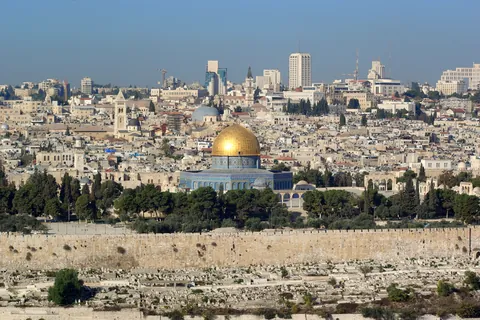 Old City of JerusalemMount Moriah: Abraham's Test, from the Biblical Story to the Temple MountWhere tradition places Abraham's test now stands the Temple Mount, one of the holiest sites in Judaism and Islam.View site →
Tradition places Abraham's trial on Mount Moriah. Today it carries the Temple Mount, a major holy site of Judaism and Islam. Non-Muslim visitors enter only through the Mughrabi Gate, after a security check, during limited time slots that vary with the day and the festivals: check them the day before and on the day. The Western Wall, just below, remains open on foot.
The Holy Sepulchre
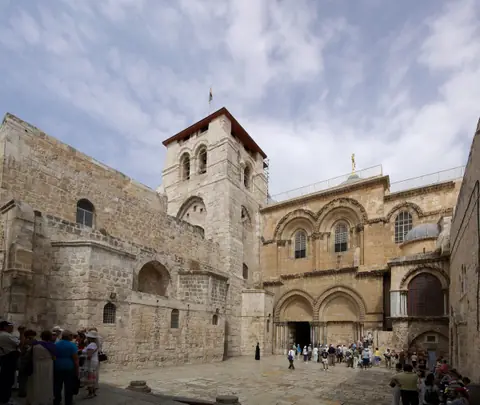 Jerusalem, Old City (Christian Quarter)The Church of the Holy Sepulchre in Jerusalem: Golgotha, the Tomb and VisitingThe rock of Calvary and the tomb venerated since the 4th century, under one roof shared by six Christian communities: Gospel account, history, archaeology and visiting.View site →
The rock of Calvary and the tomb venerated since the 4th century stand under one roof, shared by six Christian communities. Entry is free. Allow 60 to 90 minutes, more if there is a queue at the Edicule. It is less crowded late in the afternoon. Night in Jerusalem.
Day 7: the Mount of Olives and the City of David
The Mount of Olives
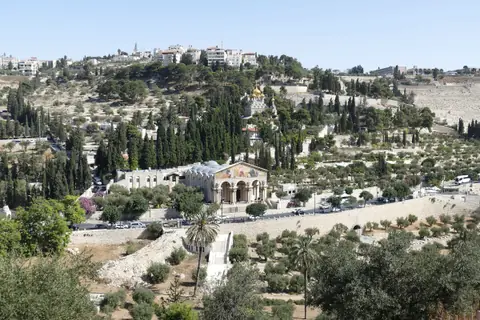 Jerusalem, facing the Old CityThe Mount of Olives and the Garden of Gethsemane in JerusalemFrom David's flight to the agony of Jesus, the hill facing the Temple Mount holds three thousand years of Jewish and Christian memory.View site →
Come in the morning, when the sun lights the Old City from the front as seen from the viewpoint. Then walk down from the summit to the Garden of Gethsemane, in 2 to 3 hours with the main churches. The mount is in East Jerusalem, whose status is disputed: visit preferably during the day and check your country's official travel advice.
The City of David
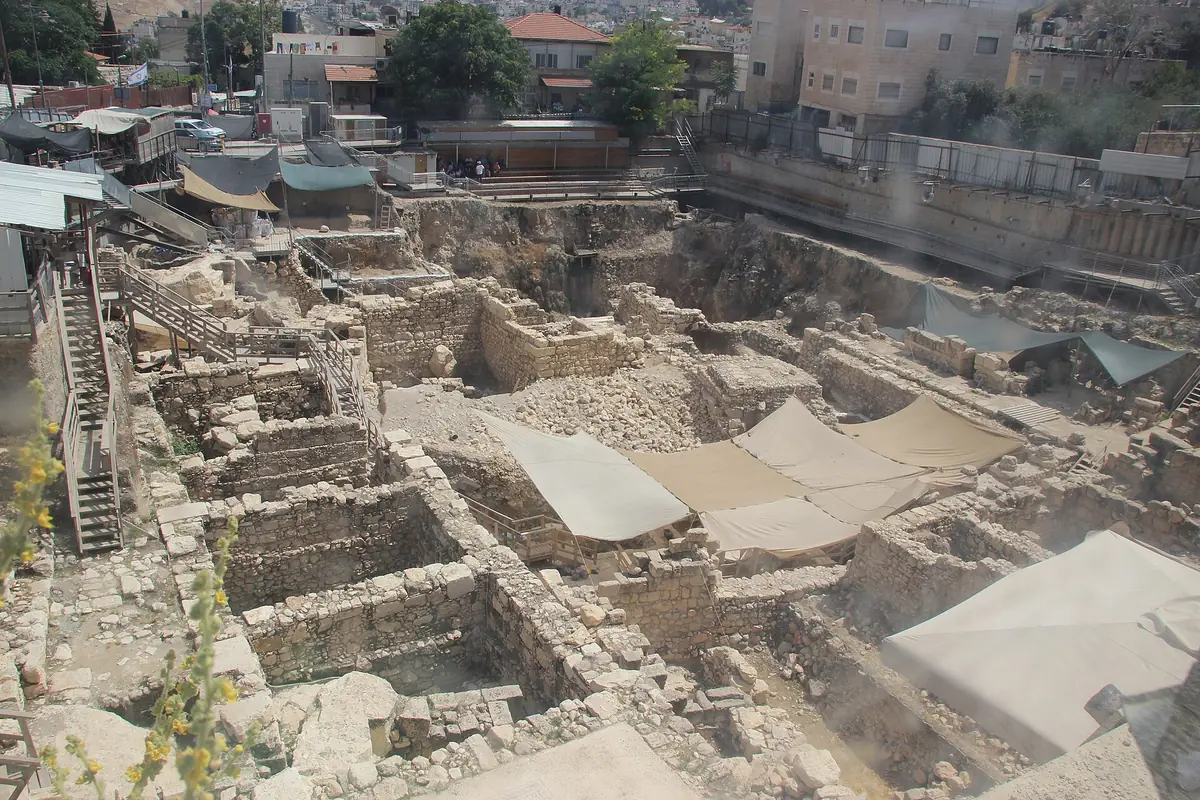
On the hill south of the Temple Mount, the City of David holds the Jerusalem of the kings. You walk through the tunnel dug under King Hezekiah to bring water into the city (2 Kings 20:20), down to the Pool of Siloam. Allow about 3 hours. Ben Gurion Airport is then about 1 h 15 away by road.
Friday, Shabbat and festivals: what to check
Before fixing the order of the days, look at where Friday, Saturday and the festivals fall during your stay. Many sites close earlier on Friday and on the eve of festivals: the Banias reserve does, and Qumran's opening hours also change on the eve of festivals. Christian shrines follow their own services, and access to the Temple Mount esplanade depends on the day.
Remember
This programme gives no opening hours: they change with the seasons. Check each site on its manager's website, listed in its guide, before you go.
The major Christian feasts also draw large crowds: Christmas and 25 March in Nazareth, Holy Week at the Holy Sepulchre. For more one-day outings, see our biblical day trips by region.
Can you add Bethlehem?
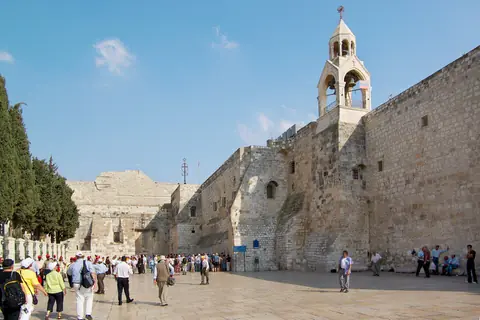 Bethlehem, Judean HillsBethlehem, town of the Nativity: Bible, excavations and visitingThe town of Ruth and David, where the Gospels place the birth of Jesus: a cave venerated since the 2nd century, beneath one of the oldest churches in the world still in use.View site →
Bethlehem is only a few kilometres from Jerusalem, and the Church of the Nativity takes 1 h 30 to 2 hours. But the town is in Judea and Samaria, in Area A, administered by the Palestinian Authority. That is why it is not in this programme.
Before you go
It is reached from Jerusalem through crossing points whose conditions vary with the situation: take your passport. Israeli regulations in principle forbid Israeli citizens from entering Area A. Check your country's official travel advice before setting off.
Visiting Israel in 5, 10 or 15 days
In 5 days
Drop day 1 and head straight for Megiddo (about 2 hours' drive from the airport). Keep Galilee, the Jordan Valley and the Dead Sea, then a single day in Jerusalem: the Western Wall, the Temple Mount and the Holy Sepulchre. The Mount of Olives and the City of David are left out.
In 10 days
Ten days let you add what the week leaves out, still under 7 h 30 a day:
- a day at the sources of the Jordan, at Tel Dan and its Canaanite gate, then Banias;
- Beit She'an, the great Roman city, on the way down the Jordan Valley;
- Ein Gedi, David's refuge, on the day of Qumran;
- a third day in Jerusalem, with the Israel Museum and the Dead Sea Scrolls;
- old Jaffa, 1 hour from the airport, for the last half-day.
In 15 days
Beyond 10 days, the assistant adds regions that a one-week trip rarely crosses: the Shephelah of David and Goliath (Tel Azekah, Lachish), Abraham's Negev around Beersheba, Tel Hazor in Upper Galilee or Shiloh in Samaria. Choose 15 days in Plan my tour: it spreads the places according to the pace you pick, and you remove the ones that do not interest you. Every place is also on the map of biblical sites.
Sources and references
- Israel Nature and Parks Authority (national parks: Caesarea, Megiddo, Qumran, Masada, Ein Gedi, Banias)
- Custody of the Holy Land (shrines of Nazareth, Capernaum, the Mount of Olives, Bethlehem)
- Christian Information Centre, Jerusalem (Holy Sepulchre opening hours)
- UK Foreign Office travel advice: Israel
Frequently asked questions about a 7-day trip to Israel
Are seven days enough to see the biblical sites of Israel?
For the essentials, yes. This programme brings together 17 stops, from Caesarea to Jerusalem, for about 26 hours of visits and 17 hours of driving. It leaves out the sources of the Jordan (Tel Dan, Banias), Beit She'an, Ein Gedi and the Negev. With 10 days you can add them without going over 7 h 30 a day.
Do you need a rental car for this itinerary?
This programme is planned by car, because several stops are poorly served: at Caesarea, for example, buses to the park are infrequent. In Jerusalem, on the other hand, the Western Wall, the Temple Mount and the Holy Sepulchre are less than 20 minutes apart on foot.
Where should you stay during a week in Israel?
The programme suggests Haifa, Nazareth, Tiberias, Jerusalem and Ein Bokek on the Dead Sea: each evening, the town closest to the last visit. To change hotels less often, keep two bases, Tiberias for the north and Jerusalem for the south; the drives then get a little longer.
What is the best season to visit Israel in 7 days?
October to April for Qumran, Masada and the Dead Sea, where the summer heat is extreme. Spring is ideal in Galilee and at Megiddo, with the valley in flower. Christmas in Nazareth and Holy Week at the Holy Sepulchre draw large crowds.
What should you check on Friday and Saturday?
Each site's opening hours for those two days. The Banias reserve closes earlier on Friday and on the eve of festivals, and Qumran's hours change on the eve of festivals. In Jerusalem, non-Muslims visit the Temple Mount esplanade during limited time slots that vary with the day: check them the day before.
Can you add Bethlehem to the programme?
It is possible, but Bethlehem is in Area A, administered by the Palestinian Authority. It is reached from Jerusalem through crossing points whose conditions vary: take your passport and check your country's official travel advice. Israeli regulations in principle forbid Israeli citizens from entering Area A.
Is this itinerary suitable for children or people with reduced mobility?
Partly. At Qumran, the path through the ruins is wheelchair accessible; at Masada, so are the cable car and part of the plateau, and a shuttle goes up to the top of Megiddo. The very steep Mount of Olives, the stairs to Calvary at the Holy Sepulchre and the grotto in Nazareth are harder. Check with each site.
Places to visit
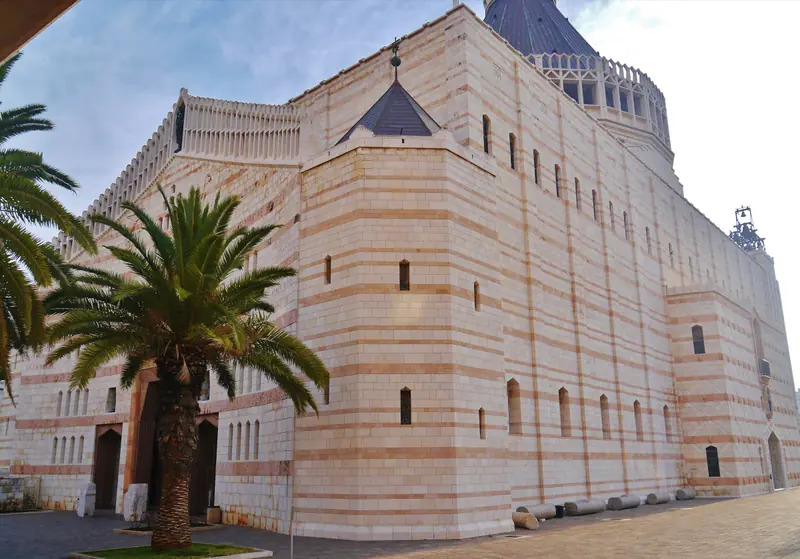
Nazareth, the Town of Jesus: Annunciation, Excavations and Visit
The Galilean village where the Gospels place the Annunciation and the childhood of Jesus, today Israel's largest Arab city: shrines, excavations and visiting tips.
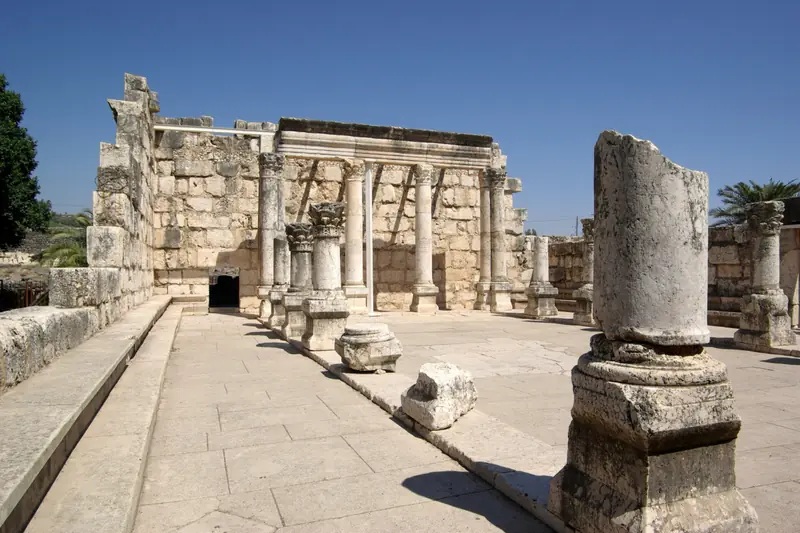
Capernaum, the town of Jesus on the Sea of Galilee
The fishing village where Jesus settled, taught in the synagogue and stayed with Peter: what the Gospels say, what the excavations found and what you can see today.
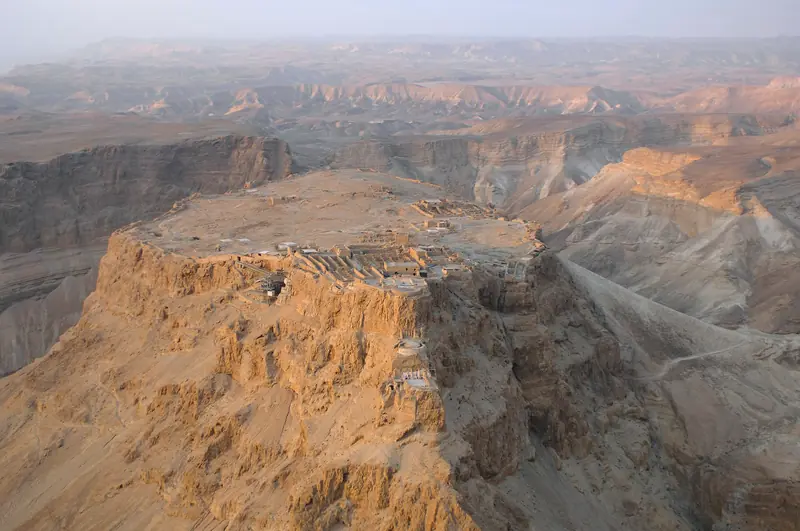
Masada, Herod's fortress above the Dead Sea
A palace hanging on the edge of the desert, the last stronghold of the Jewish revolt against Rome, and a famous story that archaeology illuminates without settling every question.
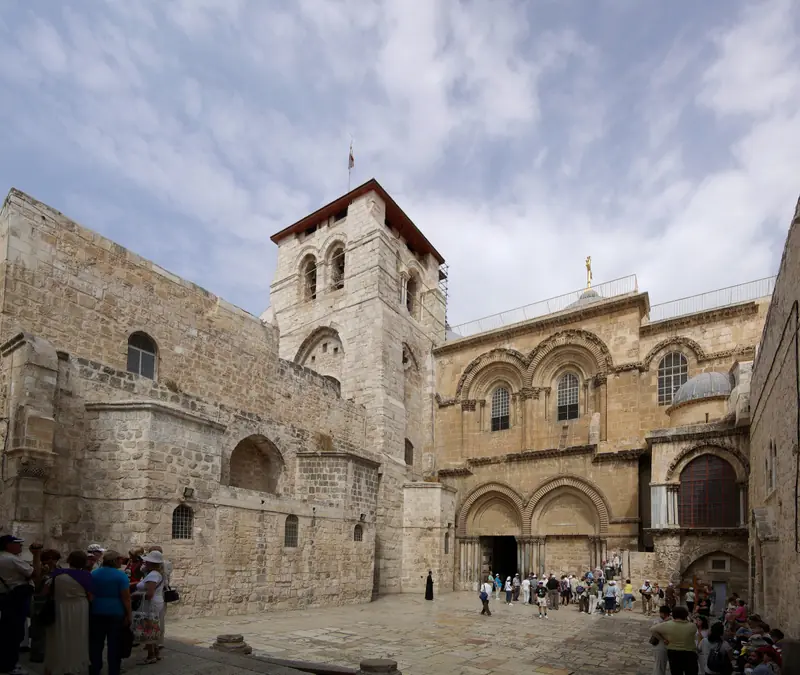
The Church of the Holy Sepulchre in Jerusalem: Golgotha, the Tomb and Visiting
The rock of Calvary and the tomb venerated since the 4th century, under one roof shared by six Christian communities: Gospel account, history, archaeology and visiting.
Read next
Who Was Sarah, Abraham's Wife?
Abraham's wife, Isaac's mother, buried in Hebron: what the Bible says about Sarah, and the unexpected portrait of her in a Dead Sea Scroll.
The Flood Around the World: Ancient Stories and Archaeological Witnesses
India, China, Greece, the Americas, Mesopotamia: flood stories around the world and three ancient tablets that record them, set beside the story of Noah.