
Tel Megiddo: a Canaanite city in the time of Joshua
A Canaanite city the Bible says was defeated but never dispossessed: four thousand years of history at the crossroads of Egypt and Mesopotamia.
1500–1200 BCE
"The head of all those kingdoms": the largest Canaanite city in the land, its destruction by fire and an archaeological debate that is still open.
Credit: Bukvoed · CC BY 4.0 · Wikimedia Commons
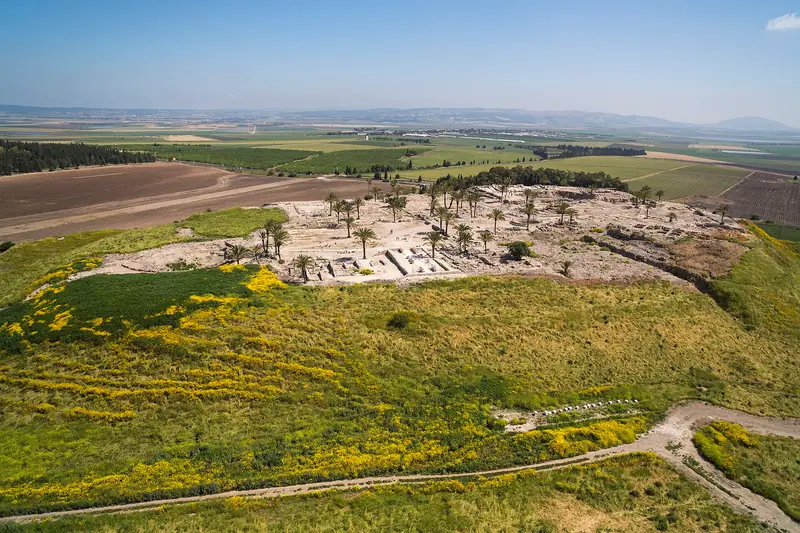
In Upper Galilee, north of the Sea of Galilee, Tel Hazor — also spelled Hatzor or Hatsor, the biblical Hazor — is the largest archaeological site of the biblical period in Israel: about 80 hectares (200 acres), with an upper city (the acropolis) and a vast lower city. The Book of Joshua calls it "the head of all those kingdoms" of northern Canaan, ruled by King Jabin, and says it was the only city Joshua burned during the northern campaign (Joshua 11).
Excavations have uncovered a Canaanite ceremonial palace of the 14th–13th centuries BC, destroyed by a fierce fire at the end of the Late Bronze Age. Who burned Hazor? The Israelites, an internal revolt, another enemy? Archaeologists still disagree. The site, now a national park and a UNESCO World Heritage Site (2005), also displays a gate, a citadel and a water system from the Iron Age, several centuries later than the time of Joshua.
After the southern campaign, the Book of Joshua describes a great coalition of northern kings. Its leader is Jabin, king of Hazor, who summons the kings of Madon, Shimron, Achshaph and the surrounding regions (Joshua 11:1-3). Their armies, "with horses and chariots very many", gather at the waters of Merom, where Joshua surprises and routs them (Joshua 11:4-9). The narrative then turns to Hazor itself.
"And Joshua at that time turned back, and took Hazor, and smote the king thereof with the sword: for Hazor beforetime was the head of all those kingdoms. And they smote all the souls that were therein with the edge of the sword, utterly destroying them: there was not any left to breathe: and he burnt Hazor with fire."
Joshua 11:10-11
״וַיָּשָׁב יְהוֹשֻׁעַ בָּעֵת הַהִיא וַיִּלְכֹּד אֶת־חָצוֹר וְאֶת־מַלְכָּהּ הִכָּה בֶחָרֶב כִּי־חָצוֹר לְפָנִים הִיא רֹאשׁ כָּל־הַמַּמְלָכוֹת הָאֵלֶּה״
יהושע יא, י
The text stresses a detail that matters directly to archaeologists: Hazor is presented as an exception. The other cities of the coalition are taken but not burned.
"But as for the cities that stood still in their strength, Israel burned none of them, save Hazor only; that did Joshua burn."
Joshua 11:13
The king of Hazor then appears in the list of thirty-one defeated kings (Joshua 12:19). To place this account within the wider period, see the Exodus and the conquest of Canaan.
Hazor reappears in the Book of Judges. A "Jabin king of Canaan, that reigned in Hazor" oppresses Israel; his general Sisera is defeated by Barak, at the call of the prophetess Deborah, at the foot of Mount Tabor (Judges 4-5).
"And the LORD sold them into the hand of Jabin king of Canaan, that reigned in Hazor; the captain of whose host was Sisera, which dwelt in Harosheth of the Gentiles."
Judges 4:2
״וַיִּמְכְּרֵם יְהוָה בְּיַד יָבִין מֶלֶךְ־כְּנַעַן אֲשֶׁר מָלַךְ בְּחָצוֹר וְשַׂר־צְבָאוֹ סִיסְרָא וְהוּא יוֹשֵׁב בַּחֲרֹשֶׁת הַגּוֹיִם״
שופטים ד, ב
How can a King Jabin reign in Hazor after the death of an earlier Jabin and the burning of the city? Readings differ: a dynastic name borne by several kings, separate traditions combined by the editors, or the memory of the great city attached to a later story. The Mari archives (18th century BC) name a king of Hazor called Ibni-Addu, and some scholars link "Ibni" with "Yabin" (Jabin): this is a hypothesis, not a proof. The rest of the story belongs to the period of the Judges and Kings.
Hazor controlled the great road linking Egypt with Syria and Mesopotamia, above the Hula Valley. Excavations reveal two clearly distinct areas:
Hazor is not only a biblical city. It appears in the Egyptian Execration Texts (19th century BC), then in the archives of Mari on the Euphrates (18th century), where it is the only city of Canaan mentioned: messengers and goods, including tin, travel there. In the 14th century, the Amarna letters, the diplomatic correspondence of the pharaohs, still mention Hazor, including a letter from its king Abdi-Tirshi to the pharaoh; other Canaanite rulers accuse Hazor of seizing their towns. Conquest lists of the New Kingdom pharaohs also name the city. Hazor has also yielded the largest group of cuneiform tablets in the southern Levant, including fragments of laws in the style of the Code of Hammurabi.
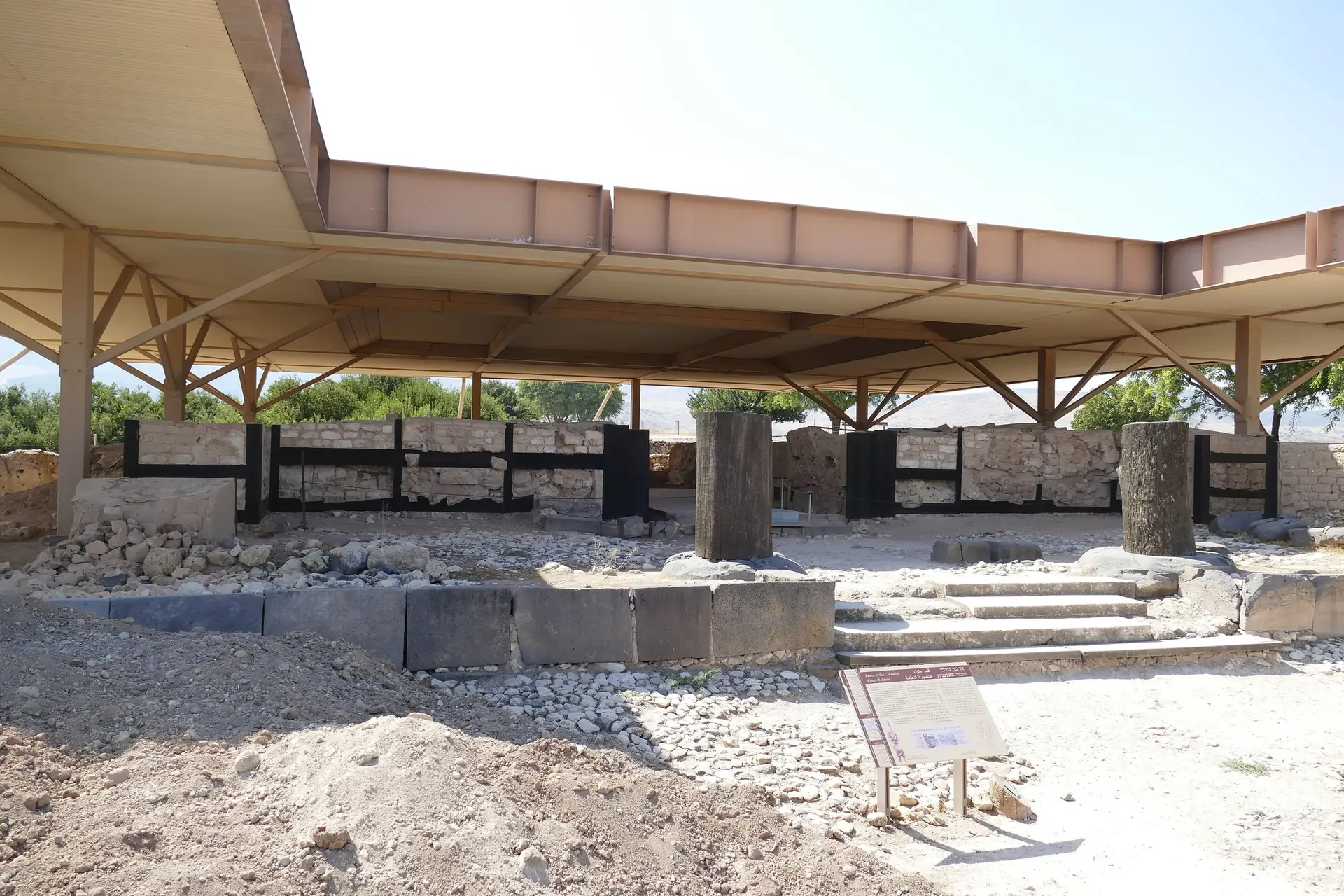
At the heart of the upper city, the park's main monument is the palace used by the kings of Hazor in the 14th and 13th centuries BC. Now sheltered under a large roof, it has an entrance staircase flanked by two basalt pillars, walls lined at their base with basalt slabs (orthostats), a cultic platform and, at its centre, a hall interpreted as the throne room. Its plan follows a Syrian architectural tradition, comparable to the royal palace of Ugarit. Next to it, other monumental buildings combine palatial and religious functions.
The lower city, protected by enormous earthen ramparts, has yielded several Canaanite temples: a temple with basalt orthostats, a small shrine with standing stelae, and many statues and cult objects. These areas are largely outside the visitor route, which focuses on the upper city; some of the finds are displayed at the Israel Museum in Jerusalem and at the Hazor Museum at Kibbutz Ayelet HaShahar.
The last Canaanite city of Hazor, upper and lower, was violently destroyed in the 13th century BC, at the end of the Late Bronze Age. In the palace, excavators found a thick layer of ash, bricks fired by the blaze, charred beams and jars full of burnt wheat. Statues of deities and rulers, both Canaanite and Egyptian, had been decapitated or mutilated, which suggests a deliberate destruction of the symbols of power. After this fire, the lower city was never inhabited again, and the upper city saw only modest occupation for more than a century.
🔎 What archaeology can say
The destruction by fire is well attested and agrees with the mention of a fire in Joshua 11. But no inscription names the attackers, and the exact date (probably the middle or second half of the 13th century) is still debated. The match between the text and the ash layer is a serious argument, not proof of who the destroyers were.
Much of what visitors see as they climb the tell dates from the Iron Age, that is the 10th–8th centuries BC, long after the time of Joshua. These monuments belong to the kingdom of Israel, not to the conquest.
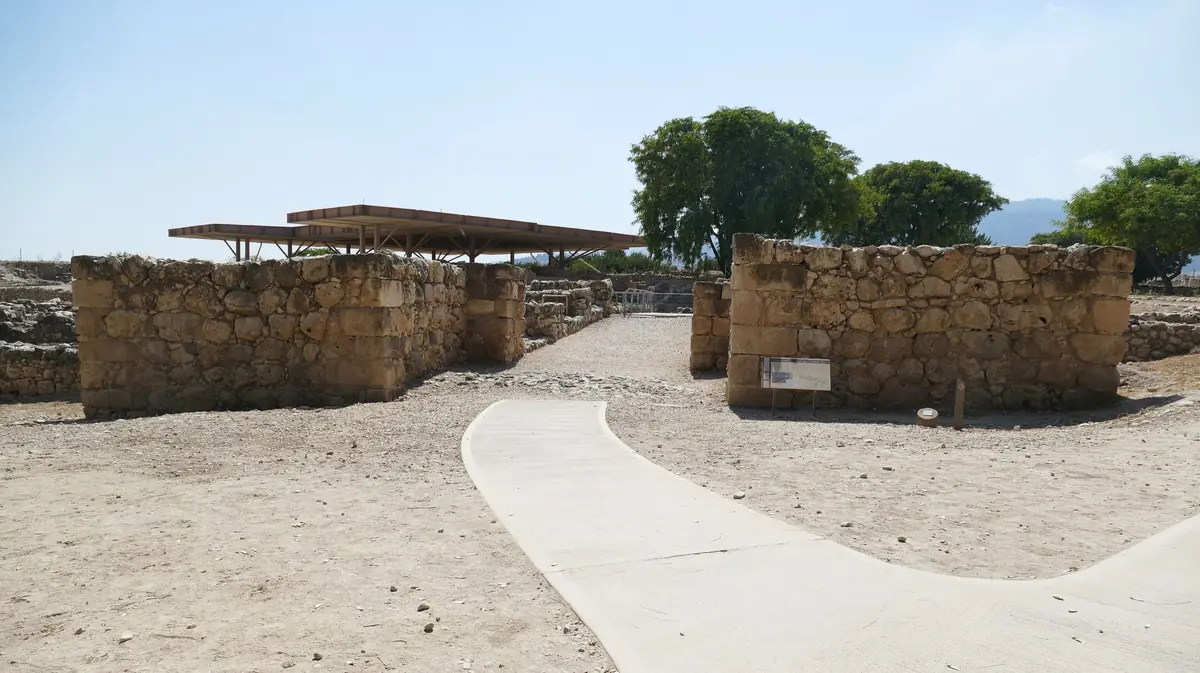
The so-called "Solomon's gate" has six chambers and two towers, with a casemate wall (two parallel walls joined by partitions). The excavators date it to the 10th century BC and connect it with the verse that credits Solomon with building works at Hazor, Megiddo and Gezer; other archaeologists, including Israel Finkelstein, place it in the 9th century. Gates of the same plan exist at Tel Megiddo and at Gezer.
"And this is the reason of the levy which king Solomon raised; for to build the house of the LORD, and his own house, and Millo, and the wall of Jerusalem, and Hazor, and Megiddo, and Gezer."
1 Kings 9:15
״וְזֶה דְבַר־הַמַּס אֲשֶׁר־הֶעֱלָה הַמֶּלֶךְ שְׁלֹמֹה לִבְנוֹת אֶת־בֵּית יְהוָה וְאֶת־בֵּיתוֹ וְאֶת־הַמִּלּוֹא וְאֵת חוֹמַת יְרוּשָׁלִָם וְאֶת־חָצֹר וְאֶת־מְגִדּוֹ וְאֶת־גָּזֶר״
מלכים א ט, טו
In the 9th century BC, probably under King Ahab, the city expanded: an ashlar citadel, a storehouse with two rows of pillars, Israelite houses. The water system is one of the highlights of the visit: a vertical shaft cut through the layers of the tell down to bedrock, about 45 metres deep, followed by a sloping tunnel about 25 metres long that reaches the water table. It allowed the inhabitants to draw water inside the city during a siege.
Hazor was destroyed by the Assyrian king Tiglath-Pileser III in 732 BC, during the conquest of Galilee (2 Kings 15:29). Afterwards, only citadels occupied the western end of the upper city, until the Hellenistic period.
📌 Two periods not to confuse
The burned palace belongs to Canaanite Hazor (14th–13th centuries BC). The six-chambered gate, the citadel, the pillared houses and the water system belong to Israelite Hazor (10th–8th centuries BC).
The site, known in Arabic as Tell el-Qedah (or Tell Waqqas), was proposed as biblical Hazor as early as the 19th century, an identification confirmed by excavation. After soundings by John Garstang in the 1920s, the major expedition of the Hebrew University of Jerusalem, led by Yigael Yadin, excavated the site from 1955 to 1958 and then in a final season in 1968. It was the most important dig of the early years of the State of Israel.
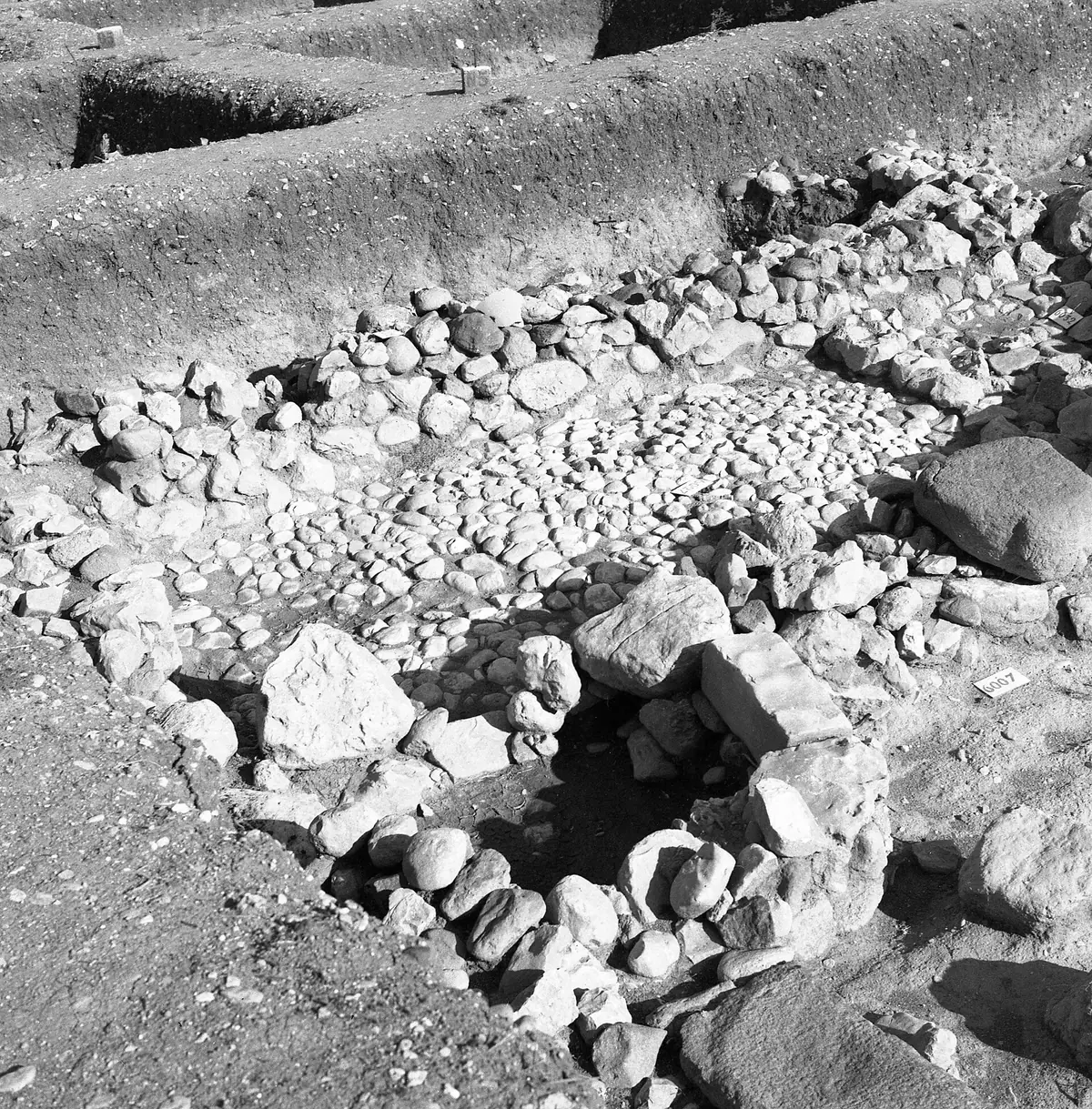
Excavations resumed in 1990 as the Selz Foundation Hazor Excavations in Memory of Yigael Yadin, directed by Amnon Ben-Tor (1935–2023), with Sharon Zuckerman as co-director from 2006 until her death in 2014. Since 2022 the expedition has been co-directed and then directed by Igor Kreimerman (Hebrew University). A 34th season was scheduled for summer 2026: research is ongoing, and some parts of the park may be active excavation areas.
Discoveries of recent decades include new fragments of Egyptian statues, cuneiform tablets, administrative buildings of the Canaanite city and Israelite fortifications built over the destruction layer.
Tel Hazor National Park is managed by the Israel Nature and Parks Authority. The visit covers the upper city: a marked trail leads past the six-chambered gate, the Canaanite palace under its roof, the citadel and the Israelite houses (moved to expose the palace), then the passage to the lower city and the water system.
Opening hours, fees and booking: see the website of the Israel Nature and Parks Authority, which recommends booking your visit. Tel Hazor combines well with Tel Dan, about thirty kilometres to the north, and with Tel Megiddo, the other great Canaanite city of the north on the UNESCO list.
Tel Hazor: the Canaanite capital of Joshua 11
Tel Hazor National Park, Road 90 between Rosh Pina and Kiryat Shmona, near Kibbutz Ayelet HaShahar
GPS coordinates : 33.0179, 35.5688
Start navigation with:
A Canaanite city the Bible says was defeated but never dispossessed: four thousand years of history at the crossroads of Egypt and Mesopotamia.
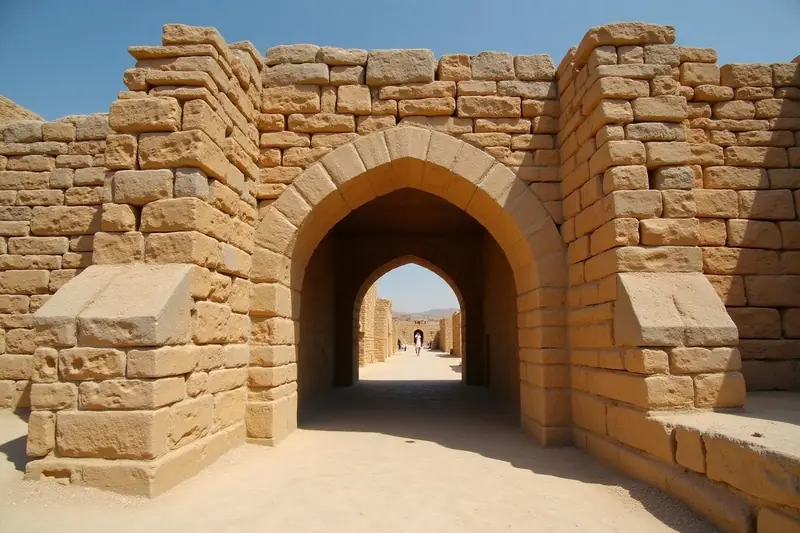
From Genesis 14 to the "House of David" stele: archaeology, nature and biblical history at the springs of the Jordan.
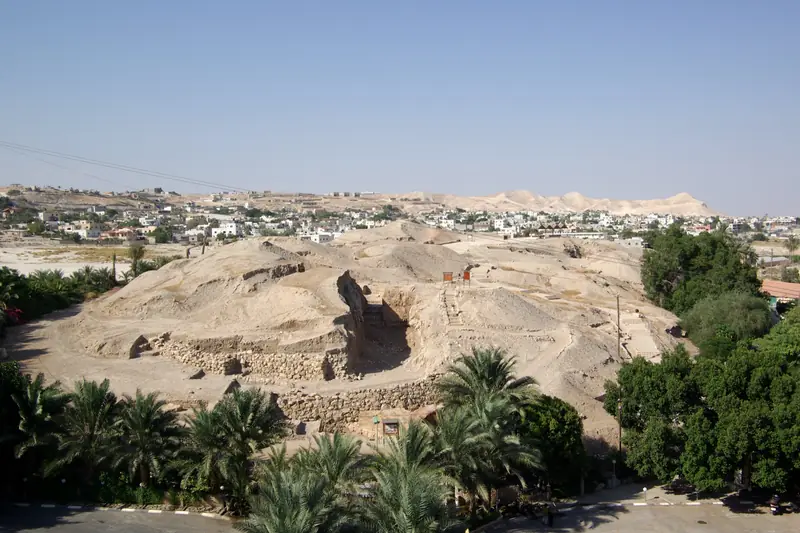
Rahab, the Jordan crossing and the falling walls: the Book of Joshua set against a century of excavation at one of the oldest towns in the world.
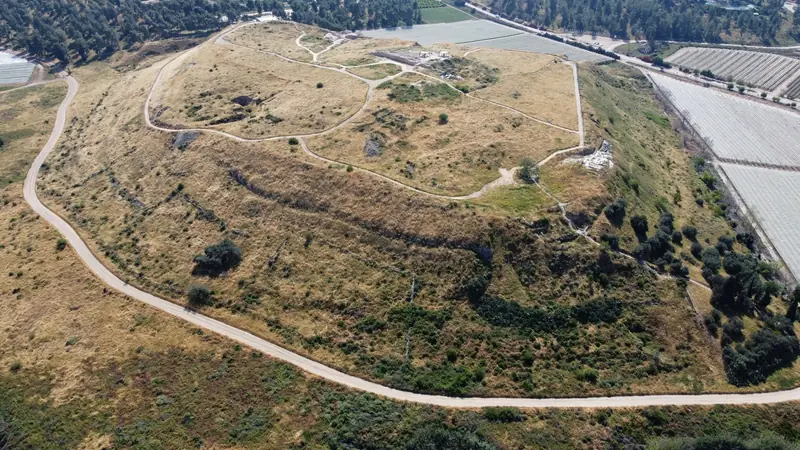
A royal Canaanite city under Egyptian rule, Lachish is one of the southern cities Joshua is said to have taken. Its excavations tell a more complex, and longer, story.
All three refer to the same place. "Hazor" is the traditional English spelling used in the King James Version, by UNESCO and by the excavators; "Hatzor" and "Hatsor" follow the Hebrew pronunciation (חָצוֹר). In Arabic the site was called Tell el-Qedah or Tell Waqqas.
The Canaanite city was indeed destroyed by a fierce fire in the 13th century BC, which agrees with Joshua 11:11-13. But no inscription names the attackers: Amnon Ben-Tor saw the Israelites as responsible, Sharon Zuckerman an internal revolt, and other scholars consider other enemies. The question remains open.
The phrase in Joshua 11:10 reflects Hazor's size and role: about 80 hectares, by far the largest city in Canaan in the 2nd millennium BC, the only Canaanite city named in the Mari archives and in contact with the great courts of the Near East.
No. The six-chambered gate is from the Iron Age: the excavators date it to the 10th century BC (the time attributed to Solomon, 1 Kings 9:15), other archaeologists to the 9th century. It is several centuries later than the destruction of the Canaanite city.
A large royal building of the 14th–13th centuries BC at the centre of the upper city, with an entrance staircase, basalt pillars and orthostats, a cultic platform and a throne room. It was destroyed in the final fire of the Canaanite city and is now protected by a roof.
Allow 1.5 to 2 hours for the upper-city trail and the water system. The Hazor Museum at Kibbutz Ayelet HaShahar only receives groups by appointment.
No. It is attributed to the 9th century BC, probably to the time of King Ahab. A shaft about 45 metres deep, with steps, leads to a sloping tunnel that reaches the water table.
Tel Dan and its springs to the north, Tel Megiddo in the Jezreel Valley (another UNESCO "biblical tel") and, for the rest of the conquest narrative, Jericho and Tel Lachish.