
In brief
Sarah is Abraham's wife and Isaac's mother, giving birth at 90 according to Genesis. She dies in Hebron at 127 and, according to the text, lies in the Cave of Machpelah. No source outside the Bible mentions her. A Dead Sea Scroll, the Genesis Apocryphon, expands her story and describes her beauty at length.
- Genesis makes her Abraham's half-sister, ten years his junior; the Talmud identifies her with Iscah, his niece.
- The Genesis Apocryphon, found in Qumran Cave 1, describes her face, hands and feet, and credits her with great wisdom.
- This text shows what ancient Jewish readers thought of her, but it does not prove that she existed.
Sarah, first called Sarai, is Abraham's wife and Isaac's mother. Almost everything we know about her comes from Genesis, chapters 11 to 23: the departure from Ur, the episode in Egypt, the long years of barrenness, her laughter at the news of a birth, her death in Hebron at 127. No inscription or archaeological find mentions her, so her historical existence cannot be demonstrated.
An entire Torah portion bears her name: parashat Chayei Sarah, "the life of Sarah" (Genesis 23:1 to 25:18). It is the only one of the 54 weekly portions named after a woman. Yet it opens with her death, then tells of the purchase of the Cave of Machpelah, Isaac's marriage and Abraham's death. You will find it, with its places, in our list of weekly Torah portions.
The Bible says little about her famous beauty. A Dead Sea Scroll, the Genesis Apocryphon, fills that silence with a portrait of a precision rare in ancient Jewish literature. Here is what the biblical text says, what the scroll adds, and where you can follow her story in Israel today.
- TextGenesis 11 to 23 (Torah portion Chayei Sarah for her death)
- Age at death127 (Genesis 23:1)
- BurialCave of Machpelah, Hebron
- ManuscriptGenesis Apocryphon, Qumran Cave 1
Who is Sarah in the Bible?
From Sarai to Sarah
Sarai appears in Genesis when Abraham, the father of monotheism, sets out with his father Terah from Ur towards Haran (Genesis 11:31). The text first presents her through what she lacks: "But Sarai was barren; she had no child" (Genesis 11:30). God later gives her the new name Sarah, just as Abram becomes Abraham (Genesis 17:15). Both forms are generally linked to the Hebrew word for "princess".
Hagar, Ishmael and the expulsion
Childless, Sarai offers Abram her Egyptian servant Hagar, who gives birth to Ishmael (Genesis 16). After Isaac is born, Sarah demands that they leave. Abraham objects, and God decides in her favour: "in all that Sarah hath said unto thee, hearken unto her voice" (Genesis 21:12).
The laughter and the birth of Isaac
When three visitors tell Abraham, by the oaks of Mamre, that she will have a son, Sarah is listening at the tent door, and she reacts without ceremony.
"Therefore Sarah laughed within herself, saying, After I am waxed old shall I have pleasure, my lord being old also?"
Genesis 18:12
וַתִּצְחַק שָׂרָה בְּקִרְבָּהּ לֵאמֹר אַחֲרֵי בְלֹתִי הָיְתָה־לִּי עֶדְנָה וַאדֹנִי זָקֵן
בראשית יח, יב
She is 90 when Isaac is born, and his Hebrew name, Yitzhak, comes from the verb "to laugh". Sarah returns to it herself: "God hath made me to laugh" (Genesis 21:6).
Was Sarah Abraham's sister?
Twice, Abraham presents her as his sister so as not to be killed because of her: before Pharaoh in Egypt (Genesis 12) and before Abimelech, king of Gerar (Genesis 20). He defends himself to Abimelech with a detail the text gives nowhere else.
"And yet indeed she is my sister; she is the daughter of my father, but not the daughter of my mother; and she became my wife."
Genesis 20:12
According to Genesis, then, Sarah would be his half-sister. Jewish tradition offers another reading: the Talmud identifies her with Iscah, daughter of Haran, Abraham's brother (Genesis 11:29; Megillah 14a), which would make her his niece. As for their age gap, Abraham gives it himself: he is 100 when she is 90 (Genesis 17:17).
The Genesis Apocryphon, a Qumran scroll about Abraham and Sarah
This scroll is one of the first seven found, in late 1946 or early 1947, in Cave 1, one of the Qumran caves. Written in Aramaic, it retells the biblical story in its own way, from Lamech, the father of Noah, down to Abraham. In the part devoted to Abram, he speaks in the first person.
Its modern journey is surprising too. It was one of four scrolls offered for sale in a small advertisement in the Wall Street Journal in June 1954, then bought for Israel. Too damaged to be opened quickly, it was long known as the "Lamech Scroll", after the character whose name could be read on it. It received its current name at its first publication in 1956, by Nahman Avigad and Yigael Yadin.
How old is this text?
Scholars disagree. The handwriting of the surviving copy places it roughly between 25 BCE and 50 CE, and proposals for the composition of the text range from the 3rd century BCE to the 1st century CE.
What does the scroll say about Sarah's beauty?
Genesis limits itself to a few words: "a fair woman to look upon" (Genesis 12:11), "very fair" (Genesis 12:14). The scroll gives Hirqanosh, one of the three Egyptian princes who have met Abram, a speech of praise addressed to Pharaoh. The start of the passage is lost, but this is what can be read.
"… how excellent and beautiful is the expression on her face! And how pleasing [and how] delicate is the hair of her head! How beautiful are her eyes, and how pleasing is her nose (…) No maidens or brides who enter the bridal chamber are more beautiful than she is!"
Genesis Apocryphon, column 20, translation by John C. Reeves
The praise also covers her arms, hands, palms and long slender fingers, her feet and thighs. It ends on a different note: to all this beauty Sarah adds great wisdom, and the work of her hands is beautiful. Commentators hear echoes of the Song of Songs and of the "woman of valour" in the Book of Proverbs (31:10-31).
🔎 How old is she in this scene?
Abraham is 75 when he leaves Haran (Genesis 12:4) and Sarah ten years younger, so she is about 65 on arriving in Canaan. The scroll adds two years in Hebron and five in Egypt before the princes' visit. On this calculation, the portrait describes a woman of about 72. The text does not say so itself, and the figure depends on these chronologies.
Genesis and the Qumran scroll: what changes in Sarah's story
The Egypt episode takes eleven verses in Genesis (12:10-20). It fills most of columns 19 and 20 of the scroll, with important differences.
| Point | Genesis 12 | Genesis Apocryphon |
|---|---|---|
| The ruse | Abram fears being killed and asks Sarai to say she is his sister | He dreams of a cedar about to be cut down and a palm tree that saves it, and understands that they are the two of them |
| Sarah's voice | She does not say a word | She hears the dream, weeps, and herself tells the king that Abram is her brother |
| How long | Not stated | She avoids being seen for five years, then stays two years with Pharaoh |
| Pharaoh | "So I might have taken her to me to wife" (12:19), nothing more | An evil spirit stops him from approaching her, and he swears he did not touch her |
| The healing | He sends the couple away | Lot reveals the truth, then Abram prays and lays his hands on the king |
| Hagar | An Egyptian servant (16:1), with no word on how she came to Sarai | The king gives Sarah silver, gold, linen, purple, and Hagar too |
These additions answer questions the biblical text leaves open: why does Abram lie, and did Pharaoh touch Sarai? Where does Hagar come from? For the biblical scholar Jacqueline Vayntrub, the scroll turns a silent Sarai into a character who acts and speaks. For Hanna Tervanotko, the description belongs to ancient physiognomy: the body reveals inner qualities, and it is foreigners who recognise them.
So the scroll sheds light on how ancient Jewish readers understood Sarah. It is not testimony about the person herself, and it does not prove that the events took place.
What Judaism, Christianity and Islam add
These elements come from later traditions, not from the text of Genesis.
- Prophetess: the Talmud counts her among the seven prophetesses of Israel (Megillah 14a), and Rashi infers from Genesis 21:12 that Abraham was inferior to her in prophecy.
- Beauty: she is one of the four women of exceptional beauty named by the Talmud (Megillah 15a). A midrash tells that Abram hid her in a chest to get through Egyptian customs (Bereshit Rabbah 40:5).
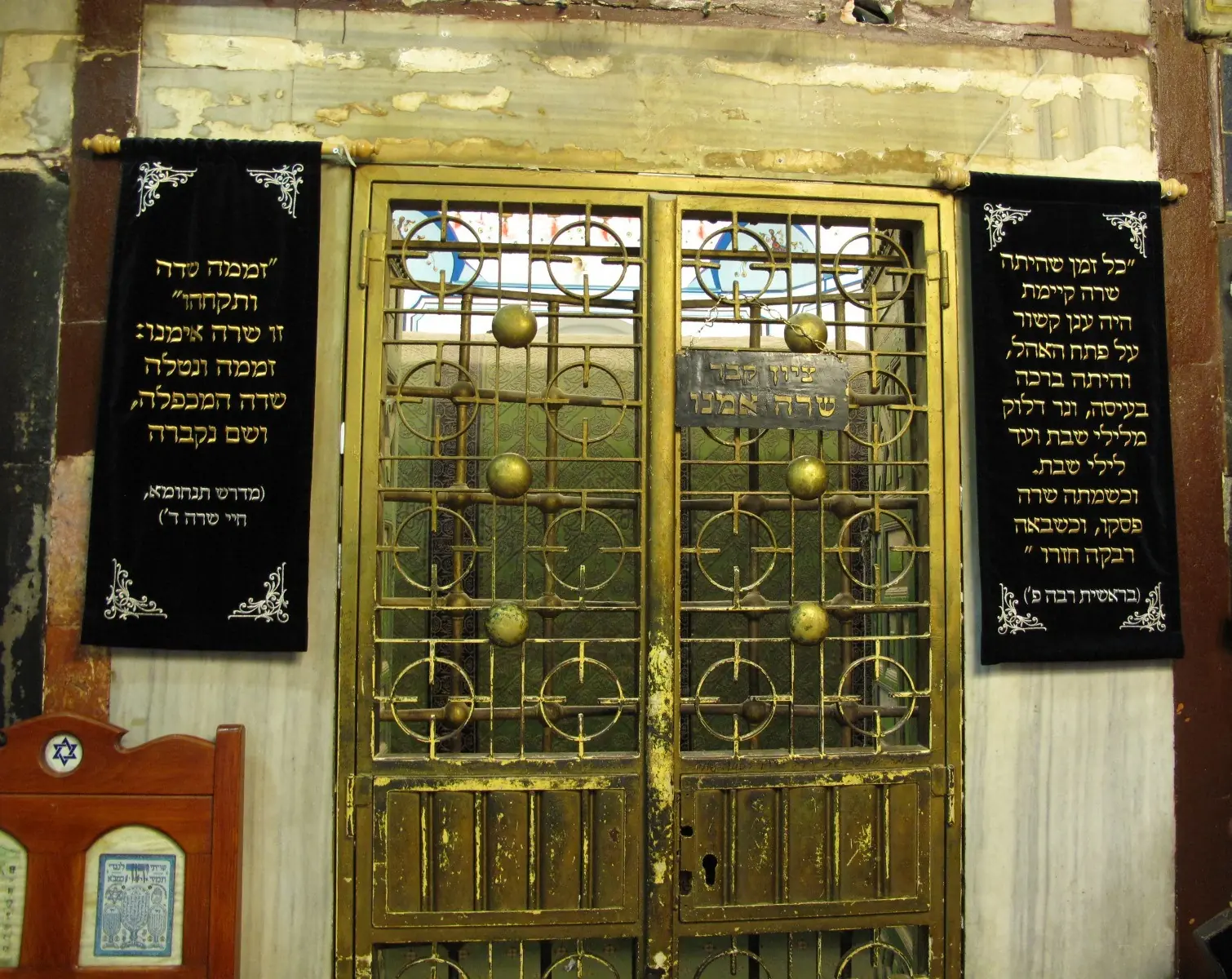
- Her tent: as long as she lived, a cloud hung over its entrance (Bereshit Rabbah 60:16). A version of this tradition is embroidered on the right-hand banner beside her cenotaph, in the photo at the top of this article.
- Her death: Rashi, on Genesis 23:2, explains that she died on learning that Isaac had nearly been sacrificed.
- Christianity: the New Testament cites her as a model of faith (Hebrews 11:11; 1 Peter 3:6).
- Islam: the Quran mentions Abraham's wife laughing at the news of the birth (11:71) without naming her. The name Sarah comes from Muslim tradition.
Where is Sarah buried?
Sarah dies in Hebron, and no other woman in the Bible has her age at death recorded.
"And Sarah was an hundred and seven and twenty years old: these were the years of the life of Sarah. And Sarah died in Kirjath-arba; the same is Hebron in the land of Canaan (…)."
Genesis 23:1-2
וַיִּהְיוּ חַיֵּי שָׂרָה מֵאָה שָׁנָה וְעֶשְׂרִים שָׁנָה וְשֶׁבַע שָׁנִים שְׁנֵי חַיֵּי שָׂרָה
בראשית כג, א
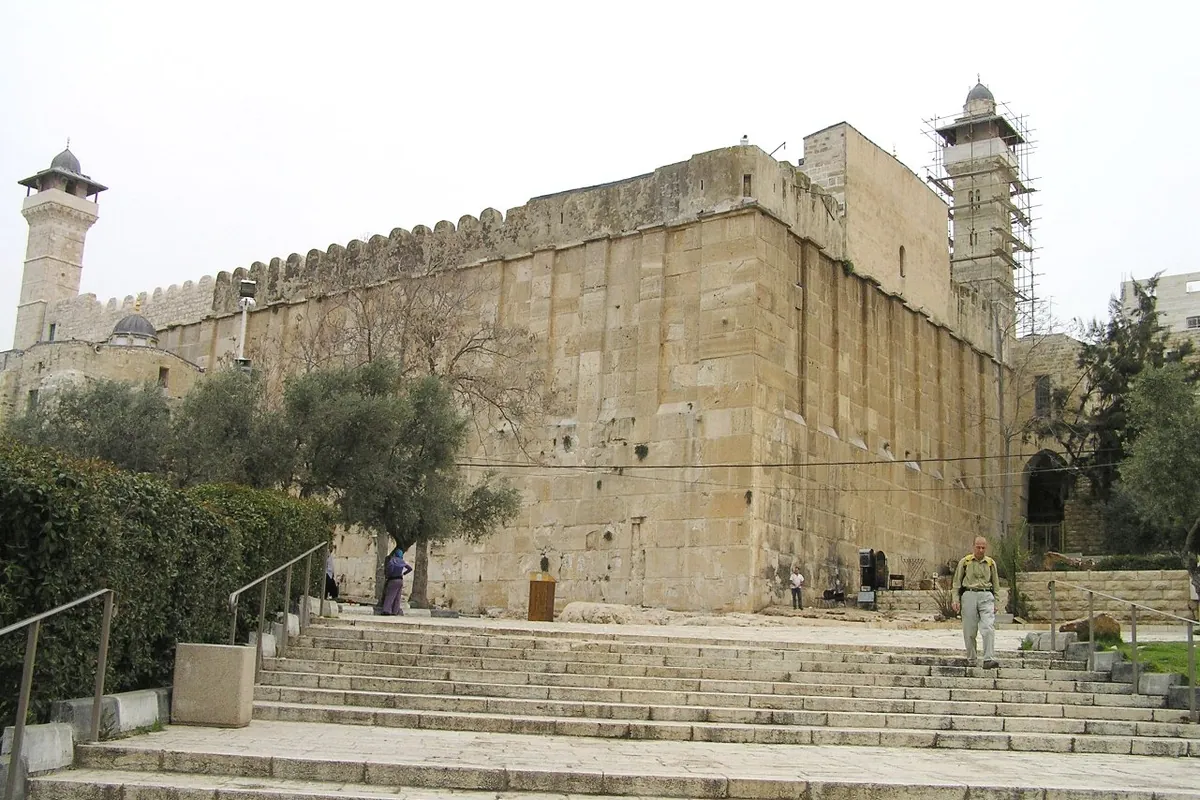
To bury her, Abraham pays Ephron the Hittite 400 shekels of silver for the cave of Machpelah and its field (Genesis 23:16-19). It is his first land in Canaan. The traditional site today is the Cave of Machpelah in Hebron, also called the Tomb of the Patriarchs.
Sarah's cenotaph is a memorial monument, much later than the biblical story. The cave itself lies below and is not open to the public.
Following Sarah's story in Israel
Three places let you follow her story, from Genesis to the scroll. Hebron and Mamre are in Judea-Samaria, and Qumran is in the Judean Desert, so check access conditions before you go.
Hebron: the Tomb of the Patriarchs
 Hebron, Judaean HillsTomb of the Patriarchs – HebronA sacred site venerated by the three monotheistic religions, the traditional burial place of Abraham, Isaac and Jacob.View site →
The Herodian enclosure houses the cenotaphs of the patriarchs and matriarchs. The scroll also has Abram living in Hebron for two years before leaving for Egypt. The site is an active place of worship shared by Jews and Muslims, and access changes from day to day.
Mamre: the scene of the laughter
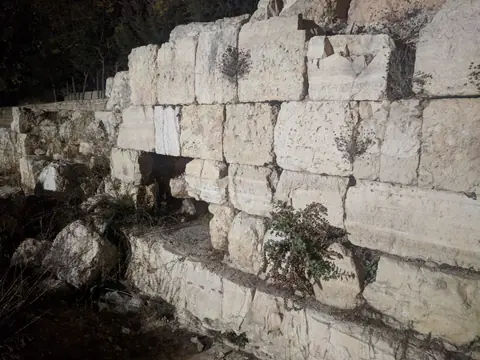 Ramat el-Khalil, north of Hebron, Judea and SamariaMamre near Hebron: Abraham and the three visitorsNorth of Hebron, Ramat el-Khalil preserves a place of memory associated with Abraham and the hospitality of Genesis 18.View site →
North of Hebron, Ramat el-Khalil preserves the remains of a place of memory linked to Abraham and to the announcement of Isaac's birth.
Qumran and the Shrine of the Book: the scroll
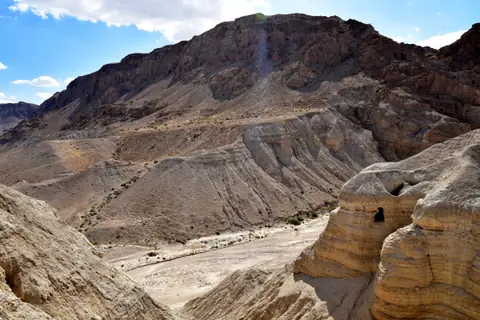 North-western shore of the Dead SeaQumran, the site of the Dead Sea Scrolls: excavations and visitingBedouin shepherds, eleven caves and some 900 manuscripts: the site that yielded the oldest known copies of the Hebrew Bible, and the riddle of who hid them.View site →
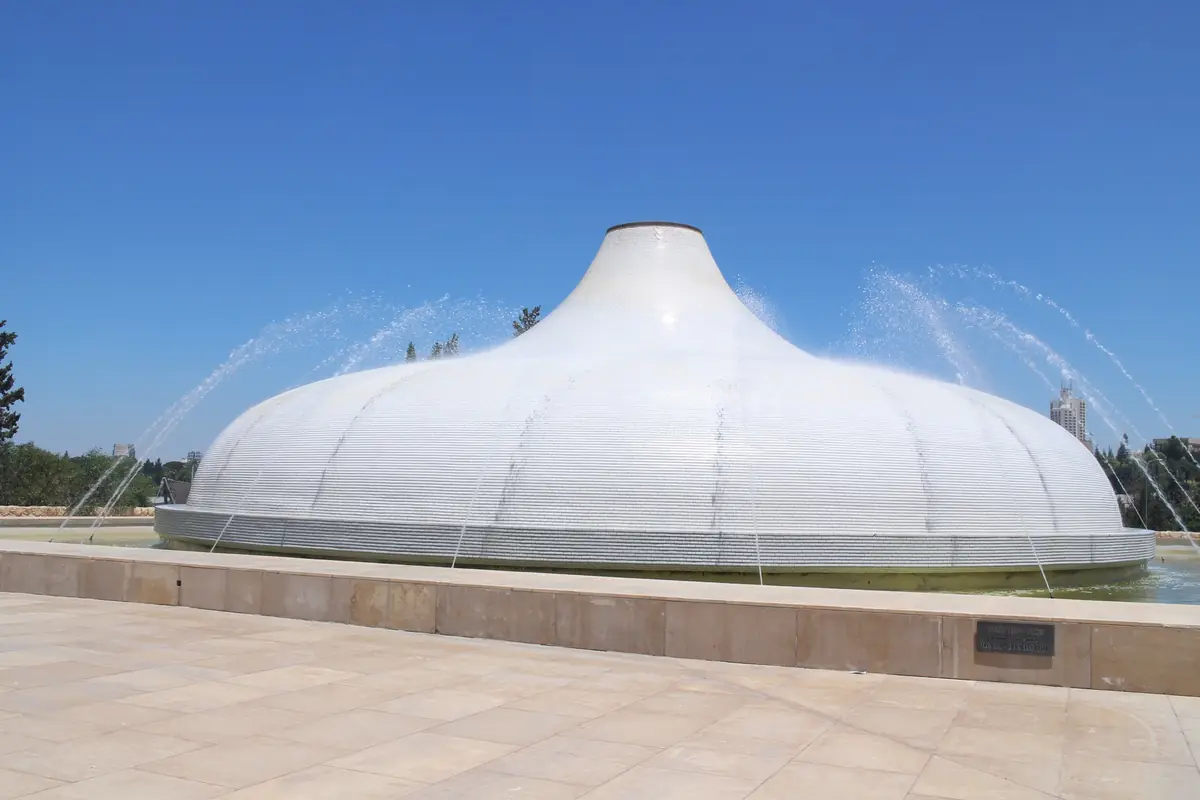
You can see the cliff caves at Qumran, but the scrolls are in Jerusalem, at the Shrine of the Book in the Israel Museum. The Genesis Apocryphon is fragile and rarely shown: a fragment was displayed in 2018 in a special case, lit for only 30 seconds on request. Check with the museum what is on display before your visit.
To link these stops day by day, build your free Bible tour and add other places from the age of the patriarchs.
Sources and references
- Genesis 11 to 23 (Hebrew text and translations on Sefaria)
- J. C. Reeves, English translation of the 1Q Genesis Apocryphon, columns II to XXII (University of North Carolina at Charlotte)
- M. Langlois, "Abram, Sara et Joseph, un destin revisité", Le Monde des Religions 56 (2012), pp. 38-39 (in French)
- H. Tervanotko, "What Is Beautiful Is Good? Examining Significance of Sarah's Beauty in The Genesis Apocryphon 20:2-9" (2022)
- J. Vayntrub, "Voice and Presence in the Genesis Apocryphon", Ancient Jew Review (2018)
- "Genesis Apocryphon", Wikipedia: discovery, condition and dating of the scroll
- "המגילה החיצונית לבראשית", Hebrew Wikipedia: the scroll's journey and the 1954 advertisement
- "Enigmatic Dead Sea Scroll fragment makes rare show in Jerusalem", The Times of Israel (2018)
- Babylonian Talmud, Megillah 14a: Sarah among the seven prophetesses, Iscah (Sefaria)
- Babylonian Talmud, Megillah 15a: the four women of great beauty (Sefaria)
- Rashi on Genesis 21:12 (Sefaria)
- Rashi on Genesis 23:2 (Sefaria)
- Bereshit Rabbah 40:5: the chest at Egyptian customs (Sefaria)
- Bereshit Rabbah 60:16: the cloud over Sarah's tent (Sefaria)
- Quran 11:71
Frequently asked questions about Sarah, Abraham's wife
How were Abraham and Sarah related?
In Genesis, Abraham says she is his half-sister: "the daughter of my father, but not the daughter of my mother" (Genesis 20:12). The Talmud offers another reading and identifies her with Iscah, daughter of his brother Haran, which would make her his niece (Megillah 14a).
What was the age difference between Abraham and Sarah?
Ten years. According to Genesis 17:17, Abraham is 100 when Sarah is 90, at the birth of Isaac. She dies at 127 (Genesis 23:1), which on this calculation makes Abraham 137.
Can you see Sarah's tomb?
You can see her cenotaph, a memorial monument inside the Tomb of the Patriarchs in Hebron. The Cave of Machpelah itself lies below and is not open to the public. The site is a place of worship in Judea-Samaria, so check access before you go.
Can you see the Genesis Apocryphon in a museum?
Rarely. The scroll belongs to the collections of the Shrine of the Book at the Israel Museum in Jerusalem, but it is fragile and the originals there are displayed in rotation. A fragment was shown in 2018. Check with the museum before planning a visit for this manuscript alone.
Does the Qumran scroll prove that Sarah existed?
No. The Genesis Apocryphon is an ancient rewriting of the biblical story, from around the Second Temple period. It shows how ancient Jewish readers saw Sarah. No inscription or archaeological find mentions her.
Can you visit Hebron and Qumran on the same day?
It is better to plan two days from Jerusalem: Hebron lies to the south, Qumran to the east near the Dead Sea, and access rules in Hebron vary from day to day. Allow another 2 to 3 hours for the Shrine of the Book. You can organise these stops in your tour.
Places to visit
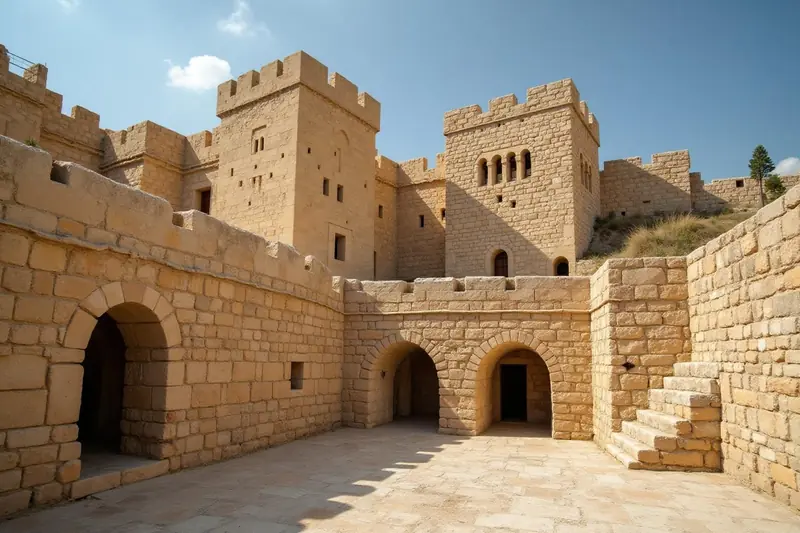
Tomb of the Patriarchs – Hebron
A sacred site venerated by the three monotheistic religions, the traditional burial place of Abraham, Isaac and Jacob.
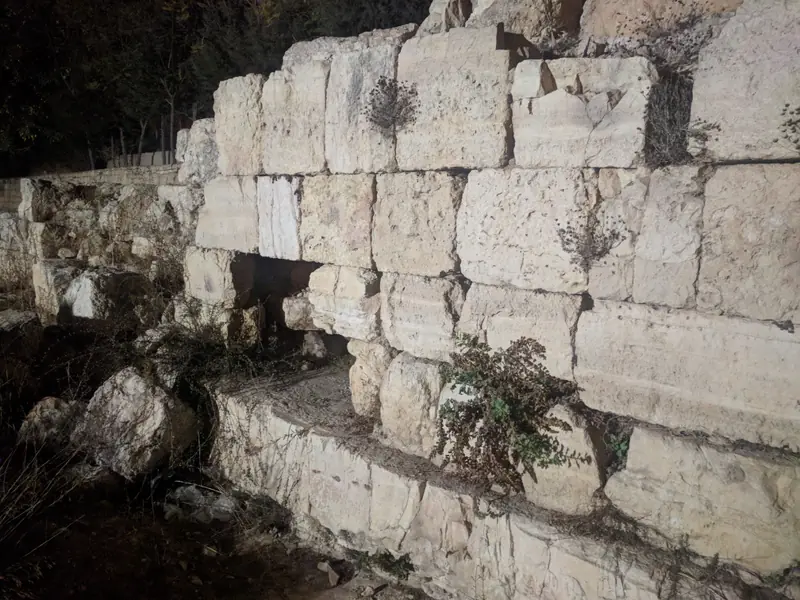
Mamre near Hebron: Abraham and the three visitors
North of Hebron, Ramat el-Khalil preserves a place of memory associated with Abraham and the hospitality of Genesis 18.
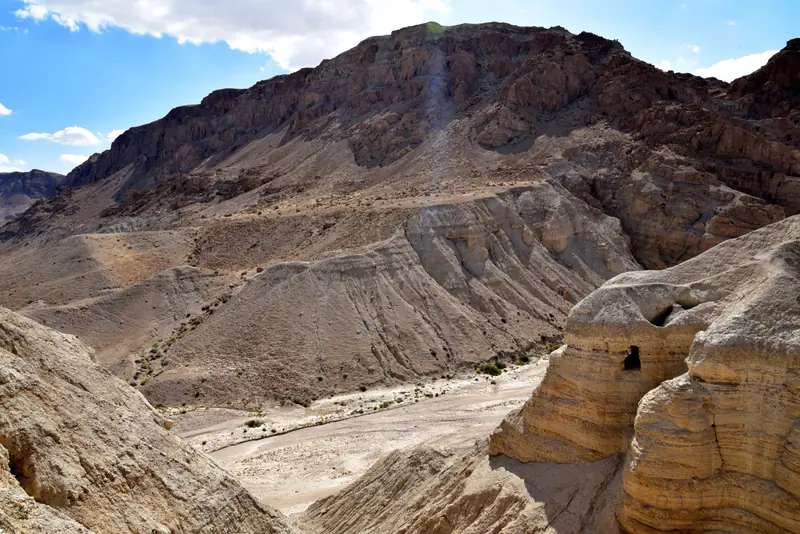
Qumran, the site of the Dead Sea Scrolls: excavations and visiting
Bedouin shepherds, eleven caves and some 900 manuscripts: the site that yielded the oldest known copies of the Hebrew Bible, and the riddle of who hid them.
Read next
The Flood Around the World: Ancient Stories and Archaeological Witnesses
India, China, Greece, the Americas, Mesopotamia: flood stories around the world and three ancient tablets that record them, set beside the story of Noah.
Where Was the Garden of Eden? The Four Rivers, Mesopotamia and Hebron
Tigris, Euphrates, the Persian Gulf or Hebron? What Genesis says about the Garden of Eden, what scholars suggest, and the traditions that link it to Israel.