
Tel Hazor: the Canaanite capital of Joshua 11
"The head of all those kingdoms": the largest Canaanite city in the land, its destruction by fire and an archaeological debate that is still open.
1500–1200 BCE
A Canaanite city the Bible says was defeated but never dispossessed: four thousand years of history at the crossroads of Egypt and Mesopotamia.
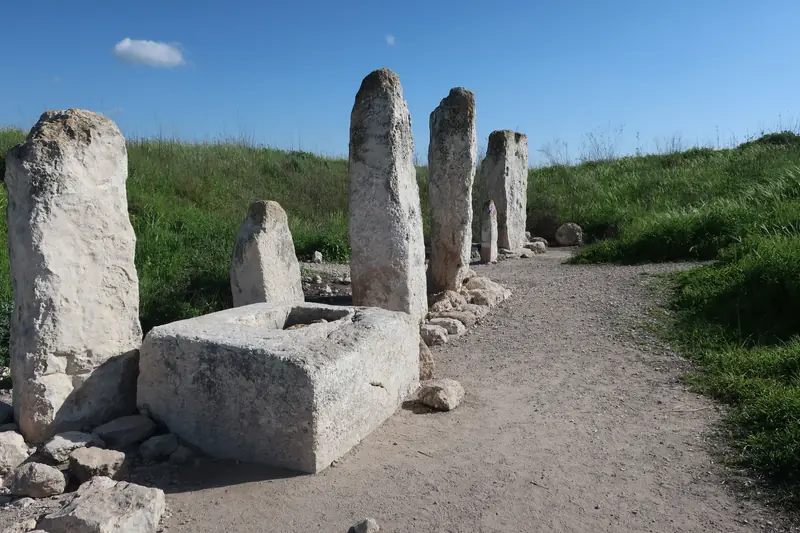
Credit: israeltourism from Israel · CC BY-SA 2.0 · Wikimedia Commons
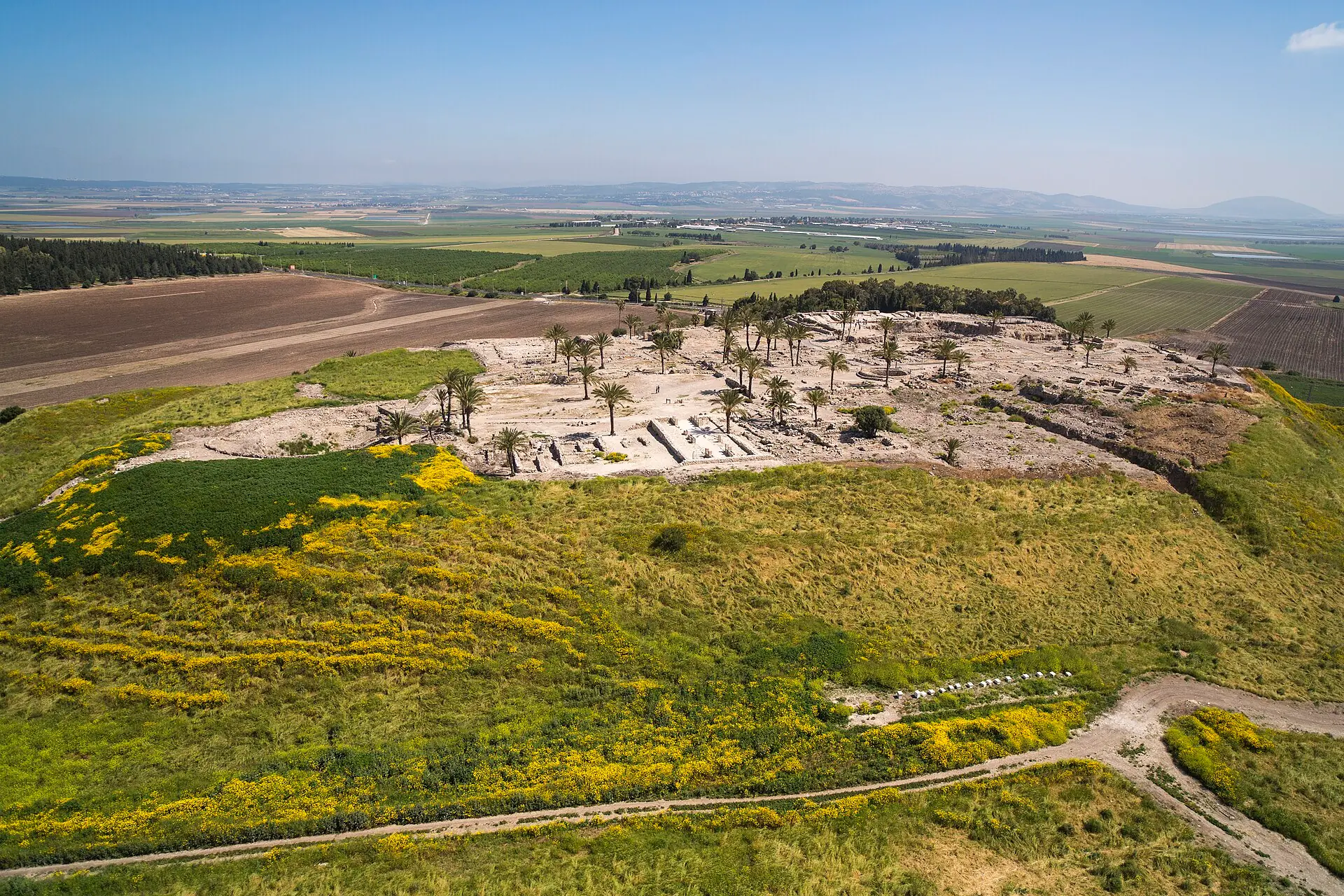
Overlooking the Jezreel Valley, Tel Megiddo — biblical Megiddo, known in Arabic as Tell el-Mutesellim — was for more than two thousand years one of the most powerful cities of Canaan. It controlled the exit of the Wadi Ara pass, on the international road linking Egypt with Syria and Mesopotamia. The Book of Joshua lists its king among the defeated kings, but also states that the tribe of Manasseh could not drive the Canaanites out of it.
This page focuses on that Canaanite angle: the battle of Pharaoh Thutmose III, the Amarna letters, the Late Bronze Age palace and ivories, and temples and a round altar that are far older. The park's most famous monuments (the six-chambered gate, the "stables", the water system), on the other hand, belong to the Iron Age, long after the time of the Exodus. The site is a national park and a UNESCO World Heritage Site since 2005, and Christian tradition places Armageddon here.
Megiddo appears in the list of thirty-one Canaanite kings defeated by Joshua and the Israelites, next to Taanach, its neighbour in the Jezreel Valley. The text does not describe any capture of the city: it only mentions its king.
"The king of Taanach, one; the king of Megiddo, one."
Joshua 12:21
״מֶלֶךְ תַּעְנַךְ אֶחָד מֶלֶךְ מְגִדּוֹ אֶחָד״
יהושע יב, כא
When the land is divided, Megiddo is allotted to Manasseh (Joshua 17:11). The text immediately adds that the tribe could not take it, any more than Beth-shean, Ibleam, Dor, Endor and Taanach.
"Yet the children of Manasseh could not drive out the inhabitants of those cities; but the Canaanites would dwell in that land. Yet it came to pass, when the children of Israel were waxen strong, that they put the Canaanites to tribute; but did not utterly drive them out."
Joshua 17:12-13
״וְלֹא יָכְלוּ בְּנֵי מְנַשֶּׁה לְהוֹרִישׁ אֶת־הֶעָרִים הָאֵלֶּה וַיּוֹאֶל הַכְּנַעֲנִי לָשֶׁבֶת בָּאָרֶץ הַזֹּאת״
יהושע יז, יב
The Book of Judges repeats the same observation: "Neither did Manasseh drive out […] the inhabitants of Megiddo and her towns: but the Canaanites would dwell in that land" (Judges 1:27). Finally, the Song of Deborah recalls a battle "in Taanach by the waters of Megiddo" (Judges 5:19), following the victory over Sisera and over Jabin, king of Hazor.
"The kings came and fought, then fought the kings of Canaan in Taanach by the waters of Megiddo; they took no gain of money."
Judges 5:19
🔎 A nuanced account
For Megiddo, the Bible itself does not describe a total conquest: the city remains Canaanite during the settlement period. This fits the archaeology, which shows a prosperous Canaanite city in the Late Bronze Age, then a town with a still Canaanite culture in the 12th century BC. For the wider context, see the Exodus and the conquest of Canaan.
In the 15th century BC, Megiddo led a coalition of Canaanite cities in revolt against Egypt, with the support of the kingdom of Mitanni. Pharaoh Thutmose III marched through the narrow Aruna pass (Wadi Ara), crushed the allies on the plain at the foot of the city, then besieged Megiddo for seven months before taking it. His annals, carved in the temple of Karnak, list booty of hundreds of chariots and thousands of horses. This battle, dated around 1457 BC in the most common chronology (others suggest 1479 or 1482), is often described as the first battle known from a detailed account.
In the 14th century BC, Megiddo was a vassal city of Egypt. Among the Amarna letters, a diplomatic archive found in Egypt, six were sent to the pharaoh by Biridiya, king of Megiddo. He reports on the labour and tribute he supplied and complains of attacks by Labayu, king of Shechem. These letters give a concrete picture of Late Bronze Age Canaan: small rival kingdoms, watched over by Egypt, which the Book of Joshua later describes as each ruled by its own "king".
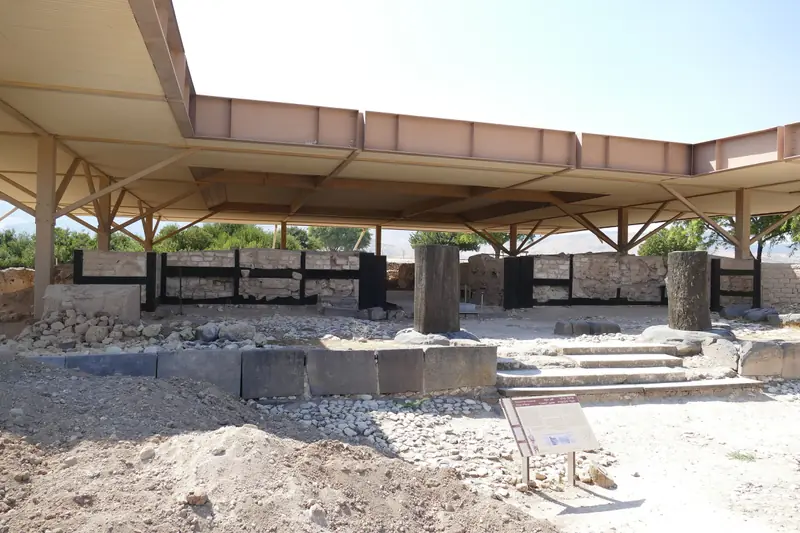
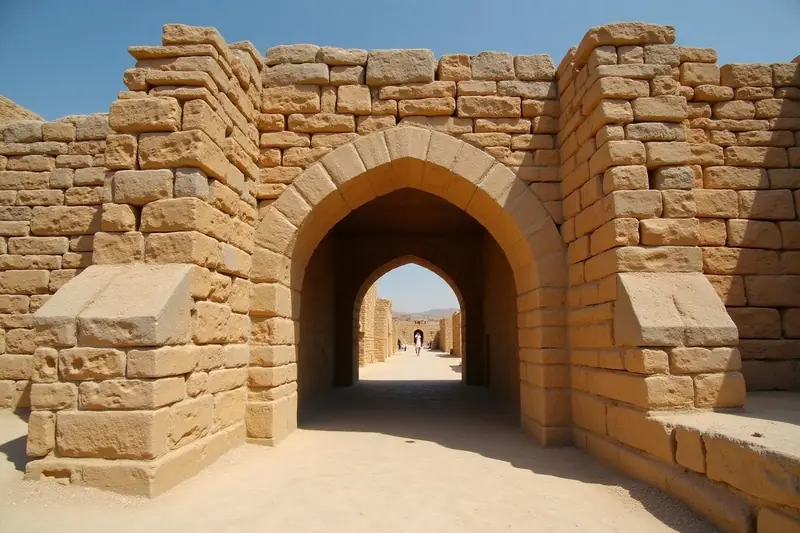
Near the present entrance to the tell, visitors see a four-chambered Canaanite gate of the Late Bronze Age. The city was not then enclosed by a wall: this gate, more ceremonial than defensive, led to the palace quarter. Of the Canaanite palace itself, only a two-metre-thick wall and some basalt steps survive on site; it measured at least 50 by 30 metres, with a central courtyard surrounded by rooms, in a plan influenced by Syrian architecture.
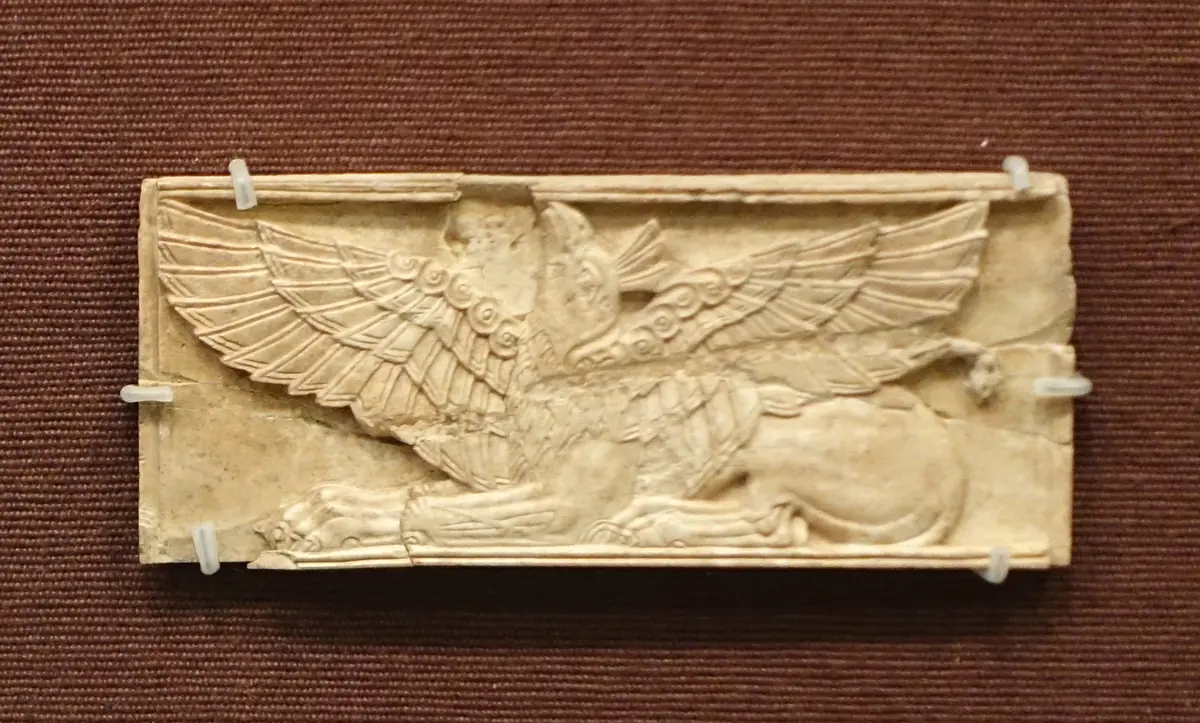
In one of its rooms, the Chicago excavators found in 1937 a hoard of several hundred carved ivory objects: plaques, boxes, combs and game pieces decorated with sphinxes, griffins and court scenes. These Megiddo ivories date from the end of the Late Bronze Age and the very beginning of the Iron Age; they blend Egyptian, Syrian, Hittite and Aegean styles. They are now divided between Jerusalem and Chicago.
The palace was destroyed by fire in the second half of the 12th century BC. A statue base bearing the name of Pharaoh Ramesses VI, found at the site, shows that Egyptian influence still persisted there shortly before this destruction.
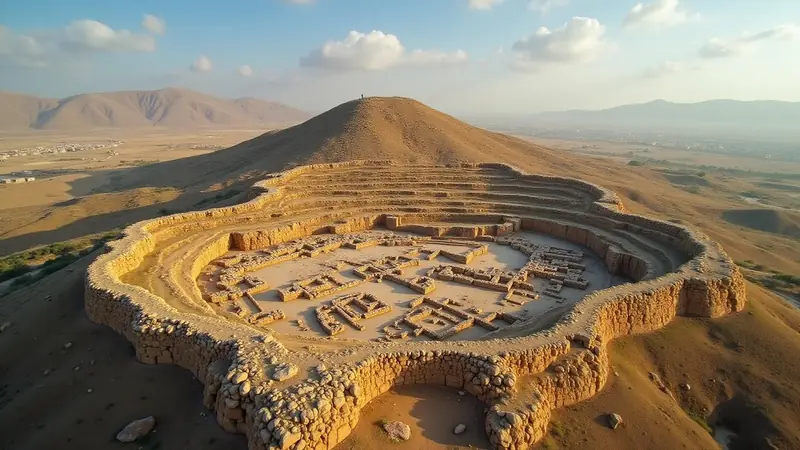
From the northern lookout, you look down into the deep trench dug by the Chicago expedition. Its face shows more than twenty superimposed cities, down to bedrock. At the bottom lies the sacred area, in continuous use for more than two thousand years, from the 4th millennium BC to the beginning of the Iron Age.
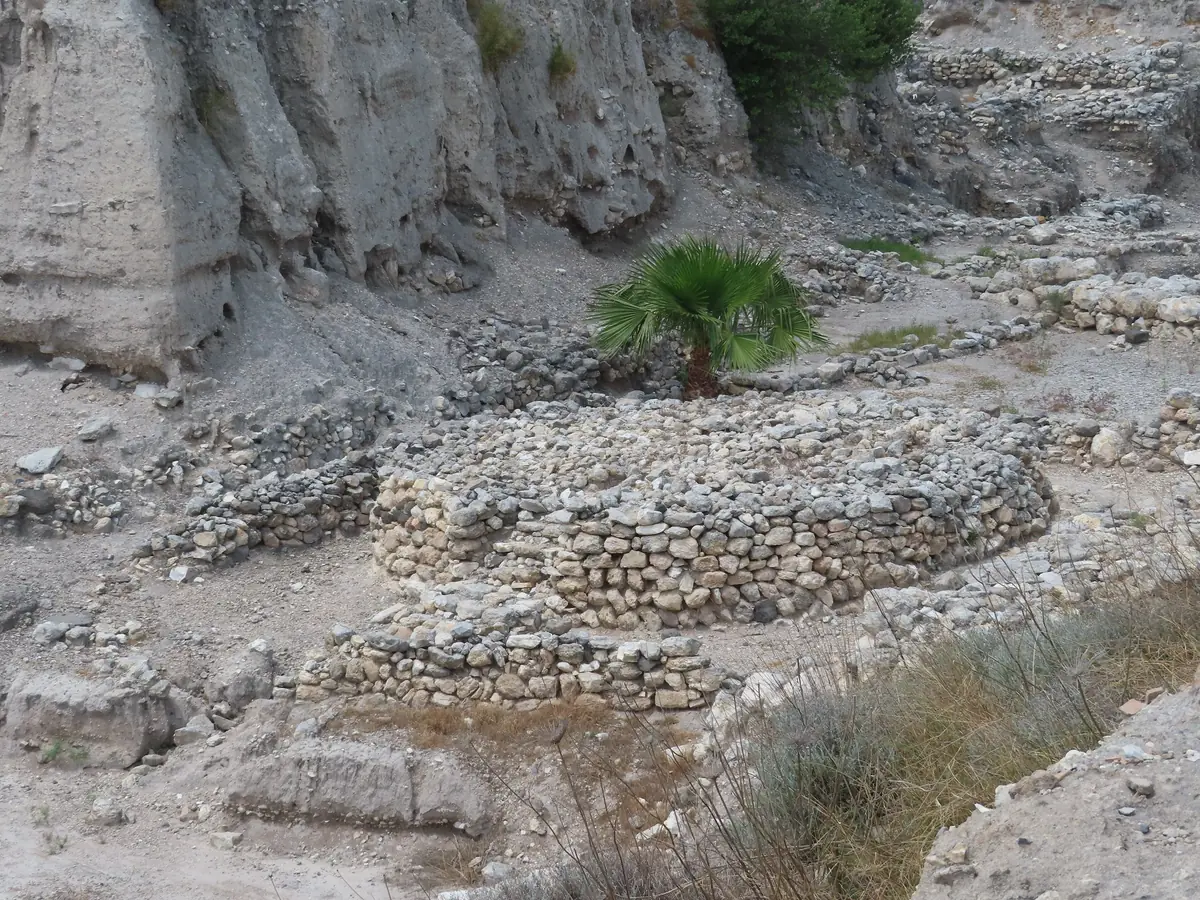
The great round altar, built of fieldstones and preserved to its full height, is Megiddo's best-known image. Many animal bones were found at its base. It is more than a thousand years older than the time of Joshua: it bears witness to the antiquity of the city's Canaanite cults, not to an event in the biblical narrative.
Most of the monuments that made Megiddo famous are later than the Canaanite city. They belong to the kingdom of Israel, in the 10th–8th centuries BC, and not to the Exodus or the conquest.
The city was taken in 732 BC by the Assyrian king Tiglath-Pileser III, who made it the capital of a province. It was also at Megiddo that King Josiah died facing Pharaoh Necho, around 609 BC (2 Kings 23:29). For this later history, see the period of the Judges and Kings.
📌 Armageddon
The Book of Revelation mentions "a place called in the Hebrew tongue Armageddon" (Revelation 16:16), usually explained as Har Megiddo, "the mount of Megiddo". Christian tradition places the final battle between good and evil here. This much later reference has no connection with the time of Joshua.
An excavation season was scheduled from 27 June to 23 July 2026, with objectives including the Middle Bronze Age gates and the search for the archive of the Late Bronze Age kings. Megiddo is thus one of the key sites in the debate over Iron Age chronology in Israel.
Megiddo National Park is managed by the Israel Nature and Parks Authority. The entrance pavilion, built by the Chicago expedition in the 1920s, offers a short film, a model of the tell and an exhibition on the excavations. The marked, numbered trail passes the Canaanite gate, the palace wall, the Israelite gate, the northern stables, the lookout over the sacred area, the great silo and the southern stables, before ending with the descent into the water system.
Opening hours, fees and booking: see the website of the Israel Nature and Parks Authority. Megiddo naturally pairs with Tel Hazor, the other great Canaanite city of the north, inscribed by UNESCO in the same listing.
Tel Megiddo: a Canaanite city in the time of Joshua
Megiddo National Park, Road 66, about 2 km north-west of Megiddo Junction, Jezreel Valley
GPS coordinates : 32.5854, 35.1842
Start navigation with:
"The head of all those kingdoms": the largest Canaanite city in the land, its destruction by fire and an archaeological debate that is still open.
A powerful Canaanite city that the Book of Joshua says was never taken, named by the pharaohs of the Amarna age and by Merneptah, then rebuilt under Solomon.
Between Mount Ebal and Mount Gerizim, the place of God's first promise and Abraham's first altar in the Promised Land (Genesis 12:6-7).
From Genesis 14 to the "House of David" stele: archaeology, nature and biblical history at the springs of the Jordan.
The Bible lists the king of Megiddo among the defeated kings (Joshua 12:21), but states that the tribe of Manasseh could not take the city and that the Canaanites stayed there (Joshua 17:11-13; Judges 1:27). There is no account of the city being captured, and archaeology shows a Canaanite city still active until the 12th century BC.
The word "Armageddon" (Revelation 16:16) is usually understood as Har Megiddo, "the mount of Megiddo". Christian tradition places the final battle of the end times here; the text is symbolic and much later than the time of Joshua.
In the 15th century BC (around 1457 in the usual chronology), Pharaoh Thutmose III defeated a coalition of Canaanite cities at the foot of Megiddo, then besieged the city for seven months. His annals are carved in the temple of Karnak.
A hoard of several hundred carved ivory objects found in 1937 in the Canaanite palace. Dated to the end of the Late Bronze Age and the beginning of the Iron Age, they combine Egyptian, Syrian, Hittite and Aegean influences. They are kept in Jerusalem and Chicago.
No. These monuments are from the Iron Age (10th–8th centuries BC). Long attributed to Solomon or Ahab, they are now dated by the current excavators rather to the 9th or 8th century. The Canaanite remains contemporary with the Joshua narrative are the Late Bronze Age gate and palace.
Yes, but it is much older than Joshua: it dates from the Early Bronze Age (3rd millennium BC). It is about 8 metres in diameter and has seven steps.
Allow 1.5 to 2 hours. The water system at the end of the trail has 187 steps down and 77 steps up, and exits into a car park outside the site.
Tel Hazor (another UNESCO "biblical tel"), Beth Shean with its Egyptian presence, Mount Carmel and Nazareth, all within an hour's drive.