
Tomb of the Patriarchs – Hebron
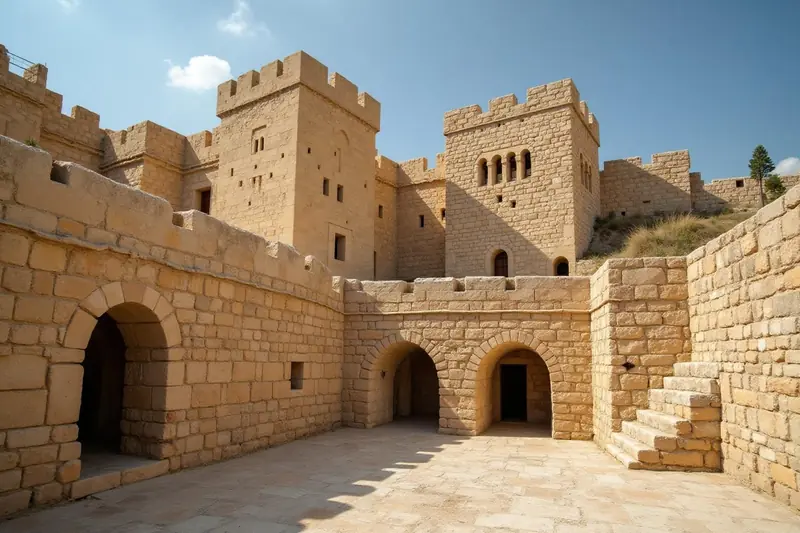
A sacred site venerated by the three monotheistic religions, the traditional burial place of Abraham, Isaac and Jacob.
Biblical period: The Patriarchs
Beside Nahal Grar, Tel Haror offers a landscape in which to read the stories of Abraham and Isaac in the western Negev.
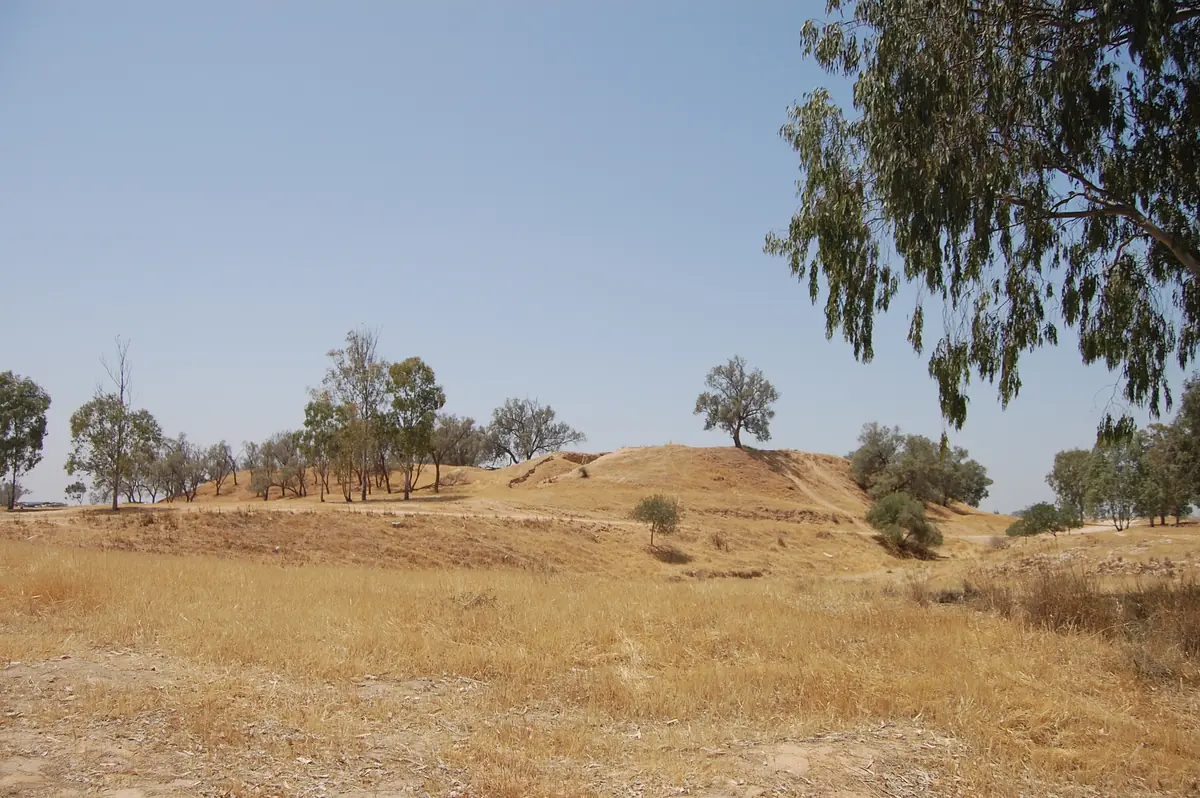
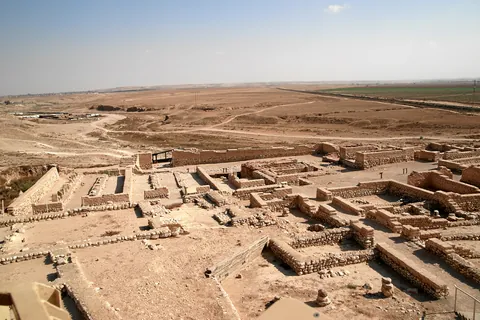
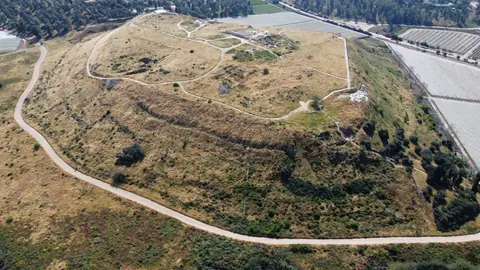
Gerar is Abimelech’s city in the stories of Abraham and Isaac. Tel Haror, north of the Nahal Grar stream, is a proposed identification rather than a universally established location. The tell and surrounding valley provide a setting for reading about water, land and agreements.
Nahal Grar Park has paths and picnic areas. These visitor facilities should be distinguished from the archaeological remains: an open park path does not establish access to every excavation area.
In brief
Parashat Vayera (Genesis 18–22) Parashat Toldot (Genesis 25:19–28:9)
History & Bible
Bible story
Following the Sodom narrative, Abraham stays in Gerar and introduces Sarah as his sister. Abimelech takes her into his household, then returns her after a divine warning. The account concerns fear, responsibility and Sarah’s protection; it does not describe a palace that can be identified among the visible ruins.
Bible story
During a famine Isaac goes to Gerar. Disputes over water lead his herdsmen into the valley. Esek, Sitnah and Rehoboth mark successive stages before he moves to the wells of Beersheba. The narrative alone does not identify any surviving well as Isaac’s.
Archaeology
A tell is a mound formed by successive settlements. Tel Haror preserves ancient remains, but its setting and modern name cannot by themselves establish the biblical identification. Reading the site alongside the wider Negev and Abraham’s story helps connect the geography without turning a proposal into certainty.
Plan my visit
Gerar — Tel Haror
Tel Haror and Nahal Grar Park, western Negev
The marker locates the mound, not a guaranteed entrance. Follow authorised approaches and the KKL map.
GPS coordinates : 31.3821, 34.6065 (reference point, not the exact entrance)
Start navigation with:
Choose a route using current signs and KKL information. Work on crossings, weather and local restrictions may affect paths. Stay on authorised routes and do not climb ancient walls. Bring water, suitable footwear and sun protection. An hour is an indicative allowance for a short look around, not a fixed duration for the whole park.
What's next
Straight-line distances: the drive is longer.
At Beersheba, Abraham seals a covenant with Abimelech over a well, plants a tamarisk and calls on the name of the Everlasting God.
A royal Canaanite city under Egyptian rule, Lachish is one of the southern cities Joshua is said to have taken. Its excavations tell a more complex, and longer, story.
A city of Judah and its caves
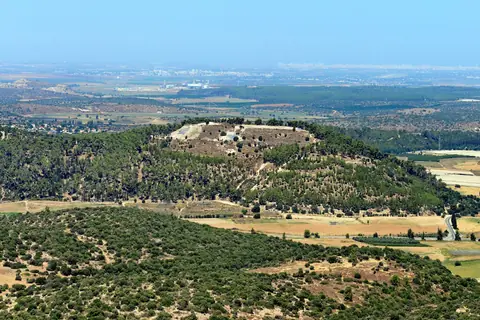
On a wooded hill commanding the Valley of Elah, Azekah marks the end of the pursuit of the Amorite kings. Excavations there have revealed a Canaanite city destroyed by fire.
These sites share a story but are not necessarily close to each other: distances are given in a straight line.
A sacred site venerated by the three monotheistic religions, the traditional burial place of Abraham, Isaac and Jacob.
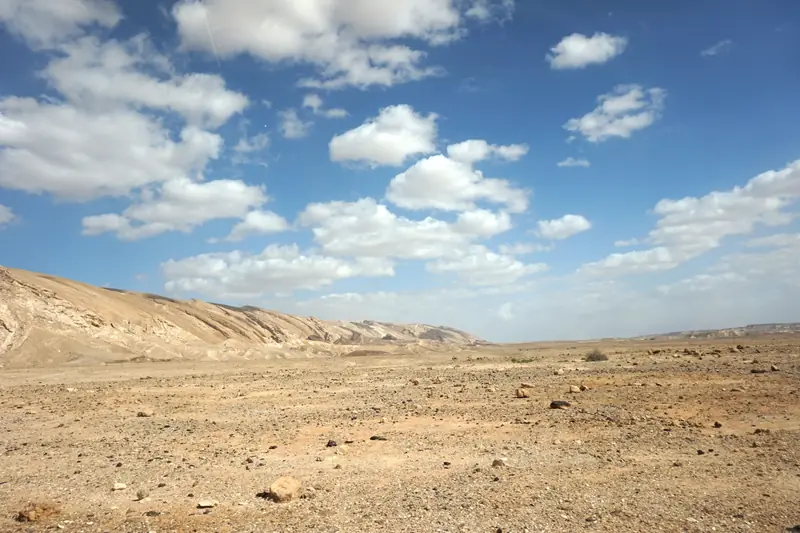
From the Beersheba area to the southern desert landscapes, a region for reading the journeys of the patriarchs.
No. Tel Haror is a proposed identification; the physical site and the biblical city are distinguished here.
No well here can be presented as archaeologically identified as Isaac’s.
An archaeological mound and the Nahal Grar landscape. Accessible areas depend on local conditions.
The tell lies in the park’s wider setting. Picnic areas and archaeological remains do not form a single managed visitor trail.
Yes, subject to access and travel time: add both stops to your tour. Both places provide context for Genesis 21 and 26.