
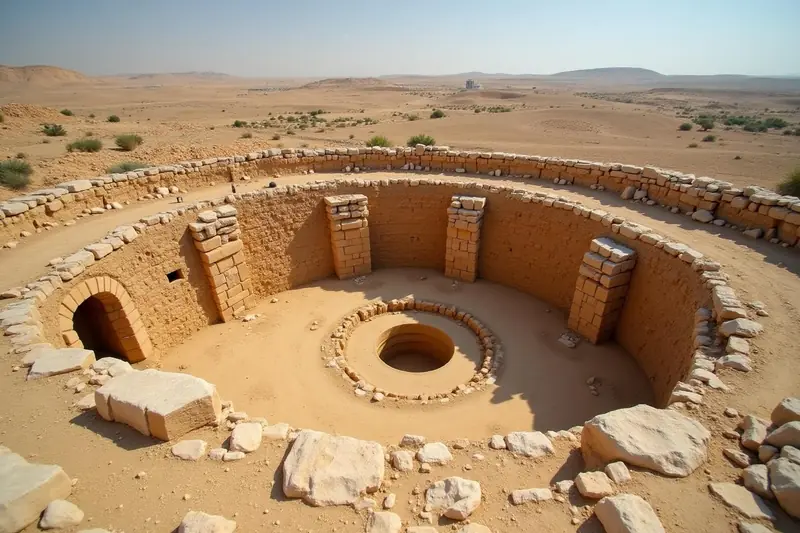
Beersheba: the Well of the Oath and Abraham's Tamarisk
At Beersheba, Abraham seals a covenant with Abimelech over a well, plants a tamarisk and calls on the name of the Everlasting God.
Biblical period: The Patriarchs
On Mount Moriah, Isaac, the son of the promise, climbs with his father towards the altar: a story of trust, substitution and mercy.
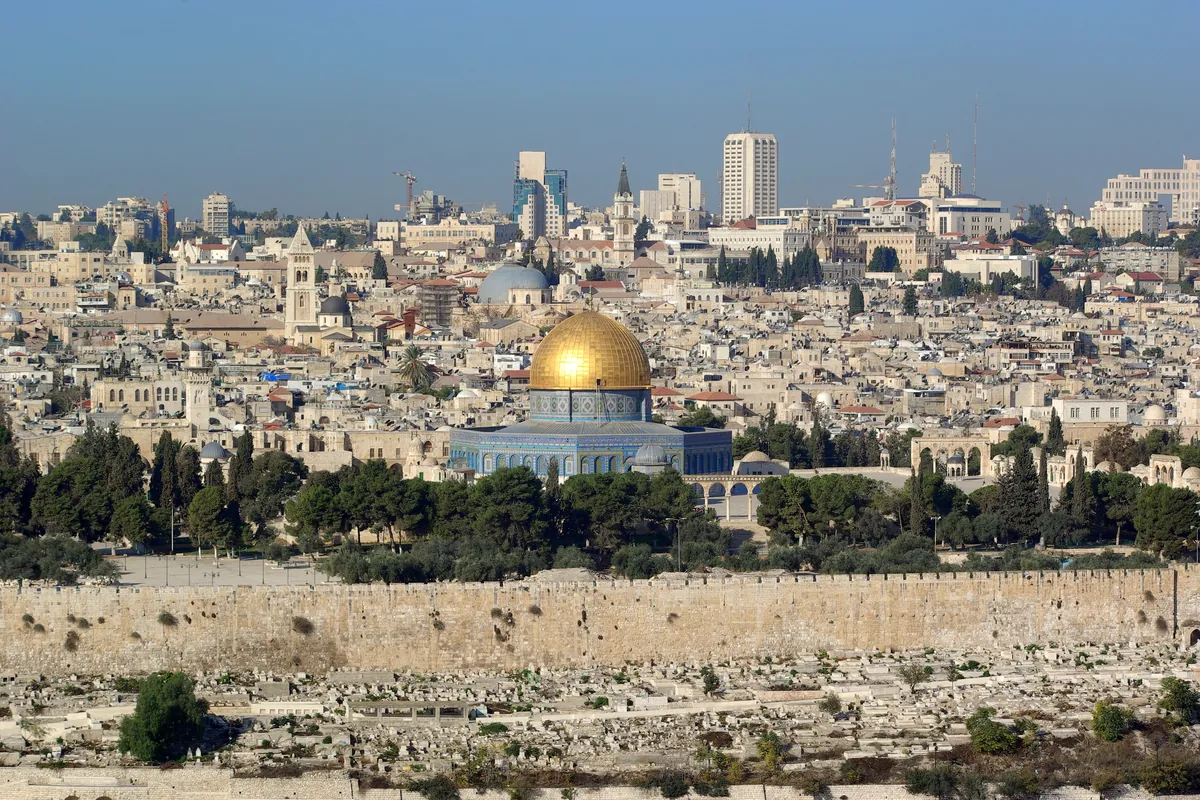
The Binding of Isaac — called the Akedah in Jewish tradition and often known as the sacrifice of Isaac — takes place, according to Genesis, on a mountain in the land of Moriah, which tradition identifies with the Temple Mount in Jerusalem. It is usually read as Abraham's test; this page tells it from the side of Isaac, the only son of the promise.
Far from being a mere tale of cruelty, the episode highlights the son's silent faith and trusting obedience. On this mountain, faith becomes covenant and sacrifice turns into blessing: a ram takes Isaac's place, and the promise made to Abraham passes to the next generation.
History & Bible
Bible story
"Sarah thy wife shall bear thee a son indeed; and thou shalt call his name Isaac: and I will establish my covenant with him for an everlasting covenant, and with his seed after him."
Genesis 17:19
Isaac is born when Abraham is a hundred years old and Sarah ninety (Genesis 17:17; 21:5). His name, Yitzhak, "he will laugh", preserves the memory of his parents' incredulous laughter at the announcement, and then of Sarah's joy: "God hath made me to laugh" (21:6). After Ishmael's departure (Genesis 21), he remains the heir of the covenant — hence the words of Genesis 22:2: "thy son, thine only son Isaac, whom thou lovest".
On Mount Moriah, this son born of a miracle becomes the quiet hero of the story: a young man climbing towards the altar, aware yet trusting. His attitude invites us to distinguish blind obedience from enlightened trust.
Bible story
"And Abraham took the wood of the burnt offering, and laid it upon Isaac his son; and he took the fire in his hand, and a knife; and they went both of them together."
Genesis 22:6
Isaac climbs the mountain with his father, carrying the wood for the offering. He does not run away. He asks — "My father […] Behold the fire and the wood: but where is the lamb for a burnt offering?" — and then falls silent. These are his only words in the whole chapter. After Abraham's reply, "God will provide himself a lamb", the narrator repeats: "so they went both of them together" (22:6 and 22:8), as if father and son now shared the same secret.
The text calls him a na'ar, a "lad" or "young man", strong enough to carry the wood for the burnt offering. The Jewish historian Flavius Josephus gives his age as 25; a rabbinic tradition, which links the episode to Sarah's death (Genesis 23), makes him 37. Either way, Isaac could have resisted a father well over a hundred years old: his consent thus becomes the heart of the story.
Isaac barely speaks. The text says nothing of his thoughts; it was tradition that gave a voice to this silence, read as an inner prayer: that of a human being facing the divine will. A midrash (Genesis Rabbah 56) even puts these words in his mouth: "Father, bind me well", so that an involuntary flinch would not invalidate the offering.
In tradition, Isaac has become the symbol:
Jewish commentators also see him as a "perfect offering" (olah temimah): this is why, according to Rashi, God later forbids him to leave the Promised Land, even in time of famine (Genesis 26:2). Isaac is indeed the only patriarch who never leaves it.
Bible story
"And Abraham lifted up his eyes, and looked, and behold behind him a ram caught in a thicket by his horns: and Abraham went and took the ram, and offered him up for a burnt offering in the stead of his son."
Genesis 22:13
A ram appears and takes Isaac's place on the altar. This act establishes the principle of substitution: God does not want death, but faithfulness. Isaac is saved, and Mount Moriah becomes the place of divine mercy. Many readers also see here a clear break with the child sacrifices known in the ancient Near East, which the Bible strongly condemns elsewhere.
Tradition and identification
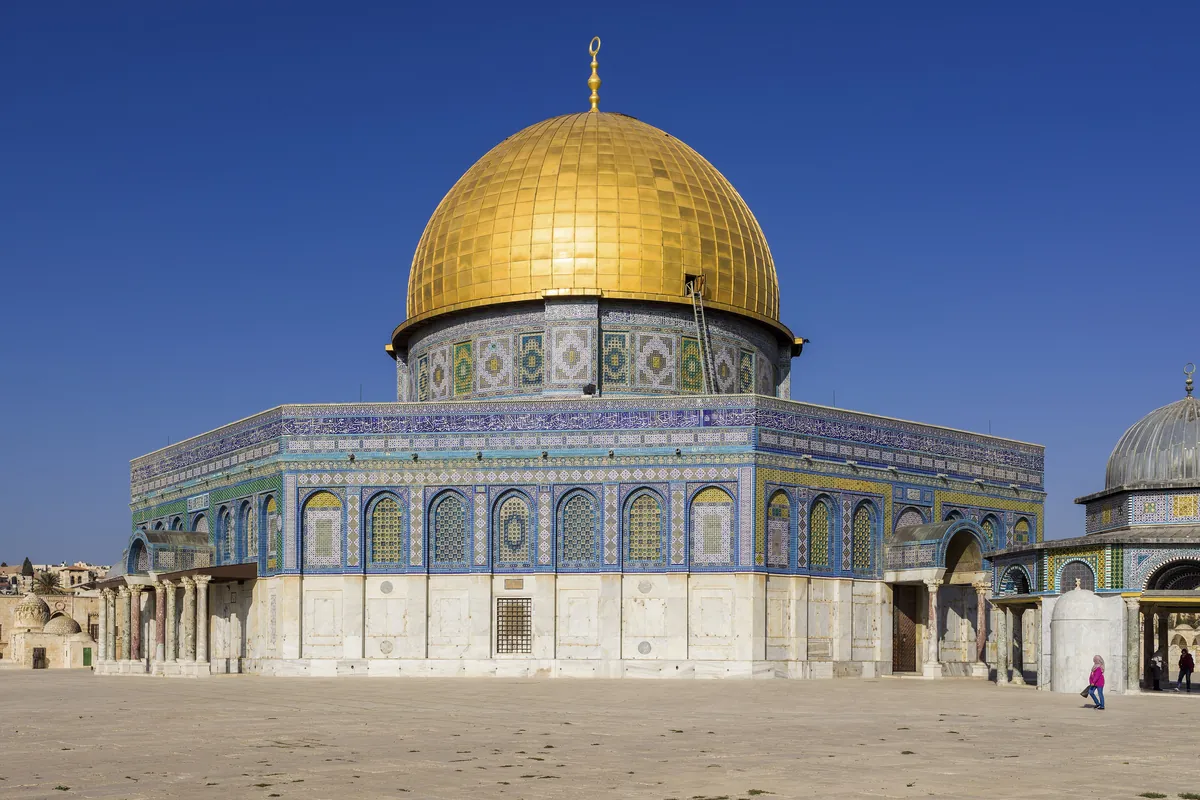
Genesis speaks only of "one of the mountains" in the land of Moriah; it is 2 Chronicles 3:1 that places Solomon's Temple "in mount Moriah", grounding the identification of the site of the Akedah with the Temple Mount. According to Jewish tradition, the Foundation Stone beneath the Dome of the Rock marks the spot of Isaac's altar — a location that rests on tradition, since no excavation is possible on the platform.
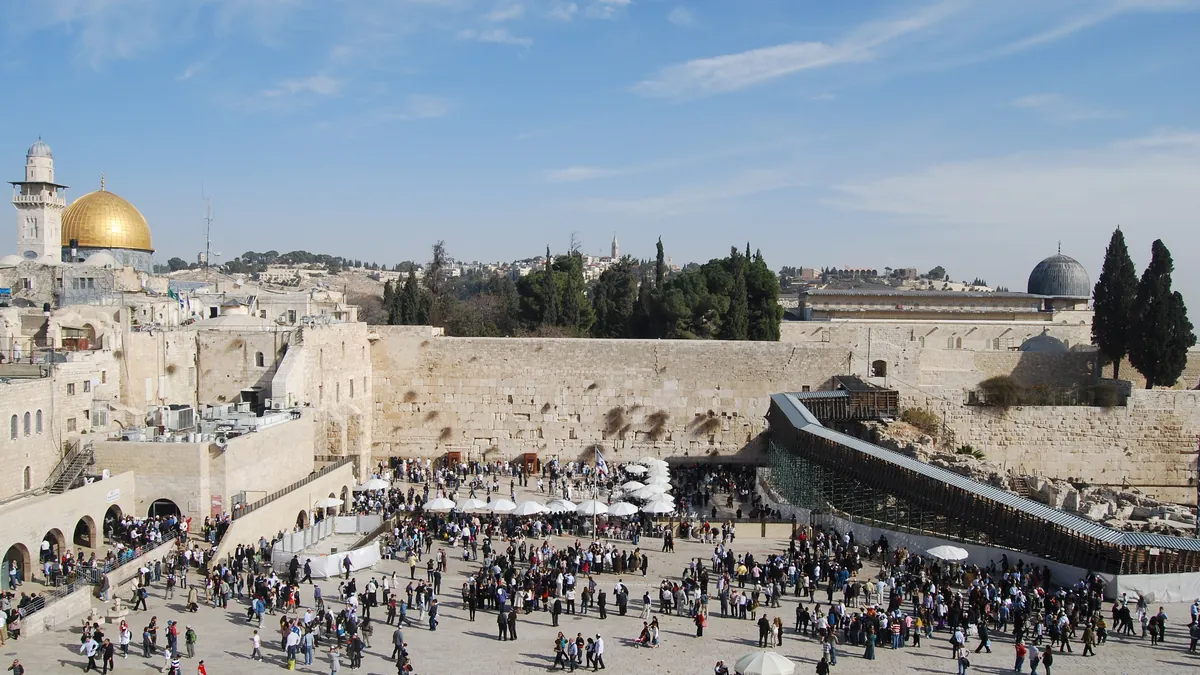
The history of the site, its archaeology and the rules for visiting the platform are covered on the Mount Moriah and the Temple Mount page.
Bible story
A striking detail: on the way back, the text mentions only Abraham, who rejoins his servants and returns to Beersheba (22:19). Isaac reappears only when he meets Rebecca, as he "came from the way of the well Lahairoi" in the Negev (24:62). Commentators have reflected at length on this absence.
The rest of his life unfolds in a handful of places: the Negev and Beersheba, where he digs wells and receives the promise in his turn; then Hebron, where he is buried with Rebecca in the Cave of Machpelah. To place Isaac within his father's story, see also our article on Abraham.
Visit the place
This story takes place at Mount Moriah. The place page gathers the archaeology, GPS access and visiting tips.
 Old City of JerusalemMount Moriah: Abraham's Test, from the Biblical Story to the Temple MountWhere tradition places Abraham's test now stands the Temple Mount, one of the holiest sites in Judaism and Islam.View site →
Around the site
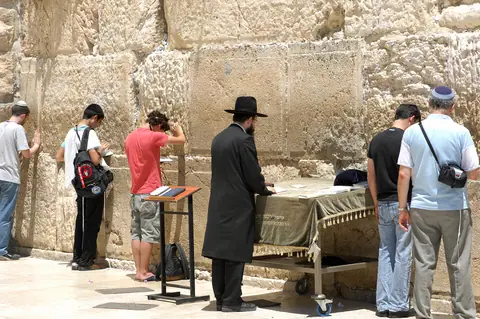
The Temple retaining wall
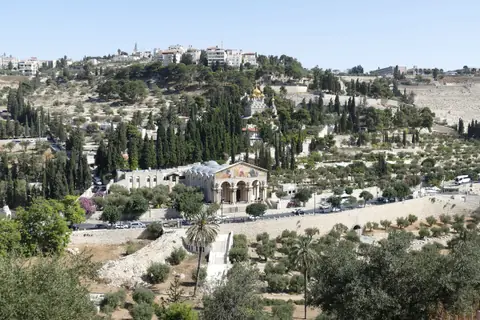
From David's flight to the agony of Jesus, the hill facing the Temple Mount holds three thousand years of Jewish and Christian memory.
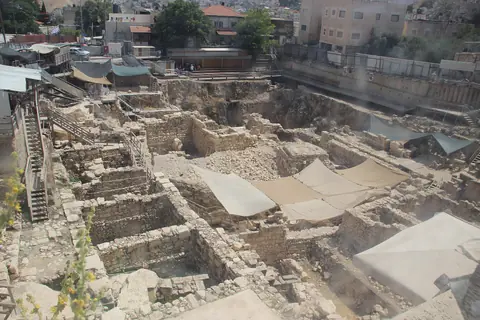
The kings' Jerusalem and Hezekiah's Tunnel
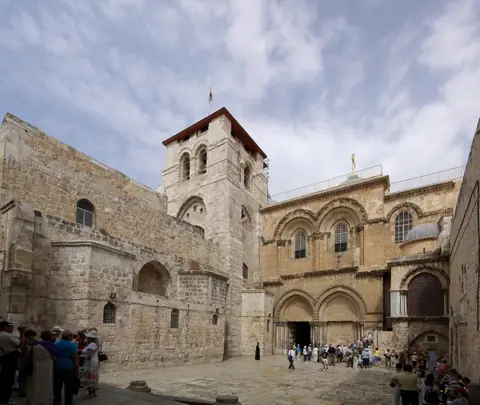
The rock of Calvary and the tomb venerated since the 4th century, under one roof shared by six Christian communities: Gospel account, history, archaeology and visiting.
At Beersheba, Abraham seals a covenant with Abimelech over a well, plants a tamarisk and calls on the name of the Everlasting God.
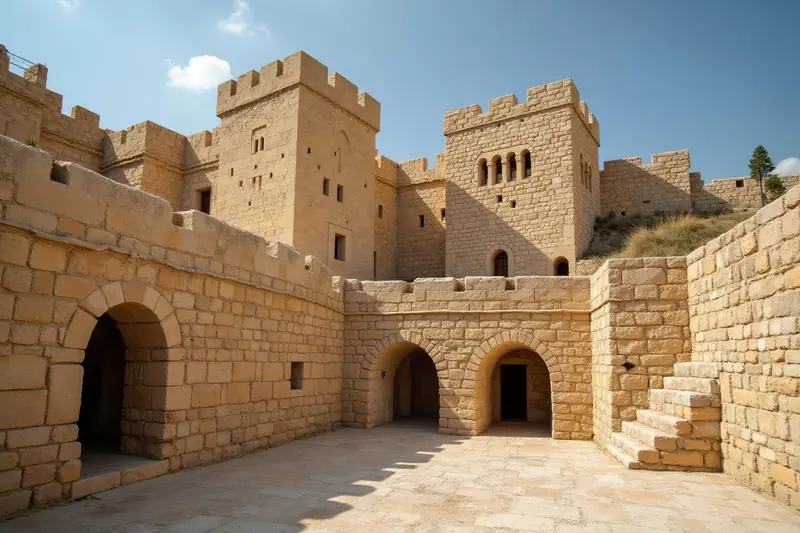
A sacred site venerated by the three monotheistic religions, the traditional burial place of Abraham, Isaac and Jacob.
The Bible does not say: it calls him a "lad" (na'ar) and shows him carrying the wood. Josephus gives his age as 25; a rabbinic tradition says 37. Either way, Isaac was strong enough to resist.
The text records no resistance: Isaac asks a single question, then lets his father bind him. Jewish tradition stresses this consent as a symbol of absolute trust; the Qur'an likewise gives the son words of acceptance.
Genesis 22:1 says that God tested Abraham. But tradition has seen the Akedah as a double test: that of the father who obeys and that of the son who consents.
Akedah comes from the Hebrew verb aqad, "to bind", used in verse 9: Abraham "bound Isaac his son". Judaism therefore speaks of a "binding" rather than a "sacrifice", since Isaac is not slain.
Substitution and mercy: the animal offered in Isaac's place is often read as the end of human sacrifice. In Judaism, the ram's-horn shofar recalls the Akedah at Rosh Hashanah.
In the Old City of Jerusalem, according to the tradition that identifies it with the Temple Mount (2 Chronicles 3:1). The Samaritans place the sacrifice on Mount Gerizim.
Genesis 22:19 mentions only Abraham returning to Beersheba. Commentators have seen in this the trace of an upheaval or a separation; Isaac reappears later in the Negev, near the well of Lahai-roi.
Surah 37 tells of the test of Abraham and of a son who accepts the divine command, without naming him; most Muslim commentators identify him as Ishmael. Eid al-Adha, the Feast of Sacrifice, commemorates its outcome.