
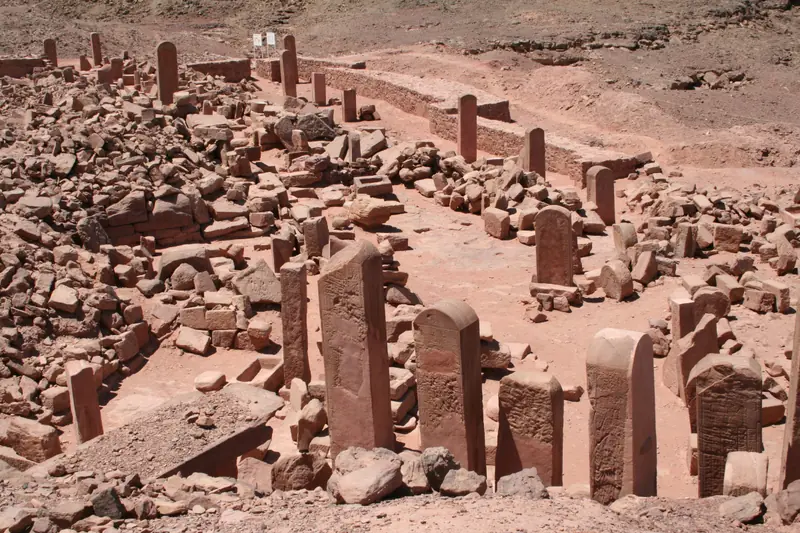
Serabit el-Khadim: the Temple of Hathor and the origins of the alphabet
On a plateau in south-western Sinai, a shrine of Egyptian miners where Semitic workers left some of the oldest known alphabetic inscriptions.
1500–1200 BCE
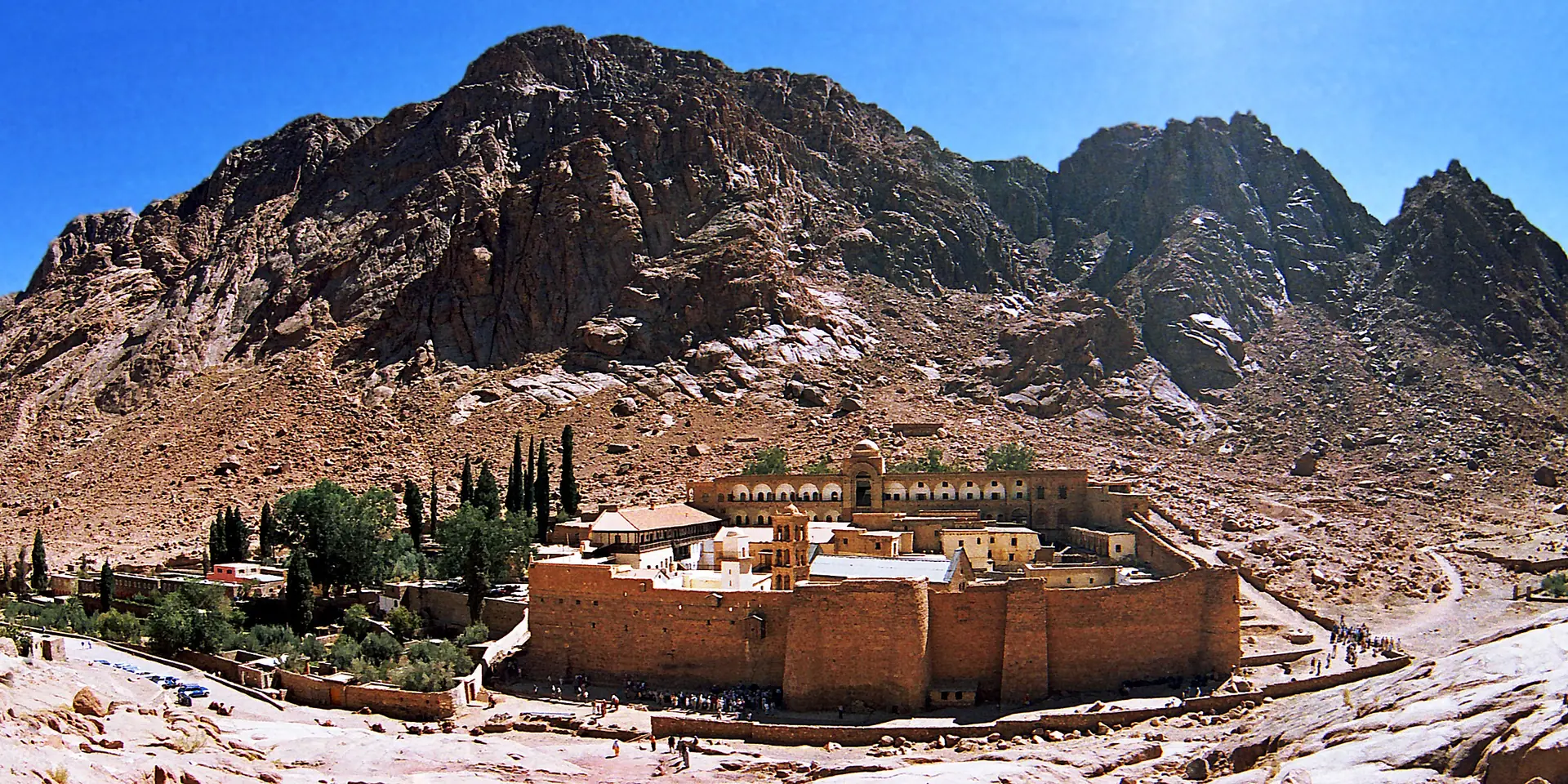
In the heart of the South Sinai mountains, a Christian tradition sixteen centuries old places the burning bush and the giving of the Law here. Yet the identification of biblical Sinai is still debated.
Credit: Ondřej Havelka · CC BY 4.0 · Wikimedia Commons
Mount Sinai is the mountain where, according to Exodus, God reveals himself to Moses in the burning bush and then gives the people the Ten Commandments. Since at least the 4th century, Christian tradition has identified it with Jebel Musa ("Mount of Moses", 2,285 m) in the south of the Sinai Peninsula, Egypt. At its foot, Saint Catherine's Monastery, fortified in the 6th century under Justinian, is one of the oldest Christian monasteries still inhabited.
This page separates the biblical account, the monastic tradition, what archaeology can say — the identification of biblical Sinai has not been proven — and the conditions for visiting, which have changed a great deal since 2025. The whole area is inscribed on the UNESCO World Heritage List as the "Saint Catherine Area".
"And the LORD came down upon mount Sinai, on the top of the mount: and the LORD called Moses up to the top of the mount; and Moses went up."
Exodus 19:20 (KJV)
While tending the flocks of his father-in-law Jethro, Moses comes to "the mountain of God, even to Horeb". The text sometimes uses the name Sinai and sometimes Horeb for what most readers take to be the same mountain.
"And the angel of the LORD appeared unto him in a flame of fire out of the midst of a bush: and he looked, and, behold, the bush burned with fire, and the bush was not consumed."
Exodus 3:2 (KJV)
God calls to him from the bush: "put off thy shoes from off thy feet, for the place whereon thou standest is holy ground" (Exodus 3:5), and introduces himself as "the God of Abraham, the God of Isaac, and the God of Jacob" (Exodus 3:6).
Three months after leaving Egypt, the people camp at the foot of the mountain. On the third day, thunder, lightning, a thick cloud and the sound of a trumpet announce God's coming.
"And mount Sinai was altogether on a smoke, because the LORD descended upon it in fire: and the smoke thereof ascended as the smoke of a furnace, and the whole mount quaked greatly."
Exodus 19:18 (KJV)
Then come the "ten words", which open by recalling the liberation:
"I am the LORD thy God, which have brought thee out of the land of Egypt, out of the house of bondage. Thou shalt have no other gods before me."
Exodus 20:2-3 (KJV)
After the covenant is sealed, Moses goes up with Joshua to receive "tables of stone" (Exodus 24:12). God's glory covers the mountain for six days; on the seventh, Moses enters the cloud.
"And Moses went into the midst of the cloud, and gat him up into the mount: and Moses was in the mount forty days and forty nights."
Exodus 24:18 (KJV)
The people then leave Sinai for forty years in the wilderness, until they reach Mount Nebo, from where Moses looks out over the Promised Land before he dies.
Centuries later, the prophet Elijah, fleeing Queen Jezebel, walks "forty days and forty nights unto Horeb the mount of God" (1 Kings 19:8) and spends the night in a cave, where he hears "a still small voice". Sinai tradition has given his name to a plateau on the mountain, "Elijah's Basin".
The Bible gives neither coordinates nor a precise geographical description of Sinai, and most stages of the Exodus route (Numbers 33) remain unlocated. Several peaks have been proposed:
⚠️ What archaeology does not show
No archaeological trace of an Exodus encampment has been identified, either at the foot of Jebel Musa or on the other proposed peaks. Jebel Musa is therefore the Sinai of tradition: a place of memory venerated for sixteen centuries, not a site whose identification has been proven.
For the Egyptian background to Bronze Age Sinai, see the page on Serabit el-Khadim, where the pharaohs' mining expeditions left temples and inscriptions; the whole story is set out on the page The Exodus and the Conquest of Canaan.
From the 4th century, hermits lived in the valleys of Jebel Musa. Around 383, the pilgrim Egeria was guided there by monks: she describes a church on the summit, another at the site of the bush, and a garden where the bush was shown. Tradition attributes a first Chapel of the Burning Bush to Empress Helena, mother of Constantine; this attribution is not documented by contemporary sources.
In the mid-6th century, Emperor Justinian had the site enclosed by fortified granite walls and built the basilica, whose apse preserves a famous mosaic of the Transfiguration. The monastery, first dedicated to the Transfiguration, later took the name of Saint Catherine of Alexandria, whose relics it keeps. A small Fatimid-era mosque stands inside the walls. The monastery is Greek Orthodox and belongs to the autonomous Archdiocese of Sinai.
The library is one of the oldest in the Christian world still in use. It once held the Codex Sinaiticus, a 4th-century Greek manuscript of the Bible: most of it is now in the British Library, other leaves are in Leipzig and St Petersburg, and fragments found at the monastery in 1975 have remained there. The icon collection includes 6th-century pieces from before the Iconoclast crisis, among them a Christ Pantocrator painted in encaustic.
🏛️ World Heritage
In 2002, UNESCO inscribed the "Saint Catherine Area" on the World Heritage List: the monastery, Jebel Musa and the surrounding mountains form a landscape sacred to Judaism, Christianity and Islam.
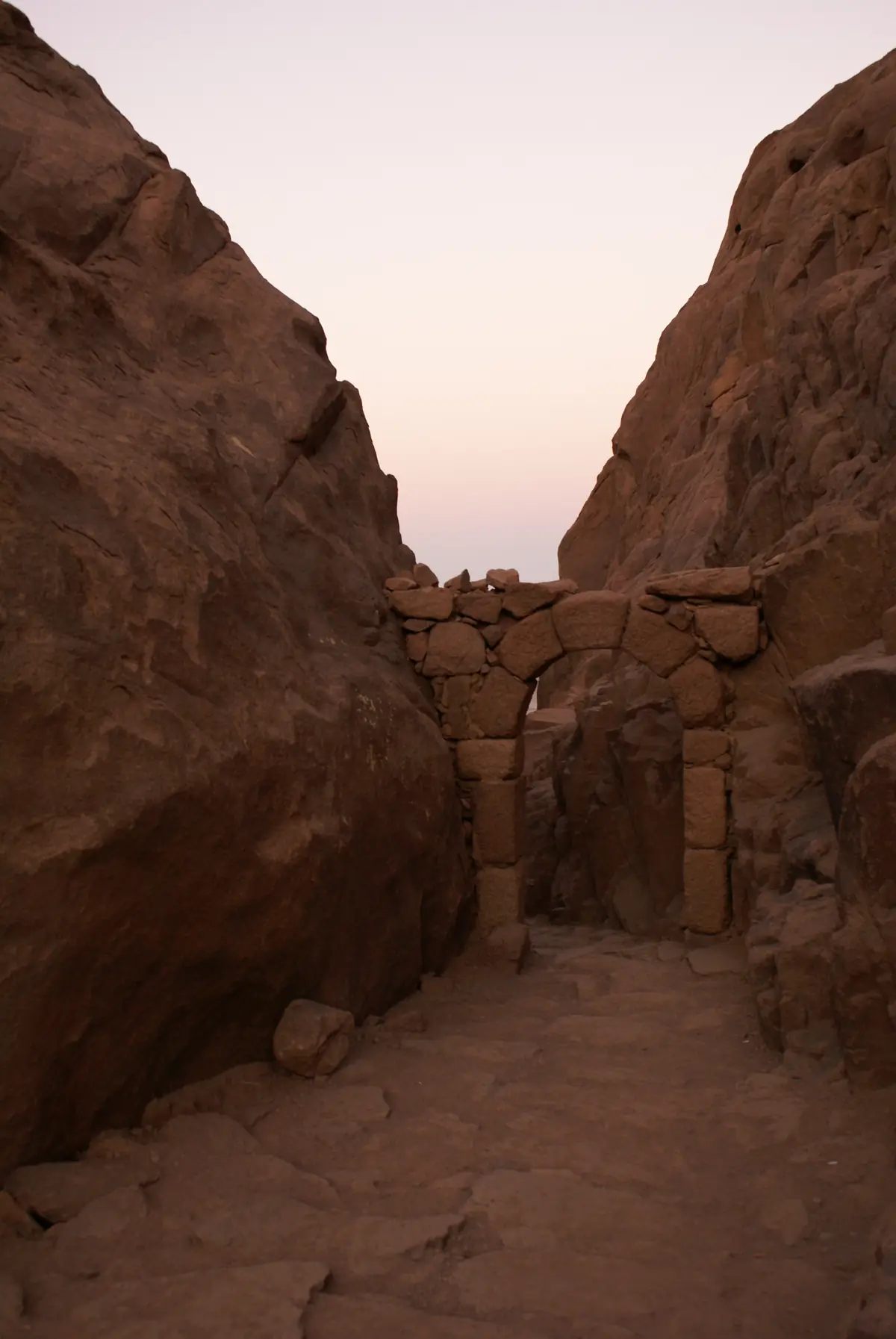
The two routes meet at Elijah's Basin, a small plateau with a cypress tree and a chapel dedicated to the prophet; from there, some 750 steps remain to the summit. On the steps, two stone arches recall the old "gates" where pilgrims made their confession before going on.
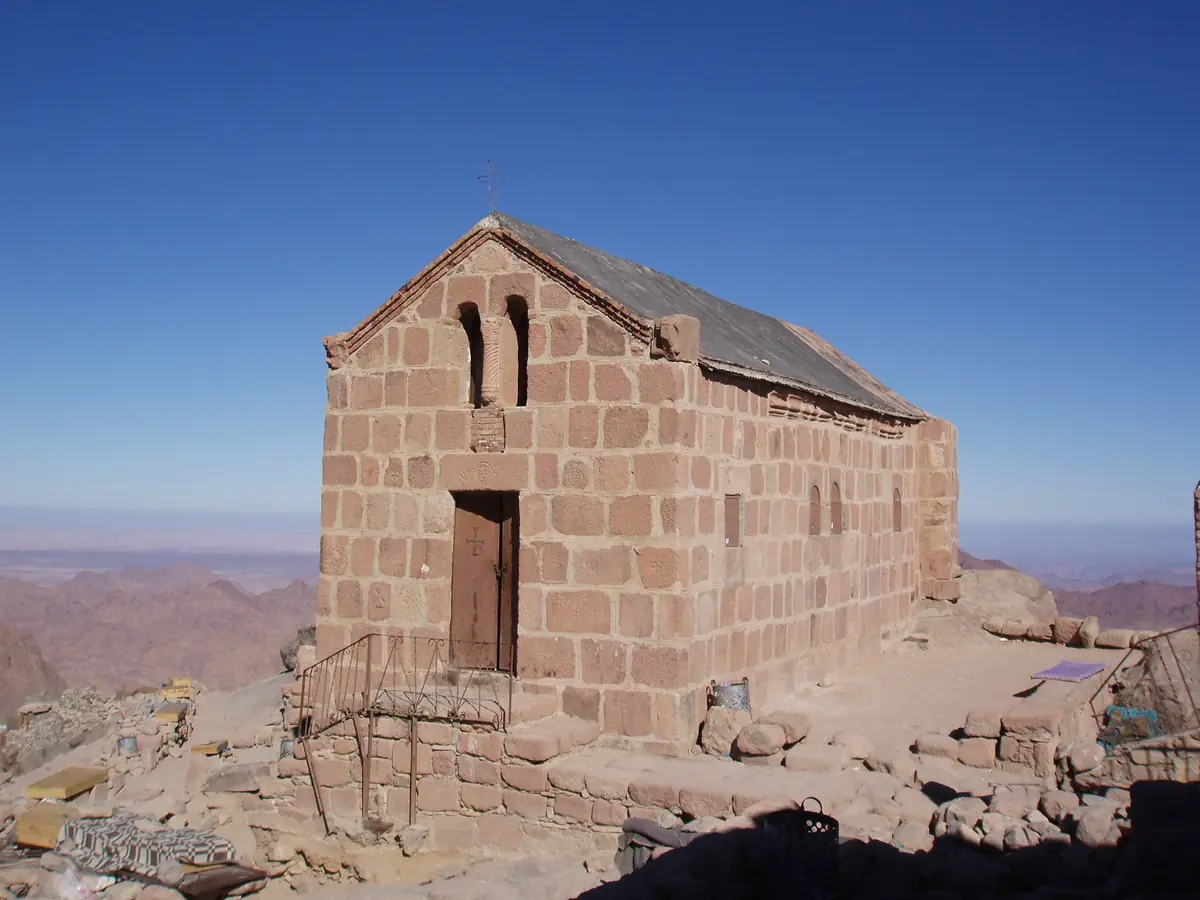
The summit has a Greek Orthodox Chapel of the Holy Trinity, built in 1934 on the ruins of earlier churches, and a small mosque. Tradition associates a cave there with Moses' stay. The view takes in a sea of granite peaks, including Jebel Katherina (2,629 m), the highest mountain in Egypt.
Many visitors set off in the middle of the night to watch the sunrise from the top. It is cold at the summit, especially in winter, when snow is possible: bring warm clothes, a head torch and water. The climb is normally made with a local Bedouin guide.
Situation as of 29 September 2026, based on published sources; things are changing and should be checked before any trip.
In late May 2025, the Ismailia Court of Appeal ruled in a long-running land dispute between the monastery and the Egyptian state. According to published reports, it assigned ownership of the land and buildings concerned to the state, while guaranteeing the monks the use of the site for their religious life. The monks then temporarily closed the monastery to visitors in protest. Greece and Egypt opened talks at the highest level; in October 2025 the Greek prime minister announced an agreement in principle, but no final text had been signed by August 2026. An appeal is pending before Egypt's Court of Cassation, whose hearing has been postponed to allow time for negotiations; press reports mention a "dual status" formula combining state ownership with perpetual rights for the community.
The community has also changed leadership: Archbishop Damianos, head of the monastery since 1973, was removed by the council of monks in July 2025 and then resigned; Archimandrite Symeon Papadopoulos was elected in September 2025 and consecrated Archbishop of Sinai in October 2025.
The Egyptian government is carrying out a large tourism development project around the town of Saint Catherine, known as the "Great Transfiguration" (hotels, a visitor centre, housing, roads). The authorities present it as a way of showcasing the site; several heritage organisations are concerned about its impact on the landscape. In July 2026, the UNESCO World Heritage Committee asked, for the third time, for the works to be suspended pending a heritage impact assessment; Egypt had told UNESCO that a presidential directive of September 2025 suspended the works until that assessment.
Mount Sinai – Jebel Musa and Saint Catherine's Monastery
Saint Catherine's Monastery, town of Saint Catherine, South Sinai Governorate (Egypt)
GPS coordinates : 28.5560, 33.9756
Start navigation with:
On a plateau in south-western Sinai, a shrine of Egyptian miners where Semitic workers left some of the oldest known alphabetic inscriptions.
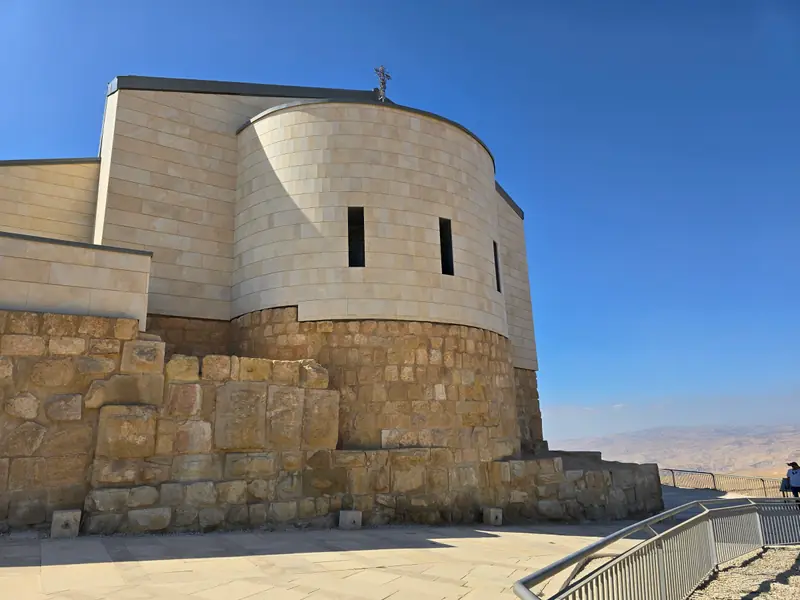
On a spur of the mountains of Moab, Deuteronomy has Moses gaze at the land he will never enter. Since the 4th century, a Christian sanctuary has kept that memory alive.
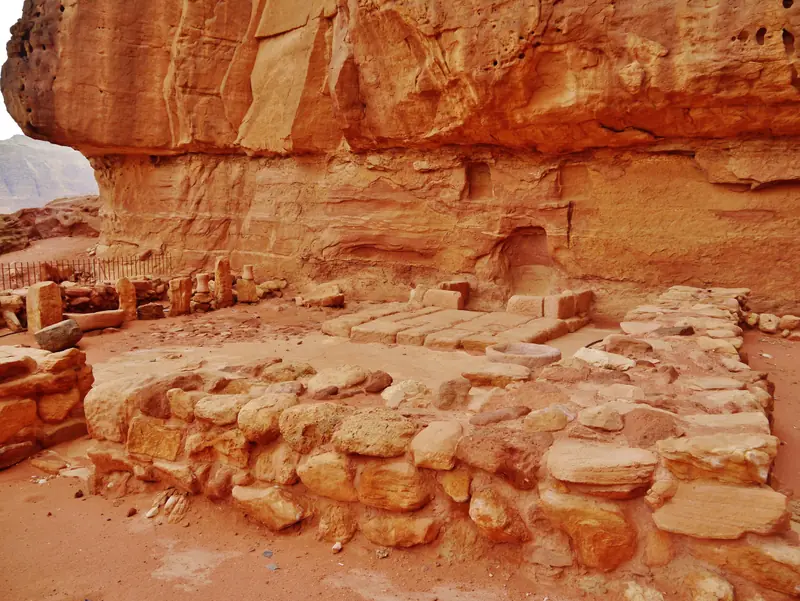
In the Arava Valley, a red sandstone landscape where the Egypt of the Ramesside pharaohs mined copper: a context site for understanding the desert of the Exodus story.
It is the Sinai of Christian tradition, attested since at least the 4th century. The Bible gives no precise location, and other peaks have been proposed (Serbal, Har Karkom, Jabal al-Lawz). None of these identifications is proven by archaeology.
No. No archaeological trace of an Israelite encampment has been identified at the foot of Jebel Musa or elsewhere in the peninsula. The remains visible at the monastery are Christian, from the 6th century onwards.
The monastery shows a bush (a bramble) near the Chapel of the Burning Bush, venerated as the one in Exodus 3. It is an object of tradition and devotion, not a dated relic.
The Steps of Repentance number about 3,750 according to tradition. The longer camel path joins the last 750 steps at Elijah's Basin.
It receives visitors on certain days, in the morning, but it closed temporarily in 2025 during a dispute with the Egyptian state, and conditions may change. Check with the monastery or a local agency just before your visit.
Most of it is kept at the British Library; other leaves are in Leipzig and St Petersburg. Fragments found at the monastery in 1975 have remained there.
The climb is normally made with a local Bedouin guide, often arranged by your accommodation or agency. Check the rules in force on site.
Official advice changes. As of 29 September 2026, the UK FCDO advises against all but essential travel to the northern part of South Sinai beyond the St Catherine–Nuweiba road, and France Diplomatie closes North Sinai to foreigners. Check these pages before booking.