
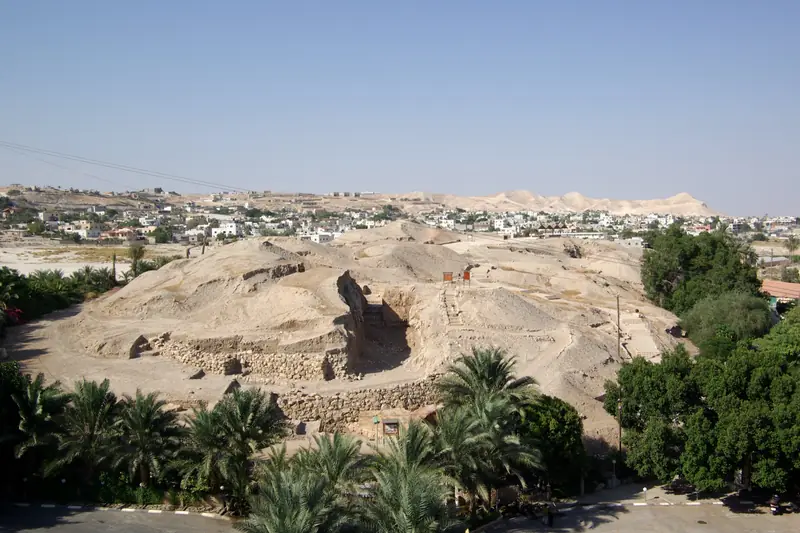
Jericho (Tell es-Sultan): the walls of Joshua
Rahab, the Jordan crossing and the falling walls: the Book of Joshua set against a century of excavation at one of the oldest towns in the world.
Biblical period: The Patriarchs
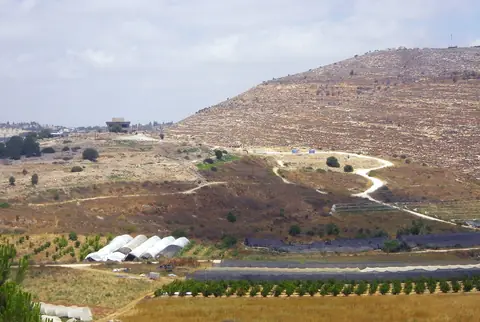
Near Deir Dibwan, et-Tell is central to the debate about Ai: a biblical landscape and archaeological remains requiring careful interpretation.
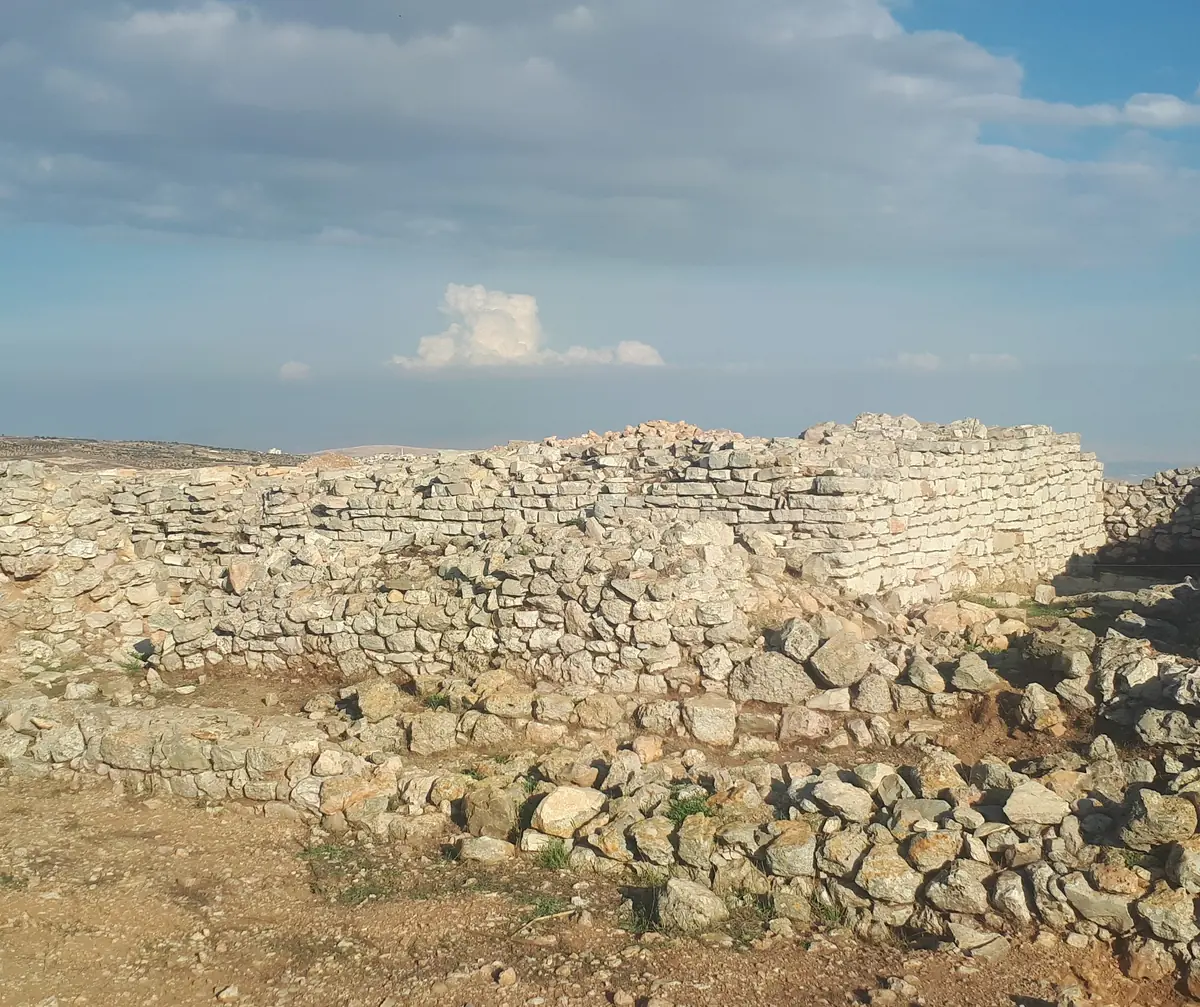
Ai is a landmark in Abraham’s journeys and the city in Joshua 7–8. Et-Tell, near Deir Dibwan, is a commonly accepted scholarly identification of the place; its relationship with the conquest narrative remains debated.
The ruins are real, but interpreting them requires a distinction between occupation periods and texts. This page does not establish a regular guided tour or guaranteed opening: access must be checked locally.
In brief
History & Bible
Bible story
Abram pitches his tent with Bethel to the west and Ai to the east, then builds an altar. After returning from Egypt he revisits this area. The account places a camp between two landmarks; it does not say that Abraham lived inside the town or locate his tent precisely.
Bible story
Following the fall of Jericho, the first attack on Ai fails. The narrative connects this with Achan’s wrongdoing, then describes a second attack involving an ambush. These chapters give a theological interpretation of the conquest. For another regional setting of biblical traditions, see Shechem in the Bible.
Archaeology
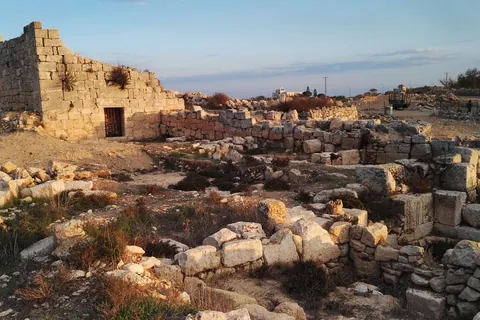
Excavations at et-Tell revealed an Early Bronze Age city and a smaller Iron Age settlement. The gap between them complicates a direct connection with usual chronologies of Joshua. Alternative locations have been proposed. No individual wall or destruction layer should therefore be presented here as certain proof of the narrative.
Plan my visit
Ai — et-Tell
Et-Tell, near Deir Dibwan, east of Bethel
The marker locates the proposed site at et-Tell, not a public entrance, parking area or Abraham’s camp.
GPS coordinates : 31.9169, 35.2609 (reference point, not the exact entrance)
Start navigation with:
Confirm access and the authorised approach before travelling. The ground is uneven; do not walk on structures or remove fragments. The marker locates the mound, not a ticket office or car park. Have an alternative biblical itinerary ready if entry is unavailable. A documentary guide remains useful even when the physical site cannot be visited.
What's next
Straight-line distances: the drive is longer.
After Shechem, Abraham builds an altar "between Bethel and Ai" and calls on the name of the LORD, then returns there after his stay in Egypt (Genesis 12:8; 13:1-4).
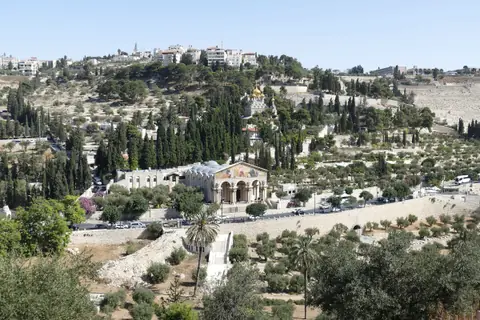
From David's flight to the agony of Jesus, the hill facing the Temple Mount holds three thousand years of Jewish and Christian memory.
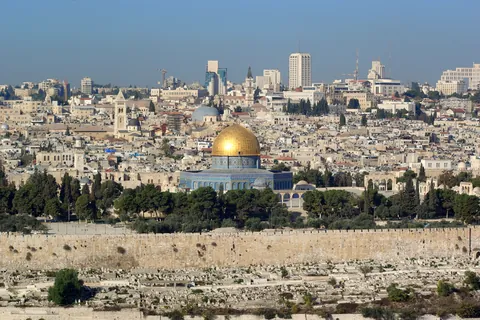
Where tradition places Abraham's test now stands the Temple Mount, one of the holiest sites in Judaism and Islam.
Israel's first great sanctuary according to the Bible: Joshua sets up the Tent of Meeting here, Hannah prays for a son, and Samuel grows up beside the priest Eli.
These sites share a story but are not necessarily close to each other: distances are given in a straight line.
Rahab, the Jordan crossing and the falling walls: the Book of Joshua set against a century of excavation at one of the oldest towns in the world.
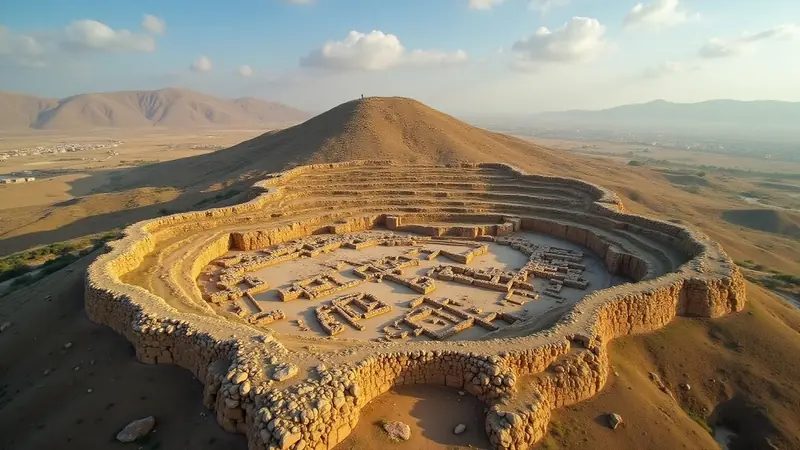
Between Mount Ebal and Mount Gerizim, the place of God's first promise and Abraham's first altar in the Promised Land (Genesis 12:6-7).
Et-Tell is a common identification of the biblical place, but the connection between its remains and Joshua’s narrative is debated.
Genesis 12:8 places his tent between Bethel and Ai, without locating a precise plot.
No. The observed occupation periods raise chronological questions and their relationship with the story is debated.
Permanent unrestricted opening is not confirmed here. Arrange and check access locally.
No. This page concerns et-Tell near Deir Dibwan, separate from the site associated with Bethsaida.