
Jericho (Tell es-Sultan): the walls of Joshua
Rahab, the Jordan crossing and the falling walls: the Book of Joshua set against a century of excavation at one of the oldest towns in the world.
1500–1200 BCE
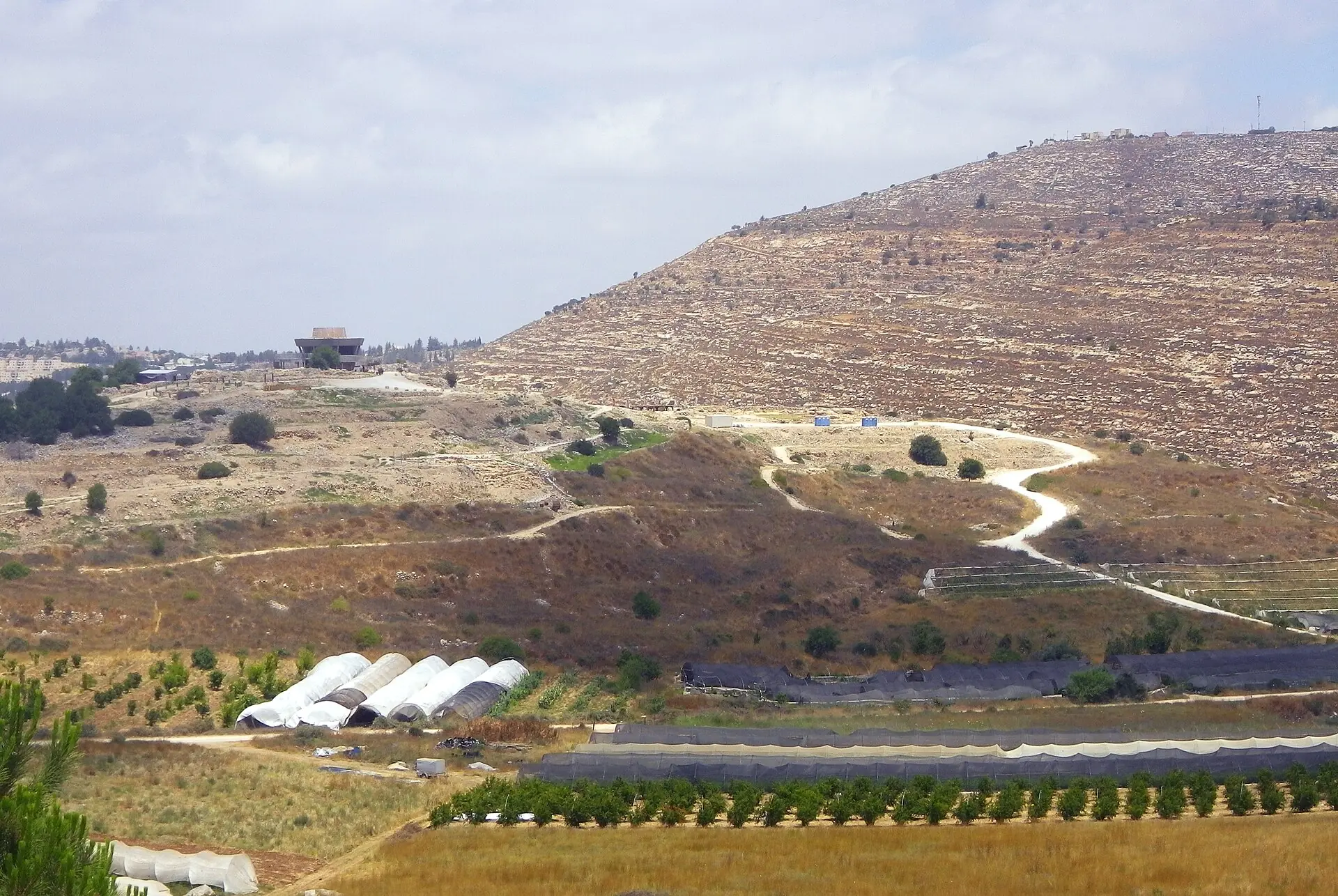
Israel's first great sanctuary according to the Bible: Joshua sets up the Tent of Meeting here, Hannah prays for a son, and Samuel grows up beside the priest Eli.
Credit: Deg777 · CC BY-SA 4.0 · Wikimedia Commons
In the hills of Samaria, halfway between Bethel and Shechem, Shiloh — the archaeological site of Tel Shiloh, known in Arabic as Khirbet Seilun — is, according to the Bible, Israel's first great sanctuary in Canaan. This is where Joshua sets up the Tent of Meeting (the Tabernacle) and divides the land among the tribes; it is also where Hannah prays for a son and where the young Samuel grows up beside the priest Eli, until the Ark of the Covenant is lost.
The mound, excavated for almost a century, preserves remains from the Middle Bronze Age, a Late Bronze Age deposit of offerings and above all an early Iron Age village destroyed by fire in the mid-11th century BC. Developed as a visitor site under the name "Ancient Shiloh", it has a visitor centre and a trail presenting hypotheses about the location of the Tabernacle — hypotheses that, to date, remain unproven.
After the first campaigns in the Book of Joshua — Jericho, Ai, then the southern and northern coalitions — the camp of Israel leaves Gilgal, in the Jordan Valley, and settles in the heart of the hill country. The text presents this move as a turning point: the portable sanctuary of the desert finds a fixed home.
"And the whole congregation of the children of Israel assembled together at Shiloh, and set up the tabernacle of the congregation there. And the land was subdued before them."
Joshua 18:1 (KJV)
Judah and the sons of Joseph have already received their territory. For the seven remaining tribes, Joshua sends three men per tribe to walk through the land and describe it "by cities into seven parts in a book" (Joshua 18:9). On their return, he casts lots for the territories "in Shiloh before the Lord" (Joshua 18:10): Benjamin, Simeon, Zebulun, Issachar, Asher, Naphtali and Dan. In the narrative, Shiloh thus becomes the place where the promised land takes the shape of a tribal map (Joshua 18–19).
📜 Shiloh at the crossroads of the tribes
Located in the territory of Ephraim, near the border of Benjamin, Shiloh sits in a central position on the watershed ridge. The Book of Joshua also sets here the allocation of the Levitical cities (Joshua 21:2) and the assembly called against the altar built by the tribes east of the Jordan (Joshua 22:12).
The Book of Judges refers to Shiloh as the central sanctuary, in contrast to the private cult set up by the tribe of Dan in the far north, at Dan: "all the time that the house of God was in Shiloh" (Judges 18:31). It also mentions a yearly feast of the Lord at Shiloh, "on the north side of Bethel": when the daughters of Shiloh come out to dance in the vineyards, the men of Benjamin, decimated by war, each seize a wife (Judges 21:19-23). Jewish tradition links this episode to the festival of Tu B'Av, the 15th of the month of Av (Babylonian Talmud, Taanit 30b).
"And this man went up out of his city yearly to worship and to sacrifice unto the Lord of hosts in Shiloh. And the two sons of Eli, Hophni and Phinehas, the priests of the Lord, were there."
1 Samuel 1:3 (KJV)
Elkanah comes from Ephraim with his two wives, Peninnah and Hannah, who is childless. At the sanctuary Hannah prays silently, her lips moving without sound; the priest Eli, sitting "by a post of the temple of the Lord" (1 Samuel 1:9), thinks she is drunk before blessing her. She vows to dedicate her son to the Lord. After Samuel's birth she brings him to Shiloh and sings a song of thanksgiving (1 Samuel 2:1-10). In the Talmud, Hannah's silent prayer became a model for Jewish prayer (Berakhot 31a).
One night, "ere the lamp of God went out", Samuel, lying in the temple where the Ark is kept, hears God's call (1 Samuel 3:3-10). "The Lord appeared again in Shiloh" (1 Samuel 3:21). But Eli's sons desecrate the offerings. During a war with the Philistines near Ebenezer and Aphek, the elders bring the Ark from Shiloh to the battlefield: Israel is defeated, Hophni and Phinehas are killed and the Ark is captured. On hearing the news, Eli falls backwards and dies; his daughter-in-law names her child Ichabod, "the glory is departed from Israel" (1 Samuel 4:21).
The Ark never returns to Shiloh. Centuries later, the texts treat it as the symbol of a sanctuary forsaken by God: "he forsook the tabernacle of Shiloh" (Psalm 78:60). The prophet Jeremiah turns it into a warning addressed to the Temple in Jerusalem (see also Jeremiah 26:6).
"But go ye now unto my place which was in Shiloh, where I set my name at the first, and see what I did to it for the wickedness of my people Israel."
Jeremiah 7:12 (KJV)
The identification of Shiloh with Khirbet Seilun, proposed as early as 1838 by the American explorer Edward Robinson, rests on the very precise description in Judges 21:19 (north of Bethel, east of the road from Bethel to Shechem, south of Lebonah) and on the survival of the ancient name in Arabic. It is widely accepted.
A Danish expedition led by Hans Kjær excavated the site between 1926 and 1932, followed by a further Danish season in the 1960s. It uncovered in particular Byzantine remains, including a basilica with mosaics, as well as Iron Age levels.
The four seasons conducted by Bar-Ilan University under Israel Finkelstein established the site's sequence. In the Middle Bronze Age, a town was surrounded by a massive wall backed by a glacis. In the Late Bronze Age there was no longer a village: a large deposit of pottery, partly cultic, and animal bones on the slope points to an isolated cult place used by people from the surrounding area. In Iron Age I a village spread over the mound; on the western slope, pillared buildings used as storehouses held large collared-rim storage jars. These buildings were destroyed in a fierce fire, dated by radiocarbon — notably on charred raisins — to the mid-11th century BC. Many see in it an echo of the defeat by the Philistines (1 Samuel 4), even though the biblical text does not explicitly describe Shiloh's destruction. The summit of the mound, where one might expect the sanctuary, is eroded down to bedrock.
The Civil Administration's Staff Officer for Archaeology (Yitzhak Magen, then Hananya Hizmi, with the archaeologist Reut Livyatan Ben-Arie) resumed excavations, notably north of the mound and in the Byzantine churches. Since 2017 the Associates for Biblical Research (ABR), an American Christian organisation whose fieldwork is directed by Scott Stripling, has also been digging at the site. It has announced the discovery of three stone altar "horns" (2019), a ceramic pomegranate, large numbers of animal bones and, in the 2026 season, Middle Bronze Age storage jars, a wall of a monumental building oriented east-west, and new elements of the northern gate. Not all of these announcements have yet been fully published in scholarly form, and their biblical interpretation is debated.
🔎 Where was the Tabernacle?
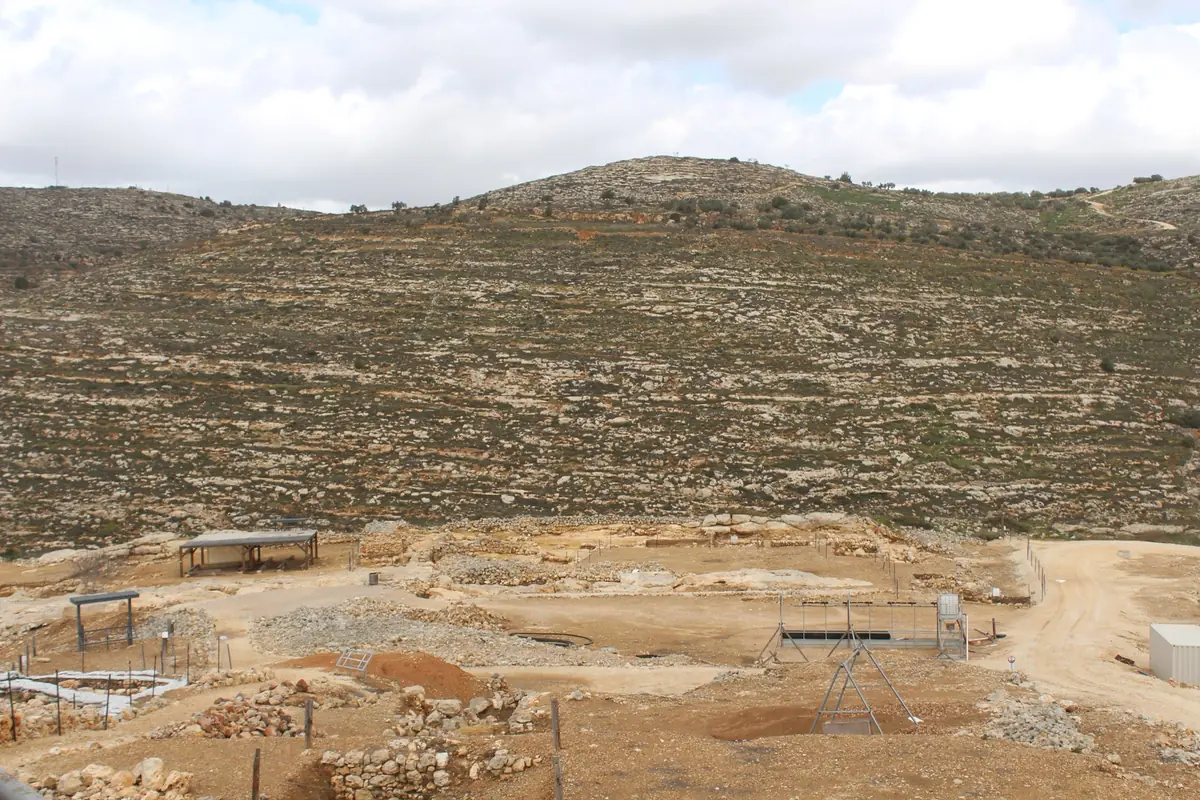
Several locations have been proposed: the summit of the mound (Finkelstein), a broad, flat rock-cut terrace north of the mound (already suggested in the 19th century by Charles Wilson, and highlighted on the visitor trail), or a monumental building now being excavated (ABR). None of these hypotheses has been proven: a tent leaves few traces, the summit is eroded and no inscription identifies the sanctuary. The biblical text itself alternates between a "tent" (Joshua 18:1) and a "temple" with doorposts (1 Samuel 1:9), a tension the Mishnah resolves by describing at Shiloh a stone structure covered with curtains (Zevachim 14:6).
Overall, archaeology places most of the biblical memory of Shiloh — the Judges, Eli and Samuel — in the early Iron Age (12th–11th century BC). For the period biblical chronology assigns to Joshua, the site has produced only a cult place without a village, which extends the conquest narrative rather than confirming it. For what happens next, see the Judges and Kings period.
The site is operated as Ancient Shiloh (Shiloh HaKduma) by the Mishkan Shiloh association together with the Binyamin Regional Council. The trail, either self-guided with a map or with a guide, links the main excavation areas.
Shiloh combines naturally with Bethel, about fifteen kilometres to the south along the ridge road, and with Shechem further north, where Joshua renews the covenant (Joshua 24).
Shiloh (Tel Shiloh): sanctuary of the Tent of Meeting
Ancient Shiloh (Tel Shiloh), near Route 60, between Ramallah and Nablus (≈ 40 km north of Jerusalem by road)
GPS coordinates : 32.0557, 35.2894
Start navigation with:
Rahab, the Jordan crossing and the falling walls: the Book of Joshua set against a century of excavation at one of the oldest towns in the world.
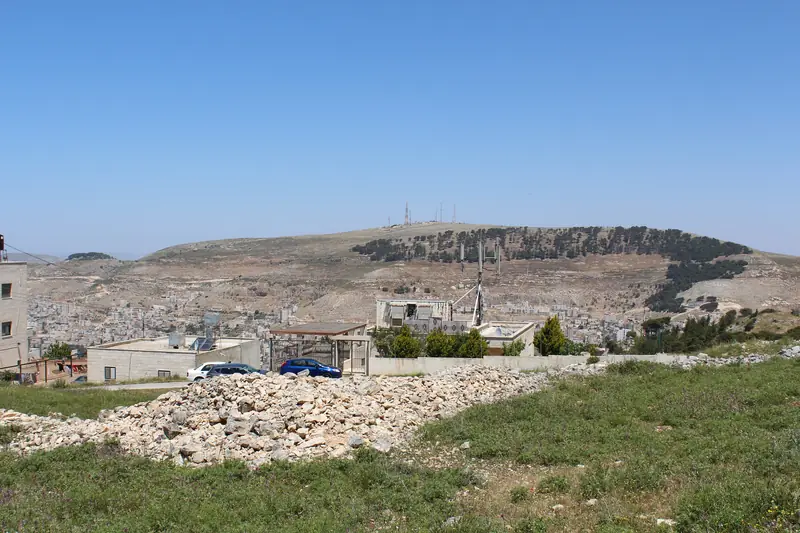
Between Mount Ebal and Mount Gerizim, Joshua has the Law read aloud, then gathers the tribes at Shechem and asks them to choose whom they will serve.
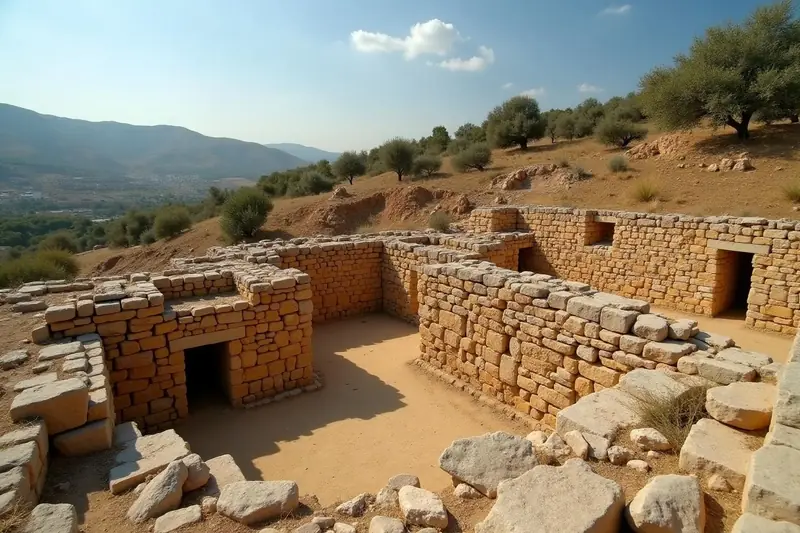
After Shechem, Abraham builds an altar "between Bethel and Ai" and calls on the name of the LORD, then returns there after his stay in Egypt (Genesis 12:8; 13:1-4).
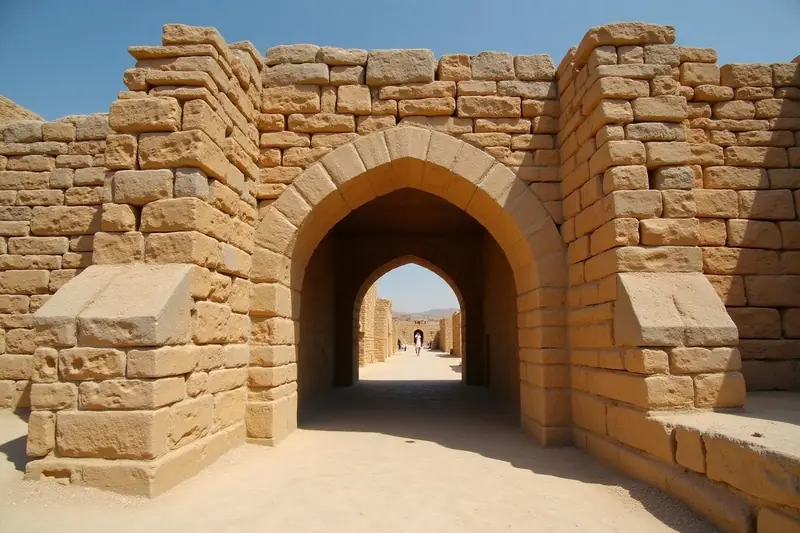
From Genesis 14 to the "House of David" stele: archaeology, nature and biblical history at the springs of the Jordan.
The biblical site is Tel Shiloh (Khirbet Seilun), in the hills of Samaria, some forty kilometres north of Jerusalem via Route 60, between Bethel and Nablus. The identification, proposed as early as 1838, rests on Judges 21:19 and on the survival of the name.
No. Several locations have been proposed (the summit of the mound, the northern terrace, a monumental building now being excavated), but none has been proven. A tent leaves few traces and no inscription identifies the sanctuary.
In the Late Bronze Age, the period often associated with Joshua, the site had no village but a cult place marked by a deposit of offerings and bones. The occupation most closely linked with the biblical story is the Iron Age I village (12th–11th century BC), the time of the Judges and of Eli.
Finkelstein's excavations revealed Iron Age I storehouses destroyed by fire in the mid-11th century BC, dated by radiocarbon. Many link this destruction with the defeat by the Philistines (1 Samuel 4); the Bible does not narrate it explicitly, but Jeremiah 7:12 and Psalm 78:60 speak of a forsaken sanctuary.
Since 2017 the Associates for Biblical Research has announced stone altar horns, a ceramic pomegranate, animal bones and, in 2026, Middle Bronze Age storage jars and the wall of a monumental building. The team interprets these finds in relation to the Tabernacle; these readings are debated and await detailed publication.
Judges 21 tells how, at a yearly feast in Shiloh, the daughters of Shiloh danced in the vineyards and the Benjaminites found wives there. The Talmud (Taanit 30b) links this episode to the 15th of Av, which has become a festival of love in Israel.
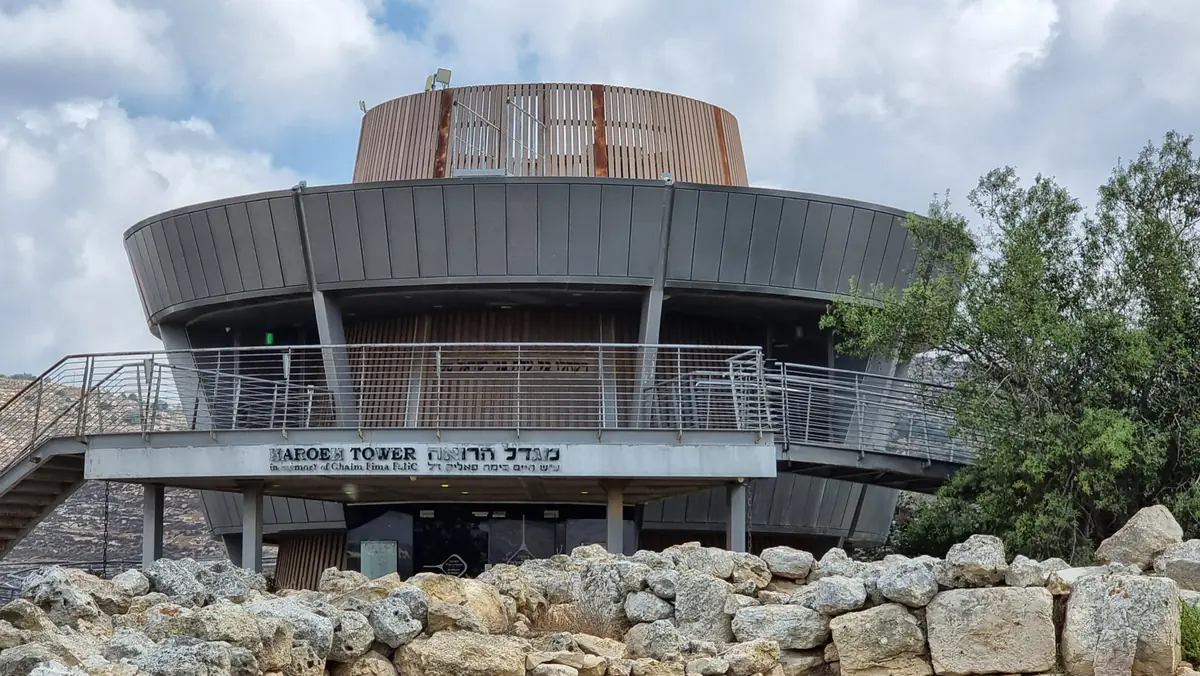
The operator suggests 1.5 to 2 hours, including the Seer's Tower show, the museum and the trail through the excavations. Check opening hours and fees with Ancient Shiloh before your visit.