
Caesarea Maritima, Herod's city: theatre, aqueduct and visit
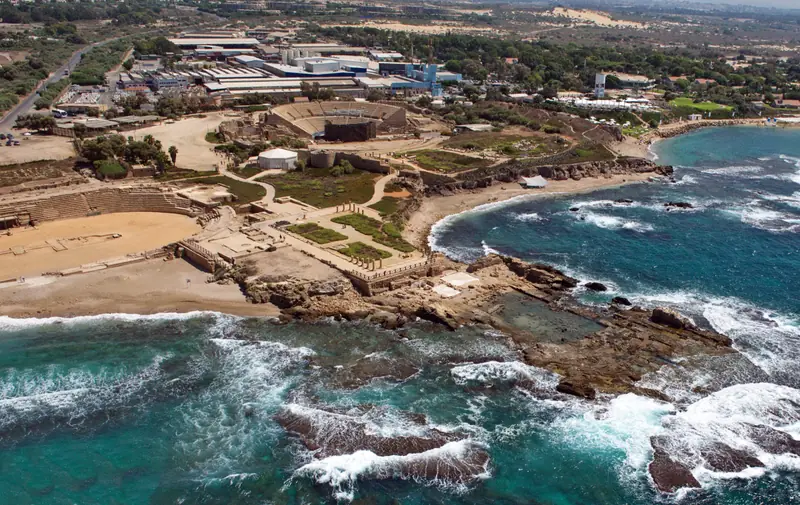
Herod's great harbour and the seat of the Roman governors, where Peter baptised Cornelius and Paul was held for two years: an archaeological park on the Mediterranean shore.
Biblical period: The Ministry in Galilee
The region where Peter recognises Jesus as the Christ, a cave dedicated to the god Pan and one of the sources of the Jordan: what the texts say, what the excavations found and what you can visit today.
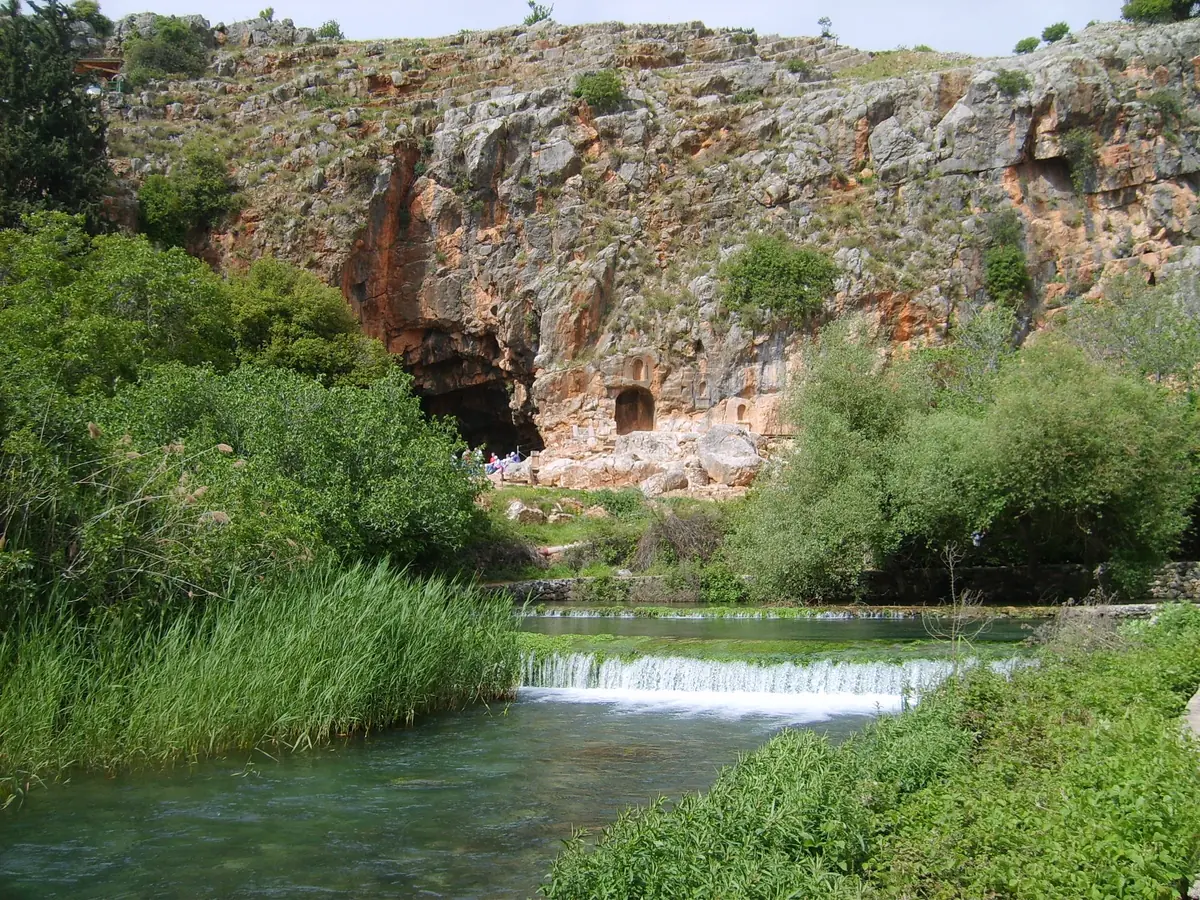
At the foot of Mount Hermon, in the northern Golan, Caesarea Philippi is the ancient Roman city visited today under the name Banias. The Gospels set a central scene in its region: Jesus asks his disciples who he is, Peter answers "Thou art the Christ", and Jesus tells him "Thou art Peter" (Matthew 16:13-20; Mark 8:27-30). It should not be confused with Caesarea Maritima, Herod's port on the Mediterranean.
The site is also one of the three sources of the Jordan. At the foot of an ochre cliff, the cave and niches of the sanctuary of Pan recall the origin of the name: Paneas, which became Banias in Arabic pronunciation. The Hermon Stream Nature Reserve brings together these remains, the palace attributed to King Agrippa II, the stream and a waterfall about ten metres high.
In brief
History & Bible
Bible story
Two Gospels name Caesarea Philippi. Matthew speaks of its "coasts" (its district), Mark of its "towns" (Mark 8:27). Neither says that the scene takes place in the city itself, or in front of the cave. Luke tells the same exchange without giving a place (Luke 9:18-21).
"When Jesus came into the coasts of Caesarea Philippi, he asked his disciples, saying, Whom do men say that I the Son of man am?"
Matthew 16:13 (KJV)
The disciples report the opinions going around: John the Baptist, Elijah, Jeremiah or another prophet. Jesus then puts the question to them directly, and Simon answers: "Thou art the Christ, the Son of the living God" (Matthew 16:16). In Matthew alone, Jesus replies with a play on his nickname, which works in Greek (Petros, petra).
"And I say also unto thee, That thou art Peter, and upon this rock I will build my church; and the gates of hell shall not prevail against it."
Matthew 16:18 (KJV)
The next verse adds the promise of "the keys of the kingdom of heaven" (Matthew 16:19). Catholic tradition reads this as the foundation of the primacy of Peter and his successors; Orthodox and Protestant readings interpret it differently. This passage gives the place its importance for pilgrims, following a disciple you also meet at his house in Capernaum and on a rooftop in Jaffa.
The Gospels tell of the healing of a woman with a flow of blood without saying where she came from (Mark 5:25-34). In the 4th century, the bishop and historian Eusebius of Caesarea reports a local tradition: she was from Paneas, and a bronze group in front of her house showed a kneeling woman stretching out her hands towards a standing man. Eusebius says he saw it (Church History VII, 18). The historian Sozomen writes that it was destroyed under the emperor Julian (Church History V, 21). What the statue really depicted is unknown.
Matthew and Mark place the Transfiguration six days after this exchange, on "an high mountain" they do not name (Matthew 17:1; Mark 9:2). Christian tradition sets it on Mount Tabor, further south. Some readers think instead of Hermon, which towers over Banias: this is a hypothesis drawn from proximity, without proof in the text.
Archaeology
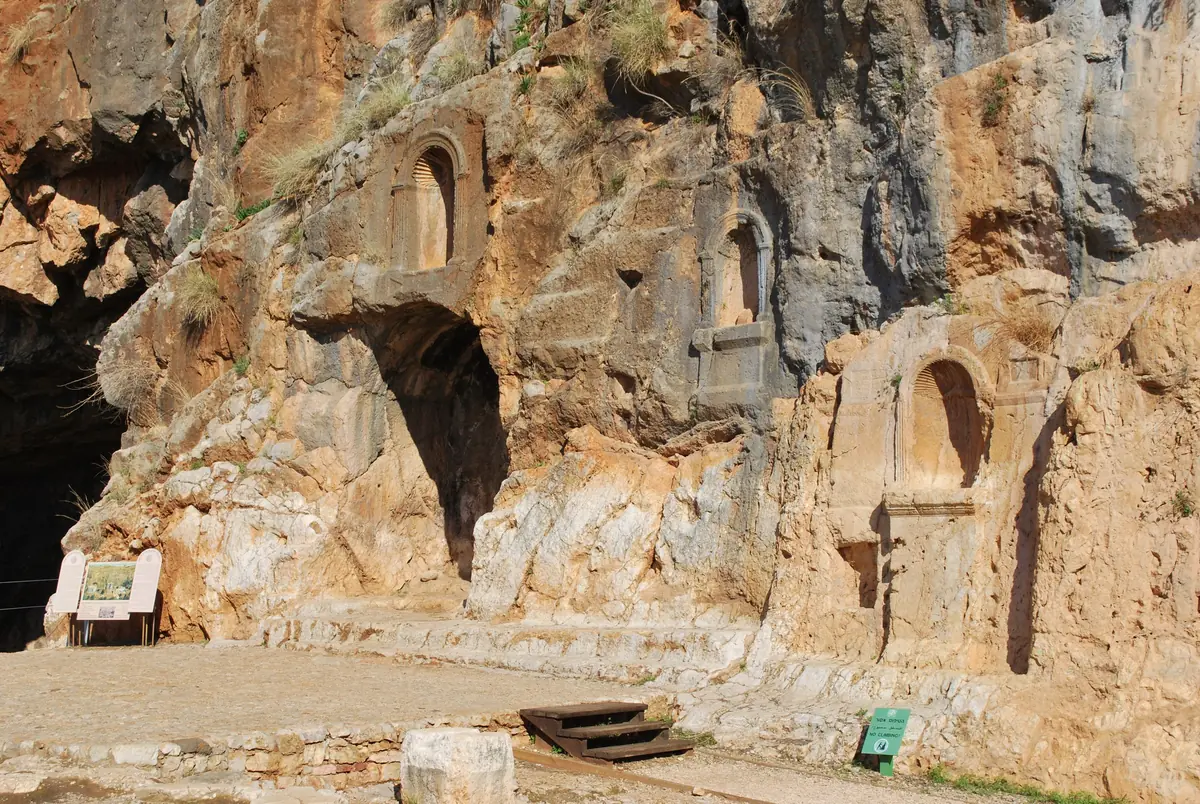
After the conquest of Alexander the Great, this place of water and greenery was dedicated to the Greek god Pan, protector of shepherds and wild nature. The sanctuary, the Paneion, gave the city its name: Paneas. Along the cliff, a natural terrace about 80 metres long received temples, courtyards and statue niches over the centuries, some of which still bear Greek inscriptions.
The 1st-century Jewish historian describes a dark cavern, a chasm full of still water whose bottom no rope could reach (Jewish War I, 405). He sees it as the source of the Jordan and even tells how the tetrarch Philip supposedly proved this by throwing chaff into a nearby lake, Lake Phiala, and seeing it come out here (Jewish War III, 509-515). The Talmud also says: "the Jordan issues from the Cave of Pamyas" (Bekhorot 55a). Today the water no longer gushes from the cave: it emerges at its foot.
According to Josephus, Herod the Great built a white marble temple near the springs in honour of Augustus (Jewish War I, 404). The excavators first placed it at the mouth of the cave, but its location is debated: some scholars prefer the nearby site of Omrit. In 2024, Adi Erlich and Ron Lavi proposed, in the journal BASOR, a different reading of the courtyard in front of the cave: it would date from the late 1st century, under Agrippa II, and would have served as a setting for banquets. These conclusions still have to be weighed against those of the earlier excavations.
Tradition and identification
Many guides present the Cave of Pan as the "gates of hell" of Matthew 16:18. The idea is appealing: a bottomless chasm, linked to a pagan god, at the very spot where Jesus would be speaking of a church these gates will not overcome.
The text itself does not make this link. The Greek speaks of the "gates of Hades", the realm of the dead, and "hell" comes from older translations such as the King James Version. Matthew sets the exchange in the "coasts" of Caesarea, without mentioning the cave. So the connection is a modern reading, possible but impossible to prove. It helps you picture the scene; it does not tell you where the scene took place.
History
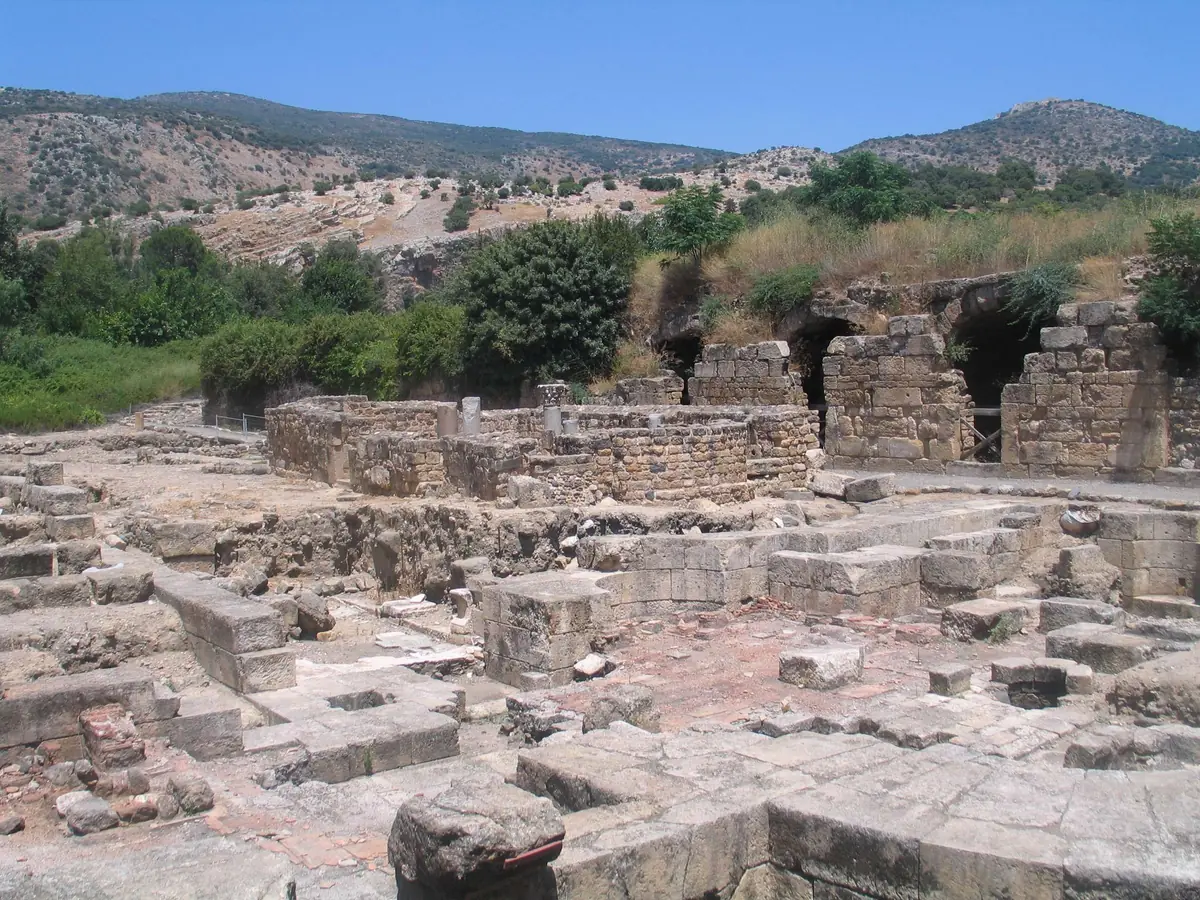
South of the park entrance, the centre of the Roman city, roughly 300 m by 300 m, was excavated from 1988 by Vassilios Tzaferis. His team uncovered the main street (the cardo) and a vast building of about 2,000 m², whose vaulted galleries are still visible. It is generally attributed to the palace of Agrippa II, without certainty. In the Byzantine period it was converted into a bathhouse.
On the cliff, a small white domed building overlooks the cave: this is the Muslim shrine of Nabi Khadr. An old hypothesis, without proof, also identifies the place with Baal-Gad, "under mount Hermon" (Joshua 11:17). For the period this site illustrates, see the ministry of Jesus in Galilee.
Plan my visit
Banias (Caesarea Philippi)
Hermon Stream (Banias) Nature Reserve, Route 99, at the foot of Mount Hermon, northern Golan
GPS coordinates : 33.2486, 35.6944 (reference point, not the exact entrance)
Start navigation with:
The Hermon Stream (Banias) Nature Reserve, run by the Israel Nature and Parks Authority, has two car parks and two entrances. The ticket is normally valid for both: check at the ticket office.
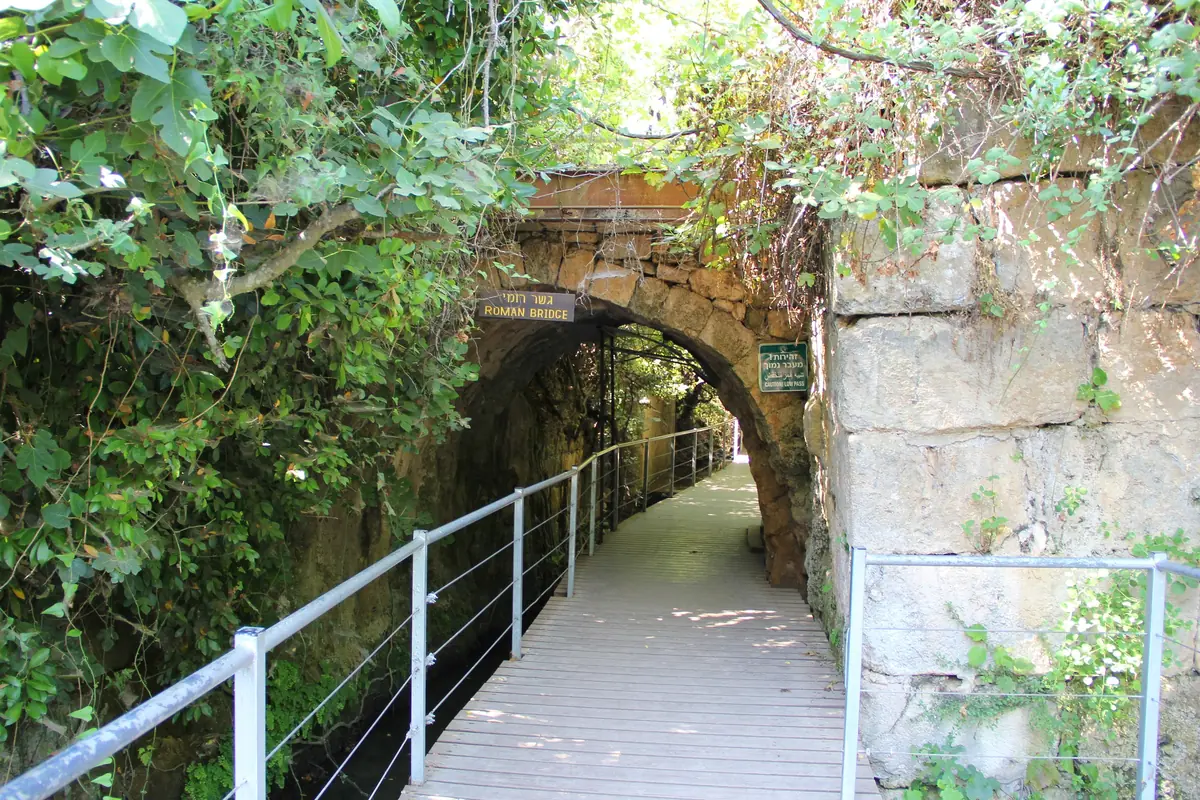
This is the entrance to choose if you are coming for Caesarea Philippi. From the springs car park, you walk to the cliff with the cave and its niches, then to the start of the stream. The trail then passes under the modern road to reach the remains of the city and the palace attributed to Agrippa II, near an old stone bridge said to be Roman.
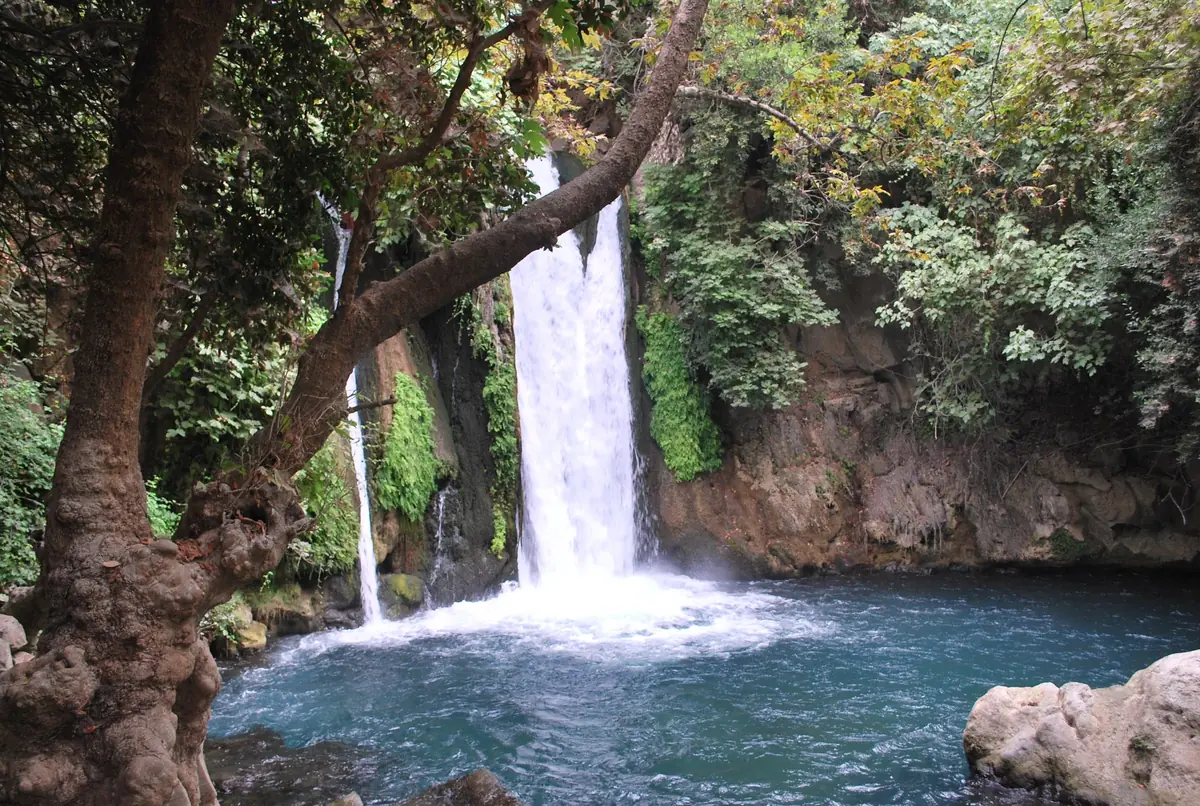
The Banias waterfall, about ten metres high according to the reserve, is one of the best-known sights in northern Israel. From the waterfall car park, allow under an hour for about 1.5 km there and back, with the suspended trail above the canyon and a climb back up steps.
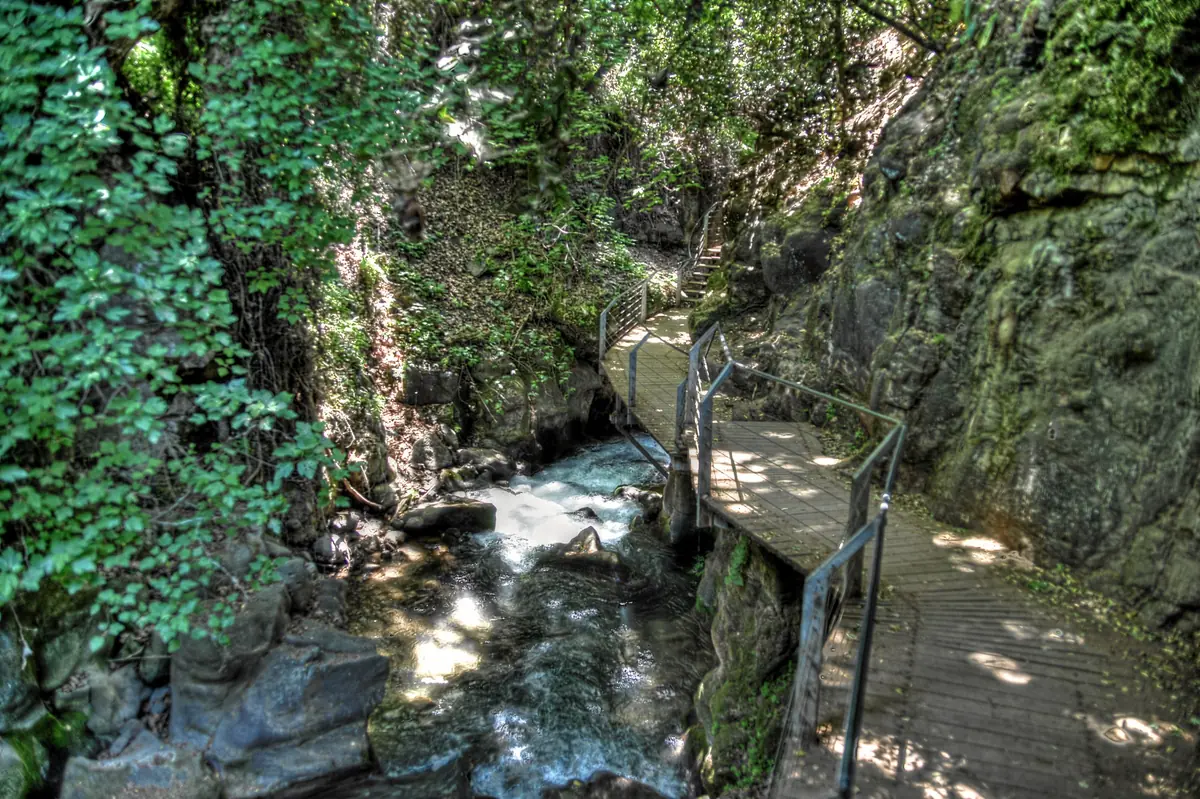
A marked trail links the two car parks along the water, past an old flour mill and under oriental plane trees. Depending on your stops, allow 2 to 3 hours. You then have to get back to your car: the simplest options are to leave a car at each end or to walk the trail both ways.
The water emerges at about 15 °C and makes up roughly a quarter of the Jordan's flow. About 9 km to the south, near Kibbutz Sde Nehemia, the Hermon Stream joins the Dan: this is where the Jordan begins.
According to the reserve, Tel Dan and Abraham's Gate are about 5 minutes' drive away and Nimrod Fortress about 10 minutes. These three sites make a very good day in the north. Heading down towards the lake, the great mound of Hazor and Capernaum, Peter's town are on the way. You can also add Banias to your own custom tour of Israel.
What's next
Straight-line distances: the drive is longer.
From Genesis 14 to the "House of David" stele: archaeology, nature and biblical history at the springs of the Jordan.
"The head of all those kingdoms": the largest Canaanite city in the land, its destruction by fire and an archaeological debate that is still open.
The fishing village where Jesus settled, taught in the synagogue and stayed with Peter: what the Gospels say, what the excavations found and what you can see today.
The Sermon on the Mount
These sites share a story but are not necessarily close to each other: distances are given in a straight line.
Herod's great harbour and the seat of the Roman governors, where Peter baptised Cornelius and Paul was held for two years: an archaeological park on the Mediterranean shore.
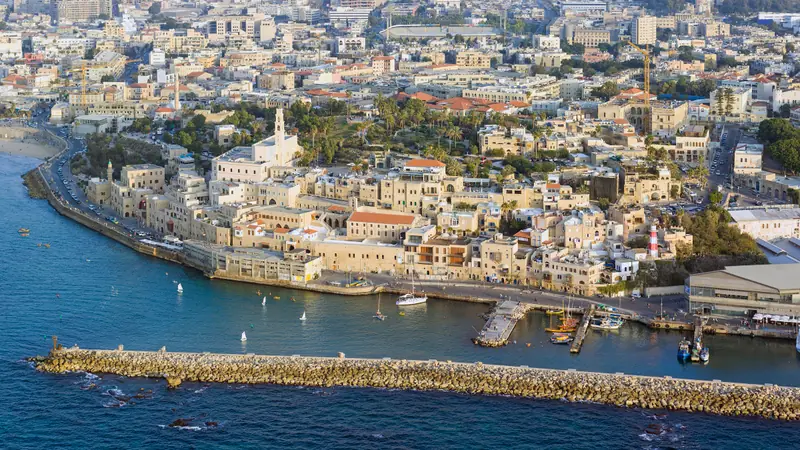
From Lebanese cedars landed for the Temple to Peter's vision on the roof of Simon the Tanner: four thousand years of history on a hill above the Mediterranean.
Yes. Caesarea Philippi is the name the tetrarch Philip gave to ancient Paneas, and Banias is its Arabic form, still used today. The site lies at the foot of Mount Hermon, in the northern Golan, in the Hermon Stream Nature Reserve. Do not confuse it with Caesarea Maritima on the Mediterranean coast, about two hours away by road.
For Caesarea Philippi, the Cave of Pan and the palace attributed to Agrippa II, choose the springs car park. For the waterfall and the suspended trail, choose the waterfall car park: under an hour, about 1.5 km there and back. The full trail between the two takes 2 to 3 hours, and you need to plan how to get back to your car.
Matthew sets the scene in the "coasts" of Caesarea Philippi and Mark in its "towns". The exact spot is unknown. Nothing in the text places it in front of the Cave of Pan, even though pilgrim groups often read the passage there today.
There is no proof of it. Matthew 16:18 speaks of the gates of Hades, the realm of the dead, without mentioning a cave. The link with the chasm of Pan described by Josephus is a modern reading, useful for picturing the setting but absent from the text.
No: entering the water and swimming are prohibited in the reserve, including at the waterfall. Visitors do swim further down the Hermon Stream, outside the reserve; check on site that access is open and allowed.
The reserve is close to the northern border and has been closed for security reasons in the past. Check that it is open and the day's instructions on parks.org.il. On site, stay on marked trails: the reserve's official map indicates mined areas.
Tel Dan, its Canaanite gate and the other source of the Jordan are about 5 minutes' drive away, and Nimrod Fortress about 10 minutes. For a longer day, add the Canaanite capital of Hazor on the way down to the Sea of Galilee.