
Shechem (Tel Balata) – Abraham's First Altar in Canaan
Between Mount Ebal and Mount Gerizim, the place of God's first promise and Abraham's first altar in the Promised Land (Genesis 12:6-7).
Biblical period: Judges and Kings
The city of refuge of Naphtali, the hometown of Barak and one of the best-preserved Roman temples in Israel, facing Mount Hermon: what the texts say, what the excavations found and what you can visit today.
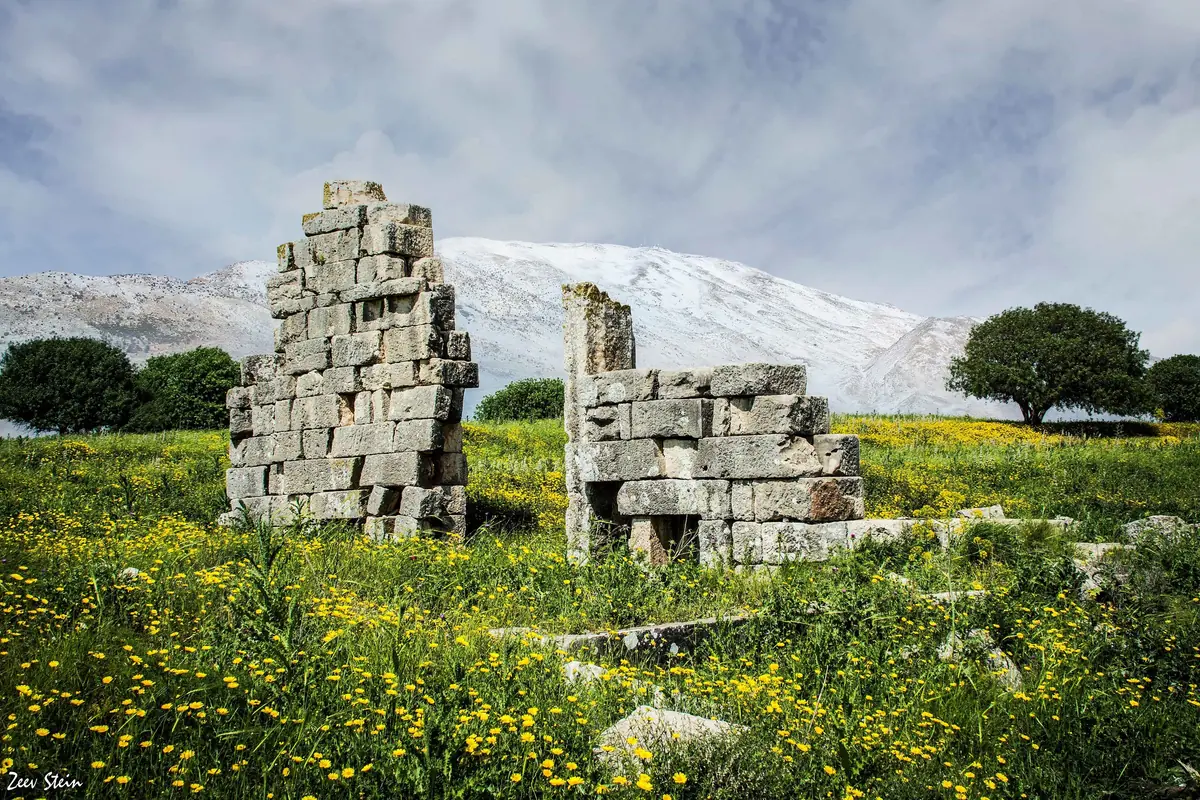
In Upper Galilee, a few hundred metres from the Lebanese border, Tel Kedesh is ancient Kedesh of Naphtali. The Bible makes it one of the six cities of refuge, where someone who had killed another person by accident could find shelter (Joshua 20:7), and the hometown of Barak, the commander summoned by the prophetess Deborah (Judges 4:6). It fell to Assyria in 732 BC, together with its great neighbour Hazor and Abel Beth Maacah, the city of the wise woman (2 Kings 15:29).
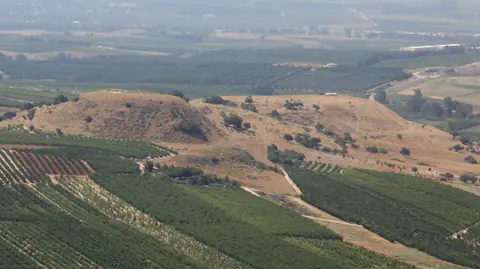
The site has two parts. The large mound, excavated from 1997 to 2012, revealed a Persian and Hellenistic administrative building and an archive of more than 2,000 seal impressions. On the neighbouring hill, Tel Kedesh National Park protects a second-century Roman temple, carved sarcophagi and a mausoleum: this is the part you visit.
In brief
Plan my visit
| Visit duration | 45 minutes to 1 hour for the sarcophagi, the mausoleum and the Roman temple. |
|---|---|
| Opening hours & prices | Check current access conditions with the Israel Nature and Parks Authority (parks.org.il) before you go. |
| Best seasons | All year round. Winter and spring bring green meadows and snow on Mount Hermon; in summer, come early or late in the day, as there is little shade. |
| Accessibility | The trail to the temple is a dirt path with stones and fallen blocks. The sarcophagi, near the car park, are easier to reach. |
| What to bring | Water, a hat and good shoes. There are no shops on site: get what you need before leaving the valley. |
| ⚠️ Safety | Route 899 runs along the Lebanese border. Check on the day that the road and the site are open, and follow the Home Front Command instructions. |
Tel Kedesh National Park lies along Route 899, between Kibbutz Malkiya and Kibbutz Yiftah, above the Hula Valley and its cranes. A small car park gives access to the site.
From the car park, you first pass the sarcophagi and the mausoleum, then a short trail leads to the Roman temple, on the south side of the hill. The whole walk takes less than an hour at an easy pace. The site is quiet: you are often alone there, with an open view of the large mound and, in winter, of snow-capped Mount Hermon.
The large mound, to the west, is not set up for visitors: the remains of the Persian and Hellenistic building were mostly covered over after the excavations. You see it from the temple hill.
Kedesh is about 11 km as the crow flies from Tel Hazor, the capital of King Jabin: the two sites tell the same chapter of Judges. Further north, the mound of Abel Beth Maacah near Metula and Tel Dan round off a day among the biblical cities of the Hula. You can also add Kedesh to your own tailor-made Israel itinerary.
Nearby
Add other places to visit around Tel Kedesh.
Straight-line distances: the drive is longer.
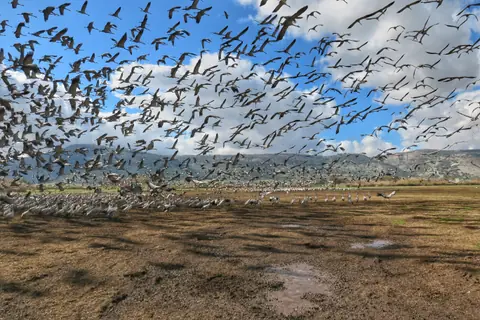
Tens of thousands of cranes in winter, a bird named by the prophet Jeremiah and, all around, the cities of the biblical north: what the texts say, what we know about the vanished lake and how to visit it today.
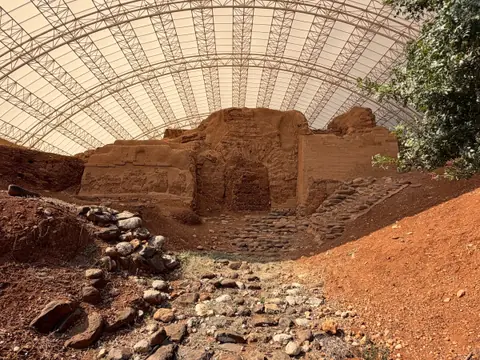
"The head of all those kingdoms": the largest Canaanite city in the land, its destruction by fire and an archaeological debate that is still open.
A border city between Israel, Aram and Tyre, saved by a wise woman according to the Bible, and a mound excavated since 2013 that has yielded the head of an unknown king: what the texts say, what the excavations found and what you can see today.
From Genesis 14 to the "House of David" stele: archaeology, nature and biblical history at the springs of the Jordan.
History & Bible
Bible story
Kedesh first appears in the book of Joshua. Its king is listed among the thirty-one defeated kings (Joshua 12:22), and the city is then allotted to the tribe of Naphtali, together with Hazor and En-hazor (Joshua 19:36-37). The text calls it "Kedesh in Galilee" to distinguish it from other towns with the same name, which means "holy" or "set apart".
The Torah provides for cities where a person who had killed someone unintentionally could flee from the victim's family, until a trial could take place (Numbers 35; Deuteronomy 19). The book of Joshua names three west of the Jordan, one for each main region: Kedesh in the north, Shechem in the centre and Hebron in the south. Three more lay east of the river.
"And they appointed Kedesh in Galilee in mount Naphtali, and Shechem in mount Ephraim, and Kirjatharba, which is Hebron, in the mountain of Judah."
Joshua 20:7 (KJV)
Kedesh was also a Levitical city, given to the descendants of Gershon from the tribe of Levi as "a city of refuge for the slayer" (Joshua 21:32).
When Jabin, the king of Canaan who reigned in Hazor, oppressed Israel, the prophetess Deborah sent for a man from Kedesh to lead the response.
"And she sent and called Barak the son of Abinoam out of Kedeshnaphtali, and said unto him, Hath not the LORD God of Israel commanded, saying, Go and draw toward mount Tabor, and take with thee ten thousand men of the children of Naphtali and of the children of Zebulun?"
Judges 4:6 (KJV)
Barak gathered his troops at Kedesh (Judges 4:10), went up Mount Tabor and routed Sisera's army. The story adds that Heber the Kenite had pitched his tent "unto the plain of Zaanaim, which is by Kedesh" (Judges 4:11): it is in that tent that the fleeing Sisera was killed by Jael.
🔎 Which Kedesh was Barak's?
The text does say "Kedesh of Naphtali". But the battle took place far to the south, around Mount Tabor, and Sisera fled on foot to Heber's tent. Several scholars, including Yohanan Aharoni, have therefore suggested another Kedesh, closer to the Sea of Galilee. Identifying Tel Kedesh with the city of refuge is widely accepted; for Barak's hometown, the question remains open.
Under Pekah, king of Israel, the Assyrian king Tiglath-pileser III conquered Galilee. The verse names in a single breath the towns around the Hula Valley:
"In the days of Pekah king of Israel came Tiglathpileser king of Assyria, and took Ijon, and Abelbethmaachah, and Janoah, and Kedesh, and Hazor, and Gilead, and Galilee, all the land of Naphtali, and carried them captive to Assyria."
2 Kings 15:29 (KJV)
Kedesh reappears in the second century BC: the first book of Maccabees says that the army of the Seleucid king Demetrius II camped at Kedesh and that Jonathan Maccabaeus defeated it in the nearby plain of Hazor (1 Maccabees 11:63-74). To place these stories in their period, see the Judges and the Kings of Israel.
Archaeology
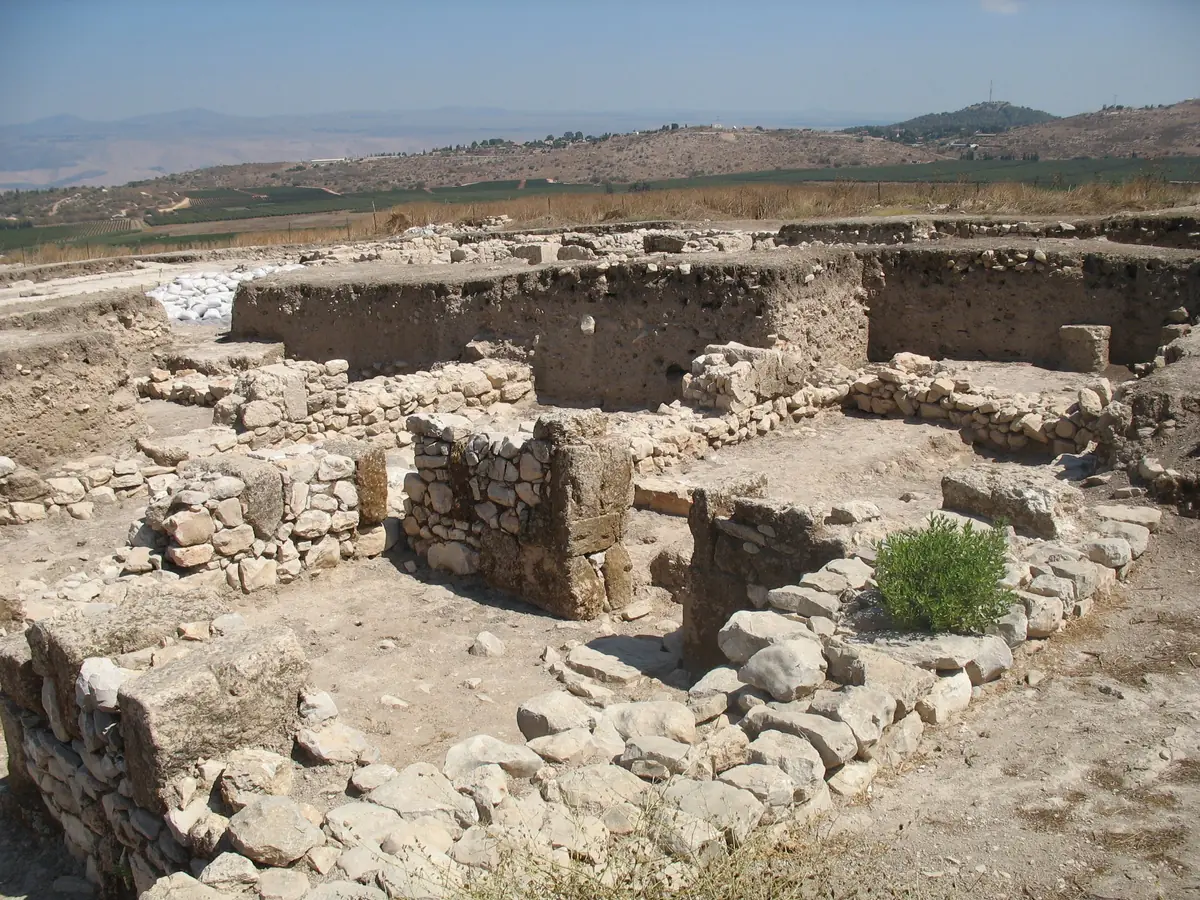
The large mound of Kedesh was excavated from 1997 to 2012 by Sharon Herbert (University of Michigan) and Andrea Berlin (University of Minnesota, then Boston University). The early levels show a large city as far back as the Early Bronze Age, but the major discovery is much later.
In one room of the building, the excavators found more than 2,000 bullae: small lumps of clay that sealed documents written on papyrus. The papyri are gone, but the impressions remain. They show Greek deities, portraits of Seleucid kings, animals and symbols. They reveal that Kedesh was then an administrative centre, first linked to the Phoenician city of Tyre and later to the Seleucid kings. The first volume of the final publication, devoted to this archive, came out in 2023.
The building was abandoned around the middle of the second century BC, roughly when the book of Maccabees places Jonathan's campaign. The excavators remain cautious about any link between the two events.
Archaeology
In the Roman period, Kedesh, called Kydasa or Cadasa, was a fortified village belonging to Tyre. Flavius Josephus describes it as hostile to the Galileans and says that Titus camped there during the war against Rome (Jewish War 2.459; 4.104-105).
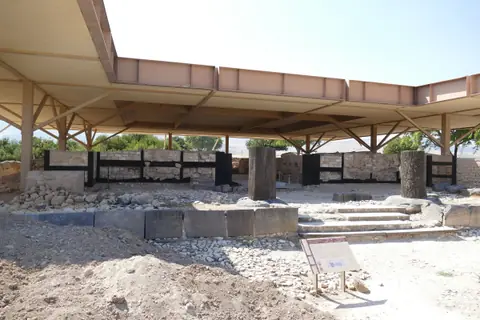
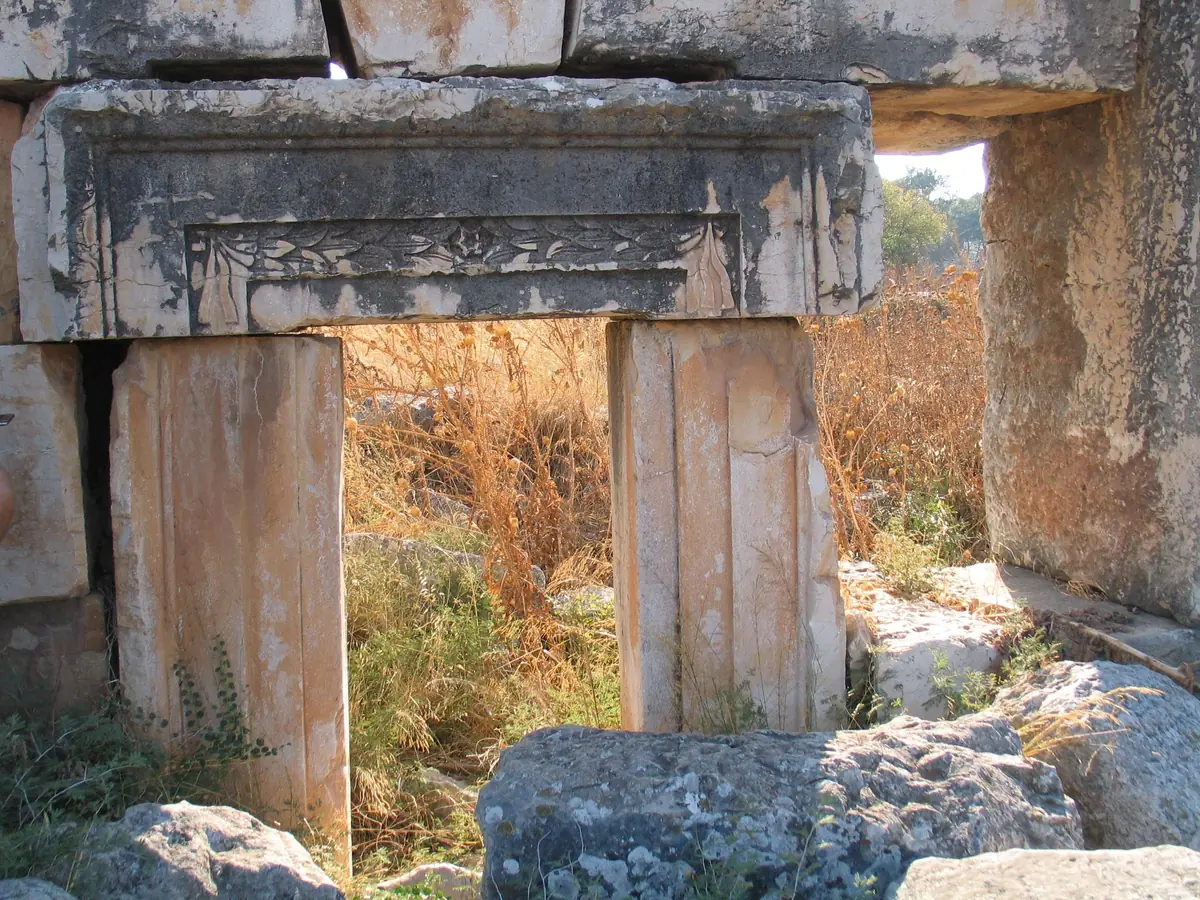
On the small hill east of the mound stands a second-century AD Roman temple, facing east. Its walls of large cut stones still stand several metres high, with a monumental doorway framed by carved jambs and a lintel. The archaeologists Moshe Fischer, Asher Ovadiah and Israel Roll attributed it to the Syro-Phoenician sky god Baal Shamin. All around, fallen cornice blocks and column drums show how rich its decoration was.
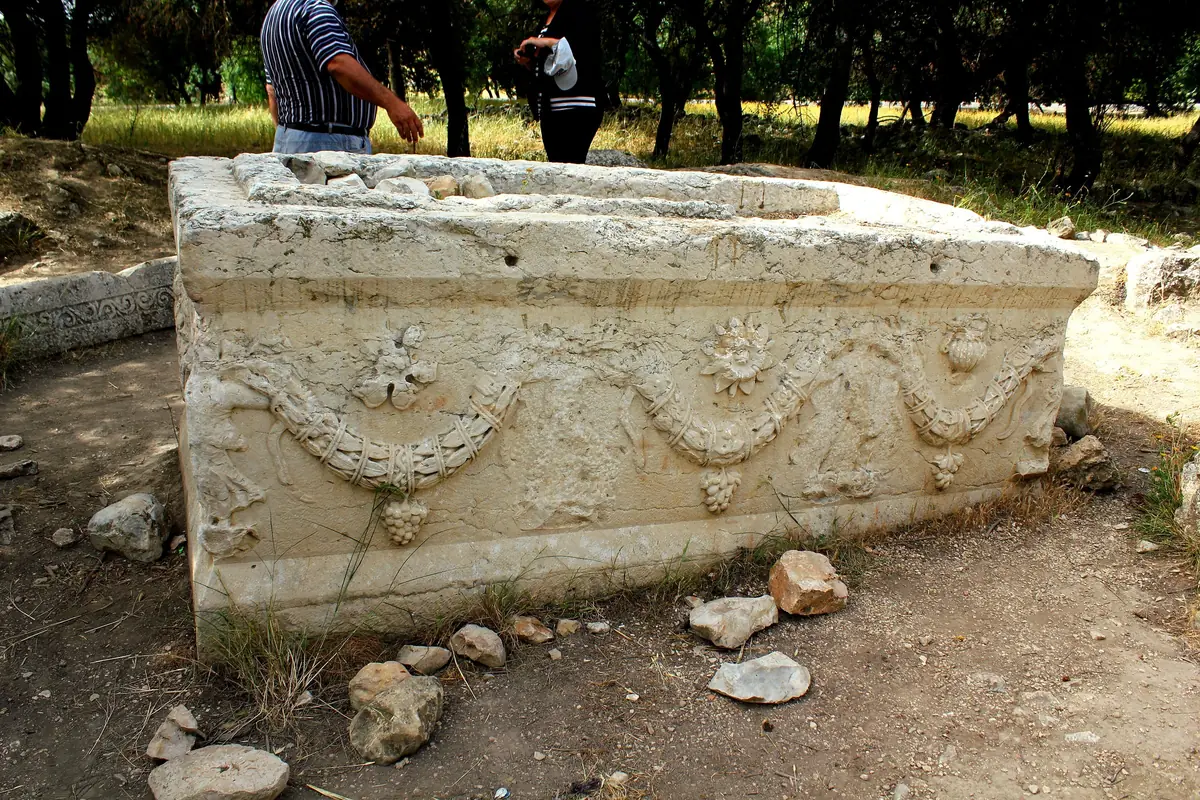
Near the park entrance, several white limestone sarcophagi are decorated with garlands and rosettes. Some were made for two people. A square mausoleum, with partly collapsed arches, was described in 1866 by the British officer Charles Wilson during the Palestine Exploration Fund survey.
📌 The "tombs of Barak and Deborah"
Jewish travellers and pilgrims in the Middle Ages saw in these tombs the graves of Barak, Deborah, Jael and Heber. The sarcophagi and the mausoleum actually date from the Roman period, more than a thousand years after the time of the Judges.
History
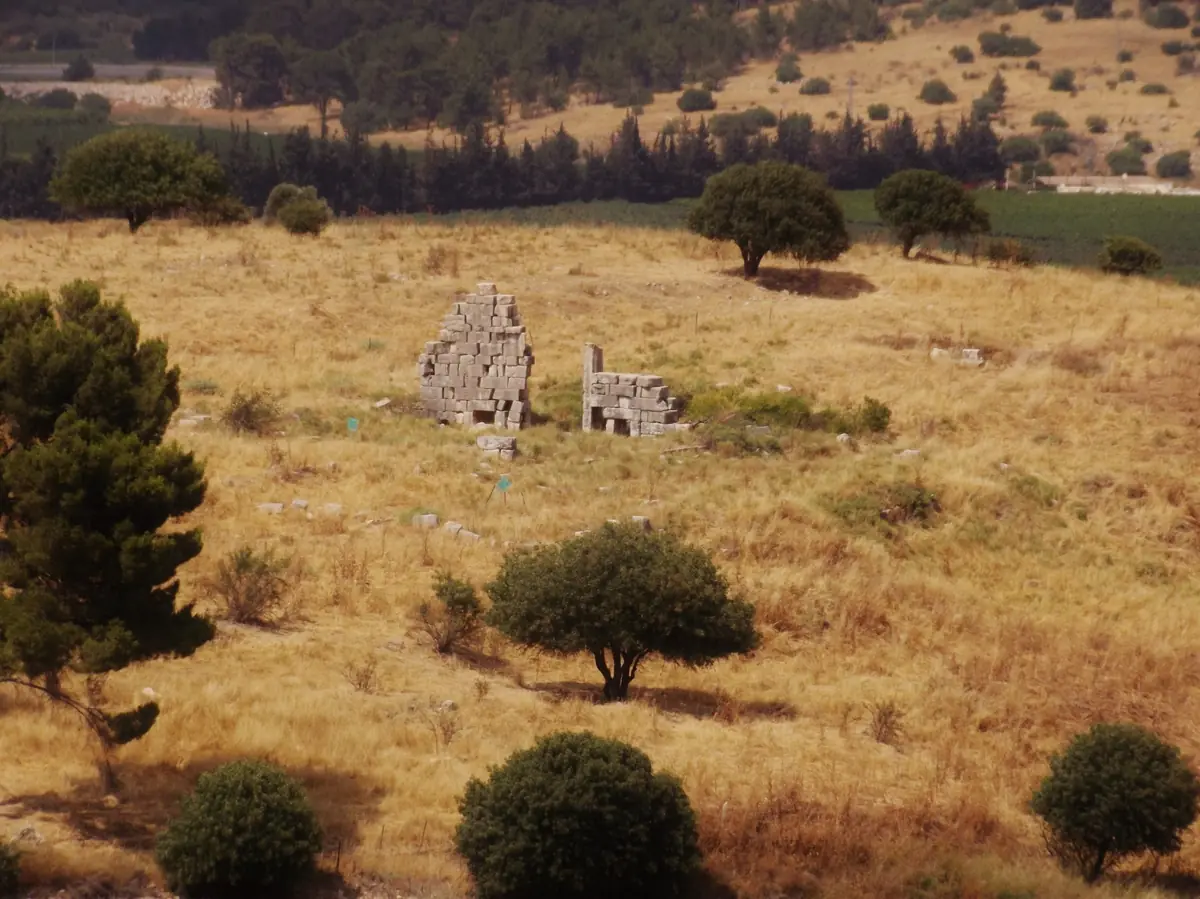
These sites share a story but are not necessarily close to each other: distances are given in a straight line.
Between Mount Ebal and Mount Gerizim, the place of God's first promise and Abraham's first altar in the Promised Land (Genesis 12:6-7).
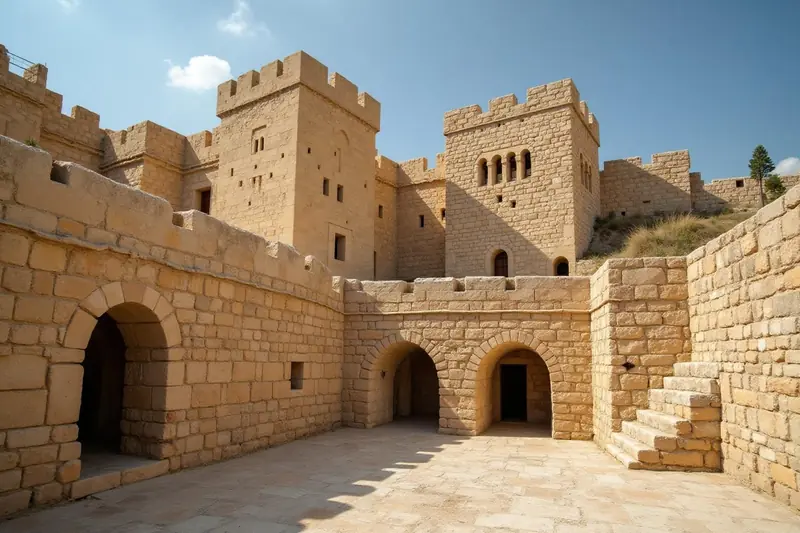
A sacred site venerated by the three monotheistic religions, the traditional burial place of Abraham, Isaac and Jacob.
Yes, if you like quiet sites and Roman remains. Kedesh adds two things that Hazor and Tel Dan do not have: a Roman temple whose walls are still standing and carved sarcophagi. Allow an hour, about 11 km as the crow flies from Hazor. The site is, however, more exposed to the situation on the Lebanese border: check that it is open.
Mostly the second-century Roman temple, the sarcophagi and the mausoleum, in the national park. The large biblical mound, just to the west, is not set up for visitors: the excavated Persian and Hellenistic building was mostly covered over. You see it from the temple hill.
The Bible calls Barak "the son of Abinoam out of Kedeshnaphtali" (Judges 4:6). Tel Kedesh, in Upper Galilee, is indeed the Kedesh of Naphtali of the lists in Joshua. But since the battle against Sisera took place near Mount Tabor, scholars such as Yohanan Aharoni have proposed another Kedesh further south, near the Sea of Galilee. The question is not settled.
A city of refuge sheltered a person who had killed someone unintentionally, protecting them from revenge until their trial (Numbers 35; Deuteronomy 19). Joshua 20:7 names three west of the Jordan, one per region: Kedesh for the north, <a href="/en/lieu/sichem">Shechem</a> for the centre and <a href="/en/lieu/hebron">Hebron</a> for the south.
A medieval Jewish tradition says so, and pilgrims venerated these tombs. But the sarcophagi and the mausoleum visible today date from the Roman period, more than a thousand years after the time of the Judges. Archaeology has not identified any tomb of Barak or Deborah.
The park lies along Route 899, between Kibbutz Malkiya and Kibbutz Yiftah, in Upper Galilee. A car park gives access to the sarcophagi, then a short trail leads to the temple. Allow 45 minutes to 1 hour. A car is essential: the site is isolated, with no shops nearby.
Route 899 runs along the Lebanese border and has already been closed for security reasons. Check on the day that the road and the park are open, on the Israel Nature and Parks Authority website, and follow the Home Front Command instructions. Stay on the marked trail.
Start with the mound of Hazor, city of King Jabin, about 11 km away as the crow flies. Then drive up towards Metula for Abel Beth Maacah, besieged by Joab, and finish at Tel Dan and its Canaanite gate.