
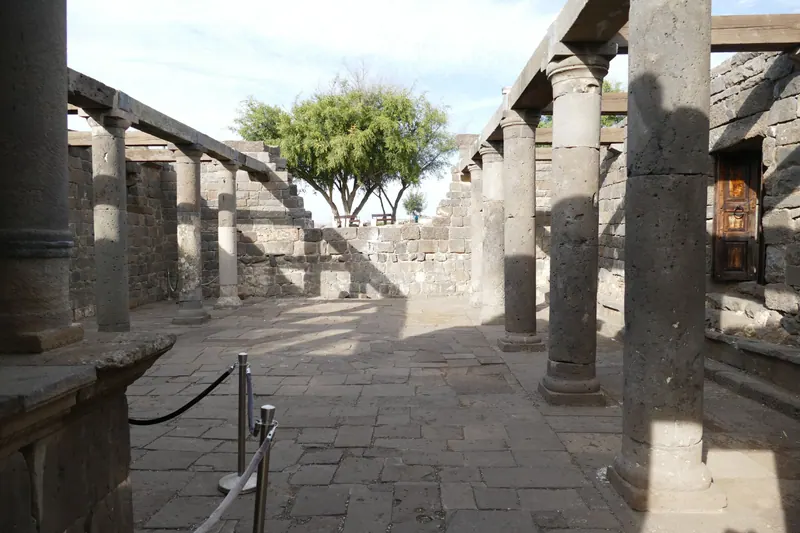
Ein Keshatot: a restored ancient synagogue in the Golan
A restored basalt synagogue, the decorated Torah shrine and an arched spring reveal Jewish life in the Byzantine Golan.
Jewish heritage · Roman period
The town of the Sanhedrin, the tomb attributed to the redactor of the Mishnah and some thirty catacombs cut into the hillside: what the texts say, what the excavations found and what you can visit today.
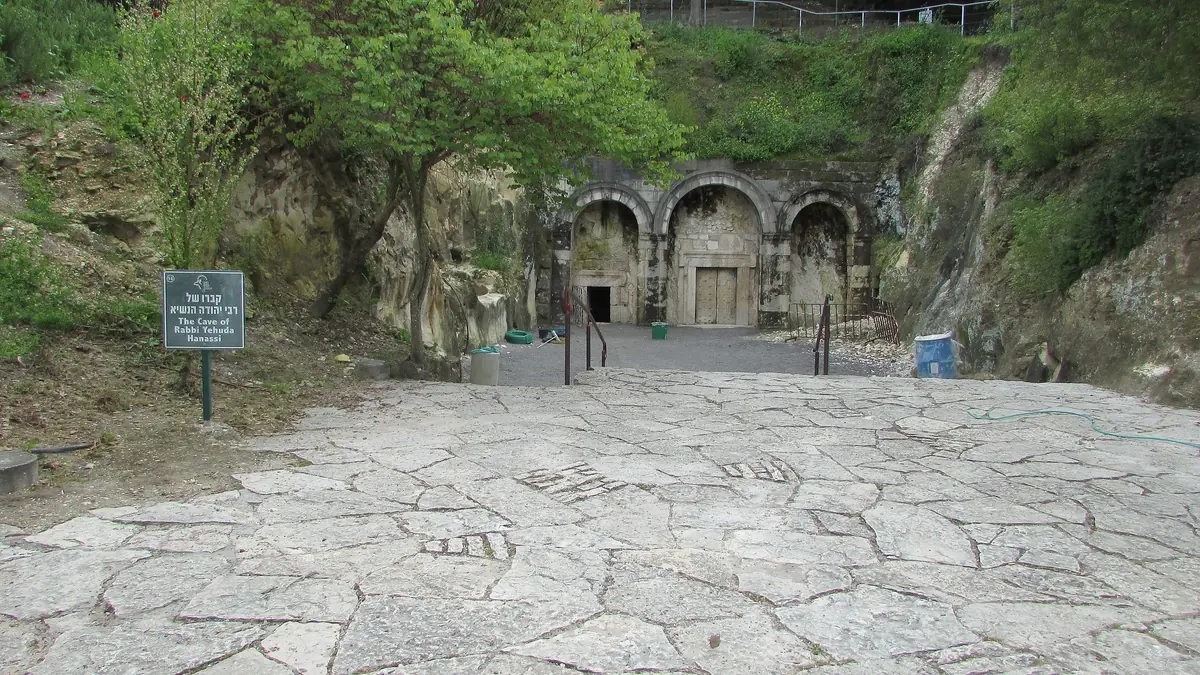
In Lower Galilee, on the edge of the Jezreel Valley, Beit She'arim is the largest ancient Jewish necropolis found in Israel. The town hosted the Sanhedrin, the high assembly of the sages, at the end of the 2nd century CE. Rabbi Judah haNasi (Judah the Prince), who gave the Mishnah its form, lived here and was buried here around 220 CE. After him, Jews from across the region wanted to rest near his tomb.
Beit She'arim National Park protects some thirty catacombs cut into the limestone, with carved sarcophagi, menorahs and close to 300 inscriptions. The site has been a UNESCO World Heritage Site since 2015. No episode of the Bible takes place here: you come to understand how Judaism rebuilt itself in Galilee after the destruction of the Temple.
In brief
Plan my visit
| Visit duration | 1 to 1.5 hours for the Cave of the Coffins, the Cave of Rabbi Judah haNasi and the museum. Add 30 to 45 minutes for the upper trail and the statue of Alexander Zaid. |
|---|---|
| Hours & fees | Paid entry. Check current opening hours and fees with the Israel Nature and Parks Authority (parks.org.il) before you go. |
| Getting there | By Road 722 from HaShomrim junction, then first left. The park is about ten minutes from the centre of Kiryat Tiv'on. |
| Best seasons | All year round. The caves stay cool in summer; winter and spring are the most pleasant for the hill trail. |
| Accessibility | The car park, paved paths, visitor services, toilets and picnic area are accessible. So is the interior of the Cave of the Coffins, with a slightly raised threshold. Models near the entrance present the caves that are not accessible. |
| On site | Toilets, drinking water, shaded picnic tables and a shop with drinks, ice cream and books. |
| Menorah Caves | Visited with a guide. Check time slots and booking terms with the park. |
| What to bring | No torch needed: the open caves are lit. Bring good shoes and water for the upper trail. This is a cemetery: dress and behave respectfully. |
Beit She'arim National Park lies at the entrance to Kiryat Tiv'on, some twenty kilometres south-east of Haifa. The car park, visitor services, toilets and shaded picnic area are at the foot of the caves.
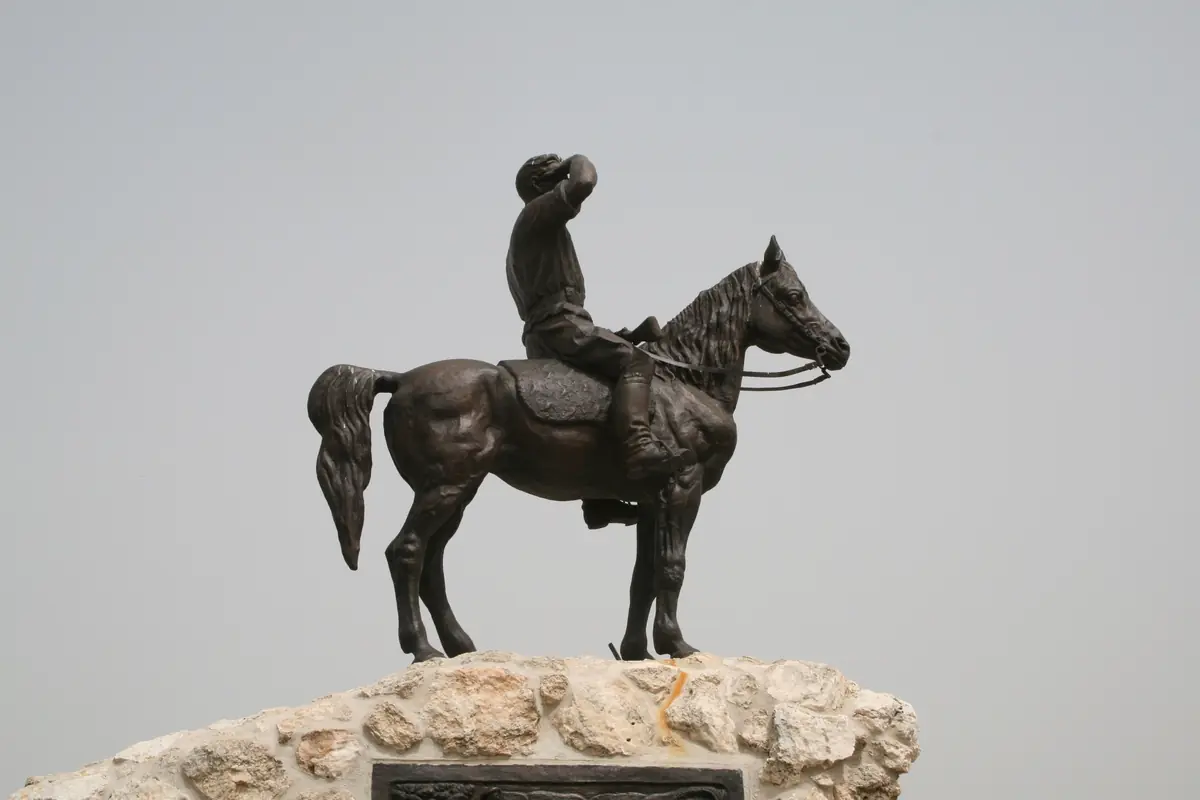
The lower trail links the main catacombs. You walk into the Cave of the Coffins, cool even in midsummer, and you reach the façade and courtyard of the Cave of Rabbi Judah haNasi. The museum cave displays the glass slab and the story of the site. The upper trail circles the hill: remains of the town, a view over the Jezreel Valley and the equestrian statue of Alexander Zaid, who was killed in 1938.
The Menorah Caves (Catacombs 1 to 4), opened in 2009, are visited with a guide. Check the time slots on offer and the booking terms with the park.
| Cave | What you see | Access |
|---|---|---|
| Cave of the Coffins (Catacomb 20) | 135 sarcophagi, a menorah 1.9 m high | You walk in; wheelchair accessible |
| Cave of Rabbi Judah haNasi (Catacomb 14) | Triple-arched façade, inscriptions naming Shimon and Gamliel | Façade and courtyard; check on site for access inside |
| Museum cave | Glass slab of nearly 9 tons | You walk in |
| Menorah Caves (Catacombs 1 to 4) | Incised menorahs, tombs of Jews from Palmyra | Visited with a guide, check time slots |
The Muhraqa, where you can recall what happened at Mount Carmel in the Bible, is about 5 km away as the crow flies. Across the valley, Tel Megiddo, above the valley of Megiddo, is about 14 km away. To stay in the same chapter of Jewish history, the restored ancient synagogue of Ein Keshatot, in the Golan, shows what came next: the life of the Jewish communities of the Golan in the Byzantine period. You can also add Beit She'arim to your own itinerary in Israel.
Nearby
Add other places to visit around Beit She'arim.
Straight-line distances: the drive is longer.
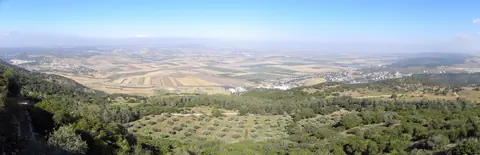
Fire from heaven, a little cloud rising from the sea and the hermits who gave their name to the Carmelite order: a mountain overlooking the Jezreel Valley and Haifa Bay.
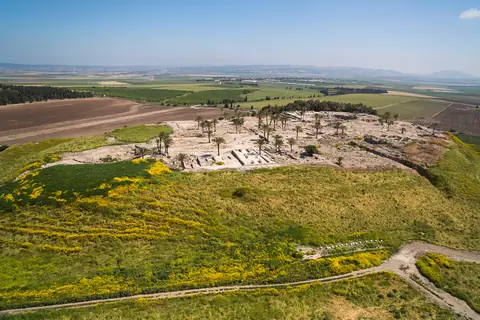
A Canaanite city the Bible says was defeated but never dispossessed: four thousand years of history at the crossroads of Egypt and Mesopotamia.
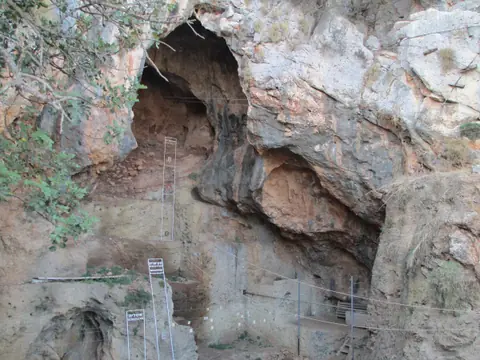
On the western slope of Mount Carmel, four caves in a limestone cliff hold at least 500,000 years of human history, from Neanderthals to Natufian villages.
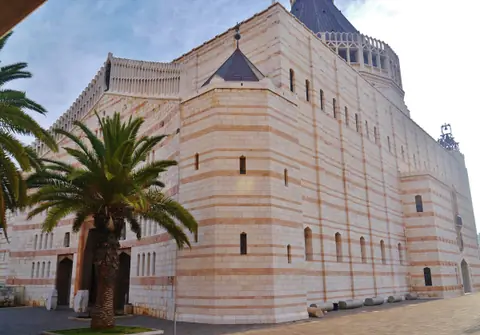
The Galilean village where the Gospels place the Annunciation and the childhood of Jesus, today Israel's largest Arab city: shrines, excavations and visiting tips.
History & Bible
History
After the destruction of the Temple in 70 CE, at the end of the Second Temple period, and the failure of the Bar Kokhba revolt in 135, the centre of Jewish life moved from Judea to Galilee. The Sanhedrin, both supreme court and academy, then moved from town to town. The Talmud preserves the list:
"From Usha to Shefaram, from Shefaram to Beit She'arim, from Beit She'arim to Tzippori, and from Tzippori to Tiberias."
Babylonian Talmud, Rosh Hashanah 31b
Rabbi Judah haNasi, "Judah the Prince", led the Sanhedrin at the end of the 2nd century. The Talmud simply calls him "Rabbi". Tradition credits him with shaping the Mishnah, the collection of the oral law completed around 200 CE, on which the whole Talmud rests.
His name is tied to Beit She'arim. To illustrate the verse "That which is altogether just shalt thou follow" (Deuteronomy 16:20), the Talmud advises following the sages to the place where they sit, and gives this example: follow Rabbi to Beit She'arim (Sanhedrin 32b).
Rabbi spent the last seventeen years of his life in Tzippori (Sepphoris), where the hill air suited his health. But the Talmud notes that his tomb was waiting elsewhere: he lay ill in Tzippori, "and a burial site was ready for him in Beit She'arim" (Ketubot 103b). He died around 220 CE and his body was carried here.
🔎 Text, tradition and archaeology
The Talmud says Rabbi was buried at Beit She'arim. Archaeologists attribute Catacomb 14 to his family: the names "Rabbi Shimon" and "Rabbi Gamliel", those of his two sons, were found there, along with "Anina the Small", often linked to his pupil Hanina. No inscription bears the name of Judah himself: the identification of his tomb is an inference, not direct proof.
History
No. Beit She'arim appears neither in the Hebrew Bible nor in the New Testament. The first written mention comes from the historian Flavius Josephus, in the 1st century CE, who calls it Besara and describes it as the centre of Queen Berenice's estates on the edge of the Jezreel Valley. This is why IsraBible files the place under post-biblical Jewish heritage, not under a biblical period.
📌 What does Beit She'arim mean?
In Hebrew, Beit She'arim (בית שערים) means "the house of gates". Ancient sources also write Beit Sharei or Beit She'arayin in Aramaic, and Besara in Greek.
Yet the Bible sheds light on what you see here. From the 3rd century on, Jews from Palmyra, Tyre, Antioch and South Arabia had their bodies brought to Beit She'arim. This wish to rest in the Land of Israel has a model in Genesis: Jacob, dying in Egypt, makes his son Joseph swear to bring him back to the land of his fathers.
"But I will lie with my fathers, and thou shalt carry me out of Egypt, and bury me in their buryingplace."
Genesis 47:30 (KJV)
Jacob was buried in Hebron, in the Cave of Machpelah, the Tomb of the Patriarchs. After the Bar Kokhba revolt failed in 135, Jews were barred from Jerusalem: the necropolis of Beit She'arim, around the tomb of Rabbi, became the main Jewish burial place outside Jerusalem.
Archaeology
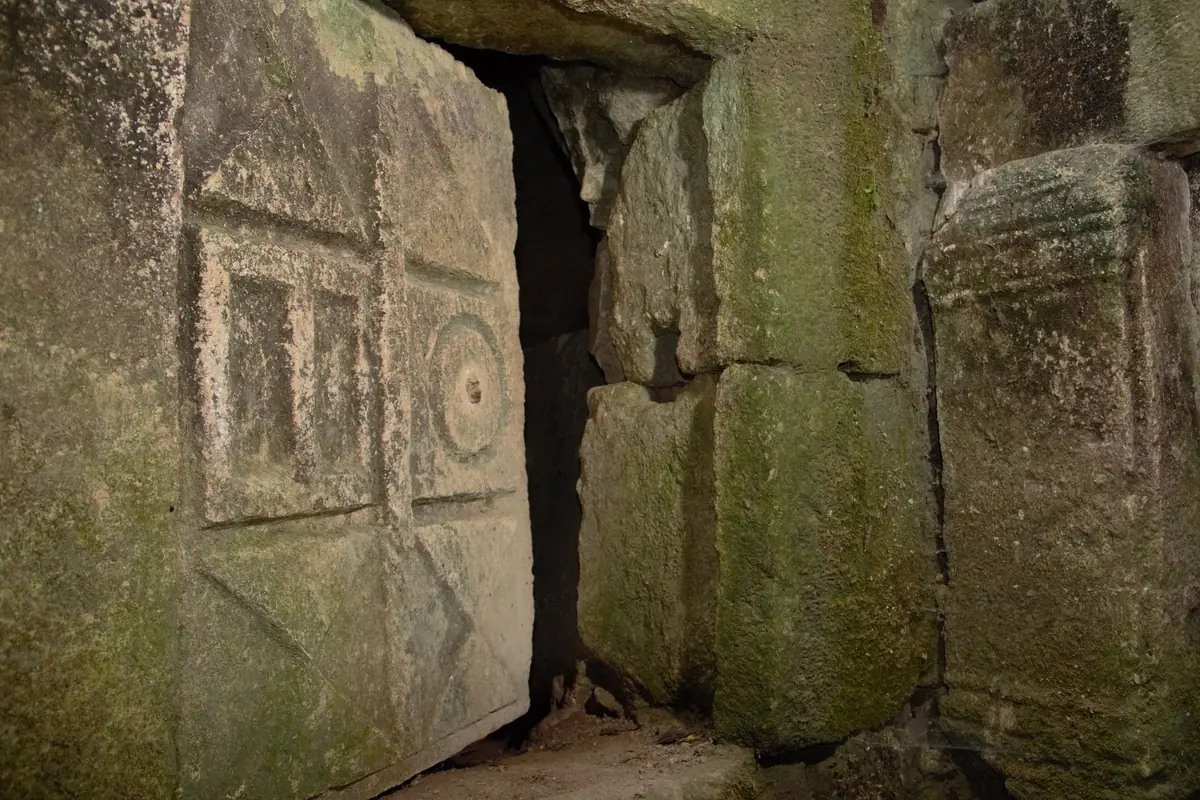
The necropolis is cut into the soft limestone of the hillside. UNESCO counts 33 catacombs. Each opens onto a courtyard, then a stone door carved to look like a wooden one, with its panels and nail heads.
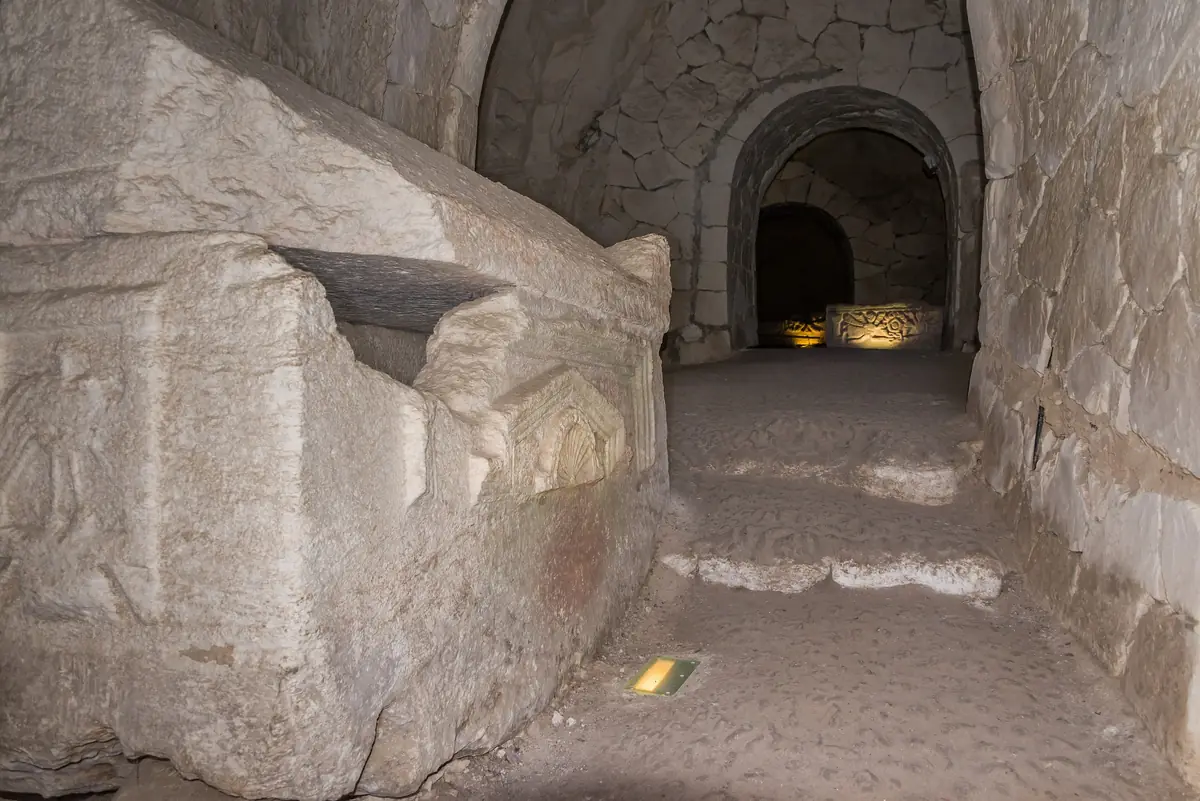
This is the largest catacomb open to the public. It measures about 75 metres across and held 135 stone sarcophagi, several of them carved with reliefs. Each weighs several tons. You can see lions, eagles, bulls' heads, birds and even a winged Victory, a common motif in Roman art. Many inscriptions are in Hebrew and carry the title "Rabbi".
Its triple-arched façade, at the back of a large courtyard, is the best-known image of the site. This is where the inscriptions "Rabbi Shimon", "This is [the tomb] of Rabbi Gamliel" and "Anina the Small" were found. At the back of the inner hall, a double grave cut into the floor is often presented as the tomb of Rabbi.
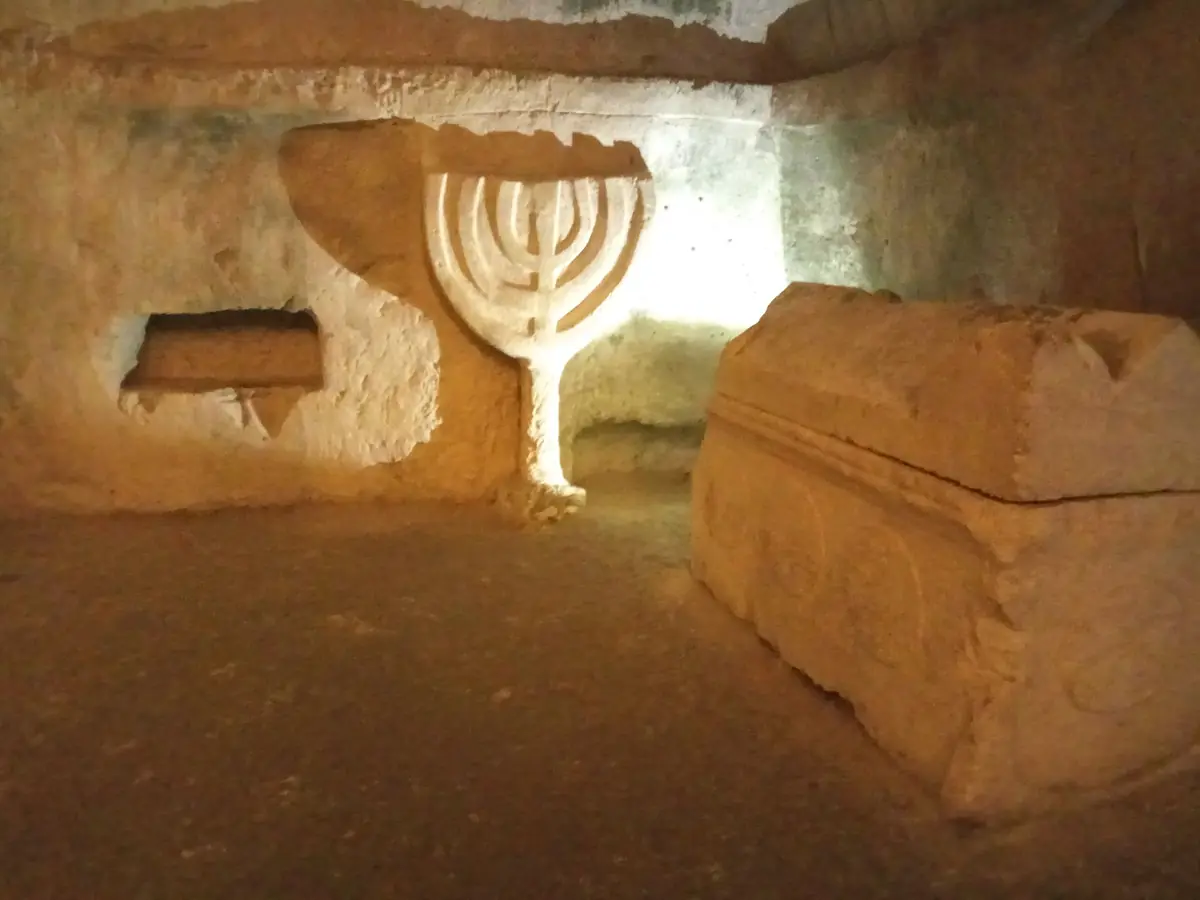
The seven-branched lampstand appears everywhere, incised or carved in relief. In the Cave of the Coffins, a menorah cut into the wall stands 1.9 metres high. The inscriptions tell where the dead came from: Palmyra, Tyre, Sidon, Beirut, Antioch, Mesene in Mesopotamia, Himyar in South Arabia. Beit She'arim was the cemetery of a whole Jewish world, from Galilee to Yemen.
History
The place was called Sheikh Abreik and nobody knew where the Beit She'arim of the Talmud lay. Proof came in 1939: a Greek epitaph, that of a certain Justus, mentions the name Besara. Since 2014 Adi Erlich of the University of Haifa has been excavating the town itself, on top of the hill. In 2017 her team uncovered the threshold of a town gate, about 4 metres wide.
In the museum cave lies a block 3.40 metres long, 1.95 wide and 45 centimetres thick, weighing nearly 9 tons. It was long taken for stone. In 1963 an American team showed that it is glass: a 9th-century melt that failed and was left where it lay. It is one of the largest blocks of ancient glass known.
These sites share a story but are not necessarily close to each other: distances are given in a straight line.
A restored basalt synagogue, the decorated Torah shrine and an arched spring reveal Jewish life in the Byzantine Golan.
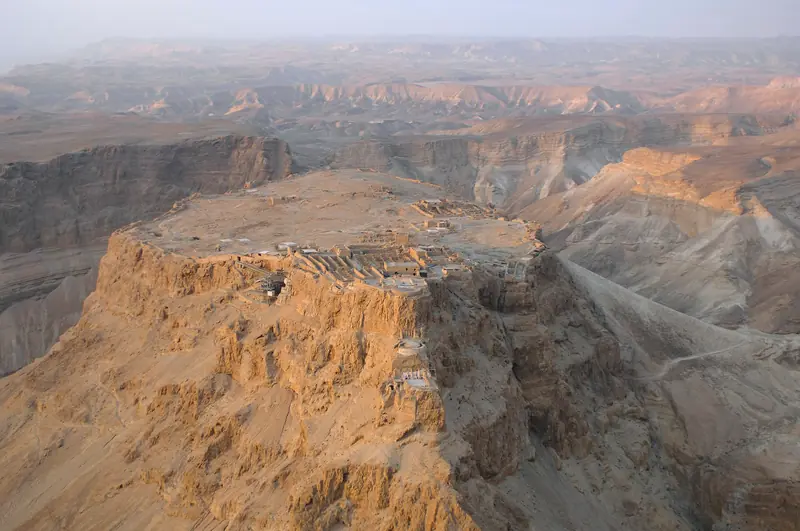
A palace hanging on the edge of the desert, the last stronghold of the Jewish revolt against Rome, and a famous story that archaeology illuminates without settling every question.
Yes, as long as you know what you are coming to see. No biblical story takes place at Beit She'arim. The site tells what came next: how, after the destruction of the Temple, the sages reorganised Judaism in Galilee and gathered and arranged the traditions of the oral law in the Mishnah. It is also one of the few places where you can walk into real ancient Jewish catacombs, listed by UNESCO.
At Beit She'arim, according to the Talmud (Ketubot 103b): he lay ill in Tzippori and a burial site was ready for him in Beit She'arim. Archaeologists attribute Catacomb 14 to his family, where the names Shimon and Gamliel, also borne by his sons, appear. No inscription bears his own name: the exact identification of his tomb remains an inference.
No. The first written mention is by Flavius Josephus, in the 1st century CE, under the Greek name Besara. The town became famous later, in the time of the Mishnah and the Talmud. The link with the Bible is indirect: the wish to be buried in the Land of Israel, as Jacob asks of Joseph (Genesis 47:29–30).
The largest catacomb open to the public: about 75 metres across, with 135 stone sarcophagi, several of them carved with lions, eagles, bulls' heads and geometric patterns. A menorah 1.9 metres high is carved into the wall. The cave is lit and stays cool all year.
Because Rabbi Judah haNasi rests there and Jerusalem was then closed to Jews. To lie in the Land of Israel, near the greatest sage of the age, was highly sought after. The inscriptions name people from Palmyra, Tyre, Sidon, Beirut, Antioch, Mesopotamia and Himyar in South Arabia.
Allow 1 to 1.5 hours for the main caves and the museum, a little more with the upper trail. The park is at the entrance to Kiryat Tiv'on, by Road 722 from HaShomrim junction, some twenty kilometres from Haifa. A car is the simplest option; there is a car park on site.
Opening hours and fees, on the Israel Nature and Parks Authority website: entry is paid and the park closes earlier on Fridays and holiday eves. If you want to see the Menorah Caves, ask before you go: they are visited with a guide, and time slots and booking terms vary.
Two biblical sites are close by: the Muhraqa on Mount Carmel, Israel, about 5 km away as the crow flies, and the mound of Megiddo in Israel, about 14 km away. To follow the Sanhedrin, carry on to Tzippori and then Tiberias.